
Hey there! Some links on this page may be affiliate links which means that, if you choose to make a purchase, I may earn a commission at no extra cost to you. I greatly appreciate your support. Read the full disclosure here.
A single high-altitude nuclear detonation, estimated to affect an area spanning hundreds of miles, could collapse the electrical grid, disable vehicles, and render most modern food and water infrastructure useless within seconds. That’s not a movie plot. It’s a scenario the U.S. EMP Commission has formally assessed as a credible national security threat. Yet most households have less than three days of food on hand and no plan for water beyond the tap.
A solid EMP survival food and water storage plan is the difference between riding out a long-term grid failure with confidence and scrambling in the first 48 hours. This guide covers everything, what an EMP actually destroys, how much food and water you need, which storage methods hold up without power, and how to build a system that lasts months, not days.
Key Takeaways
- An EMP can disable electronics, water pumps, and refrigeration simultaneously, making pre-stored food and water non-negotiable.
- Store a minimum of one gallon of water per person per day; aim for a 30-day supply as a baseline, 90 days as a serious target.
- The best EMP-proof foods are shelf-stable without refrigeration: white rice, dried beans, canned goods, freeze-dried meals, and hard grains.
- Mylar bags with oxygen absorbers inside food-grade buckets are the gold standard for long-term dry food storage without electricity.
- Frozen food becomes a liability within 24-48 hours of an EMP event; plan to consume or preserve it immediately.
- Rotate your food supply every 6-12 months depending on the item; water stored in sealed containers should be replaced every 6-12 months.
- An EMP survival plan differs from a standard 72-hour emergency kit, it must account for weeks or months of grid failure, not just a short-term disruption.
- Manual water filtration, gravity-fed filters, and rainwater collection are the most reliable water sources when municipal systems fail.
What Is an EMP and How Does It Affect Food Storage
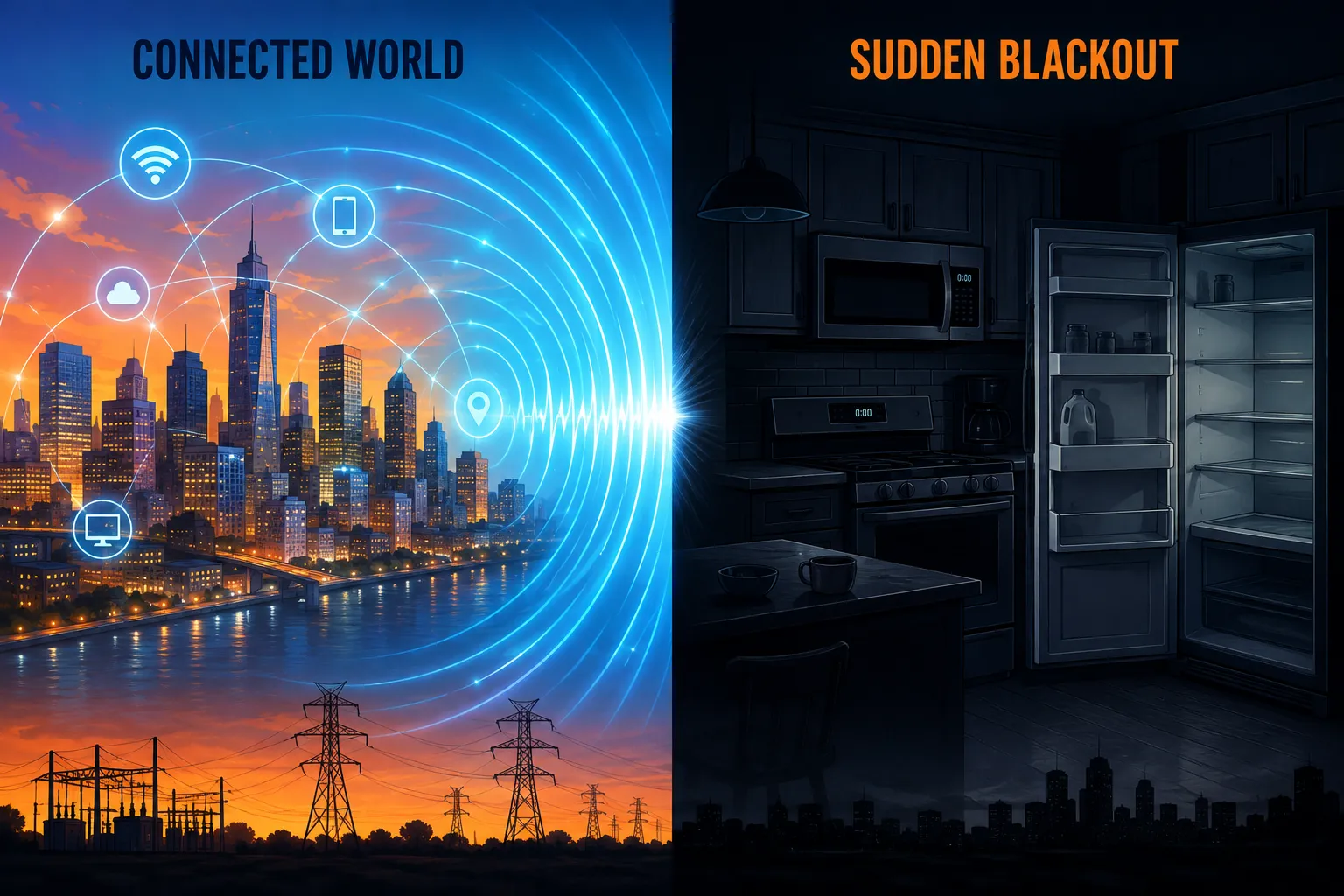
An electromagnetic pulse (EMP) is a burst of electromagnetic energy that can come from a nuclear detonation at high altitude, a solar geomagnetic storm, or a directed-energy weapon. When it hits, it induces massive voltage surges in electrical systems, frying circuit boards, disabling motors, and collapsing the power grid.
For food and water storage, the consequences are immediate and cascading:
- Refrigerators and freezers stop working. All perishable food spoils within 24-48 hours.
- Municipal water pumps go offline. Most city water systems rely on electrically powered pumps. Without them, water stops flowing to homes within hours.
- Fuel supply chains break down. Gas stations can’t pump fuel, which means resupply trucks stop running.
- Electronic payment systems fail. Grocery stores become inaccessible even if shelves still have product.
The core lesson: any food that requires electricity to stay safe becomes a liability the moment an EMP hits. A proper EMP survival food and water storage plan eliminates dependence on the grid entirely.
For a broader look at grid failure scenarios, see the EMP attack and grid failure survival guide at Preppers HQ.
Who Needs an EMP Survival Plan and Why
Anyone who depends on municipal infrastructure for food and water needs this plan, which is essentially everyone. That said, certain households face higher stakes.
This plan is especially critical for:
- Families with young children, elderly members, or people with medical dietary needs
- Households in suburban or urban areas where foraging or farming isn’t immediately viable
- Anyone more than a short walk from a natural water source
- Preppers who have a 72-hour kit but haven’t scaled beyond it
The honest reality: a standard emergency kit built for a three-day storm is not an EMP survival plan. Grid-down scenarios following an EMP event are projected by analysts to last weeks to months, not days. The 4-Layer Disaster Plan based on FEMA protocols addresses this distinction well; short-term kits and long-term resilience are two different systems.

What’s the Difference Between an EMP Survival Kit and Regular Emergency Prep
A standard emergency kit covers 72 hours. An EMP survival plan covers 30 to 365 days. That’s not a small difference, it’s an entirely different category of preparedness.
| Factor | Standard Emergency Kit | EMP Survival Plan |
|---|---|---|
| Duration | 72 hours to 2 weeks | 30 days minimum; 90-365 days ideal |
| Water source | Bottled water | Stored barrels plus filtration system |
| Food type | Ready-to-eat snacks, short shelf-life | Long-term shelf-stable staples |
| Cooking method | Camp stove with fuel | Rocket stove, wood fire, solar cooker |
| Power assumption | Some power likely returns | Assume zero grid power indefinitely |
| Rotation schedule | Rarely needed | Every 6-12 months, systematically |
The key distinction is the assumption about grid recovery. Regular emergency prep assumes power comes back. An EMP survival food and water storage plan assumes it doesn’, and builds accordingly.
Best Foods to Stockpile for an EMP Event
The best EMP survival foods require no refrigeration, have shelf lives measured in years, and provide adequate calories and nutrition. Prioritize caloric density and storage efficiency over variety at first.
Tier 1, Core caloric foundation (25+ year shelf life when properly stored):
- White rice (not brown, the oils in brown rice go rancid)
- Hard red or white wheat berries
- Dried lentils, black beans, pinto beans, and chickpeas
- Rolled oats
- Pasta (semolina-based, not egg pasta)
Tier 2, Nutritional support and variety (5-25 year shelf life):
- Freeze-dried vegetables and fruits
- Freeze-dried meats (chicken, beef crumbles)
- Honey (indefinite shelf life when sealed)
- Salt, baking soda, and baking powder
- Canned fish (tuna, salmon, sardines)
- Canned vegetables and legumes
Tier 3, Comfort and morale foods (1-5 year shelf life, rotate regularly):
- Peanut butter
- Instant coffee and tea
- Hard candies and chocolate
- Crackers and hardtack
For a deep dive into building this pantry, the ultimate survival pantry list covers quantities, costs, and sourcing in detail. The prepper’s guide to freeze-dried food is also worth reading before purchasing any commercial freeze-dried products.
What Foods Go Bad First in an EMP Scenario
Within the first 48 hours of an EMP event, certain foods become urgent priorities: either consume them, preserve them, or lose them.
Foods that fail first:
- Fresh meat anddairy spoil within 4-8 hours without refrigeration in warm weather
- Frozen foods, the USDA estimates a full freezer stays safe for roughly 48 hours if kept closed; a half-full freezer, about 24 hours
- Leftovers and cooked foods, already partially degraded, spoil fastest
- Fresh produce, most fruits and vegetables,s last only a few days without refrigeration
- Eggs, unwashed, unrefrigerated eggs last 2-4 weeks; already-refrigerated eggs should be prioritized
What to do immediately: Cook and consume perishables first. If you have a wood stove, outdoor grill, or rocket stove, use it to cook large batches of meat and eat communally. Salt-curing, smoking, or dehydrating meat are preservation options if you have the supplies ready.
Can You Use Regular Freezer Food After an EMP
Frozen food is usable after an EMP, but only within a narrow window. If the power goes out and stays out, a fully packed freezer will keep food safe for approximately 48 hours. A half-full freezer lasts so about 24 hours. After that, bacterial growth accelerates, and food safety becomes a serious concern.
Practical rules:
- Keep the freezer closed as long as possible to preservethe cold
- Use a food thermometer; food is safe if still at or below 40°F (4°C)
- Cook and eat frozen meat before it reaches 40°F if the grid isn’t coming back
- Do not refreeze thawed meat without cooking it first
The hard truth: in a genuine EMP scenario, freezer food is a short-term bonus, not a long-term plan. Don’t build your survival strategy around it.
How to Store Food Without Electricity for Months
Storing food without electricity for months requires airtight containers, oxygen removal, and protection from heat, light, and moisture. This is the foundation of any serious EMP survival food and water storage plan.
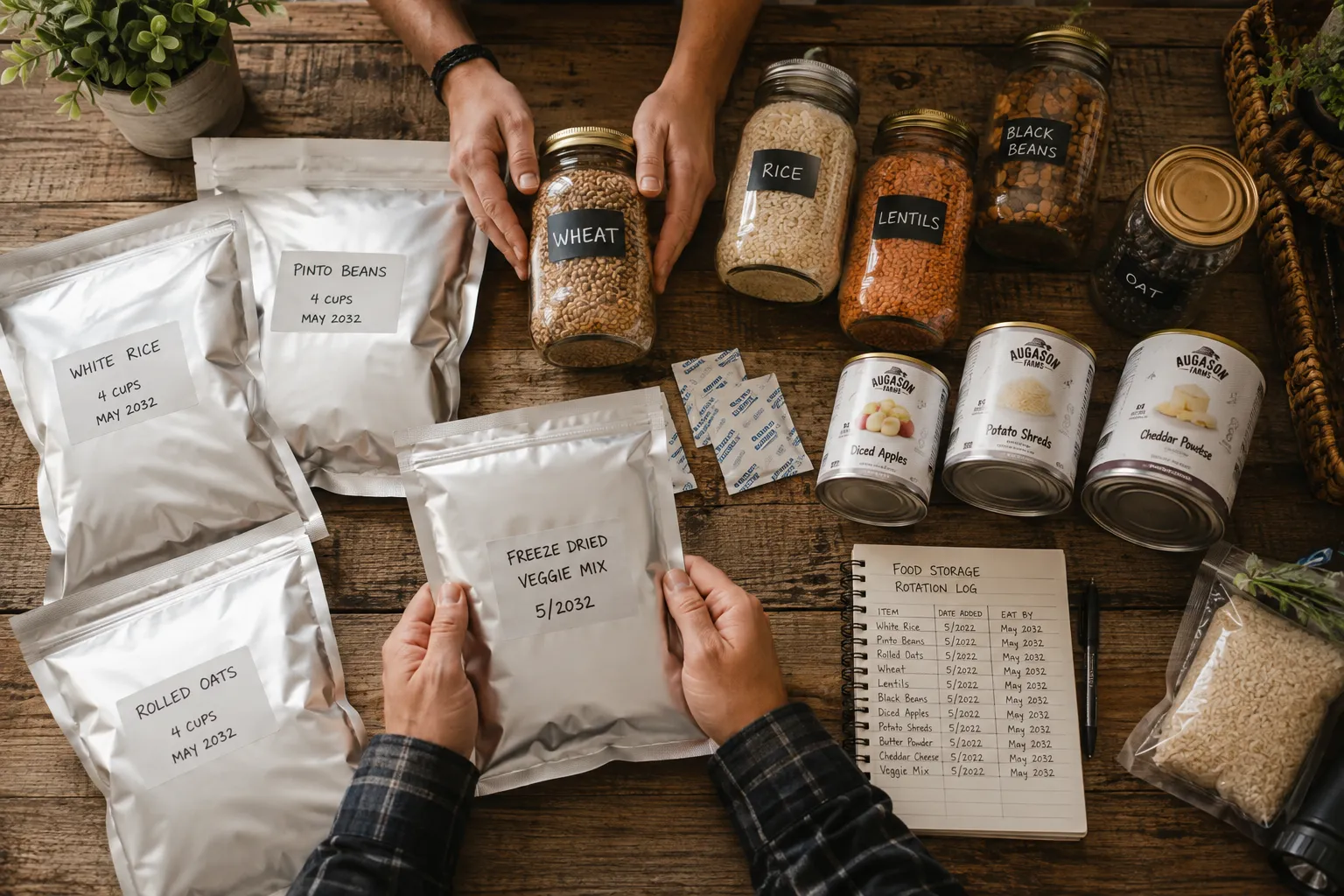
The best EMP survival food storage containers:
- Mylar bags + oxygen absorbers inside food-grade 5-gallon buckets: the gold standard for dry goods like rice, beans, and grains. Properly sealed, white rice can last 25-30 years.
- #10 cans (commercial-grade): used by freeze-dried food manufacturers; excellent for long-term storage but require a can sealer for DIY use.
- Food-grade HDPE buckets (with gamma-seal lids): good for bulk storage but should be combined with Mylar bags for maximum shelf life.
- Glass mason jars with vacuum-sealed lids: excellent for smaller quantities of herbs, spices, and seeds.
What to avoid: regular plastic bags, cardboard boxes, or containers not rated as food-grade. Pests, moisture, and oxygen degrade food rapidly in non-sealed containers.
Storage location matters: aim for a cool (below 70°F), dark, and dry space. Every 10°F increase in storage temperature roughly halves the shelf life of most dry goods. A basement or interior room away from exterior walls is ideal.
For more guidance on building out a serious long-term system, the long-term food storage beginner’s guide is a practical starting point. Also review 15 food storage mistakes to avoid before investing in bulk supplies.
Is Canned Food Safe to Eat After an EMP
Yes, commercially canned food is one of the most reliable components of an EMP survival food and water storage plan. Cans require no electricity to store or open, and most commercially canned foods remain safe and nutritious for 2-5 years past their printed date, with many lasting much longer.
What to check before eating canned food:
- Avoid cans that are bulging, deeply dented along the seam, or have a foul smell when opened
- Rust on the outside doesn’t automatically mean the food is unsafe, but inspect the interior seam carefully
- Home-canned goods require proper pressure canning technique; improperly canned food carries a botulism risk
Canned fish, beans, tomatoes, and vegetables are nutritional workhorses in a grid-down scenario. Build a substantial canned goods inventory as your accessible, no-prep-needed layer of food security. For meal ideas using only canned supplies, see 25 easy emergency meals using only canned foods.
How Long Can You Store Water for EMP Survival, and How Much Do You Need
Store a minimum of one gallon of water per person per day. For a family of four, that’s 120 gallons for a 30-day supply, a realistic minimum for an EMP scenario. Ninety days (360 gallons for four people) is a more serious target.
Water stored in food-grade sealed containers in a cool, dark location remains safe for 6-12 months before it should be rotated or treated. Water itself doesn’t expire, but containers can leach chemicals over time and contamination can occur if seals fail.
Recommended water storage containers:
- 55-gallon food-grade polyethylene barrels: the most cost-efficient option for bulk storage
- WaterBOB emergency bathtub bladder (100 gallons): useful for rapid fill-up before a known event
- 5-7 gallon stackable water containers (BPA-free): flexible and portable
- Commercial bottled water: convenient but expensive per gallon and generates significant plastic waste
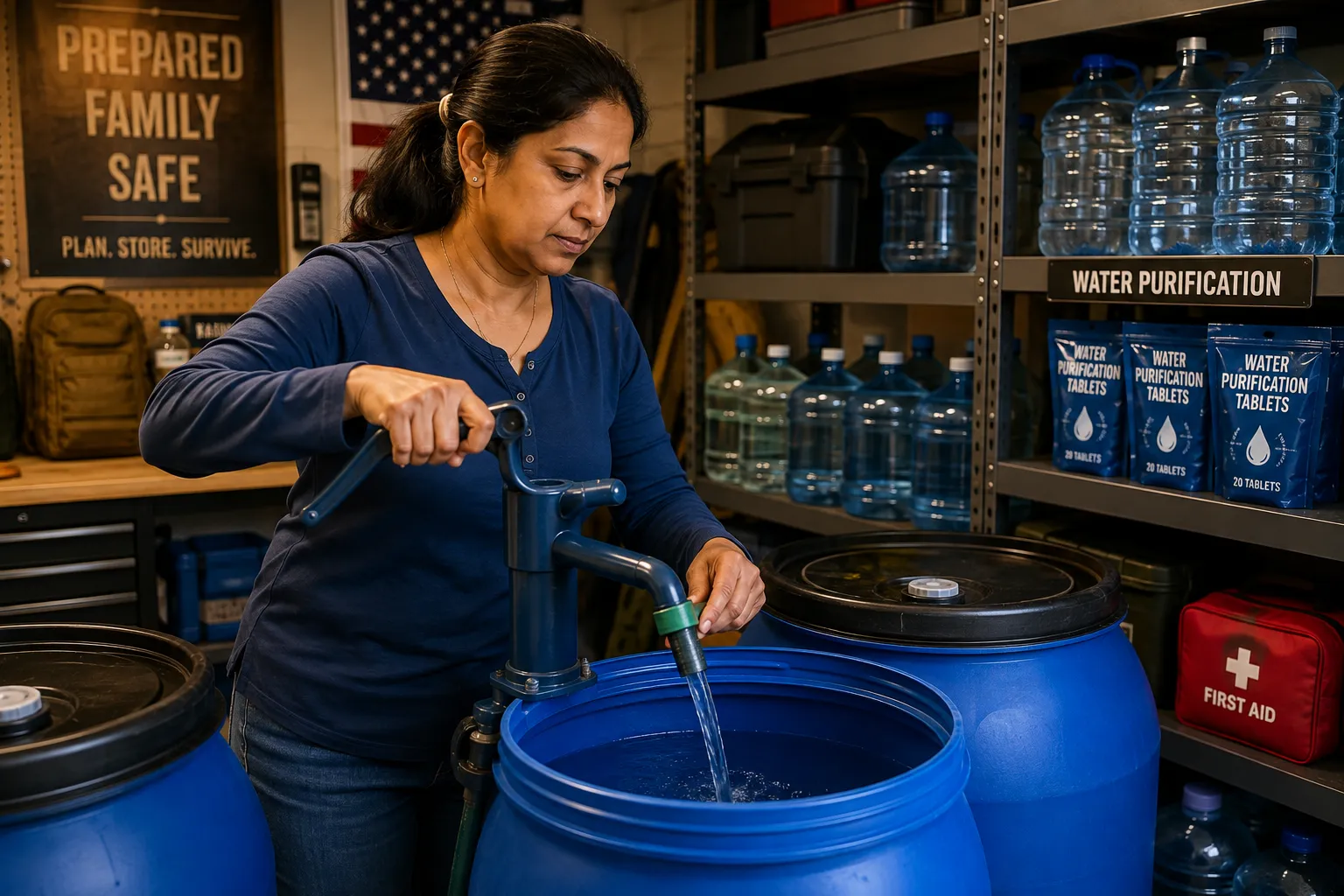
Do you need special equipment to store waterlong-termm? For basic storage, no, clean food-grade containers and a dark storage space are sufficient. For extended storage or water collected from natural sources, a gravity-fed filter (like a Berkey-style system), water purification tablets, and a manual hand pump are essential additions.
The ultimate emergency water storage and purification guide covers container types, treatment options, and sourcing in depth. For common errors that compromise stored water, the worst water storage mistakes preppers still make is required reading.
Rainwater collection is a critical backup water source in a long-term EMP scenario. A basic roof catchment system with a 50-gallon barrel can collect hundreds of gallons per year, depending on rainfall. See the rainwater collection emergency survival setup guide for setup instructions.
How Often Should You Rotate Your EMP Survival Food Supply
Rotation frequency depends on what you’re storing. The general rule: eat what you store, and store what you eat. A “first in, first out” system prevents waste and ensures your supply stays fresh.
Rotation schedule by food type:
- Canned goods: every 2-3 years (though many last longer)
- Peanut butter, crackers, cooking oils: every 1-2 years
- Freeze-dried meals (commercially sealed): every 10-25 years, depending on the product
- White rice, dried beans in Mylar/oxygen absorbers: every 10-25 years
- Stored water in sealed containers: every 6-12 months
- Water purification tablets: check expiration, typically 4-5 years
Label everything with the date of storage. A simple rotation log, even a handwritten notebook, prevents the common mistake of discovering expired supplies when you actually need them.
Cheapest Way to Build an EMP Survival Food Storage
Building an EMP-ready food supply doesn’t require a large upfront investment. The most cost-effective approach is buying in bulk from warehouse stores or restaurant supply companies and doing your own Mylar bag packaging.
Budget-friendly starting strategy:
- Buy a 50-pound bag of white rice and a 25-pound bag of dried lentils or beans;, this provides roughly 50,000+ calories per bag of rice at low cost.
- Purchase food-grade 5-gallon buckets with gamma-seal lids (available at hardware stores or online).
- Buy Mylar bags (1-gallon size) and 300cc oxygen absorbers in bulk.
- Package the dry goods yourself: fill the Mylar bag, drop in 1-2 oxygen absorbers, seal with a hair straightener or clothing iron, then place in the bucket.
- Add commercially canned goods over time; buy a few extra cans per grocery trip.
A realistic 30-day food supply for one adult can be assembled for under $150 using this method. Scale up from there as budget allows. For a structured approach to building out a full supply, the 3-month emergency food supply guide provides a step-by-step system.
Conclusion
An EMP event is one of the few scenarios where preparedness must be built entirely before the event;, there’s no window to react, no time to run to the store, and no grid to fall back on. The households that fare best won’t be the ones with the most gear. They’ll be the ones who built a system: a real EMP survival food and water storage plan with layered food supplies, adequate water storage, manual filtration, and a rotation schedule that keeps everything fresh.
Actionable next steps:
- Audit what you have today. Count your current food supply in days, not items. Count your water in gallons.
- Set a 30-day target first. For a family of four, that’s roughly 120 gallons of water and 6,000-8,000 calories per day in shelf-stable food.
- Package your dry goods properly. Invest in Mylar bags, oxygen absorbers, and food-grade buckets before buying more food.
- Add a gravity water filter. A Berkey-style or similar gravity-fed filter works with zero electricity and can process water from any source.
- Build a rotation habit. Label everything. Eat the oldest first. Restock as you consume.
- Plan for cooking without power. A propane camp stove, rocket stove, or wood-burning setup is non-negotiable when the grid is down.
The goal isn’t a bunker. It’s confidence, knowing that whatever happens to the grid, your family has what it needs to stay fed, hydrated, and functional for weeks or months while the situation stabilizes.
Products, Tools, and Resources
Gravity-fed water filters (Alexapure Pro Water Filtration System): The most reliable non-electric water filtration option for home use. Filters tap water, rainwater, and most natural sources. Look for systems rated for at least 3,000 gallons per filter element.
Mylar bags and oxygen absorbers: Available in bulk from emergency food supply retailers and Amazon. The 1-gallon Mylar bag with 300cc oxygen absorbers is the standard for packaging rice, beans, and grains at home.
Food-grade 5-gallon buckets with gamma-seal lids: Hardware stores (Home Depot, Lowe’s) and restaurant supply companies carry food-grade HDPE buckets. Gamma-seal lids allow easy access without breaking the seal permanently.
55-gallon water storage barrels: Available from emergency preparedness retailers and farm supply stores. Include a hand pump and bung wrench for access.
Freeze-dried food brands (Mountain House, Augason Farms, ReadyWise): Commercial freeze-dried meals provide a 25-year shelf life with no packaging effort. Use these as a complement to bulk dry goods, not a replacement.
Propane camp stoves and extra fuel canisters: A two-burner propane stove with 10-20 extra 1-pound canisters provides months of cooking capability. For longer-term scenarios, a rocket stove that burns small wood scraps is a more sustainable option.
Manual grain mill: If you’re storing wheat berries, a hand-cranked grain mill (Country Living or similar) lets you grind flour without electricity. This is a longer-term investment but is valuable for multi-month scenarios.
For more on building a complete preparedness system, explore the backup power guide for emergencies and the city blackout survival checklist for complementary planning layers.
Frequently Asked Questions
How long does an EMP event last? The electromagnetic pulse itself lasts milliseconds. The grid failure that follows, however, could last weeks, months, or longer depending on the scale of infrastructure damage and the speed of repair or replacement. Plan for the grid failure, not the pulse.
Will an EMP destroy my stored food directly? No. An EMP doesn’t affect food itself. The danger is indirect, refrigeration fails, water pumps stop, and supply chains collapse. Properly stored shelf-stable food is completely unaffected by the pulse.
Can I store water in regular plastic jugs from the store? Commercially bottled water in sealed PETE (PET #1) plastic is safe for storage. Reusing milk jugs or thin plastic containers is not recommended; they degrade, leach chemicals, and are difficult to fully sanitize. Use food-grade containers rated for water storage.
How do I cook food without electricity after an EMP? Propane camp stoves, wood-burning rocket stoves, charcoal grills (used outdoors only), and solar cookers all work without grid power. Stock fuel in advance and have at least two cooking methods available. For no-cook options, see the guide to best no-cook survival meals.
Does a Faraday cage protect my food storage? A Faraday cage protects electronics, not food. What it can protect are useful tools like a hand-crank radio, backup solar charge controller, or spare electronic components, none of which are food or water. Your food storage doesn’t need EMP shielding; it just needs to be shelf-stable and non-electric.
Is tap water safe to drink immediately after an EMP? Possibly for a short time, depending on your location. Many municipal systems have water towers with gravity-fed pressure that can supply water for hours after pumps fail. However, treatment systems also go offline, so water quality degrades quickly. Use stored water and filter anything from a natural source.
How much food should I store per person per day? A minimum of 2,000 calories per adult per day is a standard baseline. Active adults, pregnant women, and growing children need more, closer to 2,500-3,000 calories. Plan for 2,000 calories as a floor, not a target.
What’s the single most important first purchase for an EMP food plan? A gravity-fed water filter and a 30-day supply of water containers. Food can be stretched; water cannot be improvised without filtration equipment. Water is always the first priority.
Can I grow food as part of my EMP survival plan? Absolutely, and it should be part of any long-term plan. A survival garden provides fresh nutrition that shelf-stable foods can’t replicate. The survival garden planning guide covers how to design a productive garden specifically for food independence.
How do I prevent pests from getting into my food storage? Store food in hard-sided containers (buckets, cans) rather than bags alone. Keep storage areas clean and dry. Oxygen absorbers inside Mylar bags eliminate the oxygen that many pests need to survive. Diatomaceous earth spread around storage areas is a non-toxic pest deterrent.