
Hey there! Some links on this page may be affiliate links which means that, if you choose to make a purchase, I may earn a commission at no extra cost to you. I greatly appreciate your support. Read the full disclosure here.
The Worst Water Storage Mistakes Preppers Still Make
Most people making water storage mistakes don’t realize it until the moment it matters most — and by then, the water they trusted with their lives is already compromised. You filled the containers. You stacked them neatly. You told yourself you were ready.
But here’s what nobody tells you: stored water can become a silent threat. Not because water itself is dangerous, but because the way most people store it — the containers they choose, the locations they pick, the rotation schedules they skip — creates conditions where safety quietly unravels.
This isn’t about fear. It’s about the gap between feeling prepared and being prepared. And that gap, for most households, lives entirely in their water supply.
Let’s close it.
The Ultimate Emergency Water Storage and Purification Guide
Find this useful? Add us as a preferred source on Google and more of what we publish will show up in your results.
The Water Storage Mistakes Most Preppers Never Catch
 Why “Stored” Water Isn’t Always Safe Water
There’s a deeply comforting myth in the preparedness community: that water, once sealed, stays safe indefinitely. It doesn’t.
Water itself doesn’t expire — the molecule H₂O is chemically stable. But the container it lives in, the environment it’s stored in, and the treatment (or lack thereof) applied before sealing all determine whether what you’re drinking in month six is safe or slowly harmful.
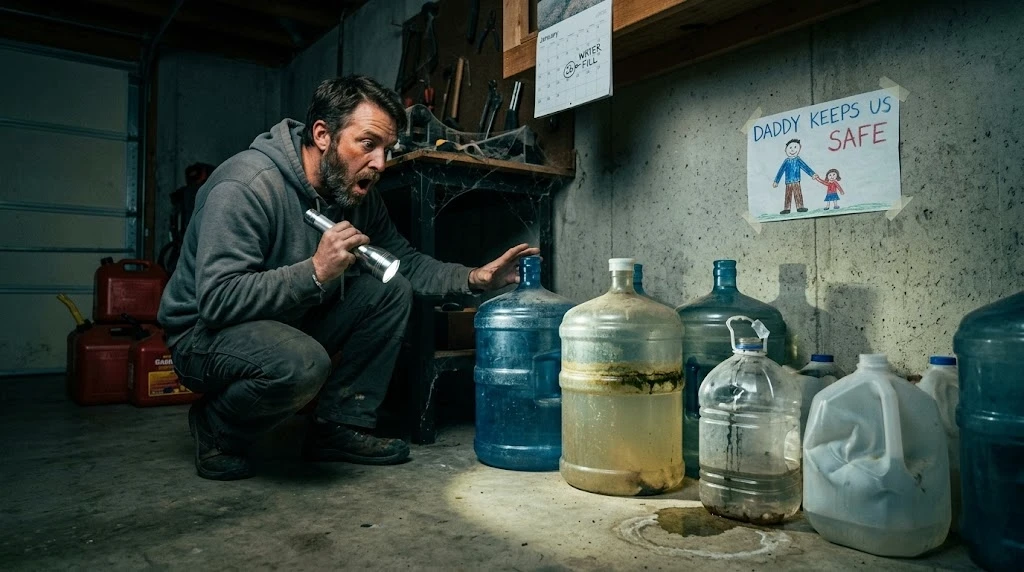
The EPA and FEMA both recommend replacing commercially bottled water every one to two years and home-stored water every six months. Most people do neither. They fill containers once, store them in a garage or basement, and consider the task complete. That single act of complacency is the foundation of nearly every water storage failure.
The Container Contamination Trap Nobody Warns You About
Not all plastic is created equal — and the wrong plastic doesn’t just fail to protect your water. It actively contaminates it.
Containers made from PET (polyethylene terephthalate, marked #1) or HDPE (#2) are considered food-safe for water storage. Containers marked #3 (PVC), #6 (polystyrene), or #7 (mixed resins) can leach chemicals, including phthalates and bisphenol compounds, into water over time, especially under heat or UV exposure.
The trap? Many people repurpose containers that look safe — old juice jugs, soda bottles, or opaque containers without visible markings. These may have been designed for single use, not long-term storage. Their structural integrity degrades. Their chemical barriers weaken. And the water inside absorbs what the plastic releases.
Rule of thumb: If the container wasn’t specifically designed for long-term water storage, don’t use it for that purpose.
How Improper Rotation Turns Your Supply into a Health Risk
Rotation isn’t just a best practice — it’s the difference between a living water supply and a stagnant one.
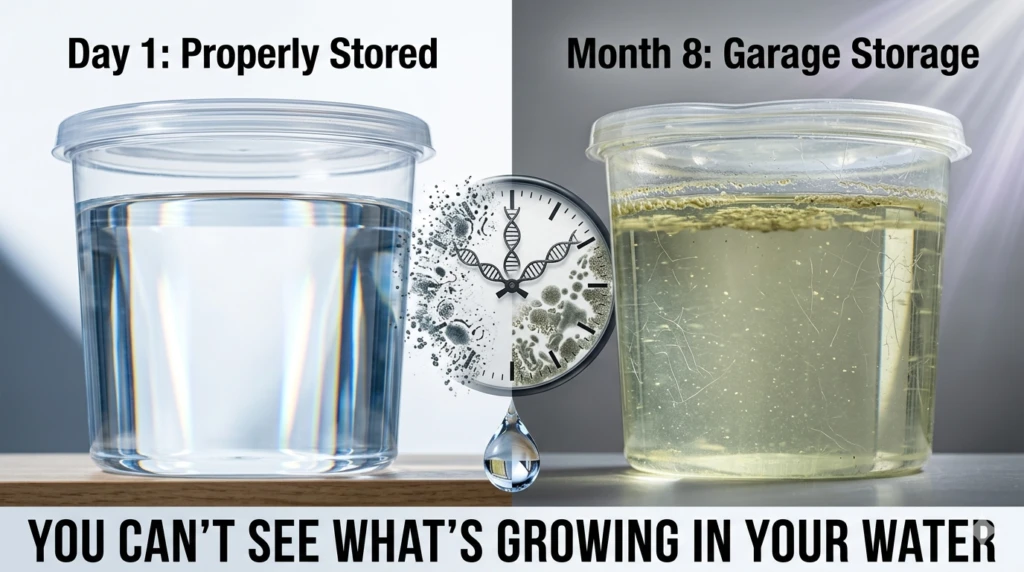
Water stored without rotation develops biofilm — a thin, invisible layer of microbial colonies that adhere to container walls. In small quantities, biofilm is manageable. Over months without treatment or replacement, it becomes a breeding ground for bacteria, including Pseudomonas aeruginosa and Legionella — organisms that cause serious illness, particularly in children, the elderly, and immunocompromised individuals.
The rotation schedules most experts recommend: every six months for home-stored tap water, every twelve months for commercially sealed water in original containers. Mark your containers with fill dates. Set calendar reminders. Treat it like a bill — because in a crisis, it’s more important than one.
Key Takeaways:
– Use food-grade, opaque HDPE (#2) containers specifically designed for long-term water storage and avoid repurposed bottles to prevent chemical leaching and bacterial growth.
– Store water in stable, climate-controlled locations away from sunlight, heat, and chemicals, and keep containers off concrete floors using racks or pallets to prevent contamination and damage.
– Rotate stored water every six months at minimum, or every three to four months in suboptimal conditions, labeling containers with fill and rotation dates to maintain water safety.
– Sanitize containers before filling with a bleach solution, treat water with appropriate preservatives like unscented bleach or Aquamira, and test before drinking using visual, smell, pH, and coliform checks.
– Build layered water security by combining stored water (primary), reliable filtration/purification tools (secondary), and knowledge of emergency water sourcing and treatment methods (tertiary).
The Science Behind Water Degradation
 Does Water Actually Expire? The Truth Behind Shelf Life
The short answer: water doesn’t expire. The longer answer: everything around the water does.
Plastic containers off-gas over time, particularly under heat. The compounds released — including acetaldehyde from PET plastics — alter taste and, in sufficient concentrations, raise health concerns. Seals degrade. Lids warp. Microscopic cracks form along stress points, allowing air and contaminants to enter.
Commercially bottled water carries expiration dates not because the water itself degrades, but because the FDA requires date labeling on food products and because the manufacturer cannot guarantee container integrity beyond a certain point.
For home storage, the practical shelf life of properly treated, properly sealed water in food-grade containers stored in stable conditions is approximately six to twelve months before rotation is recommended.
How Light, Heat, and Plastic Interact to Poison Your Supply
This is the combination most people never consider — and it’s the most dangerous one.
UV light accelerates plastic degradation. Heat amplifies chemical leaching. Together, they create a compounding effect: a clear container sitting in a sunny garage in summer is simultaneously being weakened structurally and chemically compromised internally.
Studies on PET plastic exposed to elevated temperatures (above 60°C / 140°F) show measurable increases in antimony leaching — a metalloid compound associated with gastrointestinal distress. Garages in summer climates regularly exceed this threshold.
The fix is simple but non-negotiable: opaque containers, cool temperatures, no direct sunlight. Every deviation from this triad accelerates degradation.
Bacterial Growth Timelines in Improperly Sealed Containers
Bacteria don’t need much. A small air gap. A trace of organic material from an improperly cleaned container. A temperature above 15°C (59°F). Given these conditions, bacterial colonies can establish within 24–48 hours and reach problematic concentrations within weeks.
The most common entry points:
- Containers filled from a tap without prior sanitization
- Lids that weren’t fully sealed or were opened and resealed multiple times
- Containers stored near heat sources that create condensation cycles
Sanitizing before filling is non-negotiable. Use a solution of one teaspoon of unscented liquid chlorine bleach per quart of water, swirl to coat all interior surfaces, let sit for 30 seconds, then rinse with clean water before filling.
Location and Storage Environment Errors
Why Your Garage Is the Worst Place to Store Water
It’s the most common storage location. It’s also the worst one.
Garages combine every environmental threat to water storage: temperature extremes (freezing in winter, baking in summer), UV exposure from windows and gaps, proximity to chemicals (gasoline, pesticides, paint), and concrete floors that transfer cold and moisture.
The chemical proximity issue is particularly underappreciated. Gasoline vapors, in sufficient concentration, can permeate thin plastic containers. Pesticide residue on shelving can transfer to container exteriors and then to hands that touch water spouts. These aren’t theoretical risks — they’re documented failure modes in emergency preparedness audits.
Ideal storage locations: interior closets, under-stair spaces, climate-controlled basements, or dedicated pantry areas with stable temperatures between 10–25°C (50–77°F).
Temperature Fluctuation and Chemical Leaching Explained
Plastic is not static. It expands in heat and contracts in cold — and each cycle stresses the molecular structure of the container. Over dozens of freeze-thaw or heat-cool cycles, micro-fractures develop. Seals loosen. The container that looked perfect when you filled it may be subtly compromised a year later.
Beyond structural damage, temperature fluctuation accelerates the rate at which plasticizers migrate from container walls into water. This is why the same water stored in a climate-controlled pantry and a fluctuating garage will test differently after six months — even if both containers were identical at the start.
The Floor-Level Storage Mistake That Invites Contamination
Storing water containers directly on concrete floors creates two distinct risks.
First, concrete is porous and can harbor moisture, mold, and chemical residue from spills. Containers sitting on damp concrete develop exterior contamination that transfers to hands and spouts during use.
Second, in flood scenarios — exactly the kind of emergency where your stored water becomes critical — floor-level containers are the first to be compromised by floodwater intrusion, sewage backup, or chemical runoff.
Store containers on wooden pallets, plastic shelving, or elevated racks. It’s a small adjustment with outsized protective value.
Container Selection Failures
 BPA vs. BPA-Free: What the Labels Don’t Tell You
The BPA-free label became a marketing triumph after public concern about bisphenol-A peaked in the late 2000s. What it didn’t tell consumers: many BPA-free plastics replaced BPA with bisphenol-S (BPS) or bisphenol-F (BPF) — compounds with similar hormonal disruption profiles and, in some studies, greater potency.
This isn’t an argument against plastic storage — it’s an argument for informed plastic selection. Food-grade HDPE (#2) containers remain the gold standard for long-term water storage because they have the longest track record of safety, the most regulatory scrutiny, and the lowest leaching rates under normal storage conditions.
For those seeking plastic-free alternatives: stainless steel containers (food-grade, non-coated interiors) and glass carboys are excellent options for smaller quantities, though they carry weight and fragility trade-offs.
Why Repurposed Containers Are a Hidden Danger
Milk jugs. Juice bottles. Old sports drink containers. These are the most commonly repurposed water storage vessels — and among the most dangerous choices for long-term storage.
Milk jugs are manufactured from HDPE but are designed for a shelf life of weeks, not months. Their thin walls degrade quickly, and the protein residue from milk is nearly impossible to fully remove — creating a nutrient-rich environment for bacterial growth regardless of how thoroughly you clean them.
Juice and sports drink bottles carry residual sugars and acids that similarly resist complete sanitization. Even trace amounts of organic residue are sufficient to support microbial colonization over time.
The rule is simple: purpose-built containers for purpose-built storage. The cost difference between a repurposed jug and a proper 7-gallon Aqua-Tainer is approximately $15. The health cost of the alternative is incalculable.
The Right Containers for Long-Term Emergency Water Storage
| Container Type | Capacity | Best For | Lifespan |
| 7-Gallon Aqua-Tainer (HDPE) | 7 gallons | Household storage | 5–10 years |
| 55-Gallon Drum (food-grade) | 55 gallons | Large family/long-term | 10+ years |
| WaterBOB Bathtub Bladder | 100 gallons | Rapid pre-storm fill | Single use |
| Stainless Steel Canteen | 1–2 liters | Portable/daily use | Indefinite |
| Collapsible Water Cube | 5–10 gallons | Space-efficient storage | 3–5 years |
Rotation, Treatment, and Testing Protocols
 How Often Should You Actually Rotate Your Water Supply?
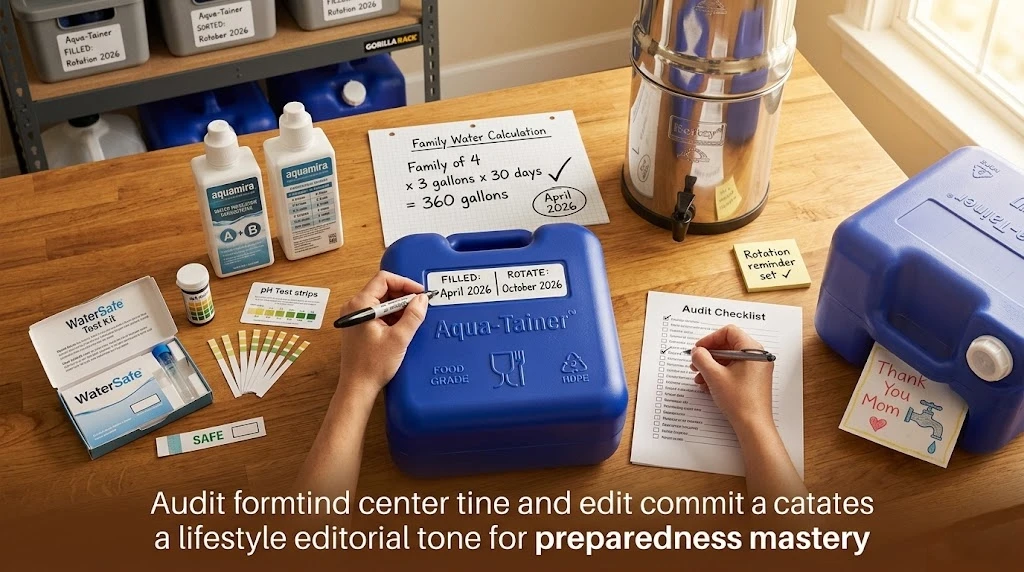
The six-month rotation recommendation for home-stored tap water is a minimum, not a target. In suboptimal storage conditions — temperature fluctuation, light exposure, imperfect sealing — three to four months is more appropriate.
Build rotation into your existing routines. Every time you change smoke detector batteries (typically twice yearly), rotate your water. Use the rotated water for cleaning, gardening, or pet hydration — nothing is wasted.
Label every container with two dates: filled on and rotated by. Make it visible. Make it automatic.
Water Treatment Methods That Work (And Ones That Don’t)
Effective treatments for home water storage:
- Unscented liquid chlorine bleach (6–8.25% sodium hypochlorite): 8 drops per gallon for clear water, 16 drops for cloudy water. Effective against bacteria and most viruses.
- Water preserver concentrate (e.g., Aquamira): Extends safe storage life to 5 years. Specifically formulated for long-term storage.
- Iodine tablets: Effective for short-term treatment but not recommended for long-term storage due to taste and health concerns with extended use.
Treatments that don’t work for storage:
- Boiling (effective for immediate use, not for extending storage life)
- UV purification pens (point-of-use tools, not storage treatments)
- Filtering alone (removes particulates, not biological contamination from storage conditions)
How to Test Stored Water Before You Drink It
Before consuming stored water in an emergency, a basic sensory and chemical check can prevent illness:
- Visual inspection: Clear water is not necessarily safe, but cloudy or discolored water is a definitive warning sign.
- Smell test: Chlorine smell is acceptable (and expected if treated). Sulfur, musty, or chemical odors indicate contamination.
- pH test strips: Safe drinking water falls between pH 6.5 and 8.5. Significant deviation suggests chemical contamination.
- Coliform test kits: Available at hardware stores, these detect bacterial contamination within 48 hours. Worth keeping in your preparedness kit.
When in doubt, treat before drinking. A few drops of bleach and 30 minutes of contact time cost nothing compared to waterborne illness during a crisis.
Building a Bulletproof Water Storage System
 The 1-Gallon-Per-Day Rule and Why It’s Not Enough
FEMA’s recommendation of one gallon per person per day is a survival floor — the absolute minimum for drinking and basic sanitation under ideal conditions. It accounts for nothing else.
Real-world water needs during an emergency expand rapidly:
- Cooking and food rehydration: 0.5–1 additional gallon per day
- Basic hygiene (handwashing, wound care): 0.5 gallon per day
- Sanitation (toilet flushing if water pressure fails): 1–2 gallons per flush
- Pets: 1 ounce per pound of body weight per day
- Medical needs (dialysis patients, nursing mothers, fever management): significantly higher
A realistic emergency water budget for a family of four is 8–12 gallons per day, not four. Plan accordingly.
Layered Water Security: Primary, Secondary, and Tertiary Sources
Resilient water security doesn’t rely on a single source. It layers three:
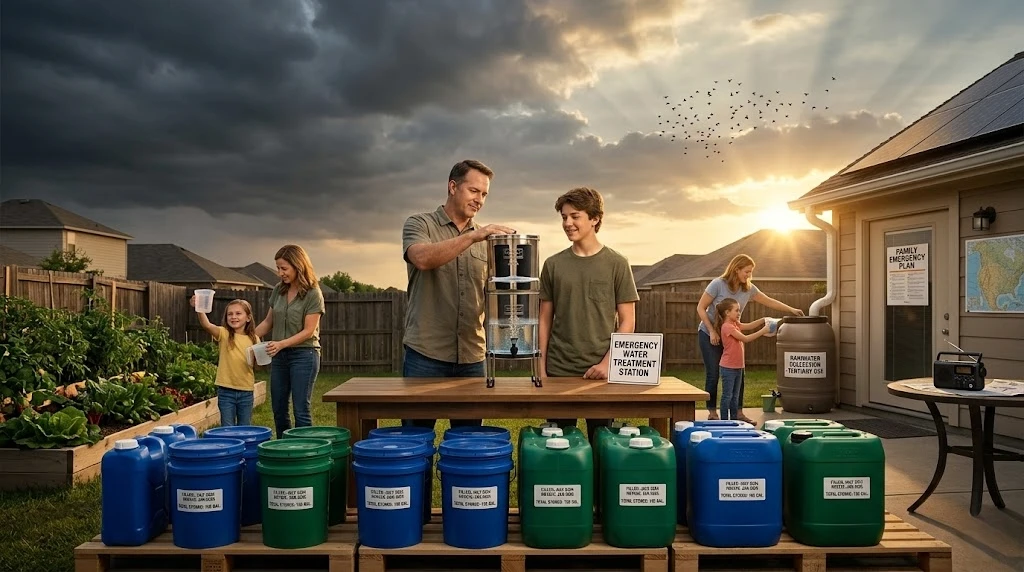
Primary: Stored water in food-grade containers — your immediate, no-effort supply for the first 72 hours to two weeks.
Secondary: Filtration and purification capability — a quality gravity filter (Berkey, Sawyer, LifeStraw) that can process water from local sources (streams, rainwater, pool water) into safe drinking water.
Tertiary: Knowledge and improvisation — understanding how to collect rainwater, how to solar disinfect water (SODIS method), and how to construct a basic sand/charcoal filter as a last resort.
Each layer compensates for the failure of the one before it. Together, they create a system that doesn’t have a single point of failure.
Tools and Products That Eliminate Human Error
The most dangerous element in any water storage system is inconsistency — the rotation that gets skipped, the container that doesn’t get sanitized, the treatment that gets forgotten. The right tools automate safety:
- Pre-measured water treatment packets eliminate dosing errors
- Dated label systems remove the “I think I filled this six months ago” guesswork
- Dedicated storage racks keep containers off the floors and organized by rotation date
- Water testing kits provide objective confirmation rather than hopeful assumptions
Preparedness isn’t about perfection. It’s about building systems that work even when you’re stressed, distracted, or operating in the dark — literally.
FAQ
“Wait — does water actually go bad? I thought it was just water.”
The water molecule itself is stable, but the container, treatment, and storage environment all degrade over time. What you’re drinking after a year in a hot garage isn’t the same as what you put in.
“I’ve been using old juice bottles. Is that really that dangerous?”
For short-term storage (a few weeks), probably fine. For long-term emergency storage, yes — residual sugars and thin walls create real contamination risk over months.
“My garage is the only space I have. What do I do?”
Use opaque, food-grade HDPE containers. Add insulation around them (moving blankets, foam panels). Keep them away from chemicals and off the floor. Shorten your rotation cycle to every three months. It’s not ideal, but it’s manageable.
“How do I know if my stored water is safe to drink right now?”
Smell it, look at it, and if you have any doubt, treat it with bleach before drinking. A coliform test kit gives you objective confirmation.
“Is a Berkey filter enough on its own without stored water?”
No. Filters require a water source to process. In a scenario where municipal water is cut off and local sources are unavailable, you need stored water as your primary supply. Filters are your secondary layer, not your first.
“What’s the single most important change I can make today?”
Label every container you currently have with the date it was filled. Then set a calendar reminder for six months from now. That one habit closes more gaps than any gear purchase.
Your Water Supply Is Either an Asset or a Liability — Right Now
You’ve just learned what most people won’t discover until it’s too late. The water sitting in your storage right now is either a genuine safety net or a false one — and the difference comes down to the details covered in this guide.
The next step isn’t complicated. It’s an audit. Walk to wherever your water is stored. Check the containers. Check the dates. Check the location. Ask the hard questions this article just taught you to ask.
Because the families who survive disruptions well aren’t the ones who bought the most gear. They’re the ones who built systems that actually work — and then verified them before they needed them.
PRODUCTS / TOOLS / RESOURCES
What Actually Works — Tested, Trusted, Recommended
These aren’t affiliate recommendations dressed up as advice. They’re the tools that consistently appear in serious preparedness communities because they solve real problems reliably.
For Storage Containers:
- Reliance Aqua-Tainer 7-Gallon— The workhorse of home water storage. Stackable, food-grade HDPE, spigot-equipped, and built to last a decade with proper care. Around $20. Worth every cent.
- WaterBOB Emergency Bathtub Bladder — For rapid pre-storm filling. Holds 100 gallons in your bathtub, keeps it clean and accessible. A brilliant single-use solution for hurricane or flood prep.
- 55-Gallon Food-Grade Drum— For serious long-term storage. Requires a hand pump or siphon for access, but the capacity-to-cost ratio is unmatched for families storing 30+ days of water.
For Treatment:
- Aquamira Water Preserver Concentrate — Extends the life of stored water to 5 years. Specifically formulated for long-term storage, unlike bleach, which dissipates over time.
- Potable Aqua Water Purification Tablets — Compact, reliable, and effective for treating water from secondary sources. Keep a bottle in every emergency kit.
For Filtration (Secondary Layer):
- Berkey Gravity Water Filter — The gold standard for home filtration. Removes bacteria, viruses, heavy metals, and chemical contaminants. Works without electricity or pressure. An investment that pays for itself in peace of mind.
- Sawyer Squeeze Filter— Lightweight, portable, and rated for one million gallons. Perfect for bug-out bags or as a backup to your primary storage.
For Testing:
- WaterSafe Well Water Test Kit— Detects bacteria, lead, pesticides, nitrates, and pH. Gives you objective data rather than hopeful assumptions about your stored water quality.
For Organization:
- Gorilla Rack Heavy-Duty Shelving — Keeps containers elevated, organized, and accessible. Rated for 2,000 lbs. The structural backbone of a serious storage setup.