
Hey there! Some links on this page may be affiliate links which means that, if you choose to make a purchase, I may earn a commission at no extra cost to you. I greatly appreciate your support. Read the full disclosure here.
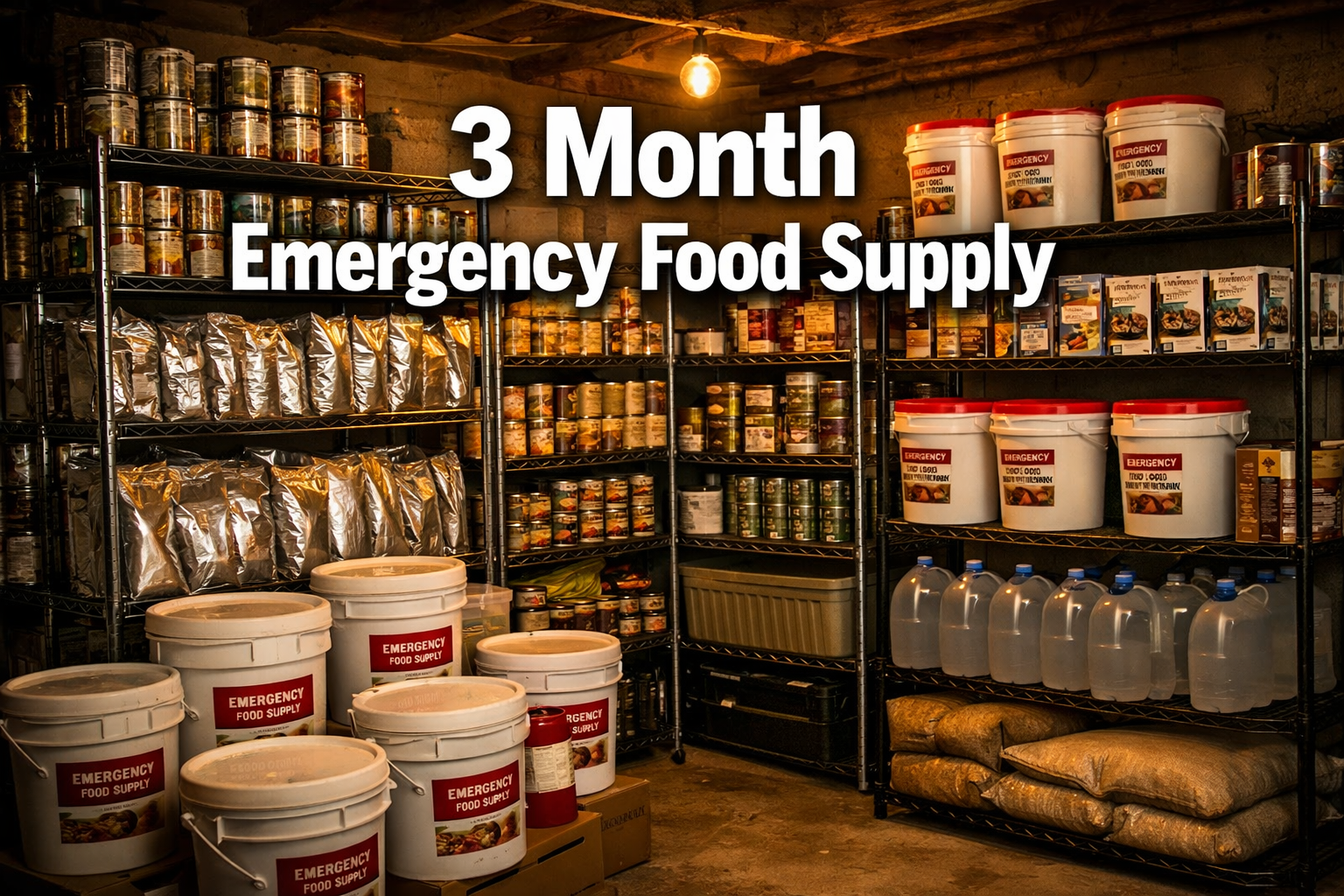
A 3 month emergency food supply is a stockpile of shelf-stable food and water designed to sustain one or more people for 90 days without access to grocery stores or outside resources. Building one requires calculating caloric needs per person, selecting the right mix of food types, and storing everything properly to maximize shelf life. For most households, a solid 90-day supply costs between $300 and $900 per person, depending on food quality and storage method.
Key Takeaways
- 🥫 A 3 month emergency food supply requires roughly 2,000 calories per person per day, totaling approximately 180,000 calories per adult over 90 days.
- 📦 The best supplies combine freeze-dried foods, canned goods, and dry bulk staples like rice, beans, and oats.
- 💧 Water is as critical as food: store at least 1 gallon per person per day (90 gallons minimum for one person over 90 days).
- 🌡️ Proper storage conditions (cool, dark, dry) can extend shelf life by years and prevent costly spoilage.
- 💰 Budget-conscious preppers can build a 90-day supply for as little as $5–$10 per person per day by prioritizing bulk staples.
- 🔄 Rotating your stock using a first-in, first-out (FIFO) system prevents waste and keeps your supply fresh.
- 🧾 A written meal plan and inventory list are non-negotiable for a functional emergency food cache.
- ⚠️ Dietary restrictions, medications, and infant or elderly needs must be factored in before purchasing anything.
- 🏠 Space planning matters: a 90-day supply for a family of four can occupy 20–40 cubic feet of storage space.
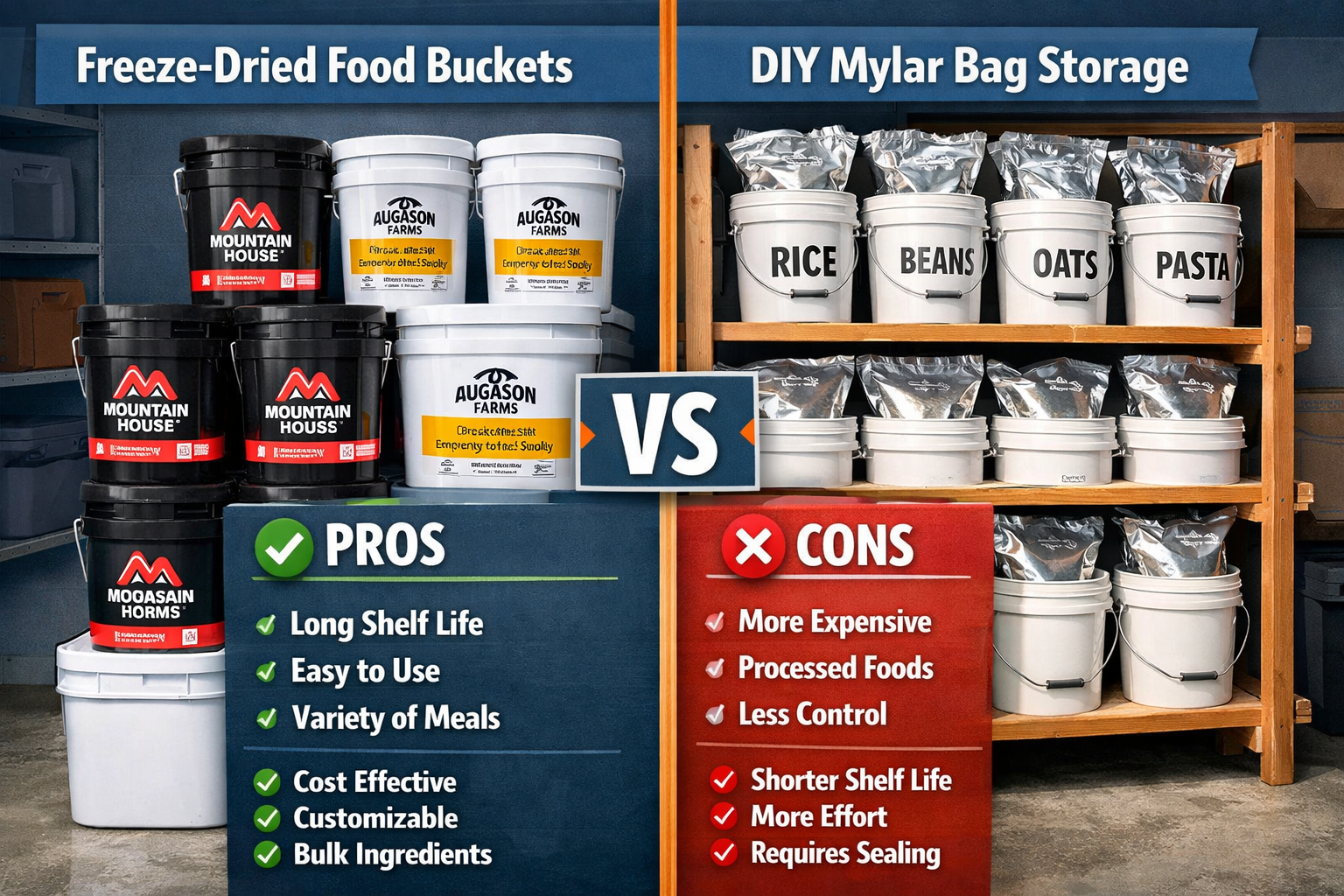
- 🛒 Commercial pre-packaged kits (like those from Augason Farms or Mountain House) offer convenience but cost more per calorie than DIY builds.
What Exactly Is a 3 Month Emergency Food Supply?
A 3 month emergency food supply is a curated, self-sufficient stockpile of food, water, and related supplies intended to keep a household fed for 90 consecutive days without resupply. It goes well beyond the standard FEMA recommendation of a 72-hour kit and is considered the baseline for serious preparedness planning.
The 90-day threshold matters because most regional disasters, economic disruptions, or supply chain failures that affect food access tend to resolve within three months. Having a full quarter-year of provisions means a household can weather job loss, natural disasters, extended illness, or infrastructure failure without depending on emergency aid.
Who this is for: Survivalists, preppers, homesteaders, and any household that wants genuine food security rather than a false sense of preparedness from a few cans in the pantry.
Who should think carefully before building one:
- Renters with very limited storage space (solutions exist, but require creative planning)
- People with highly specialized medical diets (consult a dietitian before building out)
- Households with infants who depend on formula (formula has short shelf life; plan accordingly)
How Many Calories Does a 3 Month Emergency Food Supply Actually Need?
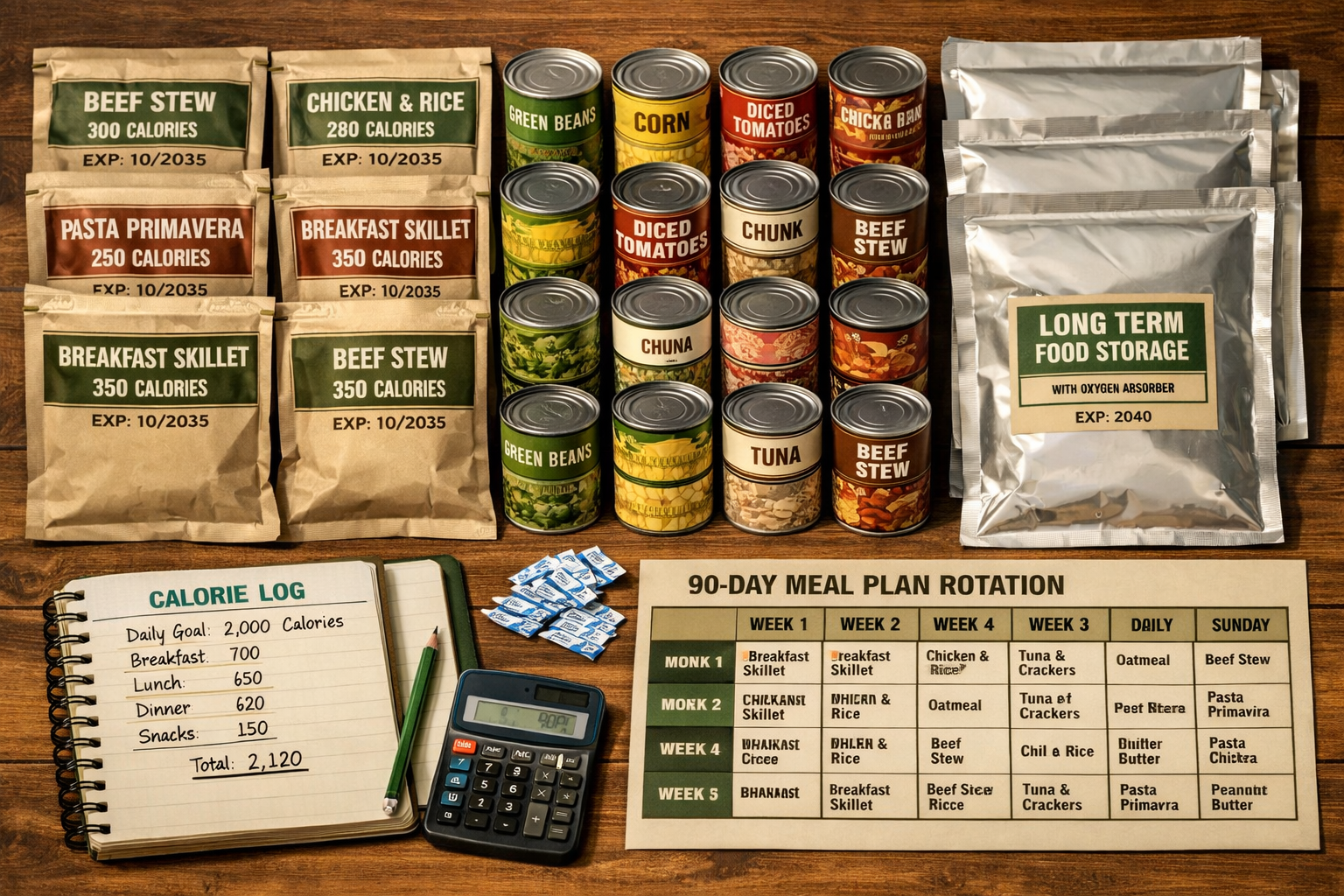
The math is straightforward: most adults need 1,800 to 2,500 calories per day to maintain basic function. Use 2,000 calories as the working baseline for planning.
Per person, 90-day calorie targets:
| Activity Level | Daily Calories | 90-Day Total |
|---|---|---|
| Sedentary adult | 1,800 | 162,000 |
| Average adult | 2,000 | 180,000 |
| Active adult / manual labor | 2,500 | 225,000 |
| Child (ages 4–12) | 1,200–1,600 | 108,000–144,000 |
| Nursing mother | 2,500+ | 225,000+ |
Beyond calories, nutritional balance matters. A supply built entirely on white rice will keep someone alive but not healthy. Aim for a mix that covers:
- Carbohydrates: Rice, oats, pasta, cornmeal
- Protein: Canned meat, dried beans, lentils, freeze-dried eggs
- Fats: Cooking oil, peanut butter, coconut oil (longer shelf life than vegetable oil)
- Vitamins and minerals: Canned fruits and vegetables, multivitamins as backup
- Comfort foods: Coffee, tea, sugar, salt, spices (critical for morale during extended emergencies)
Common mistake: Many first-time preppers stock calories without tracking macronutrients. A 90-day supply heavy in carbs and light in protein leads to muscle loss and poor immune function under stress.
What Foods Should Go Into a 3 Month Emergency Food Supply?
 The best 90-day food stockpile balances shelf life, caloric density, nutritional value, and ease of preparation. No single food type covers all four criteria, so a layered approach works best.
Tier 1 — Bulk dry staples (cheapest per calorie, longest shelf life):
- White rice (25–30 year shelf life when sealed in mylar with oxygen absorbers)
- Dried beans and lentils (up to 30 years sealed)
- Rolled oats (up to 30 years sealed)
- Pasta (5–10 years in original packaging; longer in mylar)
- Cornmeal and flour (2–5 years; shorter than most staples)
Tier 2 — Canned goods (convenient, no cooking required for some):
- Canned meat: tuna, salmon, chicken, sardines
- Canned vegetables: corn, green beans, tomatoes, potatoes
- Canned fruit: peaches, pears, mandarin oranges (morale booster)
- Canned beans (backup to dry beans; ready to eat)
- Soups and stews
Tier 3 — Freeze-dried and dehydrated foods (best taste and nutrition, higher cost):
- Freeze-dried fruits and vegetables
- Freeze-dried meat and dairy
- Complete freeze-dried meal pouches (Mountain House, Augason Farms, Wise Company)
Tier 4 — Fats, condiments, and supplements:
- Coconut oil or ghee (longer shelf life than standard vegetable oils)
- Salt, sugar, honey (honey has indefinite shelf life)
- Multivitamins (fills nutritional gaps)
- Baking soda and baking powder
Choose freeze-dried if: budget allows and you want maximum nutrition retention with minimal prep. Choose bulk staples if: cost is the primary constraint and you’re comfortable cooking from scratch.
How Much Does a 3 Month Emergency Food Supply Cost?
Cost varies widely based on approach. A realistic range for one adult is $300 to $900 for a 90-day supply.
Budget breakdown by approach:
| Approach | Estimated Cost (1 Adult, 90 Days) | Notes |
|---|---|---|
| DIY bulk staples only | $150–$300 | Lowest cost, requires cooking skills |
| Mixed DIY + canned goods | $300–$500 | Most practical for most households |
| Commercial pre-packaged kits | $600–$1,200+ | Convenient, higher cost per calorie |
| Premium freeze-dried only | $900–$1,500+ | Best quality, highest cost |
Money-saving strategies:
- Buy in bulk from warehouse stores (Costco, Sam’s Club)
- Watch for sales on canned goods and stock up aggressively
- Build the supply over 3–6 months rather than all at once
- Prioritize staples first, then add variety as budget allows
Edge case: Households in high-cost-of-living areas may find commercial kits competitive with local bulk prices. Always compare cost per calorie, not cost per package.
How Do You Store a 3 Month Emergency Food Supply Properly?
Proper storage is what separates a functional emergency food supply from a pile of spoiled goods. The enemies of long-term food storage are heat, moisture, light, oxygen, and pests.
Core storage rules:
- Temperature: Keep storage area below 70°F (21°C) if possible. Every 10°F increase roughly halves shelf life for most foods.
- Darkness: Light degrades nutrients and accelerates spoilage. Opaque containers or dark storage rooms are essential.
- Low humidity: Aim for below 15% relative humidity in storage areas. Silica gel packets help in humid climates.
- Oxygen control: Use mylar bags with oxygen absorbers for bulk dry goods. This is the single most impactful step for long-term storage.
- Pest prevention: Store in hard-sided containers (food-grade buckets with gamma-seal lids). Never rely on original cardboard packaging alone.
FIFO rotation system:
Label every item with the purchase date. New items go to the back; oldest items come from the front. Consume and replace on a rolling basis so nothing expires unused.
Space planning for a family of four:
A 90-day supply for four adults requires roughly 25–40 cubic feet of storage space. That’s equivalent to a 4x4x2 foot section of shelving, which fits in most closets, garages, or basements.
What’s the Best Way to Build a 3 Month Emergency Food Supply on a Budget?
Building a 90-day supply doesn’t require a large upfront investment. The most effective approach is a phased build over several months, starting with the highest-calorie, lowest-cost staples.
Phase 1 (Month 1): Foundation
- 50 lbs white rice (~$25–$40)
- 20 lbs dried beans and lentils (~$20–$30)
- 10 lbs rolled oats (~$10–$15)
- 1 gallon cooking oil (~$8–$12)
- Salt, sugar, basic spices (~$15–$25)
Phase 2 (Month 2): Protein and variety
- 24–36 cans of tuna or canned chicken (~$30–$60)
- 24 cans of vegetables (~$20–$35)
- 12 cans of fruit (~$15–$25)
- Peanut butter, 4–6 jars (~$15–$25)
- Multivitamins, 3-month supply (~$15–$30)
Phase 3 (Month 3): Comfort, redundancy, and gaps
- Coffee, tea, hot cocoa
- Freeze-dried meals for variety and morale
- Any identified nutritional gaps
- Additional water storage or filtration equipment
This phased approach keeps monthly spending manageable, typically $100–$200 per month for one adult, while building toward a complete 3 month emergency food supply systematically.
Do You Need Special Equipment for a 3 Month Emergency Food Supply?
Yes, and the right equipment makes the difference between a supply that lasts and one that fails. The core equipment list is short but non-negotiable.
Essential storage equipment:
- 5-gallon food-grade buckets with gamma-seal lids: For bulk dry goods. Gamma lids allow easy access without tools.
- Mylar bags (1-gallon and 5-gallon): Line buckets for maximum oxygen and moisture protection.
- Oxygen absorbers (300cc–2000cc): Placed inside sealed mylar bags to remove residual oxygen.
- Heat sealer or clothing iron: To seal mylar bags.
- Heavy-duty shelving: Wire or metal shelving rated for 200+ lbs per shelf.
Useful additions:
- Silica gel desiccant packets (humidity control)
- Permanent markers and label tape (inventory management)
- Inventory spreadsheet or app (Pantry Check, OurGroceries)
- Manual can opener (at least two)
- Propane camp stove and fuel (if grid-down cooking is a concern)
What Are the Most Common Mistakes When Building a 3 Month Emergency Food Supply?
Most preppers make at least one of these mistakes on their first build. Knowing them in advance saves money and frustration.
Mistake 1: Storing foods the family won’t actually eat.
A 90-day supply of unfamiliar foods creates stress and poor nutrition compliance during an already stressful situation. Stock what the household actually eats and enjoys.
Mistake 2: Ignoring water.
Food is useless without water for cooking and drinking. Many preppers over-invest in food and under-invest in water storage. Minimum: 1 gallon per person per day, plus a water filtration backup (Sawyer Squeeze, Berkey filter, or similar).
Mistake 3: No meal plan.
Storing random quantities of food without a meal plan leads to imbalanced nutrition and running out of key ingredients mid-supply. A written 90-day meal rotation solves this.
Mistake 4: Poor storage conditions.
Storing food in a hot garage or damp basement dramatically shortens shelf life. A supply stored at 85°F may last a fraction of its rated shelf life.
Mistake 5: Buying everything at once.
Impulse-buying a full 90-day supply in one trip often means overspending, poor variety, and overlooking critical gaps. The phased approach consistently outperforms the single-purchase approach.
FAQ: 3 Month Emergency Food Supply
Q: How much space does a 3 month emergency food supply take up for one person?
A: Roughly 8–12 cubic feet of storage space for one adult. That’s about the size of a large closet shelf section or two standard kitchen pantry shelves.
Q: Can I buy a pre-made 3 month emergency food supply kit?
A: Yes. Companies like Augason Farms, Mountain House, and My Patriot Supply sell 90-day kits. They’re convenient but cost more per calorie than DIY builds. Always check the actual calorie count on kits, as some are marketed as “90-day supplies” but only provide 1,200–1,500 calories per day.
Q: How long do the foods in a 90-day supply actually last?
A: Properly sealed white rice and dried beans can last 25–30 years. Canned goods typically last 3–5 years (often longer if stored cool). Freeze-dried foods range from 10–30 years depending on the product and packaging.
Q: Does a 3 month emergency food supply need to be refrigerated?
A: No. A properly built 90-day supply relies entirely on shelf-stable foods that require no refrigeration. This is a core design principle, not an afterthought.
Q: What about special dietary needs like gluten-free or diabetic diets?
A: Build the supply around the household’s actual dietary requirements from the start. Gluten-free preppers should emphasize rice, potatoes, and certified GF oats. Diabetics should prioritize lower-glycemic options like legumes and limit refined carbohydrates in the stockpile.
Q: How do I know if my stored food has gone bad?
A: Signs of spoilage include bulging or rusted cans, off odors when opened, visible mold, or unusual discoloration. When in doubt, throw it out. Properly stored and rotated food rarely spoils before its use-by date.
Q: Should I tell people about my emergency food supply?
A: Operational security (OPSEC) is a real consideration in the prepper community. Most experienced preppers keep their supply details private to avoid becoming a target during a genuine emergency.
Q: Is a 3 month supply enough, or should I aim for more?
A: Three months is a strong baseline and the recommended starting point. Many serious preppers extend to 6 months or a full year once the 90-day foundation is solid. Build to 3 months first, then reassess.
Q: What’s the single most important first step?
A: Calculate your household’s daily calorie needs, multiply by 90, and identify the gap between what’s currently in your pantry and what you need. That gap number drives every purchasing decision.
Q: Can I use a 3 month emergency food supply for everyday cooking?
A: Absolutely. In fact, integrating the supply into daily cooking through a FIFO rotation system is the best way to keep it fresh, reduce waste, and stay familiar with the foods in the stockpile.
Products, Tools, and Resources
Building a 3 month emergency food supply is easier with the right tools and sources. These are practical recommendations based on what experienced preppers consistently use.
Storage containers:
- Gamma Seal Lids (by Gamma2) are the standard for food-grade bucket access. They thread on and off without tools and create an airtight seal.
- 5-gallon HDPE food-grade buckets from restaurant supply stores or Home Depot are often cheaper than those sold specifically as “prepper” products.
Mylar bags and oxygen absorbers:
- PackFreshUSA and Wallaby are well-regarded sources for mylar bags. Buy 1-gallon bags for variety items and 5-gallon bags for bulk staples.
- 300cc oxygen absorbers work for 1-gallon bags; use 2000cc for 5-gallon bags.
Commercial freeze-dried options:
- Mountain House is consistently rated for taste and has verified 30-year shelf life on many products.
- Augason Farms offers good value on bulk cans of single ingredients (freeze-dried vegetables, eggs, milk).
- My Patriot Supply sells complete 3-month kits with detailed calorie counts per day.
Water storage and filtration:
- WaterBOB(bathtub bladder, 100 gallons) for emergency water capture
- Sawyer Squeeze or LifeStraw Mission for portable filtration
- Berkey countertop filter for home-based gravity filtration
Planning tools:
- FEMA’s Ready.gov food storage calculator for baseline household needs
- Pantry Check (iOS/Android app) for inventory tracking
- The LDS Preparedness Manual (free PDF) for detailed meal planning frameworks used by one of the most experienced preparedness communities in the world
Conclusion: Turn Planning Into Action
A 3 month emergency food supply is not a luxury for extreme survivalists. It’s a practical, achievable form of household insurance that protects against job loss, natural disasters, supply chain disruptions, and public health emergencies. In 2026, with global supply chains still showing vulnerability and extreme weather events becoming more frequent, the case for a 90-day food reserve has never been more straightforward.
Actionable next steps:
- This week: Calculate your household’s daily caloric needs and audit what’s already in your pantry.
- This month: Purchase Phase 1 staples (rice, beans, oats, oil, salt) and proper storage containers.
- Over 90 days: Complete Phases 2 and 3, adding protein, variety, and comfort foods.
- Ongoing: Implement FIFO rotation, maintain a written inventory, and review the supply every 6 months.
The hardest part of building a 3 month emergency food supply is starting. Every can on the shelf today is one less problem to solve during a crisis.
References
- FEMA. (2021). Build a Kit. Ready.gov. https://www.ready.gov/kit
- The Church of Jesus Christ of Latter-day Saints. (2017). Provident Living: Food Storage. https://www.churchofjesuschrist.org/topics/food-storage
- United States Department of Agriculture (USDA). (2020). Dietary Guidelines for Americans 2020–2025. https://www.dietaryguidelines.gov
- Utah State University Extension. (2015). Shelf Life of Foods. https://extension.usu.edu/preserve-the-harvest/research/food-storage-shelf-life
- Mountain House. (2023). Shelf Life Testing and Guarantees. https://www.mountainhouse.com/pages/shelf-life