

Hey there! Some links on this page may be affiliate links which means that, if you choose to make a purchase, I may earn a commission at no extra cost to you. I greatly appreciate your support. Read the full disclosure here.
Imagine waking up to silence.
Not the comfortable silence of a quiet morning — but the wrong kind of silence. No hum from the refrigerator. No glow from the clock on the microwave. No notification sounds from your phone. You reach for the light switch and nothing happens. You look outside and see your neighbors doing the same thing — standing in their doorways, confused, checking devices that no longer respond.
Now imagine that silence lasting not for hours, but for weeks. Months. Possibly years.
This is not a science fiction scenario. It is a documented, assessed, and officially acknowledged threat — one that the United States EMP Commission described as capable of causing “catastrophic consequences” for modern civilization. It is the emergency that most preppers are least prepared for, and the one that standard 72-hour emergency kits are completely inadequate to address.
This guide is the system that changes that.
The Ultimate Emergency Preparedness Guide For Preppers
What an EMP Actually Does — And Why Nothing Else Compares
An electromagnetic pulse is a burst of electromagnetic energy that can damage, degrade, or destroy electronic equipment over a wide area. Unlike most emergencies — which are localized, temporary, and followed by organized recovery — an EMP event can simultaneously destroy the electronic infrastructure across an entire region or continent, eliminating the very systems needed to organize and execute recovery.
This is what makes EMP categorically different from every other emergency scenario. A hurricane destroys a region, but the rest of the country can send aid. A power outage affects a city, but the grid can be restored from functioning infrastructure elsewhere. An EMP attack or major solar storm can destroy the infrastructure needed for recovery across an area so vast that there is no functioning “elsewhere” to send help from.
The physics of electromagnetic pulse — three pulses, three different ways to destroy everything:
E1 pulse: The fastest component — occurring in nanoseconds. It induces extremely high voltages in electronic circuits, destroying semiconductors, microprocessors, and integrated circuits. This is the component that destroys modern electronics. It cannot be blocked by surge protectors. Not even close.
E2 pulse: Similar to lightning in its characteristics. Occurs over microseconds to milliseconds. Standard lightning protection can mitigate some E2 effects, but E2 typically follows E1 so quickly that any E1-damaged protection systems are already non-functional.
E3 pulse: The slowest component — occurring over seconds to minutes. Similar to a geomagnetic storm. Induces currents in long conductors (power lines, pipelines, telephone cables), potentially destroying transformers and other large infrastructure components. This is the pulse that takes down the grid itself.
The short version: An EMP generates three pulse components — E1 (destroys electronics in nanoseconds), E2 (similar to lightning), and E3 (destroys large infrastructure like transformers). The primary protection against EMP is a Faraday cage — a conductive enclosure that blocks electromagnetic fields. Standard surge protectors provide no protection against EMP. None.
Key Takeaways:
– An EMP can simultaneously disable electronics and critical infrastructure over vast regions, causing extended grid failures lasting months to years, far beyond typical emergency scenarios.
– Modern electronics, vehicles, and medical devices are highly vulnerable to the fast E1 pulse of an EMP, making protection via Faraday cages essential for critical gear and backup components.
– Immediate actions after an EMP include securing water supplies before pressure drops, managing perishable food, and activating pre-planned communications using protected devices like ham radios and hand-crank NOAA radios.
– Long-term survival depends on renewable off-grid power systems with EMP-hardened components, sustainable water procurement methods, food production, preservation capabilities, and strong community support networks.
– Preparedness requires more than 72-hour kits; it involves building layered protection strategies, testing equipment, acquiring key knowledge, and having practical tools and plans tailored to your environment and needs.
How Real Is the EMP Threat — And Why Isn’t Anyone Talking About It?
 The EMP threat is not theoretical. It is documented, assessed, and officially acknowledged at the highest levels of government — which makes the lack of public awareness and preparation all the more striking.
What the EMP Commission actually concluded:
The Congressional EMP Commission, established in 2001 and reconvened in 2017, produced two landmark reports on the EMP threat. Their conclusions were unambiguous:
- A nuclear EMP attack could render the United States electrical grid non-functional for months to years
- The cascading failures from grid collapse would affect water systems, food distribution, transportation, communications, and medical care simultaneously
- The Commission estimated that without adequate preparation, a significant percentage of the US population could die within the first year following a major EMP event due to the collapse of life-sustaining infrastructure
Read that last point again. Not inconvenienced. Not displaced. Dead — from the collapse of the systems that keep modern people alive.
The Carrington Event — the historical benchmark that should terrify us:
In September 1859, a massive solar coronal mass ejection struck Earth’s magnetic field, producing the most powerful geomagnetic storm in recorded history. Telegraph systems across North America and Europe failed. Telegraph operators reported receiving electric shocks. Some telegraph systems continued operating even after being disconnected from their power sources, powered entirely by the induced current from the geomagnetic storm.
If a Carrington-scale event occurred today, the effects would be catastrophically different. Modern civilization runs on electronics that didn’t exist in 1859. The 2012 near-miss — a solar storm that passed through Earth’s orbit just nine days after Earth had passed that point — was estimated by NASA scientists to have been of Carrington-scale magnitude. Nine days. That’s the margin between business as usual and civilizational disruption.
Nation-state EMP capabilities:
Multiple nation-states possess nuclear EMP capability — the ability to detonate a nuclear weapon at high altitude (above 30 kilometers) to generate an E1 pulse affecting a wide geographic area. A single nuclear weapon detonated at 400 kilometers altitude over the center of the continental United States would generate an E1 pulse covering the entire country. One weapon. One detonation. The entire country.
Grid vulnerability without EMP:
The electrical grid is vulnerable to failure through multiple non-EMP pathways: cyber attacks on grid control systems, physical attacks on critical transformer substations, extreme weather events, and simple infrastructure aging. The grid’s vulnerability to these threats means that grid failure preparedness is valuable regardless of whether an EMP event ever occurs. You don’t need to believe in EMP to need this guide.
What Survives an EMPattack— And What Gets Destroyed
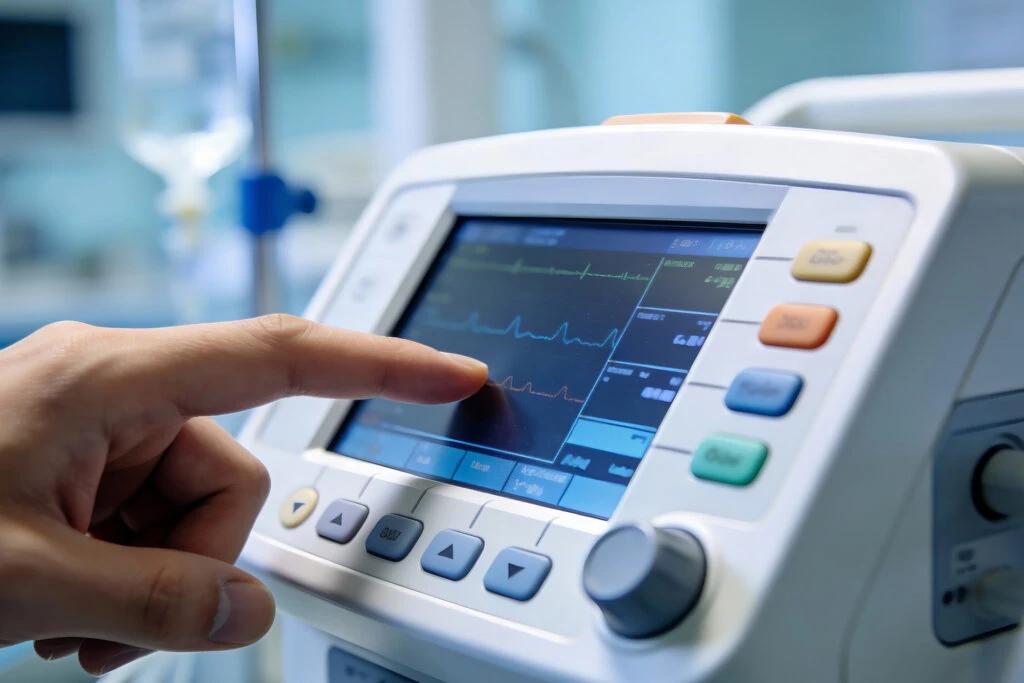 Understanding the EMP vulnerability spectrum is essential for effective preparation. Not all electronics are equally vulnerable, and not all EMP events are equally powerful.
Electronics most vulnerable to EMP:
- Modern vehicles with electronic ignition systems and computerized controls (manufactured after approximately 1980)
- Smartphones, tablets, and computers
- Modern solar inverters and charge controllers
- Smart home devices and IoT equipment
- Modern medical devices (pacemakers, insulin pumps, CPAP machines)
- Grid-connected power systems
- Communication infrastructure (cell towers, internet routers, satellite systems)
Electronics less vulnerable to EMP:
- Older vehicles with simple ignition systems (pre-1980, carbureted engines)
- Simple electrical devices without microprocessors (basic motors, heating elements)
- Vacuum tube electronics (largely obsolete but highly EMP-resistant)
- Electronics stored in properly constructed Faraday cages
The medical device vulnerability — the gap nobody talks about:
The EMP vulnerability of medical devices is the preparedness gap that receives the least attention and carries the most immediate life-threatening consequences. Pacemakers, insulin pumps, CPAP machines, home dialysis equipment, and other life-sustaining medical devices are all potentially vulnerable to EMP damage. People who depend on these devices need specific, individualized preparedness plans that go beyond general EMP preparation. This is not a footnote. For millions of people, it is the entire conversation.
Vehicle vulnerability:
Modern vehicles are significantly more vulnerable to EMP than older vehicles. The EMP Commission’s testing found that some modern vehicles would experience engine stall during an EMP event, while others would experience permanent damage to electronic control systems. Older vehicles with simple ignition systems and no electronic controls are significantly more EMP-resistant. That beat-up 1975 pickup truck your neighbor refuses to sell suddenly looks a lot more valuable.
Faraday Cages — The Complete Guide to Actually Protecting Your Electronics
 A Faraday cage is a conductive enclosure that blocks electromagnetic fields. Named after physicist Michael Faraday, who demonstrated the principle in 1836, a Faraday cage works by distributing the electromagnetic charge around the exterior of the enclosure, preventing it from penetrating to the interior.
How a Faraday Cage Works — The Physics Without the Jargon
When an electromagnetic field encounters a conductive enclosure, the free electrons in the conductor redistribute themselves to cancel the field inside the enclosure. The effectiveness of this shielding depends on the conductivity of the material, the thickness of the material, the frequency of the electromagnetic field, and the completeness of the enclosure — gaps and openings reduce effectiveness significantly.
For EMP protection, the key requirements are:
- Complete enclosure with no gaps larger than the wavelength of the EMP frequencies being blocked
- Conductive material (metal) throughout
- No direct electrical connection between the interior and exterior of the cage
DIY Faraday Cage Construction — What Actually Works
Option 1 — Metal garbage can with lid:
A galvanized steel garbage can with a tight-fitting metal lid is one of the most commonly recommended DIY Faraday cages. Construction:
- Line the interior with cardboard, foam, or other non-conductive material to prevent direct contact between stored electronics and the metal walls
- Ensure the lid fits tightly — gaps reduce effectiveness
- Do not drill holes in the can for any reason
- Store electronics inside non-conductive bags or boxes within the can
Option 2 — Ammo cans:
Military surplus ammunition cans are excellent Faraday containers. They are made of steel, have tight-fitting lids with rubber gaskets, and are designed to be airtight. The rubber gasket actually reduces EMP effectiveness slightly (rubber is non-conductive), but the overall shielding is still significant. They’re also cheap, durable, and stackable.
Option 3 — Mylar bags:
Heavy-duty Mylar bags provide some EMP shielding when properly sealed. They are not as effective as metal enclosures but provide meaningful protection for small electronics. Multiple layers improve effectiveness. Think of them as a supplement to metal enclosures, not a replacement.
Option 4 — Dedicated Faraday rooms:
For comprehensive protection of larger electronics (solar charge controllers, ham radios, backup computers), a dedicated Faraday room — a room lined with conductive material — provides the most complete protection. This is a significant construction project but provides the highest level of EMP protection available to civilians.
What to Store in Your Faraday Cage — The Priority List
Tier 1 — Life-critical electronics:
- Backup medical devices (if applicable)
- Emergency medications requiring electronic monitoring
- Backup insulin pump supplies
Tier 2 — Communication electronics:
- Ham radio transceiver and accessories
- NOAA emergency weather radio (hand-crank backup)
- Walkie-talkies for local communication
- Shortwave radio receiver
Tier 3 — Power management electronics:
- Spare solar charge controller
- Backup inverter
- Battery management systems
Tier 4 — Information and navigation:
- Backup laptop or tablet with downloaded offline maps, medical references, and survival guides
- GPS device (backup to paper maps)
- External hard drives with critical data
Tier 5 — Essential tools:
- Backup flashlights and headlamps
- Backup radio equipment
- Spare electronic components for critical systems
Testing Your Faraday Cage — Because Untested Is Unprotected
A Faraday cage that hasn’t been tested is a Faraday cage that may not work. Simple testing methods:
Cell phone test: Place a cell phone inside the closed Faraday cage and call it from another phone. If the call goes through, the cage is not providing adequate shielding. If the call fails to connect, the cage is blocking the cell signal — a good indicator of EMP shielding effectiveness, though not a perfect test.
Radio test: Place an AM radio inside the closed cage, tuned to a strong local station. If you can hear the station through the cage walls, the shielding is inadequate. Simple, free, and takes two minutes.
The First 72 Hours After Grid Failure — What Actually Happens
 The first 72 hours following a major EMP event or grid failure are the most critical — and the most chaotic. Understanding the cascade of failures that follows grid collapse allows you to prepare for each stage before it arrives.
The Cascade of Failures — Hour by Hour
Hour 0 to 1: The EMP event occurs. Electronics fail. Vehicles stall. Communication systems go dark. The immediate reaction is confusion — most people will not immediately understand what has happened. This is the window where calm, prepared people have an enormous advantage over everyone else.
Hours 1 to 6: The scope of the event becomes apparent. Emergency services are overwhelmed and largely non-functional — their vehicles and communication systems are also affected. Hospitals switch to backup generators (if those generators survived the EMP). Grocery stores cannot process transactions. Gas stations cannot pump fuel.
Hours 6 to 24: Water pressure begins dropping in most urban areas as electric pumps fail. Hospitals begin running out of generator fuel. Food in refrigerators and freezers begins warming. People begin moving — some toward perceived safety, some toward perceived resources. The roads become complicated.
Hours 24 to 72: Water systems fail in most areas. Hospitals begin making impossible triage decisions. Food spoilage becomes significant. Social order begins deteriorating in dense urban areas. The realization that this is not a temporary outage begins to set in — and that realization changes people’s behavior in ways that are difficult to predict and dangerous to be unprepared for.
Water Systems and Grid Failure — The Clock Is Already Running
Municipal water systems depend on electric pumps to maintain pressure. When the grid fails, water pressure drops — typically within 12 to 24 hours in most urban systems. The water that remains in pipes and building systems is finite and will not be replenished until power is restored.
Immediate water actions — do these before anything else:
- Fill every available container immediately — bathtubs, pots, buckets, WaterBOB bathtub bladders
- Fill your water heater tank (if not already full) — it holds 30 to 80 gallons of clean water
- Identify your nearest natural water sources and the purification methods you’ll use
Water purification without electricity:
- Boiling (requires fire — wood stove, camp stove, or open fire)
- Chlorine dioxide tablets (most effective chemical treatment)
- Gravity-fed water filters (Berkey systems require no electricity)
- Solar disinfection (SODIS) — filling clear plastic bottles and leaving in direct sunlight for 6+ hours
Food Security in the First 72 Hours
Immediate food actions:
- Consume refrigerated foods first — they will spoil within 4 hours without power
- Consume frozen foods second — they will remain safe for 24 to 48 hours in a full freezer
- Transition to shelf-stable foods from your emergency supply
Cooking without electricity:
- Propane camp stove (most practical for short-term)
- Wood-burning rocket stove (most sustainable for long-term)
- Solar oven (effective in sunny conditions, no fuel required)
- Open fire (requires fuel management and fire safety)
Communication When Infrastructure Fails
Cell towers typically have 4 to 8 hours of backup battery power. After that, cellular communication fails. Internet infrastructure fails similarly. The communication tools that survive:
Ham radio: The most reliable long-distance communication option in a grid-down scenario. Requires a license (Technician class minimum) and equipment stored in a Faraday cage.
NOAA Weather Radio: Battery-powered or hand-crank NOAA radios can receive emergency broadcasts if any broadcast infrastructure survives.
Walkie-talkies: For local communication within a neighborhood or community.
Written communication: In a complete communication blackout, written messages and physical messengers become the primary communication method. This is not a metaphor. This is what happens.
When the Power Doesn’t Come Back — Long-Term Grid Failure Survival
 The EMP Commission’s assessment is that restoring the US electrical grid after a major EMP event could take months to years. This is because the large transformers that form the backbone of the grid are custom-manufactured, have lead times of 12 to 18 months under normal conditions, and are not stockpiled in significant quantities. An EMP event that destroys a significant number of these transformers creates a recovery timeline that extends far beyond any standard emergency preparedness framework.
Off-Grid Power Systems That Survive EMP
Solar power systems:
Modern solar panels themselves are relatively EMP-resistant — they are simple semiconductor devices without complex electronics. The vulnerable components are the charge controllers, inverters, and battery management systems. Protecting these components in Faraday cages and having backup units stored allows a solar power system to be restored after an EMP event.
EMP-hardening your solar system:
- Store backup charge controllers and inverters in Faraday cages
- Use simple, older charge controllers rather than sophisticated MPPT controllers — simpler electronics are less vulnerable
- Disconnect solar systems from the grid before a known EMP threat (geomagnetic storms can be predicted 24 to 48 hours in advance)
- Use manual disconnects to isolate components during an EMP event
Wind power:
Small wind turbines are generally more EMP-resistant than solar systems because they use simpler electrical components. The generator itself is a simple electromagnetic device; the vulnerable components are the charge controllers and inverters.
Micro-hydro power:
If your property has a stream or river with sufficient flow and head, micro-hydro power is the most EMP-resistant renewable energy option. The turbine and generator are simple mechanical and electromagnetic devices with minimal electronic components. If you have this resource, it changes your entire preparedness calculus.
Water Procurement and Purification Without Grid Power
Long-term water sources:
- Wells with hand pumps: A hand pump installed alongside an electric pump provides water access without electricity. Bison Pump and Simple Pump are the most recommended brands for deep wells.
- Rainwater harvesting: A properly designed rainwater collection system can provide significant water supply in most climates.
- Natural water sources: Streams, rivers, springs, and lakes — all requiring purification before drinking.
Long-term water purification:
- Gravity-fed ceramic filters: Berkey and similar systems filter large quantities of water without electricity.
- Boiling: Requires a reliable fuel source — wood is the most sustainable long-term option.
- Solar disinfection: Effective in sunny climates for biological contamination.
Food Production and Preservation Without Electricity
Food production:
A productive garden is the most sustainable long-term food source. Key considerations:
- Calorie-dense crops: Potatoes, sweet potatoes, winter squash, dried beans, and corn provide the most calories per square foot.
- Seed saving: Open-pollinated and heirloom varieties allow seed saving for subsequent seasons.
- Soil building: Composting and cover cropping build soil fertility without purchased inputs.
Food preservation without electricity:
- Canning: Water bath canning for high-acid foods; pressure canning for low-acid foods.
- Fermentation: Lacto-fermentation preserves vegetables without electricity or special equipment.
- Root cellaring: A cool, dark, humid space maintains root vegetables for months without refrigeration.
- Smoking and drying: Traditional preservation methods for meat and fish.
Community — The Most Important Long-Term Survival Asset
The most important long-term survival asset is not gear or supplies. It is community. Extended grid failure creates conditions where individual households cannot meet all their needs independently. Communities that organize effectively, share skills and resources, and establish mutual aid networks survive at significantly higher rates than isolated individuals.
Community preparedness priorities:
- Establish communication protocols before the emergency
- Identify the skills and resources each community member has
- Establish security and watch protocols
- Create food and water sharing systems
- Establish medical care coordination
The Complete EMP Preparedness Checklist — Build This Before You Need It
 Electronics protection:
- Galvanized steel garbage can with tight-fitting lid (primary Faraday cage)
- Ammo cans for smaller electronics
- Heavy-duty Mylar bags for additional protection
- Non-conductive lining material (cardboard, foam)
Communication:
- Ham radio transceiver (stored in Faraday cage)
- Ham radio license (Technician class minimum)
- NOAA hand-crank emergency radio (stored in Faraday cage)
- Walkie-talkies (stored in Faraday cage)
- Shortwave radio receiver (stored in Faraday cage)
Power:
- Backup solar charge controller (stored in Faraday cage)
- Backup inverter (stored in Faraday cage)
- Hand-crank generator
- Propane generator with fuel supply
- Solar panels (relatively EMP-resistant, but have backup)
Water:
- WaterBOB bathtub bladder (100-gallon emergency storage)
- Gravity-fed water filter (Berkey or equivalent)
- Chlorine dioxide tablets (large supply)
- Hand pump for well (if applicable)
- Rainwater collection system
Food:
- 6-month to 1-year food supply (shelf-stable)
- Manual can opener
- Wood-burning rocket stove or camp stove with fuel
- Pressure canner and canning supplies
- Seed bank (open-pollinated varieties)
Navigation and information:
- Paper topographic maps of your area
- Compass
- Backup laptop with offline survival references (stored in Faraday cage)
- Printed copies of critical medical information
Medical:
- 90-day supply of prescription medications
- Complete first aid kit with trauma capability
- Backup medical devices (if applicable, stored in Faraday cage)
- Wilderness first aid training
The Questions People Actually Ask About EMP and Grid Failure
Would an EMP destroy every single electronic device permanently?
Not necessarily all of them, and not all permanently. The extent of damage depends on the strength of the EMP, the distance from the source, and the specific electronics involved. Electronics stored in properly constructed Faraday cages would be protected. Simple electronics without microprocessors are less vulnerable than complex modern devices. Some electronics may experience temporary disruption rather than permanent damage. However, a major nuclear EMP or Carrington-scale solar storm could permanently destroy a significant percentage of unprotected modern electronics across a wide area. The honest answer is: you don’t want to find out the hard way.
How far does an EMP actually reach?
The range depends entirely on its source. A nuclear EMP detonated at high altitude (400 kilometers) could affect an area with a radius of approximately 2,200 kilometers — potentially covering the entire continental United States from a single detonation. A solar storm-generated geomagnetic storm affects the entire planet simultaneously, though effects are strongest at higher latitudes. A non-nuclear EMP weapon (NNEMP) has a much more limited range — typically affecting an area of a few hundred meters to a few kilometers.
Can I actually protect my car from an EMP?
Protecting a modern vehicle from EMP is extremely difficult because the vehicle itself is too large to fit in a practical Faraday cage. The most practical approach is to have an older vehicle (pre-1980, carbureted engine) as a backup, or to store critical electronic components (spare ECU, ignition module) in a Faraday cage. Some preppers keep an older vehicle specifically for post-EMP transportation. That old truck suddenly has a new job description.
How long would the grid actually be down after an EMP attack?
The EMP Commission’s assessment is that restoring the US electrical grid after a major EMP attack could take months to years. The primary bottleneck is the large high-voltage transformers that form the backbone of the grid — these are custom-manufactured with lead times of 12 to 18 months under normal conditions and are not stockpiled in significant quantities. A major EMP event that destroys a significant number of these transformers creates a recovery timeline that extends far beyond any standard emergency preparedness framework. This is why 72-hour kits are not the answer.
What’s the single most important thing to do immediately after an EMP?
The most important immediate actions after an EMP event are: (1) assess your situation and the scope of the event, (2) fill every available container with water immediately before water pressure fails, (3) secure your food supply and begin consuming perishables, (4) establish communication with family members using pre-planned protocols, and (5) activate your pre-planned EMP preparedness system. The STOP method — Stop, Think, Observe, Plan — is the cognitive framework that prevents panic-driven decisions in the critical first hours. Panic is the enemy. Preparation is the antidote.
Is EMP preparedness different for urban vs. rural households?
Yes, significantly. Urban households face greater challenges in almost every category: higher population density creates more competition for resources and greater security risks; urban water systems fail faster; urban food production is more limited; and urban evacuation routes are more congested. Rural households have advantages in water access (wells, springs), food production (land for gardens and livestock), and security (lower population density). However, rural households may face greater challenges in community organization and medical care access. The fundamental preparedness principles are the same; the specific implementations differ significantly.
Products / Tools / Resources
These are the specific items that consistently come up in serious EMP and grid failure preparedness conversations — selected for genuine usefulness, not for how well they photograph.
Faraday Protection
Galvanized Steel Trash Cans (with tight-fitting lids) — The most accessible DIY Faraday cage option. Available at any hardware store. Line the interior with cardboard before storing electronics. Buy two — one for communication equipment, one for power management electronics.
Military Surplus Ammo Cans — Excellent Faraday containers for smaller electronics. Steel construction, tight-fitting lids, stackable, and inexpensive. Available at military surplus stores and online. The 50-caliber size works well for most handheld electronics.
Mission Darkness Faraday Bags — The most consistently recommended commercial Faraday bags. Available in multiple sizes for phones, tablets, laptops, and larger equipment. Use as a supplement to metal enclosures for additional protection.
Communication
Baofeng UV-5R Ham Radio — The most affordable entry point into ham radio for EMP preparedness. Requires a Technician class license to operate legally. Store in a Faraday cage. Buy two — one for use, one as a backup.
Midland ER310 Emergency Crank Weather Radio — Multiple power sources (battery, hand-crank, solar), NOAA Weather Radio reception, USB charging port. Store in a Faraday cage. The most consistently recommended emergency radio for grid-down scenarios.
Motorola T600 Walkie-Talkies — Waterproof, floatable, and reliable for local communication. Store in a Faraday cage. Range of approximately 35 miles in ideal conditions; more realistically 1 to 5 miles in typical terrain.
Water
WaterBOB Emergency Drinking Water Storage — Holds 100 gallons in a standard bathtub. Fills from the tap in approximately 20 minutes. The single most cost-effective emergency water storage solution available. Keep one in every household.
Berkey Water Filtration System — The gold standard for gravity-fed off-grid water purification. Removes bacteria, viruses, protozoa, heavy metals, and chemical contaminants without electricity. No EMP vulnerability. The Big Berkey handles most household needs.
Potable Aqua Chlorine Dioxide Tablets — The most effective chemical water treatment option. Kills bacteria, viruses, and Cryptosporidium. Lightweight, compact, and effective. Keep a large supply.
Simple Pump — The most recommended hand pump for deep wells. Can be installed alongside an electric pump to provide water access during power outages. Built to last decades.
Power
Renogy 100W Solar Panel — Relatively EMP-resistant (simple semiconductor device). Store backup charge controllers and inverters in Faraday cages. A starting point for off-grid power capability.
Victron SmartSolar MPPT Charge Controller — Store a backup unit in a Faraday cage. The most recommended charge controller for off-grid solar systems. Losing this component is what makes a solar system non-functional after EMP.
Goal Zero Yeti 500X Portable Power Station — Store in a Faraday cage when not in use. Provides power for essential devices during extended outages. Charges from solar panels, wall outlets, or car chargers.
Food and Preservation
All American 921 Pressure Canner — The gold standard for homestead pressure canning. Made in the USA, all-metal construction, no rubber gaskets to replace. An investment that lasts decades and pays for itself in the first season.
Augason Farms Emergency Food Supply — One of the most accessible long-term food storage options. Wide variety, reasonable pricing, and shelf lives of 25+ years for many products.
Open-Pollinated Seed Bank — Survival Garden Seeds and similar suppliers offer comprehensive seed banks of open-pollinated, heirloom varieties. The seeds that can be saved and replanted indefinitely.
Medical
Israeli Bandage (Emergency Pressure Bandage) — The most effective improvised wound closure and pressure bandage available. Used by military and emergency medical personnel worldwide.
CAT Tourniquet — The standard tourniquet used by military and emergency medical personnel. Requires training to use correctly — pair with a tourniquet training course.
Training Resources
American Radio Relay League (ARRL) Ham Radio License Manual — The standard study guide for the Technician class ham radio license exam. The license that makes your Faraday-protected radio legally operational.
NOAA Space Weather Prediction Center (swpc.noaa.gov) — Free, real-time monitoring of solar activity and geomagnetic storm forecasts. Geomagnetic storms can be predicted 24 to 48 hours in advance — enough time to disconnect vulnerable electronics.
EMP Commission Reports (available at empcommission.org) — The primary source documents on EMP threat assessment. Dense reading, but the most authoritative information available on the actual threat level and recommended preparations.