
Hey there! Some links on this page may be affiliate links which means that, if you choose to make a purchase, I may earn a commission at no extra cost to you. I greatly appreciate your support. Read the full disclosure here.
A grid-down emergency doesn’t give you time to figure out what to eat. When a hurricane knocks out power for five days, when a wildfire evacuation gives you 10 minutes to grab your bag, or when a prolonged blackout turns your kitchen into a dead zone, the food you can open and eat immediately is the food that keeps you functional. No-cook survival meals that require zero preparation are not a convenience, they are a core survival strategy. This guide covers exactly what to stock, how long it lasts, who it works for, and the mistakes that leave most preppers hungry when it matters most.
Key Takeaways
- No-cook survival meals that require zero preparation are shelf-stable foods eaten straight from the package with no heat, water, or tools required.
- The best options include canned fish, nut butters, trail mix, hard crackers, honey, dried fruit, and ready-to-eat (RTE) pouches.
- Most quality no-cook foods last 2 to 25 years depending on packaging and storage conditions.
- A well-stocked no-cook supply can deliver 1,500 to 2,500 calories per day per adult without any cooking equipment.
- MREs and civilian RTE meals differ significantly in caloric density, cost, and palatability.
- Common mistakes include ignoring caloric density, storing food in heat-prone areas, and failing to account for dietary restrictions.
- Kids, elderly individuals, and people with food allergies all need specific no-cook options planned in advance.
- Eating expired no-cook food is often safe short-term but carries real nutritional and safety risks over time.
Find this useful? Add us as a preferred source on Google and more of what we publish will show up in your results.
What Are No-Cook Survival Meals That Need Zero Prep
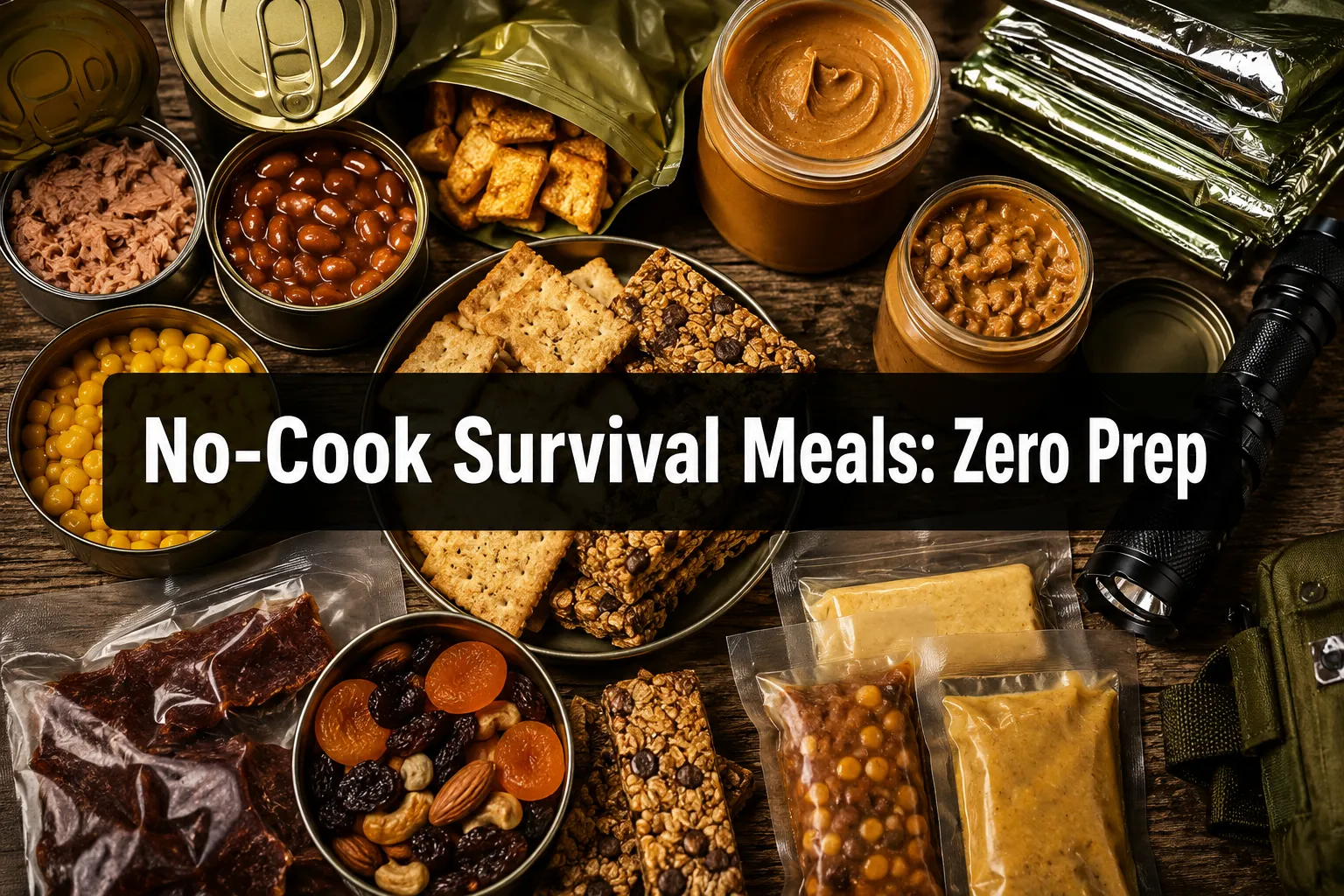
No-cook survival meals that require zero preparation are foods that can be consumed directly from their packaging without heating, rehydrating, or any form of cooking. They require no stove, no fire, no electricity, and ideally no utensils. You open the container and eat.
This category covers a wide range of foods:
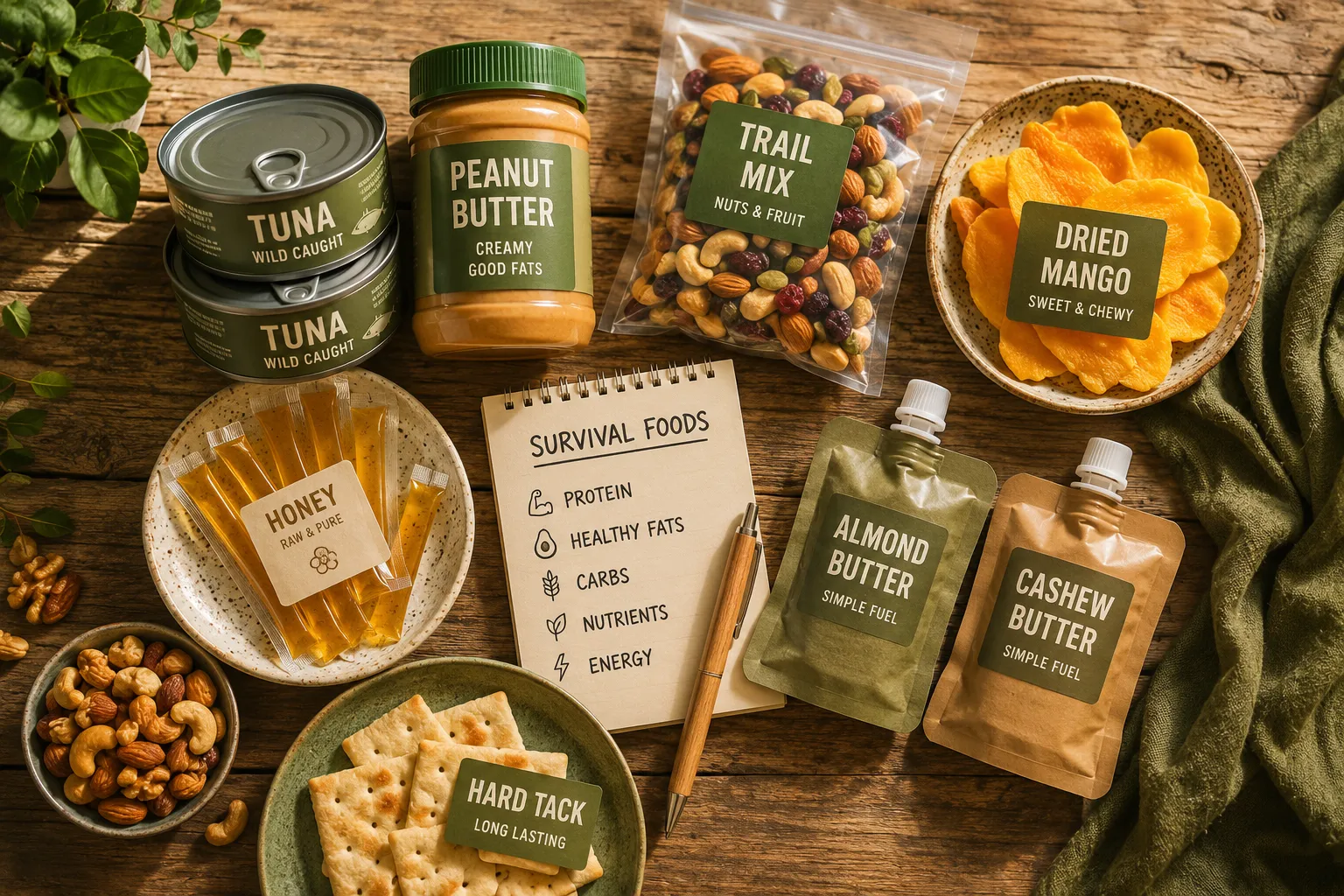
- Canned fish and meat (tuna, salmon, sardines, chicken), pull-tab cans are ideal
- Nut butters (peanut, almond, sunflower seed), single-serve packets are the most field-ready
- Hard crackers and hardtack, dense, calorie-efficient, and extremely shelf-stable
- Trail mix and mixed nuts, high calorie-to-weight ratio, no prep needed
- Dried fruit (raisins, apricots, mango, dates), natural sugar for quick energy
- Honey packets, antimicrobial, indefinite shelf life, calorie-dense
- Granola and energy bars, compact and portable
- Jerky and meat sticks, protein-dense, shelf-stable
- Peanut butter crackers and cheese crackers (pre-packaged)
- Ready-to-eat pouches (commercially produced RTE meals, some military-grade)
The defining characteristic is that none of these require any action beyond opening. That distinction matters enormously in a real emergency where stress is high, resources are limited, and cognitive load is already maxed out.
For a broader look at what belongs in a complete emergency food system, the Ultimate Survival Pantry List breaks down quantities, rotation schedules, and storage priorities in detail.
Best Shelf-Stable Foods That Don’t Need Cooking
The best no-cook shelf-stable foods balance caloric density, nutritional value, palatability, and storage life. Not all shelf-stable foods qualify, some technically require water or heat to be edible or safe.
Top-tier no-cook options by category:
| Food | Calories per 100g (approx.) | Shelf Life | Notes |
|---|---|---|---|
| Peanut butter | 588 | 1-2 years (opened) | High fat and protein |
| Canned tuna (in oil) | 200 | 3-5 years | Pull-tab preferred |
| Mixed nuts | 600+ | 1-2 years | Vacuum-sealed lasts longer |
| Honey | 304 | Indefinite | No water activity, antimicrobial |
| Dried dates | 277 | 1-2 years | Natural sugar, fiber |
| Hard crackers / hardtack | 400+ | 5-25 years | Homemade hardtack lasts decades |
| Jerky (commercial) | 250-350 | 1-2 years | Check sodium levels |
| Energy bars (e.g., Clif, Kind) | 400-450 | 1-2 years | Vary widely in quality |
| Canned sardines | 208 | 3-5 years | Omega-3s, bones = calcium |
Choose based on your situation:
- Bug-out bag: Prioritize calorie-to-weight ratio. Nut butters in squeeze packets, jerky, and energy bars win here.
- Home shelter-in-place: You can store heavier canned goods. Prioritize variety and nutritional balance.
- Vehicle emergency kit: Avoid chocolate-coated items that melt. Stick to nuts, jerky, and foil-packaged crackers.
For a comprehensive breakdown of the 50 best long-term storage foods, see this complete food storage guide.
How Long Do No-Cook Emergency Meals Last
Shelf life depends on the food type, packaging method, and storage environment, not just the date printed on the label.
General shelf life ranges for common no-cook foods:
- Honey: Indefinite if sealed and kept dry
- Hard crackers / hardtack: 5 years commercially, up to 25 years for properly made homemade hardtack in sealed tins
- Canned fish and meat: 3 to 5 years (USDA guidance; quality degrades after this but safety often extends further)
- Nut butters: 1 to 2 years unopened; 3 to 4 months once opened
- Dried fruit: 6 months to 2 years depending on moisture content and packaging
- Commercial energy bars: 1 to 2 years; some survival-specific bars (like Mainstay or Datrex) are rated for 5 years
- Jerky: 1 to 2 years commercially sealed; homemade is far shorter
Storage conditions that extend shelf life:
- Temperature below 70°F (21°C), heat is the biggest enemy of shelf life
- Low humidity, moisture accelerates spoilage and mold
- Darkness, UV light degrades fats and vitamins
- Oxygen-free environment, vacuum sealing or oxygen absorbers dramatically extend life
Avoid storing no-cook food in garages, attics, or vehicles during summer months. A consistent, cool interior space is ideal. For more on avoiding storage errors, the 15 Food Storage Mistakes to Avoid guide covers the most common and costly errors preppers make.
No-Cook Survival Meals vs MREs: Which Is Better
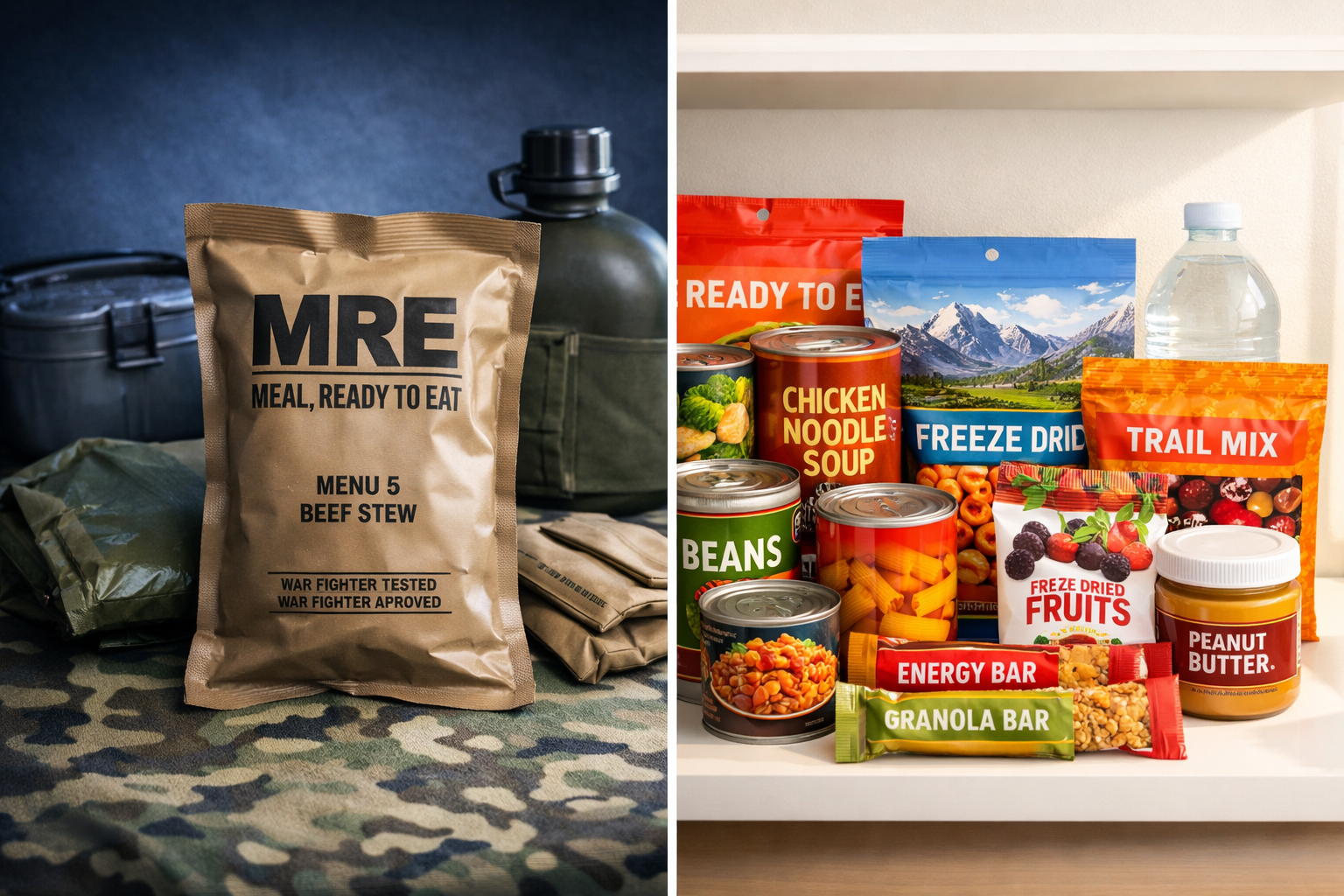
MREs (Meals Ready-to-Eat) are technically no-cook meals, they can be eaten cold straight from the pouch. But comparing civilian no-cook foods to military MREs reveals meaningful differences that affect which you should stock.
MREs:
- Designed for military field use; each meal delivers roughly 1,200 calories
- Include an entrée, side, dessert, and accessories (utensils, condiments, gum)
- Shelf life: 3 years at 80°F, up to 10 years at 60°F (per U.S. Army Natick Labs data)
- Cost: $10 to $15+ per meal
- Pros: Complete, self-contained, high caloric density
- Cons: Expensive, heavy, high sodium, and many people find them unpalatable cold
Civilian no-cook foods:
- More variety and flexibility in building a custom kit
- Generally lower cost per calorie
- Easier to find options for dietary restrictions
- Shelf life varies widely (from 1 to 25+ years)
- Cons: Require more planning to ensure nutritional completeness
The practical answer: MREs are excellent for short-duration emergencies (72 hours to 2 weeks) and for bug-out bags where caloric completeness matters. Civilian no-cook foods are better for long-term home stockpiles where cost, variety, and dietary needs take priority. Most serious preppers use both.
For a deeper look at how MREs fit into a broader emergency food plan, the Complete Guide to Emergency Food Rationing and Cooking provides a full framework.
What’s the Difference Between Ready-to-Eat Meals and Survival Rations
Ready-to-eat (RTE) meals and survival rations are often used interchangeably, but they serve different purposes and have different nutritional profiles.
Ready-to-eat meals are fully cooked, shelf-stable meals packaged for immediate consumption. They include military MREs, civilian camping pouches (like Mountain House eaten cold), and commercially prepared canned entrees. They aim to replicate a normal meal experience with protein, carbs, and fat in balanced proportions.
Survival rations (like Datrex 3600 or Mainstay Emergency Food Bars) are calorie-dense compressed bars designed purely to sustain life. They are not meant to satisfy, they are engineered to prevent starvation. A single Datrex bar provides 200 calories; a full daily ration of nine bars provides 1,800 calories in a package smaller than a hardback book.
Key differences:
- Survival rations prioritize caloric density and shelf life over taste or variety
- RTE meals prioritize palatability and nutritional balance
- Survival rations are better for evacuation kits; RTE meals are better for extended shelter-in-place scenarios
- Survival rations typically have a 5-year shelf life; some extend to 7 years
Choose survival rations for your 72-hour bug-out bag. Use RTE meals and diverse no-cook foods for your home emergency stockpile.
Can You Eat Canned Food Straight From the Can Without Cooking
Yes, most commercially canned food in the United States is fully cooked during the canning process and is safe to eat directly from the can without heating. The canning process involves heating food to temperatures that kill pathogens, so the contents are already shelf-stable and ready to consume.
What’s safe to eat cold from the can:
- Canned tuna, salmon, sardines, and chicken
- Canned beans (rinsed if possible to reduce sodium)
- Canned vegetables (corn, green beans, peas)
- Canned fruit in juice or syrup
- Canned soups and stews (though texture is unpleasant cold for many people)
Important caveats:
- Never eat from a can that is bulging, dented along the seam, or has a foul odor when opened, these are signs of botulism or spoilage
- Rinse high-sodium canned goods if water is available, especially for children or anyone with heart conditions
- Pull-tab cans are preferable in emergencies; standard cans require a manual can opener (keep one in your kit)
The answer is yes, but inspect every can before eating. A compromised seal is a serious health risk, not a minor inconvenience.
Do No-Cook Survival Meals Have Enough Calories
A sedentary adult needs roughly 1,600 to 2,000 calories per day to maintain basic function. During an emergency, where stress, physical exertion, and cold exposure are common, caloric needs can rise to 2,500 to 3,500 calories per day. No-cook survival meals can absolutely meet these needs if planned correctly.
Sample 2,000-calorie no-cook daily plan:
- Breakfast: 2 tablespoons peanut butter + 6 hard crackers + a handful of raisins = approx. 550 calories
- Midday: 1 can of tuna (5 oz) + crackers + dried apricots = approx. 450 calories
- Afternoon: Trail mix (2 oz) + 2 energy bars = approx. 550 calories
- Evening: Canned sardines + peanut butter crackers + dried dates = approx. 450 calories
Total: approximately 2,000 calories
The mistake most preppers make is stocking foods that are low in fat and protein. Caloric density matters. A can of green beans has 35 calories. A can of sardines in oil has over 200. Build your no-cook stockpile around fat-dense and protein-dense foods first, then add carbohydrates for energy.
For a complete framework on rationing and caloric planning, see the Emergency Food Rationing and Cooking guide.
Cheapest No-Cook Survival Food Options
Budget-conscious preppers can build a solid no-cook emergency supply without spending a fortune. The most affordable options per calorie are staples available at any grocery store.
Best value no-cook foods (estimated cost per 1,000 calories):
- Peanut butter: Among the lowest cost-per-calorie of any shelf-stable food; a standard 40 oz jar provides roughly 6,700 calories
- Canned sardines: Often under $2 per can; high protein and fat content
- Dried beans (if eaten cold-soaked): Extremely cheap, though requires pre-soaking in water
- Hard crackers / hardtack: Homemade hardtack costs almost nothing to produce and lasts decades
- Raisins and dried fruit: Affordable in bulk from warehouse stores
- Oats (dry, eaten as overnight oats with cold water): Very cheap per calorie; requires water but no heat
- Canned tuna: Frequently on sale; excellent protein-to-cost ratio
Where to buy affordably:
- Warehouse clubs (Costco, Sam’s Club) for bulk nuts, trail mix, and canned goods
- Dollar stores for canned fruit, crackers, and peanut butter
- Grocery store sales with a rotating purchase strategy
Building a 72-hour supply for one adult using these options costs well under $50. A two-week supply for a family of four can be assembled for $150 to $250, depending on your region and sourcing strategy.
No-Cook Survival Meals for People With Food Allergies
Food allergies in an emergency are not a minor inconvenience, they are a medical risk. The most common allergens (peanuts, tree nuts, gluten, dairy, soy, shellfish) appear in many standard no-cook survival foods, so allergy-safe planning must happen before the emergency.
Allergy-safe no-cook alternatives:
- Peanut/tree nut allergy: Sunflower seed butter (SunButter), pumpkin seeds, sunflower seeds, canned fish, jerky
- Gluten intolerance/celiac: Rice cakes, corn tortilla chips (sealed), gluten-free energy bars (Larabar, RXBar), canned fruit, nuts
- Dairy allergy: Most no-cook survival staples are naturally dairy-free; avoid cheese crackers and milk-based bars
- Soy allergy: Read labels carefully, soy appears in many energy bars, jerky, and canned meats
- Shellfish allergy: Avoid canned crab, shrimp, and some seafood blends; canned tuna and salmon are safe for most shellfish-allergic individuals
Practical steps:
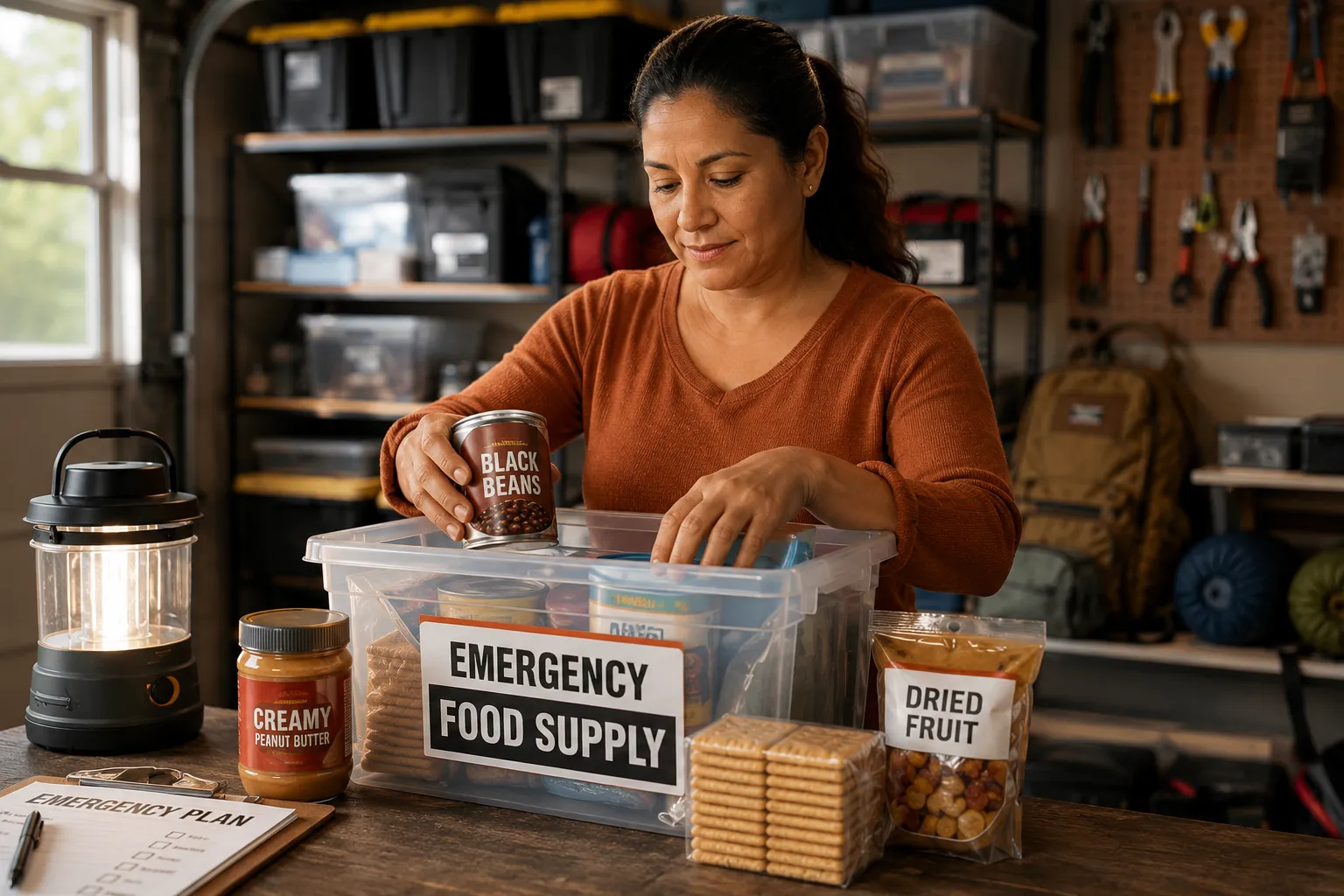
- Label allergy-safe items separately in your emergency kit
- Keep a written list of safe foods with your emergency documents
- Stock a dedicated allergy kit for affected family members, do not rely on sorting through a mixed supply during a crisis
Best No-Cook Meals for Kids in an Emergency
Children have different caloric needs, texture preferences, and psychological responses to food in stressful situations. Familiar foods reduce anxiety and encourage eating when kids might otherwise refuse unfamiliar survival rations.
Kid-friendly no-cook survival foods:
- Peanut butter packets, familiar, calorie-dense, most kids accept them readily
- Applesauce pouches, shelf-stable, no mess, no utensils needed
- Fruit cups in juice, familiar texture, naturally sweet
- Goldfish crackers or animal crackers, comfort food that travels well
- Granola bars and cereal bars, familiar breakfast-style food
- String cheese (short-term; requires no refrigeration for a few hours)
- Shelf-stable chocolate milk boxes, calories plus comfort
- Raisins and dried cranberries, most kids accept these without resistance
Key considerations for kids:
- Children need fewer total calories but more frequent small meals
- Avoid very high-sodium foods for young children
- Keep a few comfort-food items specifically for kids, morale matters, and a child who refuses to eat is a serious problem in a multi-day emergency
- Toddlers and infants require special planning; formula and baby food pouches are essential and must be rotated regularly
For families building a comprehensive emergency plan, the Disaster Preparedness for Families guide covers food, shelter, and communication strategies in one place.
Common Mistakes People Make With No-Cook Emergency Food
Most preppers who think they have a solid no-cook food supply discover gaps only when they actually need it. These are the mistakes that show up most often.
Mistake 1: Stocking low-calorie foods Canned vegetables, broth, and fruit cups feel like food but deliver very few calories. A shelf full of green beans won’t sustain you through a week-long emergency.
Mistake 2: Ignoring water requirements Some “no-cook” foods still require water to be palatable or safe, crackers with peanut butter, for example, are extremely dry. Dehydration compounds hunger. Always pair your food plan with a water plan. The Ultimate Emergency Water Storage and Purification Guide is essential reading here.
Mistake 3: Poor storage conditions Storing food in a hot garage or attic cuts shelf life dramatically. Oils in nut butters and nuts go rancid faster in heat. A pantry or interior closet is far better.
Mistake 4: No rotation system Buying food and forgetting it means eating expired products during an emergency. Use a first-in, first-out system and check expiration dates every six months.
Mistake 5: Forgetting a manual can opener This sounds obvious. It isn’t. Many preppers own only electric can openers. A quality manual can opener costs under $10 and belongs in every emergency kit. Check the 15 Things Missing From Your Emergency Kit for a full list of overlooked essentials.
Mistake 6: No variety Eating the same food repeatedly causes appetite fatigue, a real phenomenon where people stop eating because the food is too monotonous. Stock at least 8 to 10 different items.
Mistake 7: Failing to account for dietary restrictions Discovering that half your food supply contains a family member’s allergen during an emergency is a preventable crisis.
How to Store No-Cook Meals for Long-Term Survival
Proper storage is what separates a functional emergency food supply from a waste of money. The goal is to maintain quality as close to the original as possible for as long as possible.
Core storage principles:
- Temperature: Store between 50°F and 70°F. Every 10°F increase roughly halves the effective shelf life of most foods.
- Humidity: Keep relative humidity below 15% for dried goods. Use desiccant packets in containers with dried fruit, crackers, and nuts.
- Light: Opaque containers or dark storage areas prevent UV degradation of fats and vitamins.
- Oxygen: Vacuum-sealed bags or Mylar bags with oxygen absorbers extend shelf life dramatically for nuts, dried fruit, and crackers.
- Pest protection: Use food-grade hard containers (not cardboard boxes) for long-term storage. Rodents and insects can destroy an entire supply.
Recommended containers:
- Food-grade 5-gallon buckets with gamma-seal lids for bulk items
- Mylar bags with oxygen absorbers for dried goods
- Original sealed cans and pouches for commercial products (don’t repackage unless necessary)
Rotation schedule:
- Check all no-cook supplies every 6 months
- Replace anything within 3 months of its expiration date
- Consume and replace on a rolling basis rather than stockpiling and forgetting
What Happens If You Eat Expired No-Cook Survival Food
Eating food past its printed date is not automatically dangerous, but the risks increase significantly depending on the food type, how it was stored, and how far past the date it is.
Understanding date labels:
- “Best by” and “use by” dates indicate quality, not safety in most cases
- Commercially canned goods are often safe well beyond their printed date if the can is undamaged
- The USDA notes that canned goods can remain safe indefinitely if the can is intact and stored properly, though quality and nutritional value decline over time
Risks by food type:
- Canned fish/meat past date: Generally safe if can is undamaged; flavor and texture degrade; discard if can is bulging or smells off
- Nut butters past date: Rancid fats are not acutely toxic but taste terrible and may cause digestive upset; rancidity is visible (darker color, bitter smell)
- Dried fruit past date: Usually safe; texture becomes harder and flavor diminishes
- Energy bars past date: Fats go rancid; not dangerous short-term but nutritional value drops
- Jerky past date: Mold is the primary risk; discard if any visible mold or off smell is present
The honest answer: Eating slightly expired no-cook food during a genuine emergency is almost always preferable to not eating. But eating severely expired, rancid, or visibly compromised food can cause gastrointestinal illness at the worst possible time. When in doubt, smell it, inspect it, and use judgment.
No-Cook Meals for Camping vs Emergency Kits: Key Differences
No-cook survival meals that require zero preparation serve two distinct contexts, camping and emergency preparedness, and the priorities for each are meaningfully different.
Camping context:
- Weight and packability are primary concerns
- Palatability matters more because you’re choosing to eat this way
- Shorter duration (typically 1 to 7 days)
- You likely have access to water for rehydrating foods
- Variety and enjoyment are reasonable goals
Emergency kit context:
- Caloric density and shelf life take priority over taste
- Must account for stress, potential medical needs, and family members with varying needs
- Duration is unknown, could be 3 days or 3 weeks
- Water access may be limited or compromised
- Reliability and simplicity matter more than variety
Where they overlap: Both contexts benefit from the same core foods: nut butters, trail mix, jerky, canned fish, and energy bars. The difference is in how you build the kit. A camping pack optimizes for weight and enjoyment. An emergency kit optimizes for resilience, caloric completeness, and worst-case scenarios.
For those building a comprehensive bug-out food supply, the Ultimate Bug Out Bag Food List covers the intersection of portability and emergency preparedness in detail.
Frequently Asked Questions
How many days of no-cook food should I have stored? FEMA recommends a minimum of 72 hours. Most experienced preppers recommend 30 days for home storage and 72 hours in a portable bug-out kit. A two-week supply is a practical middle ground for most households.
Do I need water to eat no-cook survival meals? Not technically, but practically yes. Many no-cook foods, crackers, jerky, nut butters, are very dry and difficult to swallow without water. Dehydration also accelerates hunger. Always plan water storage alongside your food supply.
Are protein bars a good substitute for real no-cook meals? They work as a supplement, not a replacement. Most protein bars deliver 200 to 300 calories and limited fat. Relying solely on protein bars for multiple days will leave you calorically deficient. Use them as part of a diverse supply.
Can I store no-cook food in my car year-round? Only in mild climates. Vehicle interiors can reach 130°F to 150°F in summer, which dramatically shortens shelf life and causes fats to go rancid within weeks. Use heat-tolerant options (hard crackers, honey, survival bars rated for high temperatures) and rotate frequently.
What’s the single best no-cook food for a bug-out bag? Peanut butter in single-serve squeeze packets. High calorie density, no utensils needed, familiar taste, and reasonable shelf life. Pair it with hard crackers for a complete, portable, zero-prep meal.
Do no-cook meals work for diabetics? With careful selection, yes. Avoid high-sugar options like fruit cups in syrup, honey, and most energy bars. Focus on nuts, nut butters, canned fish, jerky, and seeds. Always consult a physician when planning emergency food for someone with diabetes or other metabolic conditions.
How do I keep kids calm about eating unfamiliar emergency food? Introduce these foods before an emergency. Include them in camping trips, road trips, or weekend snacks. Familiarity reduces resistance. Keep at least one comfort food item per child in the kit.
Is hardtack worth making at home? Yes, for long-term preppers. Homemade hardtack (flour, salt, water, baked dry) costs almost nothing, lasts 20 to 25 years in sealed tins, and provides a reliable caloric base. It’s not enjoyable to eat, but it works.
What about vitamin and mineral deficiencies in a no-cook diet? A realistic concern for extended emergencies beyond two weeks. Include a supply of multivitamins in your emergency kit. Canned fish (especially sardines with bones) provides calcium and omega-3s; dried fruit provides potassium; nuts provide magnesium and zinc.
Can I feed a newborn or infant with no-cook survival meals? No. Infants require formula or breast milk. No standard no-cook survival food is appropriate for infants. Stock formula, sterile water, and feeding supplies separately and rotate them on a strict schedule.
Conclusion
No-cook survival meals that require zero preparation are the backbone of any serious emergency food strategy. They work when the power is out, when you’re on the move, when stress is high, and when every minute counts. The foods covered in this guide, canned fish, nut butters, trail mix, dried fruit, hard crackers, jerky, and survival rations, can sustain an adult through days or weeks of crisis without a stove, fire, or electricity.
Actionable next steps:
- Audit your current food supply. Identify what you have that requires zero preparation and what requires cooking. Close the gap.
- Build a 72-hour no-cook kit first, one that fits in a bag and requires nothing but opening.
- Expand to a 14-day home supply using the caloric density guidelines in this article.
- Address dietary restrictions, children’s needs, and water requirements as part of the same planning session.
- Set a calendar reminder every six months to inspect, rotate, and replenish.
Preparedness is not about fear. It’s about being the person in your household who stays calm and functional when everyone else is scrambling. The right food supply, ready to eat, right now, no preparation required, is one of the most direct ways to build that confidence.
Products, Tools, and Resources
Manual can openers: A quality manual can opener is non-negotiable. The Swing-A-Way and OXO Good Grips models are widely trusted, inexpensive, and built to last. Keep one in your kitchen kit and one in your bug-out bag.
Survival ration bars: Datrex 3600 and Mainstay 3600 are the most widely used civilian survival ration bars. Both are Coast Guard-approved, rated for 5 years, and compact enough for any bag. They are not enjoyable to eat but they do the job.
Single-serve nut butter packets: Justin’s and RXBar both make single-serve almond and peanut butter packets that are shelf-stable, calorie-dense, and genuinely portable. These belong in every bug-out bag.
Mylar bags and oxygen absorbers: For long-term storage of dried goods, Mylar bags paired with 300cc oxygen absorbers are the most cost-effective solution available. Available from Amazon, Walmart, and preparedness retailers.
Pull-tab canned fish: Wild Planet and Safe Catch both produce high-quality canned tuna and salmon in pull-tab cans with no BPA lining, a meaningful consideration for long-term storage.
Multivitamins: For extended no-cook scenarios, a quality multivitamin (Kirkland Signature or Nature Made) provides nutritional insurance. Store a 90-day supply alongside your food.
For a complete system that goes beyond food, covering water, shelter, communication, and evacuation, the 72-Hour Bug Out Bag Checklist is the logical next resource to work through.