
Hey there! Some links on this page may be affiliate links which means that, if you choose to make a purchase, I may earn a commission at no extra cost to you. I greatly appreciate your support. Read the full disclosure here.
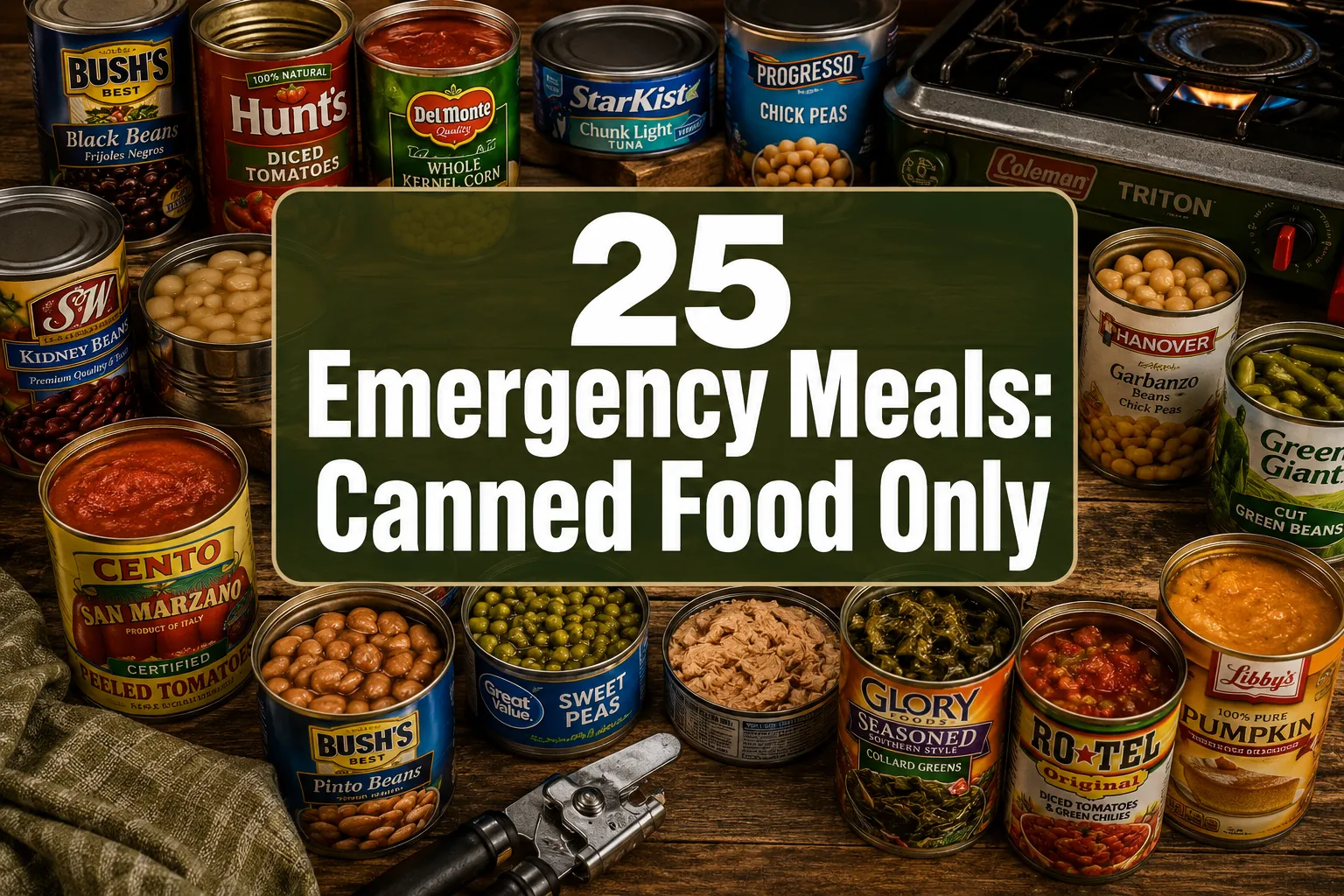
The average American household has fewer than three days of food on hand. When a hurricane, ice storm, or extended power outage cuts off the supply chain, that gap becomes a serious problem fast. The good news: a well-stocked canned food supply can bridge that gap completely, and the 25 emergency meals you can make with only canned food in this guide prove that eating well during a crisis doesn’t require a functioning kitchen, fresh ingredients, or any culinary expertise.
This isn’t about surviving on cold beans straight from the can (though that’s always an option). It’s about having a real, rotating meal plan built from shelf-stable ingredients that deliver nutrition, variety, and enough calories to keep your household functioning under stress.
Key Takeaways
- Canned foods with the highest emergency value include proteins (tuna, salmon, chicken, beans), vegetables (tomatoes, corn, spinach), and starches (potatoes, chickpeas).
- Most commercially canned foods remain safe and nutritious for 2 to 5 years, with low-acid canned goods lasting up to 5 years or more when stored properly.
- All 25 meals in this guide can be made with no electricity, many require no heat at all.
- Canned foods cover most major dietary needs, including gluten-free, vegetarian, and high-protein requirements.
- A manual can opener is the single most critical non-food item in your emergency pantry.
- Proper storage (cool, dark, dry location away from temperature swings) significantly extends the usable life of your canned supply.
- Seasoning, acid (canned tomatoes, vinegar), and fat (canned coconut milk, olive oil in a jar) are the three variables that most improve the taste of canned meals.
Find this useful? Add us as a preferred source on Google and more of what we publish will show up in your results.
What Are the Best Canned Foods to Keep in an Emergency Kit
The best canned foods for an emergency kit are those that provide complete macronutrients, require minimal preparation, and offer the longest shelf life. Prioritize canned proteins, legumes, vegetables, and fruits that cover a wide range of meals.
Top-tier canned staples for any emergency pantry:
- Proteins: Canned tuna, salmon, sardines, chicken breast, and corned beef
- Legumes: Black beans, kidney beans, chickpeas, lentils, and white beans
- Vegetables: Diced tomatoes, tomato paste, corn, green beans, spinach, mixed vegetables, and potatoes
- Fruits: Peaches, pears, mandarin oranges, and pineapple (in juice, not syrup, for better nutrition)
- Starches and grains: Canned brown bread, hominy, and baked beans
- Fats and liquids: Coconut milk, evaporated milk, and broth (chicken or vegetable)
- Condiments: Canned olives, jalapeños, and roasted red peppers for flavor variety
A practical rule: stock at least 7 different protein sources, 5 vegetable varieties, and 3 legume types. That combination gives you enough variety to build the 25 emergency meals you can make with only canned food without eating the same thing twice in a week.
For a broader view of what belongs in a long-term food supply, the 3-month emergency food supply guide covers quantity planning in detail.
How Long Do Canned Foods Last in Storage
Most commercially canned foods are safe to eat for 2 to 5 years past their manufacture date when stored correctly. Low-acid canned goods, such as vegetables, beans, and meats, generally last 3 to 5 years. High-acid foods like tomatoes and fruit typically last 18 months to 3 years.
The USDA notes that canned foods stored past their “best by” date are usually still safe, though nutrient content and texture may decline over time. The date printed on the can is a quality indicator, not a hard safety cutoff.
Storage conditions that maximize shelf life:
- Temperature: 50°F to 70°F is ideal. Avoid garages or attics with extreme temperature swings.
- Humidity: Keep cans dry. Moisture causes rust, which can compromise the seal.
- Light: Store away from direct sunlight, which degrades nutrients and can heat the can.
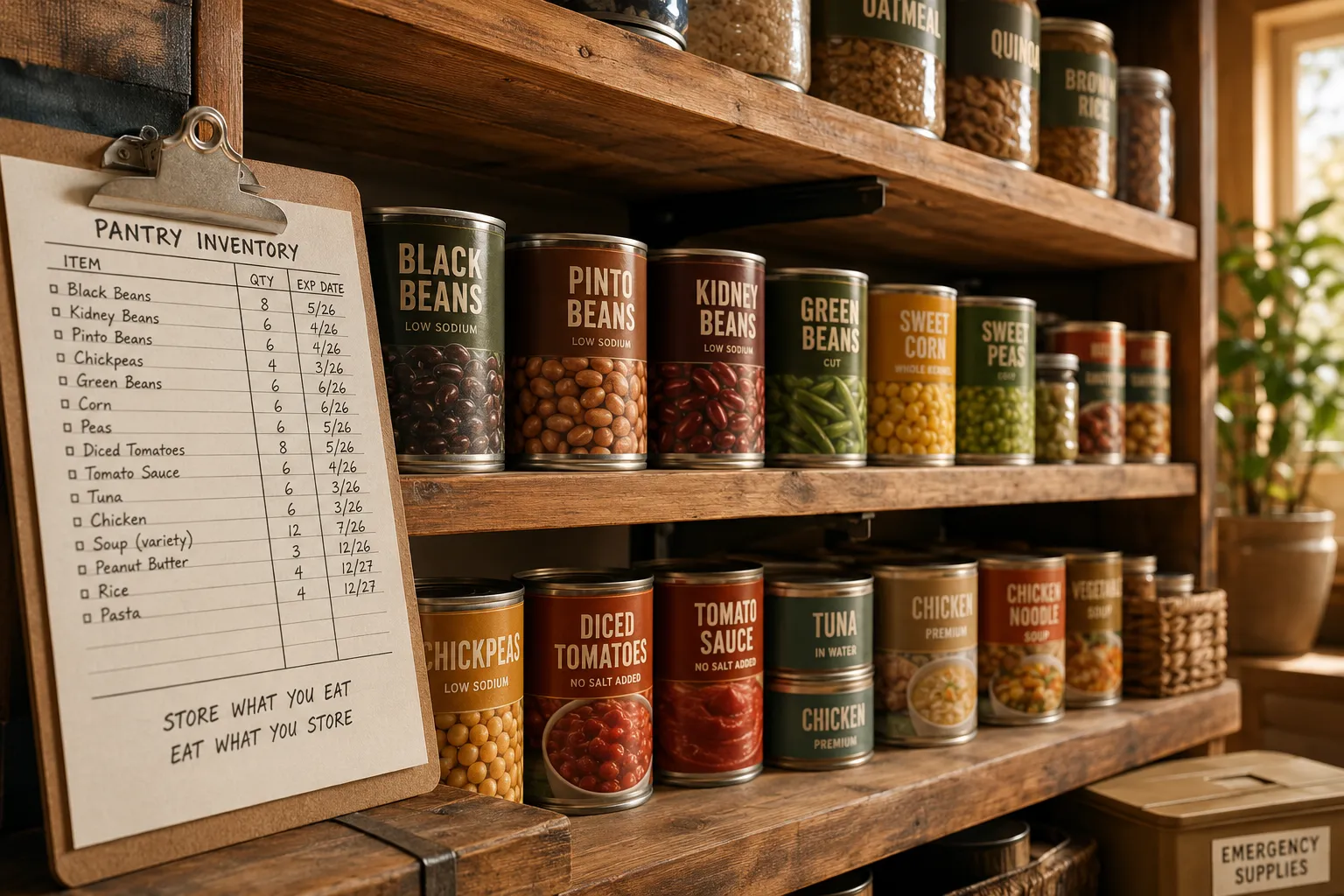
- Rotation: Use a first-in, first-out system. Label cans with purchase dates using a permanent marker.
Discard any can that is: bulging, deeply dented along a seam, leaking, or produces an off odor when opened. These are signs of potential contamination.
For guidance on avoiding the most common storage errors, see 15 food storage mistakes to avoid.
Can You Make a Full Meal With Just Canned Ingredients
Yes, a nutritionally complete, satisfying meal is entirely achievable using only canned ingredients. The key is combining a protein source, a carbohydrate or legume, and a vegetable in the same dish.
Here are the 25 emergency meals you can make with only canned food, organized by category:
Soups and Stews (heat optional)
- Tuna and White Bean Soup, Canned tuna, white beans, diced tomatoes, chicken broth, and canned spinach. Simmer together or serve at room temperature.
- Chicken and Corn Chowder, Canned chicken, creamed corn, evaporated milk, and diced potatoes. Rich and filling.
- Lentil and Tomato Stew, Canned lentils, crushed tomatoes, and mixed vegetables. Add canned jalapeños for heat.
- Black Bean Soup, Black beans, diced tomatoes, corn, and chicken broth. Season with canned chipotle peppers.
- Minestrone, Mixed vegetables, kidney beans, diced tomatoes, and broth. Add canned pasta or hominy for bulk.
Protein-Forward Meals
- Sardine and Tomato Plate, Sardines in olive oil over canned diced tomatoes with olives. No heat needed.
- Canned Salmon Patties, Mash canned salmon with mashed canned potatoes, form into patties, and pan-fry if heat is available.
- Corned Beef Hash, Corned beef with canned potatoes and mixed vegetables. One of the most calorie-dense options on this list.
- Chicken Tikka-Style Bowl, Canned chicken, coconut milk, and canned tomatoes with curry powder from your spice kit.
- Tuna Salad, Canned tuna, canned corn, and canned peas mixed together. Eat directly from the bowl.
Bean and Legume Dishes
- Three-Bean Salad, Kidney beans, chickpeas, and green beans. Dress with vinegar and olive oil.
- Refried Bean Wraps, Canned refried beans with salsa and canned jalapeños. Serve in canned bread or on crackers.
- Chickpea Curry, Chickpeas, coconut milk, and diced tomatoes. One of the most nutritionally dense meals on this list.
- White Bean and Tuna Salad, White beans, canned tuna, and roasted red peppers.
- Baked Bean Plate, Canned baked beans served with canned brown bread. A classic no-cook combination.
Rice and Grain Alternatives
- Hominy and Black Bean Bowl, Canned hominy, black beans, and salsa verde.
- Chickpea and Tomato Stew over Canned Potatoes, A hearty, starchy base meal.
- Lentil and Spinach Bowl, Canned lentils and spinach with broth poured over canned potatoes.
Lighter Meals and Snacks
- Fruit and Coconut Milk Bowl, Canned peaches or pears in canned coconut milk. Works as breakfast or dessert.
- Sardine Crackers, Sardines on canned bread with mustard from your condiment stock.
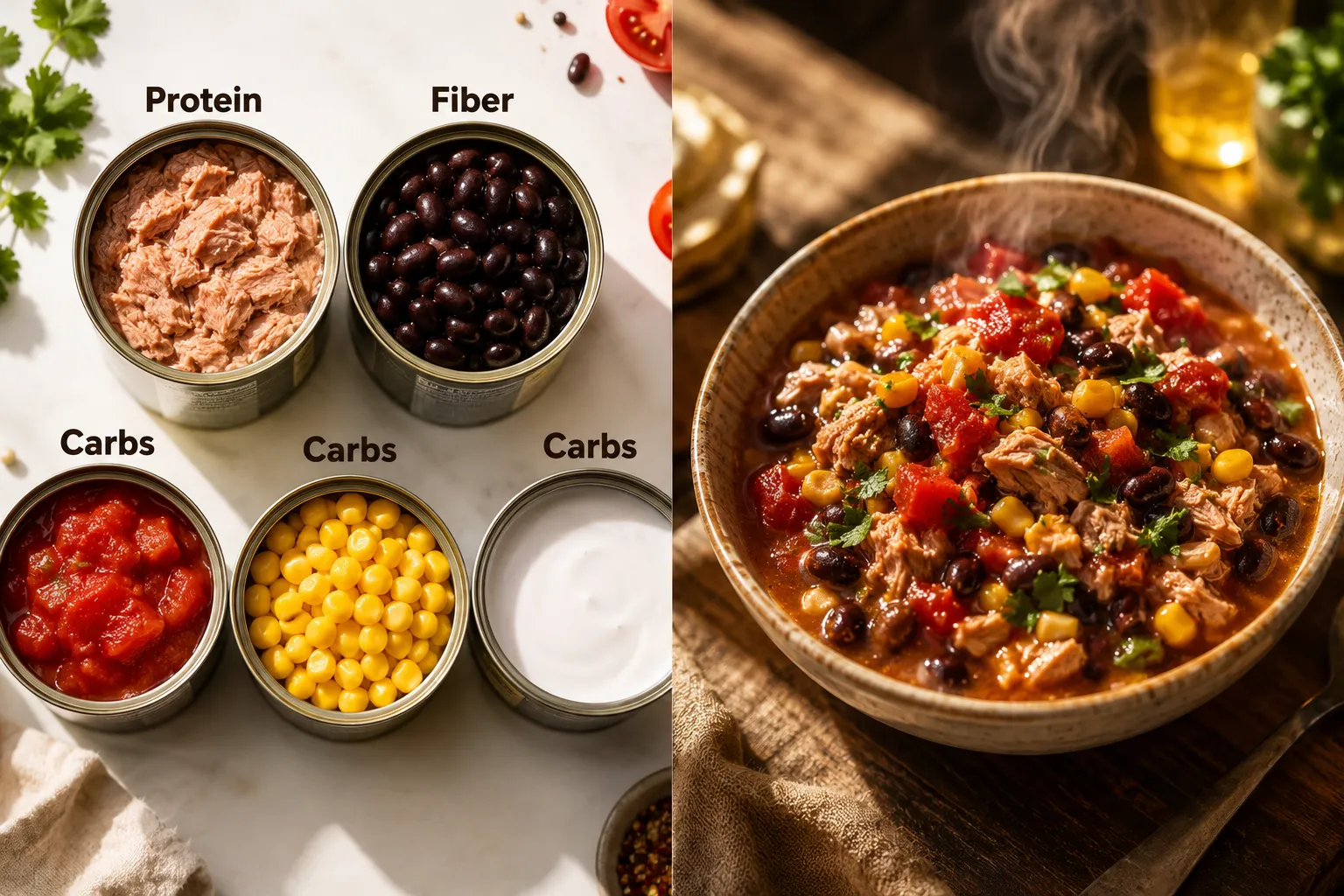
- Corn and Bean Salsa Bowl, Corn, black beans, and diced tomatoes. Eat cold.
- Canned Vegetable Medley, Mixed vegetables, green beans, and corn heated with broth.
High-Calorie Emergency Meals
- Coconut Milk and Chickpea Stew, High in fat and protein, ideal for cold-weather emergencies.
- Corned Beef and Potato Mash, Calorie-dense and fast to prepare with minimal heat.
- Salmon and White Bean Mash, Canned salmon mashed with white beans and olive oil. High in omega-3s and protein.
Easy Canned Food Recipes for Beginners and Canned Meals That Don’t Need Cooking
Many of these meals require zero cooking. For preppers who may be managing a power outage, a bug-out situation, or an injury, no-cook meals are a critical part of the plan.
No-cook meals from the list above:
- Sardine and Tomato Plate (#6)
- Tuna Salad (#10)
- Three-Bean Salad (#11)
- White Bean and Tuna Salad (#14)
- Baked Bean Plate (#15)
- Corn and Bean Salsa Bowl (#21)
- Fruit and Coconut Milk Bowl (#19)
Beginner-friendly rule: If a recipe requires more than opening cans and stirring, it’s too complicated for a true emergency. The best emergency meals are the ones you can actually execute when you’re stressed, sleep-deprived, or working by flashlight.
For situations where you do have access to a heat source, the complete guide to emergency food rationing and cooking covers off-grid cooking methods in detail, including camp stoves, rocket stoves, and solar cookers.
Can You Eat Canned Food Straight From the Can
Yes, almost all commercially canned food is pre-cooked during the canning process and is safe to eat directly from the can without additional heating. This includes canned beans, vegetables, tuna, chicken, and most soups.
Heating improves palatability and can kill any surface bacteria introduced when opening the can, but it is not required for food safety in most cases. The exception is canned meats that have been stored in damaged or suspect cans, those should always be heated if consumed at all, or discarded.
Practical note: Eating cold canned food is psychologically harder than it sounds during a real emergency. Rotating your pantry and actually eating these foods before a crisis hits, so you know what you like cold, is a preparation step most people skip.
Best Canned Proteins for Emergency Meals
The best canned proteins for emergencies are tuna, salmon, sardines, canned chicken, and canned beans. Each offers a different nutritional profile, calorie density, and flavor, which matters when you’re eating from the same pantry for days or weeks.
| Protein Source | Calories (per can, approx.) | Key Nutrients | No-Cook Ready |
|---|---|---|---|
| Canned tuna (5 oz) | 130-150 | Omega-3, lean protein | Yes |
| Canned salmon (14.75 oz) | 400-450 | Omega-3, calcium, protein | Yes |
| Sardines in oil (3.75 oz) | 190-210 | Omega-3, vitamin D, calcium | Yes |
| Canned chicken (12.5 oz) | 300-350 | Lean protein, low fat | Yes |
| Corned beef (12 oz) | 420-480 | High calorie, iron, protein | Yes |
| Black beans (15 oz) | 350-380 | Fiber, plant protein, iron | Yes |
| Chickpeas (15 oz) | 360-400 | Fiber, plant protein, folate | Yes |
Stock a minimum of two animal proteins and two plant proteins. Variety prevents palate fatigue and ensures you’re covering different amino acid profiles over extended emergencies.
Which Canned Foods Have the Most Nutrition and Cheapest Options for Emergency Preparedness
Nutritionally, the most valuable canned foods per dollar are canned beans (black, kidney, chickpeas), canned tomatoes, canned sardines, and canned spinach. These provide fiber, complete or near-complete protein, vitamins C and K, and essential minerals at very low cost.
Budget-first emergency pantry (under $50 for a 2-week supply for one person):
- Canned beans (assorted): $0.79,$1.29 per can
- Canned tuna: $0.99,$1.49 per can
- Canned diced tomatoes: $0.89,$1.19 per can
- Canned corn and mixed vegetables: $0.79,$0.99 per can
- Canned sardines: $1.29,$1.99 per can
- Canned coconut milk: $1.49,$2.49 per can
Sardines are consistently one of the most underrated emergency foods. They’re calorie-dense, rich in omega-3 fatty acids and vitamin D, have a long shelf life, and cost less than $2 per can. If there’s one protein to prioritize for both nutrition and budget, sardines make a strong case.
For a comprehensive breakdown of shelf-stable foods worth stocking, the 50 best foods for long-term storage is worth bookmarking.
Do Canned Meals Need Water or Electricity to Prepare
Most canned meals require little to no water and no electricity. This is one of the core advantages of canned food over freeze-dried or dehydrated options, which typically require significant water for rehydration.
Meals that need no water or electricity at all: sardine plates, bean salads, tuna salads, baked bean plates, and fruit bowls. Meals that benefit from a small amount of water for heating or thinning (soups, stews): 1 to 2 cups maximum per serving.
If water is limited: Prioritize eating canned foods in their own liquid rather than draining them. The liquid in canned beans and vegetables contains nutrients and can serve as a broth substitute.
Water management during an emergency is its own discipline. The ultimate emergency water storage and purification guide covers how to store, source, and purify water when municipal supply is unavailable.
How to Make Canned Food Taste Better
Canned food tastes better when you add acid, fat, and heat, in that order of impact. A splash of vinegar or the liquid from canned jalapeños brightens almost any bean or vegetable dish. A drizzle of olive oil (store a bottle alongside your cans) adds richness. Even gentle warming on a camp stove transforms a flat-tasting can of soup into something genuinely satisfying.
Practical flavor upgrades that store well:
- Dried spices: Cumin, smoked paprika, garlic powder, curry powder, and chili flakes. These last 2 to 4 years and weigh almost nothing.
- Hot sauce: Most commercial hot sauces have a shelf life of 3 to 5 years unopened.
- Soy sauce packets: Long shelf life, add umami depth to any protein dish.
- Mustard: Pairs well with sardines, corned beef, and bean dishes.
- Canned chipotle peppers in adobo: One can adds smoky heat to dozens of meals.
The psychological reality of emergency eating is that flavor variety reduces stress and maintains morale. Preppers who have lived through extended grid-down situations consistently report that food monotony is one of the hardest parts. A small investment in a spice kit pays dividends far beyond its weight.
What Canned Vegetables Go Well Together
The best canned vegetable combinations are those that mimic familiar dishes: tomatoes with corn and beans (Southwestern), spinach with tomatoes and chickpeas (Mediterranean), and mixed vegetables with potatoes and broth (stew base).
Winning combinations:
- Diced tomatoes + corn + black beans = instant salsa or soup base
- Spinach + chickpeas + diced tomatoes = Mediterranean stew
- Green beans + potatoes + broth = classic vegetable soup
- Corn + mixed vegetables + coconut milk = creamy vegetable curry base
- Roasted red peppers + white beans + olive oil = Italian-style salad
The liquid from canned tomatoes is particularly versatile, it functions as a cooking liquid, a sauce base, and a flavor enhancer for almost any savory dish.
Emergency Meals for People With Dietary Restrictions
Canned food works well for most major dietary restrictions. Vegetarians and vegans can build complete meals entirely from canned beans, legumes, vegetables, and coconut milk. Gluten-free individuals will find that most canned foods are naturally gluten-free, though they should verify labels on soups and stews that may contain modified starch.
Restriction-specific guidance:
- Vegetarian/Vegan: Meals #11, 12, 13, 15, 16, 17, 19, 21, 22, and 23 from the list above require no animal products.
- Gluten-free: Virtually all plain canned vegetables, beans, and proteins are gluten-free. Check labels on canned soups and seasoned products.
- Low-sodium: Many canned foods are available in no-salt-added versions. Rinsing standard canned beans reduces sodium content by approximately 40%, according to food science research.
- High-calorie needs (physical labor, cold weather): Prioritize corned beef, coconut milk, salmon, and chickpeas. These are the highest-calorie options per can.
- Children and elderly: Soft-textured options like canned peaches, mashed bean dishes, and creamed corn are easier to eat and generally more palatable for those with chewing difficulties.
For households with members who have specific medical or physical needs, the emergency preparedness guide for disabled individuals addresses dietary planning in the context of broader accessibility needs.
How to Store Canned Food Properly for Emergencies
Store canned food in a cool, dark, dry location, ideally between 50°F and 70°F, away from direct sunlight and temperature extremes. Avoid basements prone to flooding and garages or attics where temperatures fluctuate significantly.
Proper storage checklist:
- Use metal shelving rather than cardboard boxes, which retain moisture
- Keep cans off the floor to prevent rust from ground moisture
- Label every can with the purchase date using a permanent marker
- Rotate stock using first-in, first-out: newest cans go to the back
- Inspect cans every 6 months for rust, dents, or swelling
- Store a manual can opener with your canned food supply, not in a kitchen drawer across the house
For apartment dwellers with limited space, the ultimate guide to apartment food storage covers creative storage solutions that work in tight spaces without requiring a dedicated pantry.
Frequently Asked Questions
Do I need a can opener for all of these meals?
Yes, a manual can opener is non-negotiable. Store at least two in your emergency kit. Pull-tab cans are convenient but not universal across all brands and products. A quality manual opener costs under $10 and lasts for years.
How many cans do I need for a 72-hour emergency supply for one person?
A reasonable estimate is 3 to 4 cans per day per person, covering two meals and one snack. For a 72-hour supply, stock 9 to 12 cans per person minimum, prioritizing protein and calorie density.
Can I cook canned food directly in the can?
Technically possible, but not recommended. The can’s interior lining can degrade at high heat, and some cans have BPA-based linings. Transfer food to a pot or heat-safe container before warming over a camp stove.
Are canned foods safe after a flood if the cans weren’t submerged?
Cans that were not submerged and show no damage are generally safe. Cans that were submerged in floodwater should be discarded, even if they appear undamaged, because floodwater can contaminate the exterior seam.
What’s the single most important canned food to always have on hand?
Canned beans, specifically a variety pack of black beans, chickpeas, and kidney beans. They’re the most nutritionally complete, most versatile, and most affordable option in any emergency pantry.
Can children eat these canned meals safely?
Yes. Most canned foods are appropriate for children over 12 months. Choose low-sodium options where possible, and prioritize soft textures like canned peaches, mashed beans, and creamed corn for younger children or toddlers.
How do I prevent palate fatigue when eating canned food for extended periods?
Rotate through different protein sources each day, vary your seasoning combinations, and include at least one fruit-based item daily. The spice kit is your most powerful tool against monotony.
Do canned foods provide enough calories for active adults during an emergency?
A standard 15-oz can of beans provides roughly 350 to 400 calories. Two cans of protein plus two cans of vegetables per day delivers approximately 900 to 1,200 calories, adequate for a sedentary emergency scenario but insufficient for heavy physical labor. Add calorie-dense options like coconut milk, corned beef, or salmon for higher-demand situations.
Is it safe to eat canned food that’s past its expiration date?
In most cases, yes, the date is a quality indicator, not a safety cutoff. Food past its best-by date may have diminished texture, color, or nutrient content, but is generally safe if the can is undamaged and shows no signs of spoilage.
What’s the difference between “best by” and “use by” dates on canned food?
“Best by” indicates peak quality. “Use by” is a stronger recommendation from the manufacturer. For canned goods, both are quality dates rather than hard safety thresholds. When in doubt, trust your senses: off odor, unusual color, or spurting liquid are the real warning signs.
Conclusion
The 25 emergency meals you can make with only canned food in this guide aren’t theoretical, they’re practical, tested combinations built from ingredients that are cheap, widely available, and genuinely shelf-stable. The difference between a household that weathers a crisis with confidence and one that scrambles for resources often comes down to whether someone took the time to stock and rotate a basic canned food supply before the emergency arrived.
Start with a two-week supply. Build it around the core categories: two to three protein sources, two legume varieties, three to four vegetable options, and at least one fruit. Add a spice kit, a manual can opener, and a rotation system. That’s the foundation.
From there, expand. A three-month supply changes your position entirely, you’re no longer reacting to a crisis, you’re managing through it. The 3-month emergency food supply guide walks through the exact quantities and planning process.
Preparedness isn’t about fear. It’s about knowing that when the unexpected happens, and it will, your household has what it needs to stay fed, calm, and functional.
Products, Tools, and Resources
Manual Can Openers, The OXO Good Grips Smooth Edge Can Opener and the Kuhn Rikon Auto Safety Lid Lifter are both highly rated for durability and ease of use. Keep two in your emergency kit.
Camp Stoves, The Camp Chef Everest 2-Burner Stove and the Coleman Classic Propane Stove are reliable options for heating canned meals without electricity. For a broader look at off-grid cooking options, the cooking without power guide covers every available method.
Spice Kits: Several companies sell pre-assembled emergency spice kits in vacuum-sealed tins. Alternatively, build your own with cumin, smoked paprika, garlic powder, chili flakes, and curry powder in small airtight containers.
Storage Shelving, Wire metro shelving units (18″ x 48″ or similar) are ideal for canned food storage. They allow air circulation, are easy to clean, and hold significant weight.
Inventory Tracking: A simple spreadsheet or a dedicated app like Pantry Check makes rotating your canned food supply significantly easier. Tracking expiration dates prevents waste and ensures you always know what you have.
Further Reading from Preppers HQ:
- Long-term food storage: the complete beginner’s guide
- Ultimate prepper’s guide to freeze-dried food, for when you’re ready to expand beyond canned goods
- Emergency food storage for small apartments, space-constrained solutions that work