Affiliate Disclosure: Hey there! As an Amazon Associate, some links on this page may be affiliate links which means that, if you choose to make a purchase, I may earn a commission at no extra cost to you. I greatly appreciate your support!
Water is the one thing you cannot improvise your way around.
You can forage food. You can build shelter from what the environment gives you. You can navigate without a phone. But water — clean, safe, drinkable water — either exists in your preparedness plan or it doesn’t. And when it doesn’t, the clock starts immediately. Not in three weeks. Not in three days. Within hours, the decisions get harder. Within 24 hours, the thinking gets worse.
Most people don’t think about their water supply until it’s gone. Until the municipal system fails after a hurricane. Until a boil-water advisory appears on their phone at 11pm. Until the pipes freeze and burst and the taps run dry for four days. By then, the window for calm, rational preparation has closed — and what’s left is scrambling.
This guide exists to make sure you never scramble.
The Ultimate Urban Survival Guide For Preppers
The Real Reason Water Preparedness Fails — And It’s Not What You Think
The human body can survive approximately three weeks without food. Without water, that timeline collapses to three days — and cognitive function begins deteriorating within the first 24 hours of inadequate hydration.
This isn’t a wilderness statistic. It applies equally to a family sheltering in place after a hurricane, an apartment dweller during a municipal water failure, and a suburban household during an extended power outage that disables well pumps. The scenario changes. The biology doesn’t.
And yet water is consistently the most underprepared element of emergency planning. FEMA’s own research shows that while most Americans acknowledge the importance of emergency water storage, fewer than 1 in 5 households maintain even a 72-hour supply. The gap between knowing and doing is enormous — and it’s the gap this guide is designed to close.
Three Assumptions That Leave Households Vulnerable
Understanding why water preparedness fails helps you avoid the specific mistakes that matter most.
The “I’ll buy bottled water” assumption. Bottled water is a legitimate short-term solution, but it fails as a primary emergency water strategy. It’s expensive per gallon. It has a finite shelf life — typically 1 to 2 years for commercially bottled water. It creates significant plastic waste. And during actual emergencies, store shelves empty within hours. Bottled water is a supplement, not a system.
The “my tap water is fine” assumption. Municipal water systems are remarkably reliable under normal conditions. Under emergency conditions — earthquakes that damage pipes, floods that overwhelm treatment facilities, power outages that disable pumping stations, chemical spills that contaminate source water — they fail in ways that are unpredictable and often without warning. The boil-water advisory that appears on your phone at midnight is not the moment to start thinking about water storage.
The “I have a filter” assumption. Water filtration is a critical component of emergency preparedness — but a filter without stored water to filter, or a filter that doesn’t address the specific contaminants in your water source, provides false security. Filtration and storage are complementary systems, not substitutes for each other.
The short version: The recommended emergency water storage is 1 gallon per person per day, with a minimum 3-day supply and ideally a 2-week supply. A family of four needs a minimum of 12 gallons for 3 days, or 56 gallons for 2 weeks. Store in food-grade containers in a cool, dark location and rotate every 6 to 12 months.
Key Takeaways:
– Store a minimum of 1 gallon of water per person per day, aiming for at least a 2-week supply; adjust quantities for climate, activity, cooking, infants, pets, and medical needs.
– Use only food-grade containers (recycling codes 1, 2, 4, or 5) for water storage; rotate your supply every 6 to 12 months and store in cool, dark places.
– Build a layered water system combining stored water, reliable purification methods (Berkey filter, Sawyer Squeeze, chemical tablets), and source identification for replenishment.
– Boiling, chemical treatments, filtration, UV purification, and solar disinfection each have strengths and limitations; select methods based on available equipment, water source, and contaminants.
– Apartment residents and households with special needs should tailor water storage and purification strategies to space, weight limits, and specific hydration requirements.
How Much Water Do You Actually Need — The Honest Calculation
 “One gallon per person per day” is the standard recommendation — and it’s a starting point, not a complete answer. Most guides stop there. This one doesn’t.
The Baseline
The 1-gallon-per-person-per-day figure comes from FEMA and the American Red Cross, and it accounts for two things: approximately 0.5 gallons for drinking and approximately 0.5 gallons for basic sanitation and hygiene. That’s it. No cooking. No laundry. No bathing beyond the minimum. No pets.
It’s a survival floor, not a comfortable ceiling.
The Adjusted Reality
Real emergency water needs are higher than the baseline for most households. Here’s what actually changes the math:
Climate and temperature. In temperatures above 90°F (32°C), individual water requirements can double. Add 0.5 to 1 additional gallon per person per day for hot weather scenarios.
Physical activity. If an emergency requires physical labor — clearing debris, evacuating on foot, managing property damage — water needs increase. Add 0.5 gallons per person per day for physically demanding scenarios.
Medical conditions. Kidney disease, diabetes, and conditions requiring specific medications all affect hydration needs. Consult with a healthcare provider about specific requirements.
Infants and young children. Infants require water for formula preparation and have higher hydration needs relative to body weight. Add 0.5 to 1 additional gallon per day for infants.
Pregnant and nursing women. Pregnant women require approximately 10 cups (2.5 liters) of water per day; nursing women require approximately 13 cups (3.25 liters). Adjust accordingly.
Pets. Dogs require approximately 1 ounce of water per pound of body weight per day. A 50-pound dog needs just over 1.5 liters daily. Cats require approximately 3.5 to 4.5 ounces per 5 pounds of body weight per day.
Cooking. Many emergency food storage staples — dried beans, rice, pasta, freeze-dried meals — require significant water for preparation. Add 0.5 to 1 gallon per person per day if your emergency food supply requires cooking.
The Household Water Calculator
| Household Size | 3-Day Minimum | 2-Week Target | 1-Month Extended |
| 1 person | 3 gallons | 14 gallons | 30 gallons |
| 2 people | 6 gallons | 28 gallons | 60 gallons |
| 4 people | 12 gallons | 56 gallons | 120 gallons |
| 6 people | 18 gallons | 84 gallons | 180 gallons |
These figures use the 1 gallon/person/day baseline. Adjust upward based on the variables above.
How Long Should Your Supply Last?
72-hour supply: The minimum recommended by FEMA and the Red Cross. Sufficient for most short-term emergencies — severe weather events, brief infrastructure failures, short-term evacuations.
2-week supply: The target recommended by most serious emergency preparedness experts. Sufficient for most natural disasters, extended power outages, and regional supply chain disruptions.
1-month supply: Appropriate for households in high-risk areas — earthquake zones, hurricane-prone regions, areas with aging water infrastructure — or for those building a comprehensive long-term preparedness system.
3-month to 1-year supply: Appropriate for off-grid living, homesteading, or comprehensive preparedness planning that accounts for extended infrastructure failures.
Emergency Water Storage Containers — What to Buy, What to Avoid, and Why It Matters
 The container you choose for emergency water storage is not a minor logistical detail. It determines how long your water stays safe, how easy it is to access and transport, and whether your storage system is practical for your living situation.
The Food-Grade Requirement — Non-Negotiable
Not all plastic containers are safe for water storage. The critical requirement is food-grade plastic — manufactured without chemicals that can leach into water and cause health problems.
How to identify food-grade plastic: Look for the recycling symbol on the bottom of the container. Food-grade plastics are typically marked with recycling codes 1 (PETE), 2 (HDPE), 4 (LDPE), or 5 (PP). Codes 3 (PVC), 6 (PS), and 7 (other) should be avoided for water storage.
Never use: Milk jugs (the plastic degrades and allows bacterial growth), juice containers (residual sugars promote bacterial growth), or any container that previously held non-food substances.
The Container Options — Ranked by Practicality
55-gallon water storage barrels
The highest-capacity option for stationary home storage. A single 55-gallon barrel provides a 2-week supply for a family of four using the baseline calculation.
Advantages: High capacity, food-grade HDPE construction, long-term storage (up to 5 years with proper treatment), cost-effective per gallon.
Disadvantages: Heavy when full (approximately 460 pounds), not portable, requires a hand pump or siphon for access, requires significant floor space.
Best for: Homeowners with basement or garage storage space, households building a 2-week or longer supply.
5-gallon water storage containers (stackable)
The most versatile option for most households. Stackable, portable, and available in food-grade HDPE.
Advantages: Portable (approximately 42 pounds when full), stackable, accessible without special equipment.
Disadvantages: Lower capacity per container, can be awkward to pour without a spigot.
Best for: Most households, apartment dwellers, households that may need to evacuate.
Aqua-Tainer 7-gallon rigid containers
A popular middle-ground option equipped with a built-in spigot for easy dispensing.
Advantages: Built-in spigot eliminates pouring difficulties, stackable, food-grade HDPE, widely available.
Disadvantages: Heavier than 5-gallon containers when full (approximately 58 pounds), spigot can leak if not properly maintained.
Best for: Households wanting a balance of capacity and portability.
WaterBOB bathtub bladder
An emergency water storage solution designed to fill a standard bathtub with up to 100 gallons of water when a water emergency is imminent.
Advantages: Extremely high capacity (100 gallons), inexpensive, stores flat until needed, fills from a standard bathtub faucet in approximately 20 minutes.
Disadvantages: Single-use, requires warning to deploy (must be filled before the water supply fails), not suitable for long-term storage.
Best for: Households that want high-capacity emergency water storage without permanent space commitment, as a supplement to other storage systems.
Commercial bottled water (cases)
The most accessible option for building an initial emergency water supply.
Advantages: Immediately available, no preparation required, known shelf life (typically 1 to 2 years), portable.
Disadvantages: Expensive per gallon, significant plastic waste, limited shelf life compared to properly stored tap water, and store shelves empty quickly during emergencies.
Best for: Initial emergency supply while building a more comprehensive system.
Collapsible water containers
Flexible containers that store flat when empty.
Advantages: Minimal storage space when empty, lightweight, portable.
Disadvantages: Less durable than rigid containers, shorter lifespan, not suitable for long-term storage.
Best for: Bug-out bags, evacuation kits, supplemental portable water storage.
How to Store Water Long Term — The Complete Protocol
Properly stored water can remain safe for drinking for 6 months to 5 years, depending on the container and storage conditions.
Step 1: Start with clean containers. Wash with dish soap and rinse thoroughly. Sanitize with a solution of 1 teaspoon of unscented liquid chlorine bleach per quart of water. Rinse with clean water.
Step 2: Use the right water source. Commercially treated municipal tap water is the best source for emergency water storage. It already contains chlorine that inhibits bacterial growth. Well water should be tested and treated before storage.
Step 3: Add water treatment for long-term storage. For storage beyond 6 months, add unscented liquid chlorine bleach (sodium hypochlorite, 6% to 8.25% concentration):
- 8 drops per gallon for clear water
- 16 drops per gallon for cloudy water
Step 4: Seal containers completely. Ensure all lids are tightly sealed. Label each container with the fill date.
Step 5: Store in optimal conditions. Store in a cool (50 to 70°F / 10 to 21°C), dark location away from direct sunlight, heat sources, and chemicals. Avoid storing near gasoline, pesticides, or other chemicals — plastic containers are permeable to vapors.
Step 6: Rotate regularly. Replace stored water every 6 to 12 months, or use and refill containers on a rolling basis.
Apartment Water Storage — Making It Work in Small Spaces
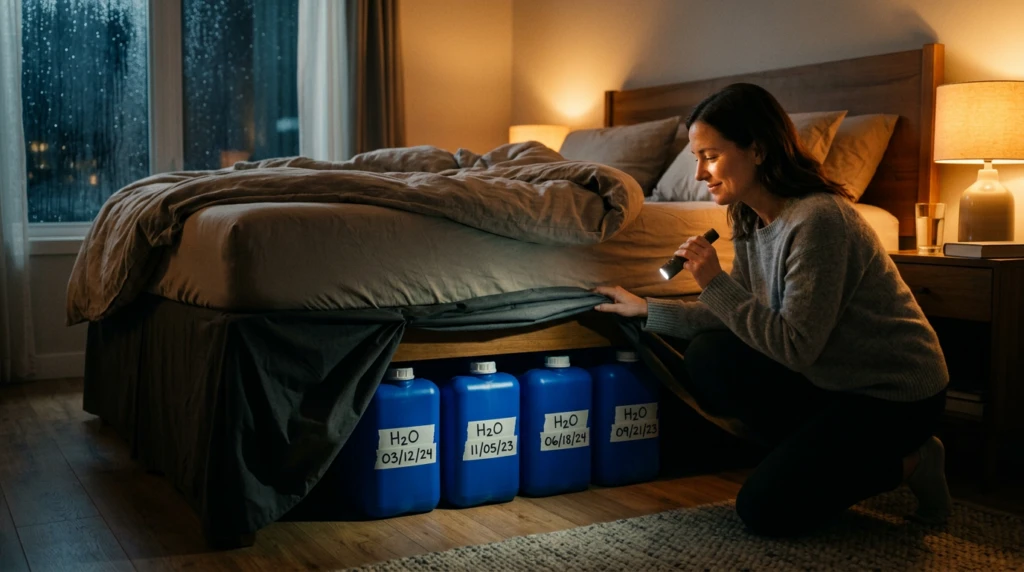 Apartment dwellers face specific challenges: limited space, weight restrictions on flooring, and the absence of basements or garages.
Under-bed storage: Flat, stackable water containers can be stored under beds. A queen-size bed with risers can accommodate 4 to 6 seven-gallon containers — providing 28 to 42 gallons of storage.
Closet storage: Dedicate a section of a closet to water storage. Stackable 5-gallon containers organize efficiently in closet floor space.
The WaterBOB strategy: Keep a WaterBOB stored flat in a closet. When a water emergency is announced, fill it immediately. This provides 100 gallons of emergency water with zero permanent space commitment.
Weight considerations: Water weighs approximately 8.34 pounds per gallon. A 55-gallon barrel weighs approximately 460 pounds when full — potentially problematic for upper-floor apartments. Distribute water storage across multiple smaller containers to manage weight.
Water Purification Methods — Every Option Compared Honestly
Water purification is the process of removing or neutralizing contaminants — biological, chemical, and physical — to make water safe for drinking. Understanding the different methods, their effectiveness against specific contaminants, and their practical limitations is essential for building a system that actually works.
What You’re Actually Purifying Against
Before evaluating purification methods, it’s worth understanding what those methods are designed to remove.
Biological contaminants:
- Bacteria: Microscopic single-celled organisms including E. coli, Salmonella, Campylobacter, and Vibrio cholerae. The most common cause of waterborne illness globally.
- Viruses: Submicroscopic pathogens including norovirus, hepatitis A, and rotavirus. Smaller than bacteria and not removed by most standard filters.
- Protozoa: Single-celled parasites including Giardia lamblia and Cryptosporidium parvum. Larger than bacteria, resistant to chlorine treatment, but removed by most filters.
Chemical contaminants:
- Heavy metals: Lead, arsenic, mercury, and chromium. Common in areas with aging infrastructure or industrial contamination.
- Pesticides and herbicides: Agricultural runoff contaminants.
- Industrial chemicals: VOCs, PFAS, and other industrial pollutants.
- Chlorine and chloramine: Added by municipal water treatment systems; generally safe at treatment levels but can affect taste.
Physical contaminants:
- Sediment: Dirt, sand, rust, and other particulate matter.
- Turbidity: Cloudiness caused by suspended particles.
Method 1: Boiling — The One That Never Fails
Boiling is the oldest, most reliable, and most universally applicable water purification method. It requires no special equipment beyond a heat source and a container, and it is effective against all biological contaminants.
At sea level, a rolling boil for 1 minute kills all bacteria, viruses, and protozoa. At elevations above 6,500 feet (2,000 meters), boil for 3 minutes to compensate for the lower boiling point of water at altitude.
What boiling removes: All biological contaminants — bacteria, viruses, and protozoa.
What boiling does NOT remove: Chemical contaminants, heavy metals, sediment, or turbidity. Boiling actually concentrates some chemical contaminants by reducing water volume through evaporation.
Practical considerations: Requires a heat source. Requires time — boiling plus cooling before drinking. Fuel consumption is a limiting factor for extended use.
The boiling protocol:
- If water is turbid, filter through a clean cloth, coffee filter, or paper towel to remove sediment before boiling
- Bring water to a rolling boil (large, vigorous bubbles)
- Maintain rolling boil for 1 minute (3 minutes above 6,500 feet)
- Allow to cool before drinking
- Store in a clean, covered container
Method 2: Chemical Treatment — Chlorine and Iodine
Chemical treatment uses disinfectant chemicals to kill biological pathogens in water. Lightweight, inexpensive, and effective against most biological contaminants.
Chlorine treatment (sodium hypochlorite):
Unscented liquid chlorine bleach (6% to 8.25% sodium hypochlorite) is the most widely available and cost-effective chemical water treatment option.
Dosage:
- Clear water: 8 drops (approximately 1/8 teaspoon) per gallon
- Cloudy water: 16 drops (approximately 1/4 teaspoon) per gallon
Protocol: Filter turbid water through a clean cloth before treatment. Add the appropriate amount of bleach. Stir and let stand for 30 minutes before drinking. Water should have a slight chlorine smell after treatment — if it doesn’t, repeat the dose and wait another 15 minutes.
Effectiveness: Kills bacteria and most viruses. Less effective against Cryptosporidium.
Shelf life of bleach: Liquid chlorine bleach degrades over time. Bleach more than 1 year old may have lost significant potency. Store in a cool, dark location and replace annually.
Calcium hypochlorite (pool shock):
A more concentrated and longer-lasting alternative to liquid bleach. Pool shock (calcium hypochlorite, 68% to 78% concentration) has a shelf life of up to 10 years when stored properly.
Dosage: Create a stock solution by dissolving 1 teaspoon of pool shock in 2 gallons of water. Add 1 part stock solution to 100 parts water to be treated.
Advantages: Much longer shelf life than liquid bleach, more cost-effective for large-scale treatment.
Disadvantages: Requires careful handling (concentrated oxidizer), requires two-step preparation.
Iodine treatment:
Iodine tablets (tetraglycine hydroperiodide) are a compact, lightweight option for emergency water treatment.
Dosage: Follow manufacturer instructions — typically 1 tablet per quart of clear water, 2 tablets per quart of cloudy water. Wait 30 minutes before drinking.
Effectiveness: Kills bacteria and most viruses. Less effective against Cryptosporidium.
Limitations: Not suitable for pregnant women, people with thyroid conditions, or people with iodine allergies. Not recommended for extended use. Leaves an unpleasant taste that can be partially neutralized with vitamin C tablets.
Chlorine dioxide tablets:
Chlorine dioxide (sold as Aquatabs, Potable Aqua Chlorine Dioxide, and similar brands) is the most effective chemical treatment option, killing bacteria, viruses, and Cryptosporidium.
Dosage: Follow manufacturer instructions — typically 1 tablet per liter of water. Wait 30 minutes for bacteria and viruses; wait 4 hours for Cryptosporidium.
Advantages: Effective against all biological contaminants including Cryptosporidium, minimal taste impact, lightweight.
Disadvantages: More expensive than chlorine or iodine, longer wait time for Cryptosporidium treatment.
Method 3: Filtration — The Most Practical Field Method
Water filtration physically removes contaminants by passing water through a porous medium. Modern water filters range from simple gravity-fed systems to sophisticated pump filters and squeeze filters.
Understanding filter ratings:
Filter effectiveness is measured by the size of particles the filter removes, expressed in microns (μm):
- 0.2 microns: Removes bacteria and protozoa (most standard filters)
- 0.02 microns: Removes bacteria, protozoa, and some viruses (hollow fiber filters)
- Activated carbon: Removes chemical contaminants, chlorine, and improves taste (does not remove biological contaminants)
Important distinction: Most standard water filters do NOT remove viruses. In wilderness settings where viral contamination is unlikely, this is generally acceptable. In urban emergency scenarios, post-disaster environments, or international travel, viral contamination is a real risk — use a filter rated for virus removal or combine filtration with chemical treatment.
Hollow fiber filters (Sawyer Squeeze, LifeStraw)
The most popular category of portable water filters. Use hollow fiber membrane technology to remove bacteria and protozoa.
Sawyer Squeeze:
- Removes 99.99999% of bacteria and 99.9999% of protozoa
- Does not remove viruses
- Rated for 100,000 gallons (378,541 liters)
- Weighs 3 ounces
- Can be used inline, as a squeeze filter, or as a gravity filter
- Requires backflushing to maintain flow rate
LifeStraw:
- Removes 99.9999% of bacteria and 99.9% of protozoa
- Does not remove viruses
- Rated for 1,000 gallons — significantly less than Sawyer
- Designed for direct drinking — less versatile than Sawyer
- Excellent for individual emergency kits
Pump filters (MSR MiniWorks, Katadyn Hiker)
Mechanical pump filters that push water through a ceramic or glass fiber element.
Advantages: Can filter directly from any water source, no gravity required, reliable in cold temperatures.
Disadvantages: Requires physical effort to pump, slower than gravity filters, heavier than hollow fiber filters.
Best for: Situations where gravity filtration isn’t practical, cold weather use.
Gravity filters (Sawyer Gravity, Platypus GravityWorks, Berkey)
Gravity-fed filtration systems that require no pumping or squeezing — water flows through the filter by gravity.
Berkey water filtration system:
The most popular countertop gravity filter for home emergency preparedness. Uses proprietary Black Berkey elements that remove bacteria, protozoa, viruses, heavy metals, pesticides, pharmaceuticals, and chlorine.
- Removes 99.9999999% of bacteria, 99.999% of viruses
- Removes heavy metals, pesticides, and chemical contaminants
- No electricity required
- Produces 1 to 26 gallons per hour depending on model size
- Filter elements rated for 3,000 gallons each (6,000 gallons per pair)
- Expensive upfront ($200 to $400+) but extraordinarily cost-effective per gallon
Best for: Home emergency preparedness, long-term water purification, households with chemical contamination concerns.
Reverse osmosis (RO) systems
Reverse osmosis uses pressure to force water through a semi-permeable membrane, removing virtually all contaminants including dissolved solids, heavy metals, and most chemicals.
Advantages: Most comprehensive filtration available, removes contaminants that other methods miss.
Disadvantages: Requires water pressure (typically electricity), produces significant wastewater (3 to 4 gallons of wastewater per gallon of purified water), slow production rate, expensive.
Best for: Home installation as a primary water treatment system, not practical for emergency field use.
Method 4: UV Purification
Ultraviolet light purification uses UV-C light to destroy the DNA of pathogens, rendering them unable to reproduce.
SteriPen and similar UV purifiers:
How it works: A UV-C light source is submerged in water and activated for 60 to 90 seconds. The UV light destroys the DNA of bacteria, viruses, and protozoa.
Effectiveness: Kills 99.9999% of bacteria, 99.99% of viruses, and 99.9% of protozoa — including Cryptosporidium.
Advantages: Fast (60 to 90 seconds per liter), effective against all biological contaminants including viruses, no chemical taste, lightweight.
Disadvantages: Requires batteries (or USB charging), does not work in turbid water (UV light cannot penetrate suspended particles), does not remove chemical contaminants, fragile.
Best for: Clear water sources where viral contamination is a concern, international travel, supplemental purification.
Method 5: Solar Disinfection (SODIS)
Solar disinfection uses UV radiation from sunlight to inactivate pathogens in water. It requires no equipment beyond clear plastic bottles and sunlight.
Protocol:
- Fill clear PET plastic bottles (1 to 2 liter) with water
- If water is turbid, filter through a clean cloth first
- Place bottles on a reflective surface (corrugated metal roofing is ideal) in direct sunlight
- Leave for 6 hours in full sun, or 2 days in cloudy conditions
- Water is safe to drink after the exposure period
Effectiveness: Kills bacteria and viruses. Less effective against Cryptosporidium.
Advantages: Requires no equipment beyond clear bottles, completely free, no chemical taste.
Disadvantages: Requires direct sunlight, slow (6+ hours), not effective in turbid water, not practical in cold or cloudy climates.
Best for: Emergency backup method when other options are unavailable.
The Purification Method Comparison — At a Glance
| Method | Bacteria | Viruses | Protozoa | Chemicals | Equipment Needed | Time Required |
| Boiling | ✅ | ✅ | ✅ | ❌ | Heat source | 1–3 min + cooling |
| Chlorine bleach | ✅ | ✅ | Partial | ❌ | None | 30 min |
| Chlorine dioxide | ✅ | ✅ | ✅ | ❌ | None | 30 min–4 hrs |
| Iodine | ✅ | ✅ | Partial | ❌ | None | 30 min |
| Hollow fiber filter | ✅ | ❌ | ✅ | ❌ | Filter | Immediate |
| Berkey filter | ✅ | ✅ | ✅ | ✅ | Filter system | Slow gravity |
| UV (SteriPen) | ✅ | ✅ | ✅ | ❌ | UV device + batteries | 60–90 sec |
| Reverse osmosis | ✅ | ✅ | ✅ | ✅ | RO system + pressure | Slow |
| SODIS | ✅ | ✅ | Partial | ❌ | Clear bottles | 6+ hours |
Emergency Water Sources — Where to Find Water When Your Supply Runs Out
 Even the most comprehensive water storage system has limits. Understanding how to identify and safely use emergency water sources is the critical complement to storage and purification planning.
The Water That’s Already in Your Home
Hot water heater tank: A standard residential water heater holds 30 to 80 gallons — enough to sustain a family of four for 1 to 2 weeks at the baseline calculation. To access:
- Turn off the power or gas to the heater
- Let the water cool if the heater was recently operating
- Connect a hose to the drain valve at the bottom of the tank
- Open a hot water faucet in the house to allow air into the system
- Open the drain valve and collect the water
Water from a hot water heater is generally safe to drink but may have a metallic taste. Filter through a clean cloth and treat with chlorine if the tank hasn’t been maintained recently.
Toilet tank (not the bowl): The water in the toilet tank — the upper reservoir, not the bowl — is typically clean tap water. Do not use water from the toilet bowl. Do not use water from tanks that contain toilet cleaning tablets or other chemical additives.
Water pipes: After a water supply failure, water remaining in your home’s pipes can be accessed by opening the lowest faucet in the house (typically a basement or ground-floor faucet) and allowing gravity to drain the pipes.
Ice cubes: Frozen ice cubes in your freezer are a clean water source. Allow to melt and use as needed.
Canned goods: Many canned fruits and vegetables contain significant liquid. This liquid is safe to drink and provides both hydration and nutrition.
Outdoor Emergency Water Sources
Rainwater collection: Rainwater is generally safe to drink when collected directly — not from rooftops, which may contain contaminants from roofing materials, bird droppings, and atmospheric pollutants. Collect in clean containers and treat before drinking.
Natural water sources (streams, rivers, lakes, ponds): Natural water sources should always be treated before drinking, regardless of how clean they appear. Clear, fast-moving mountain streams can contain Giardia. Still ponds can contain bacteria, viruses, and chemical runoff. Always filter and treat.
Groundwater (wells): Private well water is generally safe but should be tested regularly. After flooding or earthquakes, well water should be tested before use — floodwater can contaminate wells with bacteria, chemicals, and other contaminants.
Dew collection: In humid environments, dew can be collected from vegetation using absorbent cloth. Tie cloth around your ankles and walk through grass at dawn, then wring into a container. This method produces small quantities but can supplement other sources.
Water Sources to Avoid
Floodwater: Floodwater is almost always contaminated with sewage, chemicals, heavy metals, and biological pathogens. Do not drink floodwater even after treatment — the contamination load may exceed the capacity of available purification methods.
Water near industrial sites: Water sources near factories, mining operations, or agricultural areas may contain chemical contaminants that standard purification methods cannot remove.
Saltwater: Saltwater cannot be made safe for drinking without desalination equipment. Drinking saltwater accelerates dehydration. Do not attempt to drink saltwater.
Water with unusual color, smell, or taste: These are indicators of contamination. Treat with extra caution and use multiple purification methods.
Building a Layered Emergency Water System — The Framework That Actually Works
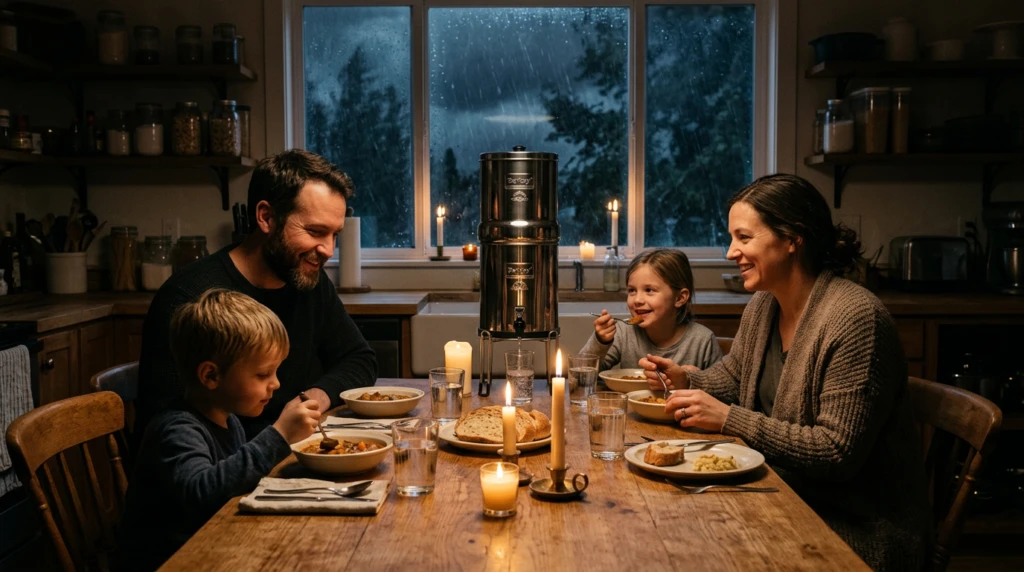 The most resilient emergency water preparedness system uses multiple overlapping layers — storage, purification, and source identification — so that the failure of any single component doesn’t leave your household without safe water.
Layer 1: Stored Water — Your Immediate Supply
Your stored water supply is your first line of defense. It requires no purification, no equipment, and no effort to access. It’s the water that keeps your household functioning in the first hours and days of an emergency, before you need to think about purification or alternative sources.
Minimum stored water target: 2 weeks for your entire household, calculated using the adjusted formula above.
Storage system components:
- Primary storage: 55-gallon barrel(s) or multiple 5 to 7-gallon containers
- Supplemental storage: WaterBOB bathtub bladder (deployed when emergency is imminent)
- Portable storage: 5-gallon containers for evacuation scenarios
Layer 2: Purification Capability — The Processing System
Your purification capability allows you to convert unsafe water sources — from your hot water heater, from natural sources, from rainwater — into safe drinking water.
Recommended purification system (layered):
- Primary: Berkey gravity filter (removes bacteria, viruses, protozoa, and chemical contaminants)
- Secondary: Sawyer Squeeze filter (portable, for field use or evacuation)
- Chemical backup: Chlorine dioxide tablets (effective against all biological contaminants)
- Emergency backup: Unscented liquid chlorine bleach (widely available, long shelf life with annual replacement)
Layer 3: Source Identification — The Replenishment Plan
Your source identification plan ensures you know where to find water when your stored supply is exhausted and your purification system is working.
Home sources: Hot water heater, toilet tank, water pipes, ice cubes, canned goods.
Neighborhood sources: Swimming pools (treat before drinking), decorative ponds (treat before drinking), natural water features.
Community sources: Emergency water distribution points established by FEMA and local emergency management agencies during major disasters, water tanker trucks, community wells.
Natural sources: Streams, rivers, lakes, ponds (always treat before drinking), rainwater collection.
Special Situations — Water Planning for Specific Households
Apartment Dwellers
Apartment dwellers face unique challenges: limited storage space, weight restrictions, and the absence of outdoor water sources. The apartment water preparedness strategy:
- WaterBOB as primary emergency storage: Keep one stored flat in a closet. Fill immediately when an emergency is announced.
- Aqua-Tainer 7-gallon containers: Store 4 to 6 under beds or in closets for ongoing storage.
- Berkey countertop filter: Provides ongoing purification capability without requiring electricity.
- Sawyer Squeeze: Portable purification for evacuation scenarios.
- Chlorine dioxide tablets: Chemical backup that takes up almost no space.
Families With Infants
Infants have specific water needs that require additional planning:
- Formula preparation: If using powdered formula, you need safe water for preparation. Boiled and cooled water is the safest option. Commercially bottled water labeled “nursery water” or purified water is acceptable.
- Sterilization: Bottles and feeding equipment should be sterilized using boiled water.
- Increased storage: Account for formula preparation water in your storage calculations — add at least 1 additional gallon per day for formula-fed infants.
People With Medical Conditions
Certain medical conditions require specific water preparedness considerations:
- Kidney disease: Patients on dialysis require access to large quantities of purified water. Dialysis centers typically have emergency protocols — contact your dialysis center about their emergency plan.
- Immunocompromised individuals: People with compromised immune systems are more vulnerable to waterborne pathogens. Use the most comprehensive purification available (Berkey filter or boiling) rather than relying on chemical treatment alone.
- Medication requirements: Some medications require water for administration or preparation. Account for this in your water storage calculations.
Off-Grid and Rural Households
Rural households with private wells face specific challenges during power outages, which disable electric well pumps:
- Hand pump installation: A manual hand pump installed alongside an electric pump provides water access during power outages. Bison Pump and Simple Pump are the most recommended brands.
- Gravity-fed storage tank: A storage tank elevated above the household provides gravity-fed water pressure without electricity.
- Generator backup: A generator can power an electric well pump during outages. Ensure the generator is properly sized for the pump’s electrical requirements.
- Water testing: Private well water should be tested annually for bacteria, nitrates, and pH, and after any flooding or seismic event.
Water Storage Maintenance — Keeping Your Supply Safe Over Time
A water storage system that isn’t maintained is a liability, not an asset. Improperly maintained stored water can become contaminated, develop bacterial growth, or degrade in quality to the point where it’s unsafe to drink.
The Maintenance Schedule
Every 6 months:
- Inspect all containers for cracks, leaks, or damage
- Check seals and lids for integrity
- Rotate stored water (use and refill, or replace entirely)
- Test stored water with a water testing kit if concerned about quality
Annually:
- Replace liquid chlorine bleach (it degrades over time)
- Inspect and clean storage containers
- Replace filter cartridges according to manufacturer recommendations
- Review and update your water storage calculations based on household changes
After any emergency:
- Inspect all containers for damage
- Replace any water that may have been contaminated
- Restock any water that was used
Signs That Stored Water Has Gone Bad
Properly stored water doesn’t “expire” in the way that food does — but it can become contaminated or develop quality issues that make it undesirable or unsafe.
Signs of contamination:
- Unusual color (green, brown, or cloudy)
- Unusual smell (musty, chemical, or sewage-like)
- Unusual taste
- Visible growth (algae, biofilm)
What to do: If stored water shows any of these signs, do not drink it without treatment. Filter through a clean cloth to remove particulate matter, then treat with chlorine dioxide tablets or boil before drinking.
The “safe but unpleasant” category: Water stored for an extended period may taste flat or stale due to the loss of dissolved oxygen. This is not a safety issue — it’s a palatability issue. Pouring the water back and forth between containers several times aerates it and improves the taste significantly.
The Questions People Actually Ask About Emergency Water
How long can you store tap water in plastic containers?
Tap water stored in clean, food-grade plastic containers in a cool, dark location is safe to drink for 6 to 12 months without additional treatment. With the addition of unscented liquid chlorine bleach (8 drops per gallon), shelf life extends to 1 to 2 years. Water stored in 55-gallon barrels with proper treatment can remain safe for up to 5 years. The key variables are container cleanliness, storage temperature, light exposure, and whether the water was treated before storage.
Is it actually safe to drink water from a hot water heater during an emergency?
Yes, in most cases. Water in a residential hot water heater is the same municipal tap water that comes from your faucets — it’s been treated by your water utility and is generally safe to drink. The water may have a slightly metallic taste from the tank, and sediment may have accumulated at the bottom. Filter through a clean cloth before drinking and treat with chlorine if the tank hasn’t been maintained recently. Turn off the power or gas to the heater before draining.
What’s the best water filter for emergency preparedness?
It depends on your specific needs. For home use, the Berkey gravity filter is the most comprehensive option — it removes bacteria, viruses, protozoa, heavy metals, and chemical contaminants without electricity. For portable use, the Sawyer Squeeze is the most versatile option — lightweight, rated for 100,000 gallons, and usable in multiple configurations. For a complete system, use both: a Berkey for home purification and a Sawyer Squeeze for evacuation scenarios.
Can you actually drink pool water in an emergency?
Swimming pool water can be made safe to drink in an emergency, but it requires treatment. Pool water typically contains chlorine at levels higher than drinking water standards, and may contain algaecides, pH adjusters, and other chemicals. To make pool water safe: filter through a clean cloth to remove debris, then treat with a water filter (Berkey or similar) to remove chemical contaminants. Do not drink pool water that has been treated with algaecides or other non-chlorine chemicals without comprehensive filtration.
What if I have absolutely no purification equipment?
If you have no purification equipment, boiling is the most reliable option — it requires only a heat source and a container. If you have no heat source, solar disinfection (SODIS) is the next best option: fill clear plastic bottles with water and leave in direct sunlight for 6 hours. If neither option is available, allow turbid water to settle for several hours, carefully pour off the clearer water from the top, and drink only as a last resort. Any water consumed without purification carries risk of waterborne illness.
How much water do you actually need for cooking and hygiene?
The 1-gallon-per-person-per-day baseline includes approximately 0.5 gallons for drinking and 0.5 gallons for basic hygiene. If your emergency food supply requires cooking (dried beans, rice, pasta), add 0.5 to 1 additional gallon per person per day. For more thorough hygiene (sponge bathing), add another 0.5 gallons per person per day. For households with infants requiring formula preparation, add at least 1 additional gallon per day.
Does boiling water remove chemicals?
No. Boiling water kills biological pathogens — bacteria, viruses, and protozoa — but it does not remove chemical contaminants, heavy metals, or dissolved solids. Boiling actually concentrates some chemical contaminants by reducing water volume through evaporation. To remove chemical contaminants, use activated carbon filtration (Berkey filter, activated carbon filter) or reverse osmosis.
I live in an apartment. How do I store enough water without taking over my entire living space?
The most space-efficient apartment water storage strategy combines a WaterBOB bathtub bladder (stored flat until needed, then filled with up to 100 gallons when an emergency is imminent) with several Aqua-Tainer 7-gallon containers stored under beds or in closets. For a 2-person apartment, 4 seven-gallon containers (28 gallons) provides a 2-week supply at the baseline calculation, and can be stored in approximately 4 square feet of floor space.
Products / Tools / Resources
These are the specific items that form the backbone of a serious emergency water preparedness system — selected for reliability, value, and real-world effectiveness.
Water Storage Containers
WaterBOB Emergency Drinking Water Storage — The single best emergency water storage solution for apartment dwellers and anyone who wants high-capacity storage without permanent space commitment. Stores flat, fills from a bathtub faucet, holds 100 gallons. Keep one in every household. It’s inexpensive insurance that takes up almost no space until the moment you need it.
Aqua-Tainer 7-Gallon Rigid Water Container — The most practical everyday water storage container. Stackable, food-grade, equipped with a built-in spigot. Buy four for a 2-person household’s 2-week supply. The spigot makes dispensing genuinely easy — no awkward pouring from a heavy container.
WaterPrepared 55-Gallon Water Storage Barrel — The highest-capacity option for homeowners with storage space. Includes a bung wrench, siphon pump, and water treatment. The most cost-effective per-gallon storage solution available. If you have a basement or garage, this is where your water preparedness system should start.
Water Purification — Filters
Sawyer Squeeze Water Filter System — The most versatile portable water filter available. Rated for 100,000 gallons, weighs 3 ounces, and works as a squeeze filter, gravity filter, or inline filter. The standard recommendation for bug-out bags and evacuation kits. If you own one water filter, this is the one.
Berkey BK4X2 Big Berkey Gravity-Fed Water Filter — The gold standard for home emergency water purification. Removes bacteria, viruses, protozoa, heavy metals, pesticides, and chemical contaminants without electricity. Expensive upfront, extraordinarily cost-effective per gallon over time. The Berkey is the water purification system that serious preparedness practitioners consistently recommend above everything else.
LifeStraw Personal Water Filter — The most accessible entry-level water filter. Excellent for individual emergency kits and as a backup to more comprehensive systems. Lightweight, inexpensive, and genuinely effective for biological contaminants.
MSR MiniWorks EX Microfilter — The most reliable pump filter for cold-weather use and situations where gravity filtration isn’t practical. Built like a tank and repairable in the field.
Water Purification — Chemical
Potable Aqua Chlorine Dioxide Water Purification Tablets — The most effective chemical treatment option. Kills bacteria, viruses, and Cryptosporidium. Lightweight, compact, and effective. Keep a supply in every emergency kit, car kit, and bug-out bag. These are the tablets that actually work against everything.
Clorox Regular Bleach (unscented, 8.25%) — The most widely available chemical water treatment. Inexpensive, effective, and already in most households. Replace annually — bleach degrades and loses potency over time.
HTH Pool Shock (calcium hypochlorite, 68%) — The longest-lasting chemical water treatment option. A single 1-pound bag treats thousands of gallons of water and stores for up to 10 years. The best long-term chemical treatment investment available.
Water Purification — UV
SteriPen Adventurer Opti UV Water Purifier — The fastest UV purification option for clear water. Treats 1 liter in 90 seconds, effective against all biological contaminants including viruses. Requires batteries — carry spares. Best used as a complement to filtration, not a replacement.
Water Testing
Safe Home Premium Water Quality Test Kit — Tests for bacteria, lead, pesticides, nitrates, and other common contaminants. Essential for households using well water or concerned about water quality after an emergency.
WaterSafe Well Water Test Kit — A simpler, more affordable option for basic bacterial and chemical testing of well water. Every household on a private well should have one.
Accessories
Siphon Pump for Water Barrels — Essential for accessing water from 55-gallon barrels. The WaterPrepared hand pump is the most recommended option. Without it, a full barrel is essentially inaccessible.
Gamma Seal Lids — Convert standard 5-gallon buckets into easy-access water storage containers. The threading mechanism provides a secure, airtight seal that standard snap-on lids don’t. Worth every dollar.
Aquatabs Water Purification Tablets — Compact, individually wrapped chlorine tablets for treating water on the go. Each tablet treats 1 liter of water. Keep a supply in every emergency kit, car kit, and bug-out bag.
Educational Resources
FEMA Emergency Water Storage Guide (free PDF)— The official government guidance on emergency water storage and purification. Available at ready.gov. Free, authoritative, and worth reading before you buy anything.
Wilderness Medicine by Paul Auerbach — The most comprehensive reference on water purification in field conditions. Used by wilderness medicine practitioners and emergency responders worldwide. Dense but invaluable.The Prepared (theprepared.com) — The most rigorous and evidence-based emergency preparedness resource available online. Their water storage and purification guides are extensively researched and regularly updated. If you read one preparedness website, make it this one.