
Hey there! Some links on this page may be affiliate links which means that, if you choose to make a purchase, I may earn a commission at no extra cost to you. I greatly appreciate your support. Read the full disclosure here.
Most American households are less than 72 hours away from a serious crisis, yet according to FEMA, nearly 60% of adults have no emergency supplies at all. The good news: knowing how to build a 72-hour emergency kit for under $50 is not only possible, it’s one of the most practical preparedness steps anyone can take. This guide breaks down exactly what to buy, where to find it cheaply, and how to organize a kit that actually works when things go sideways.
Key Takeaways
- A functional 72-hour emergency kit for one adult can be built for $30 to $50 using dollar stores, discount retailers, and strategic shopping.
- The five non-negotiables are water, food, light, first aid, and communication, everything else is secondary.
- A 72-hour kit and a bug out bag serve different purposes; a budget kit is designed for shelter-in-place or short evacuation, not extended wilderness survival.
- Families need to scale supplies per person, roughly $15 to $20 per additional adult, less for young children.
- Apartment dwellers can build a fully functional compact kit that fits in a single backpack under the bed or in a closet.
- Rotate perishable items every 6 to 12 months to keep the kit ready.
- Free and low-cost emergency supplies are available through local emergency management offices, community organizations, and seasonal sales.
- A 72-hour kit is a starting point, not a finish line, it buys time while you assess the situation and decide next steps.
Do You Really Need a 72-Hour Emergency Kit?
 Yes, and the reasoning is straightforward. Emergency services are often overwhelmed in the first 72 hours after a major disaster. FEMA and the American Red Cross both recommend that every household maintain at least a three-day supply of food, water, and basic supplies to bridge that gap without relying on outside help.
This isn’t about worst-case doomsday scenarios. Power outages, winter storms, flooding, and even a sudden job loss can disrupt access to food, clean water, and medical supplies within hours. A 72-hour kit is simply a buffer, the difference between managing a crisis calmly and scrambling in a panic.
For anyone serious about preparedness, this is the foundation. Everything else, long-term food storage, bug out planning, off-grid skills, builds on top of it.
What Should You Put in a 72-Hour Emergency Kit?
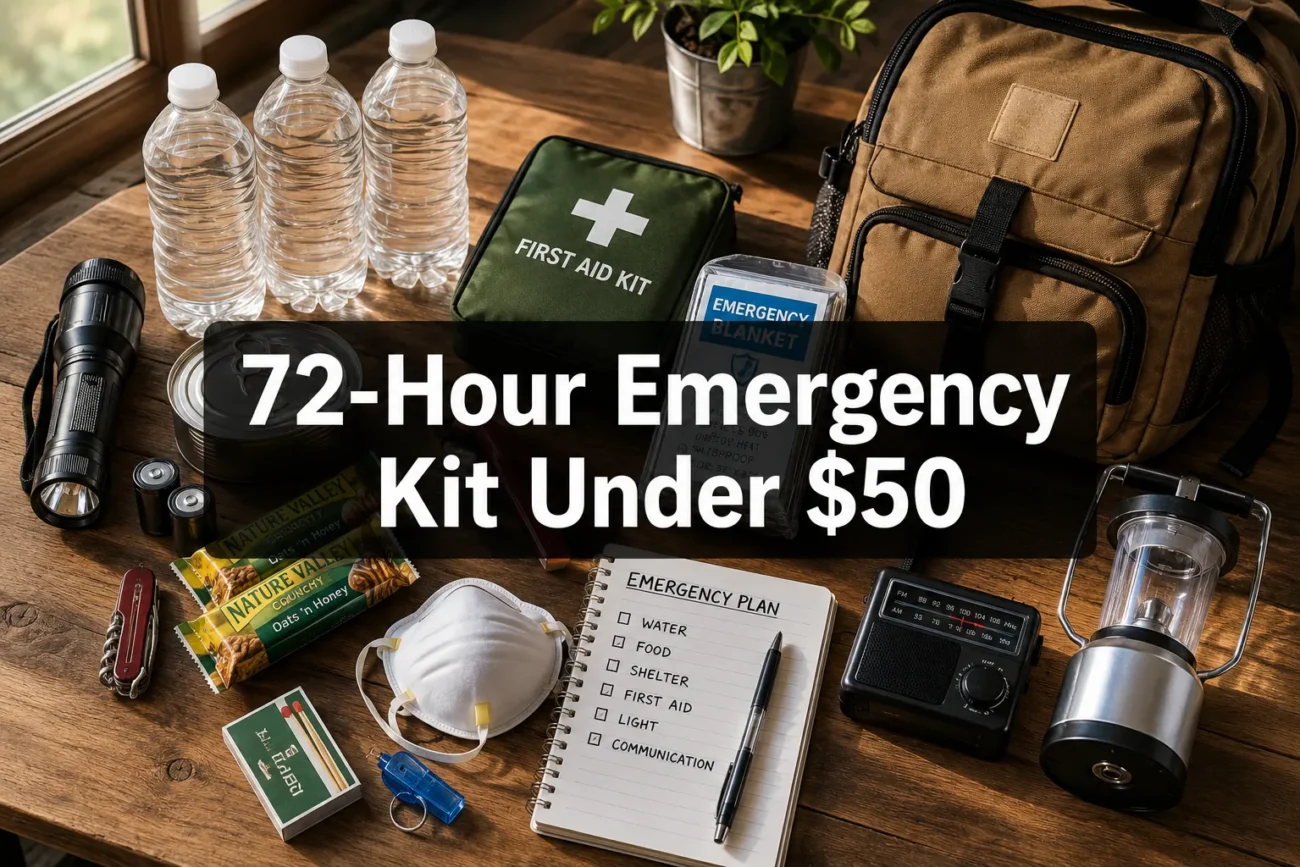
A solid 72-hour emergency kit covers five core categories: water, food, light and power, first aid, and communication. Every item beyond those five is a bonus.
Water
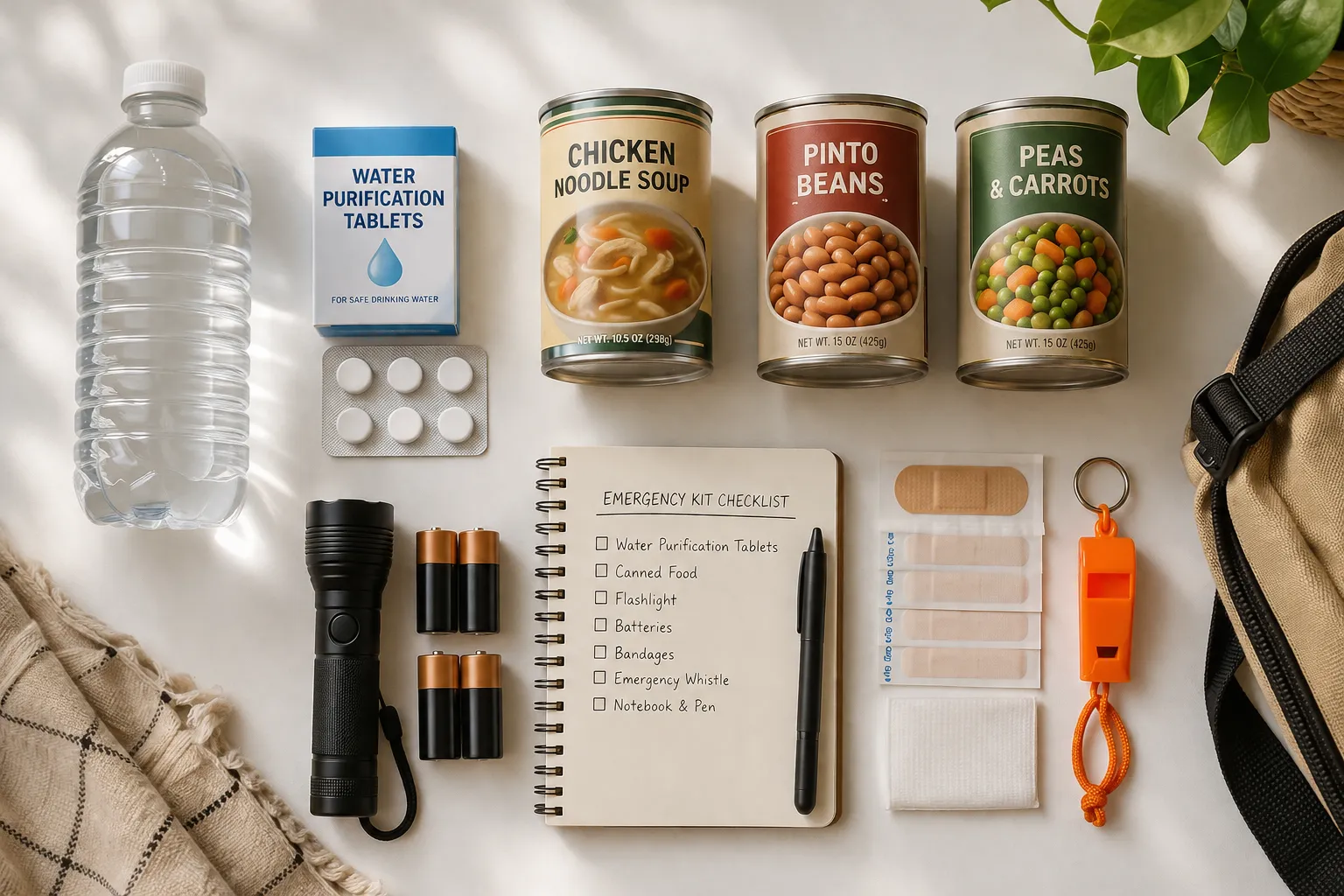
- Store at least one gallon per person per day (three gallons total for 72 hours)
- Budget option: fill clean 2-liter bottles from the tap, or buy a case of bottled water (~$4 to $6)
- Add water purification tablets (Aquatabs, ~$6 for 50 tablets) as a backup
- For a deeper look at water storage options, the Ultimate Emergency Water Storage and Purification Guide covers every method in detail
Food
- Target 1,200 to 2,000 calories per person per day
- Best budget picks: canned beans, tuna, peanut butter, crackers, granola bars, instant oatmeal
- Choose foods that require no cooking or minimal preparation
- See 25 Easy Emergency Meals Using Only Canned Foods for practical meal ideas
Light and Power
- A basic LED flashlight ($3 to $5 at dollar stores) and extra batteries
- Emergency candles or a headlamp if budget allows
- A hand-crank or battery-powered radio for alerts
First Aid
- A pre-made basic first aid kit runs $8 to $12 at most pharmacies
- Supplement with any personal prescription medications (30-day supply if possible)
- Include a copy of important medical information in a waterproof bag
Communication and Documents
- Copies of IDs, insurance cards, and emergency contacts in a zip-lock bag
- A whistle (under $2) for signaling
- A local paper map, GPS fails when the grid goes down
Common mistake: People overbuy gear and underbuy consumables. A $30 multi-tool is less useful in the first 72 hours than three days of water and food.
Can You Really Build a 72-Hour Emergency Kit for $50?
Yes, a fully functional 72-hour emergency kit for one adult can be assembled for $30 to $50. For a family of four, expect to spend $80 to $120, which still averages out to $20 to $30 per person.
The key is buying strategically rather than buying branded “emergency kits” at outdoor retailers, which often run $60 to $150 for the same items you can source yourself for half the price.
Sample $50 budget breakdown (one adult):
| Item | Estimated Cost |
|---|---|
| 3 gallons bottled water (case) | $5 |
| Canned food (3-day supply) | $12 |
| Peanut butter + crackers | $5 |
| Basic first aid kit | $10 |
| LED flashlight + batteries | $6 |
| Emergency mylar blanket | $2 |
| Water purification tablets | $5 |
| Whistle + zip-lock bags | $3 |
| Small backpack or bag | $5 |
| Total | ~$53 |
Swap the backpack for one you already own and you’re well under $50. Buy the water purification tablets at a dollar store and save another $2.
What’s the Difference Between a 72-Hour Kit and a Bug Out Bag?
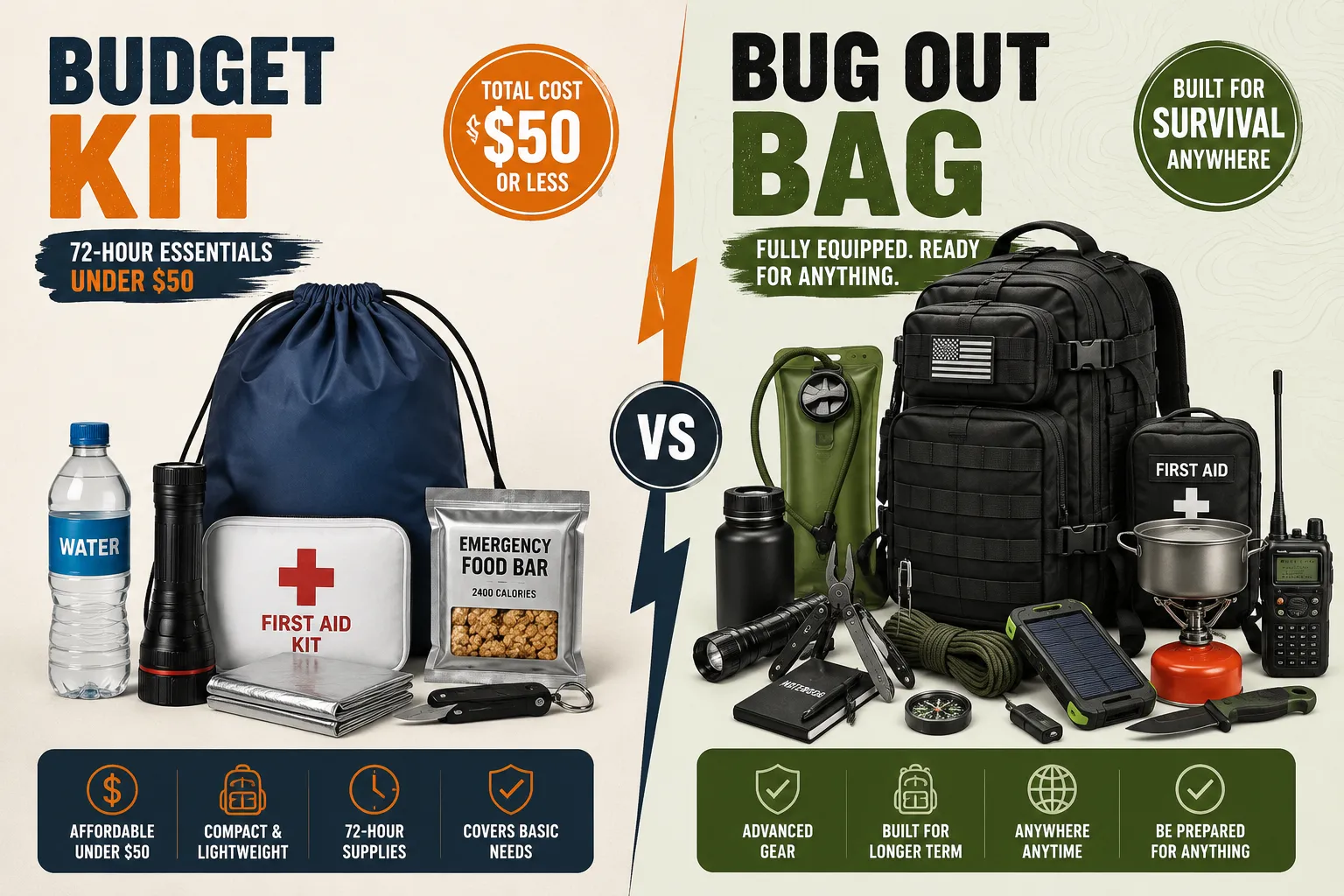
A 72-hour emergency kit is designed for shelter-in-place emergencies or short-term evacuations to a nearby shelter. A bug out bag is built for mobility, specifically for leaving your home quickly and surviving for 72 hours or more while on the move, potentially in a wilderness or urban survival scenario.
The practical differences matter when you’re shopping on a budget:
- A 72-hour kit prioritizes calories, water, and basic medical supplies, it doesn’t need to be carried on your back for miles
- A bug out bag prioritizes weight, durability, and self-sufficiency tools (fire-starting, navigation, shelter-building)
- A budget 72-hour kit can live under your bed or in a closet; a bug out bag needs to be grab-and-go ready
If you want to go deeper on the bug out side, the 72-Hour Bug Out Bag Checklist and the Complete Bug Out Bag Guide are the logical next steps after you’ve nailed the basics here.
Choose a 72-hour kit if: You’re sheltering in place, evacuating to a nearby hotel or shelter, or just starting out with preparedness.
Choose a bug out bag if: You may need to leave on foot, travel off-road, or sustain yourself without resupply for multiple days.
Emergency Kit for Families vs. a Single Person
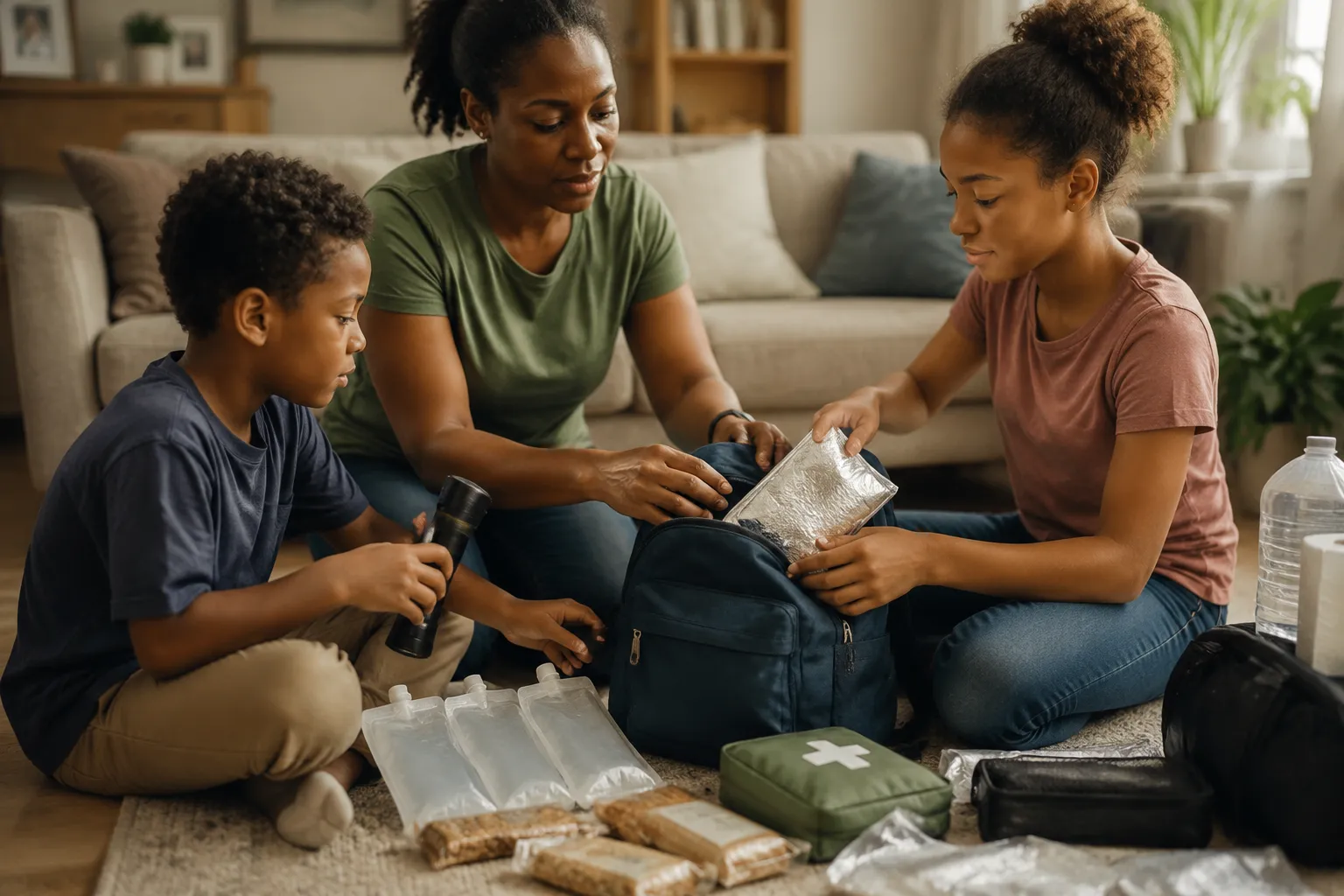
A single adult can build a complete 72-hour kit for $30 to $50. Families need to scale water and food per person, but shared items (flashlight, first aid kit, radio) don’t need to be duplicated.
Per-person additions for a family kit:
- 3 additional gallons of water per person (~$5)
- 3 days of food per person (~$12 to $15)
- Personal medications, glasses, or special dietary items
Special considerations:
- Infants need formula, diapers, and baby food, budget an extra $15 to $20
- Seniors may need extra medications, mobility aids, or comfort items
- Pets need their own food and water, see the Ultimate Pet Emergency Preparedness Checklist for a full breakdown
- Children benefit from a small comfort item (a familiar toy or book) to reduce stress during a crisis
For a family of four, a realistic budget is $100 to $130 if you’re buying everything new. That drops significantly if you raid your pantry first, most households already have canned goods, flashlights, and basic first aid supplies that can seed the kit.
For families wanting a more comprehensive system, Disaster Preparedness for Families covers the full planning framework.
Where to Find the Cheapest Emergency Kit Supplies
The cheapest places to buy emergency supplies are dollar stores, warehouse clubs, discount pharmacies, and online marketplaces, in that order for most items.
Best sources by category:
- Dollar stores (Dollar Tree, Dollar General): Flashlights, batteries, candles, zip-lock bags, basic first aid supplies, canned food, water bottles, most items run $1 to $5
- Walmart / Target: Bottled water cases, first aid kits, emergency blankets, hand-crank radios, competitive pricing with wide availability
- Amazon: Water purification tablets, mylar blankets, and multi-packs of survival items often cost less per unit than retail
- Costco / Sam’s Club: Bulk canned goods, bottled water, and first aid kits at the lowest per-unit cost, ideal for families
- Thrift stores: Backpacks, containers, and storage bags at a fraction of retail
Free and low-cost options:
- Local emergency management offices sometimes distribute basic preparedness supplies during community events
- The American Red Cross offers free preparedness guides and occasionally hosts supply giveaways
- Community preparedness fairs and neighborhood emergency response team (CERT) programs often provide free items
- Check Facebook Marketplace and local buy-nothing groups for donated supplies
Emergency Kit for Apartments With Limited Space
Apartment dwellers can absolutely build a functional 72-hour kit, it just requires thinking vertically and compactly. The entire kit for one person fits in a standard 20-liter backpack.
Space-saving strategies:
- Use a backpack instead of a plastic bin, it’s portable and stores under a bed or in a closet
- Replace bulky water jugs with flat water pouches or purification tablets (saves significant space)
- Choose calorie-dense foods: peanut butter, energy bars, and trail mix pack more calories per inch than canned goods
- Mylar emergency blankets compress to the size of a deck of cards, far better than a bulky sleeping bag for a 72-hour kit
- Store the kit near your exit point, not buried in a storage unit
For apartment-specific preparedness strategies, Urban Survival Kit for Apartment Residents covers the full setup in detail.
Common Mistakes When Building Emergency Kits
The most common emergency kit mistake is building it once and never touching it again. Supplies expire, batteries corrode, and needs change, a kit that was perfect three years ago may be useless today.
Other frequent errors:
- Buying gear over consumables: A tactical knife is less useful than three days of water in most emergencies
- Forgetting medications: Running out of a blood pressure medication or insulin in a disaster is a genuine life-threatening problem
- No copies of documents: Losing access to IDs, insurance cards, and bank account numbers compounds every crisis
- Skipping the radio: When cell towers are down, a battery or hand-crank radio is often the only way to receive emergency alerts
- Packing food you won’t eat: If your family hates canned sardines, they won’t eat them under stress, stock familiar foods
- No plan to go with the kit: Supplies without a plan are just stuff, pair your kit with a basic family emergency plan
For a comprehensive look at what most kits are missing, 15 Things Missing From Your Emergency Kit That Could Cost You Everything is worth reading before you finalize your list.
How Often Should You Replace Emergency Kit Items?
Most emergency kit items should be checked every 6 months and rotated annually. Set a calendar reminder, many preppers tie it to daylight saving time changes, which makes it easy to remember.
Rotation schedule by item type:
| Item | Replace Every |
|---|---|
| Bottled water (commercially sealed) | 1 to 2 years |
| Tap water stored in clean bottles | 6 months |
| Canned food | 2 to 5 years (check dates) |
| Energy bars / granola bars | 1 year |
| Batteries | 2 to 3 years (or when depleted) |
| Medications | Per expiration date |
| First aid supplies | 1 to 3 years |
| Emergency blankets | 5+ years (check for tears) |
The “rotate, don’t waste” principle works well here: eat the canned goods before they expire and replace them with fresh stock. This keeps the kit current without throwing money away.
Is a 72-Hour Kit Enough, or Do You Need More?
A 72-hour kit is the minimum viable preparedness baseline, not the ceiling. It’s designed to cover the most common emergencies: short-term power outages, local evacuations, and the initial chaos after a natural disaster.
For anything beyond 72 hours, extended grid failure, regional disasters, or longer-term disruptions, you’ll need to expand into a 2-week or 3-month food and water supply. The 3-Month Emergency Food Supply Guide is the logical next step once the 72-hour foundation is in place.
Think of it this way: the 72-hour kit buys you time to assess. It keeps you fed, hydrated, and informed while you figure out whether to shelter in place, evacuate, or activate a longer-term plan. That window is often enough to avoid the worst outcomes.
Emergency Kit Checklist for Beginners
This checklist covers everything needed to build a functional 72-hour emergency kit for under $50. Check off each item as you acquire it.
Water
- 3 gallons of water per adult (bottled or stored in clean containers)
- Water purification tablets (backup)
Food
- 3-day supply of non-perishable food (canned goods, peanut butter, energy bars)
- Manual can opener
Light and Power
- LED flashlight
- Extra batteries (AA or AAA depending on your flashlight)
- Emergency candles (optional)
First Aid
- Basic first aid kit (bandages, antiseptic, gauze, medical tape)
- Personal medications (minimum 7-day supply)
- Medical information sheet in a waterproof bag
Communication and Documents
- Battery or hand-crank emergency radio
- Whistle
- Copies of IDs, insurance cards, emergency contacts
- Local paper map
Warmth and Shelter
- Mylar emergency blanket (one per person)
- Light jacket or extra layer
Sanitation
- Hand sanitizer
- Toilet paper
- Garbage bags (heavy duty)
- Wet wipes
Miscellaneous
- Cash in small bills (ATMs fail during power outages)
- Multi-tool or basic knife
- Zip-lock bags (assorted sizes)
- Duct tape
Frequently Asked Questions
Can I really build a 72-hour emergency kit for $50?
Yes. For one adult, a fully functional kit costs $30 to $50 when you shop at dollar stores, Walmart, and discount pharmacies. Families can scale up for roughly $15 to $20 per additional person by sharing items like flashlights and first aid kits.
What’s the single most important item in a 72-hour kit?
Water. A person can survive three weeks without food but only three days without water. Prioritize water storage and purification before anything else.
Can I use a regular backpack instead of a tactical bag?
Absolutely. Any backpack that holds 20 to 30 liters works fine for a personal 72-hour kit. The bag itself is just a container, what’s inside matters far more.
Should I keep my kit at home or in my car?
Ideally both. A home kit handles shelter-in-place scenarios; a smaller car kit handles situations where you’re away from home when disaster strikes. The Ultimate Car Emergency Kit List covers the vehicle version in detail.
What food is best for a budget emergency kit?
Peanut butter, canned beans, canned tuna, crackers, oatmeal packets, and granola bars. They’re calorie-dense, shelf-stable, inexpensive, and require little or no preparation.
Do I need a generator or solar charger in my 72-hour kit?
Not for a basic 72-hour kit. Extra batteries and a hand-crank radio are sufficient for most 72-hour scenarios. Generators and solar chargers are valuable for longer-term preparedness.
How do I store a 72-hour kit in a small apartment?
Use a compact backpack stored under the bed or in a hall closet near the exit. Replace bulky water jugs with flat water pouches or purification tablets to save space.
What if a family member has special dietary needs or medical conditions?
Account for those needs first before buying generic supplies. Prescription medications, special formula, diabetic-friendly foods, and allergy considerations should be addressed before anything else in the kit.
Is a pre-made emergency kit worth buying?
Pre-made kits are convenient but often overpriced for what you get. Building your own gives you better quality control, fresher supplies, and the ability to customize for your household’s actual needs.
How do I know if my kit is actually ready?
Do a dry run. Pack everything up, pretend the power is out, and see if you can actually use everything in the kit for 24 hours. Most people discover at least two or three gaps they hadn’t considered.
What’s the best container for a 72-hour kit?
A backpack for portability, or a waterproof plastic bin (with a lid) for home storage. The bin approach works well for families; the backpack is better for individuals and apartment dwellers who may need to evacuate quickly.
Do kids need their own emergency kit?
Children old enough to carry a small pack (generally ages 6 and up) can have a simple personal kit with a water bottle, snacks, a flashlight, and a comfort item. Younger children’s supplies should be packed with the family kit.
Conclusion
Building a 72-hour emergency kit for under $50 isn’t complicated, it’s a matter of knowing what actually matters in the first three days of a crisis and buying those things strategically. Water, food, light, first aid, and communication. That’s the core. Everything else is a bonus.
Start this week. Don’t wait for the “perfect” kit or a bigger budget. A $30 kit assembled today beats a $200 kit you haven’t bought yet. Once the basics are in place, rotate your supplies every six months, add items gradually, and expand toward a two-week supply when your budget allows.
The goal at Preppers HQ has always been the same: practical preparedness that works for real people with real budgets. A 72-hour kit is where that starts.
Next steps:
- Print the checklist above and do a pantry audit, you likely already own 30% to 40% of what you need
- Set a $25 budget for this week and cover water and food first
- Add the remaining items over the next two weeks
- Review your kit every six months and rotate perishables
For a broader preparedness framework, The Ultimate Emergency Preparedness Guide for Preppers covers the full system from beginner to advanced.
Recommended Products and Resources
Water storage and purification:
Aquatabs Water Purification Tablets (50-pack), widely available at Walmart, Amazon, and outdoor retailers for under $7. Compact, lightweight, and effective for backup water treatment.
First aid:
Johnson & Johnson All-Purpose First Aid Kit, a reliable, budget-friendly option available at most pharmacies for $10 to $12. Covers the basics without unnecessary extras.
Emergency radio:
Midland ER310 Emergency Crank Radio, one of the best-reviewed budget options for emergency communication. Available for $30 to $40 and worth the investment as a kit upgrade.
Emergency blankets:
SOL Emergency Blankets (4-pack), available for under $10 and far more durable than single-use foil blankets. Store flat and weigh almost nothing.
Container:
A 25-liter backpack from Amazon Basics or a similar no-frills brand runs $15 to $20 and works perfectly as a kit bag for one adult.
For more on what belongs in a complete preparedness system, The Ultimate Disaster Preparedness Checklist is a solid companion resource to this guide.
References
- Federal Emergency Management Agency (FEMA). (2021). Build a Kit. https://www.ready.gov/kit
- American Red Cross. (2023). Emergency Preparedness and Safety Tips. https://www.redcross.org/get-help/how-to-prepare-for-emergencies/survival-kit-supplies.html
- Centers for Disease Control and Prevention (CDC). (2022). Emergency Water Storage and Purification. https://www.cdc.gov/healthywater/emergency/drinking/index.html