

Hey there! Some links on this page may be affiliate links which means that, if you choose to make a purchase, I may earn a commission at no extra cost to you. I greatly appreciate your support. Read the full disclosure here.
You have an emergency kit. You built it, you’re proud of it, and somewhere in the back of your mind it gives you a quiet sense of security — the feeling that if something went wrong, your family would be okay.
Here’s the uncomfortable truth: that feeling may be completely unwarranted.
The most dangerous emergency kit is not the one that doesn’t exist. It’s the one that exists but fails — the kit that sits in its bin or backpack with quiet authority, that looks complete from the outside, but that contains critical gaps which only reveal themselves at the worst possible moment. When the power has been out for 36 hours. When the roads are closed. When the pharmacy is shuttered and the cell towers are overwhelmed and the thing you assumed you had turns out to be the thing you don’t.
The Ultimate Emergency Preparedness Guide For Preppers
Emergency responders, disaster relief professionals, and preparedness experts consistently report the same finding: most household emergency kits are missing the items that matter most. Not the obvious ones — most people have a flashlight and some bottled water. The items that are missing are the ones nobody thinks about until they desperately need them.
This guide identifies 15 of the most critical gaps. Some will surprise you. All of them matter.
The False Security Problem — Why Having a Kit Isn’t the Same as Being Ready
There’s a specific psychological phenomenon at work in emergency preparedness that researchers call the “preparedness paradox.” The act of building an emergency kit — even an incomplete one — creates a sense of security that can actually reduce the motivation to improve it.
You bought the kit. You checked the box. You moved on.
The problem is that emergency kits are not static objects. They’re living systems that require maintenance, updating, and honest assessment. A kit built three years ago for a household of two, now including a toddler and a dog, is not the same kit. A kit containing expired medications and depleted batteries is not functional. A kit that contains food nobody in your household will eat under stress is not a food supply — it’s a collection of good intentions gathering dust.
FEMA’s own research consistently shows that while the majority of Americans believe they’re prepared for a disaster, the actual state of their preparedness — when assessed against specific criteria — falls dramatically short. The gap between perceived preparedness and actual preparedness is not a minor discrepancy. It’s the difference between a family that functions during an emergency and a family that becomes a burden on already-overwhelmed emergency services.
 The short version: The 15 most critical things missing from most emergency kits include adequate water storage, water purification backup, calorie-sufficient food, medications and medical supplies, copies of critical documents, cash in small denominations, a family communication plan, a battery-powered or hand-crank emergency radio, sanitation supplies, a manual can opener, extra eyeglasses or contact lens supplies, infant and pet supplies, a complete first aid kit with instructions, a multi-tool or basic toolkit, and a written emergency plan. Most kits have some of these. Very few have all of them.
Key Takeaways:
– Most emergency kits have critical gaps, such as insufficient water storage, missing prescription medications, incomplete first aid supplies, and lack of a family communication plan, which can undermine preparedness during disasters.
– Adequate water storage with purification options, calorie-appropriate familiar food, complete medical supplies, and backup eyewear are essential for functionality and survival.
– Written plans, including a family communication and reunification plan plus a household emergency plan, significantly improve coordination and response but are often missing.
– Tools like manual can openers, emergency radios with multiple power sources, sanitation supplies, and cash in small denominations are simple yet frequently overlooked essentials.
– Regular audits (at least twice a year), rotation of perishable items, training in first aid and emergency procedures, and tailoring kits to specific household needs ensure readiness goes beyond simply owning a kit.
Missing Item #1: Enough Water — And a Way to Make More When It Runs Out
The standard recommendation is 1 gallon of water per person per day. Most people who have thought about emergency water storage know this number. Most people who have actually stored water have stored significantly less than they need.
Here’s what the math actually looks like for a family of four over 72 hours: 4 people × 1 gallon × 3 days = 12 gallons minimum. That’s before accounting for cooking, basic hygiene, pets, hot weather (which can double individual water requirements), or any physical activity. A realistic 72-hour water supply for a family of four in a warm climate is closer to 20 to 24 gallons.
Most emergency kits contain a case of bottled water. A standard case of 24 sixteen-ounce bottles contains approximately 3 gallons. That’s one day for one person.
What’s actually missing:
Adequate stored volume. Most households need significantly more water than they’ve stored. The solution is food-grade water storage containers — 5-gallon stackable containers, 7-gallon Aqua-Tainers, or a WaterBOB bathtub bladder that holds up to 100 gallons and stores completely flat until the moment you need it.
Water purification backup. Stored water runs out. Municipal water systems fail. The emergency kit that has no water purification capability is the kit that leaves a family drinking from questionable sources with no way to make them safe.
Every emergency kit should contain at a minimum:
- A portable water filter (Sawyer Squeeze or LifeStraw for portable use; Berkey for home use)
- Chlorine dioxide tablets (Potable Aqua or Aquatabs) — effective against bacteria, viruses, and Cryptosporidium
- Unscented liquid chlorine bleach (8 drops per gallon for clear water, 16 drops for cloudy water)
Water storage containers that fail: Milk jugs (the plastic degrades and allows bacterial growth), juice containers (residual sugars promote bacterial growth), and any container not rated as food-grade. These are common emergency water storage mistakes that compromise the safety of stored water before you ever need it.
The Worst Water Storage Mistakes Preppers Still Make
Missing Item #2: Food Your Family Will Actually Eat When Everything Is Wrong

Emergency food planning fails in two distinct ways. The first is quantity — most emergency kits contain far fewer calories than the household needs. The second is palatability — most emergency kits contain food that the household won’t actually eat, especially under the psychological weight of a genuine emergency.
The calorie calculation most kits get wrong:
The average adult needs approximately 2,000 calories per day. Children, elderly individuals, and physically active adults have different requirements. A 72-hour food supply for a family of four requires approximately 24,000 calories — roughly 8,000 calories per day for the household. Most emergency kits contain enough food for one or two days, not three. And most of that food is selected for shelf life rather than palatability or nutritional completeness.
The palatability problem:
Under stress, people revert to familiar foods. Children under stress are particularly resistant to unfamiliar ones. An emergency kit stocked with foods your family has never eaten — unfamiliar freeze-dried meals, unusual grain varieties, foods that require preparation methods your family doesn’t know — is not a functional food supply. It’s a collection of items that will sit untouched while your family goes hungry.
What a complete emergency food supply actually looks like:
- Familiar, shelf-stable versions of foods your family already eats
- A manual can opener (addressed separately below — it’s its own critical gap)
- Foods that require minimal or no cooking, in case your cooking method is unavailable
- Comfort foods — chocolate, coffee, tea, familiar snacks — that provide psychological stability during stress
- Specific provisions for dietary restrictions: gluten-free options, diabetic-appropriate foods, allergen-free alternatives
The rotation problem:
Emergency food that isn’t rotated expires. Expired food is not a food supply. Every emergency kit needs a rotation schedule — a system for using and replacing stored food before it expires. Most kits have no rotation system, which means most kits contain food that is past its optimal quality or outright expired.
Missing Item #3: Prescription Medications — The Gap That Emergency Professionals Find Most Alarming
This is the emergency kit gap that emergency medical professionals identify most consistently as life-threatening — and it’s the one that’s hardest to solve.
Most people who take prescription medications have, at most, a 30-day supply on hand at any given time. Many have less. In a regional disaster that disrupts pharmacy supply chains, closes pharmacies, or makes travel impossible, a person who runs out of critical medication faces a medical emergency on top of whatever emergency they’re already managing.
The medications most critical to include:
- Chronic condition medications: Blood pressure medications, diabetes medications (including insulin, which requires refrigeration — a separate planning challenge), thyroid medications, psychiatric medications, seizure medications, and any medication where interruption causes rapid deterioration
- Over-the-counter medications: Pain relievers (acetaminophen, ibuprofen), antihistamines, antidiarrheal medications, antacids, cold and flu medications
- Prescription emergency medications: EpiPens for severe allergies, nitroglycerin for cardiac conditions, rescue inhalers for asthma
The practical challenge:
Insurance companies typically won’t fill prescriptions early, which makes building a medication stockpile difficult. Strategies that work:
- Ask your physician for a 90-day supply prescription — many insurers allow this
- Use mail-order pharmacy services, which often provide 90-day supplies
- Ask your physician for emergency samples to keep in your kit
- Maintain a written list of all medications, dosages, and prescribing physicians — even if you can’t stockpile the medications themselves, this list is critical for emergency medical personnel
The documentation component:
Your emergency kit should contain a complete medication list for every household member, including medication name, dosage, frequency, prescribing physician, and pharmacy contact information. This list is critical if a household member requires emergency medical care and cannot communicate their own medical history.
Missing Item #4: A First Aid Kit That’s Actually Complete — And Someone Who Knows How to Use It
 Most emergency kits contain a first aid kit. Most of those first aid kits are inadequate — either too small, missing critical components, or containing items that have expired or been used and not replaced.
But the more fundamental gap is this: having first aid supplies and knowing how to use them are completely different things. A first aid kit in the hands of someone with no first aid training is significantly less useful than a first aid kit in the hands of someone who has completed even a basic course.
What a complete emergency first aid kit contains:
Wound care:
- Adhesive bandages in multiple sizes
- Sterile gauze pads (multiple sizes)
- Rolled gauze bandages
- Medical tape
- Butterfly closures or Steri-strips
- Israeli bandage (emergency pressure bandage)
- Tourniquet (CAT or SOFTT-W) — and training in how to use it
- Wound irrigation syringe
- Antiseptic wipes and solution
- Antibiotic ointment
Assessment and monitoring:
- Digital thermometer
- Blood pressure cuff (for households with hypertensive members)
- Pulse oximeter
- Penlight
Immobilization:
- SAM splint (moldable, reusable)
- Elastic bandages (ACE wraps)
- Triangle bandages (slings)
Airway and breathing:
- CPR face shield or mask
- Nitrile gloves (multiple pairs)
Reference:
- A first aid manual — because under stress, even trained individuals benefit from written reference
The training gap:
The American Red Cross and American Heart Association both offer first aid and CPR certification courses that take 4 to 8 hours and provide skills that can genuinely save lives. This training is the most important supplement to any first aid kit — and it costs almost nothing.
Missing Item #5: An Emergency Radio — Because Your Phone Will Fail When You Need It Most
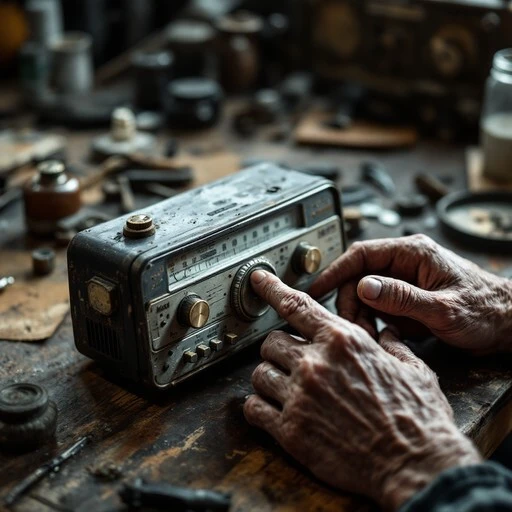
In a major emergency, cell towers fail. Internet service goes down. Social media becomes unreliable. The only consistently available source of official emergency information — evacuation orders, shelter locations, road closures, weather updates — is broadcast radio.
Most emergency kits contain no radio.
What to look for in an emergency radio:
- Multiple power sources: Battery-powered, hand-crank, and solar charging capability. In an extended emergency, batteries run out. A radio that can only be powered by batteries is a radio that eventually goes silent.
- NOAA Weather Radio: The National Oceanic and Atmospheric Administration broadcasts continuous weather and emergency information on specific frequencies. An emergency radio that receives NOAA Weather Radio frequencies is significantly more valuable than one that doesn’t.
- AM/FM reception: For local emergency broadcasts and news.
- USB charging port: To charge phones and other devices from the radio’s battery.
- Flashlight and SOS function: Many emergency radios include these features, consolidating multiple emergency kit functions into one device.
The cell phone dependency problem:
Most people’s emergency communication plan is “I’ll use my phone.” This plan fails when cell towers are overwhelmed — which happens in every major disaster — when power outages prevent charging, and when local infrastructure is damaged. An emergency radio is not a backup to your phone. It’s a primary communication tool that works when your phone doesn’t.
Missing Item #6: Copies of Critical Documents — The Items That Prove You Exist
In the aftermath of a major disaster, the ability to prove who you are, what you own, and what you’re entitled to becomes critically important — and surprisingly difficult if your documents have been destroyed, lost, or are inaccessible.
The documents every emergency kit must contain (copies):
Identity documents:
- Passports (for all household members)
- Driver’s licenses or state ID cards
- Social Security cards
- Birth certificates
- Marriage certificates
- Naturalization certificates (if applicable)
Financial documents:
- Bank account information (account numbers, bank contact information)
- Insurance policies (home, auto, health, life) — policy numbers and contact information
- Investment account information
- Mortgage or lease documents
- Vehicle titles
Medical documents:
- Health insurance cards and policy information
- Vaccination records
- Medical history summaries for all household members
- Medication lists
- Physician contact information
Property documents:
- Home deed or lease agreement
- Property tax records
- Photographs of your home’s contents (for insurance claims)
How to store documents safely:
Physical copies should be stored in a waterproof, fireproof container or bag within your emergency kit. Digital copies should be stored in a secure cloud service (encrypted, password-protected) and on a USB drive in your kit.
The photograph inventory:
One of the most overlooked document preparedness steps is creating a photographic or video inventory of your home’s contents. Walk through every room, open every cabinet and closet, and document what you own. Store this documentation in the cloud. In the event of a total loss, this documentation is the foundation of your insurance claim.
Missing Item #7: Cash in Small Denominations — Because Electronic Payments Disappear First

In a major emergency, electronic payment systems fail. ATMs run out of cash or go offline. Credit card terminals stop working. The economy reverts, temporarily, to cash — and the person who has no cash has no purchasing power.
Most emergency kits contain no cash.
How much cash to keep in your emergency kit:
The general recommendation is $200 to $500 in cash, in small denominations — $1, $5, $10, and $20 bills. Large bills are problematic in emergency scenarios because vendors may not have change, and the psychological resistance to breaking a $100 bill can lead to poor purchasing decisions under stress.
Why small denominations matter:
In a genuine emergency, you may need to purchase water, food, fuel, or other supplies from individuals or small vendors who cannot make change for large bills. Small denominations provide flexibility and prevent overpaying for necessities.
The cash rotation problem:
Cash stored in an emergency kit should be rotated periodically — not because it expires, but because inflation erodes its purchasing power over time, and because the temptation to “borrow” from the emergency kit cash supply is real. Treat emergency kit cash as genuinely off-limits for non-emergency use.
Missing Item #8: A Family Communication and Reunification Plan — The Gap That Costs Nothing to Fix
This is the emergency kit gap that isn’t a physical item — and one of the most critical.
Most families have no written plan for what to do if an emergency occurs when family members are separated. No designated meeting point. No out-of-area contact. No plan for how children will be reunited with their parents if schools are locked down. No plan for what to do if the primary meeting point is inaccessible.
What a complete family emergency communication plan includes:
Contact information:
- Phone numbers for all household members — memorized, not just stored in phones
- An out-of-area contact: a friend or family member outside your region who can serve as a communication hub if local lines are overwhelmed
- Contact information for children’s schools and employers
- Contact information for neighbors who can check on your home
Meeting locations:
- Primary meeting location: a specific point near your home (a neighbor’s house, a specific street corner)
- Secondary meeting location: a specific point outside your neighborhood (a community center, a school, a landmark)
- Tertiary meeting location: a specific point outside your city or region
School and workplace protocols:
- Know your children’s school emergency protocols — where children will be held, how they will be released, what identification is required
- Know your employer’s emergency protocols
The written document:
- The communication plan should be written down, laminated, and kept in every household member’s emergency kit, backpack, or wallet
- Children should memorize the out-of-area contact’s phone number
Why local contacts fail in regional disasters:
When a regional disaster occurs, local phone lines are overwhelmed. Calls within the affected area often fail while calls to out-of-area numbers succeed. An out-of-area contact who knows to expect calls from your family members can serve as a communication hub, relaying information between separated family members when direct communication is impossible.
Missing Item #9: Sanitation Supplies — The Category That Prevents the Second Disaster
In a major emergency, sanitation systems fail. Sewage systems back up. Running water stops. The conditions that allow disease to spread — poor sanitation, inadequate hygiene, contaminated water — emerge rapidly.
Most emergency kits contain no sanitation supplies.
What a complete emergency sanitation kit includes:
Toilet alternatives:
- A portable camping toilet or a 5-gallon bucket with a toilet seat lid
- Heavy-duty garbage bags (for use as toilet liners)
- Waste treatment chemicals (Poo Powder or similar products that solidify and deodorize waste)
Hygiene supplies:
- Hand sanitizer (alcohol-based, at least 60% alcohol)
- Antibacterial soap
- Baby wipes or body wipes (for bathing when water is unavailable)
- Feminine hygiene products
- Toilet paper — significantly more than you think you need
- Toothbrushes and toothpaste
- Deodorant
Waste management:
- Heavy-duty garbage bags in multiple sizes
- Twist ties or zip ties for sealing bags
- A designated waste disposal area plan
Why sanitation matters as much as food and water:
The diseases that kill people in disaster aftermath — cholera, typhoid, dysentery, hepatitis A — are primarily transmitted through contaminated water and poor sanitation. Maintaining basic sanitation standards during an emergency is not a comfort issue. It is a survival issue.
Missing Item #10: A Manual Can Opener — The Simplest Gap and the Most Embarrassing to Discover
 This one seems almost too obvious to include. And yet it is one of the most consistently reported missing items in emergency kit audits.
Most emergency food supplies consist largely of canned goods. Most emergency kits contain no manual can opener. The electric can opener on the kitchen counter is useless without power.
What to look for in an emergency can opener:
- Durability: A cheap can opener will fail at the worst possible moment. Invest in a quality manual can opener — the OXO Good Grips or Kuhn Rikon are consistently recommended.
- Ease of use: Under stress, with potentially cold or wet hands, a can opener that requires significant dexterity or strength becomes a problem. Choose one that is easy to operate.
- Compact options: P-38 and P-51 military can openers are extremely compact and can be attached to a keychain. They require practice to use efficiently but are reliable and take up almost no space.
The broader tool gap:
The manual can opener is the most obvious missing tool, but it’s part of a broader tool gap in most emergency kits. A complete emergency kit should also contain:
- A multi-tool (Leatherman or Gerber) with pliers, knife, screwdrivers, and other tools
- Duct tape — one of the most versatile emergency supplies available
- Work gloves (for handling debris after a disaster)
- A wrench or pliers for shutting off gas and water utilities
- A pry bar or crowbar for opening jammed doors or windows
Missing Item #11: Extra Eyeglasses or Contact Lens Supplies — A Disability Hiding in Plain Sight
For the approximately 75% of adults who require vision correction, losing or breaking their glasses or running out of contact lens supplies during an emergency is not a minor inconvenience. It is a functional disability that impairs their ability to read, navigate, drive, and perform the tasks that emergencies demand.
Most emergency kits contain no vision correction backup.
What to include:
- An extra pair of prescription eyeglasses: Ask your optometrist for a backup pair — many will provide an older prescription pair at low or no cost. Even a slightly outdated prescription is significantly better than no correction.
- Contact lens supplies: Extra contacts in their original sealed packaging, contact lens solution, and a contact lens case. If you wear contacts, include a pair of glasses as a backup — smoke, debris, and limited water for hand washing make contact lens wear risky in many emergency scenarios.
- Reading glasses: For household members who use reading glasses, include a pair in the emergency kit.
- Prescription information: Include a copy of your current eyeglass and contact lens prescription. In some emergency scenarios, you may be able to obtain replacement glasses or contacts if you have your prescription.
Missing Item #12: Infant, Child, and Pet Supplies — Because Standard Kits Are Built for Nobody in Your House

Standard emergency kit recommendations are built around the average adult. They do not account for the specific needs of infants, young children, or pets — and those specific needs are significant.
Infant and young child supplies:
- Formula: If your infant uses formula, your emergency kit needs a supply of ready-to-feed formula (which requires no water preparation) or powdered formula with a supply of safe water for preparation. The formula has a shelf life — rotate regularly.
- Diapers and wipes: Calculate your infant’s daily diaper usage and multiply by your target supply duration. Add 25% for stress-related increases.
- Baby food: Age-appropriate, shelf-stable baby food for infants transitioning to solid foods.
- Comfort items: A familiar toy, blanket, or comfort object. Under stress, children’s psychological stability is significantly supported by familiar items.
- Children’s medications: Age-appropriate doses of children’s pain reliever, antihistamine, and any prescription medications.
- Infant-specific first aid: Nasal aspirator, infant thermometer, teething supplies.
Pet supplies:
- Food and water: Calculate your pet’s daily food and water requirements and multiply by your target supply duration.
- Medications: Any prescription medications your pet takes, plus flea/tick prevention and heartworm prevention if applicable.
- Carrier or leash: A carrier for cats and small dogs; a leash and collar with ID tags for dogs.
- Vaccination records: Many emergency shelters require proof of vaccination for pets.
- Comfort items: A familiar toy or blanket.
- Waste management: Poop bags for dogs; a portable litter box and litter for cats.
Missing Item #13: Multiple Light Sources — Because One Flashlight Is Never Enough
Most emergency kits contain one flashlight. One flashlight is not adequate for an extended power outage affecting an entire household.
The complete emergency lighting system:
Flashlights (multiple): At minimum, one flashlight per household member. Headlamps are significantly more practical than handheld flashlights for most emergency tasks — they free both hands for work.
Batteries (more than you think): Calculate the battery life of your flashlights and multiply by your target supply duration. Double that number. Batteries drain faster in cold temperatures and under heavy use.
Rechargeable options: A high-capacity portable power bank (20,000 mAh or larger) can recharge flashlights, phones, and other devices. A solar charging panel extends the power bank’s usefulness in extended outages.
Area lighting: Flashlights provide directional light. For living and working in a space during an extended outage, area lighting is more practical:
- LED lanterns (battery-powered or rechargeable)
- Candles (with appropriate fire safety precautions — never leave unattended, keep away from flammable materials)
- Glow sticks (chemical light sticks that require no power and are safe for children)
The carbon monoxide danger:
A critical emergency lighting and heating mistake: using gas-powered generators, camp stoves, or charcoal grills indoors. These produce carbon monoxide — an odorless, colorless gas that kills. Every emergency kit should contain a battery-powered carbon monoxide detector, and every household member should understand that combustion appliances must never be used indoors.
Missing Item #14: A Written Emergency Plan — The Document That Costs Nothing and Changes Everything
Like the family communication plan, this is not a physical item — but its absence is one of the most consequential gaps in emergency preparedness.
Most households have no written emergency plan. They have a vague sense of what they would do in various scenarios, but no documented, practiced, household-wide plan that every member understands.
What a complete household emergency plan includes:
Evacuation routes:
- Primary evacuation route from your home
- Secondary evacuation route (in case the primary is blocked)
- Designated evacuation destination (a specific address, not just “we’ll go to a hotel”)
- Alternate evacuation destination
Utility shutoffs:
- Location of gas shutoff valve and instructions for shutting it off
- Location of water main shutoff and instructions
- Location of the electrical panel and instructions for shutting off power
Scenario-specific protocols:
- What to do in an earthquake (drop, cover, hold on; then assess and evacuate if necessary)
- What to do in a fire (evacuation routes, meeting point, do not re-enter)
- What to do in a flood (when to shelter in place vs. evacuate, upper floor protocol)
- What to do in a tornado (interior room, lowest floor, away from windows)
- What to do in a power outage (food safety, heating alternatives, communication)
Special needs protocols:
- How to assist household members with mobility limitations during evacuation
- How to manage medical equipment during a power outage
- How to transport pets
The practice requirement:
A written emergency plan that has never been practiced is significantly less effective than one that has. Emergency drills — even simple ones — build the muscle memory and household coordination that make emergency response faster and more effective. Practice your evacuation routes. Practice your utility shutoffs. Practice your communication plan. Do it before you need to.
Missing Item #15: Warmth and Shelter Supplies — The Gap That Kills People in Their Own Homes
This is the emergency kit gap that varies most by geography — and the one that is most catastrophically underestimated in regions that don’t typically experience extreme cold.
The 2021 Texas winter storm is the most recent large-scale example: a region that rarely experiences extreme cold was hit with temperatures that disabled heating systems, burst pipes, and left millions of people without heat for days. People died of hypothermia in their own homes. In their own homes.
What a complete emergency warmth and shelter kit includes:
Thermal regulation:
- Emergency Mylar space blankets — reflect up to 90% of body heat, weigh almost nothing, take up almost no space. At a minimum, one per household member, ideally two.
- Sleeping bags rated for temperatures below your region’s coldest recorded temperature
- Wool or synthetic blankets (wool retains warmth even when wet)
- Warm clothing layers: base layer, insulating layer, outer layer — for every household member
Shelter options:
- A quality tarp (for an improvised shelter if your home is uninhabitable)
- Paracord (for rigging tarps and improvised shelters)
- A tent (for households in high-risk areas or those planning for extended displacement)
Heating alternatives:
- Propane or butane camp stoves (for outdoor use only — carbon monoxide risk indoors)
- Hand warmers (chemical heat packs) — useful for warming extremities and sleeping bags
- A wood-burning option (for households with fireplaces or wood stoves)
The indoor heating danger:
The most dangerous emergency heating mistake is using combustion appliances indoors. Every year, people die from carbon monoxide poisoning while trying to stay warm during power outages — using generators, camp stoves, charcoal grills, or gas ovens indoors. The emergency kit should contain a battery-powered carbon monoxide detector, and every household member should understand this danger before they ever need to act on it.
The Emergency Kit Audit — How to Fix Your Kit Right Now
 Now that you know what’s missing, the question is what to do about it. The answer is a systematic audit — a structured assessment of your current kit against the 15 gaps identified above.
The 30-Minute Emergency Kit Audit Protocol
Step 1: Inventory what you have. Remove everything from your emergency kit and create a complete inventory. Note quantities, expiration dates, and condition.
Step 2: Check against the 15 gaps. For each of the 15 items identified above, assess whether your kit addresses it adequately. Not just whether you have something in that category — whether you have enough of it, whether it’s in good condition, and whether it’s appropriate for your household’s specific needs.
Step 3: Identify your critical gaps. Rank the gaps you’ve identified by urgency. Water and medications are typically the highest priority. Documents and communication plans can be addressed immediately at no cost.
Step 4: Create a prioritized shopping list. Address the highest-priority gaps first. Don’t let the perfect be the enemy of the good — a partially improved kit is better than a kit that remains unchanged while you wait to address everything at once.
Step 5: Schedule your next audit. Emergency kit audits should happen at minimum twice per year — the spring and fall equinoxes work well as easy-to-remember dates. Set a calendar reminder now.
The Priority Order for Addressing Gaps
If you can only address a few gaps at a time, prioritize in this order:
- Water — adequate storage and purification capability
- Medications — prescription medications and documentation
- Communication plan — costs nothing, can be done today
- Emergency radio — critical for receiving official information
- Documents — copies of critical documents
- First aid — complete kit with training
- Cash — small denominations
- Food — adequate quantity and palatability
- Sanitation — often completely absent
- Warmth — space blankets at minimum
The Questions People Actually Ask About Emergency Kit Gaps
What’s the single most commonly forgotten item in an emergency kit?
Based on emergency preparedness assessments and disaster relief reports, the most commonly forgotten items are prescription medications and a family communication plan. Medications are forgotten because they’re difficult to stockpile and people assume pharmacies will be accessible. Communication plans are forgotten because people assume their phones will work. Both assumptions fail in major emergencies — consistently, predictably, and at the worst possible time.
How do I actually know if my emergency kit is complete?
Honestly? No emergency kit is ever truly “complete” — because completeness depends on your specific household’s needs, your geographic risk profile, and the scenarios you’re preparing for. The more useful question is: “Is my emergency kit adequate for the most likely emergencies in my area, for the specific needs of every member of my household?” Audit against the 15 gaps in this guide, then assess against your specific household needs. That’s the closest thing to a real answer.
Should I have separate emergency kits for home and car?
Yes. A home emergency kit and a car emergency kit serve different purposes and should be built separately. Your home kit is designed for shelter-in-place scenarios and should be comprehensive. Your car kit — sometimes called a “get-home bag” — is designed to help you get home if you’re stranded away from home, and should be portable and focused on the most critical needs: water, first aid, warmth, light, and communication.
How often should I actually check my emergency kit for expired items?
At a minimum twice per year. The spring and fall equinoxes — approximately March 20 and September 22 — work well as easy-to-remember audit dates. During each audit, check all food and medication expiration dates, test all batteries and electronic devices, inspect all containers for damage or leaks, and assess whether your kit still meets your household’s current needs. Set the calendar reminder now, before you close this tab.
What’s the difference between a 72-hour kit and a 2-week emergency kit?
A 72-hour kit — also called a “go bag” or “bug-out bag” — is designed to sustain your household for three days. It’s typically portable and focused on the most critical needs. A 2-week emergency kit is designed for extended shelter-in-place scenarios — regional disasters, extended power outages, or supply chain disruptions that prevent access to stores for an extended period. A 2-week kit requires significantly more food, water, and supplies, and is typically stored at home rather than in a portable bag. Both are worth having. Most people have neither done properly.
Is a pre-built emergency kit worth buying?
Pre-built emergency kits are a legitimate starting point — they provide a foundation of basic supplies in a convenient package. Their limitations: they’re typically built for the average adult, not for your specific household; they often contain lower-quality versions of critical items; and they almost always omit the most critical gaps identified in this guide — medications, documents, communication plan, and adequate water. If you buy a pre-built kit, treat it as a starting point and supplement it with the items identified above.
Products / Tools / Resources
These are the specific items that address the 15 gaps identified in this guide — selected for reliability, value, and real-world effectiveness in emergency scenarios.
Water Storage and Purification
WaterBOB Emergency Drinking Water Storage — The highest-capacity emergency water storage solution for home use. Holds 100 gallons, stores flat until needed, fills from a standard bathtub faucet. The single best emergency water storage investment for most households costs less than a tank of gas.
Aqua-Tainer 7-Gallon Rigid Water Container — Stackable, food-grade, equipped with a built-in spigot. The most practical everyday water storage container for building a household supply incrementally.
Sawyer Squeeze Water Filter — Rated for 100,000 gallons, weighs 3 ounces, removes 99.99999% of bacteria and protozoa. The standard recommendation for portable water filtration in emergency kits. If you own one water filter, this is the one.
Potable Aqua Chlorine Dioxide Tablets — The most effective chemical water treatment option. Kills bacteria, viruses, and Cryptosporidium. Lightweight, compact, and effective. Keep a supply in every emergency kit, car kit, and bug-out bag.
Communication
Midland ER310 Emergency Crank Weather Radio — Multiple power sources (battery, hand-crank, solar), NOAA Weather Radio reception, USB charging port, and SOS function. The most consistently recommended emergency radio for household preparedness. Buy it before you need it.
Fox 40 Classic Pealess Whistle — Audible at distances of over a mile, works in freezing temperatures, and weighs almost nothing. Every emergency kit and every household member’s bag should have one.
First Aid
Adventure Medical Kits Comprehensive Family First Aid Kit — The most complete pre-built first aid kit for household emergency preparedness. Includes a comprehensive first aid guide and supplies for managing the most common emergency injuries.
Israeli Bandage (Emergency Pressure Bandage) — The most effective improvised wound closure and pressure bandage available. Used by military and emergency medical personnel worldwide. Inexpensive and takes up almost no space.
CAT Tourniquet (Combat Application Tourniquet) — The standard tourniquet used by military and emergency medical personnel. Requires training to use correctly — pair with a tourniquet training course.
Light and Power
Black Diamond Spot Headlamp — The most consistently recommended headlamp for emergency preparedness. Bright, durable, water-resistant, and available in rechargeable versions. Headlamps beat handheld flashlights in almost every emergency scenario.
Anker PowerCore 26800 Portable Power Bank — High-capacity portable power bank for charging phones, flashlights, and other devices during extended power outages. The 26800 mAh capacity provides multiple full charges for most smartphones.
Goal Zero Nomad 10 Solar Panel — Compact, foldable solar charging panel for recharging power banks and devices during extended outages. Pairs with the Anker PowerCore for a complete off-grid charging system.
Energizer LED Lantern — Battery-powered area lighting for living and working during extended power outages. Significantly more practical than flashlights for illuminating a room.
Warmth and Shelter
Emergency Mylar Space Blankets (multipack) — Reflect up to 90% of body heat, weigh almost nothing, take up almost no space. Every emergency kit should contain at minimum two per household member. Buy a multipack and distribute them everywhere.
Kidde Battery-Operated Carbon Monoxide Detector — Critical for households using any alternative heating or power source during emergencies. Carbon monoxide poisoning is one of the leading causes of death in power outage scenarios — this detector costs less than $30 and could save your life.
Documents and Organization
Fireproof Document Bag— Waterproof and fireproof storage for physical copies of critical documents. The most important organizational investment for emergency document preparedness.
DYMO Label Maker — For organizing and labeling emergency kit contents, expiration dates, and storage locations. Makes the twice-yearly audit significantly faster and more systematic.
Planning Resources
FEMA Ready.gov Emergency Plan Templates — Free, downloadable family emergency plan templates from the federal government. Available at ready.gov. The starting point for every household’s written emergency plan, and it costs nothing.
American Red Cross First Aid App — Free app with step-by-step first aid instructions for common emergencies. Download before you need it — it works offline.
The American Red Cross First Aid/CPR/AED Course — The most accessible first aid certification for civilians. 4 to 8 hours of instruction that provides skills genuinely capable of saving lives. Find a course at redcross.org. This is the most important supplement to any first aid kit — and it’s the one most people never get around to.