
Hey there! Some links on this page may be affiliate links which means that, if you choose to make a purchase, I may earn a commission at no extra cost to you. I greatly appreciate your support. Read the full disclosure here.
Nearly 40% of adults over 65 have at least one functional limitation that could directly affect their ability to respond to an emergency, according to the U.S. Centers for Disease Control and Prevention. Yet most mainstream preparedness advice is written for able-bodied adults in their 30s and 40s, people who can sprint to a car, haul a 40-pound bug-out bag, and navigate chaos on minimal sleep.
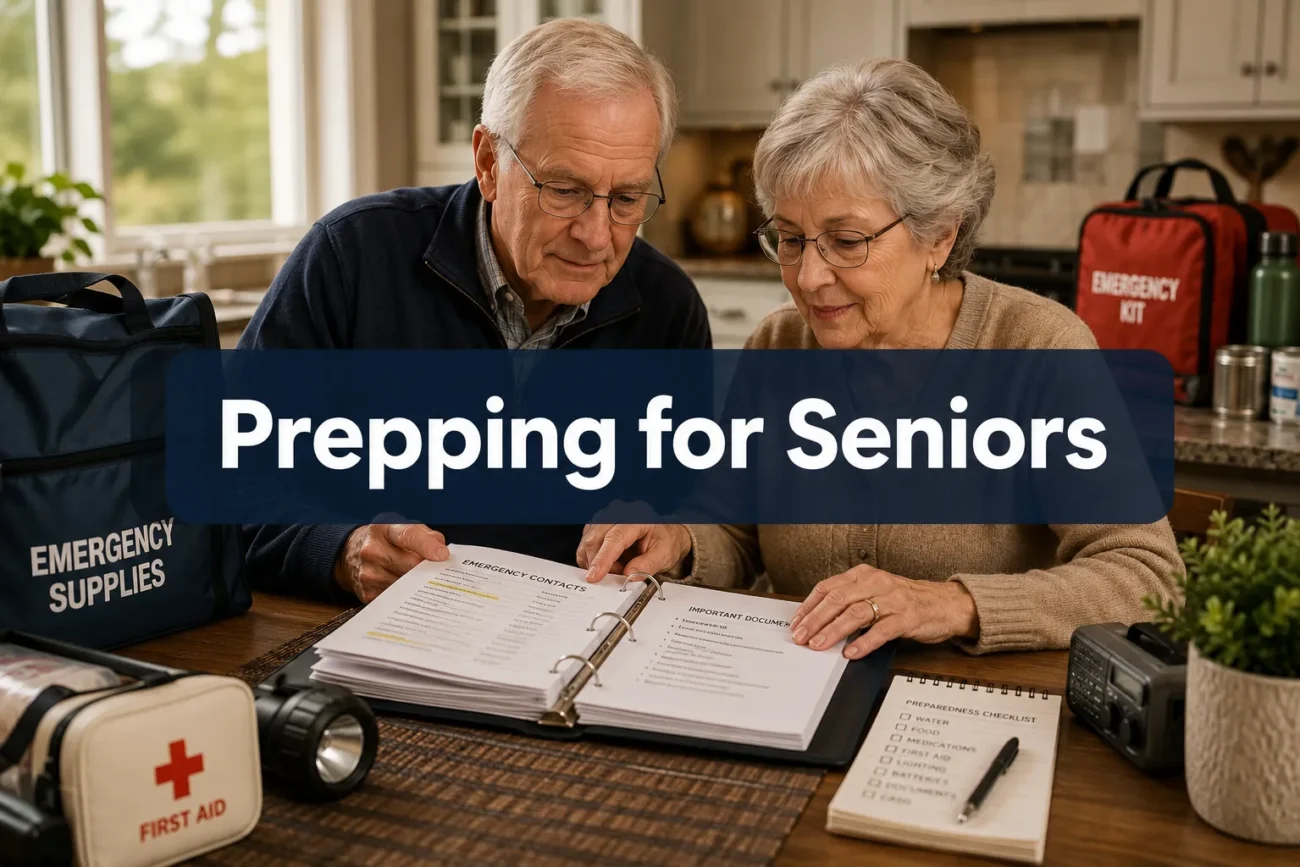
Prepping for Seniors: The Comprehensive Guide exists to close that gap. Whether you’re a senior building your own preparedness plan, an adult child helping aging parents get ready, or a prepper community member who wants to make sure no one gets left behind, this guide covers everything from medical supply stockpiling to mobility-conscious evacuation planning. Senior preparedness isn’t a lesser version of regular prepping. In many ways, it demands more thought, more customization, and more coordination, and done right, it delivers genuine confidence and independence.
Key Takeaways
- Senior preparedness requires a customized approach that accounts for medications, mobility limitations, dietary needs, and medical equipment.
- The most critical first step is a complete medication and medical device inventory, not food or water, though those matter too.
- Seniors living alone need a dedicated check-in network and a written emergency contact plan posted visibly in the home.
- A senior emergency kit should be lightweight, accessible, and stored where the senior can actually reach it independently.
- Fixed-income prepping works best as a slow build: spend $10-$20 per week on rotating supplies rather than making one large purchase.
- Mobility limitations change both shelter-in-place and evacuation strategies significantly, plan both in advance.
- Family members should involve seniors in planning, not plan for them without their input.
- Register with local emergency management agencies as a special-needs resident before a disaster happens.
What Does Prepping for Seniors Actually Mean
Prepping for seniors means building a personalized emergency preparedness system that accounts for the specific physical, medical, and logistical realities of older adults. It covers the same core categories as general preparedness, food, water, shelter, communication, and security, but layers in medication management, medical equipment backup power, mobility planning, and social support networks.
The term “senior prepping” doesn’t mean a watered-down checklist. It means a smarter, more tailored one. A 72-year-old with well-managed hypertension and a 78-year-old using a walker face very different challenges during a 10-day power outage. Effective senior preparedness starts by acknowledging that difference rather than papering over it with a generic supply list.
At its core, this approach answers three questions: What does this specific person need to stay alive and functional during an emergency? What obstacles will they face that others won’t? And who else needs to be part of the plan?
How Is Senior Prepping Different From Regular Emergency Preparedness
Standard emergency preparedness assumes a relatively healthy adult who can carry gear, travel quickly, and manage stress without major physical consequences. Senior preparedness breaks from that assumption in several concrete ways.
The key differences:
- Medications are non-negotiable. Missing a blood pressure medication or insulin dose for even 24-48 hours can be life-threatening. General preppers can often improvise around food gaps. Seniors often cannot improvise around prescription gaps.
- Medical equipment needs power. CPAP machines, oxygen concentrators, powered wheelchairs, and home dialysis equipment require electricity. A standard prepper’s backup power plan may not account for continuous medical device use.
- Physical stamina is different. Bugging out on foot for 10 miles isn’t realistic for most seniors. Shelter-in-place becomes the primary strategy for many, which changes the entire supply calculation.
- Heat and cold tolerance decreases with age. Older adults are significantly more vulnerable to both hypothermia and heat stroke, making climate control a medical necessity rather than a comfort preference.
- Cognitive considerations matter. Seniors with early-stage dementia or cognitive changes need simpler, more visual emergency plans that don’t rely on remembering complex procedures under stress.
- Social isolation amplifies risk. Many older adults live alone. Without a check-in network, a senior who falls during a disaster or runs out of medication may go unnoticed for days.
For a broader foundation on emergency planning, the Ultimate Guide to Home Emergency Preparedness provides a strong general framework that senior-specific planning can build on top of.
What Should Go in a Senior Emergency Kit
A senior emergency kit should prioritize medical continuity, mobility support, and communication above all else. The standard 72-hour kit model is a starting point, but most seniors benefit from planning for at least 7-14 days of self-sufficiency.
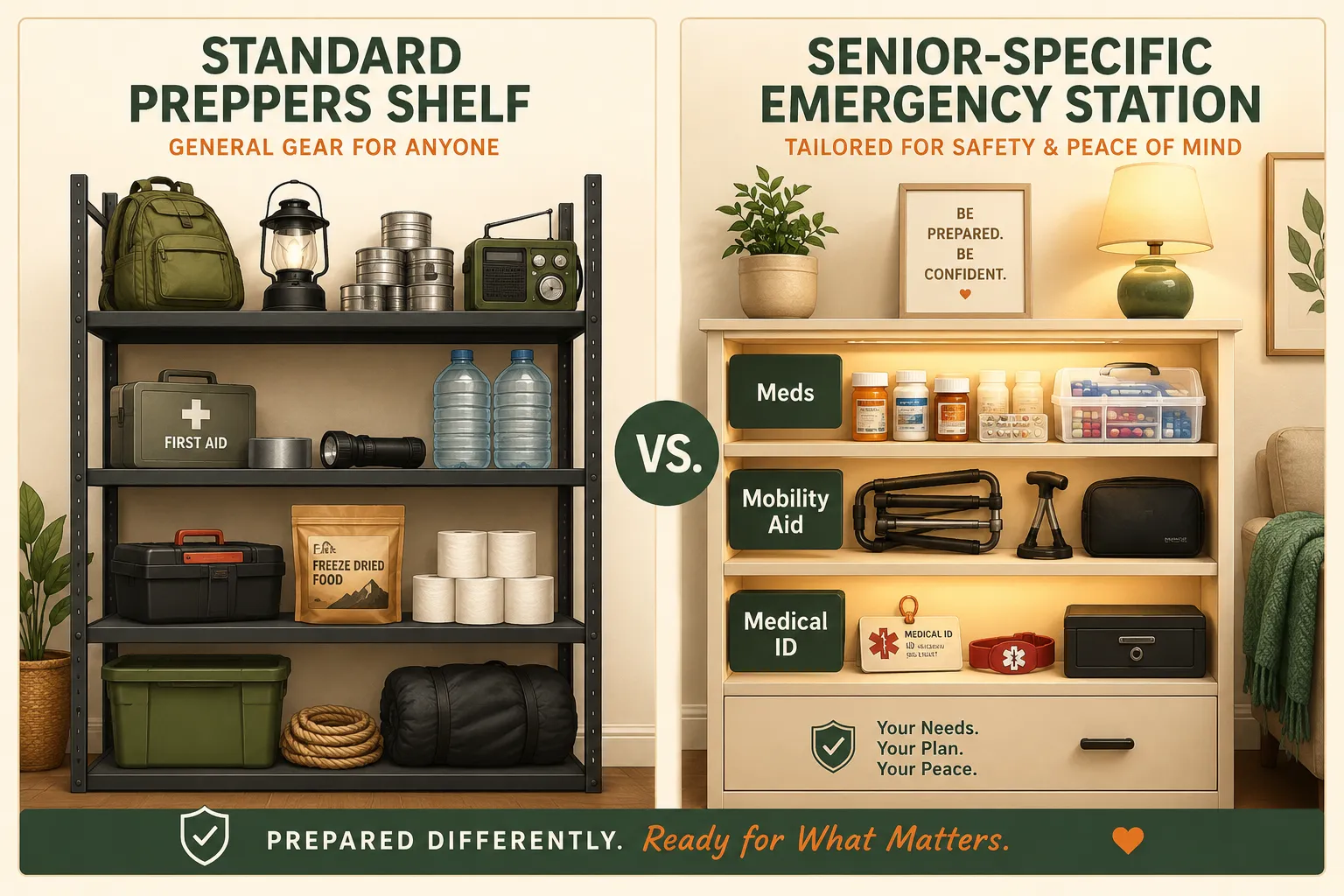
Core components of a senior emergency kit:
Medical and Health
- 30-day supply of all prescription medications (rotated regularly)
- Over-the-counter medications: pain relievers, antacids, antihistamines, stool softeners
- Blood pressure cuff, glucose monitor with extra test strips, and any personal monitoring devices
- Copies of all prescriptions, insurance cards, Medicare/Medicaid information, and physician contact numbers
- Medical alert ID bracelet or card
- Hearing aid batteries (extra supply, stored in a cool dry place)
- Extra eyeglasses or contact lens supplies
- Denture adhesive and cleaning supplies if applicable
Mobility and Physical Support
- Backup cane or walker if the primary one is in regular use
- Non-slip grip gloves for handling emergency equipment
- Comfortable, supportive footwear stored with the kit
Communication and Information
- Battery-powered or hand-crank weather radio
- Fully charged backup phone battery or solar charger
- Written list of emergency contacts (family, neighbors, physicians, pharmacy)
- Printed copies of important documents: will, power of attorney, insurance policies
Food and Water
- At least 1 gallon of water per day per person (14-gallon minimum for a 2-week plan)
- Easy-open, easy-to-prepare foods that match any dietary restrictions (low-sodium, diabetic-friendly, soft foods if needed)
- Manual can opener
Comfort and Shelter
- Warm blankets or emergency thermal blankets
- Extra clothing appropriate to the local climate
- Flashlights with extra batteries and at least one headlamp for hands-free use
For deeper guidance on food storage that works in limited spaces, the 3 Month Emergency Food Supply guide covers practical rotation strategies that apply directly to senior households.
What Medical Supplies Should Seniors Stockpile
Seniors should stockpile a 30-day minimum supply of all prescription medications, plus backup supplies for any medical devices they depend on. This is the single most critical category in senior preparedness, and it’s also the one most people underestimate.
Prescription medications: Talk to your physician and pharmacist about emergency supplies. Many insurance plans now allow 90-day fills. Some states have emergency prescription laws that allow pharmacists to dispense a limited supply during declared disasters. Know your state’s rules before a crisis.
Chronic condition management:
- Diabetics need insulin storage solutions (insulin degrades above 77°F), extra syringes or pen needles, lancets, and glucose tablets for hypoglycemia
- Heart patients need nitroglycerin (check expiration dates frequently) and a written action plan for chest pain episodes when 911 response may be delayed
- COPD and asthma patients need extra rescue inhalers and, if on supplemental oxygen, a backup power source
Medical device backup power: This is where senior preparedness intersects directly with grid-down scenarios. An oxygen concentrator running 24/7 draws significant power. A CPAP machine draws less but still needs a reliable source. The Backup Power for Emergencies guide covers generator sizing, battery banks, and solar options in detail, essential reading for any senior dependent on powered medical equipment.
First aid additions specific to seniors:
- Wound care supplies (older skin tears more easily and heals more slowly)
- Compression bandages for circulation support
- Thermometer (seniors are more prone to both hypothermia and fever complications)
How to Prep for Seniors With Mobility Issues or Disabilities
Seniors with mobility limitations need a preparedness plan built around their actual physical capacity, not an idealized version of it. The standard “grab your bag and go” model often fails this population entirely.
Shelter-in-place as the primary strategy: For many seniors with mobility challenges, staying home is safer than evacuating. This means the home itself needs to be prepared, adequate food and water, backup power for medical devices, and a way to communicate with the outside world even if phones are down.
Evacuation planning when it’s unavoidable:
- Identify a specific person (not just “family”) who is responsible for transportation
- Pre-arrange a meeting point that is accessible by wheelchair or walker
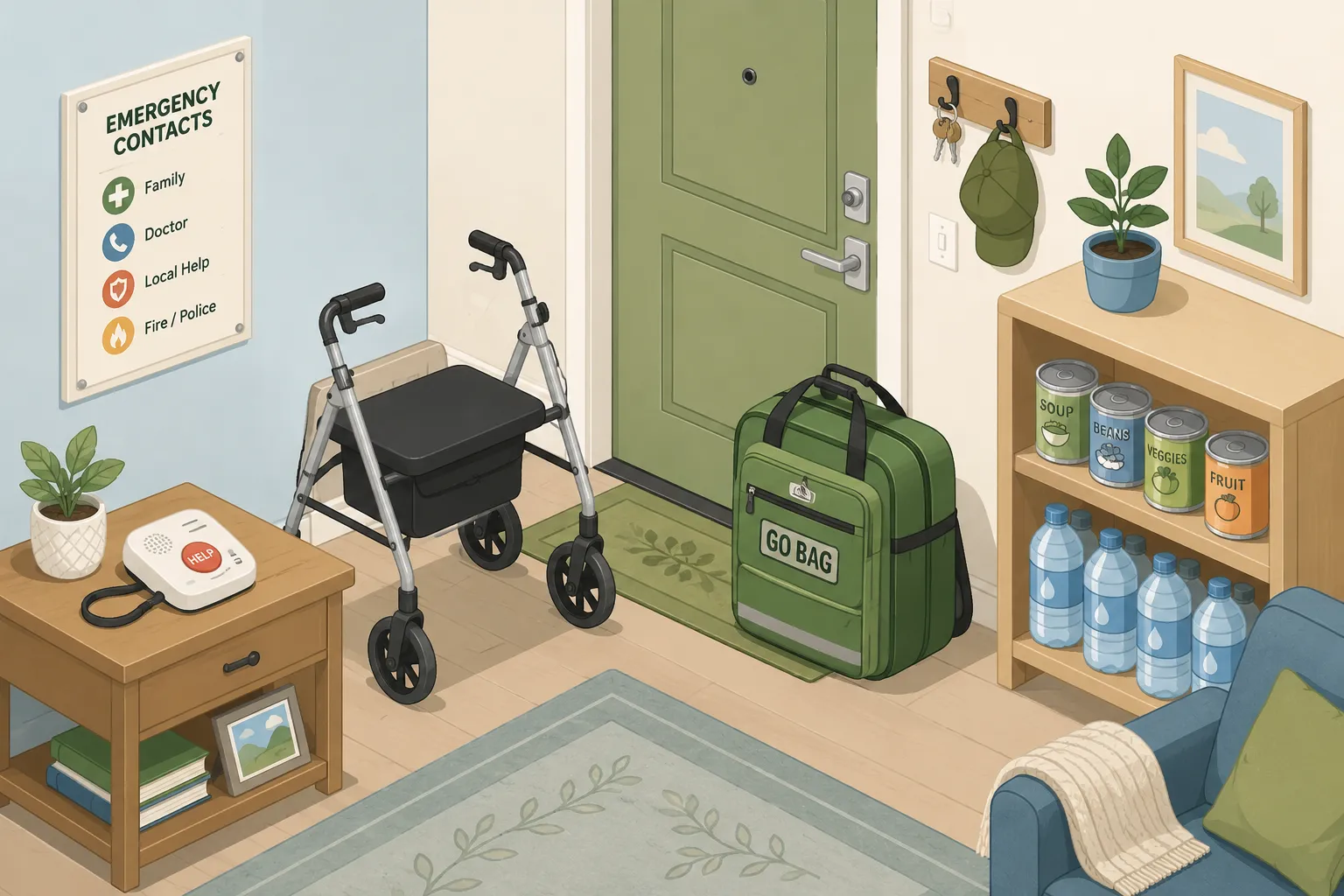
- Keep a lightweight, accessible go-bag near the front door, not in a high closet or basement
- If the senior uses a power wheelchair, know the battery range and have a manual backup option
Home modifications that double as preparedness measures:
- Grab bars in bathrooms and hallways reduce fall risk during power outages when lighting is poor
- Non-slip mats and secured rugs prevent trip hazards during stressful evacuations
- Clear pathways from bedroom to exit, maintained consistently
For seniors with disabilities beyond mobility limitations, the Emergency Preparedness for Disabled Individuals guide provides a comprehensive framework that complements this senior-specific approach.
Register with local emergency services: Most counties have a Special Needs Registry or Access and Functional Needs (AFN) program. Registering ensures emergency responders know a mobility-limited senior lives at that address. This one step costs nothing and can be genuinely life-saving during a large-scale evacuation.
Should Seniors Prep Differently If They Live Alone vs. With Family
Yes, significantly. Seniors living alone face a fundamentally different risk profile than those in multi-person households, and the preparedness plan needs to reflect that.
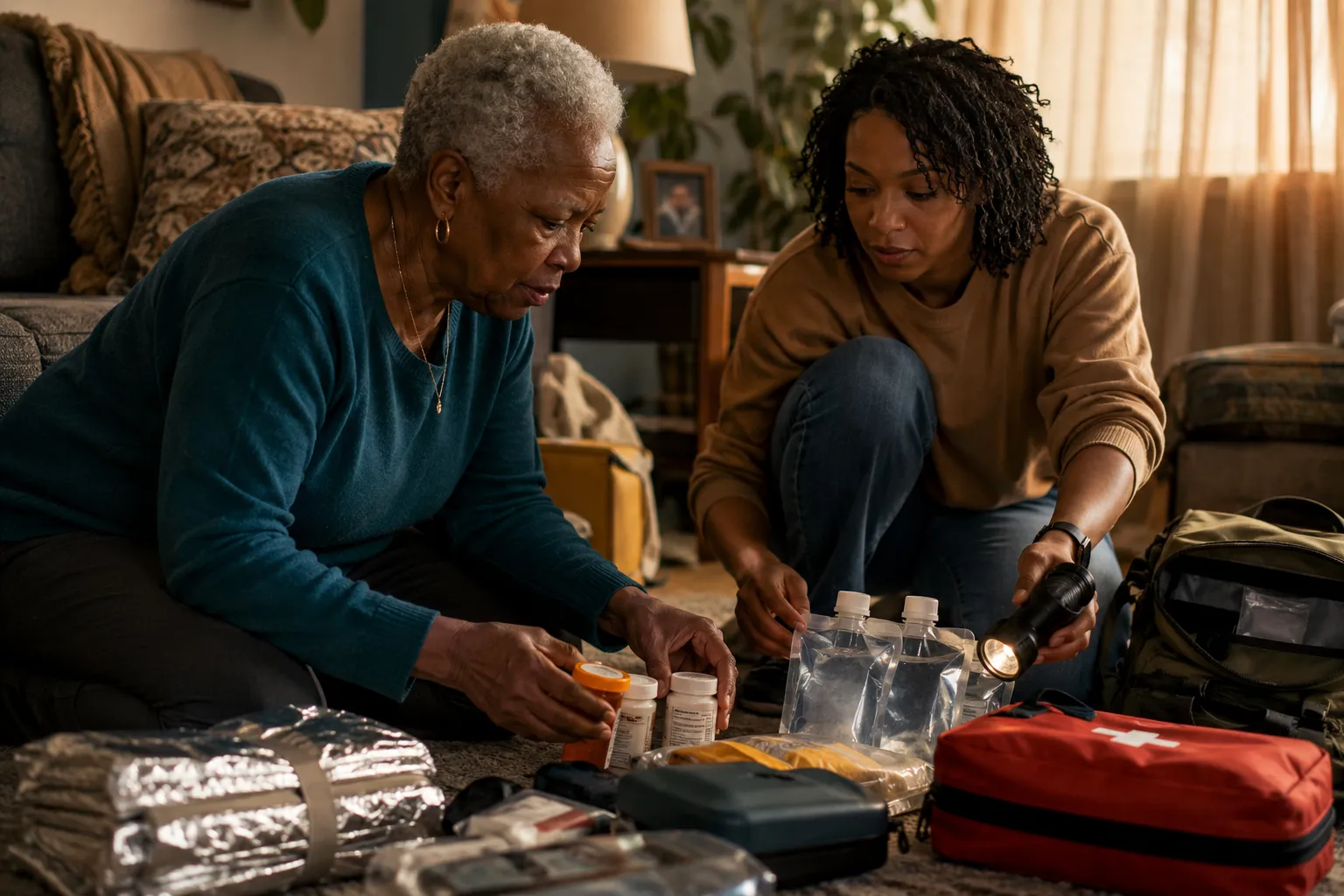
For seniors living alone:
The biggest vulnerability isn’t supplies, it’s the absence of someone to notice when something goes wrong. A senior who falls during a power outage, runs out of insulin, or has a cardiac event during a disaster may not be found for hours or days without a deliberate check-in system.
- Establish a daily or twice-daily check-in routine with a neighbor, friend, or family member. A simple text or phone call works. The agreement should be: if I don’t hear from you by X time, I’m coming to check.
- Invest in a personal emergency response system (medical alert device) with a battery backup. These devices have evolved significantly and many now include fall detection and GPS.
- Post emergency contact information visibly, on the refrigerator, by the front door, and in the emergency kit itself.
- Make sure a trusted neighbor has a spare key and knows about any medical conditions.
For seniors living with family:
The risk profile shifts, but new challenges emerge. Family members may assume someone else has handled the senior’s specific needs. Build explicit responsibility into the family emergency plan, name who manages medications, who assists with mobility during evacuation, and who is the senior’s designated communicator.
The Family Emergency Plan template is a practical tool for formalizing these assignments before a crisis makes them urgent.
How to Prep for Seniors on a Fixed Income or Limited Space
Senior preparedness on a fixed income is entirely achievable with a slow-build, rotation-based approach. The goal isn’t to spend $2,000 in one weekend, it’s to add $10-$20 worth of supplies per week until a meaningful baseline is reached.
Budget-friendly strategies:
- Buy one extra, every trip. Each grocery run, add one extra can of soup, one extra box of crackers, one extra bottle of water. Over two months, this builds a meaningful supply without a single large expenditure.
- Dollar stores and discount grocers often carry canned goods, batteries, and basic first aid supplies at significantly lower prices than mainstream retailers.
- Generic medications for over-the-counter needs (pain relievers, antacids, antihistamines) cost a fraction of branded versions and are chemically equivalent.
- Freeze-dried food has a 25-year shelf life and is surprisingly cost-effective per calorie when bought in bulk. The Ultimate Prepper’s Guide to Freeze-Dried Food breaks down the best options by cost, nutrition, and ease of preparation.
Limited space solutions:
Many seniors live in smaller homes, apartments, or assisted living situations where storage space is genuinely constrained. The principles in the Ultimate Guide to Prepping in a Small Apartment translate directly to senior living situations: under-bed storage, behind-door organizers, and dedicated closet sections can hold a surprising amount of supplies without cluttering living areas.
Prioritize ruthlessly. On a limited budget, medications and water come first. Food comes second. Everything else is built incrementally.
Common Mistakes People Make When Prepping for Older Adults
The most common mistake is planning for seniors without involving them. Adult children often take over the process with good intentions and end up creating a system the senior doesn’t understand, can’t access, or won’t use.
Other frequent errors:
- Ignoring dietary restrictions. Stocking up on high-sodium canned goods for a senior with hypertension, or high-sugar foods for a diabetic, creates a supply that can’t safely be used. Always check medical dietary requirements before buying food storage.
- Storing supplies in inaccessible locations. A 50-pound bucket of rice in a basement is useless to a senior who can’t navigate stairs. Supplies need to be where the senior can actually reach them independently.
- Forgetting medication rotation. Prescription medications expire. A stockpile that’s never rotated becomes a false sense of security. Set calendar reminders to check and rotate medication supplies every 90 days.
- No backup communication plan. Assuming a cell phone will work during a disaster is a dangerous assumption. Landlines, battery-powered radios, and written contact lists are essential backups.
- Underestimating heat and cold vulnerability. During a summer power outage, an elderly person in a hot apartment can develop heat stroke within hours. Cooling centers, battery-powered fans, and pre-arranged stays with family need to be part of the plan before summer arrives.
- Skipping the local registration step. Failing to register with county emergency management as a special-needs resident means emergency responders won’t know to prioritize that address during a mass casualty event.
How to Prepare Aging Parents for Natural Disasters
The most effective approach is a collaborative conversation, not a surprise preparedness intervention. Start by asking what your parents are most worried about, their answers will reveal the threats they’re actually thinking about and make the planning feel relevant rather than imposed.
A practical starting framework:
-
Conduct a threat assessment together. What natural disasters are most likely in their area? The Geographic Threat Prep Guide breaks down regional risks across the U.S. and is a useful starting point for this conversation.
-
Audit their current situation. Walk through the home together. Where are medications stored? Is there a flashlight they can actually find in the dark? Do they have enough food on hand for 72 hours? This audit reveals the gaps without making assumptions.
-
Build the medical inventory first. Create a written list of every medication, dosage, prescribing physician, and pharmacy. Keep one copy in the home, one in the emergency kit, and one with a trusted family member.
-
Establish the check-in system. Agree on a specific person, a specific time, and a specific backup contact if the primary check-in fails.
-
Test the plan. A plan that’s never practiced is just a document. Run a simple drill: what would your parents do tonight if the power went out and stayed out for three days? Walk through it together.
For region-specific natural disaster planning, the Step-by-Step Guide to Natural Disaster Preparedness provides a structured framework that works well as a companion to senior-specific planning.
Is Prepping for Seniors Worth the Time and Money
Yes, without qualification. The return on investment for senior preparedness is measured in lives, not dollars. Older adults are statistically among the most vulnerable populations during disasters, they account for a disproportionate share of disaster-related deaths and hospitalizations in every major U.S. emergency event.
The time investment is modest when approached systematically. Building a solid 2-week senior preparedness baseline takes roughly 8-10 hours of planning spread over a month, plus ongoing maintenance of about 30 minutes per quarter to rotate supplies and update documents.
The financial investment, done gradually, is genuinely affordable. A functional senior emergency kit, medications, water, food, communication tools, and basic medical supplies, can be built for under $300 over three to four months of incremental purchasing.
The alternative is improvising during a crisis. That’s when medication runs out, when the oxygen concentrator dies because there’s no backup power, when no one knows to check on a senior living alone. Preparedness isn’t about fear. It’s about making sure those scenarios never happen.
Frequently Asked Questions About Senior Preparedness
How much water should a senior store for emergencies?
The standard recommendation is 1 gallon per person per day. For seniors, especially those on diuretics or with kidney conditions, adequate hydration is critical, plan for at least 14 gallons for a 2-week supply. Store in food-grade containers away from direct sunlight.
Can I get extra prescription medications for emergency storage?
Many insurance plans allow 90-day fills, and some states have emergency dispensing laws. Talk to your pharmacist about your specific plan. Some physicians will also write a separate emergency prescription if you explain your preparedness goals.
What if a senior’s medical equipment requires power during an outage?
Identify the wattage requirements of each device, then size a battery bank or generator accordingly. Oxygen concentrators typically require 150-600 watts continuously. A quality portable power station or a small generator with proper ventilation can cover most home medical equipment needs.
How do I help a parent with dementia prepare for emergencies?
Simplify the plan to visual cues and automatic responses. Post a laminated emergency card with large-print instructions by the door. Ensure a caregiver or neighbor has a key and is part of the check-in network. Consider a GPS-enabled medical alert device. The plan should not rely on the senior remembering steps under stress.
Should seniors bug out or shelter in place during a disaster?
For most seniors, especially those with mobility limitations or medical equipment needs, sheltering in place is the safer default. Bug-out planning should exist as a backup for scenarios where staying home becomes untenable (structural damage, fire, mandatory evacuation), but the primary plan should optimize the home for extended self-sufficiency.
What’s the most important document to have in a senior emergency kit?
A one-page medical summary: all current medications with dosages, known allergies, primary physician contact, insurance information, and emergency contacts. This document can save a senior’s life if they’re incapacitated and emergency responders need to make treatment decisions quickly.
How do I store medications properly in an emergency kit?
Most medications should be stored below 77°F in a dry, dark location. Avoid storing them in bathrooms (humidity) or cars (heat). Check expiration dates every 90 days and rotate stock. Insulin and some biologics require refrigeration, plan for a cooler with ice packs or a 12V mini-fridge powered by a battery backup.
What’s a realistic budget for building a senior emergency kit from scratch?
A functional baseline kit can be built for $150-$300 over 2-3 months of incremental purchasing. Prioritize medications and water first, then food, then communication tools. Many items, flashlights, blankets, manual can openers, are available at dollar stores or discount retailers for a fraction of specialty prepper store prices.
Should seniors register with local emergency management?
Yes, absolutely. Most counties maintain a Special Needs Registry or Access and Functional Needs program specifically for residents who may need assistance during evacuations or disasters. Registration is free and ensures first responders know to prioritize that address.
How often should a senior emergency kit be reviewed and updated?
At minimum, twice per year, many preppers tie this to daylight saving time changes as a reminder. Review medication expiration dates, rotate food and water, update contact information, and check that batteries and backup power devices are still functional.
Conclusion
Senior preparedness isn’t complicated, but it does require specificity. The generic emergency kit advice that works for a 35-year-old with no health conditions will leave critical gaps for a 72-year-old managing three chronic conditions and living alone. Closing those gaps is what Prepping for Seniors: The Comprehensive Guide is designed to help with.
Start here, this week:
- Write out every medication the senior takes, with dosages, prescribing physician, and pharmacy contact.
- Ask the pharmacist about a 90-day fill and emergency dispensing options.
- Store 14 gallons of water in an accessible location.
- Establish a daily check-in routine with a neighbor or family member.
- Register with your county’s Special Needs or AFN registry.
Those five steps, completed in the next seven days, represent a meaningful improvement in resilience. Everything else, expanded food storage, backup power, detailed evacuation planning, builds on that foundation.
Preparedness at any age is about confidence. For seniors, it’s also about maintaining the independence and dignity that comes from knowing you’ve planned ahead, that someone will check on you, and that your medical needs won’t be left to chance when the unexpected happens.
Products, Tools, and Resources
Personal Emergency Response Systems (PERS): Devices from brands like Life Alert, Medical Guardian, and Bay Alarm Medical offer fall detection, GPS tracking, and 24/7 monitoring. Look for models with at least 24-hour battery backup and waterproof construction.
Portable Power Stations: The Jackery Explorer series, EcoFlow DELTA, and Bluetti AC200P are well-regarded options for powering medical devices during outages. Size the unit based on your device’s wattage requirements and how many hours per day you need to run it.
Medication Management: Pill organizers with daily/weekly compartments help track medication rotation. For seniors with complex medication schedules, automatic pill dispensers (like the Hero or Livi dispenser) can reduce errors and remind users when doses are due.
Water Storage: WaterBOB bathtub bladders (100-gallon capacity) and stackable 5-gallon water containers from Reliance or Scepter are practical, affordable options. For purification, the LifeStraw Mission gravity filter or Sawyer Squeeze work well for seniors who can’t manage complex filtration systems.
Freeze-Dried Food: My Patriot Supply Emergency Food offer senior-friendly options with easy preparation (just add hot water), long shelf life, and reasonable sodium levels. Look for low-sodium lines specifically if the senior has hypertension.
Medical Alert IDs: American Medical ID and Road ID both offer durable, customizable medical alert bracelets and cards that can include medication lists, allergies, and emergency contacts, critical if a senior is found incapacitated and unable to communicate.
Emergency Communication: Midland and Kaito make reliable hand-crank/battery weather radios that receive NOAA alerts without requiring a cell signal or internet connection, an essential tool for any senior living in a disaster-prone region.