
Hey there! Some links on this page may be affiliate links which means that, if you choose to make a purchase, I may earn a commission at no extra cost to you. I greatly appreciate your support. Read the full disclosure here.
A disaster preparedness checklist is a prioritized inventory of supplies, tools, and systems that keep a household functional when infrastructure fails. The most effective checklists are organized by survival priority (water, food, medical, power, security) rather than random item lists. Preppers who build supplies in tiers — 72 hours first, then 30 days, then 90+ days — are significantly better positioned than those who stockpile without a framework.
Key Takeaways
- FEMA recommends a minimum 72-hour supply of water, food, and medications, but experienced preppers treat that as a starting floor, not a goal
- Water is the single highest-priority category: the human body fails faster from dehydration than from any other supply shortage
- A disaster preparedness checklist should be reviewed and rotated at least twice per year, ideally in spring and fall
- Power outages lasting more than 72 hours affect food storage, medical equipment, communication, and home security simultaneously
- The most common prepper mistake is over-investing in gear before establishing food and water fundamentals
- Redundancy matters more than quantity: two methods of water purification beat twice the stored water
- Medical supplies are consistently under-stocked relative to their actual use in disaster scenarios
- Security and communication tools are often overlooked until they’re critically needed
- A written, laminated checklist stored with supplies outperforms memory under stress
- Preparedness is a system, not a shopping list — items only work when the household knows how to use them
Why Most Disaster Preparedness Checklists Fail When It Matters Most
 The primary reason most disaster preparednesschecklists fail is that they treat preparedness as a shopping list rather than a system. They focus on the what — the gear, the supplies, the gadgets — while ignoring the how and the why.
A checklist that tells you to buy a flashlight but doesn’t tell you how to manage your battery supply is a liability. A checklist that tells you to store water but ignores the reality of water contamination in a disaster is a false sense of security.
True preparedness is about redundancy, rotation, and reality.
Redundancy: If your primary system fails, what is your backup? If your backup fails, what is your tertiary system? A single flashlight is not a lighting system. A single water filter is not a water system.
Rotation: Supplies that sit in a bin for five years are not supplies. They are expired waste. A functional preparedness system requires a rotation schedule — a way to use and replace your supplies so they are always fresh and ready.
Reality: Most preparedness advice is built for a suburban home with a basement. If you live in an apartment, a high-rise, or a city center, your preparedness system must be built for your reality — not for a hypothetical scenario that doesn’t apply to your life.
The short version: A functional disaster preparedness checklist must prioritize redundancy, regular rotation of supplies, and alignment with your specific living situation. The 50 essential items are categorized into five survival pillars: Water, Food, Medical/Sanitation, Power/Light, and Communication/Documents.
Pillar 1: Water — The First 72 Hours and Beyond
 Water is the one thing you cannot improvise your way around. You can forage food. You can build shelter from what the environment gives you. But water — clean, safe, drinkable water — either exists in your preparedness plan or it doesn’t. And when it doesn’t, the clock starts immediately.
The 10 Essential Water Items
- Food-grade water storage containers: 5-gallon stackable containers are the gold standard for most households. They are portable, stackable, and durable.
- WaterBOB bathtub bladder: Holds up to 100 gallons in a standard bathtub. Fills in 20 minutes. The most cost-effective high-capacity emergency water storage available.
- Sawyer Squeeze water filter: Rated for 100,000 gallons, weighs 3 ounces, removes 99.99999% of bacteria and protozoa. The standard for portable water filtration.
- Chlorine dioxide tablets: Effective against bacteria, viruses, and Cryptosporidium. Lightweight and compact.
- Unscented liquid chlorine bleach: The most cost-effective chemical water treatment. 8 drops per gallon for clear water. Replace annually.
- Manual water pump (for well owners): If you have a well, an electric pump is useless without power. A manual hand pump provides water access during outages.
- Rainwater harvesting system: Gutters, downspouts, and storage tanks. Essential for long-term water independence.
- Water testing kit: Essential for verifying the safety of well water or natural water sources after a disaster.
- Sediment pre-filter: Removes particles and debris before water enters your primary purification system.
- Activated carbon filter: Removes chemicals, pesticides, and improves taste.
Pillar 2: Food — Calorie-Dense, Shelf-Stable Nutrition
 Emergency food planning fails when it focuses on “survival food” that nobody in your household will actually eat. The best emergency food is the food you already eat, just stored in larger quantities.
The 10 Essential Food Items
- White rice: 25–30 year shelf life when stored in mylar bags with oxygen absorbers. The foundation of caloric density.
- Dried beans and lentils: 25–30 year shelf life. The most cost-effective protein source.
- Rolled oats: 20–30 year shelf life. High-energy breakfast staple.
- Canned proteins (tuna, chicken, salmon): 3–5 year shelf life. Widely available and nutritionally dense.
- Peanut butter powder: 4–5 year shelf life. High calorie, high protein, and psychologically comforting.
- Freeze-dried fruits and vegetables: 25–30 year shelf life. Retain 97% of nutritional value.
- Honey: Indefinite shelf life. High calorie, antimicrobial properties.
- Iodized salt: Indefinite shelf life. Essential for electrolyte balance and food preservation.
- White sugar: 30+ year shelf life. High-energy fuel.
- Manual can opener: The most commonly forgotten food item. Buy two.
Pillar 3: Medical and Sanitation — Preventing the Second Disaster
 In a major emergency, sanitation systems fail. Sewage systems back up. Running water stops. The conditions that allow disease to spread — poor sanitation, inadequate hygiene, contaminated water — emerge rapidly.
The 10 Essential Medical and Sanitation Items
- Complete first aid kit: Beyond basic bandages — include trauma supplies like Israeli bandages and CAT tourniquets.
- Prescription medications (30-day supply): The most dangerous preparedness gap. Work with your physician to build a stockpile.
- Over-the-counter medications: Pain relievers, antihistamines, antidiarrheal medication, antacids.
- Nitrile gloves: Essential for sanitation and medical tasks.
- Antibacterial soap and hand sanitizer: The first line of defense against disease.
- Baby wipes or body wipes: Essential for hygiene when water is unavailable.
- Feminine hygiene products: A critical, often overlooked sanitation essential.
- Toilet paper: Significantly more than you think you need.
- Waste management system: Portable toilet or 5-gallon bucket with toilet seat lid and waste treatment chemicals.
- Heavy-duty garbage bags: For waste disposal and sanitation management.
Pillar 4: Power and Light — Staying Functional in the Dark
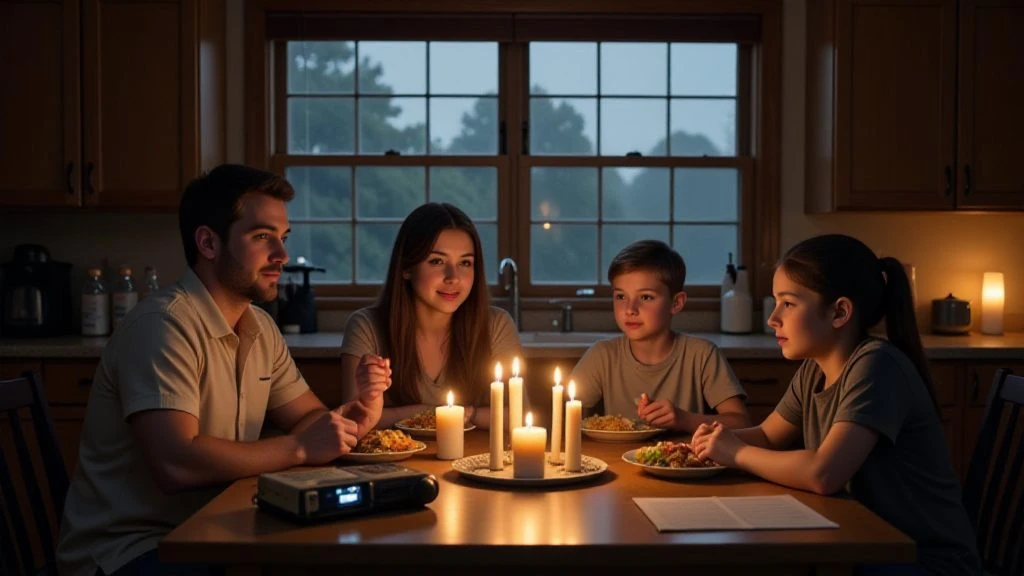 When the grid fails, the world goes dark and silent. Your ability to generate light, power essential devices, and receive information is what keeps you functional.
The 10 Essential Power and Communication Items
- Battery-powered or hand-crank emergency radio: NOAA Weather Radio reception is non-negotiable.
- High-capacity portable power bank: 20,000 mAh or larger for charging phones and flashlights.
- Solar charging panel: Extends the life of your power bank in extended outages.
- Headlamps (one per person): Hands-free lighting is essential for emergency tasks.
- LED lanterns: Area lighting for living and working.
- Extra batteries (lithium): Perform better in cold and have longer shelf life than alkaline.
- Glow sticks: Chemical light sources that require no power and are safe for children.
- Carbon monoxide detector (battery-powered): Essential if using any alternative heating or cooking.
- Whistle: Audible at over a mile. The most effective signaling device.
- Signal mirror: Visible to aircraft at up to 10 miles.
Pillar 5: Documents, Tools, and Security — The Foundation of Resilience
 The final pillar of preparedness is the one that bridges the gap between surviving the immediate crisis and navigating the aftermath.
The 10 Essential Documents, Tools, and Security Items
- Copies of critical documents: Passports, birth certificates, insurance policies, medical records in a waterproof bag.
- Cash in small denominations: $200–$500 in $1, $5, $10, and $20 bills.
- Multi-tool: Leatherman or Gerber. The most versatile tool in your kit.
- Fixed blade knife: Mora Companion. Essential for every task from food prep to shelter building.
- Duct tape: The most versatile repair tool available.
- Work gloves: Essential for handling debris and performing emergency tasks.
- Wrench or pliers: For shutting off gas and water utilities.
- Pry bar: For opening jammed doors or windows.
- Family communication plan: Written, laminated, and kept in every household member’s kit.
- Written emergency plan: Evacuation routes, utility shutoffs, and scenario-specific protocols.
Frequently Asked Questions
How do I know if my emergency kit is actually complete?
No emergency kit is ever truly “complete” — because completeness depends on your specific household’s needs, your geographic risk profile, and the scenarios you’re preparing for. The more useful question is: “Is my emergency kit adequate for the most likely emergencies in my area, for the specific needs of every member of my household?” Audit against the 50 items in this guide, then assess against your specific household needs. That’s the closest thing to a real answer.
Should I have separate emergency kits for home and car?
Yes. A home emergency kit and a car emergency kit serve different purposes and should be built separately. Your home kit is designed for shelter-in-place scenarios and should be comprehensive. Your car kit — sometimes called a “get-home bag” — is designed to help you get home if you’re stranded away from home, and should be portable and focused on the most critical needs: water, first aid, warmth, light, and communication.
How often should I check my emergency kit for expired items?
At minimum twice per year. The spring and fall equinoxes work well as easy-to-remember audit dates. During each audit, check all food and medication expiration dates, test all batteries and electronic devices, inspect all containers for damage or leaks, and assess whether your kit still meets your household’s current needs. Set the calendar reminder now, before you close this tab.
What’s the single most important thing to put in an emergency kit first?
Water purification capability. You can improvise shelter, forage food, and navigate without a compass. You cannot safely drink contaminated water without purification. A Sawyer Squeeze filter weighs 3 ounces and costs $30 — it is the highest-value item in any emergency kit, and the one most worth spending money on even when you’re cutting costs everywhere else.
Is it better to buy a pre-made kit or build my own?
Building your own is almost always better. Pre-made kits are a legitimate starting point, but they’re typically built for the average adult, not for your specific household; they often contain lower-quality versions of critical items; and they almost always omit the most critical gaps identified in this guide — medications, documents, communication plan, and adequate water. If you buy a pre-made kit, treat it as a starting point and supplement it with the items identified here.
Products / Tools / Resources
These are the specific items and resources that form the foundation of a serious emergency preparedness system — selected for reliability, value, and real-world effectiveness.
Water Storage and Purification
WaterBOB Emergency Drinking Water Storage — The highest-capacity emergency water storage solution for home use. Holds 100 gallons, stores flat until needed, fills from a standard bathtub faucet. The single best emergency water storage investment for most households.
Aqua-Tainer 7-Gallon Rigid Water Container — Stackable, food-grade, equipped with a built-in spigot. The most practical everyday water storage container for building a household supply incrementally.
Sawyer Squeeze Water Filter — Rated for 100,000 gallons, weighs 3 ounces, removes 99.99999% of bacteria and protozoa. The standard recommendation for portable water filtration.
Potable Aqua Chlorine Dioxide Tablets — The most effective chemical water treatment option. Kills bacteria, viruses, and Cryptosporidium. Lightweight, compact, and effective. Keep a supply in every emergency kit.
Communication
Midland ER310 Emergency Crank Weather Radio — Multiple power sources (battery, hand-crank, solar), NOAA Weather Radio reception, USB charging port, and SOS function. The most consistently recommended emergency radio for household preparedness.
Fox 40 Classic Pealess Whistle — Audible at distances of over a mile, works in freezing temperatures, weighs almost nothing. Every emergency kit and every household member’s bag should have one.
First Aid
Adventure Medical Kits Comprehensive Family First Aid Kit — The most complete pre-built first aid kit for household emergency preparedness. Includes a comprehensive first aid guide and supplies for managing most common emergency injuries.
Israeli Bandage (Emergency Pressure Bandage) — The most effective improvised wound closure and pressure bandage available. Used by military and emergency medical personnel worldwide.
CAT Tourniquet (Combat Application Tourniquet) — The standard tourniquet used by military and emergency medical personnel. Requires training to use correctly — pair with a tourniquet training course.
Light and Power
Black Diamond Spot Headlamp — The most consistently recommended headlamp for emergency preparedness. Bright, durable, water-resistant, and available in rechargeable versions. Headlamps beat handheld flashlights in almost every emergency scenario.
Anker PowerCore 26800 Portable Power Bank — High-capacity portable power bank for charging phones, flashlights, and other devices during extended power outages. The 26800 mAh capacity provides multiple full charges for most smartphones.
Energizer LED Lantern — Battery-powered area lighting for living and working during extended power outages. Significantly more practical than flashlights for illuminating a room.
Planning Resources
FEMA Ready.gov Emergency Plan Templates — Free, downloadable family emergency plan templates from the federal government. Available at ready.gov. The starting point for every household’s written emergency plan.
American Red Cross First Aid/CPR/AED Course — The most accessible first aid certification for civilians. 4 to 8 hours of instruction that provides skills genuinely capable of saving lives. Find a course at redcross.org.
The Prepared (theprepared.com) — The most rigorous and evidence-based emergency preparedness resource available online. Their water storage and purification guides are extensively researched and regularly updated. If you read one preparedness website, make it this one.