
Hey there! Some links on this page may be affiliate links which means that, if you choose to make a purchase, I may earn a commission at no extra cost to you. I greatly appreciate your support. Read the full disclosure here.
Most people know they should have a bug out bag. Most people don’t have one.
Not because they don’t care. Not because they can’t afford it. Because the gap between “I should do this” and “I actually did this” is filled with complexity, overwhelm, and the quiet assumption that there’s always more time.
There isn’t always more time. But there is this weekend.
The Ultimate Guide to Create a Bug Out Plan
This guide builds your complete 72-hour bug out bag in two days, for under $200, starting from zero. No prior experience required. No expensive gear. No excuses left.
What a Bug Out Bag Actually Is — And Why Getting This Wrong Costs You Everything
 A bug out bag (BOB) is a portable emergency kit designed to sustain one person for 72 hours during an evacuation or emergency scenario. The 72-hour window isn’t arbitrary — it reflects the standard timeframe that emergency management agencies use as the minimum period before organized relief typically becomes available.
The bug out bag is distinct from two related concepts that beginners consistently confuse:
Get-home bag (GHB): A smaller kit kept in your car or workplace, designed to help you get home if you’re stranded away from your house during an emergency. Typically 24-hour capacity. Different purpose, different contents.
Everyday carry (EDC): The items you carry on your person daily — wallet, phone, keys, pocket knife, small first aid kit. The foundation layer beneath both the GHB and BOB.
Shelter-in-place kit: A larger, stationary supply designed for extended home emergencies. Not portable. Not a bug out bag.
Understanding these distinctions matters because they determine what goes in your bag. A bug out bag is optimized for mobility, not comfort. Every item must earn its weight — and that phrase is not a metaphor.
The short version: A bug out bag is a portable emergency kit designed to sustain one person for 72 hours during an evacuation. It should weigh no more than 20 to 25% of your body weight, contain water (or purification capability), food (minimum 2,000 calories per day), shelter, fire starting, navigation, first aid, communication, and tools. A complete bug out bag can be built for under $200 in a single weekend.
Key Takeaways:
– A bug out bag is a portable, 72-hour emergency kit optimized for mobility, weighing no more than 20–25% of your body weight, and containing essentials: water (with purification), shelter, fire, food, navigation, first aid, communication, and tools.
– Prioritize packing according to survival needs: shelter first, then water purification, followed by food and other gear; avoid overpacking to maintain portability.
– Quality core items like a Sawyer Squeeze water filter, emergency bivvy, reliable fire starters (lighter, ferro rod, matches), calorie-dense food, compass, and first aid with trauma care save lives and keep weight manageable.
– Building a functional bug out bag for around $200 is possible with budget choices and compromises, but investing $300–$500 yields a more complete and durable kit.
– Testing your bug out bag under realistic conditions before an emergency ensures functionality, comfort, and familiarity, greatly increasing its effectiveness when it counts.
The Priority Framework — Before You Buy a Single Thing
The Rule of Threes governs survival priorities and should govern your packing sequence:
- 3 minutes without air (or in icy water)
- 3 hours without shelter in a harsh environment
- 3 days without water
- 3 weeks without food
This hierarchy tells you exactly what to prioritize when building your bag. Shelter comes before water. Water comes before food. Most beginners pack in the wrong order — loading up on food and tools while neglecting shelter and water purification. Then they wonder why their bag feels wrong.
The weight rule: Your bug out bag should weigh no more than 20 to 25% of your body weight. For a 160-pound person, that’s 32 to 40 pounds maximum. Most experienced preppers aim for 25 to 30 pounds. Every item you add must justify its weight against this limit — not justify its existence, justify its weight.
The modular approach: Build your bag in layers — essential survival items first, comfort and capability items second. If you need to drop weight in the field, you drop the outer layers, not the core.
Saturday Morning: Water, Shelter, and Fire — Start Here, Always
 Water — The Category That Determines Whether You Live or Die
Water is the survival priority that most beginners get wrong. Carrying enough water for 72 hours (minimum 3 liters per day = 9 liters total) would add approximately 20 pounds to your bag — an unsustainable weight penalty that defeats the purpose of a portable kit. The solution is carrying less water and more purification capability.
The recommended bug out bag water system:
Primary storage: 2-liter collapsible water bottle or hydration bladder. Carry 2 liters at all times — enough for immediate needs while you locate and purify more.
Primary purification: Sawyer Squeeze water filter. Rated for 100,000 gallons, weighs 3 ounces, removes 99.99999% of bacteria and protozoa. The standard recommendation for bug out bags. Approximately $30.
Backup purification: Potable Aqua chlorine dioxide tablets. Kills bacteria, viruses, and Cryptosporidium. A 30-tablet bottle weighs almost nothing. Approximately $10.
Total water system cost: Approximately $40 to $50.
The water source mindset: Your bug out bag water system is only as good as your ability to find water sources. Before you need your bag, identify water sources along your planned bug out routes — streams, rivers, lakes, and municipal water sources that may still be accessible. The filter is useless without something to filter.
Shelter — The Category That Kills People Who Ignore It
Hypothermia kills faster than dehydration. In a 50°F environment with wind and rain, an unprotected person can develop life-threatening hypothermia within 2 to 3 hours. Shelter is the second priority after breathing — and the category most beginners underpack because it doesn’t feel urgent until it suddenly, catastrophically is.
The minimum viable bug out bag shelter system:
Emergency bivvy: A reflective, waterproof sleeping bag-shaped shelter that reflects up to 90% of body heat. SOL Escape Bivvy is the standard recommendation — significantly more durable than standard space blankets, reusable, and weighs 8.5 ounces. Approximately $35.
Tarp (3×3 meters minimum): A lightweight silnylon tarp provides versatile shelter in any environment. Aqua Quest Guide Tarp is consistently recommended for its combination of weight, waterproofing, and durability. Approximately $60 to $80.
Paracord (50 feet minimum): For rigging the tarp. 550-pound paracord, approximately $8 to $12.
Budget alternative: If the tarp pushes you over budget, a heavy-duty contractor garbage bag (6 mil) weighs almost nothing and provides emergency rain protection. Not ideal. Functional.
Total shelter system cost: Approximately $50 to $80 (with tarp) or $45 to $55 (bivvy only).
Fire — Three Methods, Because One Is Never Enough
 Fire provides warmth, water purification, food preparation, signaling, and psychological comfort. The rule is simple and non-negotiable: never rely on a single fire starting method. Carry three.
The three-method fire starting system:
Method 1 — BIC lighter: The most reliable fire starting tool available. Carry two. Approximately $2 each.
Method 2 — Ferro rod (ferrocerium rod): Produces sparks at 5,400°F. Works when wet, works in cold temperatures, lasts for thousands of strikes. Bayite 6-inch ferro rod is the standard recommendation. Approximately $12.
Method 3 — Waterproof matches: UCO Stormproof matches burn for 15 seconds in wind and rain. Approximately $8.
Tinder: Carry a small amount of prepared tinder — cotton balls soaked in petroleum jelly (the most effective and cheapest fire starting tinder available) stored in a small waterproof container. Cost: negligible. Value: significant.
Total fire starting system cost: Approximately $25 to $30.
Food — Calorie-Dense, Lightweight, and Actually Edible Under Stress
The average adult needs approximately 2,000 calories per day. For 72 hours, your bug out bag food supply needs to provide approximately 6,000 calories minimum. Under stress and physical exertion, caloric needs increase — plan for 2,500 to 3,000 calories per day if your bug out scenario involves significant physical activity.
The bug out bag food priority: Calorie density (calories per ounce) is the primary metric. Palatability is the secondary metric — food that nobody will eat under stress is not a food supply. It’s dead weight.
Budget bug out bag food options:
| Food Item | Calories | Weight | Cost |
| Clif Bars (6 pack) | 1,500 | 15 oz | $12 |
| Peanut butter packets (6) | 1,200 | 6 oz | $8 |
| Instant oatmeal packets (6) | 900 | 12 oz | $6 |
| Tuna pouches (3) | 450 | 9 oz | $9 |
| Trail mix (1 lb) | 2,400 | 16 oz | $8 |
| Instant ramen (3 packs) | 1,140 | 9 oz | $3 |
| Total | 7,590 | 67 oz | $46 |
This food supply provides approximately 2,530 calories per day for 3 days, weighs approximately 4.2 pounds, and costs approximately $46. It requires minimal cooking — the oatmeal and ramen need hot water; everything else can be eaten cold if necessary.
Cooking capability: A lightweight camp stove (BRS-3000T ultralight stove, approximately $15) and a small titanium pot (approximately $20) allow you to cook the oatmeal and ramen and boil water for purification. Total cooking system: approximately $35.
Total food system cost: Approximately $80 to $85 (including cooking system).
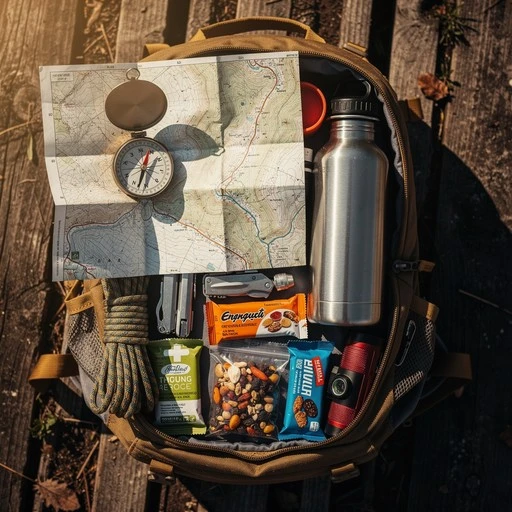
GPS and cell phone navigation fail in the emergencies that require bug out bags — dead batteries, no signal, damaged infrastructure. Paper maps and a compass are the navigation backup that always works, in every condition, without batteries.
The bug out bag navigation system:
Paper maps: Obtain topographic maps of your local area and your planned bug out routes. USGS 7.5-minute topographic maps are available free as digital downloads at store.usgs.gov and can be printed or purchased as waterproof printed maps. Cost: free to $15.
Compass: A quality baseplate compass is essential. Suunto A-10 is the standard beginner recommendation — accurate, durable, and straightforward to use. Approximately $20 to $30.
Pre-planned bug out routes: Before you need your bag, plan three routes out of your area — primary, secondary, and tertiary. Mark them on your paper maps. Identify water sources, shelter locations, and potential obstacles along each route. Do this now, not during the emergency.
Total navigation system cost: Approximately $20 to $45.
Sunday Morning: First Aid, Communication, and Tools
First Aid — The Kit That Actually Saves Lives (Not the One That Looks Good)
Most pre-built first aid kits are inadequate for bug out scenarios. They contain too many bandages and not enough trauma care capability. A bug out bag first aid kit needs to address the injuries most likely in an emergency evacuation — lacerations, sprains, burns, and in worst-case scenarios, penetrating trauma.
The complete bug out bag first aid kit:
Wound care:
- Adhesive bandages (assorted sizes)
- Sterile gauze pads (multiple sizes)
- Medical tape
- Israeli bandage (emergency pressure bandage) — approximately $8
- CAT tourniquet — approximately $30
- Wound closure strips (Steri-strips)
- Antiseptic wipes
- Antibiotic ointment
Assessment and medication:
- Digital thermometer
- Pain relievers (ibuprofen and acetaminophen)
- Antihistamines
- Antidiarrheal medication
- Any prescription medications (30-day supply minimum)
- Nitrile gloves (multiple pairs)
Reference:
- Laminated first aid quick reference card
Total first aid kit cost: Approximately $50 to $70 (building your own is significantly cheaper than pre-built kits of equivalent quality).
The training gap: A first aid kit in the hands of someone with no first aid training is significantly less useful than one in the hands of someone who has completed a basic course. The American Red Cross First Aid/CPR/AED course takes 4 to 8 hours and provides skills that genuinely save lives. This is the most important supplement to any first aid kit — and it costs almost nothing.
Communication — Staying Informed When the Infrastructure Goes Dark
In a bug out scenario, information is as critical as water. The decisions you make — which routes are safe, where emergency resources are available, whether to shelter in place or continue moving — depend on accurate, timely information. When cell networks fail and internet goes down, most people are completely information-blind.
The bug out bag communication system:
Emergency radio: A battery-powered or hand-crank NOAA Weather Radio provides continuous emergency information on dedicated frequencies that remain operational when other infrastructure fails. Midland ER310 is consistently recommended for its combination of power options (battery, hand-crank, solar) and reception quality. Approximately $40 to $50.
Signaling devices:
- Fox 40 pealess whistle — audible at over a mile, works in freezing temperatures. Approximately $8.
- UST StarFlash signal mirror — visible to aircraft at up to 10 miles. Approximately $10.
Family communication plan: A written plan that answers three questions: Where do we meet if we can’t reach each other by phone? Who is our out-of-area contact? What is our bug out destination? Write it down. Laminate it. Put it in the bag.
Total communication system cost: Approximately $60 to $70.
Tools — The Items That Do Everything Else
Multi-tool: The Leatherman Skeletool is the standard recommendation for bug out bags — lightweight (5 ounces), durable, and includes the most-used tools (pliers, knife, bit driver). Approximately $60 to $70. Budget alternative: Gerber Suspension-NXT at approximately $30.
Fixed blade knife: A Mora Companion provides a reliable, sharp fixed blade for approximately $15 to $20. The most cost-effective knife in the bug out bag category, and one that experienced preppers consistently recommend over knives costing five times as much.
Headlamp: Black Diamond Spot headlamp — bright, durable, water-resistant. Approximately $40. Budget alternative: Energizer Vision HD at approximately $20.
Duct tape: Wrap 10 feet around a pencil or lighter. Weighs almost nothing. Solves almost everything.
Total tools cost: Approximately $75 to $130 (depending on multi-tool choice).
Sunday Afternoon: The Backpack and the Honest Budget
 Choosing Your Bug Out Bag Backpack — The Decision That Holds Everything Together
How many liters does a bug out bag need?
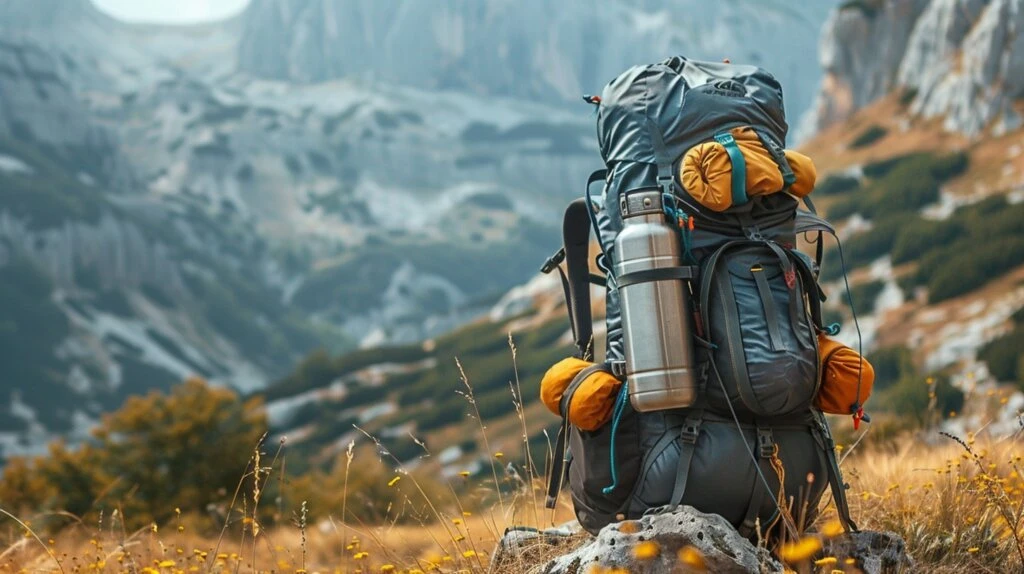
For a 72-hour kit, 30 to 50 liters is the standard recommendation. Smaller bags force you to be disciplined about weight — which is actually a feature, not a bug. Larger bags invite overpacking, which defeats the purpose of a portable emergency kit.
Budget bug out bag backpack options:
Under $70: Condor 3-Day Assault Pack (50L) — approximately $60 to $70. Excellent value for the price, durable construction, and MOLLE-compatible for those who want it.
Under $100: 5.11 Rush 24 (40L) — approximately $100 (often on sale for $60 to $70). Durable, purpose-built for this application, and widely trusted in the preparedness community.
Under $120: Osprey Farpoint 40 — approximately $100 to $120. More comfortable for extended carry, better suspension system, and looks like a travel bag rather than a tactical kit.
The gray man approach: Tactical-looking bags — MOLLE webbing, military colors, visible gear attachments — signal preparedness in ways that can attract unwanted attention during civil unrest scenarios. A neutral-colored hiking pack or travel backpack is less conspicuous and equally functional. This matters more than most guides acknowledge.
The Honest Budget — What $200 Actually Gets You
| Category | Budget Range |
| Water system | $40–$50 |
| Shelter system | $50–$80 |
| Fire starting | $25–$30 |
| Food (72 hours) | $80–$85 |
| Navigation | $20–$45 |
| First aid | $50–$70 |
| Communication | $60–$70 |
| Tools | $75–$130 |
| Backpack | $60–$120 |
| Total | $460–$680 |
Wait — that’s over $200. Here’s the honest answer: a complete, quality bug out bag for one person costs $300 to $500 when built properly. The $200 figure is achievable with significant compromises — budget alternatives in every category, skipping the emergency radio, choosing the cheapest backpack, and building your own first aid kit from pharmacy components.
The realistic $200 bug out bag:
| Category | Budget Option | Cost |
| Water | Sawyer Squeeze + 2L bottle | $35 |
| Shelter | SOL Bivvy + contractor bag | $40 |
| Fire | 2 BIC lighters + ferro rod | $15 |
| Food | Trail mix, bars, peanut butter | $40 |
| Navigation | Free USGS maps + $20 compass | $20 |
| First aid | DIY kit from pharmacy | $25 |
| Communication | Whistle + written plan | $8 |
| Tools | Mora knife + Gerber multi-tool | $45 |
| Backpack | Budget 40L pack | $40 |
| Total | ~$268 |
The honest answer: $200 gets you a functional, life-sustaining bug out bag. $300 to $400 gets you a genuinely good one. Build what you can afford now, and upgrade over time. A functional bag you have is worth infinitely more than a perfect bag you’re still planning.
The Step Nobody Does — And Why It Matters More Than Everything Else
A bug out bag that has never been tested is a bag full of assumptions. Before you need your bag, test it:
- Pack it completely and carry it for 2 hours. Note what’s uncomfortable, what’s inaccessible, and what you forgot.
- Use your fire starting system — actually start 10 fires with your ferro rod before you need to start one in an emergency.
- Use your water filter — filter water from a natural source and drink it.
- Navigate your primary bug out route — drive it, then walk a section of it.
- Sleep in your shelter — spend one night in your bivvy or under your tarp.
The field test reveals failures that packing never does. Do it before you need to.
The Questions People Actually Ask About Bug Out Bags
How heavy should my bug out bag actually be?
No more than 20 to 25% of your body weight. For a 160-pound person, that’s 32 to 40 pounds maximum. Most experienced preppers aim for 25 to 30 pounds. If your bag is heavier than this, you will not be able to carry it effectively over distance — which defeats the entire purpose of a portable emergency kit. Weight is not a minor consideration. It is the central constraint around which everything else is organized.
What’s the single most important item in a bug out bag?
Water purification capability. You can improvise shelter, forage food, and navigate without a compass. You cannot safely drink contaminated water without purification. A Sawyer Squeeze filter weighs 3 ounces and costs $30 — it is the highest-value item in any bug out bag, and the one most worth spending money on even when you’re cutting costs everywhere else.
What’s the difference between a bug out bag and a 72-hour kit?
Functionally, they’re the same thing. “72-hour kit” is the term used by FEMA and emergency management agencies; “bug out bag” is the term used by the preparedness community. The 72-hour kit is often associated with shelter-in-place scenarios; the bug out bag is specifically designed for evacuation. Both should contain the same core categories: water, food, shelter, fire, navigation, first aid, communication, and tools.
Should I tell people I have a bug out bag?
Exercise discretion. Share the location and contents with household members who need to know. Be cautious about advertising your preparedness to neighbors and acquaintances — during genuine emergencies, a well-stocked bag can attract unwanted attention. The gray man principle applies to your bag and to your conversations about it.
How often should I actually update my bug out bag?
Conduct a complete audit twice per year — the spring and fall equinoxes work well as easy-to-remember dates. Check all food and medication expiration dates, test all batteries and electronic devices, inspect all containers for damage, and assess whether your kit still meets your household’s current needs. Update seasonally for climate changes — add cold weather gear in autumn, remove it in spring.
Products / Tools / Resources
These are the specific items that consistently come up in serious bug out bag conversations — not because they’re the most expensive or the most tactical-looking, but because they actually work when it matters.
Water
Sawyer Squeeze Water Filter — The standard recommendation for bug out bag water purification. Rated for 100,000 gallons, weighs 3 ounces, and removes 99.99999% of bacteria and protozoa. If you buy one thing for your bug out bag before anything else, make it this.
Potable Aqua Chlorine Dioxide Tablets — The most effective chemical water treatment option. Kills bacteria, viruses, and Cryptosporidium. Lightweight, compact, and effective. Keep a supply in every kit.
Platypus Collapsible Water Bottle (2L) — Lightweight, durable, and collapses flat when empty. The most practical water storage option for a bug out bag.
Shelter
SOL Escape Bivvy — The most recommended emergency bivvy for bug out bags. Significantly more durable than standard space blankets, reusable, and genuinely warm. Worth every dollar.
Aqua Quest Guide Tarp (3x3m) — Silnylon construction, fully waterproof, and versatile enough for every shelter configuration. The standard recommendation for bug out bag tarps.
Paracord (550 lb, 50 feet) — The most versatile cordage for bug out bag applications. Used for shelter construction, lashing, and dozens of other applications.
Fire Starting
Bayite Ferro Rod (6-inch) — The standard recommendation for bug out bag fire starting. Produces sparks at 5,400°F, works when wet, lasts for thousands of strikes. The 6-inch version is significantly easier to use than smaller rods.
UCO Stormproof Matches — Waterproof, windproof, and burn for approximately 15 seconds each. Reliable backup when a lighter fails.
Suunto A-10 Baseplate Compass — The most recommended entry-level compass for beginners. Accurate, durable, and straightforward to use. The right starting point for most people.
USGS 7.5-Minute Topographic Maps— Free digital downloads at store.usgs.gov. Print them, laminate them, and put them in your bag before you need them.
First Aid
Israeli Bandage (Emergency Pressure Bandage) — The most effective improvised wound closure and pressure bandage available. Used by military and emergency medical personnel worldwide. Inexpensive and takes up almost no space.
CAT Tourniquet (Combat Application Tourniquet) — The standard tourniquet used by military and emergency medical personnel. Requires training to use correctly — pair with a tourniquet training course.
American Red Cross First Aid/CPR/AED Course — The most important supplement to any first aid kit. 4 to 8 hours of instruction that provides skills genuinely capable of saving lives. Find a course at redcross.org.
Communication
Midland ER310 Emergency Crank Weather Radio — Multiple power sources (battery, hand-crank, solar), NOAA Weather Radio reception, USB charging port, and SOS function. The most consistently recommended emergency radio for bug out bags.
Fox 40 Classic Pealess Whistle — Audible at distances of over a mile, works in freezing temperatures, weighs almost nothing. Every bug out bag should have one.
UST StarFlash Signal Mirror — Military-spec signal mirror with a sighting hole for accurate aiming. Visible to aircraft at up to 10 miles in clear conditions.
Tools
Mora Companion Fixed Blade Knife — The most consistently recommended beginner bushcraft and bug out knife. Fixed blade, full tang, Scandi grind, approximately $15 to $20. The best value in bug out bag knives.
Leatherman Skeletool — The standard recommendation for bug out bag multi-tools. Lightweight (5 ounces), durable, and includes the most-used tools. Worth the investment over cheaper alternatives.
Black Diamond Spot Headlamp — The most consistently recommended headlamp for emergency preparedness. Bright, durable, water-resistant. Headlamps beat handheld flashlights in almost every emergency scenario.
Backpacks
Condor 3-Day Assault Pack (50L) — The best value bug out bag backpack available. Durable, MOLLE-compatible, and priced for real budgets.
Osprey Farpoint 40 — The most comfortable option for extended carry. Looks like a travel bag, carries like a hiking pack, and doesn’t announce itself as a tactical kit.