

Hey there! Some links on this page may be affiliate links which means that, if you choose to make a purchase, I may earn a commission at no extra cost to you. I greatly appreciate your support. Read the full disclosure here.
A grid failure lasting just 72 hours can disable water treatment plants, drain hospital backup systems, and leave millions without heat, refrigeration, or communication. According to the U.S. Department of Energy, weather-related power outages have increased significantly over the past two decades, with major events now affecting hundreds of thousands of households at a time. Most families are not prepared for anything beyond a few hours of darkness.
This grid failure preparedness checklist at home is built for people who want real answers, not vague advice. Whether you’re a seasoned prepper or just starting to think seriously about self-reliance, what follows covers every critical category, from water and food to backup power, medical needs, and the specific mistakes that leave otherwise prepared households vulnerable.
Key Takeaways
- A grid failure can last anywhere from hours to weeks, and the first 72 hours are the most critical window for household survival.
- Every home needs at minimum one gallon of water per person per day, stored for at least two weeks.
- Backup power options range from portable battery stations to whole-home generators, the right choice depends on your household’s medical and energy needs.
- Food storage should prioritize shelf-stable, no-cook options alongside a plan for managing refrigerated and frozen items.
- Elderly, disabled, and medically dependent household members require a separate, dedicated preparedness layer.
- The most common preparedness failure is not a lack of supplies, it’s supplies that are expired, inaccessible, or untested.
- Review and rotate your emergency kit every six months, minimum.

What Is a Grid Failure and How Long Do They Usually Last
A grid failure is the collapse of electrical power delivery across a region or network, typically caused by extreme weather, equipment failure, cyberattack, or physical infrastructure damage. Unlike a localized outage, a true grid failure can affect entire states or interconnected regions simultaneously, making rapid utility restoration far more difficult.
Duration varies widely. Routine outages last a few hours. Ice storms, hurricanes, and major infrastructure events can knock out power for days to weeks. The 2021 Texas winter storm left over 4.5 million homes without power for up to 10 days in subfreezing temperatures. Large-scale grid failures caused by EMP events or coordinated cyberattacks could, in worst-case scenarios, last months. For practical preparedness purposes, planning for a minimum of two weeks of self-sufficiency is the standard most experienced preppers recommend.
For a deeper look at EMP-specific threats, the EMP attack and grid failure survival guide covers that scenario in detail.
Essential Items to Have at Home During a Power Outage
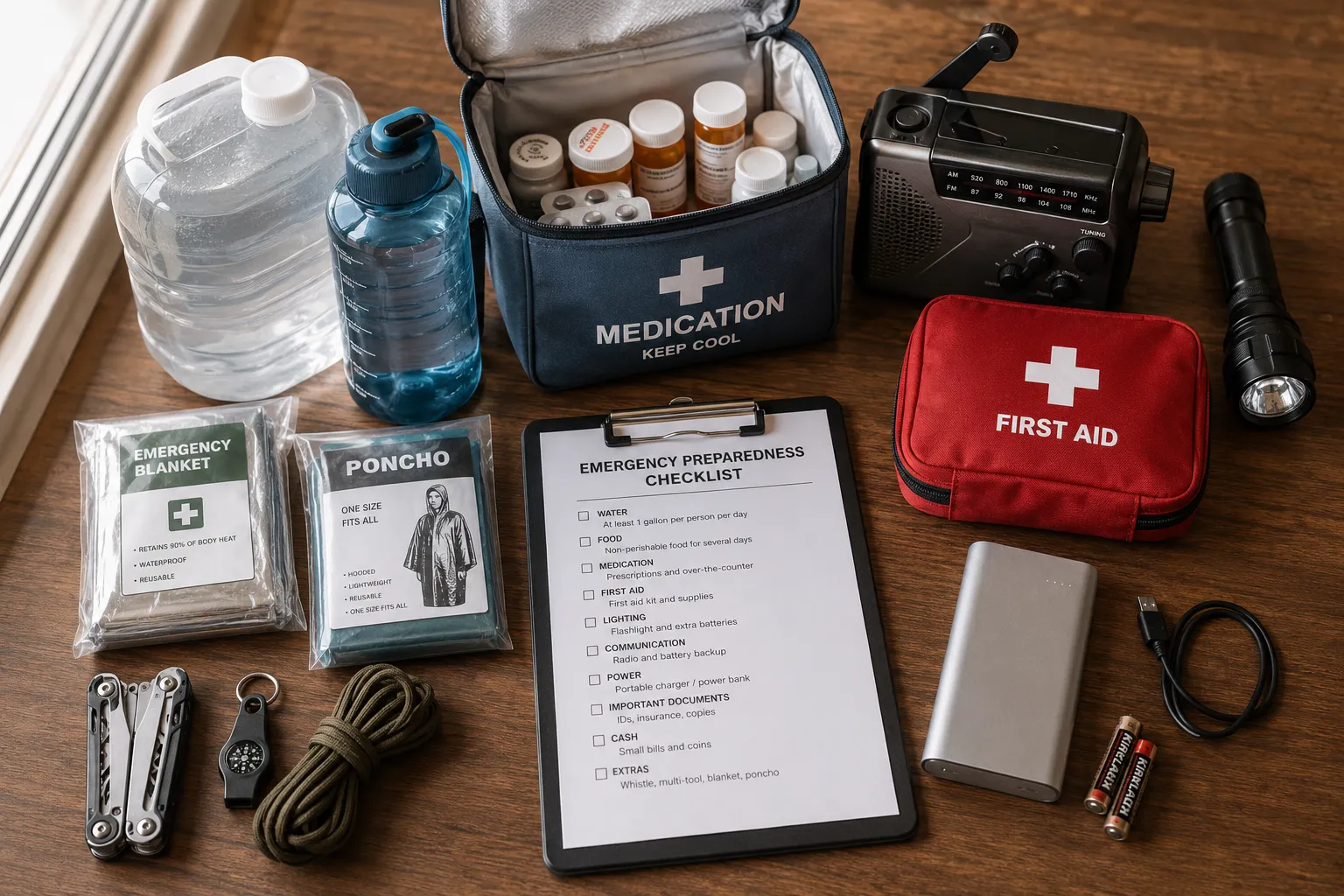
The core of any grid failure preparedness checklist at home starts with these non-negotiable categories:
Water
- 1 gallon per person per day (2 gallons if you have infants, nursing mothers, or live in a hot climate)
- Minimum 14-day supply for each household member
- Water purification tablets or a gravity filter as backup
Food
- 2-week supply of shelf-stable foods requiring minimal or no cooking
- Manual can opener
- Camp stove or propane burner for cooking without power
Light and Communication
- LED flashlights with extra batteries
- Battery-powered or hand-crank weather radio
- Backup battery banks for phones
- Printed copies of emergency contacts (phones die)
Safety and Sanitation
- First aid kit
- Prescription medications (30-day minimum supply)
- Sanitation supplies: toilet bags, hand sanitizer, wet wipes
- Fire extinguisher
Documents
- Waterproof container with copies of IDs, insurance cards, prescriptions, and financial documents
For a comprehensive breakdown of what belongs in your emergency supplies, the ultimate emergency supplies list is worth reviewing alongside this checklist.
How to Prepare Your Home for Extended Power Outages
Preparing for extended outages means thinking in layers: immediate survival (72 hours), short-term sustainability (2 weeks), and long-term resilience (30+ days).
72-Hour Layer Focus on water, food, light, and communication. Everything in this layer should be pre-packed, accessible without power, and known to every adult in the household.
Two-Week Layer Add fuel for cooking, expanded food storage, sanitation supplies, and a plan for managing heat or cold depending on your climate. This is where most households fall short.
30-Day Layer This requires more investment: a generator or solar system, deep food storage, water collection capability, and medical supply reserves. Many preppers integrate this with broader off-grid living strategies to build permanent resilience rather than just emergency capacity.
Home hardening steps worth taking now:
- Install carbon monoxide detectors (generator use indoors kills people every year)
- Know how to manually release your garage door
- Identify which circuit breakers control critical systems
- Establish a “safe room” with insulation value for extreme cold or heat
- Keep vehicles at half-tank or above at all times
Best Backup Power Sources for Home Grid Failure
The right backup power source depends on your household’s power requirements, budget, and how long you expect to need it. There is no single best option for everyone.
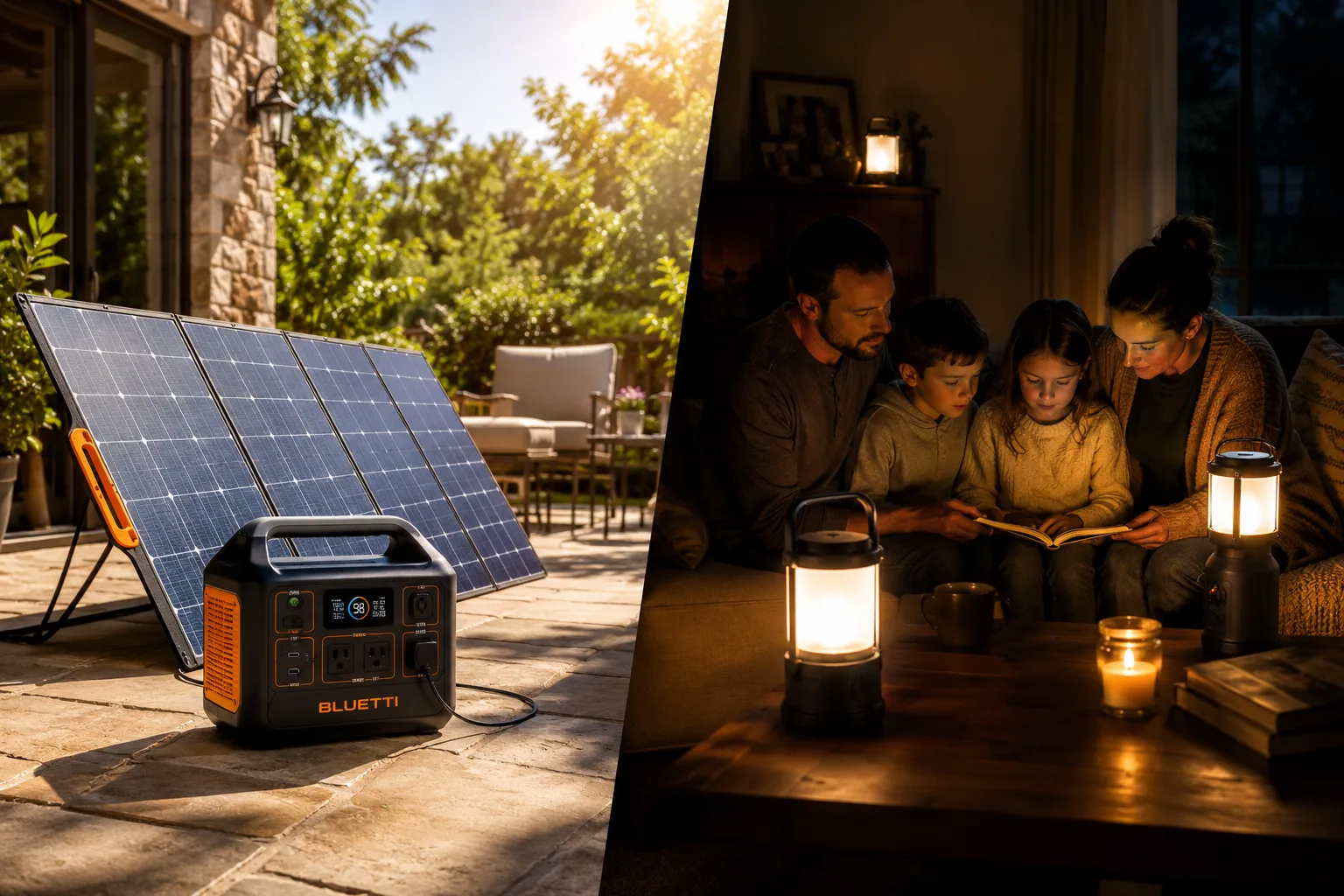
Portable Power Stations (Battery Backup) Best for: apartments, renters, households with moderate power needs
- Brands like Jackery, EcoFlow, and Bluetti offer 500Wh to 3,000Wh capacity
- Silent, safe for indoor use, rechargeable via solar panels
- Cannot run central HVAC or electric stoves, but handles phones, lights, CPAP machines, and small appliances
Portable Gasoline Generators Best for: homeowners needing to run refrigerators, sump pumps, or power tools
- Must be used outdoors only, at least 20 feet from windows and doors
- Requires fuel storage (rotate every 6-12 months with stabilizer)
- Loud and requires regular maintenance
Whole-Home Standby Generators Best for: households with medical equipment, extreme climate exposure, or long-term grid instability risk
- Runs on natural gas or propane, activates automatically
- Significant upfront cost but requires minimal intervention
- Propane tanks can be sized for weeks of runtime
Solar + Battery Systems Best for: preppers investing in long-term resilience
- Pairs well with a whole-home battery (e.g., Tesla Powerwall or similar)
- No fuel dependency, silent, scalable
- Higher upfront cost, weather-dependent charging
For a detailed comparison of these systems, the complete prepper’s guide to backup power for emergencies walks through specs, costs, and use cases.
Food Storage and Refrigeration Without Electricity
When the grid goes down, your refrigerator becomes a ticking clock. A full, unopened refrigerator holds safe temperatures for approximately 4 hours. A full freezer maintains safe temperatures for 24-48 hours if kept closed.
Immediate refrigerator management:
- Keep the door closed as much as possible
- Move the most perishable items (meat, dairy, eggs) to a cooler with ice immediately
- Food above 40°F for more than 2 hours should be discarded
Long-term food storage priorities for grid failure:
- Canned goods (3-5 year shelf life)
- Freeze-dried meals (up to 25-year shelf life)
- Rice, oats, pasta, dried beans in sealed Mylar bags
- Peanut butter, honey, hard cheeses sealed in wax
- Crackers, nuts, jerky for no-cook snacking
A well-stocked survival pantry is the backbone of food security during extended outages. For cooking options when the stove is out, emergency cooking without power covers propane, wood, and solar cooking methods in detail.
Water Storage and Purification During Grid Failure
Water is the single most critical supply in any grid failure preparedness checklist at home. Municipal water systems depend on electric pumps, when the grid fails, water pressure can drop or stop entirely within hours.
Storage targets:
- Minimum: 14 gallons per person (two-week supply at 1 gallon/day)
- Recommended: 28 gallons per person to account for sanitation and cooking
Storage containers:
- Food-grade 5-gallon jugs or 55-gallon barrels (use a hand pump for large barrels)
- WaterBOB bathtub bladder (holds up to 100 gallons, fill it when a storm warning is issued)
- Avoid milk jugs, they degrade and leak
Purification methods when stored water runs low:
- Boiling: 1 full minute at a rolling boil (3 minutes above 6,500 feet elevation)
- Chemical treatment: unscented household bleach at 8 drops per gallon
- Gravity filters: Berkey, Sawyer Squeeze, or LifeStraw Home
- Rainwater collection: legal in most U.S. states, viable with a simple barrel setup
For guidance on rainwater collection for emergency survival, including legal considerations and setup options, that resource is worth bookmarking.
Heating and Cooling Without Power at Home
Thermal emergencies kill. Hypothermia and heat stroke are both real risks during extended grid failures, and neither waits for rescue services to arrive.
Heating without power:
- Wood-burning fireplace or stove: the most reliable long-term option
- Propane or kerosene heaters: effective but require ventilation, carbon monoxide is a serious risk
- Thermal layering: insulate one room with blankets over windows and doors, concentrate body heat
- Sleeping bags rated for temperatures below your expected overnight low
Cooling without power:
- Strategic ventilation: open windows on opposite sides of the home at night to create cross-breeze, close them before the heat of the day
- Wet towels on the neck and wrists reduce perceived temperature significantly
- Battery-powered fans (a large battery station can run a fan for 10+ hours)
- Identify the coolest room in your home (usually a basement or interior room) and shelter there during peak heat
Decision rule: If outdoor temperatures drop below 20°F or rise above 100°F, thermal management becomes a survival priority, not a comfort issue. Plan accordingly.
Medical Equipment Backup Power Options
For households with CPAP machines, oxygen concentrators, insulin refrigeration, or powered wheelchairs, grid failure is not an inconvenience, it’s a medical emergency in progress.
CPAP machines: Most modern CPAPs run on 12V DC and can be powered by a mid-range portable power station (500-1,000Wh capacity) for several nights. A dedicated CPAP battery backup is also available from most manufacturers.
Oxygen concentrators: These draw significantly more power (150-600W depending on the unit). A whole-home generator or large battery system (2,000Wh+) is typically required for continuous use. Contact your supplier about emergency oxygen tank delivery protocols.
Insulin and temperature-sensitive medications: See the section below on medication refrigeration.
Powered mobility devices: Keep chairs and scooters charged to 100% when a grid failure is anticipated. A solar panel with the right adapter can maintain charge during extended outages.
Anyone with a medically dependent household member should also review the emergency preparedness guide for disabled individuals for a full framework.
What to Do With Medications That Need Refrigeration During Outages
Insulin, certain biologics, and some liquid antibiotics require refrigeration between 36-46°F. When the grid fails, these medications have a limited window before potency degrades.
Immediate steps:
- Transfer medications to an insulated cooler with ice packs as soon as the outage begins, do not wait
- A well-insulated cooler with frozen gel packs can maintain safe temperatures for 24-48 hours
- Avoid opening the cooler unnecessarily
Longer-term options:
- Frio cooling wallets use evaporative cooling and require only water, no electricity needed, effective for 45+ hours in most conditions
- Portable 12V coolers (powered by a car battery or power station) can maintain refrigeration for days
- Contact your pharmacy or physician about emergency supplies or alternative formulations (some insulins have room-temperature stability for 28-30 days once opened)
Critical note: Never use insulin or biologics that have been exposed to temperatures outside the recommended range without consulting a healthcare provider first. When in doubt, replace rather than risk a dosing failure.
Common Mistakes People Make When Preparing for Grid Failure
The grid failure preparedness checklist at home fails most households not because of what they bought, but because of what they never tested, rotated, or thought through.
The most common and costly mistakes:
- Storing water in the wrong containers. Milk jugs degrade. Reused soda bottles leach chemicals over time. Use food-grade containers only.
- Never testing backup power. A generator that hasn’t been started in two years may not start at all. Run it under load every 3-6 months.
- Forgetting fuel storage. A generator is useless without fuel. Store at least 10-15 gallons in approved containers with fuel stabilizer added.
- Ignoring carbon monoxide risk. Generators, propane heaters, and camp stoves used indoors kill people every year. CO detectors are non-negotiable.
- No printed information. When phones die and the internet is down, digital-only information is gone. Print emergency contacts, medical records, and your preparedness plan.
- Overlooking pets. Dogs, cats, and other animals need food, water, and temperature management too. The pet emergency preparedness checklist covers this often-missed category.
- Assuming the outage will be short. The first 24 hours of any grid failure feel manageable. It’s day 3 through day 10 where unprepared households face real danger.
How to Keep Devices Charged During Extended Outages
Communication devices, phones, radios, and medical monitors, are lifelines during grid failures. Keeping them charged requires a layered approach.
Portable battery banks: Keep at least two high-capacity power banks (20,000mAh or larger) fully charged at all times. Rotate the charge every 3-4 months.
Portable power stations: A 500-1,000Wh battery station can charge phones dozens of times, run LED lights for days, and power small medical devices. Pair it with a 100W solar panel for renewable recharging.
Vehicle charging: A car’s 12V outlet or USB ports can charge phones and small devices. Run the engine in a well-ventilated area only, never in a closed garage.
Hand-crank and solar chargers: Slow but reliable for phones in a true long-term scenario. Best treated as a last resort rather than a primary strategy.
Battery-powered weather radio: This is not optional. A hand-crank NOAA weather radio provides emergency alerts, storm updates, and official guidance without any grid or cellular dependency.
Do I Need a Generator or Battery Backup System
The honest answer: most households benefit from both, but the priority depends on what you need to power.
Choose a generator if:
- You need to run a refrigerator, sump pump, or electric heating system
- You live in an area with frequent multi-day outages
- You have medical equipment with high power draw (oxygen concentrators, etc.)
- You own your home and can safely operate one outdoors
Choose a battery backup system if:
- You live in an apartment or rental where generators aren’t practical
- Your primary needs are phone charging, LED lighting, a CPAP, and a small fan
- You want a silent, zero-maintenance option
- You’re willing to pair it with solar panels for recharging
Choose both if:
- You have medical equipment AND want a silent indoor backup for daily use
- You’re building a long-term resilience system rather than just an emergency kit
For a full breakdown of power backup options and what to look for, the power outage preparedness checklist is a practical companion resource.
Grid Failure Preparedness for Elderly or Disabled People
Elderly and disabled individuals face disproportionate risk during grid failures. Heat-related illness, medication failure, mobility limitations, and communication barriers all compound quickly when infrastructure collapses.
Specific preparedness steps for this population:
- Register with your local utility company’s medical baseline or life support program, many utilities prioritize restoration for registered medically dependent customers
- Notify your local emergency management office before a known threat (hurricane season, winter storm warnings)
- Establish a check-in system with a neighbor, family member, or community organization
- Pre-identify a cooling or warming center in your area as a backup shelter option
- Ensure all mobility aids, hearing aids, and medical devices have backup power plans
- Keep a written list of all medications, dosages, prescriptions, and physician contacts in a waterproof bag
For seniors specifically, the disaster preparedness strategies for seniors resource provides tailored guidance that goes beyond the general checklist.
How Often Should I Update My Grid Failure Emergency Kit
Emergency kits should be reviewed every six months, a practical schedule is to align reviews with daylight saving time changes in spring and fall.
What to check at each review:
- Water: replace stored tap water every 6 months; commercially sealed water is good for 1-2 years
- Food: rotate anything within 6 months of expiration, replace with fresh stock
- Batteries: test and replace as needed
- Medications: check expiration dates, update prescriptions
- Documents: update insurance cards, contact lists, and any financial records
- Fuel: rotate gasoline with stabilizer, inspect propane tanks for leaks or damage
- Generator: run it under load for 30 minutes to confirm function
Annual additions to consider:
- Upgrade power storage capacity as better technology becomes available
- Add supplies for any new household members (babies, elderly relatives, new pets)
- Reassess your threat profile based on where you live and what’s changed
Frequently Asked Questions
How much water should I store for a grid failure? Store a minimum of one gallon per person per day, for at least 14 days. In hot climates or for households with infants or nursing mothers, plan for two gallons per person per day. A family of four needs a minimum of 56 gallons for a two-week supply.
Can I use my fireplace for heat during a grid failure? Yes, if it’s a wood-burning fireplace or insert that doesn’t rely on electric ignition or a blower. Gas fireplaces with standing pilots work without power. Gas fireplaces with electronic ignition typically do not. Have your chimney inspected annually if you plan to rely on it.
How long will food in my freezer last without power? A full, unopened freezer maintains safe temperatures for 24-48 hours. A half-full freezer lasts roughly 24 hours. Keep freezers as full as possible, fill empty space with water jugs that freeze and act as thermal mass.
Is it safe to run a generator in my garage with the door open? No. Carbon monoxide from a generator can enter a home even with the garage door open. Generators must be operated at least 20 feet from any door, window, or vent. Install CO detectors on every level of your home.
What’s the minimum backup power I should have for a phone? At minimum, keep two fully charged 20,000mAh power banks. That provides roughly 8-12 full phone charges per bank, enough for a week of moderate use. Recharge them every 3-4 months so they’re ready when needed.
Do I need to store extra cash for a grid failure? Yes. ATMs and card payment systems go down when the grid fails. Keep at least $200-$300 in small bills at home. Larger amounts are worth considering for extended scenarios. For a broader financial preparedness framework, the financial survival checklist is a solid reference.
What temperature is dangerous without heat in my home? Indoor temperatures below 55°F are dangerous for elderly individuals and infants. Below 50°F, hypothermia risk increases for anyone. If your home cannot maintain safe temperatures, relocate to a warming shelter or a household with backup heat.
Can I drink water from my water heater during a grid failure? Yes, in most cases. A standard water heater holds 30-80 gallons of water that can be drained from the bottom valve. This is a legitimate emergency water source. If your water heater uses a gas burner with electronic ignition, it won’t heat new water, but the stored water is still usable.
Should I tell neighbors I have backup power and supplies? Use discretion. Sharing general awareness of preparedness is fine, but advertising specific supplies can create security risks in a prolonged crisis. Focus on building mutual aid relationships with trusted neighbors rather than broadcasting your inventory.
What’s the single most important thing I can do today to prepare for a grid failure? Store water. It’s the fastest, cheapest, and most impactful preparedness action available. Fill food-grade containers today. Everything else builds from there.
Conclusion
A grid failure doesn’t announce itself with enough warning to prepare from scratch. The households that come through extended outages with their health, safety, and sanity intact are the ones that treated preparedness as an ongoing practice, not a one-time purchase.
This grid failure preparedness checklist at home is a starting point, not a finish line. Start with water and food. Add backup power based on your household’s real needs. Build in redundancy for medical requirements. Then test everything, because supplies that haven’t been used or checked are supplies you can’t trust when it matters.
Preparedness isn’t about fear. It’s about the quiet confidence that comes from knowing your household can handle what most people aren’t ready for.
Recommended next steps:
- Audit your current water storage against the 1 gallon/person/day standard
- Review the city blackout survival checklist essentials for urban-specific considerations
- Assess your backup power needs and choose a system that fits your household profile
- Set a calendar reminder for your next 6-month kit review
Products and Tools Worth Having
These aren’t endorsements of specific brands, but categories that consistently prove their value in real outages:
- Portable power station (500-2,000Wh): EcoFlow, Jackery, and Bluetti are the most widely tested options in the prepper community. Match capacity to your highest-priority device’s power draw.
- Gravity water filter: Berkey systems are the most popular among long-term preppers. The Big Berkey handles a family of four comfortably. Sawyer Squeeze is a compact, lower-cost alternative.
- Hand-crank NOAA weather radio: Midland ER310 and Kaito KA500 are both well-regarded. Look for one with USB charging output so it can top off a phone.
- Frio cooling wallet: An essential, low-tech solution for insulin and temperature-sensitive medications. Widely available online and through diabetic supply retailers.
- WaterBOB bathtub bladder: One of the most underrated items on any grid failure preparedness checklist at home. Fill it at the first sign of a major storm warning and you’ve added 100 gallons of clean water storage instantly.
- Carbon monoxide detector: Not optional if you own any fuel-burning backup equipment. Kidde and First Alert both make battery-operated models that work without grid power.