
Hey there! Some links on this page may be affiliate links which means that, if you choose to make a purchase, I may earn a commission at no extra cost to you. I greatly appreciate your support. Read the full disclosure here.
When a natural disaster shuts down supply chains, a grid failure leaves roads impassable, or a prolonged emergency stretches your household supplies thin, the local pharmacy becomes irrelevant. Knowing your emergency herbal medicine alternatives when pharmacies are closed is not a fringe hobby — it is a practical survival skill that belongs in every prepper’s toolkit alongside food storage and water purification. This guide covers the most effective plant-based remedies for common ailments, how they compare to conventional drugs, what to avoid, and exactly how to build a home herbal medicine kit before you need it.
Key Takeaways
- Several well-documented herbs — including elderberry, echinacea, ginger, and garlic — can address common cold symptoms, fever, pain, and digestive upset when pharmacy access is unavailable.
- Herbal remedies generally act more slowly than over-the-counter drugs and are best suited for mild-to-moderate conditions, not emergencies requiring prescription medication.
- Willow bark (a natural source of salicin, the precursor to aspirin) and feverfew are the most evidence-supported herbal options for fever and mild pain relief.
- Children under two, pregnant women, and people with known plant allergies require extra caution — several popular herbs carry real contraindication risks.
- A basic herbal medicine kit can be assembled for $50 to $150 and stored alongside standard emergency supplies.
- Kitchen staples like garlic, ginger, honey, and peppermint have genuine first-aid applications backed by traditional use and some clinical research.
- Knowing the signs that a remedy is not working — and when to escalate to professional care — is as important as knowing which herb to reach for.
What Herbal Remedies Work Best for Common Cold Symptoms
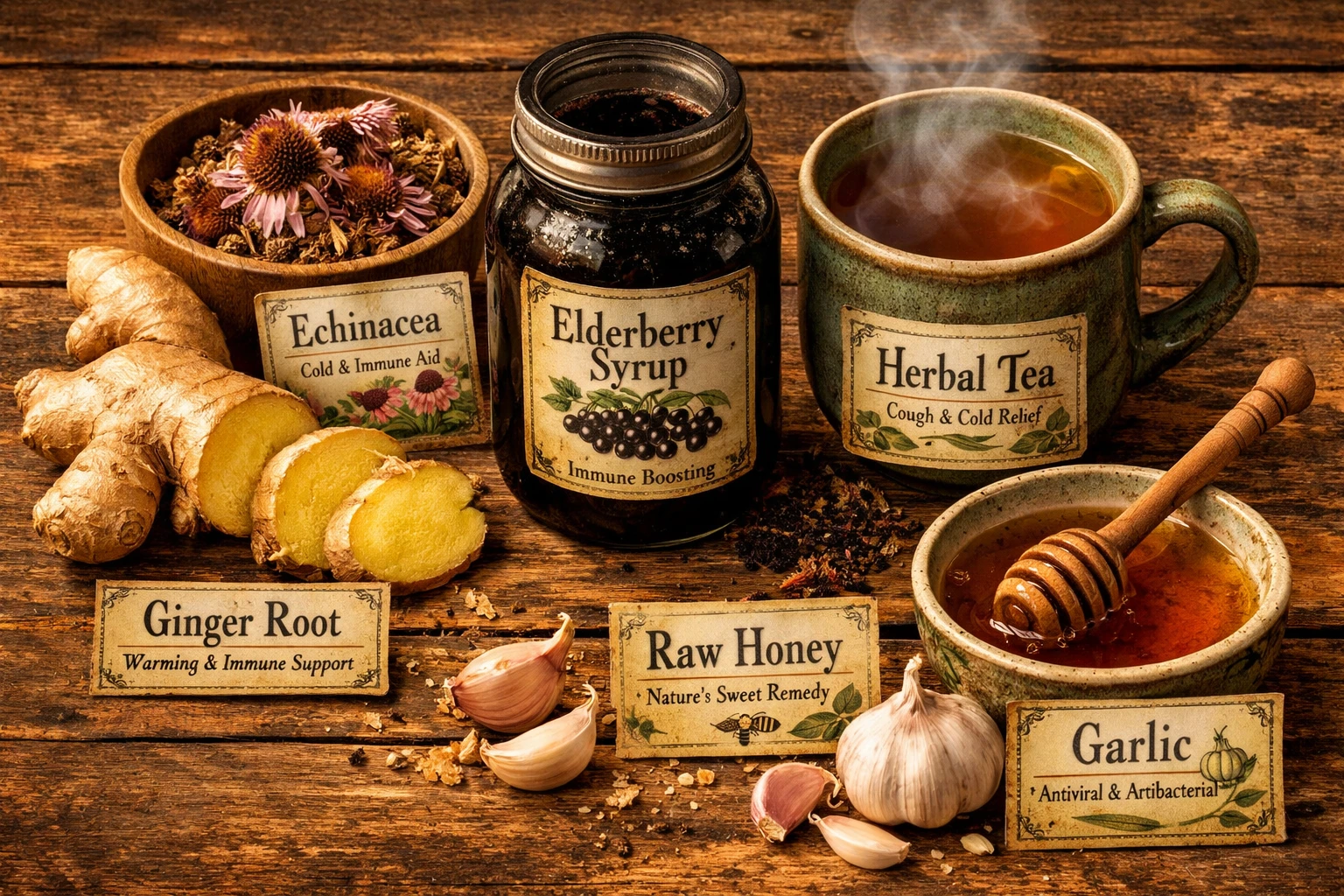
For cold symptoms including sore throat, nasal congestion, and general fatigue, elderberry syrup, echinacea, and raw honey with ginger tea are the most consistently supported herbal options. These remedies are widely available, easy to prepare, and have a reasonable body of traditional and clinical evidence behind them.
Elderberry (Sambucus nigra): Elderberry syrup is one of the most studied herbal cold remedies. A 2016 randomized controlled trial published in Nutrients found that elderberry supplementation significantly reduced the duration and severity of colds in air travelers. For preppers, elderberry syrup can be made from dried berries and stored for months. Do not consume raw, unripe elderberries — they contain cyanogenic compounds that cause nausea and vomiting.
Echinacea: Best used at the first sign of symptoms. Evidence is mixed, but several meta-analyses suggest echinacea preparations can modestly reduce cold duration. It works best as a short-term intervention (7 to 10 days), not a daily supplement.
Ginger and raw honey tea: Ginger has well-documented anti-inflammatory and antimicrobial properties. Raw honey (particularly Manuka honey) has demonstrated antibacterial activity and soothes sore throats effectively. Together, they make a practical first-line response.
Peppermint: Menthol in peppermint acts as a natural decongestant. Inhaling steam from peppermint tea or applying diluted peppermint oil below the nostrils can temporarily relieve nasal congestion.
Common mistake: Reaching for echinacea after symptoms have been present for several days. Its benefit window is narrow — start it within the first 24 to 48 hours for the best effect.
Are There Safe Herbal Treatments for Fever and Pain
Yes, but with important caveats. Willow bark is the most evidence-based herbal option for mild fever and pain. It contains salicin, which the body converts to salicylic acid — the same compound that inspired the development of aspirin. Feverfew and meadowsweet are secondary options for fever reduction.
Willow bark: Effective for mild-to-moderate pain (headaches, muscle aches, low back pain) and modest fever reduction. Standard traditional dosing uses 1 to 3 grams of dried bark in tea form. People who are allergic to aspirin should avoid willow bark entirely, as the mechanism is closely related.
Feverfew: Historically used for fever (its name reflects this) and more recently studied for migraine prevention. It is not a fast-acting analgesic but may reduce fever intensity over several hours.
Turmeric (curcumin): Has anti-inflammatory properties but works slowly. It is better suited as a preventive supplement than an acute pain treatment. Pair it with black pepper to increase absorption significantly.
Clove oil: Contains eugenol, a natural anesthetic. Applied topically to a tooth or gum, it provides temporary dental pain relief — a genuinely useful skill when dental care is unavailable.
Choose willow bark if the priority is pain and fever. Choose clove oil if the issue is dental. Avoid giving willow bark to children under 16 due to the same Reye’s syndrome risk associated with aspirin.
How Do Natural Alternatives Compare to Over-the-Counter Medications
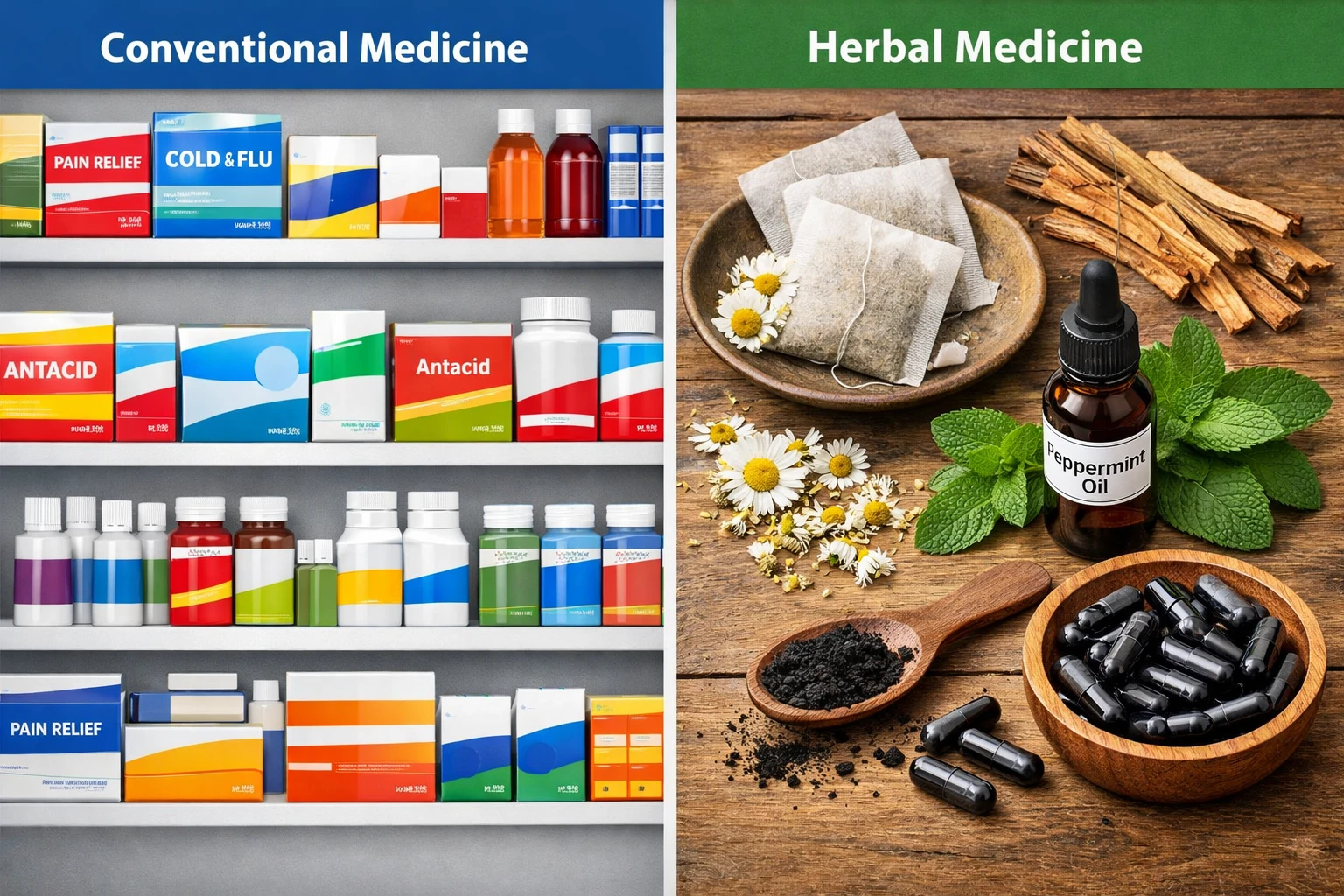
Herbal remedies and OTC medications serve overlapping but not identical purposes. Understanding the differences helps preppers make smarter decisions about when to rely on plant-based options and when a conventional drug is genuinely irreplaceable.
| Condition | OTC Option | Herbal Alternative | Key Difference |
|---|---|---|---|
| Cold symptoms | Pseudoephedrine | Elderberry, echinacea | OTC acts faster; herbal may shorten duration |
| Fever/pain | Ibuprofen, acetaminophen | Willow bark, feverfew | OTC more predictable dosing; herbal slower onset |
| Nausea | Dramamine, Pepto-Bismol | Ginger root | Comparable for mild nausea; OTC better for severe |
| Insomnia | Diphenhydramine | Valerian root, chamomile | Herbal fewer side effects; OTC faster acting |
| Anxiety | Benzodiazepines (Rx) | Passionflower, lemon balm | Herbs for mild anxiety only; no substitute for Rx |
| Minor cuts | Antibiotic ointment | Calendula, raw honey | Honey has documented antibacterial activity |
The core trade-off is speed and precision versus availability and self-sufficiency. OTC drugs offer standardized dosing and predictable timelines. Herbal alternatives require more patience, carry more variability between preparations, and work best for mild-to-moderate conditions. For a true emergency — a high fever in a child, signs of infection spreading, or chest pain — no herbal remedy substitutes for professional medical care.
Which Herbs Can Help with Minor Stomach Issues Overnight
Ginger, peppermint, and chamomile are the three most effective herbal options for common digestive complaints including nausea, bloating, indigestion, and mild cramping. All three are easy to store, inexpensive, and well-tolerated by most adults.
Ginger: The most versatile digestive herb in a prepper’s kit. It reduces nausea (including motion sickness and post-illness nausea), stimulates digestion, and has anti-spasmodic properties. Fresh ginger root, dried ginger powder, or ginger tea all work. A standard dose is 1 to 2 grams of dried ginger.
Peppermint: Peppermint oil capsules are the most studied form for irritable bowel-type cramping and bloating. Peppermint tea is gentler and effective for general indigestion. Avoid peppermint if you have acid reflux — it relaxes the lower esophageal sphincter and can worsen heartburn.
Chamomile: Chamomile tea has mild antispasmodic and anti-inflammatory effects on the digestive tract. It is particularly useful for stress-related stomach upset, which is common during emergencies. It also doubles as a mild sleep aid.
Activated charcoal: While not an herb, it belongs in any emergency medicine kit. It can adsorb toxins in the gut and is useful for suspected food poisoning in the first few hours after ingestion. It is not a substitute for emergency care in cases of serious poisoning.
Edge case: Persistent diarrhea during a prolonged emergency is a dehydration risk. Herbal remedies can ease cramping, but oral rehydration (water, salt, and sugar) is the priority. See the Ultimate Emergency Water Storage and Purification Guide for water safety protocols that matter alongside any treatment.
Can I Use Kitchen Herbs for Basic First Aid and Healing
Several common kitchen herbs have legitimate first-aid applications. Garlic, raw honey, turmeric, and thyme are the most practically useful for wound care, infection prevention, and respiratory support when standard first-aid supplies run low.
Garlic: Contains allicin, a compound with demonstrated antimicrobial activity against a broad range of bacteria and fungi. Crushed raw garlic applied to a minor wound (with a clean cloth barrier) has been used as a topical antimicrobial for centuries. It is not a replacement for proper wound cleaning, but it adds a layer of protection. Eating garlic regularly also supports immune function.
Raw honey: Particularly Manuka honey (UMF 10+ or higher) has well-documented antibacterial properties and is used in clinical wound care. Applied to minor cuts, burns, and abrasions, it creates a moist healing environment and inhibits bacterial growth. It is one of the most practical dual-use items a prepper can stock.
Turmeric paste: A paste of turmeric powder and coconut oil applied to minor wounds has anti-inflammatory and antimicrobial properties. It stains skin yellow but is effective for minor abrasions.
Thyme: Thyme contains thymol, a natural antiseptic. Thyme tea can help with chest congestion and coughs. A strong thyme infusion can be used as a wound rinse in a pinch.
Apple cider vinegar: Useful as a topical antiseptic for minor skin infections and fungal issues. Not for open wounds — it can damage tissue.
Building these items into your regular food storage means they serve double duty: nutrition and medicine. This aligns with the broader self-reliance philosophy covered in the Ultimate Guide to Off-Grid Living.
What Herbal Treatments Are Not Recommended for Children
Several popular herbs that are safe for adults carry real risks for children, particularly those under two years old. Knowing these restrictions before an emergency is critical.
Herbs to avoid in children under 2:
- Honey (including medicinal honey) — risk of infant botulism in children under 12 months
- Peppermint oil — can cause breathing difficulties in infants and young children
- Echinacea — insufficient safety data for young children; some reports of allergic reactions
- Valerian root — not studied in young children; potential CNS effects
- St. John’s Wort — interacts with multiple medications and is not appropriate for children
Herbs requiring caution in children aged 2 to 12:
- Willow bark — Reye’s syndrome risk (same as aspirin); avoid entirely in children under 16
- Feverfew — limited pediatric safety data
- Licorice root — can affect blood pressure and hormone levels with extended use
Safer options for children:
- Diluted chamomile tea (mild, well-tolerated)
- Ginger tea with honey (for children over 12 months)
- Elderberry syrup (age-appropriate dosing, avoid raw berries)
- Saline nasal rinse for congestion
Parents and caregivers should include pediatric-specific herbal guidelines in their family emergency plan and consult a healthcare provider before an emergency to establish safe protocols for their children’s specific health situations.
What Are the Most Effective Herbal Alternatives for Sleep and Anxiety
Valerian root, passionflower, and lemon balm are the best-supported herbal options for sleep disruption and situational anxiety. These are particularly relevant during emergencies, when stress and disrupted routines make sleep difficult.
Valerian root: The most studied herbal sleep aid. Several clinical trials suggest it reduces the time to fall asleep and improves sleep quality, though effects can take two to four weeks of consistent use to peak. For acute use, higher doses (400 to 900 mg of extract) taken 30 to 60 minutes before bed show more immediate results. It has a strong, unpleasant smell — something to know before stocking it.
Passionflower: Has demonstrated anxiolytic (anxiety-reducing) effects in small clinical trials. It works on GABA receptors in the brain, similar in mechanism to some anti-anxiety medications, but far milder. Passionflower tea or tincture is effective for situational anxiety and mild insomnia.
Lemon balm: Often combined with valerian for synergistic effect. On its own, it reduces anxiety and promotes calm without causing significant sedation — useful during the day when alertness is still needed.
Chamomile: Mild but consistent. A cup of strong chamomile tea 30 minutes before sleep is a low-risk, accessible option. A 2017 study published in Phytomedicine found chamomile extract significantly improved sleep quality in elderly patients.
Lavender: Aromatherapy with lavender essential oil has clinical support for reducing anxiety. A few drops on a pillow or diffused in a small space can lower perceived stress during high-tension situations.
What Are the Risks of Using Herbal Medicine Without Professional Advice
The risks are real and specific. Herb-drug interactions, misidentification of plants, incorrect dosing, and delayed treatment of serious conditions are the four most significant dangers for preppers relying on herbal medicine alternatives when pharmacies are closed.
Herb-drug interactions: St. John’s Wort reduces the effectiveness of blood thinners, birth control pills, antiretrovirals, and several other medications. Garlic and ginkgo can increase bleeding risk when combined with anticoagulants. Anyone on prescription medication should research interactions before stocking herbal alternatives.
Misidentification: Foraging wild plants without expert knowledge is dangerous. Water hemlock resembles wild carrot. Foxglove resembles comfrey. Misidentification can be fatal. Stick to commercially prepared, labeled herbal products unless you have verified botanical training.
Dosing variability: Herbal preparations vary widely in potency depending on the plant part used, how it was dried, and how long it has been stored. This makes consistent dosing difficult compared to standardized pharmaceutical products.
Delayed treatment: The most dangerous risk is using herbal remedies to manage a condition that requires professional care. Signs that demand escalation beyond herbal treatment include: fever above 103°F (39.4°C) that does not respond to treatment, difficulty breathing, signs of systemic infection (spreading redness, red streaks, fever with wound), altered mental status, or any condition in a young child that is worsening.
Herbal medicine is a complement to preparedness, not a complete replacement for medical infrastructure. It fits best as a bridge — managing mild conditions and buying time — not as a substitute for emergency medical care. This is why a well-rounded home emergency preparedness system should include both herbal supplies and a clear protocol for when those supplies are not enough.
Which Herbal Treatments Should People with Allergies Avoid
People with known plant allergies, particularly to members of the Asteraceae (daisy) family, face the highest risk from popular herbal remedies. This family includes echinacea, chamomile, feverfew, calendula, and arnica — all commonly stocked in herbal medicine kits.
High-risk herbs for allergy-prone individuals:
- Echinacea — cross-reacts with ragweed, chrysanthemums, and other Asteraceae plants
- Chamomile — one of the more common herbal allergens; can cause contact dermatitis and, rarely, anaphylaxis
- Feverfew — Asteraceae family; avoid with ragweed allergy
- Calendula — topical use can cause skin reactions in sensitive individuals
- Arnica — for external use only; toxic if ingested; avoid with Asteraceae allergy
Latex-fruit syndrome: People with latex allergies may also react to avocado, banana, and certain herbal products including aloe vera and echinacea.
Salicylate sensitivity: People who react to aspirin should avoid willow bark, meadowsweet, and wintergreen oil.
Decision rule: If someone in your household has a known allergy to any flowering plant, do a patch test with any new topical herbal product before applying it to a wound or large skin area. For internal use, start with the smallest effective dose and monitor for 30 minutes.
How Do I Know If an Herbal Remedy Is Actually Working
An herbal remedy is working if symptoms show measurable improvement within the expected timeframe for that specific herb. The key is knowing what “working” looks like for each remedy — and how long it should take.
Expected timelines:
- Ginger for nausea: 20 to 40 minutes for noticeable relief
- Peppermint for congestion: 10 to 20 minutes (inhalation method)
- Willow bark for mild pain: 1 to 2 hours
- Elderberry for cold duration: effect seen over 2 to 4 days of consistent use
- Valerian for sleep: acute effect within 1 hour; full benefit after 2 to 4 weeks
Signs a remedy is not working and escalation is needed:
- Fever that climbs above 103°F despite treatment
- Symptoms worsening after 48 hours of consistent use
- New symptoms appearing (rash, difficulty breathing, swelling)
- No improvement in pain after 2 to 3 hours with willow bark or clove oil
- Digestive symptoms (vomiting, diarrhea) that prevent fluid intake
Keep a simple log during any treatment period. Note the remedy used, dose, time, and observed effect. This is especially important during a prolonged emergency when multiple people may be managing different conditions. It also helps identify what works for your household specifically.
Where Can I Buy Emergency Herbal Medicine Supplies
Emergency herbal medicine supplies are available through online retailers, health food stores, herbal apothecaries, and some farm supply stores. Buying in advance — before an emergency — is the only reliable strategy.
Best sources:
- Mountain Rose Herbs (mountainroseherbs.com): High-quality bulk dried herbs, tinctures, and essential oils. Excellent for building a customized kit.
- Starwest Botanicals: Competitive pricing on bulk herbs; good for stocking larger quantities.
- Amazon: Convenient for standardized capsule forms (valerian, elderberry, echinacea). Look for products with USP verification or third-party testing.
- Local health food stores: Good for smaller quantities and staff advice; less reliable for bulk stocking.
- Farmers markets and herbalists: Best for locally grown, fresh-dried herbs; quality varies widely.
What to look for on labels:
- Standardized extract percentage (e.g., “4% echinacosides” for echinacea)
- Expiration date (most dried herbs are effective for 1 to 3 years if stored correctly)
- Country of origin and third-party testing certification
- No unnecessary fillers or proprietary blends that obscure dosing
Store dried herbs in airtight glass jars away from light and heat. Tinctures (alcohol-based extracts) last significantly longer — up to 5 years — making them preferable for long-term emergency storage. This storage logic mirrors the principles in the Ultimate Prepper’s Guide to Freeze-Dried Food — proper storage conditions are what make the difference between a useful supply and a wasted investment.
What Basic Herbal Medicine Supplies Should Every Home Have
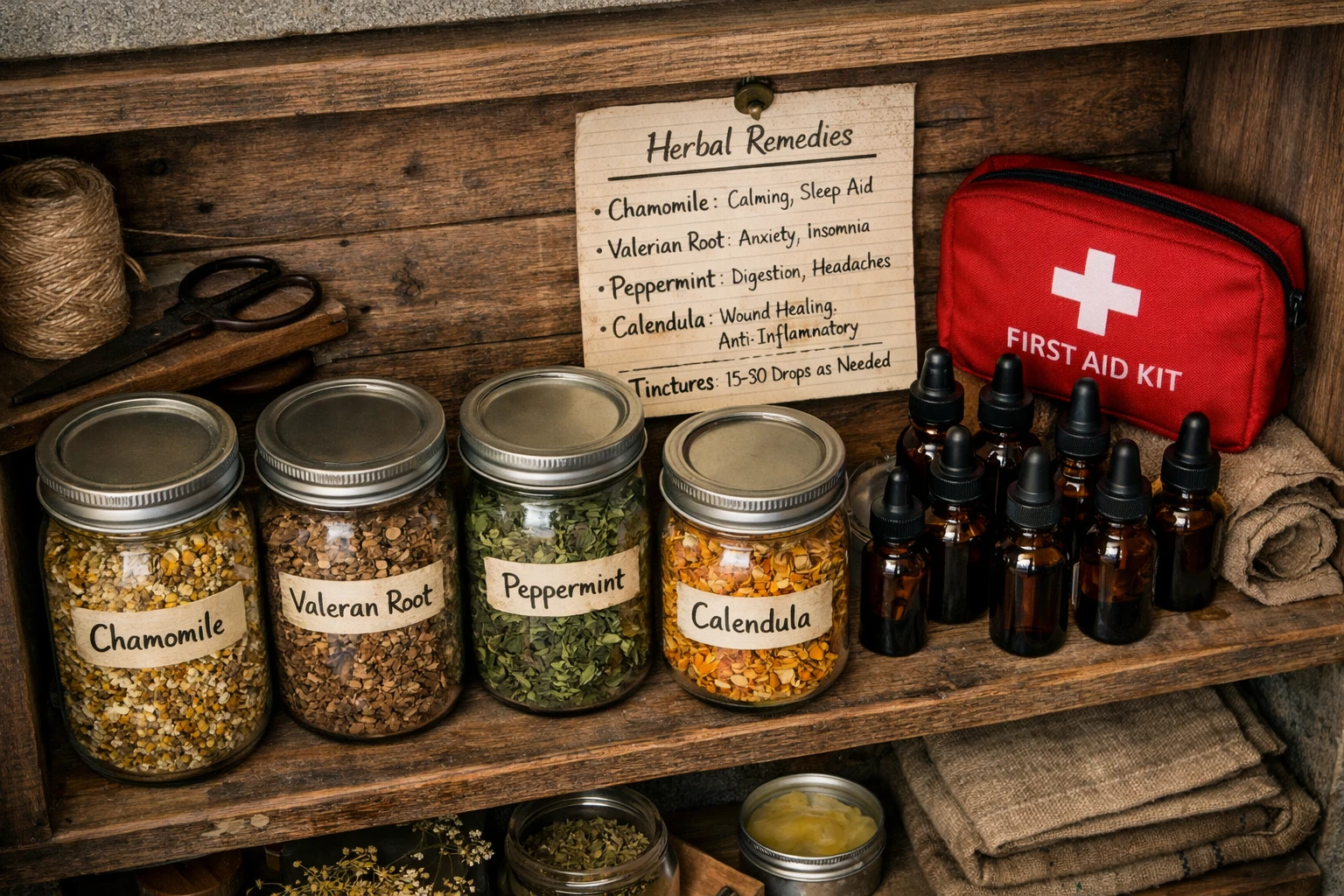
A functional herbal medicine kit for emergency preparedness covers five categories: immune support, pain and fever, digestive health, sleep and stress, and wound care. The following list represents a practical starting point that can be assembled for $50 to $150 depending on quantities and brands.
Core herbal medicine kit:
Immune support:
- Elderberry syrup or dried elderberries (to make your own)
- Echinacea tincture or capsules
- Raw Manuka honey (UMF 10+)
- Garlic (fresh or powdered; fresh is more potent)
Pain and fever:
- Willow bark tea or capsules
- Clove oil (dental pain)
- Turmeric powder or capsules
- Peppermint essential oil
Digestive health:
- Dried ginger root or ginger capsules
- Peppermint tea bags
- Chamomile tea bags
- Activated charcoal capsules
Sleep and stress:
- Valerian root capsules or tincture
- Passionflower tincture
- Lavender essential oil
Wound care:
- Calendula salve or dried calendula
- Raw honey (dual use)
- Aloe vera gel (pure, no additives)
- Thyme or oregano essential oil (diluted for topical antiseptic use)
Estimated cost breakdown:
| Category | Estimated Cost |
|---|---|
| Immune support | $20 to $35 |
| Pain and fever | $15 to $25 |
| Digestive health | $10 to $20 |
| Sleep and stress | $15 to $25 |
| Wound care | $15 to $25 |
| Total | $75 to $130 |
This kit should be reviewed and restocked annually. Pair it with a printed reference guide — several reputable herbalists publish pocket-sized field guides that are worth keeping in your emergency supplies. For a broader view of what belongs in your emergency kit, the 15 things missing from your emergency kit is worth reviewing alongside this list.
How Much Do Typical Herbal Medicine Kits Cost
A basic herbal medicine kit for a household of four costs between $50 and $150 upfront, with annual restocking costs of $30 to $60. Pre-assembled herbal first aid kits from commercial suppliers typically run $40 to $100 but offer less customization and smaller quantities than building your own.
Cost factors that affect the total:
- Buying bulk dried herbs versus pre-packaged capsules (bulk is significantly cheaper per dose)
- Tinctures cost more upfront but last longer (3 to 5 years versus 1 to 2 years for dried herbs)
- Specialty items like Manuka honey and high-quality essential oils drive costs up
- Organic certification adds 20 to 40% to most herb prices
Budget approach ($50 to $75): Focus on the highest-utility items — elderberry, echinacea, ginger, chamomile, valerian, raw honey, and clove oil. These cover the most common emergency health needs.
Comprehensive approach ($100 to $150): Add willow bark, calendula salve, passionflower, activated charcoal, lavender oil, and a printed herbal reference guide.
The cost is modest relative to the value in a prolonged emergency. A single pharmacy run for cold medicine, pain relievers, and sleep aids can easily exceed $60 — and that assumes the pharmacy is open and stocked.
Herbal Medicine Alternatives When Pharmacies Are Closed: Building Your Knowledge Base
Stocking herbs without understanding how to use them is like stocking a generator without fuel. The knowledge component of herbal medicine alternatives when pharmacies are closed is what separates a useful kit from a shelf full of jars.
Recommended resources:
- The Herbal Medicine-Maker’s Handbook by James Green: Practical guide to making tinctures, salves, and teas from scratch.
- Rosemary Gladstar’s Medicinal Herbs: A Beginner’s Guide: Accessible, well-organized, and accurate. Good starting point.
- The Modern Herbal Dispensatory by Thomas Easley and Steven Horne: More clinical in approach; covers dosing, interactions, and contraindications in detail.
- American Herbalists Guild (americanherbalistsguild.com): Directory of qualified herbalists for in-person training before an emergency occurs.
- National Institutes of Health National Center for Complementary and Integrative Health (nccih.nih.gov): Evidence-based summaries of herbal research, updated regularly.
Consider taking a basic herbal medicine course — many are available online and in-person through community colleges and herbalist schools. Practical skills like making a tincture, identifying medicinal plants, and preparing a poultice are part of the broader survival skills every prepper needs and are best learned before the situation demands them.
Frequently Asked Questions
Can herbal remedies replace prescription medications in an emergency? No. Herbal remedies can manage mild-to-moderate symptoms and buy time, but they cannot replicate the pharmacological precision of prescription drugs. Anyone who depends on prescription medication for a chronic condition — heart disease, diabetes, epilepsy, mental health — should prioritize building a medication supply buffer as part of their emergency plan, not rely on herbal substitutes.
How long do dried herbs stay effective in storage? Most dried herbs retain meaningful potency for 1 to 3 years when stored in airtight glass containers away from light, heat, and moisture. Roots and bark tend to last longer than leaves and flowers. Tinctures (alcohol extracts) are the most shelf-stable form, lasting 3 to 5 years or more.
Is it safe to take multiple herbal remedies at the same time? Some combinations are synergistic (valerian and lemon balm for sleep), but others carry interaction risks. Avoid combining herbs with similar mechanisms — for example, multiple sedating herbs — without knowing the combined effect. St. John’s Wort should not be combined with most other herbs or medications without professional guidance.
What is the safest herbal remedy for a pregnant woman during an emergency? Ginger tea is generally considered safe in moderate amounts during pregnancy for nausea. Chamomile tea in small amounts is also commonly used. However, many herbs are contraindicated in pregnancy — including blue cohosh, pennyroyal, and high-dose echinacea. Pregnant women should consult a healthcare provider before an emergency to establish a safe protocol.
Can I forage for medicinal herbs if I run out of stored supplies? Only if you have verified identification skills. Misidentification of wild plants is a serious risk. Invest in a regional field guide specific to your area and take a plant identification course before relying on foraged medicine. The 25 Most Critical Wilderness Survival Skills covers plant identification as a core competency for exactly this reason.
Does elderberry syrup actually shorten colds, or is that a myth? The evidence is more supportive than for most herbal cold remedies. A 2016 randomized trial in Nutrients found elderberry supplementation reduced cold duration by an average of two days in travelers. The mechanism appears to involve both antiviral activity and immune modulation. It is not a cure, but the evidence is credible enough to justify including it in a prepper’s herbal kit.
What should I do if someone has an allergic reaction to an herbal remedy? Stop the remedy immediately. For mild reactions (localized rash, mild itching), remove the substance and monitor. For any signs of systemic reaction — hives spreading beyond the application site, throat tightening, difficulty breathing, or swelling of the face — treat as a medical emergency. An epinephrine auto-injector (EpiPen) should be part of any serious emergency kit for households with known allergy risk.
Are herbal teas as effective as capsules or tinctures? It depends on the herb. For some herbs (chamomile, peppermint, ginger), tea is an effective delivery method because the active compounds are water-soluble. For others (turmeric, valerian), standardized extracts in capsule or tincture form deliver more consistent and potent doses. When potency matters, tinctures and standardized capsules are generally more reliable than loose-leaf tea.
How do I make a basic herbal tincture at home? Pack a clean glass jar with dried herb (or finely chopped fresh herb), cover completely with 80-proof vodka or food-grade vegetable glycerin, seal tightly, and store in a cool dark place for 4 to 6 weeks, shaking daily. Strain through cheesecloth and store in amber glass dropper bottles. Label with the herb name, date, and menstruum used. Alcohol-based tinctures last 3 to 5 years; glycerin-based tinctures last 1 to 3 years.
What is the single most important herb to have in an emergency kit? Ginger is arguably the most versatile. It addresses nausea, digestive upset, inflammation, cold symptoms, and mild pain — covering more common emergency health needs than any other single herb. Raw honey is a close second for its dual role in wound care and immune support.
Conclusion
Herbal medicine alternatives when pharmacies are closed are not a backup plan for the desperate — they are a legitimate layer of preparedness that every self-reliant household should develop before it matters. The herbs covered in this guide are not exotic or hard to source. Most are available at health food stores, online retailers, or already sitting in your kitchen. The difference between a household that manages a winter illness confidently during a grid failure and one that struggles is preparation: stocked supplies, printed reference materials, and practiced knowledge.
Start with the basics — elderberry, ginger, raw honey, chamomile, willow bark, and valerian — and build from there. Take a short herbal medicine course. Add a printed field guide to your emergency supplies. Review the kit annually. And remember that herbal medicine works best as a bridge, not a destination. Know the signs that indicate a situation has moved beyond what plants can address, and have a plan for escalation.
Preparedness is confidence. Knowing that your household can manage a fever, a stomach bug, a sleepless night, or a minor wound without a functioning pharmacy is exactly the kind of self-reliance that makes the difference when the unexpected happens.
For a broader view of what a complete emergency supply system looks like, the Ultimate Emergency Preparedness Guide for Preppers is the natural next step. And if you are building out your overall preparedness system from scratch, the Complete Prepping Guide for Beginners provides the structured framework to make sure nothing critical gets missed.
Products / Tools / Resources
Herbal Medicine Books Worth Owning
- Rosemary Gladstar’s Medicinal Herbs: A Beginner’s Guide — Storey Publishing. Practical, accurate, and well-organized for non-specialists.
- The Modern Herbal Dispensatory by Thomas Easley and Steven Horne — The most clinically rigorous general herbal reference for home practitioners.
- The Herbal Medicine-Maker’s Handbook by James Green — Covers tincture-making, salve preparation, and tea formulation from scratch.
Reliable Suppliers
- Mountain Rose Herbs (mountainroseherbs.com) — Best for bulk dried herbs and high-quality tinctures. Certified organic options available.
- Starwest Botanicals (starwest-botanicals.com) — Competitive pricing for larger quantities; good for stocking up.
- Gaia Herbs and Herb Pharm — Reputable brands for standardized capsules and tinctures available through Amazon and health food stores.
Reference Tools
- NIH National Center for Complementary and Integrative Health (nccih.nih.gov) — Free, evidence-based herb summaries. Bookmark it and print key pages before an emergency.
- American Herbalists Guild (americanherbalistsguild.com) — Find qualified herbalists for in-person training in your region.
Recommended Emergency Kit Add-Ons
- Amber glass dropper bottles (for tincture storage)
- Cheesecloth or fine mesh strainer (for tincture preparation)
- Small digital kitchen scale (for accurate herb dosing)
- Printed herbal first aid reference card (laminated for durability)
Tags: herbal medicine alternatives, emergency herbal remedies, natural medicine for preppers, survival medicine, herbal first aid kit, elderberry for cold, willow bark pain relief, prepper health supplies, herbal medicine storage, medicinal herbs for emergencies, off-grid medicine, natural fever remedies
References
- Tiralongo, E., Wee, S. S., & Lea, R. A. (2016). Elderberry Supplementation Reduces Cold Duration and Symptoms in Air-Travellers: A Randomized, Double-Blind Placebo-Controlled Clinical Trial. Nutrients, 8(4), 182. https://doi.org/10.3390/nu8040182
- Hieu, T. H., Dibas, M., Surber, C., et al. (2019). Therapeutic efficacy and safety of chamomile for state anxiety, generalized anxiety disorder, insomnia, and sleep quality: a systematic review and meta-analysis of randomized trials and quasi-randomized trials. Phytotherapy Research, 33(6), 1604–1615.
- Srivastava, J. K., Shankar, E., & Gupta, S. (2010). Chamomile: A herbal medicine of the past with bright future. Molecular Medicine Reports, 3(6), 895–901.
- Borrelli, F., & Ernst, E. (2010). Alternative and complementary therapies for the menopause. Maturitas, 66(4), 333–343.
- National Center for Complementary and Integrative Health. (2023). Herbs at a Glance. U.S. Department of Health and Human Services. https://www.nccih.nih.gov/health/herbsataglance
- Vlachojannis, J., Magora, F., & Chrubasik, S. (2011). Willow species and aspirin: different mechanism of actions. Phytotherapy Research, 25(7), 1102–1104.