

Hey there! Some links on this page may be affiliate links which means that, if you choose to make a purchase, I may earn a commission at no extra cost to you. I greatly appreciate your support. Read the full disclosure here.
A bacterial infection that would be a minor inconvenience today can become life-threatening within 72 hours when hospitals are unreachable and pharmacies are shuttered. That is the reality behind the growing prepper focus on antibiotics for preppers: what to stockpile and when to use them. This guide covers every critical angle — which antibiotics to store, how to get them legally, how long they actually last, and the mistakes that can make a stockpile useless or dangerous.
Key Takeaways
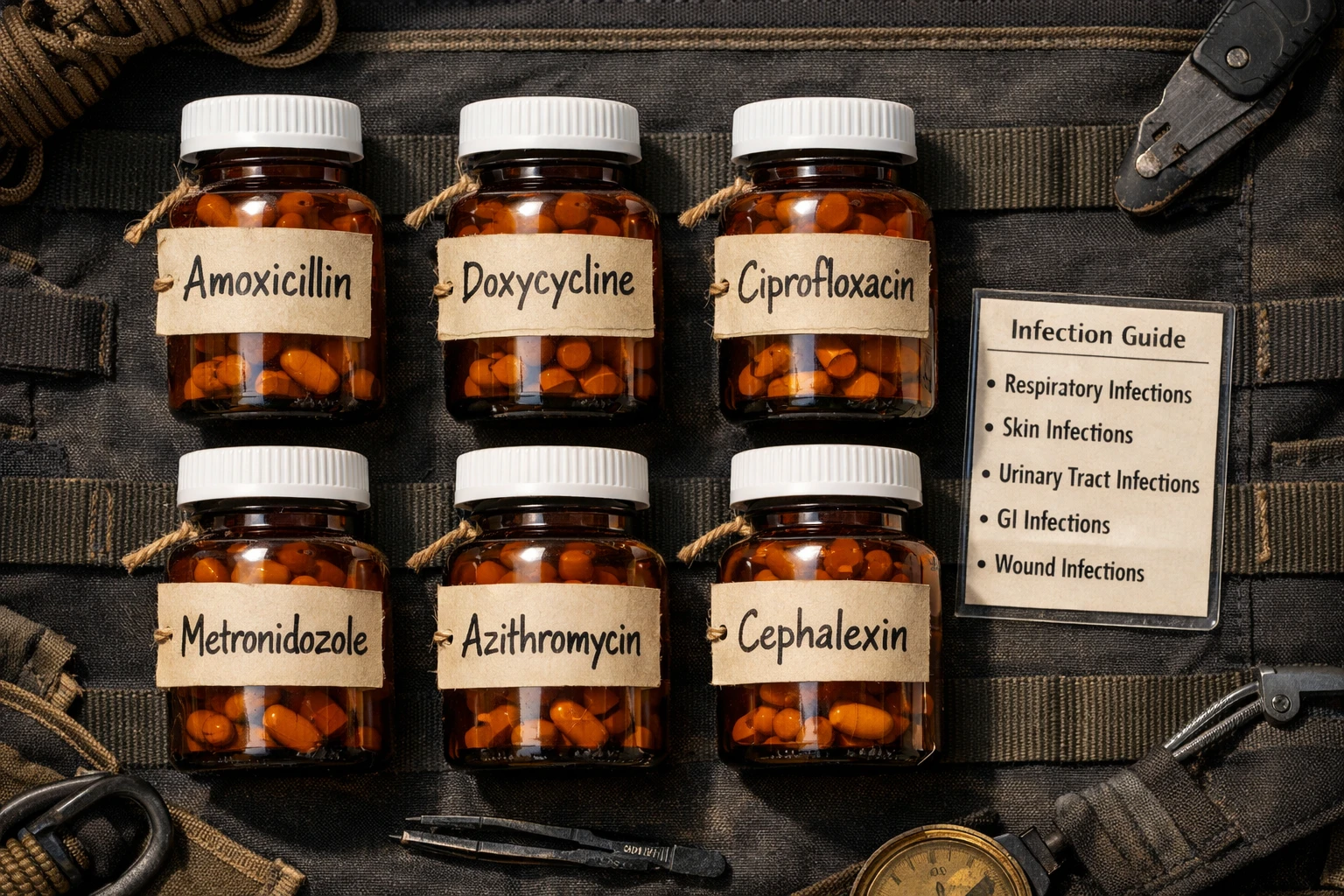
- A core emergency antibiotic kit should include Amoxicillin, Doxycycline, Ciprofloxacin, Metronidazole, and Azithromycin to cover the widest range of common bacterial infections.
- Most antibiotics remain potent well past their printed expiration date when stored correctly — cool, dark, dry, and sealed.
- Fish antibiotics and human antibiotics often share the same active compounds, but quality control and dosing verification remain serious concerns.
- Penicillin-class antibiotics are contraindicated for anyone with a documented penicillin allergy; cross-reactivity with cephalosporins is also possible.
- A basic emergency antibiotic kit can be assembled for roughly $50 to $150 depending on quantities and sourcing method.
- The most dangerous grid-down infections include sepsis from wound contamination, pneumonia, urinary tract infections that ascend to the kidneys, and dental abscesses.
- Antibiotics treat bacterial infections only — using them for viral illnesses wastes your supply and accelerates resistance.
- Proper storage in sealed containers with desiccants, in a cool dark location, is the single biggest factor in maximizing shelf life.
Find this useful? Add us as a preferred source on Google and more of what we publish will show up in your results.
What Antibiotics Are Safe to Store Long Term
The safest antibiotics to store long term are those with broad-spectrum coverage, stable chemical structures, and a long track record of human use. Doxycycline, Amoxicillin, Ciprofloxacin, Metronidazole, and Azithromycin are the most commonly recommended for emergency preparedness stockpiles.
Here is a breakdown of the core five and what each one covers:
| Antibiotic | Class | Best Used For | Shelf Life Potential |
|---|---|---|---|
| Amoxicillin | Penicillin | Respiratory, dental, skin, ear infections | 2-5 years past expiry if stored well |
| Doxycycline | Tetracycline | Respiratory, tick-borne illness, skin, STIs | 2-4 years past expiry |
| Ciprofloxacin | Fluoroquinolone | UTIs, GI infections, anthrax exposure | 5+ years documented in military studies |
| Metronidazole | Nitroimidazole | Anaerobic infections, dental abscesses, GI parasites | 2-3 years past expiry |
| Azithromycin | Macrolide | Respiratory, skin, STIs, penicillin-allergic patients | 2-3 years past expiry |
One important note on Tetracyclines: Older literature warned that degraded tetracycline could cause kidney damage. More recent analysis suggests this risk was overstated and specific to an old formulation no longer in production, but the caution is worth keeping in mind. When in doubt, replace rather than use visibly degraded product.
A sixth option worth considering is Cephalexin (a first-generation cephalosporin), which covers skin and soft tissue infections well. However, anyone with a severe penicillin allergy should use it cautiously given the possibility of cross-reactivity.
How Long Can Antibiotics Be Stored Before They Expire
Most antibiotics remain effective significantly longer than their printed expiration date when stored properly. The FDA’s Shelf Life Extension Program (SLEP), which tested military stockpiles, found that 88% of drugs tested remained stable an average of 66 months past their labeled expiration date — with some batches remaining potent for 15 years or more.
That said, expiration dates are not meaningless. They represent the manufacturer’s guarantee of full potency under standard storage conditions. After that point, potency may gradually decline rather than suddenly vanish.
Practical shelf life estimates by antibiotic type:
- Ciprofloxacin tablets: among the most stable; documented potency 5 to 10 years past expiry in controlled conditions
- Doxycycline capsules: 3 to 5 years past expiry when sealed and dry
- Amoxicillin capsules: 2 to 4 years past expiry; liquid formulations degrade much faster and should not be stockpiled
- Azithromycin tablets: 2 to 3 years past expiry
- Metronidazole tablets: 2 to 3 years past expiry
The key rule: stockpile tablets and capsules, not liquids or suspensions. Liquid antibiotics degrade rapidly and are not suitable for long-term storage.
How to Properly Store Antibiotics to Maximize Their Shelf Life
Proper storage is the single most controllable factor in antibiotic longevity. The goal is to eliminate the four enemies of pharmaceutical stability: heat, moisture, light, and oxygen.
Storage protocol for maximum shelf life:
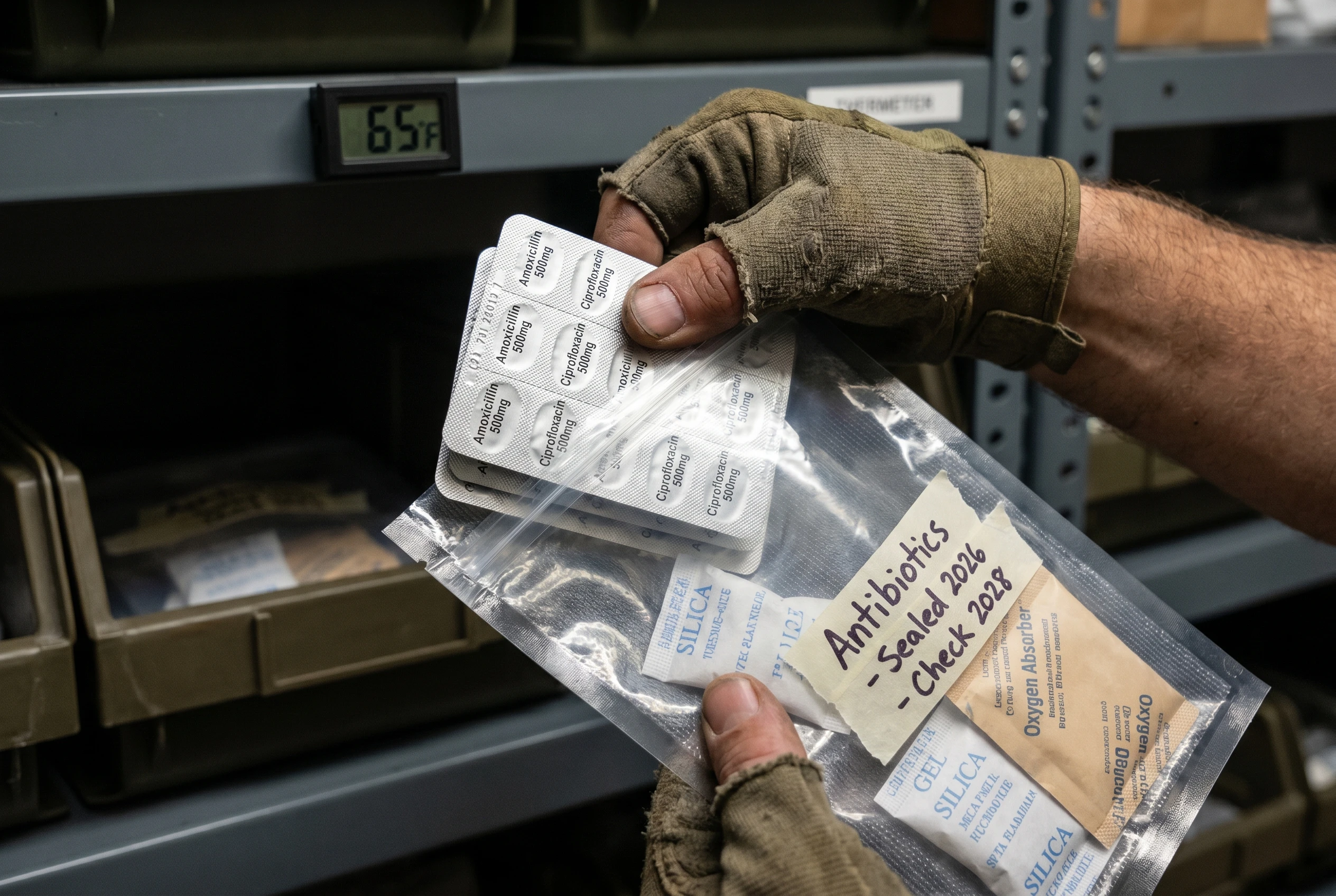
- Keep antibiotics at or below 65-70 degrees Fahrenheit consistently. Avoid garages, vehicles, or any space with temperature swings.
- Store in original sealed blister packs or amber glass bottles when possible.
- Place sealed packs inside airtight containers (Mason jars or vacuum-sealed mylar bags) with silica gel desiccant packets.
- Add an oxygen absorber to each container before sealing.
- Store in a dark location — a dedicated shelf in a climate-controlled interior room, a basement, or a purpose-built medical cache.
- Label every container with the purchase date, expiration date, and a “check by” date two years out.
- Rotate stock on a first-in, first-out basis.
Avoid storing antibiotics in bathrooms (humidity), kitchens (heat and moisture), or direct sunlight. A cool, dark interior closet is better than a dedicated medicine cabinet near a shower.
For preppers building a full preparedness system, medical storage fits naturally alongside your emergency food supply — the same principles of rotation, labeling, and environmental control apply to both.
What Antibiotics Work Best for Wilderness or Survival Situations
For wilderness and grid-down survival scenarios, the priority is broad-spectrum coverage with the fewest pills required per treatment course. Ciprofloxacin and Doxycycline are the top two choices because they cover the widest range of likely threats with manageable dosing schedules.
Scenario-based selection guide:
- Wound infection or cellulitis: Amoxicillin-Clavulanate (if available) or Cephalexin; Doxycycline as an alternative
- Respiratory infection (pneumonia, bronchitis): Azithromycin or Doxycycline
- Urinary tract infection: Ciprofloxacin (500mg twice daily for 3-7 days)
- Tick-borne illness (Lyme, Rocky Mountain Spotted Fever): Doxycycline — this one is non-negotiable in tick-heavy environments
- Dental abscess: Metronidazole combined with Amoxicillin, or Metronidazole alone for penicillin-allergic patients
- GI infection or traveler’s diarrhea with fever: Ciprofloxacin or Azithromycin
- Anaerobic or deep wound infection: Metronidazole
For anyone spending time in remote wilderness, building medical knowledge alongside your supplies is essential. The 25 Most Critical Wilderness Survival Skills covers the broader skill set that keeps you alive long enough for antibiotics to matter.
How Do I Know Which Antibiotics to Use for Different Infections
Choosing the right antibiotic requires matching the drug to the type of bacteria most likely causing the infection. No single antibiotic covers everything, and using the wrong one wastes your supply and delays recovery.
The most practical framework for preppers:
First, confirm the infection is bacterial, not viral. Antibiotics do nothing against viruses. Signs pointing to bacterial infection include: fever above 101 degrees F lasting more than 48 hours, pus or purulent discharge, localized swelling and heat in a wound, and worsening rather than improving symptoms after 48 to 72 hours of rest.
Second, identify the likely infection site and match it to the appropriate drug using the scenario guide above.
Third, use the correct dose for the correct duration. Stopping early because symptoms improve is one of the most dangerous mistakes in antibiotic use — it leaves the strongest bacteria alive and breeds resistance.
Dosing reference for the core five (adult, standard doses):
- Amoxicillin: 500mg three times daily for 7-10 days
- Doxycycline: 100mg twice daily for 7-14 days (varies by condition)
- Ciprofloxacin: 500mg twice daily for 3-14 days (varies by condition)
- Metronidazole: 500mg three times daily for 7-10 days
- Azithromycin: 500mg on day one, then 250mg daily for 4 more days (Z-pack)
Important: These are general reference doses for emergency use only. Dosing varies by infection type, severity, and patient weight. A printed antibiotic reference guide — such as the Sanford Guide to Antimicrobial Therapy — belongs in every serious medical preparedness kit.
Where Can I Legally Get Antibiotics Without a Prescription for Emergency Preparedness
In the United States, prescription antibiotics require a doctor’s order — there is no legal workaround for human-labeled drugs. However, several legitimate pathways exist for preppers to build a legal antibiotic stockpile.
Legal options in 2026:
- Telehealth services: Many online providers will prescribe a small emergency supply of antibiotics for documented preparedness purposes, particularly for travelers or remote workers. Services like Wilderness Medical Associates-affiliated providers and some direct primary care physicians are receptive to this conversation.
- Travel medicine clinics: Physicians at travel clinics routinely prescribe standby antibiotics (Ciprofloxacin or Azithromycin) for travelers going to remote areas. This is a well-established medical practice.
- Direct primary care (DPC) physicians: DPC doctors, who operate outside insurance billing, often have more flexibility for preparedness-oriented conversations.
- International pharmacies: In some countries, antibiotics are available over the counter. Purchasing abroad for personal use exists in a legal gray area in the US — not explicitly illegal for personal quantities, but not officially sanctioned either.
- Veterinary/aquatic antibiotics: Discussed in the next section.
The most reliable approach is building a relationship with a preparedness-minded physician who understands your goals. Being direct and honest about emergency preparedness intentions is far more effective than trying to work around the system.
What Is the Difference Between Fish Antibiotics and Human Antibiotics
Fish antibiotics and human antibiotics often contain identical active pharmaceutical ingredients, but they are not manufactured under the same regulatory standards. This distinction matters more than most prepper discussions acknowledge.
The facts:
- Products like Fish Mox (Amoxicillin), Fish Doxy (Doxycycline), and Fish Flox (Ciprofloxacin) have historically been sold without a prescription in the US as aquatic medications.
- Third-party laboratory testing has confirmed that many of these products contain the stated active ingredient at or near labeled doses.
- However, they are not manufactured under FDA Good Manufacturing Practice (GMP) standards for human use, meaning purity, fillers, and consistency are not guaranteed to the same level.
- In 2019, the FDA began requiring veterinary antibiotics to go through prescription channels, which has reduced the availability of some fish antibiotic products.
Bottom line: Fish antibiotics are a last-resort option, not a primary strategy. If you can obtain human-grade antibiotics through legitimate medical channels, that is always the better choice. If fish antibiotics are your only option in a true grid-down scenario, they are better than nothing — but verify the product, check for fillers that may cause reactions, and understand you are accepting additional uncertainty.
Can I Use Veterinary Antibiotics If Human Medicine Isn’t Available
Veterinary antibiotics can be used by humans in a genuine survival emergency, but this comes with real risks that preppers should not minimize. The same active compounds are often present, but dosing, formulations, and contaminants differ.
Key considerations:
- Injectable veterinary antibiotics carry the highest risk due to sterility concerns — avoid these unless you have formal medical training.
- Oral veterinary tablets are the safest form to consider in an emergency.
- Dosing for animals is often calculated by weight and may differ significantly from human dosing.
- Some veterinary formulations include additives not intended for human consumption.
This is genuinely a last-resort measure. The better preparation is securing human-grade antibiotics through the legal pathways described above, so veterinary products never become necessary.
Which Antibiotics Should I Avoid If I Have Allergies
Penicillin allergy is the most common drug allergy in the general population, affecting an estimated 10% of people who report it (though true allergy confirmed by testing is much lower). Anyone with a documented penicillin allergy should avoid the entire penicillin class and use caution with cephalosporins.
Allergy-based substitutions:
- Penicillin allergy (Amoxicillin, Ampicillin): Substitute Azithromycin for respiratory infections; Ciprofloxacin for UTIs and GI infections; Metronidazole for dental and anaerobic infections.
- Sulfa allergy (Trimethoprim-Sulfamethoxazole / Bactrim): Avoid this class entirely; substitute Ciprofloxacin or Doxycycline depending on the infection.
- Fluoroquinolone sensitivity: Some individuals experience tendon damage, nerve symptoms, or psychiatric effects from Ciprofloxacin and related drugs. If you have had adverse reactions, substitute Doxycycline or Azithromycin where possible.
- Tetracycline sensitivity: Substitute Azithromycin for most respiratory and skin indications.
Every prepper’s medical kit should include a laminated card listing each household member’s known drug allergies. This is especially critical if you are preparing for scenarios where you might be administering medications to family members under stress.
For seniors with multiple medications and potential interactions, the 9 Essential Disaster Prep Strategies for Seniors addresses these layered medical considerations in more depth.
What Infections Are Most Dangerous If Left Untreated in a Grid-Down Scenario
The infections most likely to kill in a grid-down scenario are those that progress rapidly, spread systemically, or affect organs that cannot compensate without medical intervention. Understanding these priorities helps preppers decide when to use their antibiotic supply rather than waiting.
High-priority infections that demand immediate antibiotic treatment:
- Sepsis from wound infection: Any wound showing spreading redness (red streaks moving away from the wound), high fever, rapid heart rate, and confusion is a medical emergency. Start antibiotics immediately — Ciprofloxacin or Amoxicillin depending on availability.
- Pneumonia: Bacterial pneumonia progresses fast, especially in the elderly or immunocompromised. Azithromycin or Doxycycline, started early, can be life-saving.
- Kidney infection (pyelonephritis): A UTI that ascends to the kidneys causes fever, back pain, and can lead to sepsis within days. Ciprofloxacin is the treatment of choice.
- Dental abscess: An untreated dental abscess can spread to the jaw, throat, and airway — a potentially fatal progression. Metronidazole plus Amoxicillin (or Metronidazole alone for penicillin-allergic patients) is the standard approach.
- Infected lacerations with cellulitis: Deep cuts contaminated with soil, animal contact, or fecal matter carry high infection risk. Cephalexin or Doxycycline for mild-to-moderate cases.
Do not use antibiotics for: colds, influenza, most sore throats (which are viral), or COVID-19. Viral infections do not respond to antibiotics, and misuse accelerates resistance while depleting your supply.
Building your broader emergency preparedness checklist should include a medical section that accounts for these specific infection risks.
How Much Should I Expect to Spend on a Basic Emergency Antibiotic Kit
A functional emergency antibiotic kit for a family of four can be assembled for roughly $50 to $200 depending on the sourcing method, quantities, and whether you include supporting supplies.
Cost breakdown (approximate, 2026):
| Item | Estimated Cost |
|---|---|
| Amoxicillin 500mg x 30 capsules | $10-$20 via GoodRx at retail pharmacy |
| Doxycycline 100mg x 20 tablets | $15-$25 |
| Ciprofloxacin 500mg x 20 tablets | $15-$30 |
| Metronidazole 500mg x 21 tablets | $10-$20 |
| Azithromycin 250mg x 6 tablets (Z-pack) | $15-$25 |
| Sanford Guide to Antimicrobial Therapy (print) | $35-$45 |
| Storage containers, desiccants, labels | $10-$20 |
Total estimate: $110 to $185 for a single-person kit with reference guide. Scaling for a family of four means multiplying the antibiotic quantities, which brings a full family kit to roughly $300 to $500 if purchased through legitimate pharmacy channels with a prescription.
Using GoodRx or similar discount programs at retail pharmacies often brings generic antibiotic costs down significantly. Telehealth consultations that result in a prescription typically cost $50 to $75 for the visit.
What Are the Most Common Mistakes Preppers Make With Antibiotics
The most dangerous mistakes in prepper antibiotic planning are not about what to buy — they are about how antibiotics get used, stored, and understood.
Top mistakes to avoid:
- Using antibiotics for viral infections. This is the most common error. Antibiotics do nothing for colds, flu, or most sore throats. Using them anyway depletes your supply and creates resistant bacteria.
- Stopping the course early. Feeling better after three days does not mean the infection is gone. Incomplete courses leave the most resistant bacteria alive.
- Storing in the bathroom medicine cabinet. Heat and humidity from showers degrade antibiotics faster than almost any other storage environment.
- Stockpiling without a reference guide. Having antibiotics without knowing which to use for which infection is like having a generator without fuel — the capability exists but cannot be deployed effectively.
- Ignoring allergies. Administering a penicillin-class antibiotic to someone with a penicillin allergy in a grid-down scenario, where anaphylaxis cannot be treated with epinephrine, is potentially fatal.
- Relying solely on fish antibiotics. Treating fish antibiotics as equivalent to pharmacy-grade human medications introduces unnecessary risk when legitimate options exist.
- No written dosing protocol. Under stress, memory fails. Every antibiotic in your kit should have a written dosing card attached to it.
For preppers building out a complete readiness system, the 14 Essential Survival Skills Every Prepper Must Know covers the broader skill foundation that medical preparedness fits within.
FAQ-Antibiotics for Preppers
Can I stockpile leftover prescription antibiotics from past illnesses? Leftover antibiotics are rarely enough for a full course, which means they cannot treat a full infection. They are also often expired. Start fresh with purpose-purchased supplies rather than relying on medicine cabinet remnants.
Are there any antibiotics I should never stockpile? Avoid stockpiling injectables unless you have clinical training in sterile injection technique. Also avoid older tetracycline formulations (not doxycycline) due to degradation concerns. Linezolid and vancomycin are reserved for resistant hospital infections and are not appropriate for self-treatment.
How do I know if an antibiotic has gone bad? Visible signs of degradation include discoloration, unusual odor, crumbling tablets, or clumping powder. However, potency loss often occurs without visible changes — which is why storage conditions and dating matter more than visual inspection alone.
Should I include antibiotics in my bug-out bag? Yes, a small supply of Ciprofloxacin and Doxycycline belongs in any serious 72-hour bug-out bag. Keep them sealed in a small airtight container with a desiccant packet.
What about antibiotic resistance — does this matter for preppers? It matters enormously. Using antibiotics incorrectly (wrong drug, wrong dose, incomplete course) breeds resistant bacteria in your own body and in your household. In a grid-down scenario, a resistant infection is essentially untreatable. Discipline in antibiotic use is not just a public health issue — it is a personal survival issue.
Can children take the same antibiotics as adults? Pediatric dosing is calculated by weight and differs significantly from adult dosing. Doxycycline is generally not recommended for children under 8 years old. Amoxicillin is commonly used in children, but doses must be weight-adjusted. Include a pediatric dosing reference in your medical kit.
Is it legal to stockpile antibiotics? Possessing antibiotics prescribed to you is legal. Obtaining them without a prescription (except through the gray-area channels discussed above) is not legal in the US. The safest and most defensible approach is obtaining prescriptions through legitimate medical channels.
What is the best single antibiotic if I can only stockpile one? Ciprofloxacin covers the broadest range of life-threatening infections likely to occur in a survival scenario, including UTIs, GI infections, respiratory infections, and wound infections. If forced to choose one, Ciprofloxacin is the most versatile option.
Do I need a medical reference book alongside my antibiotic supply? Absolutely. The Sanford Guide to Antimicrobial Therapy is the gold standard reference used by physicians. A printed copy belongs in every serious preparedness medical kit. Do not rely on digital-only resources that require power or internet access.
How often should I rotate my antibiotic stockpile? Check your supply every 12 months. Replace any antibiotics that are within 12 months of their expiration date, show visible degradation, or have been stored in suboptimal conditions. Use GoodRx or telehealth to refresh prescriptions cost-effectively.
Conclusion
Antibiotics for preppers: what to stockpile and when to use them comes down to five core drugs, disciplined storage, a solid reference guide, and the knowledge to deploy them correctly. A bacterial infection that is trivially treatable today becomes a genuine survival threat when supply chains fail and medical facilities are inaccessible. The gap between those two realities is filled by preparation.
Start with the core five: Amoxicillin, Doxycycline, Ciprofloxacin, Metronidazole, and Azithromycin. Store them sealed, cool, and dark. Know your household’s allergies. Get a printed dosing reference. And build this medical layer as a deliberate part of your overall preparedness system — not an afterthought.
Actionable next steps:
- Schedule a telehealth or travel medicine appointment to discuss an emergency antibiotic prescription.
- Purchase a printed copy of the Sanford Guide to Antimicrobial Therapy.
- Assemble storage containers with desiccants and label everything with purchase and expiration dates.
- Create a laminated allergy card for each household member and keep it with your medical kit.
- Review your full preparedness plan to ensure medical supplies integrate with your emergency preparedness checklist and disaster preparedness strategy for your family.
Recommended Products and Resources
- Sanford Guide to Antimicrobial Therapy (print edition) — the single most important reference for antibiotic selection and dosing in emergencies. Updated annually.
- GoodRx (goodrx.com) — use this free tool to find the lowest cash-pay price for generic antibiotics at pharmacies near you without insurance.
- Dry-Packs Silica Gel Desiccants — food-grade silica packets rated for pharmaceutical storage, available in bulk for long-term medical caching.
- Mylar Bags with Oxygen Absorbers — the same system used for long-term food storage works equally well for pharmaceutical storage.
- Pelican 1510 Case or similar hard-shell case — for a portable, crush-proof, waterproof medical cache that travels with your bug-out bag.
- Telehealth platforms— services like Plushcare, Sesame, or a local direct primary care physician for obtaining legitimate antibiotic prescriptions for preparedness purposes.
Preparedness is not about fear. It is about being the person in your household who has the tools, the knowledge, and the calm to act when others cannot. A well-built antibiotic kit is one of the highest-value, low-cost investments in that mission.