
Hey there! Some links on this page may be affiliate links which means that, if you choose to make a purchase, I may earn a commission at no extra cost to you. I greatly appreciate your support. Read the full disclosure here.
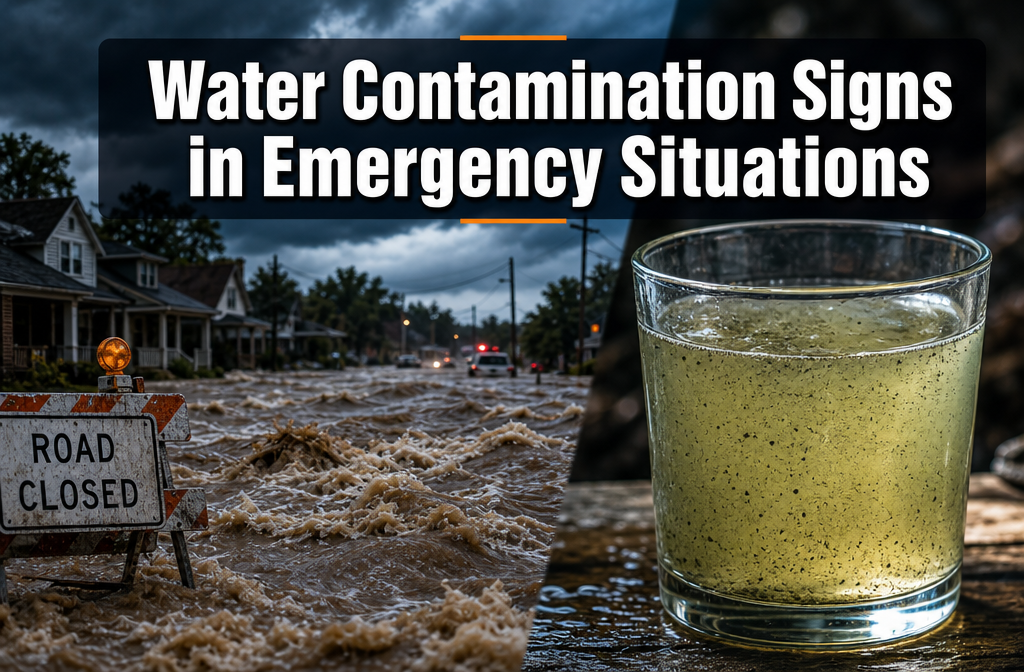
Water contamination signs in emergency situations include visible discoloration, unusual odor, oily sheens, foam, and sediment. During disasters, safe-looking water can still carry deadly pathogens, heavy metals, and chemical runoff. Never assume water is safe based on appearance alone — always test, filter, and treat before drinking.
Find this useful? Add us as a preferred source on Google and more of what we publish will show up in your results.
Key Takeaways
- Discolored, cloudy, or foul-smelling water is an immediate red flag, but clear water can be just as dangerous after a disaster
- Floods are the single biggest driver of water contamination events, mixing sewage, agricultural chemicals, and industrial waste into local water supplies
- Boiling kills biological threats but does not remove heavy metals, fuel, or chemical contaminants
- Home test strips can detect nitrates, pH imbalance, and some bacteria — but they won’t catch everything
- Children, elderly individuals, and pregnant women face the highest risk from waterborne illness
- Urban water systems and rural wells face different contamination threats and require different responses
- Most bottled water is safe during disasters, but storage conditions and bottle integrity matter
- FEMA, the CDC, and local health departments are your primary resources for post-disaster water safety guidance
- A layered approach — storage, filtration, chemical treatment, and boiling — gives the strongest protection
What Are the First Signs My Water Might Be Contaminated?
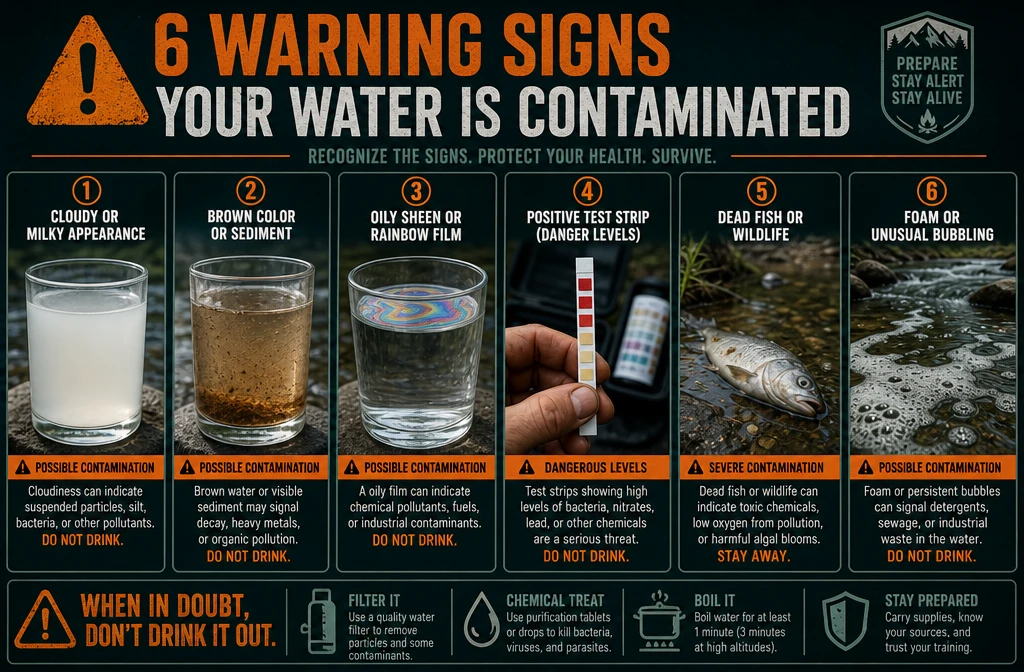
The first signs of water contamination in an emergency are usually visible or detectable by smell — but not always. Discoloration, cloudiness, a sulfur or chemical odor, an oily surface sheen, or unusual foam are all warning indicators. The dangerous reality is that many biological contaminants, including bacteria like E. coli and Giardia cysts, produce no visible change at all.
Watch for these immediate warning signs:
- Discoloration: Brown or yellow water often signals sediment, rust, or sewage intrusion. Green or blue-green tints can indicate algae blooms or copper pipe corrosion
- Cloudiness or turbidity: Milky or murky water suggests suspended particles, sediment, or microbial activity
- Oily sheen: A rainbow-colored film on the surface points to petroleum or chemical contamination
- Unusual foam: Persistent foam that doesn’t dissipate can indicate detergents, sewage, or organic decomposition
- Foul odor: Rotten egg smell = hydrogen sulfide or sewage. Chemical or gasoline smell = industrial or fuel contamination. Chlorine overload can also signal emergency treatment by your utility
- Dead animals nearby: Fish kills or dead wildlife near a water source are serious biological and chemical red flags
- Taste changes: A metallic, bitter, or chemical taste in tap water is never normal
💡 Critical rule: If any one of these signs is present, treat the water as contaminated until proven otherwise. Don’t wait for multiple signs to appear.
Common mistake: People often check only for visual signs and ignore odor. During floods, water can look relatively clear while carrying dangerous levels of E. coli from sewage overflow.
How Do I Test My Water for Dangerous Chemicals at Home?
Basic home water testing is possible and practical for preppers, but it has real limits. Test strips and portable test kits can detect nitrates, pH, chlorine, hardness, and some bacteria — but they won’t identify heavy metals, pesticides, or most industrial chemicals without lab analysis.
Home testing options, ranked by reliability:
| Method | What It Detects | Cost | Reliability |
|---|---|---|---|
| Test strips (e.g., Safe Home, WaterSafe) | Nitrates, pH, chlorine, hardness, some bacteria | $10–$30 | Basic screening only |
| Portable colorimetric kits | Chlorine, pH, iron, ammonia | $20–$60 | Moderate |
| Mail-in lab test (e.g., National Testing Labs) | Full chemical/biological panel | $30–$150 | High |
| Local health department testing | Varies by region | Free–$50 | High |
For emergency situations, the practical steps are:
- Keep a supply of broad-spectrum water test strips in your emergency kit
- Test before drinking any water source you’re unsure about
- If strips show abnormal nitrate, pH, or bacteria readings, do not drink even after boiling
- For chemical contamination suspected (fuel spills, industrial runoff), skip home testing and assume the water is unsafe — only lab analysis can confirm chemical safety
For a deeper look at what belongs in your water preparedness setup, the Ultimate Emergency Water Storage and Purification Guide covers storage containers, treatment methods, and purification gear in detail.
Can Boiling Water Remove All Contamination Risks?
No. Boiling water kills biological threats — bacteria, viruses, and protozoa — but it does not remove chemical contaminants, heavy metals, fuel residues, or agricultural runoff. This is one of the most dangerous misconceptions in emergency preparedness.
What boiling does:
- Kills E. coli, Salmonella, Giardia, Cryptosporidium, and most waterborne viruses
- The CDC recommends bringing water to a rolling boil for at least 1 minute (3 minutes at elevations above 6,500 feet)
What boiling does NOT do:
- Remove lead, arsenic, or other heavy metals (boiling actually concentrates them as water evaporates)
- Neutralize pesticides, herbicides, or industrial solvents
- Remove nitrates from agricultural runoff
- Eliminate fuel or petroleum contamination
The bottom line: Boiling is a critical tool for biological safety, but it’s only one layer of protection. In flood scenarios where chemical contamination is possible, boiling alone is not enough. Use a quality carbon-block filter for chemical removal, then boil for biological safety.
What Health Problems Can Happen If I Drink Contaminated Water?
Drinking contaminated water during an emergency can cause illness ranging from mild gastrointestinal upset to life-threatening conditions. The type of illness depends entirely on the contaminant.
Biological contaminants (bacteria, viruses, parasites):
- E. coli and Salmonella: Severe diarrhea, vomiting, cramps, dehydration — onset within 1–3 days
- Giardia: Prolonged diarrhea, bloating, fatigue — can persist for weeks
- Cryptosporidium: Watery diarrhea, stomach cramps — especially dangerous for immunocompromised individuals
- Cholera (rare in the US, but a real risk in major international disasters): Severe dehydration, can be fatal within hours
Chemical contaminants:
- Lead and heavy metals: Neurological damage, especially in children; no immediate symptoms but devastating long-term effects
- Nitrates: Particularly dangerous for infants — can cause “blue baby syndrome” (methemoglobinemia)
- Pesticides and herbicides: Nausea, dizziness, potential long-term organ damage
The dehydration trap: In a survival situation, the instinct to drink available water when dehydrated is powerful. But drinking heavily contaminated water can accelerate dehydration through diarrhea and vomiting, making the situation worse. Prioritize stored safe water or properly treated water above all else.
What Are the Most Common Sources of Water Contamination During Floods?
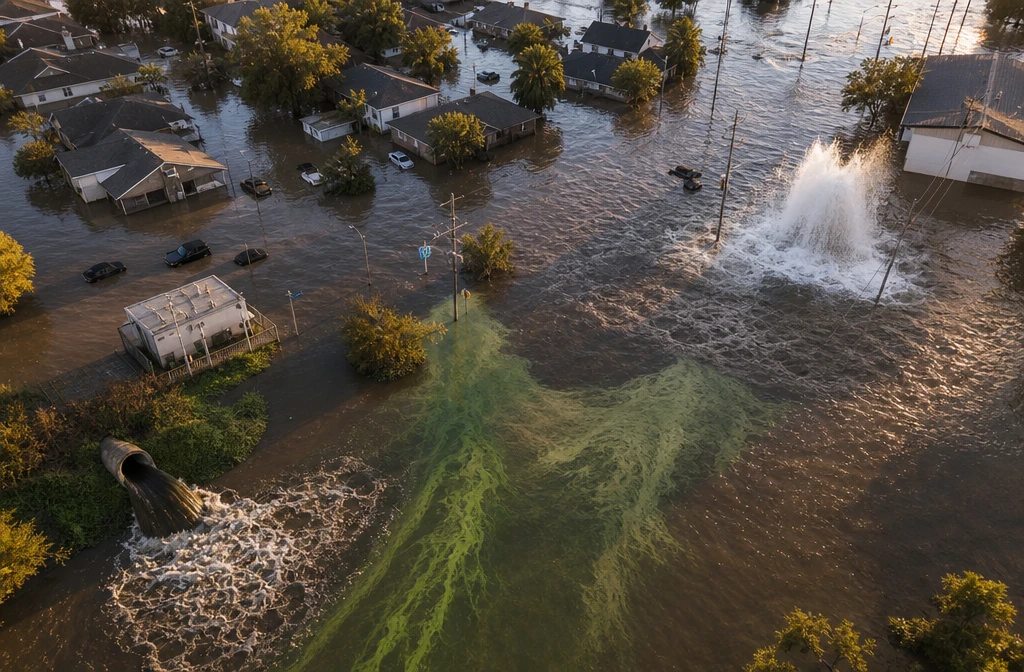
Floods are the leading cause of water contamination events during emergencies. When floodwater rises, it doesn’t stay in one place — it picks up everything in its path and mixes it together.
Primary contamination sources during floods:
- Sewage system overflow: The most common and immediately dangerous source. Floodwater routinely overwhelms municipal sewer systems, introducing E. coli, Hepatitis A, and other pathogens into the water supply
- Agricultural runoff: Fertilizers (nitrates), pesticides, and animal waste from farms enter waterways during heavy flooding
- Industrial and chemical sites: Fuel storage tanks, chemical plants, and hazardous waste sites can rupture or overflow, releasing petroleum products and industrial chemicals
- Underground storage tanks: Gas stations and heating oil tanks can leak during floods, contaminating groundwater and nearby wells
- Dead animals: Decomposing livestock and wildlife introduce additional biological hazards
- Household chemicals: Cleaning products, paint, and automotive fluids from flooded homes all contribute
⚠️ Critical fact: According to the CDC, floodwater should always be treated as contaminated with sewage. This applies even if the water appears relatively clear.
Understanding how to respond to these scenarios is part of broader natural disaster preparedness — water safety is just one piece of a larger system.
How Are Water Contamination Risks Different in Urban vs. Rural Areas?
Urban and rural preppers face genuinely different water contamination threats, and the response strategies differ accordingly.
Urban water contamination risks:
- Municipal water systems are centralized, meaning a single contamination event can affect hundreds of thousands of people simultaneously
- Aging infrastructure (lead pipes, corroded mains) is a persistent background risk that worsens under emergency conditions
- Industrial and chemical contamination sources are more concentrated
- When pressure drops in a municipal system (common during disasters), backflow can introduce contaminants from the ground into the pipes
- High population density accelerates biological contamination spread
Rural water contamination risks:
- Private wells are the primary concern — they have no centralized treatment and are directly vulnerable to surface water infiltration during floods
- Agricultural chemicals (nitrates, pesticides) are a significant threat to groundwater
- Septic system failures during floods can contaminate nearby wells within hours
- Distance from emergency services means slower response and longer periods of uncertainty
Choose your strategy based on your source:
- Urban preppers: Store adequate water before emergencies, monitor utility advisories, and have a quality point-of-use filter for chemical and biological threats
- Rural preppers with wells: Test your well water annually under normal conditions, seal the wellhead properly, and have a backup water source ready. After any flood, do not use well water until it has been professionally tested
Which Household Water Filters Actually Work During Emergencies?
Not all filters are equal, and the wrong filter in an emergency gives a false sense of security. The right filter depends on what contaminants are present.
Filter types and what they actually remove:
| Filter Type | Removes Bacteria/Protozoa | Removes Viruses | Removes Chemicals/Heavy Metals | Best For |
|---|---|---|---|---|
| Hollow fiber (e.g., LifeStraw, Sawyer) | ✅ Yes | ❌ No | ❌ No | Biological threats in wilderness/flood |
| Activated carbon (e.g., Brita) | Partial | ❌ No | ✅ Yes (chlorine, some chemicals) | Chemical taste/odor, everyday use |
| Ceramic filter | ✅ Yes | ❌ No | ❌ No | Biological threats |
| Reverse osmosis (RO) | ✅ Yes | ✅ Yes | ✅ Yes | Comprehensive home treatment |
| UV purifier (e.g., SteriPen) | ✅ Yes | ✅ Yes | ❌ No | Biological threats, clear water only |
| Gravity filter with carbon + ceramic (e.g., Berkey) | ✅ Yes | ✅ Yes | ✅ Yes | Best all-around emergency filter |
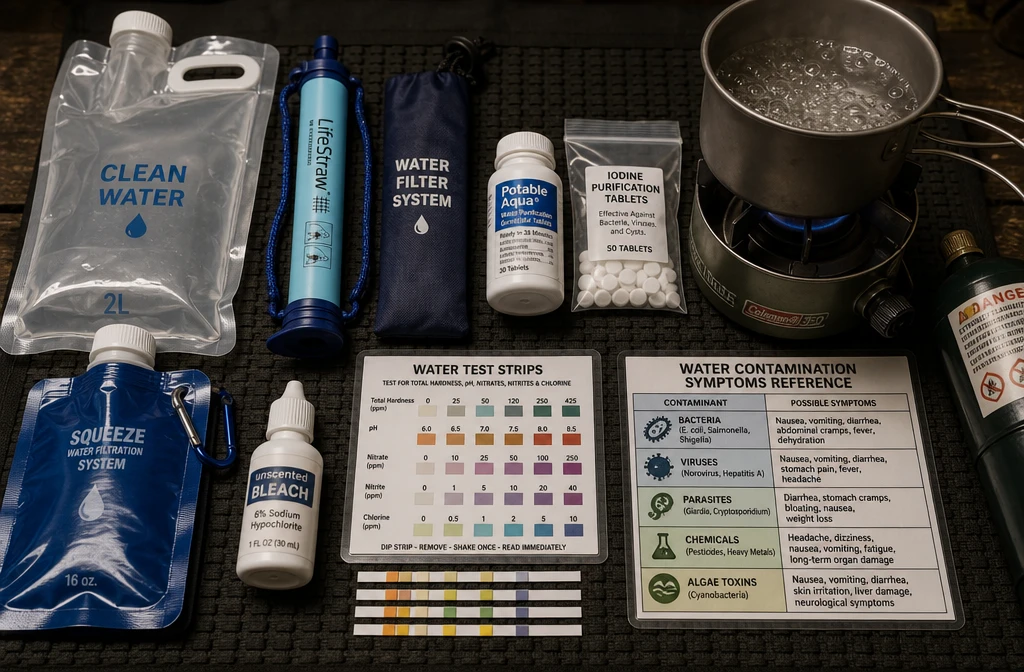
The practical recommendation for preppers: A gravity-fed filter with both ceramic and activated carbon elements (like the Berkey system) is the most capable all-around emergency filter for home use. For portability, pair a hollow fiber filter with iodine tablets or chlorine dioxide tablets to cover both chemical treatment and biological filtration.
Avoid the common mistake of relying on a basic pitcher filter (like a standard Brita) as your only emergency water treatment. It won’t protect against the biological threats that dominate flood scenarios. For more on what preppers frequently get wrong, see The Worst Water Storage Mistakes Preppers Still Make.
Are Bottled Water Supplies Safe During Natural Disasters?
Commercially bottled water is generally safe during natural disasters, provided the bottles are undamaged and have been stored correctly. The water inside sealed plastic bottles is not affected by external flooding, power outages, or airborne contamination.
When bottled water is safe:
- Bottles are factory-sealed and undamaged
- Stored away from direct sunlight and heat (heat accelerates chemical leaching from plastic)
- Within the manufacturer’s recommended use-by date
When to be cautious:
- Bottles that have been submerged in floodwater may have contaminated caps or seal areas — wipe and sanitize the cap area before opening
- Bottles stored in hot vehicles or garages for extended periods may have degraded plastic affecting taste and potentially leaching chemicals
- “Emergency” water in non-food-grade containers is a different matter entirely
Practical storage guidance: FEMA recommends storing at least one gallon of water per person per day for a minimum of three days. Most serious preppers aim for two weeks or more. For apartment-dwellers with space constraints, the Apartment Water Storage Complete Guide offers practical solutions for maximizing storage in small spaces.
What Should Parents Know About Protecting Kids From Water Contamination?
Children are significantly more vulnerable to waterborne illness and chemical contamination than healthy adults. Their immune systems are still developing, they consume more water relative to body weight, and they’re less able to communicate early symptoms.
Key risks specific to children:
- Lead: Even low-level lead exposure causes irreversible neurological damage in children. During emergencies involving pipe damage or pressure loss, lead risk in tap water increases substantially
- Nitrates: Infants under 6 months are at serious risk of methemoglobinemia from nitrate-contaminated water — this applies to formula preparation as well
- Dehydration from illness: Children dehydrate much faster than adults when experiencing diarrhea or vomiting from waterborne illness
Protective steps for parents:
- Store dedicated clean water for infant formula preparation — never use potentially contaminated tap water
- Use only tested, treated water for reconstituting powdered formula
- Watch for early illness signs: unusual fussiness, decreased urination, lethargy, or digestive upset after water exposure
- Keep oral rehydration salts (ORS) in your emergency kit — they’re critical for treating dehydration in children
- Do not let children play in or near floodwater
Parents building out their full family emergency system should also review the Family Emergency Plan Template to ensure water safety is integrated into the broader household plan.
How Quickly Can Water Contamination Spread in a Community?
Water contamination can spread through a municipal system within hours of a contamination event. In flood scenarios, biological contamination of surface water is essentially immediate — floodwater should be assumed contaminated from the moment it rises.
Timeline of contamination spread:
- Flood onset: Surface water contamination begins immediately as sewage systems overflow
- Within hours: Shallow wells near flood zones can be compromised as surface water infiltrates
- Within 24–48 hours: Municipal water systems with pressure loss or pipe damage can experience backflow contamination
- Days to weeks: Groundwater contamination from chemical spills or agricultural runoff can persist and spread slowly through aquifers
Community-level factors that accelerate spread:
- Aging pipe infrastructure with cracks or joints
- Loss of water pressure (allows ground contamination to enter the system)
- Overwhelmed water treatment facilities
- High population density increasing biological load in sewage systems
This is why monitoring official advisories from your local utility and health department is non-negotiable during any emergency. Don’t wait for symptoms in your community before acting.
How Do I Recognize If My Tap Water Is Making Me Sick?
Recognizing waterborne illness from tap water requires connecting symptoms to water consumption timing. Most biological waterborne illnesses have an incubation period of 1–3 days, meaning symptoms appear after the exposure, not immediately.
Symptoms that suggest waterborne illness:
- Sudden onset of diarrhea (especially watery), nausea, vomiting, or stomach cramps
- Multiple household members experiencing similar symptoms around the same time
- Symptoms appearing 1–3 days after a known water event (flood, boil water advisory, pressure loss)
- Skin rashes or eye irritation after bathing in tap water during a contamination event
Symptoms that suggest chemical contamination:
- Metallic or chemical taste in water accompanied by headache, dizziness, or nausea
- Neurological symptoms (confusion, numbness) — seek emergency medical care immediately
What to do if you suspect your water made you sick:
- Stop using tap water for drinking and cooking immediately
- Switch to stored safe water or commercially bottled water
- Contact your local health department — they need to know about potential contamination events
- Seek medical attention, especially for children, elderly individuals, or anyone with immune system vulnerabilities
- Document when symptoms started and what water sources were used
What Emergency Services Help With Water Safety After a Crisis?
Multiple agencies provide water safety support after emergencies, and knowing who to contact before a crisis hits is part of solid preparedness.
Primary resources:
- Local water utility: Your first call for tap water safety questions. They issue boil water advisories and can provide testing information
- Local health department: Provides guidance on well water testing, waterborne illness reporting, and community water safety
- FEMA (Federal Emergency Management Agency): Coordinates large-scale disaster response including water distribution points and emergency water supplies. FEMA.gov has real-time disaster resources
- CDC (Centers for Disease Control and Prevention): Provides public health guidance on waterborne illness and emergency water treatment. CDC.gov/healthywater is a reliable reference
- American Red Cross: Operates emergency shelters that include safe water access and can direct people to water distribution sites
- State emergency management agencies: Coordinate with FEMA and local agencies; often post water safety advisories specific to your region
- 211 Helpline: In the US, dialing 211 connects people to local emergency resources including water distribution points
Prepper-specific note: Emergency services are valuable, but they’re often overwhelmed in major disasters. The goal of preparedness is to not need them for basic survival needs like water. Having a comprehensive emergency supplies system means you’re not dependent on distribution lines that may be days away from reaching your neighborhood.
FAQ: Water Contamination Signs in Emergency Situations
Q: Can water look completely clear and still be contaminated? Yes. Biological contaminants including bacteria, viruses, and Giardia cysts are invisible to the naked eye. Clear water from a flood zone or compromised well should always be treated before drinking.
Q: How long does boil water advisory typically last after a flood? Most boil water advisories last between 24 hours and several days, depending on how quickly the utility can test and confirm water safety. Some advisories following major infrastructure damage can last weeks.
Q: Is rainwater safe to collect and drink during an emergency? Rainwater collected directly (not from a roof or contaminated surface) is relatively safe biologically, but should still be filtered and treated. Roof-collected rainwater picks up bird droppings, dust, and potentially chemical residue from roofing materials.
Q: What’s the safest emergency water treatment method if I have no filter? Boiling is the most reliable method for biological threats. If boiling isn’t possible, unscented household bleach (5–8% sodium hypochlorite) at 8 drops per gallon of clear water (16 drops for cloudy water) provides basic disinfection. Wait 30 minutes before drinking.
Q: Can I use my hot water heater as an emergency water source? Yes — a standard 40–80 gallon water heater holds drinkable water if the tank was clean before the emergency. Turn off the power/gas first, then drain from the bottom valve. This water should still be treated before drinking if contamination is suspected.
Q: How do I know if my well was contaminated after a flood? Assume it was. Any well that was submerged in floodwater should be professionally tested before use. Shock chlorination followed by lab testing is the standard protocol. Do not use the well until testing confirms safety.
Q: Are water purification tablets effective against all contaminants? No. Iodine and chlorine tablets are effective against most bacteria and viruses, but not against Cryptosporidium (which requires chlorine dioxide tablets or boiling) and not against chemical contaminants at all.
Q: How much emergency water should I store per person? FEMA’s minimum recommendation is 1 gallon per person per day for at least 3 days. For serious preparedness, target 2 weeks at 1 gallon per person per day, plus additional water for cooking, hygiene, and pets.
Q: Can I drink water from a swimming pool during an emergency? Pool water is not safe to drink without treatment. It contains chlorine, algaecides, and pH adjusters that are harmful in drinking quantities. It can be used for sanitation purposes, but should not be consumed without proper filtration and treatment.
Q: What’s the first thing to do when a boil water advisory is issued? Stop using tap water for drinking, cooking, brushing teeth, and making ice immediately. Switch to stored water or bottled water. Follow the advisory until your utility officially lifts it.
Conclusion: Build Your Water Safety System Before You Need It
Recognizing water contamination signs in emergency situations is a skill that can genuinely save lives — but knowledge alone isn’t enough. The preppers who stay healthy after a disaster are the ones who built their water safety system before the emergency hit.
Actionable next steps:
- Audit your current water storage today. Do you have at least 14 days of water per household member? If not, start building that supply now
- Add water test strips to your emergency kit. Basic strips are inexpensive and give you a first-line screening tool
- Invest in a quality gravity filter. A multi-stage filter with ceramic and carbon elements covers both biological and chemical threats
- Stock chemical treatment options. Chlorine dioxide tablets and unscented bleach should both be in your kit
- Know your water source. If you’re on a well, get it tested annually. If you’re on municipal water, know how to access your utility’s emergency advisories
- Integrate water safety into your family emergency plan. Every household member should know what to do when water safety is in question
Water is the one resource you can’t improvise your way around. Everything else in a survival scenario — food, shelter, communication — becomes secondary when your water supply is compromised. Build the knowledge, build the system, and build the confidence that comes from knowing you’re ready.
For a complete look at your emergency preparedness system beyond water, the Ultimate Emergency Preparedness Guide for Preppers covers the full spectrum of what a serious preparedness plan looks like.
Products, Tools, and Resources Worth Having
These are practical tools that belong in any serious prepper’s water safety kit — not because they’re flashy, but because they work when it counts:
- Berkey Gravity Filter System: The most capable all-around gravity filter for home emergency use. Removes biological threats, heavy metals, and many chemical contaminants. Worth the investment for families
- Sawyer Squeeze or LifeStraw: Portable hollow fiber filters for bug-out bags and wilderness scenarios. Lightweight and reliable for biological filtration on the move
- Aquatabs or Potable Aqua Chlorine Dioxide Tablets: Chemical treatment backup when boiling or filtering isn’t possible. Chlorine dioxide tablets handle Cryptosporidium where standard iodine tabs fall short
- Safe Home Premium Water Test Kit: A broad-spectrum home test kit that screens for bacteria, nitrates, pH, chlorine, and hardness. Good for baseline testing and post-emergency screening
- WaterBOB Emergency Water Storage Bladder: Fits in a standard bathtub and stores up to 100 gallons of tap water before a disaster hits. One of the most underrated pieces of emergency water gear available
- National Testing Laboratories (NTL) Mail-In Water Test: For comprehensive chemical and biological analysis of well water or suspected contamination — when you need real answers, not just a screening
- Oral Rehydration Salts (ORS): Not a filtration tool, but critical for treating dehydration caused by waterborne illness. Keep a supply for every household member, especially children
Related Reading:
- The Ultimate Emergency Water Storage and Purification Guide
- The Worst Water Storage Mistakes Preppers Still Make
- 15 Things Missing From Your Emergency Kit That Could Cost You Everything
- Step-by-Step Guide to Natural Disaster Preparedness
References
- Centers for Disease Control and Prevention (CDC). Emergency Water Supply and Sanitation. cdc.gov/healthywater. 2023.
- Federal Emergency Management Agency (FEMA). Food and Water in an Emergency. ready.gov. 2021.
- World Health Organization (WHO). Guidelines for Drinking-Water Quality, 4th Edition. WHO Press. 2017.
- United States Environmental Protection Agency (EPA). Emergency Disinfection of Drinking Water. epa.gov. 2022.
- CDC. Natural Disasters and Severe Weather: Floods and Water Safety. cdc.gov. 2022.