
Hey there! Some links on this page may be affiliate links which means that, if you choose to make a purchase, I may earn a commission at no extra cost to you. I greatly appreciate your support. Read the full disclosure here.
The human body is more resilient than most people realize, and far more fragile than they assume. Understanding exactly how long can humans survive without food, water, and heat isn’t just an academic exercise. For preppers and survivalists, these numbers are the foundation of every kit you build, every plan you write, and every decision you make under pressure.
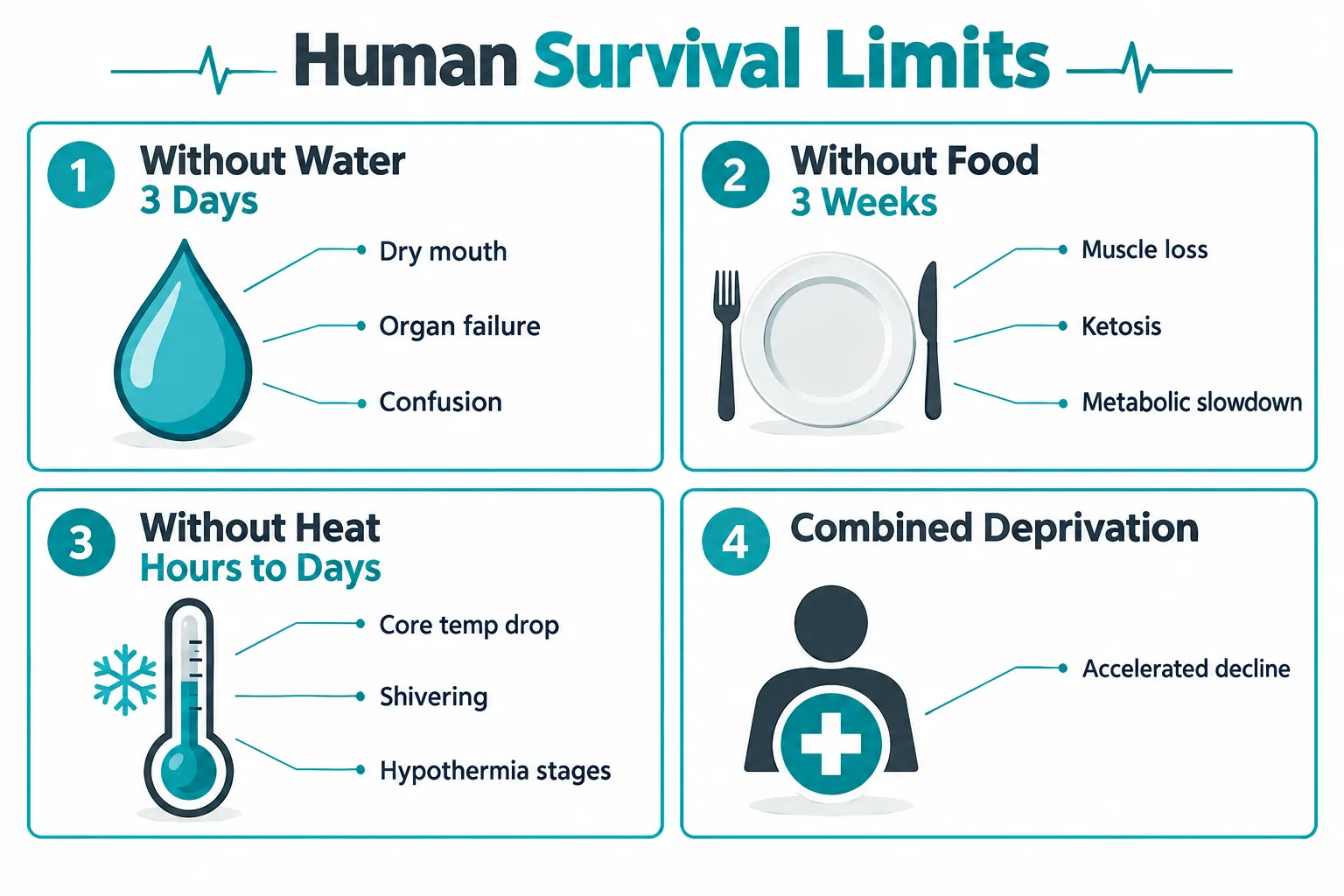
The short answer: roughly 3 days without water, 3 weeks without food, and potentially just a few hours without adequate heat in freezing conditions. But those are averages. The real picture is more complex, and knowing the variables could be the difference between life and death.
Key Takeaways
- The “Rule of Threes” provides a baseline: 3 minutes without air, 3 hours without shelter in harsh conditions, 3 days without water, 3 weeks without food.
- Dehydration becomes life-threatening within 24-48 hours in hot or physically demanding conditions.
- Hypothermia can kill in under two hours when wet and exposed to cold wind.
- Body composition, age, health status, and environment all significantly affect survival timelines.
- Water deprivation is always more immediately dangerous than food deprivation.
- Fat reserves extend starvation survival time, but they do not protect against dehydration or cold.
- The biggest survival mistakes are underestimating water needs and overestimating cold tolerance.
- Preparation, stored water, emergency food, and reliable heat sources, eliminates all three threats before they start.
Find this useful? Add us as a preferred source on Google and more of what we publish will show up in your results.
How Long Can a Human Survive Without Water
A healthy adult can survive approximately 3 days without water, though this window shrinks dramatically in heat, humidity, or during physical exertion. Some documented cases show survival up to 8-10 days under cool, sedentary conditions, but these are outliers, not benchmarks to plan around.
The body loses water constantly through breathing, sweating, and urination. When that loss isn’t replaced, blood volume drops, the kidneys begin to fail, and the brain starts to malfunction. At just 2% dehydration, cognitive performance declines noticeably. At 10% body weight lost to dehydration, the situation becomes critical.
Dehydration progression by percentage of body weight lost:
- 1-2%: Thirst, mild headache, reduced concentration
- 3-5%: Dry mouth, fatigue, reduced urine output, dizziness
- 6-8%: Muscle cramps, nausea, difficulty breathing under exertion
- 10%+: Organ failure risk, delirium, potential death
For a deeper look at water needs during emergencies, the Ultimate Emergency Water Storage and Purification Guide covers storage volumes, purification methods, and rotation schedules that every prepper should have in place.
How Long Before Dehydration Becomes Life-Threatening
Dehydration becomes life-threatening within 24-48 hours in high-heat environments or when a person is physically active. In a cool, shaded, sedentary environment, that window extends to 3-4 days. The variables that accelerate the timeline include ambient temperature, physical exertion, illness, diarrhea or vomiting, and altitude.
Children, the elderly, and anyone with a chronic illness hit critical thresholds faster than a healthy adult. A child can become dangerously dehydrated in under 12 hours during a fever or in extreme heat.
Common mistake: Many people assume they can judge hydration by thirst alone. By the time you feel thirsty, you’re already 1-2% dehydrated. In a survival scenario, drink on a schedule, not just when prompted by thirst.
For anyone relying on natural or improvised water sources, understanding how to purify water without tools outdoors is a non-negotiable skill.
Can You Survive Longer Without Food or Without Water
Water deprivation is always more immediately dangerous than food deprivation. A person can survive 3 weeks or longer without food but will die within 3-7 days without water under normal conditions. The body has substantial energy reserves in fat and muscle tissue, but it has no meaningful reserve of water beyond what’s already in circulation.
This distinction matters enormously for preppers prioritizing supplies. Water storage and sourcing should always come before food stockpiling in terms of urgency. A 30-day food supply means nothing if you run out of water on day three.
How Long Can a Human Survive Without Food
A healthy adult can survive approximately 3 weeks without food, though this varies considerably based on starting body composition, activity level, hydration status, and mental state. The most well-documented cases of prolonged fasting, including medically supervised fasts and hunger strikes, suggest a range of 30-70 days is physiologically possible under specific conditions.
The body’s response to starvation follows a predictable sequence:
- First 24 hours: The body burns through glycogen stores in the liver and muscles.
- Days 2-3: Ketosis begins. The liver converts fat into ketone bodies for fuel.
- Week 1-2: Fat becomes the primary fuel source. Muscle protein is spared but not entirely.
- Week 3+: Fat reserves deplete. The body increasingly breaks down muscle and organ tissue. Organ failure risk rises sharply.
For preppers building long-term food resilience, the long-term food storage complete beginner’s guide is a practical starting point for building a supply that covers weeks or months.
What Happens to Your Body When You Don’t Eat for Days
The body doesn’t simply “shut down” when food is withheld, it adapts, and then it deteriorates. During the first 24-48 hours, most people experience hunger, irritability, difficulty concentrating, and mild fatigue. These are uncomfortable but not dangerous.
By days 3-5, the body is running primarily on fat. Hunger often diminishes paradoxically during this phase as ketones suppress appetite. However, weakness, cold sensitivity, and impaired immune function become more pronounced.
Beyond week two, the consequences become serious: heart muscle can begin to atrophy, electrolyte imbalances create cardiac arrhythmia risk, and the immune system weakens significantly. The psychological effects of prolonged food deprivation, anxiety, depression, and impaired decision-making, are often underestimated in survival scenarios.
Do Some People Survive Longer Without Food Than Others
Yes, significantly. Body composition, metabolic rate, age, health status, and mental resilience all affect how long a person can survive without food.
Factors that extend survival time:
- Higher body fat percentage (more stored energy)
- Younger age with no underlying metabolic conditions
- Sedentary conditions (lower caloric expenditure)
- Warm environment (no extra calories burned for thermoregulation)
- Strong psychological resilience
Factors that shorten survival time:
- Low body fat or muscle mass
- Chronic illness, especially diabetes or kidney disease
- Cold or physically demanding environment
- High stress (cortisol accelerates muscle breakdown)
- Children and elderly individuals
A person with 30% body fat has substantially more stored energy than someone at 10% body fat. That said, body fat offers no meaningful protection against dehydration or hypothermia, those threats operate on entirely different timelines.
How Long Can Humans Survive in Cold Temperatures
Without adequate shelter or insulation, a person can develop fatal hypothermia in as little as 30 minutes to 2 hours in extreme cold, particularly when wet or exposed to wind. In milder cold (around 40°F / 4°C) with wet clothing, death can occur within 3-4 hours. In dry, calm conditions at 20°F (-7°C), a fit adult in appropriate clothing can survive indefinitely.
The key variable isn’t just temperature, it’s the combination of temperature, wind, moisture, and insulation. Wind chill dramatically accelerates heat loss. Wet clothing loses up to 90% of its insulating value.
Hypothermia stages and their effects:
| Stage | Core Temp | Symptoms | Risk Level |
|---|---|---|---|
| Mild | 95-89°F (35-32°C) | Shivering, confusion, slurred speech | Manageable |
| Moderate | 89-82°F (32-28°C) | Shivering stops, muscle rigidity, drowsiness | Serious |
| Severe | Below 82°F (28°C) | Unconsciousness, cardiac arrhythmia, no shivering | Life-threatening |
| Fatal | Below 68°F (20°C) | Cardiac arrest, death | Fatal without intervention |
When the grid goes down in winter, having a backup plan is critical. The guide to emergency heat sources without fuel covers practical, safe options for maintaining warmth when conventional heating fails.
Signs of Hypothermia and How Long Until It’s Fatal
The first sign of hypothermia is uncontrollable shivering, the body’s attempt to generate heat through muscle activity. As core temperature drops further, shivering paradoxically stops, which many people mistake for improvement. It isn’t. It means the body has exhausted its ability to self-warm.
Other early warning signs include: stumbling or poor coordination, slurred speech, confusion or unusual behavior, and pale or bluish skin. At moderate hypothermia, the person may become drowsy and resist help. At severe hypothermia, loss of consciousness and cardiac arrest become the primary risks.
Time to fatality depends heavily on conditions. In ice-cold water (below 40°F / 4°C), incapacitation can occur in under 10 minutes and death within 30-90 minutes. In cold air with wet clothing, death can occur in 2-4 hours. In dry cold with no shelter, the timeline extends to several hours or longer depending on wind and temperature.
Can You Survive Longer in Cold If You Have Body Fat
Body fat provides meaningful but limited insulation against cold. People with higher body fat percentages do lose core heat more slowly than lean individuals, and they have more stored energy to fuel shivering. However, this advantage is measured in minutes to hours, not days. It does not make a person immune to hypothermia.
The more important factor is behavioral: getting out of the wind, removing wet clothing, creating an insulating barrier between the body and the ground, and generating heat through movement or fire. Body fat is a passive advantage. Preparation and action are the active ones.
For urban environments where power outages create cold-exposure risks, the guide to surviving in an apartment without power, water, or heat addresses practical layering, insulation, and heat retention strategies specific to apartment dwellers.
How Long Can You Last Without Heat in Freezing Weather
In freezing outdoor conditions (32°F / 0°C and below), an unprotected person without adequate clothing or shelter can become hypothermic within 1-2 hours, particularly if wet or in wind. Death can follow within 4-6 hours in severe conditions.
The critical survival window is the first 30-60 minutes. During that time, a person can still act effectively to find or create shelter, build a fire, or signal for help. Once moderate hypothermia sets in, decision-making degrades sharply and physical coordination fails.
The “Rule of Threes” for cold: In harsh weather, shelter is the priority before water or food. Three hours without shelter in extreme conditions can be fatal. Three days without water and three weeks without food represent the outer boundaries under more moderate circumstances.
What’s the Difference Between Starvation and Malnutrition Survival Times
Starvation refers to a total or near-total absence of caloric intake. Malnutrition refers to inadequate intake of specific nutrients, calories may be present, but essential vitamins, minerals, or macronutrients are missing.
Starvation kills within 3-8 weeks in most healthy adults. Malnutrition kills more slowly but is often more insidious. A person eating enough calories but lacking vitamin C will develop scurvy within 4-12 weeks. Inadequate sodium or potassium can cause fatal cardiac events even when caloric intake seems sufficient.
For preppers, this distinction matters when building food stores. Calorie-dense storage foods like white rice and sugar can prevent starvation but won’t prevent malnutrition over extended periods. Rotating in foods with genuine nutritional diversity, legumes, canned vegetables, freeze-dried fruits, is essential for long-term scenarios. The 50 best foods for long-term storage provides a practical, nutritionally balanced starting list.
Common Mistakes People Make When Stranded Without Supplies
Most survival failures aren’t caused by bad luck, they’re caused by predictable errors made in the first hours of an emergency.
The most dangerous mistakes:
- Underestimating water loss: People consistently underestimate how quickly they dehydrate, especially when anxious or physically active.
- Ignoring early cold symptoms: Mild confusion and stumbling are often dismissed. By the time shivering stops, the situation is already serious.
- Expending energy searching for food too early: Food is the lowest-priority survival need. Burning energy foraging in the first 24 hours accelerates dehydration and hypothermia risk.
- Removing wet clothing incorrectly: Stripping off wet clothes in the open air without immediately replacing them with dry insulation accelerates heat loss.
- Drinking unknown water sources without purification: Waterborne illness can cause the diarrhea and vomiting that accelerates fatal dehydration. An improvised water filter for survival can be built from natural materials when no other option exists.
- Assuming body fat means cold immunity: As noted above, fat slows heat loss but doesn’t prevent hypothermia.
How to Survive Longer If Stranded Without Food, Water, or Warmth
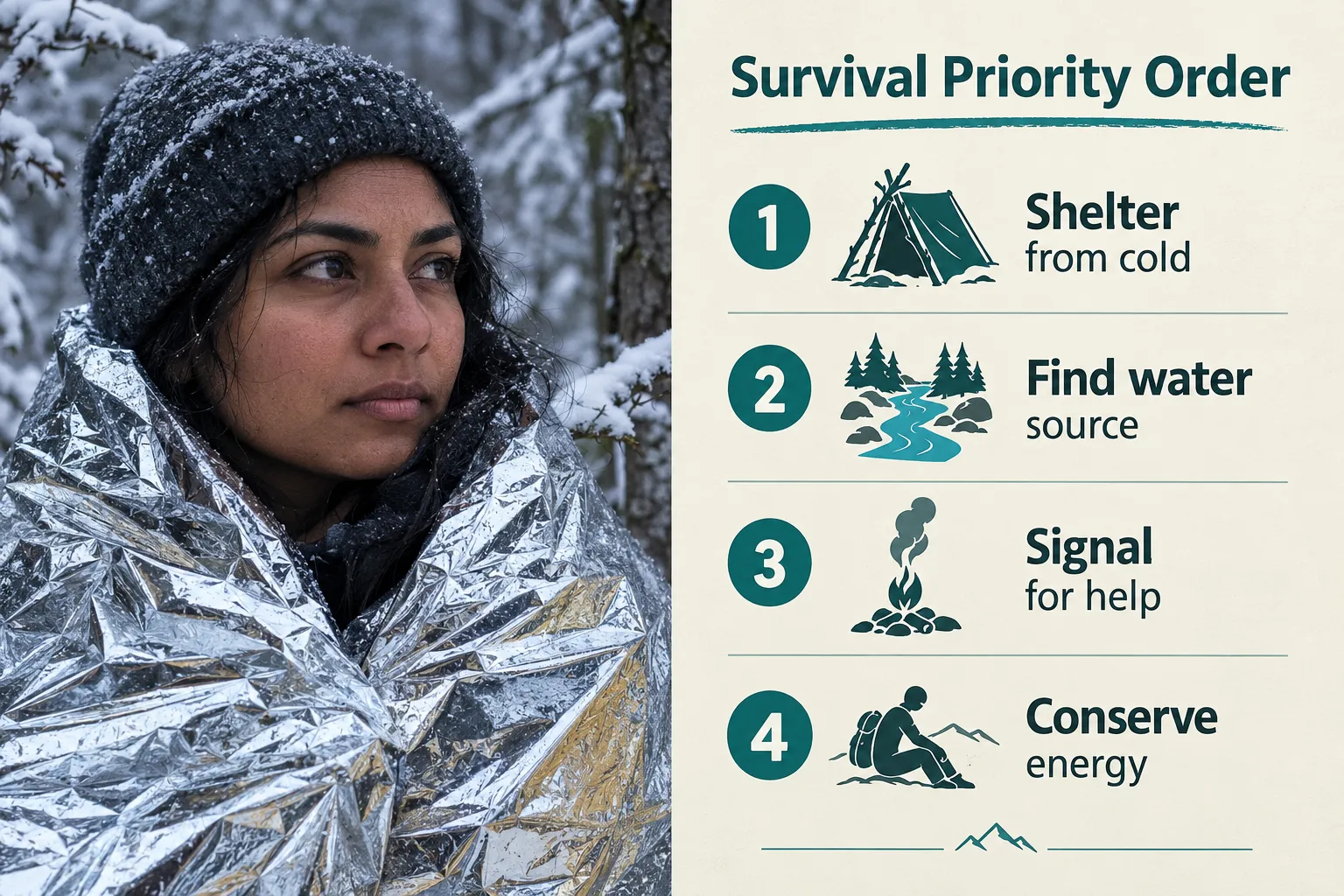
The core principle is simple: address threats in order of how quickly they kill. Heat loss first, water second, food last.
Prioritized survival action sequence:
- Shelter from wind and wet immediately. Even a debris hut or emergency mylar blanket buys critical hours.
- Stop sweating if possible. Wet clothing from sweat is as dangerous as rain-soaked clothing.
- Find or purify water within the first 24 hours. Don’t wait until you feel thirsty.
- Signal for rescue before expending energy on food. Most survival situations resolve within 72 hours if rescuers know where to look.
- If rescue is not coming, forage conservatively. Prioritize calorie-dense, easily identifiable foods. Avoid unknown plants. Learn the basics of foraging edible wild plants before you need the skill.
- Maintain body heat through movement, not just clothing. Light exercise generates significant heat without excessive sweating.
- Manage mental state actively. Panic burns energy, impairs decisions, and accelerates physiological decline. The psychological effects of long-term disaster survival are real and worth understanding before a crisis hits.
FAQ
How long can humans survive without food, water, and heat simultaneously?
When all three are absent at once, survival time collapses dramatically. Cold accelerates dehydration, physical exertion burns calories faster, and stress degrades decision-making. In extreme cold without water or food, death can occur within 24-72 hours rather than the weeks that food deprivation alone would allow.
What is the “Rule of Threes” in survival?
The Rule of Threes is a survival memory aid: 3 minutes without air, 3 hours without shelter in harsh weather, 3 days without water, 3 weeks without food. These are rough guidelines, not precise medical thresholds, but they correctly prioritize the sequence of threats.
Does drinking seawater help if you have no fresh water?
No. Seawater accelerates dehydration because the kidneys require more water to excrete the excess salt than the seawater provides. Drinking seawater in a survival situation speeds death rather than delaying it.
Can a person survive longer without food if they drink plenty of water?
Yes. Adequate hydration supports kidney function, temperature regulation, and metabolic processes that allow the body to utilize fat stores more efficiently. Water doesn’t provide calories, but it extends the window in which the body can sustain itself on stored energy.
How quickly does hypothermia set in after falling into cold water?
In water below 50°F (10°C), cold shock occurs within the first 1-3 minutes, swimming failure within 3-30 minutes, and unconsciousness within 30 minutes to several hours depending on water temperature and body composition. The colder the water, the faster each stage progresses.
Is it dangerous to eat snow for hydration?
Eating snow is not recommended as a primary hydration strategy. Melting snow in your mouth requires body heat, which accelerates hypothermia. Melt snow using body warmth in a container against your skin, or over a fire, before drinking.
Does age affect how long a person can survive without food?
Yes. Children have lower energy reserves and higher metabolic rates relative to body size, making them more vulnerable to both starvation and dehydration. The elderly often have reduced fat reserves, diminished kidney function, and blunted thirst responses that accelerate decline.
What’s the fastest way to warm someone with hypothermia?
Remove wet clothing, insulate from the ground, apply warm (not hot) compresses to the neck, armpits, and groin, and provide warm beverages if the person is conscious. Do not rub the limbs vigorously, this can push cold blood toward the core and cause cardiac arrest.
Can you survive longer without food if you sleep more?
Sleep reduces caloric expenditure and helps preserve energy reserves. In a survival scenario where food is unavailable and rescue is expected, conserving energy through rest is a legitimate strategy, provided warmth and hydration are maintained.
How much water does a person need per day to survive?
The minimum survival intake is approximately 1 liter (about 34 oz) per day under cool, sedentary conditions. In heat, during physical exertion, or with illness, that minimum rises to 2-4 liters or more. The standard preparedness recommendation is 1 gallon (approximately 3.8 liters) per person per day to cover drinking and basic sanitation.
Conclusion
Knowing how long humans can survive without food, water, and heat gives preppers a clear framework for prioritization. Water is the most urgent need. Heat is the fastest killer in the right conditions. Food is the longest runway, but it’s not unlimited.
The practical takeaway is straightforward: build your preparedness around these biological realities. Store at minimum a two-week water supply per person. Maintain a food reserve that covers at least 30-90 days. Have a reliable, tested plan for staying warm when the power goes out.
None of this requires extreme measures or significant expense. It requires consistent, informed action taken before the emergency arrives.
Recommended next steps:
- Audit your current water storage against the 1 gallon per person per day standard. If you’re short, the apartment water storage complete guide covers practical solutions for any living situation.
- Review your food reserves for nutritional diversity, not just calorie count. A 3-month emergency food supply is an achievable target for most households.
- Identify your cold-weather vulnerabilities now. If a power outage in January would leave your household without heat, address that gap before winter arrives.
Preparedness isn’t about fear. It’s about knowing the numbers, respecting the biology, and making sure you never have to test these limits firsthand.