
Hey there! Some links on this page may be affiliate links which means that, if you choose to make a purchase, I may earn a commission at no extra cost to you. I greatly appreciate your support. Read the full disclosure here.
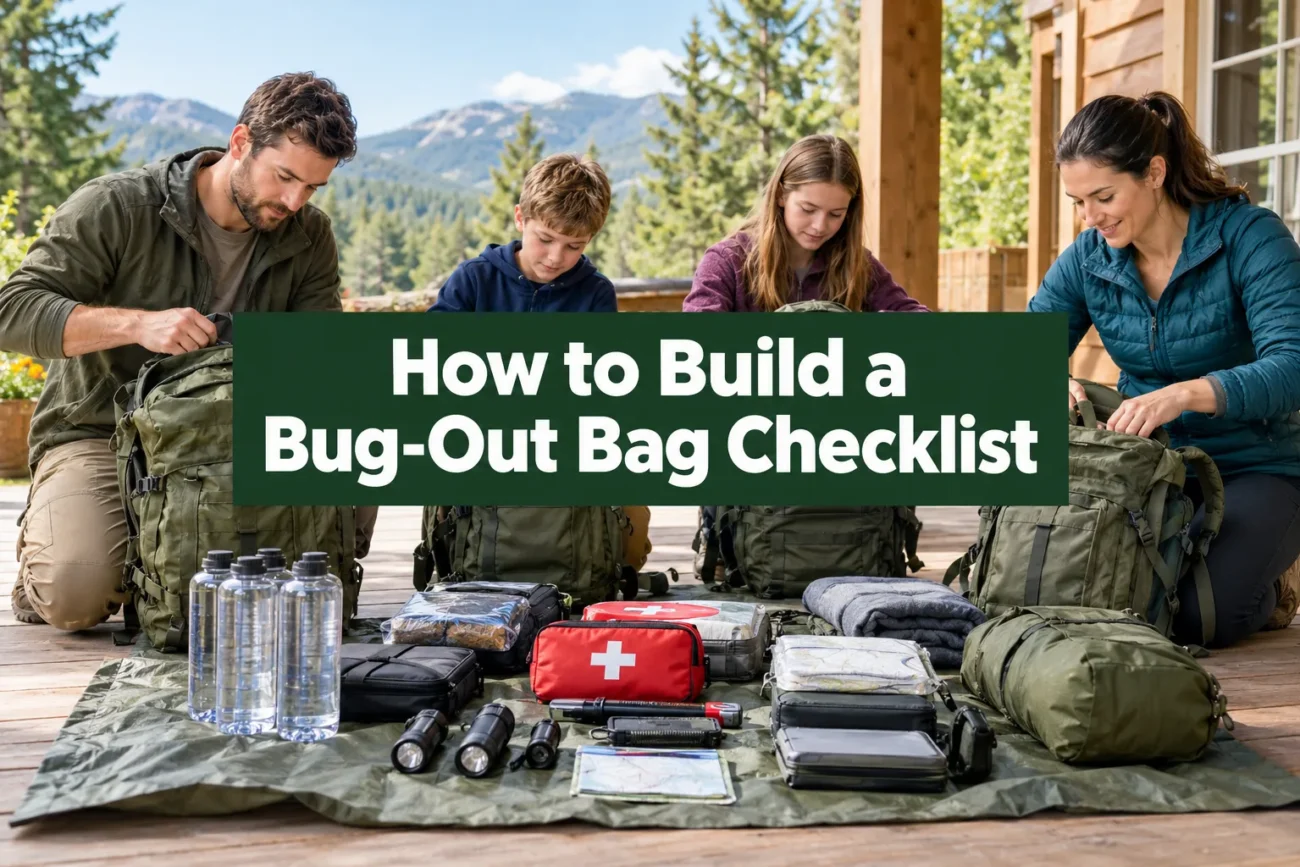
Eighteen minutes. That’s roughly how long residents in some wildfire-prone California counties have had to evacuate once a mandatory order is issued, according to county emergency management bulletins cited in past CAL FIRE evacuation advisories. Eighteen minutes is not enough time to hunt for a child’s inhaler, find the dog’s leash, or remember where the birth certificates are. This is exactly why learning how to build a bug-out bag checklist for families matters long before disaster knocks on the door.
A family bug-out bag checklist isn’t a single backpack with a flashlight and some granola bars. It’s a coordinated system, built around every person in the household, that gets everyone out the door fast and functional for at least 72 hours. Done right, it removes panic from the equation and replaces it with muscle memory.
Find this useful? Add us as a preferred source on Google and more of what we publish will show up in your results.
What exactly is a bug-out bag, and why do families need one
A bug-out bag is a portable kit of survival essentials, packed in advance, designed to keep a person alive and mobile for roughly 72 hours after an evacuation. For families, this means building a coordinated set of bags, not just one, so every member, from toddler to grandparent, has what they need without relying entirely on one adult to carry everything.
Families need bug-out bags because evacuations rarely happen on a convenient schedule. Wildfires, floods, gas leaks, and chemical spills don’t wait for a weekend when everyone is home and calm. A properly built kit means:
- No last-minute scrambling for medications, documents, or diapers
- Faster exit times, which matter most in fire or flood scenarios
- Reduced stress for kids, because the plan is already rehearsed
- A backup if your home becomes unsafe or unreachable for days
Families who have already read through 12 Essential Disaster Preparedness Strategies for Families will recognize this as one piece of a larger plan, but it’s often the piece that gets people out the door alive.
How much does it cost to put together a family bug-out bag
A basic family bug-out bag setup typically costs between $150 and $400 per person when built gradually from existing household items plus a few key purchases, according to general cost estimates commonly cited across prepper community resources. Premium, pre-assembled commercial kits can run higher, but building piece by piece almost always costs less.
Here’s a rough cost breakdown for one adult bag, built over time rather than bought as a kit:
| Category | Estimated Cost Range |
|---|---|
| Backpack (45-65L) | $40,$90 |
| Water filtration + storage | $20,$50 |
| First aid supplies | $25,$60 |
| Food (freeze-dried/shelf-stable) | $20,$40 |
| Shelter/warmth (tarp, blanket, poncho) | $30,$60 |
| Tools (knife, fire starter, flashlight) | $25,$70 |
Choose the budget end if you’re starting from zero and building across a few paychecks. Choose the higher end if you want name-brand gear tested for durability, like what’s outlined in our Complete Bug Out Bag Guide for under $200. A common mistake here is overspending on a tactical-looking bag while skimping on water filtration, the single most life-critical item in the entire kit.
Bug-out bag checklist for families with young kids vs. teenagers
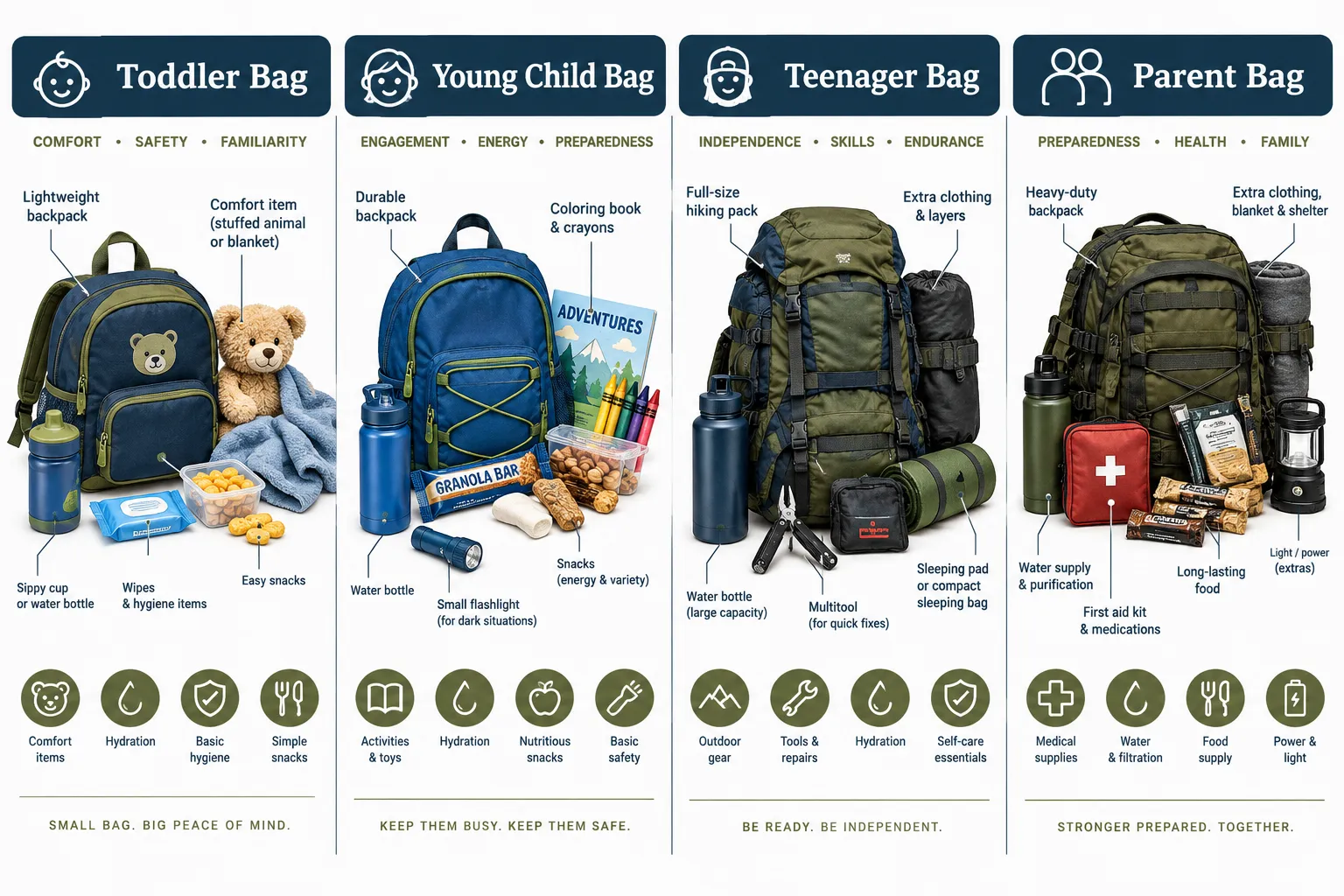
Bug-out bags for young children focus on comfort, safety, and reduced weight, while teen bags shift toward self-sufficiency and shared responsibility for family gear. The checklist changes significantly based on age, not just the size of the backpack.
For toddlers and young kids (ages 2-7):
- Comfort item (small stuffed animal, nothing bulky)
- Pre-portioned snacks that don’t need prep
- Spare clothes, including socks and underwear
- A laminated card with the child’s name and a parent contact number
- Simple coloring book and crayons to manage anxiety during waiting periods
For school-age kids (8-12):
- Their own water bottle and a basic flashlight they can operate
- A whistle (three short blasts is the universal distress signal)
- A light jacket and rain poncho
For teenagers (13+):
- A real pack, 20-30L, with their own first aid basics
- Navigation tool or offline maps on a charged device
- Portion of family food supply and a water filter straw
- Basic multitool, if judgment and responsibility support it
Our guide to building a bug-out bag for kids breaks this down further by developmental stage, which is worth reviewing before you finalize weights and contents.
Common mistakes people make when packing a family bug-out bag
The most common mistake is treating the family bug-out bag as one giant shared kit instead of several coordinated individual bags. This creates a single point of failure: if that one bag gets left behind or lost, the whole family loses access to critical supplies.
Other frequent mistakes include:
- Packing for comfort, not survival. Extra gadgets add weight without adding safety.
- Forgetting to rotate food and batteries. Expired items are discovered at the worst possible moment.
- Storing bags somewhere inaccessible. A bag in the attic is useless during a house fire.
- Skipping a practice run. Families who’ve never actually grabbed their bags and walked out the door are slower and more panicked when it counts.
- Ignoring weight distribution. One overloaded bag while others carry almost nothing wastes capacity and tires out the strongest carrier too fast.
Choose to do a full “grab and go” drill at least once a year, timing how long it takes your household to reach the car with bags in hand. If it takes longer than 10 minutes, something on the checklist needs to be moved closer to the door.
How much weight should kids carry in their own bug-out bags
Children should generally carry no more than 10-15% of their body weight in a bug-out bag, a range commonly recommended by outdoor and scouting organizations for sustained hiking loads. For very young children, even that may be too much, and the bag should be more symbolic than functional.
A practical breakdown:
- Ages 2-5: No pack, or a tiny bag with only a comfort item and snack (under 2 lbs)
- Ages 6-9: 5-8 lbs max, focused on clothing and a flashlight
- Ages 10-13: 10-15 lbs, including some shared food or water
- Teens 14+: Up to 20-25% of body weight if physically capable and the evacuation involves walking
Edge case: if your evacuation plan is entirely vehicle-based, weight limits matter less than organization. But if there’s any chance of walking, flooded roads, gridlocked traffic, downed bridges, weight limits become a safety issue, not a convenience one.
Difference between a bug-out bag and a regular emergency kit
A bug-out bag is built for mobility and leaving quickly, while a regular emergency kit (sometimes called a shelter-in-place kit) is built for staying home during a crisis like a power outage or winter storm. The core difference is portability versus volume.
| Feature | Bug-Out Bag | Emergency Kit |
|---|---|---|
| Purpose | Evacuate fast | Shelter in place |
| Duration | 72 hours | Days to weeks |
| Weight limit | Yes, must be carryable | No real limit |
| Location | By the door, in the car | Pantry, basement, garage |
| Water quantity | A few liters + filter | Dozens of gallons stored |
If you’re also building out a longer-term supply, our 72-Hour Emergency Kit guide and the Ultimate Power Outage Preparedness Checklist cover the stay-home side of the equation.
Do you need separate bug-out bags for each family member
Yes, every family member capable of carrying a bag should have their own, sized and stocked according to age, ability, and medical needs. Shared bags create bottlenecks and risk during an evacuation when seconds matter.
A reasonable system looks like this:
- Each adult carries a full 72-hour kit plus a share of communal supplies (larger first aid kit, extra water filtration, shelter).
- Each capable child carries a scaled-down personal kit with clothing, snacks, and comfort items.
- One designated “family grab bag” holds documents, cash, and medications that can’t be duplicated across multiple bags.
- Infants get a dedicated diaper bag-style kit carried by a parent, not the infant.
Decision rule: if a family member cannot reliably carry and manage their own bag, due to age, mobility, or cognitive ability, assign that bag’s weight to the nearest capable adult instead of skipping it.
Best bug-out bag products and where to buy them
The best bug-out bag products are mid-range, field-tested items from established outdoor and emergency-supply brands, not necessarily the most expensive tactical gear. Reliability and simplicity beat flashy features in a survival scenario.
Good categories to prioritize when shopping:
- Backpacks: Internal-frame packs from established hiking brands hold up better than cheap “survival” branded bags.
- Water filtration: Straw-style filters rated for bacteria and protozoa removal are compact and reliable.
- Lighting: Headlamps beat handheld flashlights because they free up hands for kids or gear.
- Food: Freeze-dried meal pouches with long shelf lives, covered in depth in our Bug Out Bag Food List.
Buy from outdoor retailers, military surplus stores, or direct from manufacturer sites rather than unverified marketplace listings, where counterfeit filtration products have been a documented problem. For clothing specifics by season and climate, see the Bug Out Bag Clothing List.
Bug-out bag for apartments vs houses: what’s different
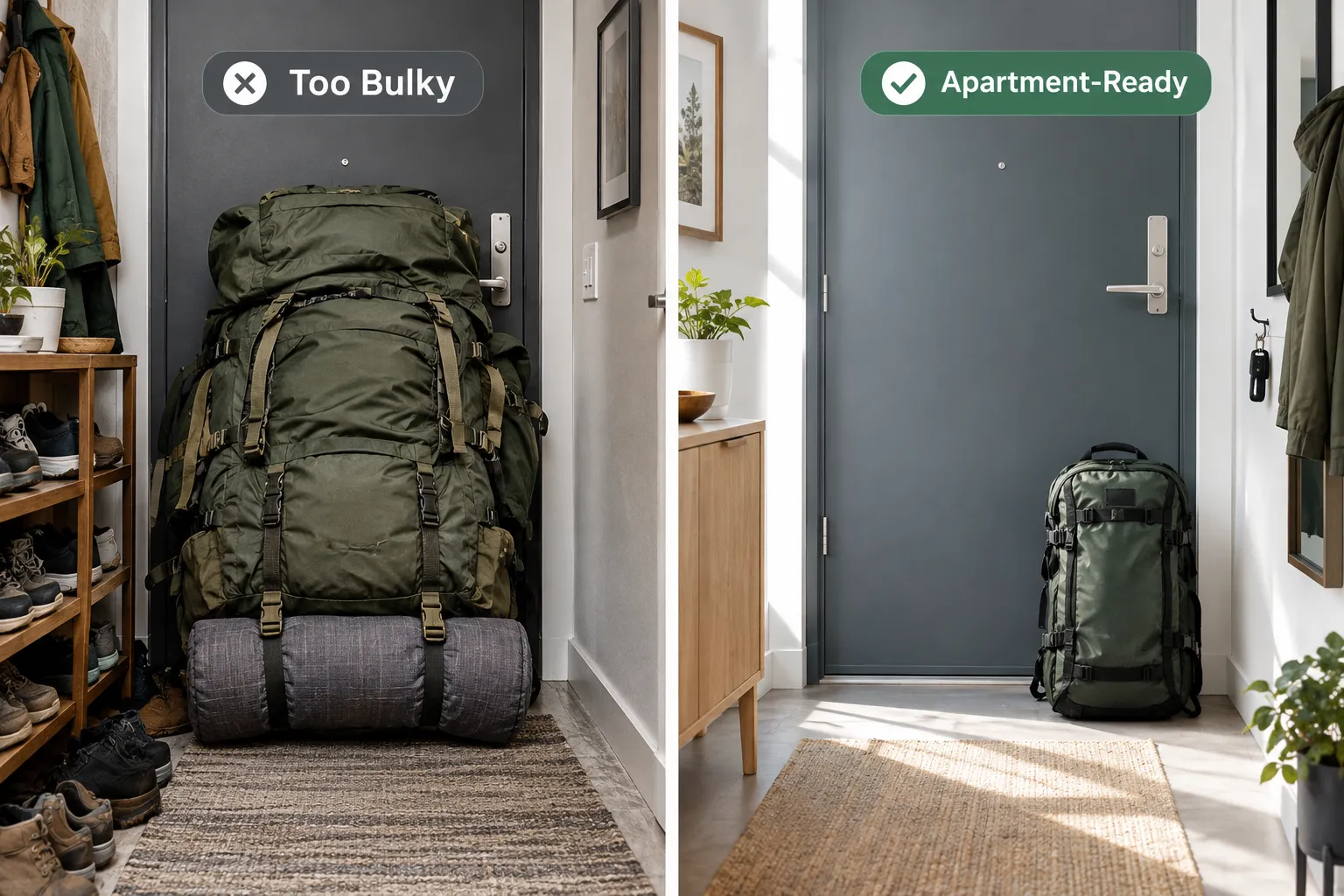
Apartment bug-out bags need to be more compact, storable in tight spaces, and ready for a walk down stairwells rather than a drive from a garage, while house-based bags can be bulkier and staged near a vehicle. Elevators often fail during emergencies, so apartment dwellers need bags light enough to carry down multiple flights.
Key differences:
- Storage location: Apartments favor a closet by the front door; houses can stage bags in a mudroom or garage near the car.
- Weight ceiling: Apartment kits should stay lighter since stairs replace elevators during most fire alarms.
- Shared building hazards: Apartment dwellers should account for shared hallway smoke and fire exposure, which changes mask and respiratory protection priorities.
Our dedicated Bug Out Bag for Apartment Living Checklist and Urban Survival for Families in High-Rise Buildings guide goes deeper into vertical-evacuation-specific planning.
What important documents should go in a family bug-out bag
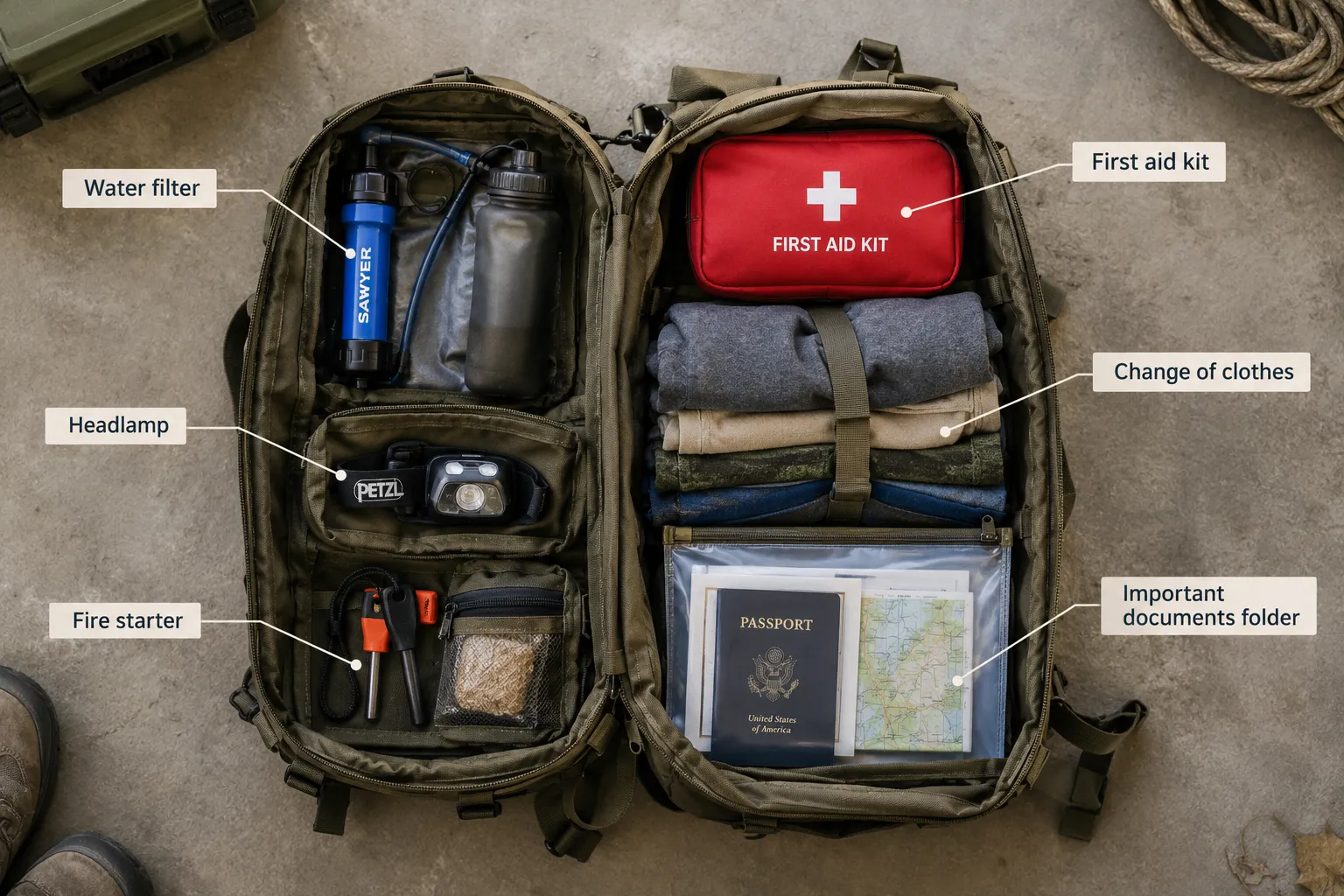
Every family bug-out bag system should include a waterproof folder with copies of identification, insurance, medical, and financial documents, since replacing these after a disaster can take weeks or months. These documents are often harder to recover than physical supplies.
Include:
- Copies of IDs, passports, and birth certificates
- Insurance policy numbers and contact information
- A list of prescriptions and dosages for every family member
- Emergency contact list, including an out-of-area contact
- A small amount of cash in small bills
- USB drive with scanned copies of the above
For a complete rundown of what to protect financially, review the Ultimate Financial Survival Checklist.
How often should you refresh and update bug-out bags
Bug-out bags should be reviewed every six months, with food, water, batteries, and medications checked for expiration and clothing sizes adjusted for growing kids. A kit that was perfect last year can quietly become useless if nobody checks it.
A simple refresh routine:
- Set a recurring reminder tied to daylight saving time changes, easy to remember, twice a year.
- Rotate expiring food into the pantry and replace it with fresh stock.
- Re-check clothing sizes for every child.
- Test flashlights, radios, and power banks.
- Confirm documents are current, especially after a move or a new prescription.
Mistake to avoid: packing a bag once and assuming it’s “done.” Preparedness is a maintenance habit, not a one-time project, a theme echoed throughout our Prepper Checklist for Beginners 30-Day System.
Bug-out bag checklist if you have pets or medical conditions
Families with pets or chronic medical conditions need dedicated supplies layered onto the standard checklist, since these needs can’t be shared or improvised during an evacuation. Skipping this step is one of the most dangerous oversights in family planning.
For pets:
- Food and water for at least 72 hours
- Leash, carrier, and ID tag with current contact info
- Copies of vaccination records
For medical conditions:
- A minimum 72-hour supply of all prescription medications
- A written list of conditions, allergies, and dosages for each person
- Backup mobility aids or medical devices, if applicable (hearing aids, glucose monitors, etc.)
Review our Ultimate Pets Emergency Preparedness Checklist and the Medical Preparedness Checklist for complete lists tailored to these situations.
How do you teach kids about bug-out bags without causing anxiety
Frame the bug-out bag as a fun “adventure kit” rather than a disaster kit, and let kids help pack their own bag so it feels like ownership instead of fear. The language you use shapes how a child processes the idea entirely.
Practical approaches:
- Call practice drills “adventure time” rather than “emergency drill.”
- Let kids pick their own comfort item and flashlight color.
- Keep explanations factual but short, “we have this ready just in case, like a spare tire for the car.”
- Avoid worst-case scenario talk; focus on the plan, not the threat.
- Practice the grab-and-go walk as a game with a stopwatch, not a drill sergeant tone.
Kids handle preparedness far better when it’s framed as competence-building rather than fear-based, a concept also covered in How to Build Mental Toughness for Survival Situations.
Should your bug-out bag change depending on where you live
Yes, climate, terrain, and regional hazards should directly shape bug-out bag contents, since a family in hurricane country needs different gear than a family in wildfire or earthquake zones. A generic checklist is a starting point, not a finished product.
- Wildfire regions: prioritize N95 masks, goggles, and fire-resistant clothing; see the 30-Minute Wildfire Evacuation Checklist.
- Hurricane and flood zones: waterproof everything and add a whistle plus a flotation aid for kids, detailed in the Hurricane Preparedness Checklist.
- Earthquake-prone areas: add sturdy footwear and dust masks, as outlined in the Earthquake Emergency Kit guide.
- Cold climates: heavier layering, hand warmers, and insulated sleeping options take priority.
Choose regional additions based on the two or three most likely hazards in your actual area, not a worst-case list of everything that could theoretically happen anywhere.
Conclusion
Building a family bug-out bag checklist isn’t about stacking gear until a bag won’t zip. It’s a deliberate, maintained system: individual bags scaled to age and ability, shared documents protected in one accessible folder, and a household that has actually practiced grabbing everything and walking out the door. Start with one bag this week, your own, then add a child’s bag, then the pet kit, then the document folder. Revisit the whole system every six months. The families who move fastest during a real evacuation are rarely the ones with the most expensive gear. They’re the ones who rehearsed the plan enough times that nobody had to think.
Products, Tools, and Resources
A few categories worth investing in as you build out your system: a mid-size internal-frame backpack per adult, a compact straw-style water filter for every bag, a headlamp with extra batteries for each family member old enough to wear one, and a waterproof document pouch kept in the main adult bag. For deeper dives into specific supply categories, our 72 Hour Bug Out Bag Checklist and Complete Women’s Bug Out Bag Checklist offer additional gear breakdowns worth cross-referencing as you finalize your family’s system.
FAQ: How to Build a Bug-Out Bag Checklist for Families
Do I really need a separate bag for every kid, even toddlers?
Not a full bag, necessarily. A toddler doesn’t need to carry weight, but they should have a small, labeled kit with their clothes, comfort item, and any medical needs that a parent carries on their behalf.
What if we can’t afford everything on the checklist at once?
Build it in stages over a few paychecks. Water filtration and first aid basics come first; comfort items and extras come last.
How do I know if our bag is too heavy?
If the person carrying it can’t comfortably walk a mile with it on, it’s too heavy. Test this during a practice drill, not during a real emergency.
Should bug-out bags live in the car or the house?
Both, ideally. A car kit covers you if disaster strikes away from home; a house kit covers you if you’re home when it happens. If you can only manage one, keep it in the most frequently used vehicle.
What’s the single most skipped item in family bug-out bags?
Copies of important documents. Physical supplies get remembered; paperwork gets forgotten until it’s needed and gone.
Can one big family bag work instead of individual bags?
It’s risky. If that one bag is lost, damaged, or left behind, the whole family loses access to everything inside it. Individual bags with a shared “grab folder” for documents are the safer model.