

Hey there! Some links on this page may be affiliate links which means that, if you choose to make a purchase, I may earn a commission at no extra cost to you. I greatly appreciate your support. Read the full disclosure here.
Most preppers spend months building a food storage system, and then almost never cook from it. That gap between stockpiling and actually eating from your pantry is one of the most common (and costly) mistakes in preparedness. This guide on how to use your food storage: 30 Easy prepper pantry recipes closes that gap with practical recipes, real techniques, and the confidence to feed your family well from what you already have on your shelves.
Key Takeaways
- A well-stocked prepper pantry includes grains, legumes, canned goods, fats, freeze-dried produce, and shelf-stable proteins, not just rice and beans.
- Most canned goods remain safe and nutritious for 2 to 5 years past their printed date when stored properly; many last far longer.
- Thirty solid meals can be built entirely from shelf-stable ingredients with no fresh produce required.
- Freeze-dried foods rehydrate into full-flavored meals when combined with the right ratios of hot water and seasoning.
- Rotating your pantry by cooking from it regularly is the single best way to avoid waste and keep your supply fresh.
- Simple equipment, a cast iron skillet, a Dutch oven, a camp stove, and a manual can opener, handles nearly every pantry recipe.
- Ingredient substitution is a core survival cooking skill; knowing your swaps means you’re never truly out of options.
- Prepper pantry recipes can be genuinely delicious, not just calorie-dense survival rations.
Find this useful? Add us as a preferred source on Google and more of what we publish will show up in your results.
What Counts as Food Storage and Pantry Staples
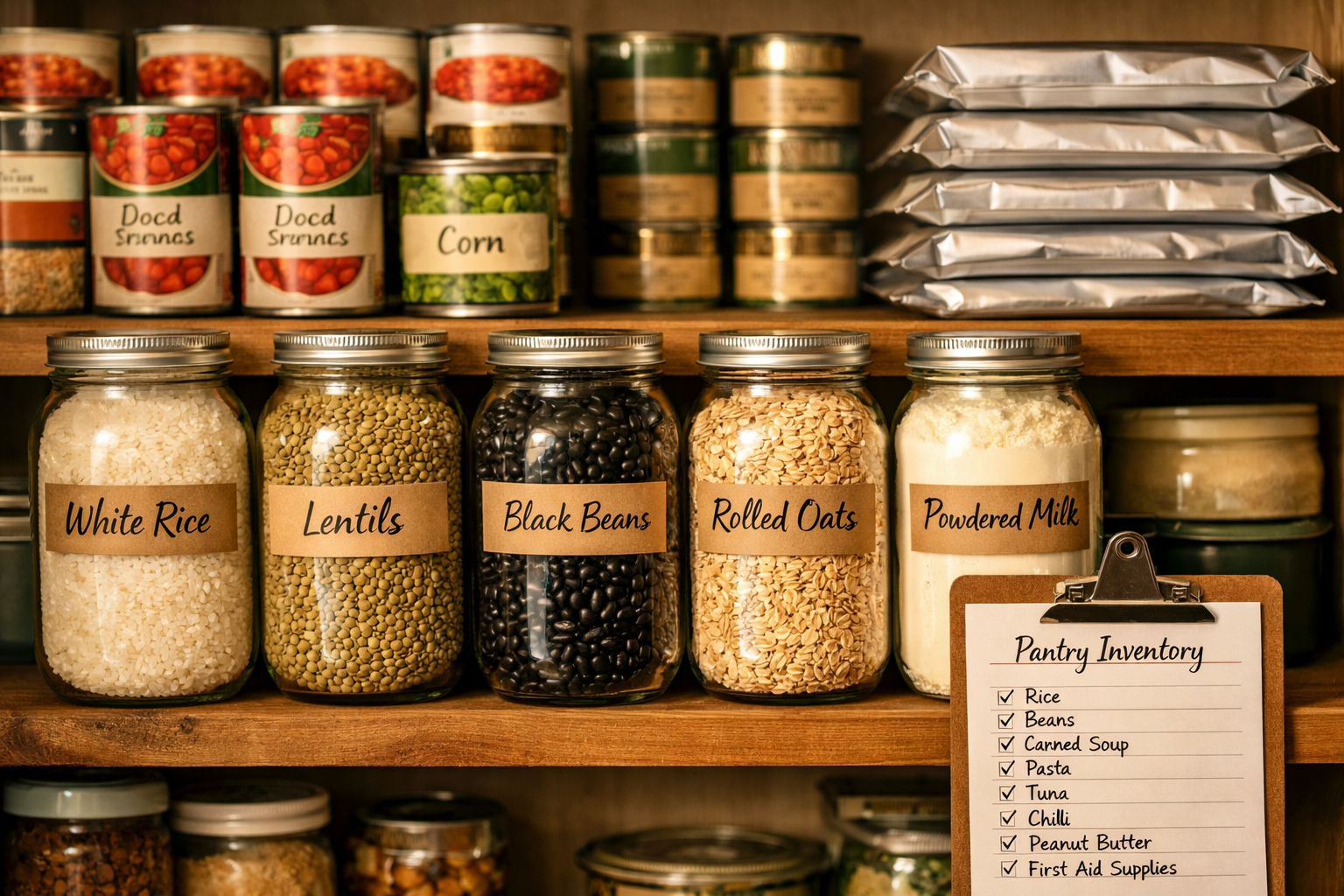
A prepper pantry is any collection of shelf-stable foods stored specifically to sustain your household when normal supply chains are disrupted. This includes everything from canned vegetables and dried legumes to freeze-dried entrees, powdered dairy, and long-shelf-life fats.
The core categories of a well-rounded food storage system are:
- Grains and starches: White rice, rolled oats, cornmeal, pasta, flour, and crackers
- Legumes: Dried or canned black beans, kidney beans, lentils, chickpeas, and split peas
- Canned proteins: Tuna, salmon, sardines, chicken, and corned beef
- Canned and freeze-dried vegetables: Tomatoes, corn, green beans, carrots, and peas
- Fats and oils: Coconut oil, olive oil, ghee, and peanut butter
- Dairy alternatives: Powdered whole milk, powdered butter, and canned evaporated milk
- Flavor builders: Salt, sugar, honey, vinegar, soy sauce, bouillon cubes, and a full spice kit
- Leavening and binders: Baking powder, baking soda, yeast, and cornstarch
For a detailed breakdown of what to stock and in what quantities, the Ultimate Survival Pantry List covers every category with specific amounts per person per month.
How Long Do Prepper Pantry Foods Actually Last
Most commercially canned goods are safe to eat for 2 to 5 years past their best-by date when stored in cool, dark, dry conditions. High-acid canned foods (tomatoes, citrus) degrade faster, typically 12 to 18 months past date, while low-acid foods like canned beans and meats can remain nutritionally sound for 5 or more years past the printed date, according to the USDA.
General shelf-life reference by category:
| Food Type | Optimal Quality | Safe to Eat |
|---|---|---|
| White rice (sealed) | 5 years | 25-30 years |
| Rolled oats | 2 years | 5+ years |
| Dried beans | 3 years | 10+ years |
| Canned vegetables | 3-5 years | 5-7 years |
| Canned meats | 3-5 years | 5+ years |
| Freeze-dried meals | 25 years | 25-30 years |
| Powdered milk | 2-10 years | Varies by packaging |
| Honey | Indefinite | Indefinite |
For more on maximizing your storage investment, see the guide on 15 food storage mistakes to avoid, several of them directly affect how long your pantry stays usable.
Can You Use Expired Canned Foods in Cooking
Yes, in most cases. The “best by” date on canned foodsrefers to peak quality, not safety. As long as the can shows no signs of bulging, rust, deep dents along the seam, or foul odor when opened, the contents are generally safe to use.
When to discard without tasting:
- Any bulging or swollen lid
- Spurting liquid when opened
- Foul, off, or fermented smell
- Visible mold inside the can
- Deeply dented seams (not body dents, but seam dents)
Older canned goods may have softer textures and slightly muted flavors, but they remain nutritionally viable. In a pantry recipe, the difference is rarely noticeable once seasoning and heat are applied.
Best Recipes Using Canned Vegetables and Beans
Canned vegetables and beans are the backbone of prepper pantry cooking. They require no rehydration, cook quickly, and absorb seasoning well. Here are ten foundational recipes built entirely from canned and shelf-stable ingredients.
10 Canned Goods Recipes:
- Black Bean Soup, Sauté dehydrated onion in oil, add two cans of black beans, one can of diced tomatoes, cumin, garlic powder, and bouillon. Simmer 20 minutes. Serve over rice.
- Chickpea Curry, Combine canned chickpeas, canned coconut milk, canned tomatoes, curry powder, and salt. Simmer until thick. Serve over rice or with flatbread.
- Three-Bean Chili, Mix canned kidney beans, black beans, and pinto beans with canned tomatoes, chili powder, cumin, and canned corn. Simmer 30 minutes.
- Tuna Noodle Casserole, Cook pasta, drain, mix with canned tuna, canned cream of mushroom soup (or a homemade roux), and canned peas.
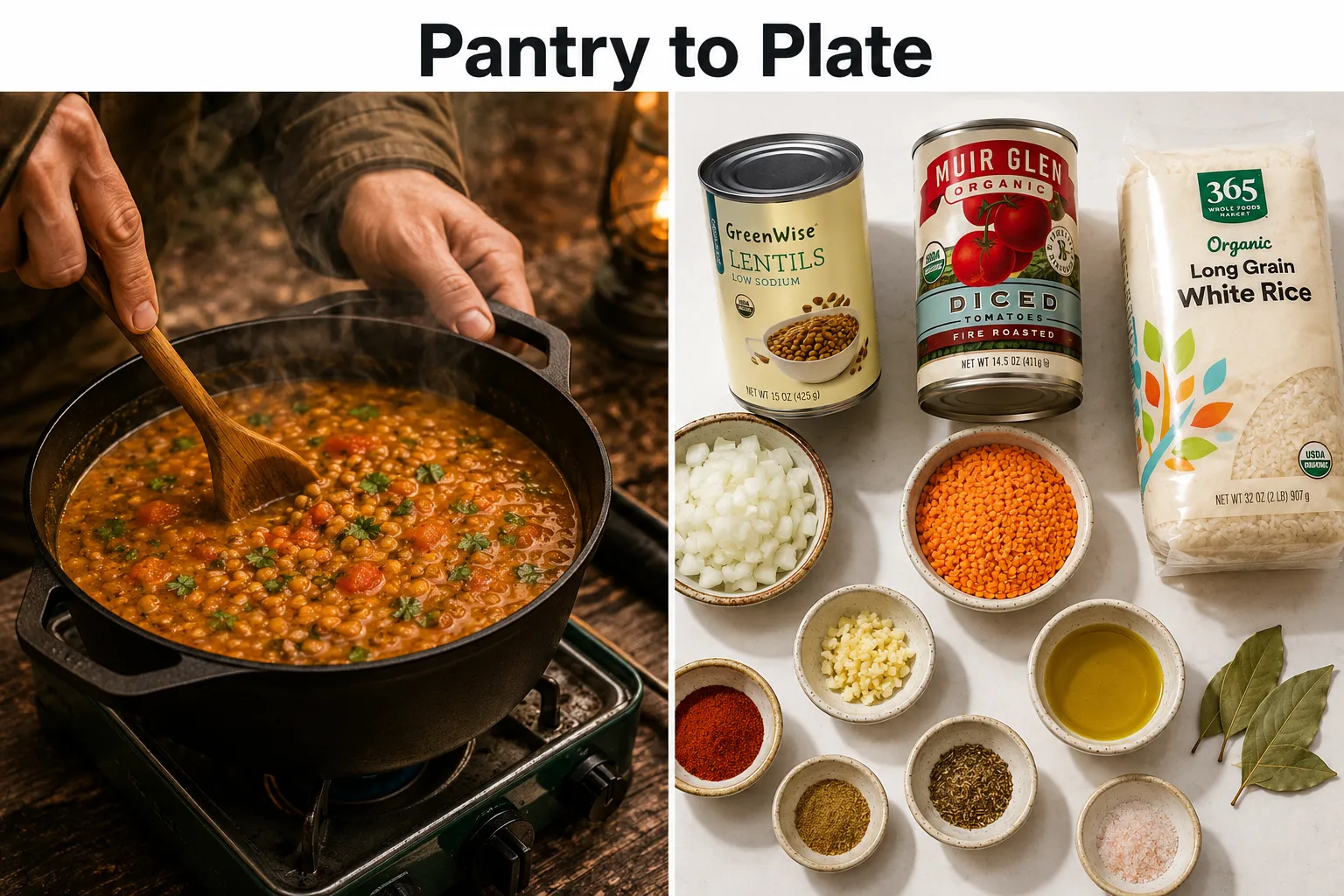
- Lentil Stew, Dried red lentils, canned tomatoes, bouillon, cumin, and coriander. Simmer 25 minutes. No soaking required.
- Corn and Bean Fritters, Mash canned corn and beans with flour, salt, and powdered egg. Pan-fry in oil until golden.
- Tomato Rice, Cook white rice in canned tomato juice instead of plain water with garlic powder and Italian seasoning.
- Sardine Pasta, Canned sardines in olive oil, pasta, canned tomatoes, capers (if available), and red pepper flakes.
- Minestrone Soup, Canned tomatoes, canned white beans, pasta, canned green beans, bouillon, and Italian seasoning.
- Refried Bean Flatbread, Mash canned pinto beans with oil and salt, spread on homemade flour tortillas, top with canned jalapeños.
How to Make Meals From Freeze-Dried Food
Freeze-dried foods rehydrate best in hot water at a ratio of roughly 1 cup of food to 1 to 1.5 cups of water, with a 5 to 15 minute rest time depending on the ingredient. Cold water works but takes significantly longer.
Rehydration ratios by food type:
- Freeze-dried vegetables: 1:1 ratio, 5-10 minutes in hot water
- Freeze-dried ground beef: 1:1.5 ratio, 10-15 minutes
- Freeze-dried chicken: 1:1.5 ratio, 10-15 minutes
- Freeze-dried fruit: 1:0.75 ratio, 5 minutes (they soften quickly)
- Freeze-dried eggs: Follow package instructions (typically 2 tbsp powder + 3 tbsp water per egg)
5 Freeze-Dried Recipes:
- Freeze-Dried Beef Stew, Rehydrate freeze-dried beef and vegetables separately, combine in a pot with bouillon and cornstarch for thickening. Simmer 10 minutes.
- Scrambled Egg Skillet, Reconstitute freeze-dried eggs, cook in a greased skillet with freeze-dried bell peppers and onions. Season with salt and hot sauce.
- Chicken and Rice Bowl, Rehydrate freeze-dried chicken, mix with cooked white rice, soy sauce, garlic powder, and freeze-dried peas.
- Freeze-Dried Fruit Oatmeal, Cook rolled oats in water, stir in freeze-dried strawberries or blueberries, sweeten with honey or sugar.
- Vegetable Fried Rice, Cook rice, fry in oil with reconstituted freeze-dried vegetables, soy sauce, and powdered egg cooked in the same pan.
For a complete breakdown of freeze-dried food systems, the Ultimate Prepper’s Guide to Freeze-Dried Food covers brands, storage methods, and long-term rotation strategies.
Easy Recipes With Just Rice, Flour, and Powdered Milk
Rice, flour, and powdered milk are the holy trinity of budget prepper pantries, and they’re more versatile than most people realize. These three ingredients alone can produce a surprising range of meals.
5 Recipes Using Rice, Flour, and Powdered Milk:
- Rice Porridge (Congee), Simmer white rice in 6 cups of water per 1 cup of rice until broken down and creamy. Add salt, bouillon, and any available toppings.
- Flatbread, Mix 2 cups flour, 1 tsp salt, 2 tbsp oil, and enough water to form a soft dough. Roll thin, cook in a dry skillet 2 minutes per side.
- White Sauce (Béchamel), Melt 2 tbsp fat, whisk in 2 tbsp flour, slowly add 2 cups reconstituted powdered milk. Season with salt, pepper, and nutmeg. Use as a base for pasta or casseroles.
- Powdered Milk Pancakes, Mix 1 cup flour, 1 tbsp sugar, 1 tsp baking powder, 1/4 tsp salt, 1 cup reconstituted powdered milk, and 1 tbsp oil. Cook on a greased skillet.
- Rice and Milk Pudding, Simmer 1/2 cup rice in 2 cups reconstituted powdered milk with sugar, vanilla extract, and a pinch of cinnamon until thick.
Are Prepper Pantry Recipes Actually Tasty or Just Survival Food
Prepper pantry recipes are genuinely good when built with proper seasoning, fat, and technique. The difference between “survival rations” and a satisfying meal comes down to three things: salt balance, fat for richness, and acid for brightness.
The formula for making pantry food taste real:
- Fat first: Always start with oil, ghee, or peanut butter as a base. Fat carries flavor and adds satiety.
- Build aromatics: Dehydrated onion, garlic powder, and dried herbs bloom in hot fat before any liquid is added.
- Layer seasoning: Season at the start, middle, and end of cooking, not just once.
- Add acid: A splash of vinegar, a squeeze of lemon powder, or even a spoonful of canned tomatoes brightens any dish.
- Texture contrast: Toast grains, fry flatbread, or crisp up canned proteins in a skillet before adding to soups.
The Complete Guide to Emergency Food Rationing and Cooking goes deeper on cooking techniques that maximize flavor from minimal ingredients.
What If I Don’t Have Fresh Ingredients for These Recipes
Every recipe in this guide is designed to work without fresh produce, fresh meat, or refrigeration. Substitutions are built into the system, not bolted on afterward.
Common fresh-to-shelf-stable swaps:
| Fresh Ingredient | Shelf-Stable Substitute |
|---|---|
| Fresh onion | Dehydrated onion flakes or onion powder |
| Fresh garlic | Garlic powder or garlic flakes |
| Fresh eggs | Powdered whole eggs or flax egg (1 tbsp flax + 3 tbsp water) |
| Fresh milk | Reconstituted powdered milk or canned evaporated milk |
| Fresh tomatoes | Canned diced tomatoes or tomato paste |
| Fresh herbs | Dried herbs (use 1/3 the amount of fresh) |
| Butter | Ghee, coconut oil, or powdered butter |
| Fresh meat | Canned chicken, tuna, or rehydrated freeze-dried meat |
Choose this substitution logic:
- If a recipe calls for sautéed aromatics, use dehydrated onion and garlic powder bloomed in oil.
- If a recipe needs a creamy element, use reconstituted powdered milk or canned coconut milk.
- If a recipe needs acid, use apple cider vinegar, lemon powder, or canned tomatoes.
Can I Substitute Ingredients in Survival Food Recipes
Yes, and doing so confidently is one of the most important skills in pantry cooking. Rigid recipe-following breaks down fast in a real emergency. Learning the function of each ingredient, rather than just its name, lets you swap freely.
5 More Recipes That Demonstrate Flexible Substitution:
- Peanut Butter Noodles, Cook pasta, toss with peanut butter thinned with soy sauce and water, garlic powder, and a splash of vinegar. Add canned chicken if available.
- Cornbread, Mix 1 cup cornmeal, 1 cup flour, 1 tbsp sugar, 1 tsp baking powder, 1/2 tsp salt, 1 cup reconstituted powdered milk, and 2 tbsp oil. Bake in a covered Dutch oven or skillet.
- Bean and Rice Burrito Bowl, Seasoned canned beans over rice with hot sauce, canned corn, and crushed crackers for crunch.
- Oat and Peanut Butter Energy Bars, Mix 2 cups oats, 1/2 cup peanut butter, 1/4 cup honey, and a pinch of salt. Press into a pan, chill or dry in sun. Cut into bars.
- Chickpea Shakshuka, Simmer canned tomatoes with cumin, paprika, and garlic powder. Add canned chickpeas. Create wells, drop in reconstituted powdered eggs, cover and cook until set.
How to Meal Prep and Store Cooked Meals From Your Pantry
Batch cooking from your pantry is the most efficient use of fuel, time, and ingredients during a disruption. Cook large quantities of base components, rice, beans, and sauce, then combine them into different meals throughout the week.
Batch cooking strategy:
- Cook a large pot of white rice (base for 4-5 meals)
- Prepare a large batch of seasoned beans or lentils (protein for 3-4 meals)
- Make a versatile tomato-based sauce (use in pasta, rice dishes, and soups)
- Bake a batch of flatbread or cornbread (serves as bread and a vehicle for toppings)
Storage rules for cooked pantry meals:
- Without refrigeration, cooked food is safe for approximately 2 hours at room temperature above 40°F.
- In cool conditions (below 60°F), cooked grains and legumes can safely last 4 to 6 hours.
- For longer storage without power, portion meals into clean, sealed containers and consume within the same day.
- Dry goods like flatbread and energy bars store for several days at room temperature.
If you’re working with limited space, the Ultimate Guide to Emergency Food Storage for Small Apartments has practical systems for organizing and rotating a pantry in tight quarters.
Best Prepper Recipes for Beginners With Limited Ingredients
Beginners should start with five core recipes that use the fewest ingredients and teach the most transferable techniques. Mastering these builds the confidence to improvise everything else.
The 5 Beginner-Priority Recipes:
- Rice and Beans, The foundational survival meal. Season aggressively with cumin, garlic powder, salt, and a splash of vinegar. Eat it 10 different ways by changing the spice profile.
- Oatmeal With Honey and Dried Fruit, Rolled oats cooked in water with honey, cinnamon, and any freeze-dried or dehydrated fruit. Fast, calorie-dense, and genuinely satisfying.
- Pasta With Canned Tomato Sauce, Cook pasta, heat canned tomatoes with garlic powder, Italian seasoning, and a drizzle of olive oil. Add canned tuna or beans for protein.
- Peanut Butter and Cracker Plate, No cooking required. High-calorie, shelf-stable, and morale-boosting. Pair with canned fruit for balance.
- Lentil Soup, Red lentils, bouillon, canned tomatoes, cumin, and salt. Simmer 25 minutes. Serve with flatbread. This one recipe alone can sustain a family for days.
For new preppers building their first food system, the 3-Month Emergency Food Supply guide provides a complete shopping and storage framework that pairs directly with these recipes.
What Kitchen Equipment Do You Need for Pantry Cooking
Pantry cooking requires minimal equipment, but the right tools make a significant difference in what’s possible. A few well-chosen pieces cover almost every recipe in this guide.
Core equipment list:
- Cast iron skillet (10-12 inch): Fries, sautés, bakes cornbread, and works over any heat source including open flame
- Dutch oven or heavy pot (4-6 quart): Soups, stews, batch rice, and covered baking
- Camp stove with fuel canisters: Reliable heat source independent of the power grid
- Manual can opener: Non-negotiable; keep two
- Measuring cups and spoons: Precision matters more when ingredients are limited
- Wooden spoon and silicone spatula: Heat-resistant and durable
- Fine-mesh strainer: Draining canned goods and rinsing beans
- Hand-crank grain mill (optional but valuable): Grinds whole wheat berries into flour for long-term baking
Choose this setup if: You’re cooking for a family of 4 or more during a multi-day outage. A single camp stove and Dutch oven can handle everything on this list.

Frequently Asked Questions
How much food storage do I actually need to cook 30 different meals? A 30-day supply for one adult, roughly 25 pounds of grains, 15 pounds of legumes, 24 cans of vegetables and protein, plus fats and seasonings, provides enough variety to cycle through all 30 recipes multiple times. Scale by household size.
Do I need to rotate my food storage? Yes. The best rotation method is to cook from your pantry regularly, at least once or twice a week. This keeps your supply fresh, confirms what you actually have, and builds the cooking skills you’ll need when it matters. The long-term food storage beginner’s guide covers first-in, first-out (FIFO) rotation in detail.
Can I make bread without an oven? Yes. Flatbread cooks in a dry skillet in under 5 minutes. Cornbread and simple loaves can be baked in a covered Dutch oven over a camp stove or fire, the lid traps heat and mimics an oven environment.
What’s the minimum calorie target per day from pantry foods? For adults doing moderate activity, 1,800 to 2,200 calories per day is a reasonable target. A combination of rice, beans, oil, and peanut butter hits this range efficiently. Children and elderly individuals may need adjustments, see the 9 Essential Disaster Prep Strategies for Seniors for age-specific guidance.
How do I cook without electricity or gas? A propane or butane camp stove is the most reliable backup. Wood fire, charcoal grill, and solar cookers are viable alternatives. Never cook with charcoal indoors, carbon monoxide risk is serious.
Are these recipes safe for people with dietary restrictions? Most recipes here are naturally gluten-free when rice or cornmeal replaces flour. Dairy-free versions are easy since powdered milk is optional in most recipes. Nut allergies require substituting sunflower seed butter for peanut butter.
How do I know if my canned food has gone bad? Discard any can that is bulging, leaking, deeply dented at the seams, or produces a foul odor when opened. A slight color change or softer texture in older cans is normal and safe.
What’s the best way to add variety to prevent food fatigue? Spice variety is the single biggest driver of meal satisfaction. A pantry with 15 to 20 different spices and condiments, cumin, paprika, curry powder, Italian seasoning, soy sauce, hot sauce, vinegar, and honey, transforms the same base ingredients into completely different meals.
Can children eat prepper pantry food? Yes, with some adjustments. Reduce or eliminate spicy seasonings for young children. Oatmeal, rice pudding, pasta, and peanut butter recipes are naturally child-friendly. Ensure adequate caloric density for growing kids.
How do I manage water for cooking from my pantry? Most pantry recipes require water for cooking grains, rehydrating freeze-dried foods, and reconstituting powdered milk. A minimum of 1 gallon per person per day covers drinking and basic cooking. For a complete water planning system, the Ultimate Emergency Water Storage and Purification Guide is an essential companion to this food guide.
Conclusion
Knowing how to use your food storage, and having 30 recipes from your prepper pantry ready to execute, is what separates a functional preparedness system from a pile of cans gathering dust. The food is only as useful as your ability to turn it into real meals.
Start by cooking one pantry meal per week right now, before any emergency forces your hand. That practice builds familiarity with your ingredients, sharpens your substitution instincts, and reveals gaps in your supply while there’s still time to fill them.
Actionable next steps:
- Audit your current pantry against the staple categories listed above.
- Cook one recipe from this guide this week using only what’s already on your shelves.
- Identify your three biggest gaps (spices, fats, or protein sources are the most common) and fill them on your next shopping trip.
- Build a simple rotation system, first in, first out, so your pantry stays fresh without waste.
- Practice at least one no-power cooking method with your camp stove or Dutch oven before you need it.
Products, Tools, and Resources
A few investments make pantry cooking significantly more practical:
- A quality cast iron skillet and Dutch oven set, Lodge is the most trusted brand for durability and heat retention across any cooking surface.
- A reliable butane or propane camp stove, The Camp Chef Explorer and Jetboil systems are proven performers for both short-term outages and extended grid-down scenarios.
- A manual can opener, The EZDine and Kuhn Rikon models are consistently reliable; keep a backup in your kit.
- A spice storage system, Magnetic spice tins or a dedicated spice drawer organizer lets you see your full inventory at a glance and prevents duplicate purchases.
- Freeze-dried food supply, Brands like Mountain House, Augason Farms, and Wise Company offer individual ingredient cans (not just pre-made meals) that integrate directly into these recipes. See the Ultimate Prepper’s Guide to Freeze-Dried Food for a full comparison.
- A hand-crank grain mill, The WonderMill Junior and Country Living Grain Mill are the two most recommended manual options for grinding stored wheat berries into fresh flour.
Preparedness isn’t about fear. It’s about having the skills, the supplies, and the confidence to feed your family well no matter what happens next.