
Hey there! Some links on this page may be affiliate links which means that, if you choose to make a purchase, I may earn a commission at no extra cost to you. I greatly appreciate your support. Read the full disclosure here.
The average American backyard contains at least a dozen plant species most people spray with herbicide, not realizing they’re destroying a free, renewable food source that sustained entire civilizations for thousands of years.
For preppers and survivalists, that’s not just a missed opportunity. It’s a gap in your preparedness plan. When supply chains fail, stores empty out, or you’re bugging in with limited food stores, knowing the backyard edible weeds you can eat could mean the difference between rationing your last cans and supplementing your diet with fresh, nutrient-dense food growing ten feet from your back door.
This guide covers identification, safety, preparation, nutrition, and the critical mistakes that can get you into serious trouble.
Key Takeaways
- Common edible backyard weeds include dandelion, clover, chickweed, plantain, purslane, lamb’s quarters, and wood sorrel, all identifiable with basic training.
- Never eat any foraged plant unless you have confirmed its identity through multiple characteristics, not just one.
- Several toxic plants closely resemble edible weeds; the most dangerous lookalikes are covered in detail below.
- Yards treated with pesticides, herbicides, or synthetic fertilizers are not safe foraging zones until sufficient time has passed and rain has cleared residues.
- Most edible backyard weeds are nutritionally significant, dandelion greens, for example, contain more beta-carotene than carrots.
- Spring and early fall are peak harvest windows for most temperate-climate backyard weeds.
- Children can eat most edible weeds in small amounts, but quantities should be conservative and identification must be certain.
- Foraging knowledge is a core survival skill, pair it with your broader wilderness survival skills to build a complete self-reliance system.

Find this useful? Add us as a preferred source on Google and more of what we publish will show up in your results.
What Are the Most Common Backyard Edible Weeds
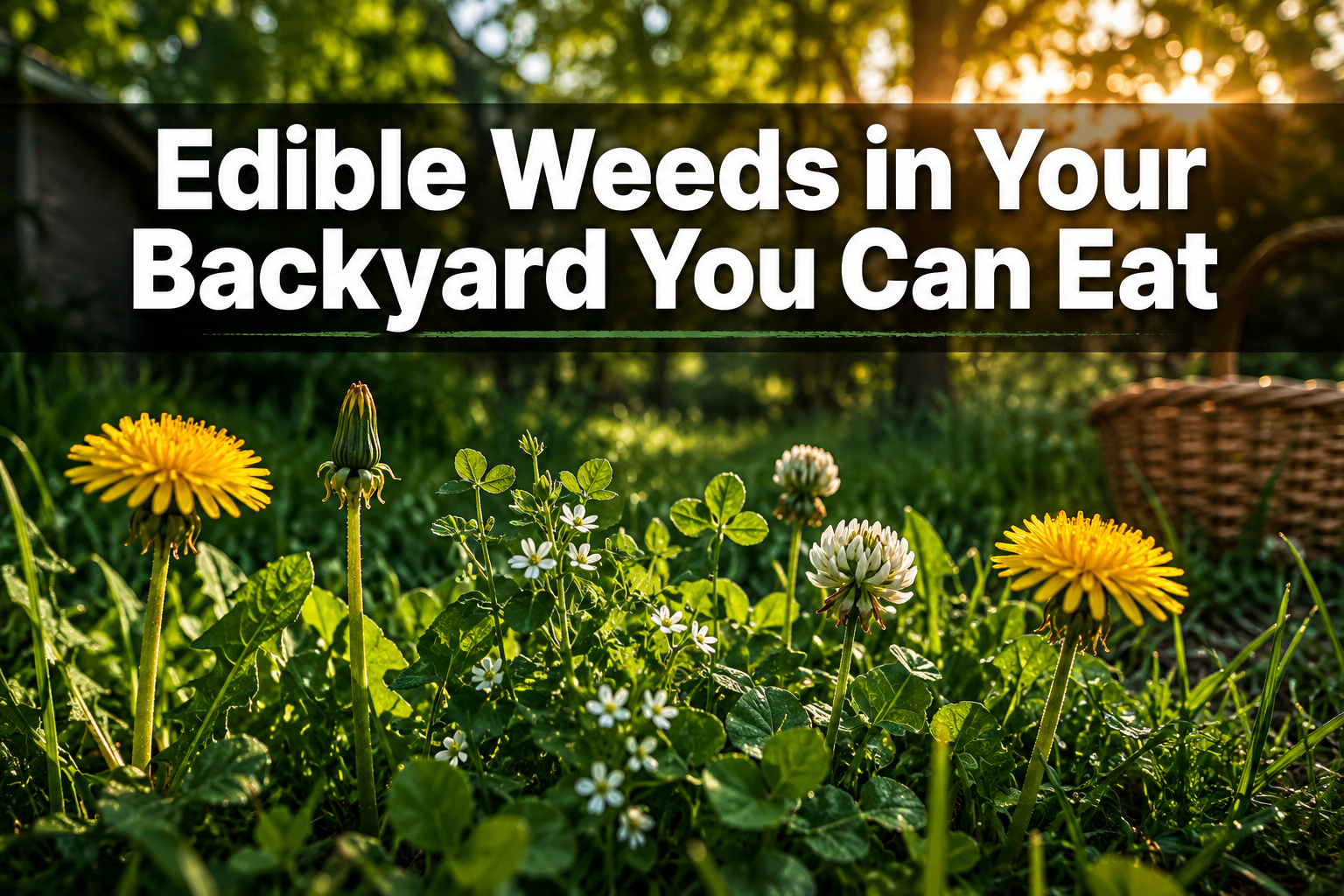
The most common edible weeds found in North American backyards include dandelion, red and white clover, chickweed, broadleaf plantain, purslane, lamb’s quarters, and wood sorrel. These plants grow in most temperate climates, require no cultivation, and return year after year.
Here’s a quick reference for the most reliable species:
| Plant | Edible Parts | Flavor Profile | Best Season |
|---|---|---|---|
| Dandelion | Leaves, flowers, roots | Bitter, earthy | Spring, fall |
| Clover (red/white) | Flowers, leaves | Mild, slightly sweet | Spring through fall |
| Chickweed | Leaves, stems, flowers | Mild, fresh, slightly grassy | Early spring, late fall |
| Broadleaf Plantain | Leaves, seeds | Mild, slightly bitter when mature | Spring through summer |
| Purslane | Leaves, stems | Tangy, slightly sour | Summer |
| Lamb’s Quarters | Leaves, seeds | Mild, spinach-like | Spring through summer |
| Wood Sorrel | Leaves, flowers, seed pods | Tart, lemony | Spring through fall |
Dandelion (Taraxacum officinale) is the gold standard for beginner foragers, it’s unmistakable, grows almost everywhere, and every part is edible. Broadleaf plantain (Plantago major) is another reliable choice, recognizable by its oval leaves with parallel veins running from base to tip. Purslane (Portulaca oleracea) is a summer standout with thick, succulent stems and paddle-shaped leaves that sprawl across bare soil and garden beds.
How to Identify Edible Weeds Safely
Safe identification requires confirming multiple characteristics simultaneously, never rely on a single feature. Use at least three identifying traits: leaf shape, stem structure, flower color and form, root type, smell, and habitat. A single match is not enough.
The multi-confirmation rule:
- Leaf shape and margin, Are the edges toothed, lobed, smooth, or wavy?
- Stem cross-section, Round, square, hollow, or solid? (Many toxic plants have hollow stems.)
- Flower structure, Count petals, note color, and observe arrangement.
- Root and smell, Smell the crushed leaf. Does it match known descriptions?
- Habitat, Where is it growing? Disturbed soil, lawn, shade, or full sun?
Recommended identification tools:
- A regional field guide specific to your area (Peterson Field Guides or Audubon Society guides are well-regarded)
- iNaturalist or PlantNet apps as a secondary check, never as your primary confirmation
- A local foraging group or extension office for in-person verification when starting out
The single most dangerous habit in foraging is assuming. If there’s any doubt, don’t eat it. This rule applies equally whether you’re in a survival scenario or a casual backyard harvest.
For preppers building a broader self-reliance skill set, foraging pairs naturally with essential bushcraft skills that cover fire, shelter, and water alongside food sourcing.
Which Backyard Weeds Are Poisonous and Look Like Edible Ones
Several toxic plants closely resemble common edible weeds, and the consequences of misidentification range from severe gastrointestinal distress to death. This is not an area where close enough is acceptable.
The most dangerous lookalikes:
- Poison hemlock (Conium maculatum) resembles wild carrot and some edible plants with white umbrella-shaped flower clusters. Key differentiator: hemlock has purple-spotted hollow stems and a musty, unpleasant smell when crushed. It is deadly.
- Pokeweed (Phytolacca americana) can be confused with lamb’s quarters when young. Pokeweed has a distinctive magenta-red stem as it matures and produces dark purple berries. All parts are toxic, especially the roots and berries.
- Spurge (Euphorbia spp.) resembles purslane at a glance. The critical difference: spurge produces a milky white sap when a stem is broken. Purslane does not. Spurge causes skin irritation and is toxic if ingested.
- Wild parsnip (Pastinaca sativa) can cause severe chemical burns on skin when touched in sunlight, and is sometimes encountered near edible plants in disturbed areas.
Rule of thumb: If a plant has a milky sap, smells unpleasant when crushed, has hollow purple-spotted stems, or produces berries you cannot confirm, do not eat it.
Can You Eat Dandelions and Clover From Your Yard
Yes, dandelions and clover are among the safest and most nutritious edible weeds in your backyard you can eat, provided the area has not been treated with chemicals. Both are widely consumed around the world and have long culinary and medicinal histories.
Dandelion (Taraxacum officinale):
- Young leaves are best raw in salads; older leaves are more bitter and benefit from blanching or sauteing.
- Flowers can be eaten raw, battered and fried, or steeped into tea.
- Roots can be roasted and used as a coffee substitute.
- Rich in vitamins A, C, and K, plus iron and calcium.
Clover (red: Trifolium pratense, white: Trifolium repens):
- Flowers and young leaves are edible raw or cooked.
- Red clover blossoms make an excellent tea with a mild, pleasant flavor.
- Note: large quantities of raw clover can cause bloating in some people due to fermentation in the gut. Blanching or drying reduces this effect.
- Clover is high in protein relative to most leafy plants and contains isoflavones.
Both plants are among the first edible weeds in your backyard you can eat that any prepper should learn to identify, because they’re nearly ubiquitous across North America and Europe.
Are Edible Weeds Nutritious or Just Free Food
Edible backyard weeds are genuinely nutritious, in many cases more nutrient-dense than cultivated vegetables. This isn’t a consolation prize for hard times; it’s a factual advantage worth understanding.
Nutritional highlights:
- Dandelion greens contain more beta-carotene per gram than carrots, according to USDA nutritional data. They’re also a meaningful source of vitamin K, calcium, and iron.
- Purslane is one of the richest plant-based sources of omega-3 fatty acids (specifically alpha-linolenic acid), which is rare in leafy greens.
- Lamb’s quarters (Chenopodium album) rival spinach in iron and calcium content and are higher in protein than most greens.
- Plantain leaves provide vitamin C, vitamin A, and have documented anti-inflammatory compounds.
- Chickweed is high in vitamin C and has historically been used to prevent scurvy during lean seasons.
For preppers managing long-term food storage, fresh foraged greens fill a critical nutritional gap that freeze-dried and canned foods often leave. If you’re building a serious food reserve, see the Ultimate Prepper’s Guide to Freeze-Dried Food for how stored food and fresh foraging can complement each other.
How Do You Prepare and Cook Edible Weeds From Your Backyard
Most edible backyard weeds can be eaten raw when young and tender, or cooked when mature and more fibrous. Cooking reduces bitterness, softens texture, and in some cases (like clover) reduces compounds that cause digestive discomfort.
Basic preparation methods:
- Raw in salads: Best for young dandelion leaves, chickweed, wood sorrel, and clover flowers. Wash thoroughly, dry, and toss with a simple vinaigrette to balance bitterness.
- Sauteed: Heat olive oil or butter, add garlic if available, and cook greens for 3-5 minutes. Works well for dandelion, lamb’s quarters, and plantain leaves.
- Blanched: Drop leaves into boiling water for 60-90 seconds, then transfer to cold water. Blanching removes bitterness from dandelion and plantain and makes them more palatable.
- Soups and stews: Lamb’s quarters, plantain, and purslane hold up well in soups. Add in the last 10 minutes of cooking to preserve nutrients.
- Dried for storage: Many edible weeds can be dried and stored for use in teas, soups, or as seasoning. Dandelion root, plantain, and clover flowers dry well.
Practical survival cooking note: In a grid-down scenario where fuel is limited, raw consumption of young greens is the most energy-efficient option. Learn to start a fire without matches if cooking foraged food in the field is part of your plan.
What Is the Best Time of Year to Harvest Edible Weeds
Spring and early fall are the best times to harvest most edible backyard weeds in temperate climates. Young growth is more tender, less bitter, and higher in nutrients than mature summer plants that have gone to seed.
Seasonal harvest guide:
- Early spring (March-April): Prime time for dandelion, chickweed, wood sorrel, and lamb’s quarters. Plants are young, tender, and pre-flower.
- Late spring through summer (May-July): Purslane peaks in summer heat. Clover flowers are abundant. Plantain leaves are still usable but becoming tougher.
- Late summer (August): Harvest seeds from lamb’s quarters and plantain. Dandelion roots are building nutrient stores and are good for roasting.
- Fall (September-October): A second flush of tender dandelion and chickweed growth often appears after summer heat breaks. Excellent harvest window.
- Winter: In mild climates, chickweed and some plantain persist through winter. In cold climates, foraging options are limited.
Key rule: Harvest before plants flower when possible. Post-flower leaves are tougher and more bitter. The exception is clover and dandelion flowers themselves, which are edible and worth collecting.
How Do I Know If My Yard Weeds Are Safe to Eat, Pesticide and Herbicide Concerns
Weeds growing in a yard that has been treated with pesticides, herbicides, or synthetic fertilizers are not safe to eat until adequate time has passed and rainfall has cleared surface residues. This is one of the most overlooked risks in backyard foraging.
Key contamination concerns:
- Herbicides (like glyphosate or 2,4-D): These are systemic, they’re absorbed into plant tissue, not just sitting on the surface. Washing does not make treated plants safe.
- Pesticides: Surface residues can persist for days to weeks depending on the product and weather conditions.
- Lawn fertilizers: Synthetic fertilizers containing urea or ammonium nitrate can accumulate in plant tissue. Organic fertilizers are generally lower risk.
- Soil contamination: If the yard is near old industrial sites, roads, or has a history of heavy chemical use, soil may contain lead, arsenic, or other heavy metals that plants absorb.
Safe foraging checklist for your yard:
- No chemical treatments for at least 90 days (longer is better for systemic herbicides)
- No known soil contamination from industrial or heavy traffic sources
- Not adjacent to a road where runoff and exhaust deposits accumulate
- Confirmed through multiple identification steps, not just appearance
If your own yard isn’t safe, consider foraging in wild areas, community green spaces, or starting a dedicated chemical-free zone in your yard. Pair this with a solid long-term food storage plan so you’re never dependent on a single food source.
What Is the Difference Between Edible Weeds and Invasive Plants
Edible weeds are plants that grow without cultivation and can be safely consumed. Invasive plants are species that spread aggressively, often outcompeting native plants, and not all invasive plants are edible. The categories overlap but are not the same.
Some invasive plants are edible and actually beneficial to harvest aggressively:
- Japanese knotweed (Reynoutria japonica): Young shoots in spring taste similar to rhubarb and can be cooked. Harvesting it actually helps control its spread.
- Garlic mustard (Alliaria petiolata): An invasive in North America with edible leaves that have a mild garlic flavor. Pulling and eating it is a genuine ecological service.
- Common mugwort (Artemisia vulgaris): Used in teas and as a culinary herb in Asian cooking. Invasive in many regions.
Important distinction: Being invasive does not make a plant safe to eat. Always confirm edibility through a reliable source regardless of how aggressively a plant spreads.
Can Kids Eat Edible Weeds From the Backyard
Children can safely eat most common edible backyard weeds in small amounts, but several precautions apply. Identification must be certain, the area must be chemical-free, and quantities should be conservative, especially for children under five.
Safe starting points for kids:
- Dandelion flowers and young leaves (mild, easy to identify)
- Clover flowers (sweet, appealing to children, low risk)
- Wood sorrel leaves (tart, lemony flavor kids often enjoy)
Precautions:
- Never let children forage independently until they have solid identification training
- Introduce one plant at a time and watch for any allergic reaction
- Avoid plants with any lookalike risk until children are old enough to reliably distinguish features
- Large amounts of wood sorrel should be avoided due to oxalic acid content, which can be problematic for children with kidney issues
For families building preparedness plans that include children, see Kids Emergency Preparedness: A Mom’s Guide to Teaching Without Fear for age-appropriate skill-building strategies.
Do Edible Weeds Taste Good or Are They Bitter
Taste varies significantly by species, season, and preparation method. Some edible backyard weeds are genuinely pleasant raw; others require cooking to become palatable. Bitterness, which many people associate with all wild greens, is manageable and often desirable in small amounts.
Honest flavor breakdown:
- Chickweed: Mild, fresh, slightly grassy. One of the most pleasant raw greens. Easy entry point for skeptics.
- Wood sorrel: Bright, lemony, tart. Kids and adults generally like it immediately.
- Clover flowers: Mildly sweet, pleasant in salads or tea.
- Purslane: Slightly tangy and succulent. Good raw or cooked.
- Dandelion leaves: Bitter, especially mature ones. Blanching or pairing with fat and acid (olive oil, lemon juice) makes them very good.
- Lamb’s quarters: Mild, spinach-like. One of the most versatile cooking greens.
- Plantain leaves: Mild when young, increasingly fibrous and bitter with age. Best cooked.
The bitterness issue: Bitterness in wild greens is largely a result of compounds like sesquiterpene lactones in dandelion. These compounds have documented liver-supportive and digestive properties, the bitterness isn’t a flaw, it’s a feature. That said, harvesting young leaves and blanching mature ones dramatically reduces bitterness for those who find it off-putting.
How Much Edible Weeds Can You Safely Eat
For most healthy adults, moderate daily consumption of common edible weeds is safe. However, a few plants have compounds that can cause problems in large quantities, and some individuals have specific health considerations.
General guidelines:
- Dandelion: Safe in substantial quantities for most people. Those on blood thinners should be aware of its high vitamin K content. People with gallbladder issues should use caution with dandelion root.
- Wood sorrel: Contains oxalic acid. Fine in normal food quantities, but large amounts daily could be problematic for people prone to kidney stones.
- Purslane: Also contains oxalic acid. Same consideration as wood sorrel.
- Clover: Large raw quantities can cause bloating. Cooking or drying reduces this.
- Lamb’s quarters: Contains oxalates and saponins. Blanching and discarding the water reduces these compounds.
Practical rule for survival scenarios: Variety is safer than volume. Rotating through multiple species rather than eating large amounts of any single plant reduces the risk of accumulating any one compound. This mirrors sound nutritional logic regardless of the context.

Frequently Asked Questions
Is it legal to forage in my own backyard?
Yes. Foraging on your own private property is legal everywhere in the United States and most other countries. Foraging on public land varies by jurisdiction, national parks generally prohibit it, while many state and local parks allow small personal-use quantities. Always check local regulations before foraging off your property.
What’s the single easiest edible weed for a complete beginner to start with?
Dandelion. It has no dangerous lookalikes in North America, grows almost everywhere, every part is edible, and it has a long documented history of culinary use. Start there, learn it completely, then expand to other species.
Can I forage edible weeds in an urban backyard?
Yes, but with extra caution. Urban yards are more likely to have chemical treatment history, soil contamination from old paint or pipes, and proximity to road runoff. Research your property’s history and test soil if you have any concerns about contamination.
How do I store foraged weeds if I can’t eat them immediately?
Treat them like any fresh leafy green. Rinse, dry thoroughly, wrap in a damp cloth or paper towel, and refrigerate. Most will keep 3-5 days. For longer storage, blanch and freeze, or dry completely and store in airtight containers.
Are there edible weeds that grow year-round?
In mild climates (USDA zones 7 and above), chickweed, plantain, and some dandelion persist through winter. In colder climates, most edible weeds die back in winter, making fall harvesting and preservation important for preppers who want year-round access.
What if I accidentally eat something toxic?
Contact Poison Control immediately (in the US: 1-800-222-1222). Do not wait for symptoms to worsen. Bring a sample of the plant if possible. This is why foraging alone without proper identification training is a serious risk.
Can I forage weeds near a road or highway?
No. Plants within 50 feet of a heavily trafficked road accumulate lead, cadmium, and other heavy metals from exhaust and runoff. The closer to the road, the higher the contamination risk. Stick to the interior of your yard or wild areas well away from traffic.
Do edible weeds have medicinal uses as well?
Many do. Plantain has documented wound-healing and anti-inflammatory properties. Dandelion root has been used as a liver tonic. Clover flowers are used in respiratory teas. For a broader look at plant-based emergency medicine, see Emergency Herbal Medicine When Pharmacies Are Unavailable.
Will eating foraged weeds give me enough calories to survive?
No. Leafy greens are low in calories. Foraging supplements your diet with micronutrients and variety but cannot replace caloric needs on its own. Pair foraging knowledge with a solid emergency food rationing and cooking plan for a complete survival food strategy.
How long does it take to learn backyard foraging well enough to use it in a real emergency?
Plan for 1-2 full growing seasons of active practice before you’re confident enough to rely on it under stress. Start now, in normal conditions, so the skill is second nature when you actually need it.
Conclusion
The edible weeds in your backyard you can eat are not a novelty or a last resort. They’re a legitimate, renewable food layer that most preppers have been walking past for years. Dandelion, clover, chickweed, purslane, lamb’s quarters, plantain, and wood sorrel are all common, nutritious, and learnable with modest effort.
The path forward is straightforward:
- Start with one plant. Learn dandelion completely, all parts, all seasons, all preparation methods.
- Get a regional field guide. Digital apps are useful supplements, not replacements for a quality print guide specific to your area.
- Audit your yard. Determine whether your property has been chemically treated and establish a chemical-free foraging zone if needed.
- Practice in normal conditions. Cook with foraged greens now, when the stakes are low, so you’re not learning under pressure.
- Integrate foraging into your broader prep. Foraged greens fill the fresh nutrition gap that stored food cannot. They belong in your food plan alongside your emergency pantry, not instead of it.
Preparedness is about building layers of resilience. Foraging is one layer. Water storage is another. Food reserves are another. Each one you add makes the whole system stronger.
Products, Tools, and Resources
Field Guides: The Peterson Field Guide to Edible Wild Plants (Eastern/Central North America) by Lee Allen Peterson remains one of the most reliable print references for North American foragers. Samuel Thayer’s Nature’s Garden is more detailed and highly regarded among serious foragers. Both are worth having in your preparedness library.
Identification Apps: iNaturalist (free) and PlantNet (free) are the most accurate AI-assisted identification apps currently available. Use them as a second opinion, never as your sole confirmation.
Foraging Bag: A simple canvas tote or mesh produce bag works well for backyard harvesting. For field foraging, a lightweight daypack with separate compartments keeps species organized. This pairs naturally with your bug out bag food list if foraging is part of your mobile survival plan.
Soil Test Kit: If you’re unsure about your yard’s chemical history, a basic home soil test kit (available at most garden centers) can check for heavy metals and pH. For serious contamination concerns, a lab-based test through your local agricultural extension office provides more detailed results.
Dehydrator: A mid-range food dehydrator lets you preserve foraged greens, dandelion root, and clover flowers for long-term storage. Brands like Excalibur and COSORI are well-regarded for consistent results.
Related Reading:
- 20 Essential Bushcraft Skills for Beginners, expand your field survival skill set beyond foraging
- Complete Guide to Emergency Food Rationing and Cooking, integrate foraged food into a complete caloric strategy
- How to Get Started With a Preparedness Lifestyle (90-Day Plan), build foraging into your broader preparedness framework