

Hey there! Some links on this page may be affiliate links which means that, if you choose to make a purchase, I may earn a commission at no extra cost to you. I greatly appreciate your support. Read the full disclosure here.
How to Get Started with a Preparedness Lifestyle Without Overwhelm (Your 90-Day Roadmap)
Starting a preparedness lifestyle feels overwhelming. You know you should be doing something—storing water, learning skills, building supplies—but where do you actually begin? What’s the first step? What’s the priority? And how do you do all of this without turning into the person your family whispers about at Thanksgiving?
The truth is, most people approach preparedness backwards. They buy a bunch of gear, watch a few YouTube videos, and then… nothing. The supplies sit in a closet. The skills remain theoretical. The anxiety persists because deep down, they know they’re not actually prepared—they’re just better equipped to feel guilty about it.
A preparedness lifestyle isn’t about accumulating stuff. It’s about cultivating a mindset, building competence, and creating systems that integrate seamlessly into your daily life. It’s the difference between having a closet full of freeze-dried food you’ll never eat and knowing how to grow, preserve, and cook real food. It’s the difference between owning a generator you don’t know how to operate and understanding how to live comfortably without power.
This isn’t a sprint. It’s a fundamental shift in how you think about risk, resilience, and responsibility. And it starts with a single, manageable step.
What the Preparedness Lifestyle Actually Is (And What It Isn’t)
Before you buy a single item or learn a single skill, you need to understand what you’re actually building toward. Because the preparedness lifestyle has been misrepresented, sensationalized, and turned into a caricature by media and marketing.
Redefining Preparedness: From Fringe to Mainstream Resilience
The modern preparedness lifestyle isn’t a fringe movement. It’s a return to the self-reliance that was normal for your grandparents’ generation. It’s knowing how to change a tire, grow a tomato, start a fire, and help a neighbor. It’s having a pantry instead of relying on daily grocery runs. It’s understanding that systems fail, and when they do, you’re capable of handling it.
This isn’t about bunkers or doomsday scenarios. It’s about being the person who stays calm when the power goes out for a week, who has food when the supply chain hiccups, who can help others instead of needing help.
The Psychological Shift: Trading Anxiety for Proactive Peace
The most immediate benefit of starting a preparedness lifestyle isn’t a full pantry or a well-stocked first aid kit. It’s a calmer mind. Every skill you learn, every system you build, is a small victory against uncertainty. You’re not eliminating risk—that’s impossible. You’re building the confidence that comes from knowing you can handle what comes.
Anxiety thrives on helplessness. Preparedness is the antidote.
Why “Prepper” and “Preparedness Lifestyle” Are Different Mindsets
“Prepper” often implies a specific event you’re preparing for—economic collapse, natural disaster, societal breakdown. It’s reactive and often fear-driven.
“Preparedness lifestyle” is proactive and integrated. It’s not about preparing for the event; it’s about being ready for any event. It’s a way of living that values self-reliance, community, and continuous learning. It’s sustainable because it’s not built on fear—it’s built on competence.
The Three Pillars: Self-Reliance, Community, and Continuous Learning
A sustainable preparedness lifestyle rests on three pillars:
- Self-reliance: The ability to meet your basic needs without external systems
- Community: The recognition that true resilience is collective, not individual
- Continuous learning: The commitment to always be developing new skills and knowledge
All three matter. Neglect one, and the whole structure weakens.
The short version: A preparedness lifestyle is a proactive approach to self-reliance that integrates emergency readiness into daily life. It focuses on building skills, creating sustainable systems, and fostering community connections rather than stockpiling supplies. The three pillars are self-reliance, community, and continuous learning. Start by assessing your vulnerabilities, then build foundational supplies and skills over 90 days.
Key Takeaways:
– Preparedness lifestyle is about building skills, mindset, and systems—not just stockpiling supplies.
– Focus on realistic risks and set small, specific goals to build competence step-by-step over 90 days.
– Prioritize water, food, light, and communication essentials, then gradually add skills like first aid, fire starting, and home security.
– Involve your community and family to increase resilience and make preparedness sustainable.
– Regularly review, rotate supplies, practice skills, and integrate preparedness naturally into daily life to avoid burnout.
The Preparedness Lifestyle Mindset: Cultivating the Right Foundation
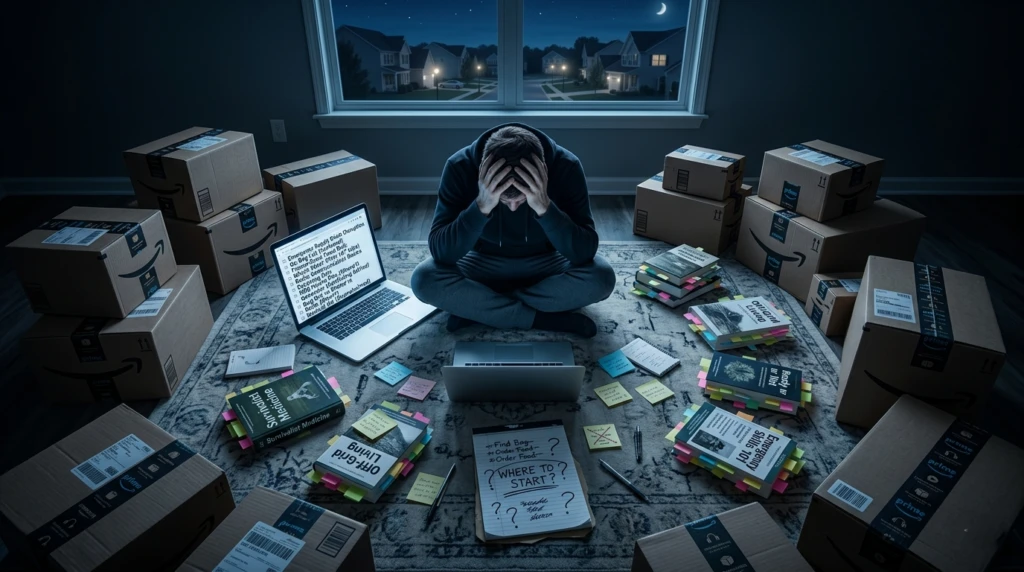 Skills and supplies are useless without the right mindset. Before you buy anything, you need to cultivate the mental framework that makes preparedness sustainable.
Pillar 1: Accepting Uncertainty Without Fear
The difference between paranoia and prudence
Paranoia sees threats everywhere and responds with panic. Prudence acknowledges that bad things happen and responds with planning. The preparedness lifestyle is prudent, not paranoid.
You don’t need to believe the world is ending to justify having a week’s worth of food and water. You just need to acknowledge that power outages, job loss, and natural disasters are real, common events that happen to real people every day.
Risk assessment vs. catastrophic thinking
Effective preparedness starts with realistic risk assessment. What are the most likely emergencies in your area? Power outages? Wildfires? Hurricanes? Economic disruption? Focus your efforts on the probable, not the apocalyptic.
Pillar 2: Building Competence Over Accumulation
Skills multiply the value of supplies
A $30 knife in the hands of someone who knows how to use it is worth more than $300 worth of gear in the hands of someone who doesn’t. Skills are lightweight, can’t be stolen, and work in any scenario.
The preparedness lifestyle prioritizes learning over buying. A person who can start a fire, purify water, and grow food is more prepared than someone with a garage full of unopened Amazon boxes.
The “two is one, one is none” principle
Redundancy matters, but not in the way most people think. It’s not about having two of everything. It’s about having backup methods for critical functions.
- Fire: Lighter, matches, ferro rod
- Water: Stored water, filter, purification tablets
- Light: Headlamp, lantern, candles
If your primary method fails, you have alternatives.
Pillar 3: Creating Systems, Not Stockpiles
Sustainable habits vs. panic buying
Panic buying creates piles of stuff you don’t know how to use and won’t maintain. Sustainable systems integrate preparedness into your daily routine.
- Food: Rotate your emergency food into regular meals
- Water: Use and refill your stored water regularly
- Skills: Practice your skills quarterly, not just in emergencies
Integration into daily life
The preparedness lifestyle works because it doesn’t feel like a separate project. It’s just how you live. You cook from your pantry. You garden because you enjoy it. You know first aid because you took a class. It’s not a burden—it’s a capability.
The Complete Prepping Guide for Beginners
Month 1: Building Your Foundation (The Essential Start)
 The first month is about assessment, basic supplies, and your first small wins. Don’t try to do everything. Focus on these four weeks.
Week 1: The Preparedness Audit
Assessing your current vulnerabilities
Spend this week honestly evaluating your current state:
- How many days could you survive without grocery stores?
- What happens if the power goes out for a week?
- Do you have critical medications? Backup power for medical devices?
- Can you heat or cool your home without electricity?
Write down your answers. This is your baseline.
Identifying your most likely risks (location, climate, lifestyle)
Your preparedness priorities depend on where you live:
- Coastal: Hurricanes, flooding
- Earthquake zones: Structural damage, utility disruption
- Wildfire areas: Evacuation, air quality
- Cold climates: Winter storms, heating loss
- Urban: Civil unrest, supply chain disruption
- Rural: Isolation, longer emergency response times
Focus on the probable, not the possible.
Setting realistic, achievable goals
Don’t set a goal to “be fully prepared.” That’s overwhelming and vague. Set specific, measurable goals:
- “Build a 72-hour water supply by the end of Week 2”
- “Take a first aid course by the end of Month 2”
- “Learn to start a fire with a ferro rod by the end of Month 2”
Small, specific goals create momentum.
Week 2: Water and Food Basics
Starting your 72-hour water supply
Water is the absolute top priority. Start with 1 gallon per person per day for 3 days. For a family of four, that’s 12 gallons.
Buy food-grade water containers or simply buy cases of bottled water. Store in a cool, dark place. Rotate every 6 months.
Building a 3-day food reserve
Focus on food you actually eat:
- Canned goods (tuna, chicken, beans, vegetables)
- Dried foods (rice, pasta, oats)
- Protein bars and trail mix
- Peanut butter and crackers
Avoid buying “survival food” you’ve never tasted. If you won’t eat it normally, you won’t eat it in an emergency.
The manual can opener rule
If you stock canned goods, you need a manual can opener. Buy two. This is the most commonly forgotten item in emergency kits.
Week 3: Light, Power, and Communication
Emergency lighting essentials
When the power goes out, darkness is immediate and disorienting. You need:
- Headlamps: One per person (keeps hands free)
- LED lanterns: One per room you’ll use
- Batteries: Lithium AA and AAA (10-year shelf life)
Avoid relying on candles as your primary light source. They’re a fire hazard and provide poor illumination.
Portable power solutions
A high-capacity power bank (20,000+ mAh) can recharge smartphones 4-6 times, keeping you connected to information and emergency services.
For longer outages, consider a portable power station (500Wh+) that can power phones, laptops, CPAP machines, and small appliances.
NOAA weather radio and information access
A battery-powered or hand-crank NOAA weather radio provides emergency alerts and information when internet and cell service fail. This is non-negotiable.
Week 4: First Practice Drill
Testing your systems in controlled conditions
Turn off your main breaker for 4 hours on a Saturday afternoon. Use only your emergency supplies. This reveals gaps immediately:
- Can you find your flashlights in the dark?
- Do your batteries work?
- Can you cook a meal without power?
- Is your water accessible?
Identifying gaps and weaknesses
Write down everything that didn’t work or that you wished you had. This is your shopping list for Month 2.
Celebrating small wins
You now have more preparedness than 90% of people. You have water, food, light, and information access for 72 hours. That’s real progress. Acknowledge it.
Month 2: Expanding Your Capabilities (Skills and Systems)
Month 2 shifts from supplies to skills. You’re building competence, not just accumulation.
Week 5: Water Sourcing and Purification Skills
 Learning to filter and purify water
Buy a portable water filter (Sawyer Squeeze, LifeStraw, Katadyn) and actually use it. Filter water from a local stream or lake. Understand the difference between filtration (removes bacteria and protozoa) and purification (kills viruses).
Practice using purification tablets. Know the wait times and dosages.
Identifying local water sources
Where would you get water if your tap stopped working? Identify:
- Nearby streams, rivers, or lakes
- Rainwater collection points
- Swimming pools (can be purified)
- Water heaters (50+ gallons of stored water)
Week 6: Fire Starting and Emergency Cooking
Mastering multiple fire-starting methods
Learn to start a fire with:
- Lighter (easiest, but can fail)
- Waterproof matches (reliable backup)
- Ferro rod (works when wet, lasts thousands of strikes)
Practice in different conditions—wind, rain, cold. Fire starting is a perishable skill.
Cooking without electricity
Invest in a propane or butane camp stove. Practice cooking a full meal outdoors. Understand fuel consumption and storage.
Week 7: Basic First Aid and Medical Preparedness
Taking a first aid course
Online videos are helpful, but hands-on training is essential. Take a Red Cross First Aid/CPR course or a wilderness first aid course. The muscle memory and confidence you gain are invaluable.
Building a comprehensive medical kit
Your first aid kit should include:
- Trauma supplies (tourniquet, Israeli bandage, QuikClot)
- Wound care (gauze, tape, antiseptic, antibiotic ointment)
- Medications (pain relievers, antihistamines, antidiarrheals)
- Tools (tweezers, scissors, thermometer)
Week 8: Home Security and Utility Management
Learning gas, water, and electrical shutoffs
Know where your main shutoffs are and how to operate them:
- Gas: Prevents fires and explosions after earthquakes
- Water: Prevents flooding from broken pipes
- Electrical: Prevents fires and power surges
Practice shutting them off and turning them back on.
Basic home hardening techniques
Simple steps to increase home security:
- Reinforce doors and windows
- Install motion-sensor lights
- Trim bushes near entry points
- Create a family communication plan
Month 3: Long-Term Resilience and Community (Beyond the Basics)
Month 3 expands beyond individual preparedness to financial resilience and community building.
Week 9: Financial Preparedness
 Building an emergency cash reserve
Keep $500-$1,000 in small bills ($1, $5, $10, $20) in a fireproof safe. ATMs and card readers don’t work without power.
Creating a document vault
Store copies of critical documents in a fireproof/waterproof container:
- Birth certificates, passports, Social Security cards
- Insurance policies (home, auto, life, health)
- Property deeds and vehicle titles
- Medical records and prescriptions
- Bank account information
Understanding insurance and recovery resources
Review your insurance policies. Know what’s covered, what’s excluded, and how to file claims. Research FEMA and local emergency assistance programs before you need them.
Week 10: Food Production and Preservation
Starting a small garden (even in apartments)
You don’t need acres to grow food. Start with:
- Container gardens: Tomatoes, peppers, herbs on a balcony
- Indoor growing: Microgreens, sprouts, herbs on a windowsill
- Community gardens: Shared plots in urban areas
The goal isn’t self-sufficiency in Month 3. It’s learning the basics.
Learning basic food preservation
Explore:
- Canning: Preserves fruits, vegetables, and meats for years
- Dehydrating: Lightweight, long-lasting food storage
- Fermenting: Sauerkraut, kimchi, pickles (probiotic benefits)
Week 11: Community Building
Connecting with neighbors
Resilience is collective. Introduce yourself to neighbors. Identify:
- Who has medical skills?
- Who has tools and equipment?
- Who has special needs (elderly, disabled, young children)?
Identifying local resources and mutual aid networks
Research local preparedness groups, community emergency response teams (CERT), and mutual aid networks. Attend a meeting. You don’t have to go it alone.
Week 12: Advanced Skills and Specialization
Choosing your next skill to develop
Based on your interests and needs, choose one advanced skill to pursue:
- Wilderness survival and navigation
- Advanced medical (wilderness first aid, EMT training)
- Ham radio operation and communication
- Permaculture and sustainable food systems
- Home repair and maintenance
Planning your year-two goals
Review your progress. Set goals for the next 12 months. The preparedness lifestyle is a journey, not a destination.
Integrating Preparedness Into Daily Life (Making It Sustainable)
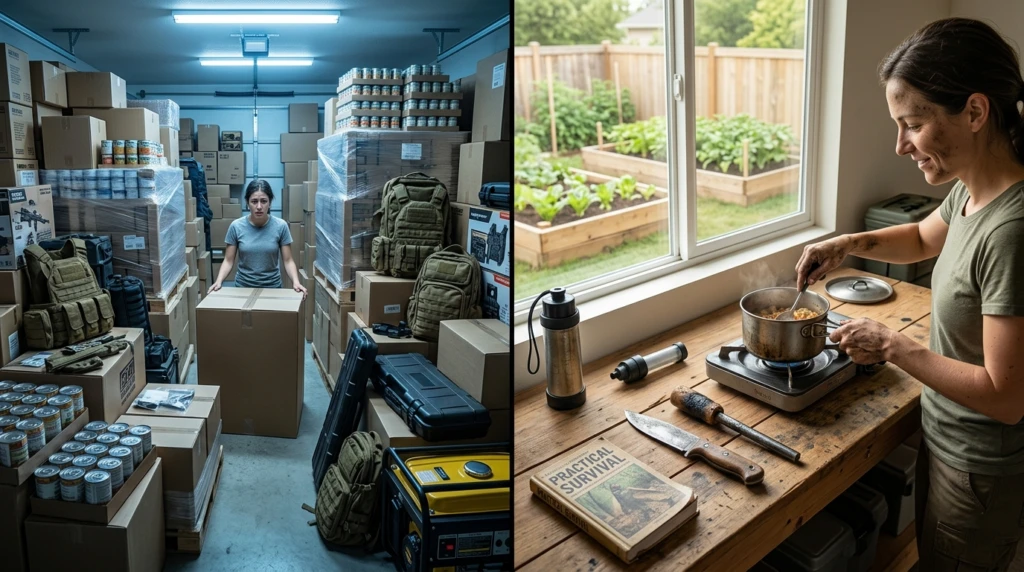 The preparedness lifestyle only works if it’s sustainable. Here’s how to make it a natural part of your life, not a burdensome project.
The “Use What You Store, Store What You Use” Philosophy
Don’t buy food you won’t eat. Stock your pantry with items you use regularly, then rotate them into your meals. When you use a can of beans, replace it. Your emergency food stays fresh, and you’re not wasting money on food that expires.
Quarterly Review and Rotation Schedules
Every 3 months:
- Test batteries and replace weak ones
- Check food expiration dates and rotate stock
- Review and update your emergency plans
- Practice a skill (fire starting, first aid, navigation)
Set calendar reminders. Make it routine.
Teaching Preparedness to Children (Age-Appropriate Approaches)
Ages 3-7: Make it a game. Practice “camping” in the living room with flashlights and sleeping bags. Let them help pack their own small emergency bag with comfort items.
Ages 8-12: Teach basic skills like fire starting (supervised), first aid, and navigation. Involve them in emergency drills.
Ages 13+: Teach advanced skills, financial preparedness, and community responsibility. Give them ownership of specific preparedness tasks.
Balancing Preparedness with Living Fully in the Present
Preparedness is about creating security so you can live fully, not about living in constant fear. Don’t let preparedness consume your life. Set boundaries:
- Limit preparedness spending to a set percentage of your budget
- Schedule specific times for preparedness activities (don’t let it bleed into all your free time)
- Maintain hobbies and relationships that have nothing to do with preparedness
Common Obstacles and How to Overcome Them
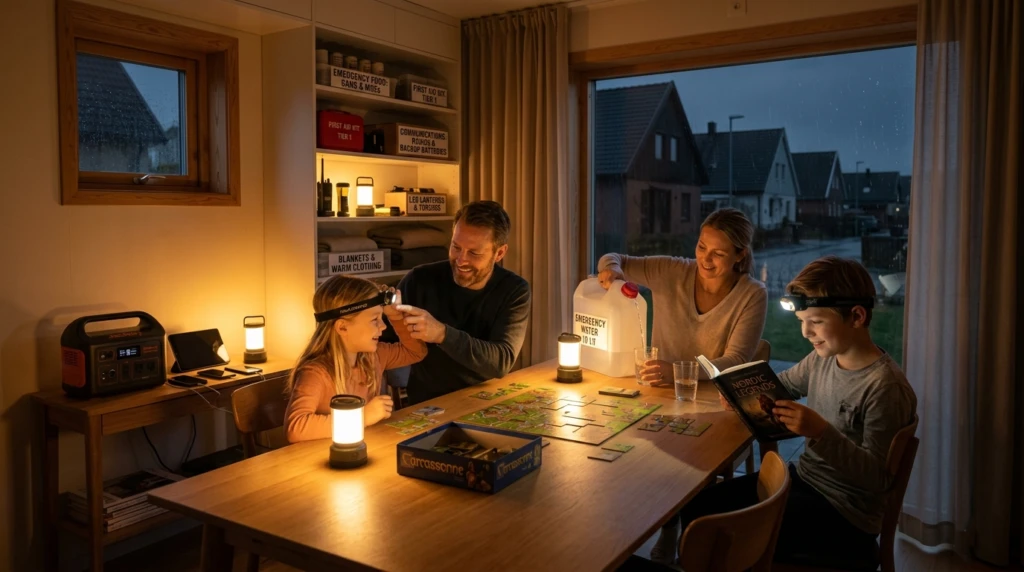 Every person starting a preparedness lifestyle faces obstacles. Here’s how to navigate the most common ones.
“My Family Thinks I’m Crazy”: Communicating Preparedness Effectively
Don’t lead with fear. Frame preparedness as responsible, proactive planning—like having car insurance or a smoke detector.
Start small and demonstrate value. When the power goes out and you calmly pull out flashlights and a camp stove, your family sees the benefit without a lecture.
Involve them in age-appropriate ways. Let kids pick comfort items for their emergency bags. Ask your spouse to help with a specific task. Ownership creates buy-in.
“I Don’t Have Space”: Small-Space Preparedness Strategies
Vertical storage: Use shelves, wall-mounted racks, and overhead storage.
Multi-use items: A sleeping bag is both emergency gear and camping equipment. A camp stove is for emergencies and outdoor cooking.
Distributed storage: Store water under beds, food in closets, tools in the garage. You don’t need a dedicated “prep room.”
“I Can’t Afford It”: Budget-Friendly Approaches and Prioritization
Start with free: Assessment, planning, and learning cost nothing.
Buy incrementally: Add one item per week. A $10 manual can opener this week, a $20 water filter next week.
Prioritize ruthlessly: Water before food. Food before gear. Skills before stuff.
Use what you have: A bathtub holds 50+ gallons of water. A fireplace or grill can cook food. You have more resources than you think.
“I Don’t Have Time”: Integrating Preparedness into Existing Routines
Batch tasks: Dedicate one Saturday per month to preparedness. Accomplish more in focused blocks than scattered efforts.
Integrate into existing activities: Learn fire starting while camping. Practice first aid while hiking. Garden because you enjoy it, not just for preparedness.
Automate: Set up automatic deliveries for supplies. Schedule recurring calendar reminders for maintenance tasks.
Avoiding Burnout and Maintaining Motivation
Set realistic expectations: You won’t be “fully prepared” in 90 days. That’s okay. Progress, not perfection.
Celebrate milestones: Completed your 72-hour kit? Celebrate. Learned a new skill? Acknowledge it.
Connect with community: Join online forums or local groups. Shared progress and encouragement prevent isolation and burnout.
The Preparedness Lifestyle Community: Finding Your People
You don’t have to do this alone. The preparedness community is vast, diverse, and welcoming.
Online Communities and Forums
- Reddit: r/preppers, r/homesteading, r/SelfSufficiency
- Forums: SurvivalistBoards.com, PrepperForums.net
- Facebook Groups: Local and topic-specific preparedness groups
Local Preparedness Groups and Meetups
- CERT (Community Emergency Response Team): Free training and local networking
- Meetup.com: Search for “preparedness,” “homesteading,” or “self-reliance” groups in your area
- Local classes: First aid, wilderness survival, gardening, canning
Skill-Sharing and Bartering Networks
- Timebanking: Exchange skills and services without money
- Tool libraries: Borrow tools instead of buying them
- Seed swaps: Exchange garden seeds with local growers
Avoiding Toxic Preparedness Culture
Not all preparedness communities are healthy. Avoid groups that:
- Promote fear and paranoia over practical planning
- Encourage isolation over community building
- Focus on weapons and conflict over skills and cooperation
- Spread conspiracy theories and misinformation
Seek communities that are positive, practical, and focused on building resilience.
Frequently Asked Questions Aboutpreparedness lifestyle
How do I start a preparedness lifestylewithout overwhelming my family?
Start small and lead by example. Don’t announce you’re “becoming a prepper.” Just quietly build a 72-hour kit, take a first aid course, and stock your pantry. When the power goes out and you’re the calm one with flashlights and food, your family will see the value without feeling pressured.
Frame preparedness as responsible planning, not fear-driven hoarding. Use language like “emergency preparedness” or “self-reliance” instead of “prepping” or “survivalism.”
What’s the first thing I should do today?
Right now: Fill a few empty water bottles and put them in your pantry. That’s your first gallon of emergency water.
This week: Buy a headlamp and a manual can opener. Test the headlamp. Put the can opener with your canned goods.
This month: Complete Week 1 of the 90-day plan—assess your vulnerabilities and set specific goals.
How much money do I need to get started?
Week 1 (Assessment): $0 Week 2 (Water and food): $30-50 Week 3 (Light and communication): $60-100 Week 4 (Practice drill): $0
Total for Month 1: $90-150
You can start a preparedness lifestyle for less than the cost of a single dinner out per week.
Is it too late to start preparing?
No. The best time to start was ten years ago. The second-best time is today.
Every day you wait is a day you remain vulnerable. But every step you take—no matter how small—is progress. Start now.
How do I know if I’m doing it right?
You’re doing it right if:
- You’re making consistent progress (even if it’s slow)
- You’re building skills, not just buying stuff
- You’re involving your family and community
- You feel more confident and less anxious
- You’re integrating preparedness into daily life, not treating it as a separate project
There’s no single “right” way. The preparedness lifestyle is personal. Focus on your specific risks, needs, and capabilities.
Taking the Next Step
You now have the complete 90-day roadmap to starting a preparedness lifestyle. You understand the mindset, the priorities, and the specific actions to take each week.
But knowledge without action is just anxiety with extra steps.
This week—not next month, not when you have more time, not when you feel “ready”—do one thing. Fill some water bottles. Buy a headlamp. Take 30 minutes to assess your vulnerabilities.
Small actions create momentum. Momentum creates confidence. Confidence creates capability.
In 90 days, you won’t be “fully prepared”—no one ever is. But you’ll be fundamentally different. You’ll be the person who stays calm when others panic. The person who has what they need when systems fail. The person who helps instead of needing help.
That’s not just preparedness. That’s a better way to live.
PRODUCTS / TOOLS / RESOURCES
These are the specific items and resources that consistently come up in serious preparedness lifestyle conversations—selected for reliability, value, and real-world effectiveness.
Water Storage & Purification
- Sawyer Squeeze Water Filter: 0.1-micron filtration, 100,000-gallon capacity. The gold standard for portable water filtration. Essential for learning water purification skills ($25-40).
- Aqua-Tainer 7-Gallon Water Container: Food-grade, stackable, built-in spigot. Perfect for building your initial 72-hour water supply ($15 each).
- Potable Aqua Chlorine Dioxide Tablets: Backup purification method. Kills viruses, bacteria, and protozoa ($10 for 30 tablets).
Emergency Lighting & Power
- Black Diamond Spot Headlamp: 300 lumens, waterproof, red-light mode. Hands-free lighting that’s reliable and durable ($40).
- Goal Zero Lighthouse 600 Lantern: Rechargeable, hand-crank backup, doubles as phone charger. Provides 48 hours of light on low setting ($60).
- Anker PowerCore 26800 Power Bank: Charges phones 6-7 times. Essential for maintaining communication during outages ($60).
Communication & Information
- Midland ER310 Emergency Radio: NOAA weather alerts, AM/FM, hand-crank and solar charging, flashlight, USB phone charging. The most versatile emergency radio ($60).
- Midland® T71VP3 X-TALKER Long Range Walkie Talkie (2-pack): Waterproof, 35-mile range, rechargeable. Essential for family communication during emergencies ($80).
First Aid & Medical
- Adventure Medical Kits Trauma Pak Pro: Comprehensive trauma kit with tourniquet, Israeli bandage, chest seals, QuikClot. Professional-grade supplies ($70-90).
- Red Cross First Aid/CPR/AED Course: Hands-on training is invaluable. Find a local course and get certified. The skills you learn could save a life.
Food & Cooking
- Coleman Classic Propane Stove: Two-burner, reliable, affordable. Essential for learning to cook without electricity ($50).
- Mountain House Essential Bucket: 32 servings of freeze-dried meals, 25-year shelf life. Convenient long-term food storage ($100).
- P-38 Can Opener: Military-issue, virtually indestructible, weighs almost nothing. Buy several and keep them everywhere ($2).
Skills Development & Education
- “The Disaster Preparedness Handbook” by Arthur T. Bradley: Comprehensive guide covering all aspects of emergency preparedness with practical, actionable advice.
- “Bushcraft 101” by Dave Canterbury: The definitive guide to wilderness survival skills. Focuses on the “5 Cs” of survivability.
- FEMA Ready.gov: Free downloadable guides, checklists, and emergency planning tools from the federal government.
- Local CERT (Community Emergency Response Team) Training: Free training and local networking. Search “CERT training [your city]” to find programs near you.
Community & Networking
- Reddit r/preppers: Active community with daily discussions, gear reviews, and skill-sharing.
- Meetup.com: Search for “preparedness,” “homesteading,” or “self-reliance” groups in your area.
- The Prepared (theprepared.com): Evidence-based online resource for all aspects of preparedness, offering in-depth guides and product reviews.