
Hey there! Some links on this page may be affiliate links which means that, if you choose to make a purchase, I may earn a commission at no extra cost to you. I greatly appreciate your support. Read the full disclosure here.
Floods are the most common and costly natural disaster in the United States, responsible for more deaths each year than tornadoes, hurricanes, or lightning combined, according to FEMA. Yet most households have no written flood emergency plan. That gap between awareness and action is exactly where lives are lost and properties are destroyed.
A solid Flood Emergency Plan: What to Do Before, During, and After a flood event is not a luxury for people who live near rivers or coastlines. Flash floods can strike anywhere, often with less than six hours of warning. If your plan is “we’ll figure it out when it happens,” that’s not a plan, that’s a gamble.
This guide covers everything you need: preparation steps, real-time survival decisions, and a structured recovery process. It’s built for people who take preparedness seriously.
Key Takeaways
- A flood watch means conditions are favorable for flooding; a flood warning means flooding is happening or imminent, act immediately on a warning.
- Six inches of moving water can knock a person down; two feet can sweep away most vehicles.
- Your flood emergency kit should be ready to grab in under five minutes and include at least 72 hours of supplies.
- Never enter a flooded room before shutting off electricity at the breaker, even shallow water can be fatal if the circuit is live.
- Floodwater is contaminated. Treat it as a biohazard before, during, and after contact.
- Flood insurance is separate from standard homeowners insurance, and you can need it even outside a designated flood zone.
- Document all damage with photos and video before touching anything, to protect your insurance claim.
- Mold can begin growing within 24 to 48 hours of water intrusion, drying out fast is critical.

Find this useful? Add us as a preferred source on Google and more of what we publish will show up in your results.
What’s the Difference Between a Flood Watch and a Flood Warning?
A flood watch means conditions exist that could produce flooding, monitor the situation and be ready to act. A flood warning means flooding is occurring or will occur very soon, take protective action immediately. A flash flood emergency is the highest alert level, indicating a life-threatening situation already in progress.
Understanding these levels matters because your response timeline changes dramatically between them:
- Flood Watch: Review your plan, charge devices, check your emergency kit, monitor weather alerts.
- Flood Warning: Move valuables to upper floors, prepare to evacuate, stay off roads.
- Flash Flood Emergency: Get to high ground immediately. Do not wait for official instructions.
The National Weather Service issues these alerts through the Emergency Alert System. A battery-powered NOAA weather radio is one of the most reliable ways to receive them when power is out. Sign up for your county’s emergency text alert system as a backup.
How to Prepare Your Home for Flooding Before It Happens
Flood preparedness starts weeks or months before a storm, not the night before. The most effective home flood preparation combines physical hardening with documented planning.
Structural and physical steps:
- Install check valves in plumbing to prevent sewage backup into your home.
- Seal basement walls with waterproofing compounds.
- Grade your yard so water drains away from the foundation.
- Elevate your electrical panel, water heater, and HVAC equipment if you’re in a flood-prone area.
- Keep gutters and downspouts clear year-round.
- Store sandbags or water-activated flood barriers if you’re in a recurring flood zone.
Planning and documentation:
- Know your property’s flood zone designation using FEMA’s Flood Map Service Center.
- Identify two evacuation routes from your neighborhood, roads flood unpredictably, so having a backup matters.
- Establish a family meeting point outside your immediate area.
- Review your family emergency plan to make sure flood-specific steps are included.
Common mistake: People assume their homeowners insurance covers flood damage. It almost never does. Flood insurance through the National Flood Insurance Program (NFIP) or a private carrier must be purchased separately, and most policies have a 30-day waiting period before they activate.
Do I Need Flood Insurance If I’m Not in a Flood Zone?
Yes. Roughly 25% of all flood insurance claims come from properties outside high-risk flood zones, according to FEMA. Flood zone maps are updated infrequently and don’t account for localized drainage failures, aging infrastructure, or unusual storm patterns.
If your mortgage lender doesn’t require flood insurance, that doesn’t mean you don’t need it. It means they’ve made a minimum-risk calculation for their loan, not a safety calculation for your household.
Standard homeowners insurance explicitly excludes flood damage. A single inch of water inside a 2,000 square-foot home can cause more than $25,000 in damage, based on FEMA cost estimates. Flood insurance premiums vary widely by location and coverage level, but the financial protection is almost always worth the cost.
What Documents Should You Gather Before a Flood?
Gather and waterproof-protect these documents before any flood season or storm warning:
- Insurance policies (homeowners, flood, auto, health)
- Identification: passports, driver’s licenses, birth certificates, Social Security cards
- Property deed and mortgage documents
- Vehicle titles
- Medical records and prescription lists
- Bank account and investment account information
- Recent utility bills (proof of address)
- Irreplaceable photos (digitize these and store in cloud backup)
Store physical copies in a waterproof document bag or fireproof/waterproof safe. Keep digital copies in an encrypted cloud storage account you can access from any device. For a broader financial protection strategy, the financial survival checklist at Preppers HQ covers this in depth.
How to Build a Flood Emergency Kit
A flood emergency kit needs to be waterproofed, portable, and ready to move in under five minutes. Standard emergency kits need modification for flood scenarios because water itself becomes a threat to the supplies.
Core flood kit contents:
- Water: one gallon per person per day for at least three days (store in sealed waterproof containers)
- Food: non-perishable items for 72+ hours
- Battery-powered or hand-crank NOAA weather radio
- Flashlights and extra batteries
- First aid kit
- Waterproof bags for electronics and documents
- Copies of critical documents (see above)
- Medications (at least a 7-day supply)
- Cash in small bills (ATMs and card readers go down)
- Wrench or pliers to shut off utilities
- Sanitation supplies: hand sanitizer, wet wipes, waste bags
- Change of clothes and sturdy waterproof boots
- Whistle to signal for help
- Phone charger and portable battery bank
For a complete breakdown of what most people forget, see the ultimate emergency supplies list, it covers items FEMA’s standard guidance consistently omits.
If you have pets, build a parallel kit for them. The pet emergency preparedness checklist is a practical starting point.
.cg-flood-kit { font-family: Arial, sans-serif; max-width: 520px; margin: 24px auto; background: #f4f8fb; border-radius: 10px; padding: 20px 24px; box-shadow: 0 2px 10px rgba(0,60,120,0.10); } .cg-flood-kit h3 { color: #1a3a5c; margin: 0 0 4px 0; font-size: 1.1rem; } .cg-flood-kit p { color: #555; font-size: 0.85rem; margin: 0 0 14px 0; } .cg-flood-kit label { display: flex; align-items: center; gap: 10px; padding: 7px 0; border-bottom: 1px solid #dde6ef; cursor: pointer; font-size: 0.92rem; color: #222; } .cg-flood-kit label:last-of-type { border-bottom: none; } .cg-flood-kit input[type=”checkbox”] { width: 17px; height: 17px; accent-color: #1a6fba; flex-shrink: 0; } .cg-flood-kit .cg-checked { color: #1a6fba; text-decoration: line-through; opacity: 0.7; } .cg-flood-kit .cg-progress { margin-top: 14px; background: #dde6ef; border-radius: 6px; height: 10px; overflow: hidden; } .cg-flood-kit .cg-bar { height: 10px; background: #1a6fba; border-radius: 6px; transition: width 0.3s; } .cg-flood-kit .cg-status { font-size: 0.82rem; color: #1a3a5c; margin-top: 6px; text-align: right; }
Flood Emergency Kit Checklist
Check off items as you pack your kit. Track your readiness below.
function cgUpdate(){ var boxes=document.querySelectorAll(‘.cg-flood-kit input[type=”checkbox”]’); var checked=0; boxes.forEach(function(b){ var lbl=b.parentElement; if(b.checked){checked++;lbl.classList.add(‘cg-checked’);} else{lbl.classList.remove(‘cg-checked’);} }); var pct=Math.round((checked/boxes.length)*100); document.getElementById(‘cgBar’).style.width=pct+’%’; document.getElementById(‘cgStatus’).textContent=checked+’ of ‘+boxes.length+’ items packed’; }
Where Should You Go During a Flood Warning?
During a flood warning, go to the highest ground available, either the upper floors of a sturdy building or an official evacuation shelter. Never shelter under a bridge, in a drainage ditch, or in a basement.
If ordered to evacuate:
- Leave immediately. Evacuation orders are issued when staying becomes genuinely dangerous.
- Take your emergency kit, documents, medications, and pets.
- Use your pre-planned evacuation route. Check road conditions via local emergency management apps before driving.
- Never drive through flooded roads. “Turn around, don’t drown” is not a slogan, it’s a survival rule. Most flood-related vehicle deaths occur when drivers attempt to cross flooded roadways.
If you cannot evacuate:
- Move to the highest floor of your home.
- Do not go to the attic unless you have a way to escape through the roof, people have drowned trapped in attics.
- Signal for help from a window using a flashlight or bright cloth.
Having a bug out plan already mapped out before flood season is the difference between a confident exit and a panicked guess at an intersection.
Can I Stay in My House During a Flood?
Staying home during a flood is only safe if the flooding is minor, not rising, and no evacuation order has been issued. If water is entering your home or an official evacuation order is in place, staying is dangerous and potentially illegal in some jurisdictions.
Factors that determine whether staying is viable:
- Is the water rising or stable?
- Do you have access to an upper floor or roof?
- Is your electrical system at risk of contact with water?
- Do you have communications and supplies for 72+ hours?
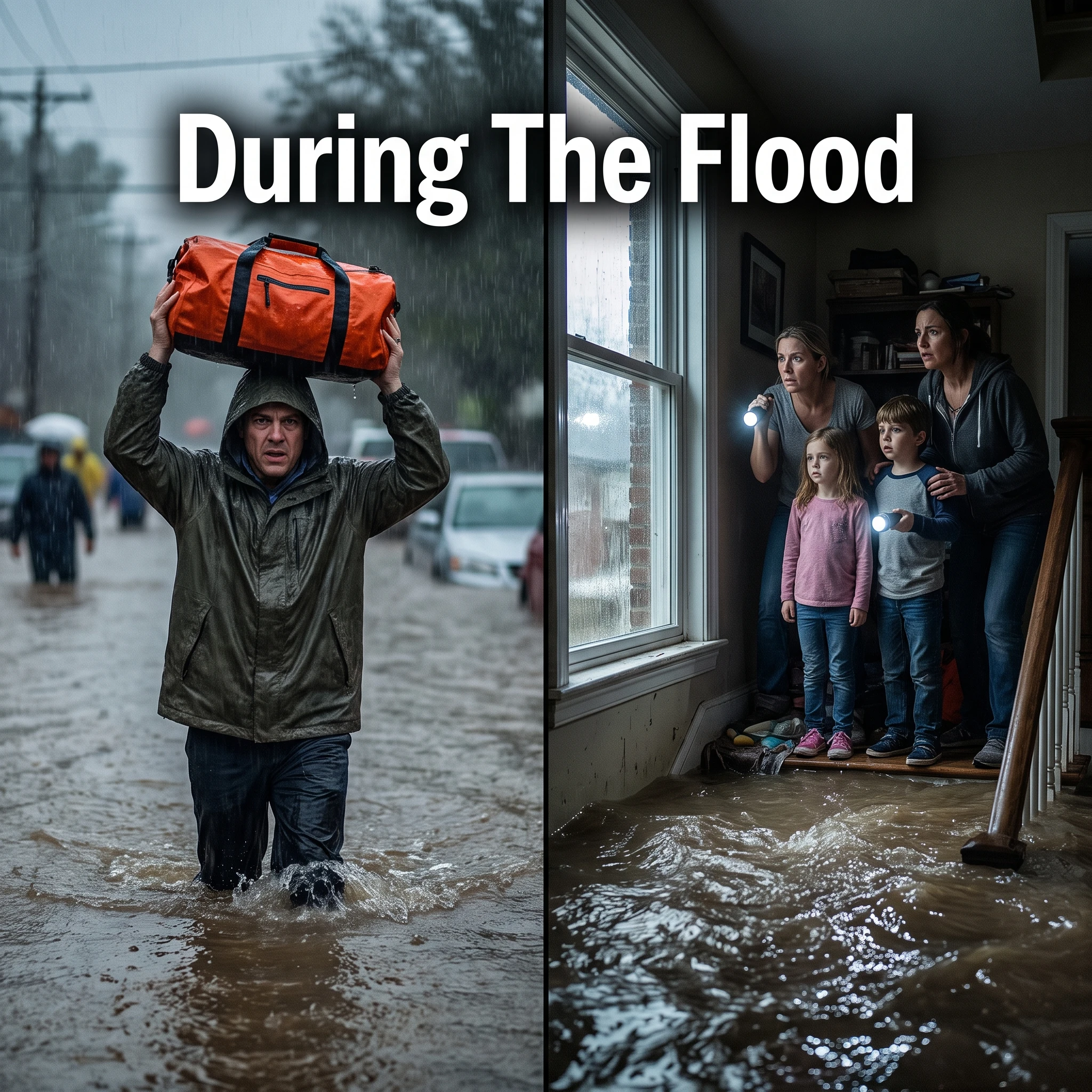
If you decide to shelter in place, shut off electricity at the main breaker before water reaches electrical outlets. Do not use gas appliances. Avoid contact with floodwater inside the home, it carries sewage, chemicals, and pathogens.
How to Turn Off Utilities During a Flood
Turn off utilities before floodwater reaches your home’s systems, not after. Acting early prevents electrical hazards, gas leaks, and sewage backflow.
Electricity: Locate your main breaker panel and shut off the main breaker. If the panel is already submerged or in a flooded area, do not touch it, call your utility company and wait for professionals.
Natural gas: Use a wrench to turn the shutoff valve on your gas meter a quarter-turn so the valve is perpendicular to the pipe. Once shut off, only your gas company should restore service.
Water: Shut off the main water supply valve to prevent contaminated floodwater from backflowing into your home’s plumbing.
Keep a utility shutoff wrench in your emergency kit. Know where all three shutoffs are located before any emergency occurs.
What Mistakes Do People Make During Floods?
The most dangerous flood mistakes involve underestimating water speed, ignoring evacuation orders, and making poor decisions in the first 30 minutes of a flash flood.
Most common and costly mistakes:
- Driving into flooded roads. This is the leading cause of flood-related deaths. Two feet of water can float most vehicles.
- Waiting too long to evacuate. Once roads flood, your options disappear fast.
- Returning home too early. Floodwaters may look receded but still be structurally dangerous and contaminated.
- Touching electrical equipment near water. Even a small amount of water contact with live circuits can be fatal.
- Drinking tap water after a flood. Municipal water systems can be compromised. Treat all tap water as potentially contaminated until authorities confirm it’s safe.
- Not documenting damage before cleanup. Starting cleanup before photographing everything destroys your insurance claim.
For a broader look at preparedness gaps, the 4-layer disaster plan from Preppers HQ is worth reviewing, it addresses exactly these decision points under pressure.
How to Document Flood Damage for Insurance
Document damage before touching, moving, or discarding anything. Insurance adjusters need evidence of the original damage state, and cleanup that happens before documentation can void or reduce your claim.
Step-by-step documentation process:
- Photograph every affected room from multiple angles before cleanup begins.
- Video walk-through of the entire property, narrating what you see.
- Photograph damaged items individually, including serial numbers where visible.
- Keep all damaged materials (flooring samples, damaged appliances) until the adjuster visits.
- Record the date and time stamps on all photos and videos.
- Write a written inventory of damaged items with estimated replacement values.
- Keep all receipts for emergency repairs, temporary housing, and cleanup supplies.
Contact your insurance company as soon as it’s safe to do so. Most policies require prompt notification. Ask specifically about your flood policy’s coverage for additional living expenses if your home is uninhabitable.
How Do You Dry Out Your House After a Flood?
Start drying your home within 24 to 48 hours of water intrusion to prevent mold growth. Mold can begin colonizing wet materials in as little as 24 hours, according to the EPA, and remediation becomes exponentially more expensive once it establishes.
Drying process:
- Remove standing water using a wet/dry vacuum or submersible pump.
- Pull up saturated carpet, padding, and flooring, these rarely dry fast enough to prevent mold.
- Remove drywall to at least 12 inches above the waterline to expose wall cavities.
- Run industrial dehumidifiers and fans continuously.
- Open windows and doors when outdoor humidity is lower than indoor humidity.
- Check wall cavities with a moisture meter before closing them back up.
Do not use standard household fans to dry a room with sewage contamination, you’ll spread pathogens through the air. In those cases, use professional remediation services.
What Health Risks Come After a Flood?
Floodwater is a biohazard. It contains sewage, agricultural runoff, industrial chemicals, and pathogens including E. coli, Salmonella, Hepatitis A, and Leptospirosis. Health risks persist long after the water recedes.
Post-flood health threats:
- Waterborne illness from contaminated tap water or contact with floodwater
- Mold exposure causing respiratory problems, especially in children and the elderly
- Carbon monoxide poisoning from generators or gas-powered equipment used indoors
- Wound infections from cuts sustained in floodwater
- Mental health impacts including acute stress, PTSD, and depression following displacement
Wear rubber gloves, waterproof boots, and eye protection when working in flood-affected areas. Wash hands frequently with clean water and soap. Discard any food that came into contact with floodwater, including canned goods with compromised seals.
For water safety after a disaster, the water contamination signs guide covers how to identify and address compromised water sources in emergency situations.
How Long Does It Take to Recover From a Flood?
Flood recovery timelines vary enormously based on flood severity, insurance coverage, and how quickly the drying and remediation process begins. Minor flooding with no structural damage may resolve in days. Major flooding with structural damage, mold, and insurance disputes can take months to years.
General recovery timeline:
| Phase | Typical Timeframe |
|---|---|
| Immediate safety and documentation | 1-3 days |
| Water removal and initial drying | 3-7 days |
| Mold inspection and remediation | 1-4 weeks |
| Structural repairs | 1-6 months |
| Full restoration and move-back | 2-12+ months |
The biggest variable is insurance. Households with comprehensive flood insurance and pre-documented home inventories recover significantly faster than those without. Households that had a written emergency plan before the flood also tend to make better decisions during recovery, because the stress of displacement doesn’t force them to make complex decisions from scratch.
How Do I Help Neighbors After a Flood?
Check on neighbors, especially elderly, disabled, or isolated individuals, as soon as it’s safe to do so. Community resilience after a flood depends heavily on neighbors helping each other in the first 72 hours before formal relief organizations are fully operational.
Practical ways to help:
- Conduct welfare checks on neighbors who may not have evacuated.
- Share supplies, tools, and labor for cleanup.
- Help document damage for neighbors who are overwhelmed or unfamiliar with the insurance process.
- Coordinate with local emergency management for volunteer opportunities.
- Watch for signs of mental health distress in neighbors dealing with significant loss.
Be cautious about entering structurally compromised buildings. If a neighbor’s home has visible foundation damage, sagging floors, or gas smell, call professionals rather than entering.

Frequently Asked Questions About Flood Emergency Plans
How much warning will I have before a flash flood? Flash floods can develop in as little as six hours after heavy rainfall, and sometimes in minutes in canyon or urban drainage areas. The National Weather Service aims to issue warnings at least 30 minutes before impact, but that window is not guaranteed. This is why having a pre-built plan matters so much; decisions made in advance are faster and better than decisions made under panic.
Is six inches of water really dangerous? Yes. Six inches of fast-moving water can knock an adult off their feet. A foot of water can sweep away a small vehicle. Two feet of rushing water can carry away most cars and trucks. Moving water is far more dangerous than standing water at the same depth.
What should I do if I’m trapped in a car in floodwater? Stay calm. Unbuckle your seatbelt. If water is entering, wait until pressure equalizes (water inside equals water outside) before trying to open the door. Use a window breaker tool or your headrest prongs to break a side window. Exit through the window and swim to higher ground. Keep a window breaker/seatbelt cutter in your car at all times.
Can I use my generator inside during flood cleanup? Never. Carbon monoxide from generators is odorless and kills quickly. Run generators at least 20 feet from any door, window, or vent. Carbon monoxide poisoning is a leading cause of death in the aftermath of natural disasters.
What’s the first call to make after a flood? Your insurance company. Notify them as soon as it’s safe, before beginning any cleanup beyond emergency protective measures. Document everything first.
How do I know if my tap water is safe after a flood? Assume it’s not until your local water authority issues an all-clear. Boil water advisories are common after floods. If in doubt, use stored water or treat tap water with approved purification methods.
Should I sandbag my home before a flood? Sandbags can help redirect minor surface water but are not effective against significant flooding. They’re most useful as a supplement to other flood barriers, not a standalone solution. Water-activated flood barriers are more effective and faster to deploy.
What if I have a medical condition or disability that affects my ability to evacuate? Register with your local emergency management office as a special needs evacuee before flood season. This allows emergency services to prioritize your location during evacuations. Build a specific evacuation plan that accounts for your needs, and review the emergency preparedness guide for disabled individuals for detailed guidance.
How do I find out my property’s flood zone? Use FEMA’s Flood Map Service Center at msc.fema.gov. Enter your address to see your official flood zone designation and the most recent flood insurance rate map for your area.
What’s the most overlooked item in a flood emergency kit? Cash. When power is out, card readers and ATMs don’t work. Small bills are essential for fuel, food, and supplies during and immediately after a flood event.
Conclusion
A flood emergency plan built before the water rises is worth more than any amount of improvisation during the event. The gap between households that recover quickly and those that struggle for months comes down to preparation: documented plans, stocked kits, waterproofed records, and practiced evacuation routes.
Start with the basics. Know your flood zone. Get flood insurance if you don’t have it. Build a 72-hour kit that’s actually waterproofed and portable. Identify your two evacuation routes and make sure everyone in your household knows them. Then document your home’s contents for insurance purposes.
The people who handle floods best aren’t the ones who got lucky, they’re the ones who treated preparation as a normal part of responsible homeownership and family safety.
Actionable next steps for this week:
- Look up your flood zone on FEMA’s Flood Map Service Center.
- Review your homeowners insurance policy and confirm whether flood damage is covered.
- Build or update your flood emergency kit using the checklist above.
- Identify and write down two evacuation routes from your home.
- Digitize and waterproof your critical documents.
Products, Tools, and Resources
NOAA Weather Radio (Midland WR120B or similar): A battery-powered weather radio is non-negotiable for flood preparedness. It receives alerts even when cell networks are down.
Waterproof document bag: Look for a submersible-rated dry bag (IPX8 rated) large enough for your document packet and a portable hard drive.
Water-activated flood barriers (e.g., Quick Dam): More effective than sandbags for doorways and garage entries. They activate on contact with water and can be pre-positioned before a storm.
Portable submersible pump: A 1/3 HP submersible pump can remove hundreds of gallons per hour from a flooded basement. Worth storing if you have a basement.
Moisture meter: Essential for post-flood drying to confirm walls and subfloors are actually dry before closing them up. Inexpensive models are available for under $30.
Industrial dehumidifier (70-pint capacity): Standard household dehumidifiers aren’t powerful enough for flood drying. Rent or purchase a commercial-grade unit for serious water intrusion.
For broader emergency readiness, the home emergency preparedness guide and the ultimate emergency preparedness guide for preppers are both worth bookmarking as companion resources to this flood-specific plan.