
Hey there! Some links on this page may be affiliate links which means that, if you choose to make a purchase, I may earn a commission at no extra cost to you. I greatly appreciate your support. Read the full disclosure here.
The survival garden crops easiest to grow for preppers include potatoes, kale, bush beans, sweet potatoes, squash, radishes, and garlic. These crops require minimal gardening experience, tolerate poor conditions, produce high caloric yields, and many can be saved for replanting season after season, making them the foundation of any serious food security plan.
Key Takeaways
- Potatoes, beans, squash, kale, and sweet potatoes deliver the best caloric return per square foot for preppers with limited space or experience.
- Heirloom seeds are non-negotiable for long-term prepping because you can save and replant them indefinitely, hybrid seeds cannot reliably be saved.
- A family of four needs roughly 1,000 to 4,000 square feet of productive garden space to grow a meaningful portion of their calories, depending on crop selection.
- Root vegetables like potatoes and sweet potatoes store far longer after harvest than leafy greens, making them more valuable for true long-term food security.
- Most survival crops need only 1 inch of water per week and minimal fertilizer when planted in decent soil, compost is your best low-cost input.
- Indoor growing is viable for greens, radishes, and herbs, but calorie-dense survival crops like potatoes and squash require outdoor space.
- Common beginner mistakes include planting only one crop type, ignoring soil preparation, and choosing hybrid seeds that can’t be saved.
Find this useful? Add us as a preferred source on Google and more of what we publish will show up in your results.
What Are the Easiest Survival Garden Crops to Grow for Preppers
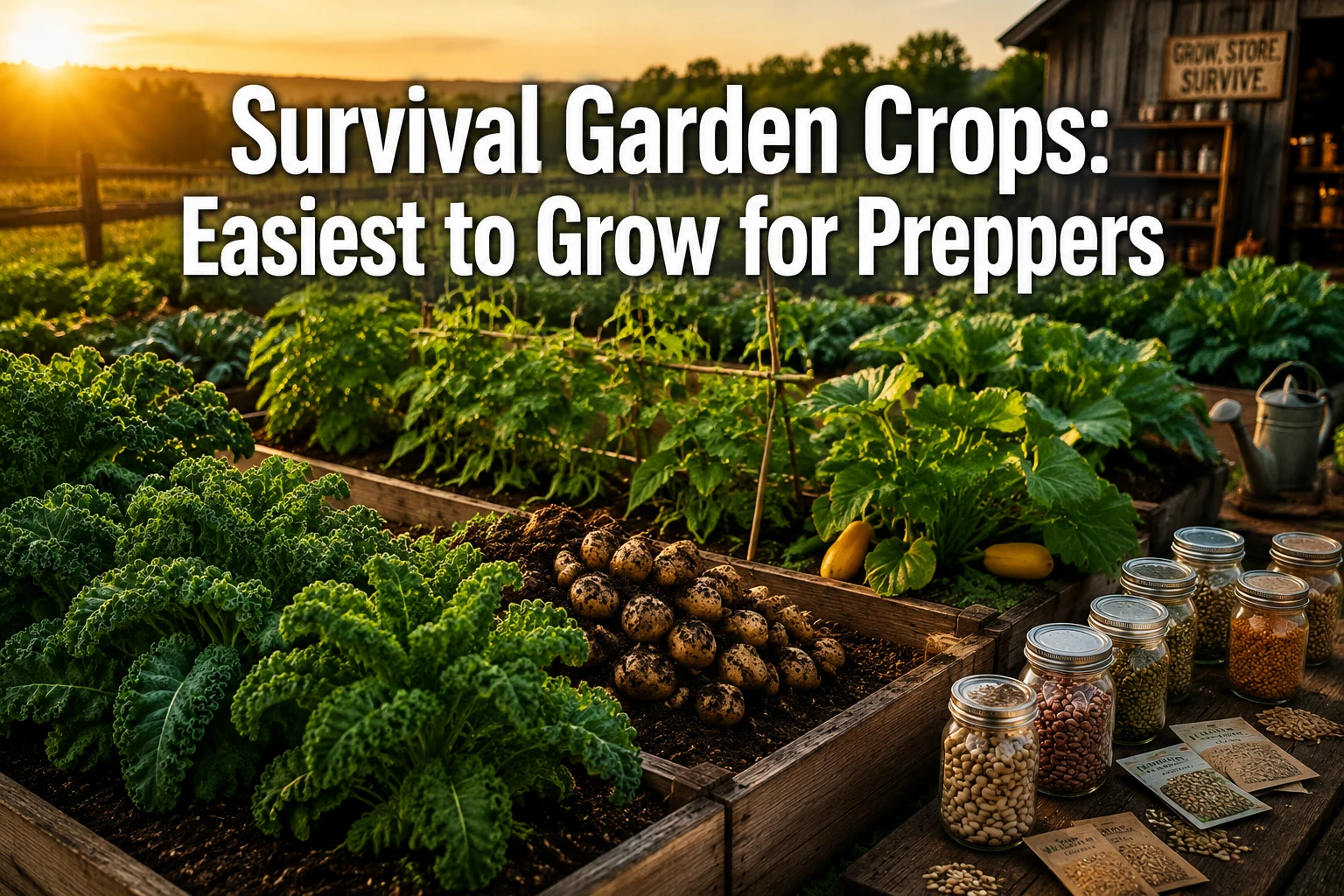 The easiest survival garden crops for preppers are those that tolerate neglect, grow in average soil, produce abundantly, and provide real nutritional value. For beginners with no gardening experience, the short list is: potatoes, kale, bush beans, zucchini/squash, radishes, sweet potatoes, and garlic.
Here’s why each earns its place:
- Potatoes, High caloric density, grow underground away from pests, store well in a cool dark space, and can be planted from grocery store potatoes in a pinch.
- Kale, One of the most nutrient-dense greens available, tolerates frost, and keeps producing after repeated harvesting. A single plant can feed a family for weeks.
- Bush beans, Fix nitrogen in the soil (improving it for future crops), produce heavily in 50-60 days, and dry easily for long-term storage.
- Zucchini/Summer squash, Nearly impossible to kill, produces faster than you can eat it, and requires almost no maintenance once established.
- Radishes, Ready in as little as 25 days, making them the fastest confidence-builder for new growers.
- Sweet potatoes, Drought-tolerant, pest-resistant, and the vines themselves are edible. One plant can yield 5-10 pounds of food.
- Garlic, Plant in fall, harvest in summer, stores for 6-12 months, and has medicinal value beyond nutrition.
Decision rule: If you’re starting from zero, plant potatoes and kale first. They’re the most forgiving, most productive, and most nutritionally complete pairing a prepper can make.
Best Vegetables for Preppers With No Gardening Experience
No experience needed, these crops are genuinely hard to fail with. The best beginner vegetables for preppers are those with wide planting windows, tolerance for irregular watering, and fast feedback loops that build confidence.
Top 5 for absolute beginners:
- Zucchini, Plant seeds directly in the ground after last frost. Water occasionally. Harvest in 50 days. Almost nothing kills it.
- Radishes, Sow seeds, water, harvest in 3-4 weeks. Perfect for learning spacing and thinning without high stakes.
- Kale, Transplant seedlings or direct sow. Tolerates cold, heat, and inconsistent watering better than most greens.
- Bush beans, Direct sow, minimal care, heavy yield. Dry the pods at end of season for stored protein.
- Potatoes, Cut a potato with at least two eyes, let it dry for a day, plant 4 inches deep. Done. Dig up the harvest in 70-120 days.
A common mistake beginners make is over-complicating their first garden. Start with two or three of these crops, learn their rhythms, and expand the following season. Trying to grow 15 different vegetables in year one almost always ends in frustration and wasted seed.
For a broader foundation in self-reliance skills, the 14 essential survival skills every prepper must know pairs well with starting a survival garden.
How Long Does It Take to Grow Survival Garden Crops
Most survival garden crops reach harvest in 30 to 120 days, depending on the variety and growing conditions. Knowing your crop timelines helps you plan succession planting so something is always ready.
| Crop | Days to Harvest | Difficulty |
|---|---|---|
| Radishes | 25-30 days | Very Easy |
| Kale | 55-75 days | Very Easy |
| Bush Beans | 50-60 days | Easy |
| Zucchini/Squash | 50-65 days | Easy |
| Potatoes | 70-120 days | Easy |
| Sweet Potatoes | 90-120 days | Easy |
| Garlic | 240-270 days (planted fall) | Easy |
| Winter Squash | 80-110 days | Easy |
Succession planting tip: Sow a new row of radishes or beans every two weeks throughout the season. This staggers your harvests and prevents the feast-or-famine cycle most first-year gardeners experience.
What’s the Difference Between Heirloom and Hybrid Seeds for Prepping
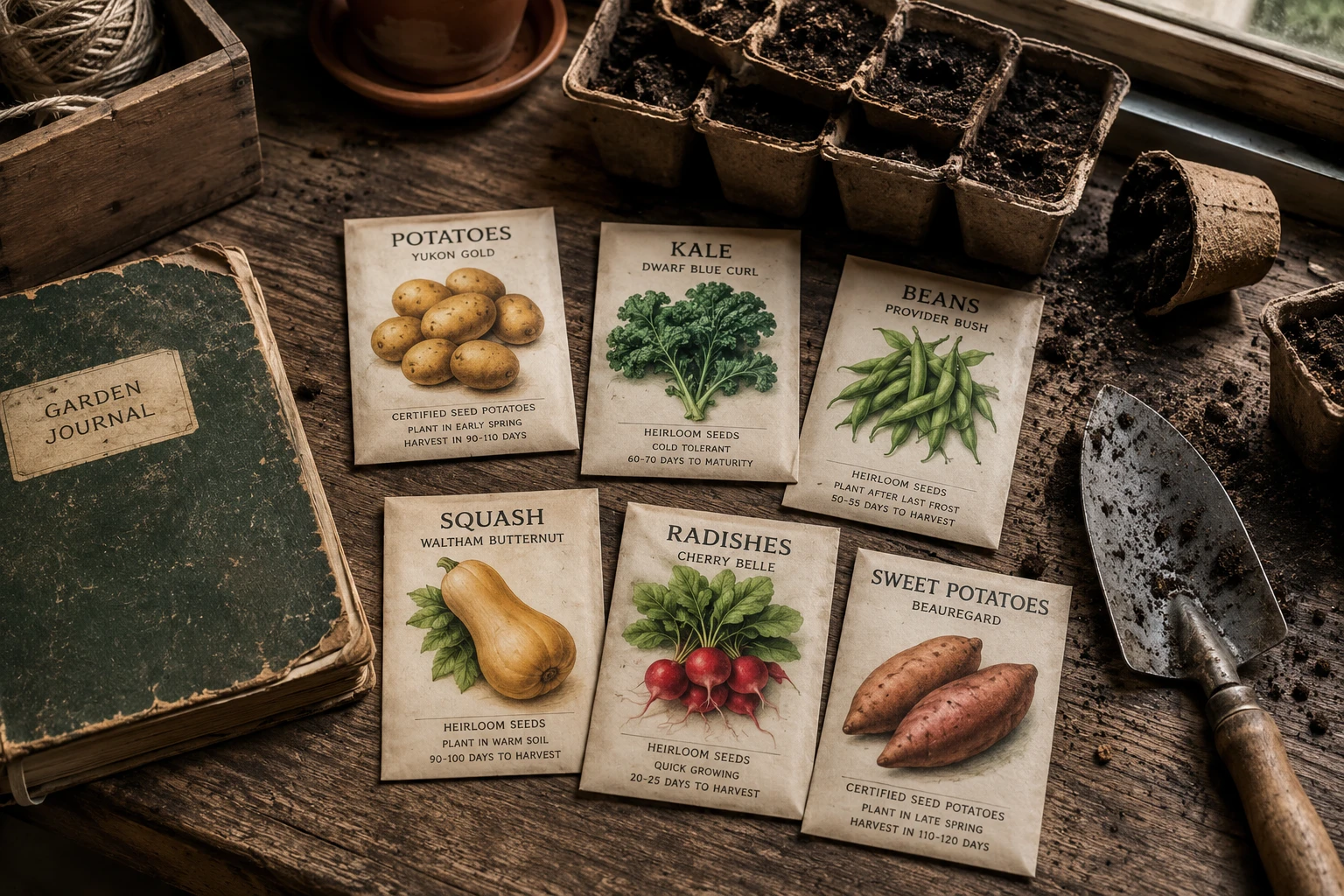 For preppers, heirloom seeds are the only responsible long-term choice. Heirloom varieties are open-pollinated, meaning seeds saved from the harvest will grow true to the parent plant the following season. Hybrid seeds (labeled F1) are bred from two different parent lines, their offspring are genetically unstable and often won’t produce reliably if saved.
Why this matters in a crisis scenario:
- With heirloom seeds, one season’s harvest produces next year’s seed supply.
- With hybrid seeds, you’re dependent on purchasing new seed every year, a supply chain that may not exist in a long-term disruption.
- Heirloom varieties also tend to have deeper flavor and stronger adaptation to local conditions over time.
Recommended heirloom varieties for preppers:
- Potatoes: Yukon Gold, Red Pontiac
- Beans: Jacob’s Cattle, Rattlesnake Pole Bean
- Squash: Waltham Butternut, Delicata
- Kale: Red Russian, Lacinato (Dinosaur Kale)
- Tomatoes: Brandywine, Cherokee Purple (if climate allows)
Store seeds in sealed glass jars with a silica gel packet in a cool, dark location. Most heirloom vegetable seeds remain viable for 3-6 years under proper storage conditions.
How Much Space Do You Need for a Survival Garden That Feeds a Family
A family of four needs roughly 1,000 to 4,000 square feet of productive growing space to make a meaningful dent in their food supply, depending on crop caloric density and growing season length. That said, even 200 square feet of intensively managed raised beds can provide a significant supplement to stored food.
Space estimates by goal:
- Supplement (25% of calories): 400-600 sq ft, focused on calorie-dense crops like potatoes and beans.
- Partial self-sufficiency (50% of calories): 1,000-2,000 sq ft with a diverse crop rotation.
- Near-total food production: 4,000+ sq ft, multiple growing seasons, livestock integration.
The most efficient use of small spaces involves intensive planting methods, square foot gardening, raised beds, and vertical trellising for beans and squash. A 4×8 raised bed planted with potatoes can yield 25-50 pounds of food in a single season.
For preppers building toward true self-reliance, the complete beginner’s guide to homesteading from scratch covers how to scale a survival garden into a full food production system.
Which Survival Crops Store the Longest After Harvest
Root vegetables and dry legumes store the longest after harvest, making them the most valuable crops for true long-term food security. Leafy greens are nutritionally excellent but must be eaten fresh or preserved quickly.
Post-harvest storage life by crop:
- Garlic: 6-12 months in a cool, dry, ventilated space
- Winter squash (butternut, acorn): 3-6 months in a cool room
- Potatoes: 3-6 months in a dark, cool, humid root cellar
- Sweet potatoes: 4-6 months when properly cured
- Dried beans: 1-2 years (longer with oxygen absorbers)
- Dried corn: 1-2 years in sealed containers
- Kale: Days to weeks fresh; can be dehydrated for months of storage
Root cellar basics: A simple root cellar doesn’t require construction. A buried garbage can, an insulated corner of a basement, or even a buried cooler can maintain the 32-40°F and moderate humidity that most root vegetables need. No electricity required.
This pairs well with your overall food storage plan. The ultimate survival pantry list explains how to integrate fresh harvest with long-term stored supplies.
Are Root Vegetables or Leafy Greens Better for Long-Term Food Security
Root vegetables win for long-term food security because of their superior caloric density and post-harvest storage life. Leafy greens win for nutritional diversity and continuous harvest during the growing season. A well-designed survival garden needs both.
Root vegetables (potatoes, sweet potatoes, turnips, beets):
- High in carbohydrates and calories, critical for sustained energy
- Store for months without refrigeration
- Grow underground, largely protected from surface pests
- Can be replanted from saved tubers or seeds
Leafy greens (kale, Swiss chard, spinach, collards):
- Rich in vitamins A, C, K, and iron, nutrients often lacking in stored food diets
- Harvest continuously over weeks or months
- Fast-growing, filling nutritional gaps between root crop harvests
- Cannot be stored long-term without dehydration or canning
The practical answer: Allocate roughly 60% of your survival garden space to calorie-dense root crops and legumes, and 40% to greens and herbs. This ratio gives you the energy to function and the micronutrients to stay healthy.
Survival Garden Crops That Grow in Poor Soil or Shade
Several of the best survival garden crops for preppers actually thrive in suboptimal conditions. This matters because not every prepper has access to rich garden soil or full sun.
Crops that tolerate poor or compacted soil:
- Potatoes, Grow in sandy, rocky, or clay-heavy soil with minimal amendment
- Sweet potatoes, Prefer loose soil but will produce in poor conditions; excess nitrogen actually reduces yield
- Turnips and radishes, Improve compacted soil as they grow; excellent “first crop” for breaking new ground
- Beans, Fix their own nitrogen; actually prefer lower-fertility soil
Crops that tolerate partial shade (3-5 hours of sun):
- Kale, spinach, and Swiss chard
- Radishes and lettuce
- Mint and other herbs
Full sun crops that won’t compromise: Potatoes, beans, squash, and sweet potatoes all need 6-8 hours of direct sun for maximum yield. In shadier spots, shift toward leafy greens and root crops like beets and turnips.
Edge case: If your only growing space is a shaded urban yard, container gardening with potatoes in grow bags and kale in window boxes can still produce meaningful food. Urban preppers should also review the ultimate urban survival guide for preppers for space-constrained strategies.
Do Survival Crops Need a Lot of Water or Fertilizer
Most survival garden crops need approximately 1 inch of water per week and very little synthetic fertilizer when grown in reasonably prepared soil. This is good news for preppers planning for scenarios where municipal water or store-bought inputs may be unavailable.
Water requirements by crop:
- Low water needs: Sweet potatoes, beans (once established), squash
- Moderate water needs: Potatoes, kale, garlic
- Higher water needs: Lettuce, spinach, radishes (shallow roots dry out faster)
Fertilizer alternatives that cost nothing:
- Compost, Kitchen scraps, yard waste, and fallen leaves break down into the most effective garden amendment available
- Wood ash, Adds potassium and raises soil pH; useful for brassicas like kale
- Bean crop rotation, Planting beans in a bed one season adds nitrogen for the following season’s heavy feeders
Rainwater collection is one of the most underrated prepper garden strategies. Even a basic 55-gallon barrel connected to a downspout can supply weeks of garden irrigation during dry periods. For guidance on water capture and storage, see the rainwater collection emergency survival setup guide.
Can You Grow Survival Crops Indoors or Do You Need Outdoor Space
Some survival crops grow well indoors under grow lights or in sunny windows, but calorie-dense crops like potatoes, squash, and sweet potatoes require outdoor space to produce meaningful yields. Indoor growing is best reserved for greens, herbs, and microgreens that supplement nutrition rather than replace calories.
What grows well indoors:
- Kale, spinach, and lettuce (south-facing window or grow light)
- Herbs: mint, oregano, thyme, basil
- Radishes (small containers, 6+ hours of light)
- Microgreens: sunflower, pea shoots, radish (ready in 7-14 days, extremely nutrient-dense)
What requires outdoor space:
- Potatoes, sweet potatoes, squash, beans, garlic
Apartment preppers: Grow bags on a balcony with 6+ hours of sun can support potatoes and beans. A 10-gallon grow bag can yield 3-5 pounds of potatoes. It’s not a full food supply, but it builds skills and supplements stored food meaningfully.
Best Survival Crops for Cold Climates vs. Warm Climates
The best survival crops shift depending on your climate zone, but several core crops perform well across a wide range of conditions. Knowing your USDA hardiness zone and average frost dates is the single most important piece of information for planning a survival garden.
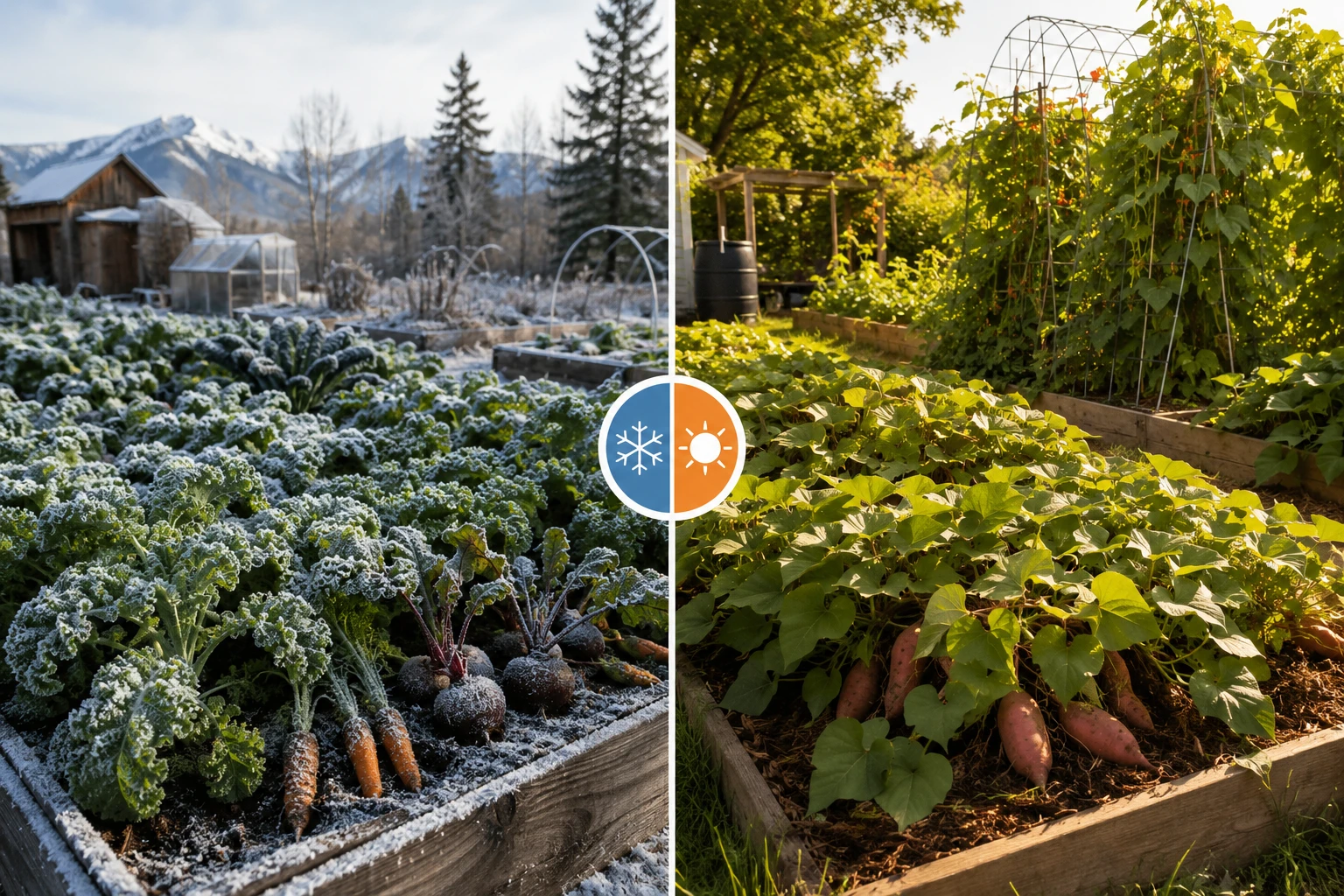
Cold climates (USDA Zones 3-6, short growing seasons):
- Kale, Frost-hardy; actually improves in flavor after a light freeze
- Potatoes, Produce well in cool summers; store naturally in cold climates
- Turnips and rutabagas, Cold-hardy root crops that mature quickly
- Garlic, Planted in fall, overwinters, and harvests in early summer
- Peas, One of the few legumes that prefer cool weather; plant as soon as ground thaws
Warm climates (USDA Zones 7-11, long growing seasons):
- Sweet potatoes, Thrive in heat; need 90-120 frost-free days
- Cowpeas (black-eyed peas), Drought-tolerant, heat-loving, high-protein legume
- Winter squash, Long growing season crops that store through winter
- Collard greens, Southern staple that tolerates heat better than kale
Universal crops that work nearly everywhere: Potatoes, bush beans, zucchini, and garlic adapt to most climates with appropriate variety selection. Choose varieties bred for your region whenever possible.
Can You Save Seeds From Survival Garden Crops to Replant
Yes, but only from heirloom or open-pollinated varieties. Seed saving is one of the most critical long-term survival skills a prepper can develop, because it eliminates dependence on seed suppliers entirely.
How to save seeds from common survival crops:
- Beans and peas: Let pods dry completely on the plant. Shell, dry for two more weeks indoors, store in sealed containers.
- Squash: Scoop seeds from a fully mature fruit, rinse off pulp, dry on a screen for 1-2 weeks.
- Kale: Let a few plants bolt (go to seed) in their second year. Collect the seed pods when dry.
- Potatoes: Save the smallest tubers from harvest as “seed potatoes” for the following season.
- Garlic: Save the largest bulbs from each harvest; replant individual cloves.
Storage rule: Seeds stored in airtight glass jars with silica gel desiccant packets in a cool, dark environment (below 50°F ideally) will remain viable for 3-6 years for most vegetables.
Seed saving pairs naturally with a broader long-term food storage strategy. The long-term food storage complete beginner’s guide covers how to integrate garden harvests with shelf-stable food reserves.
What Tools and Supplies Do You Actually Need to Start a Survival Garden
Starting a survival garden doesn’t require a large investment. The core toolkit is small, durable, and mostly one-time purchases.
Essential tools (prioritized):
- Digging fork or spade, For breaking ground and harvesting root crops
- Hand trowel, For transplanting and close-in work
- Hoe, For weeding and hilling potatoes
- Watering can or hose with adjustable nozzle
- Gloves, Protect your hands; a minor cut in a grid-down scenario is a real problem
Supplies to stock:
- Heirloom seed collection (prioritize the crops listed above)
- Compost or aged manure for soil amendment
- Silica gel packets and glass jars for seed storage
- Row cover fabric (extends growing season, protects from late frosts)
- pH test strips (soil pH between 6.0-7.0 suits most survival crops)
What you don’t need: Expensive raised bed kits, automated irrigation systems, or specialty fertilizers. A shovel, seeds, compost, and water are enough to grow significant food. Keep your toolkit simple and repairable.
Common Mistakes People Make Starting a Prepper Garden
The most damaging mistakes in a prepper garden aren’t about technique, they’re about planning. Starting too small, planting only one crop type, and waiting until a crisis to learn are the three most costly errors.
Avoid these specific mistakes:
- Buying hybrid seeds, You can’t reliably save them. Every packet of hybrid seed is a dependency you can’t afford in a long-term scenario.
- Skipping soil preparation, Poor soil is the single biggest yield killer. Spend one season improving it with compost before expecting heavy harvests.
- Planting only vegetables you like to eat, Survival gardens prioritize caloric density and storability, not personal preference.
- No succession planting, Planting everything at once creates a harvest glut followed by months of nothing. Stagger plantings every 2-3 weeks.
- Ignoring water planning, A garden without a reliable water source is a liability. Plan for drought before it happens.
- Not practicing before you need it, Gardening is a skill. The time to learn it is now, not when food security is already compromised.
Building a survival garden is part of a larger preparedness system. The prepper checklist for beginners 30-day system helps new preppers build multiple layers of readiness simultaneously.
FAQ
What is the single most important survival crop to grow?
Potatoes. They deliver more calories per square foot than almost any other crop, grow in poor soil, store for months without refrigeration, and require minimal gardening experience. If you can only grow one thing, grow potatoes.
How much food can a 10×10 garden produce?
A well-managed 100 square foot garden planted with potatoes and beans can produce an estimated 50-100 pounds of food per season. This won’t feed a family, but it meaningfully supplements stored supplies and builds critical growing skills.
Are tomatoes worth growing in a survival garden?
Tomatoes are nutritious and productive, but they’re more demanding than core survival crops, they need staking, consistent watering, and are vulnerable to disease. Grow them as a supplement, not a foundation. Prioritize calorie-dense crops first.
Can I start a survival garden in containers?
Yes, with limitations. Potatoes in grow bags, beans in large pots, and kale in containers all work on patios or balconies. You won’t achieve caloric self-sufficiency, but you’ll build skills and produce meaningful nutritional supplements.
What’s the fastest crop to grow in a survival situation?
Radishes are ready in 25-30 days. Microgreens (sunflower shoots, pea shoots) are ready in 7-14 days and are extremely nutrient-dense. Neither provides significant calories, but both provide vitamins and morale during a difficult period.
Do I need to rotate crops in a survival garden?
Yes. Planting the same crop family in the same bed year after year depletes specific nutrients and builds up crop-specific pests and diseases. A simple three-bed rotation (legumes, brassicas, root crops) prevents most problems without complex management.
How do I protect a survival garden from pests without pesticides?
Row cover fabric is the most effective physical barrier. Companion planting (marigolds near beans, garlic near most vegetables) deters common pests. Hand-picking insects in the morning is labor-intensive but effective in small gardens.
What’s the best way to water a survival garden without a hose?
Drip irrigation from gravity-fed rain barrels is the most efficient low-tech solution. Alternatively, water deeply once or twice per week rather than lightly every day, this encourages deep root growth and reduces total water consumption.
Should I use raised beds or in-ground planting?
Both work. Raised beds warm faster in spring, drain better, and are easier to manage in small spaces. In-ground planting is cheaper to establish and better for large-scale production. Choose based on your available space and budget.
Can children help with a survival garden?
Absolutely, and they should. Involving children builds skills they’ll carry for life. Assign them radishes and beans, fast-growing, easy to harvest, and immediately rewarding. This also distributes the labor load across the household.
Conclusion
A survival garden isn’t a backup plan, it’s a core pillar of genuine self-reliance. The survival garden crops easiest to grow for preppers share a common profile: they tolerate imperfect conditions, produce abundantly with minimal inputs, and give you something to harvest whether you’re a seasoned grower or picking up a trowel for the first time.
Start with potatoes, kale, and bush beans. Add squash and sweet potatoes as your confidence grows. Invest in heirloom seeds from day one, build your soil with compost, and plan your water source before you plant a single seed. Then practice. Every season you grow food is a season of skill-building that no supply chain disruption can take away from you.
Actionable next steps for 2026:
- Order a core heirloom seed collection this week, don’t wait for spring.
- Test your soil pH with inexpensive strips and amend with compost if needed.
- Set up at least one rain barrel before your first planting season.
- Plant radishes as your first crop, the 25-day harvest builds confidence fast.
- Keep a garden journal from day one. Notes on what worked become your most valuable prepping resource.
For preppers building a complete food security system, combine your survival garden with a well-stocked pantry. The 50 best foods for long-term storage complete prepper’s guide and the 3-month emergency food supply guide are natural companions to everything covered here.
Products, Tools, and Resources
Heirloom Seed Collections: Seed Savers Exchange and Baker Creek Heirloom Seeds are the two most respected sources for non-hybrid, open-pollinated survival garden seeds. Both offer curated collections specifically suited for food security gardening.
Grow Bags (10-25 gallon): For apartment or patio preppers, heavy-duty fabric grow bags allow potato and bean production without traditional garden beds. Look for bags with handles for easy repositioning.
Soil pH Test Strips or Digital Meter: A basic pH meter (under $15) tells you whether your soil needs lime (to raise pH) or sulfur (to lower it) before you invest in seeds and labor.
Row Cover Fabric (Agribon AG-19): Lightweight floating row cover extends your growing season by 4-6 weeks on each end, protects against frost, and creates a physical barrier against flying insects. One of the highest-value investments in a survival garden.
Silica Gel Desiccant Packets and Glass Mason Jars: For seed saving and long-term seed storage, these two items are all you need. Store seeds at below 50°F with low humidity and most heirloom varieties remain viable for 3-5 years.
Compost Bin or Tumbler: Turning kitchen scraps and yard waste into compost eliminates the need for purchased fertilizer. A basic plastic compost bin produces usable compost in 3-6 months.
Garden Journal: Paper, not digital. A physical notebook records planting dates, harvest yields, pest problems, and what worked, information that becomes more valuable with every season you grow.