
Hey there! Some links on this page may be affiliate links which means that, if you choose to make a purchase, I may earn a commission at no extra cost to you. I greatly appreciate your support. Read the full disclosure here.
Most people assume the city will always work.
The lights will come on. The taps will run. The grocery shelves will be stocked. The emergency services will answer. These assumptions are so deeply embedded in urban life that most city dwellers have never seriously questioned them — until the moment they fail.
And they do fail. Not rarely. Not only in movies. In Houston after Hurricane Harvey. In New York after Sandy. In Puerto Rico after Maria. In Texas during the 2021 winter storm. In every major city that has ever faced an extended infrastructure failure, the same pattern emerges: the people who prepared survived better. The people who assumed the city would always work found out, very quickly, that it wouldn’t.
This guide is the system that changes which category you’re in.
What Urban Survival Actually Means — And Why It’s Not What You Think
 Urban survival is not wilderness survival in a city. That distinction matters more than most guides acknowledge — and getting it wrong leads beginners to prepare for the wrong things entirely.
Wilderness survival is about extracting resources from a natural environment. Finding water in streams. Building shelter from trees. Starting fire from friction. Urban survival is something categorically different: managing the collapse of artificial systems. Navigating a city when its infrastructure has failed. Maintaining security when social order has degraded. Sustaining a household when the supply chains that normally feed it have broken down.
The threats are different. The skills are different. The gear is different. And critically, the timeline is different. In a wilderness emergency, the danger is immediate and physical. In an urban emergency, the danger often builds gradually — the first 24 hours feel manageable, the next 48 hours feel uncomfortable, and by day 4 or 5, the situation has become genuinely dangerous for households that haven’t prepared.
The short version: Urban survival is the practice of maintaining safety, food security, water access, and functional shelter during urban infrastructure failures — including power grid collapse, civil unrest, natural disasters, and supply chain disruption. Unlike wilderness survival, urban survival focuses on managing the failure of artificial systems rather than extracting resources from nature.
The most important urban survival insight is also the most counterintuitive: cities concentrate both resources and risks. More people competing for the same water, food, and safety. More potential sources of conflict. More infrastructure dependencies that can fail simultaneously. But also more resources available to the prepared person — water in building systems, food in community networks, shelter in existing structures, and community in neighbors who can become allies.
Key Takeaways:
– Urban survival focuses on managing artificial system failures—power outages, civil unrest, and supply chain disruptions—rather than wilderness skills.
– Water and food storage tailored to apartment living are critical; 1 gallon of water per person per day and layered food supplies (72-hour to 30-day) ensure extended readiness.
– Home security combines physical hardening (door/window reinforcement, lighting) with social strategies like community building and the gray man principle.
– Reliable communication tools (emergency radio, power banks) and clear family communication plans are essential when conventional networks fail.
– The bug-out vs. shelter-in-place decision depends on structural safety, resource availability, and neighborhood conditions; plan multiple routes and maintain a get-home bag.
The Threats You’re Actually Preparing For — Not the Ones That Make Good Movies
Before building any preparedness system, you need to understand what you’re preparing for. Urban survival threats fall into five categories, each with distinct timelines and requirements.
Extended power grid failure is the most common and most consequential urban emergency. When the grid fails in a dense urban environment, the cascading effects are rapid and severe: water pressure drops (pumps require electricity), heating and cooling systems fail, refrigerated food spoils within 24 to 48 hours, gas stations can’t pump fuel, ATMs go offline, and communication infrastructure degrades. A 2-week urban power outage — which has occurred in multiple major cities — requires a fundamentally different level of preparation than a 72-hour outage.
Civil unrest and social breakdown is the urban survival scenario most guides underemphasize. Historical data from urban emergencies consistently shows that social behavior deteriorates in a predictable pattern: the first 24 hours are characterized by shock and cooperation; by 48 to 72 hours, competition for resources begins; by day 4 or 5 in a severe emergency, opportunistic crime increases significantly. Preparing for this timeline — not assuming it won’t happen — is the mark of serious urban preparedness.
Natural disasters in urban environments — earthquakes, floods, hurricanes — create unique challenges because they damage the infrastructure that urban dwellers depend on while simultaneously overwhelming emergency services. The density of urban populations means that emergency response is stretched thin across more people than it can effectively serve.
Supply chain collapse is the most underappreciated urban survival threat. Modern grocery stores carry approximately 3 days of inventory. When supply chains are disrupted — by weather, infrastructure failure, or civil unrest — shelves empty within hours. The households that have built their own food supply are the ones that don’t experience this as a crisis.
Urban Water — The System That Keeps You Alive When the Taps Run Dry
Water is the first priority in any survival scenario, and urban water planning has specific challenges that wilderness-focused guides don’t address.
The urban water problem: Municipal water systems depend on electricity to pump water through distribution networks. When the grid fails, water pressure drops — often within 12 to 24 hours in high-rise buildings, and within 48 to 72 hours in most urban systems. The water that remains in pipes and building systems is finite and will not be replenished until power is restored.
Urban water storage — the apartment-friendly approach:
The standard recommendation is 1 gallon per person per day. For a family of four over a 2-week emergency, that’s 56 gallons minimum. In an apartment, this requires creative storage solutions:
- WaterBOB bathtub bladder: Holds up to 100 gallons in a standard bathtub. Fills from the tap in approximately 20 minutes. Costs approximately $30. The single most cost-effective urban water storage solution available.
- Aqua-Tainer 7-gallon containers: Stackable, food-grade, and storable under beds, in closets, and in any available floor space.
- Water purification backup: A Sawyer Squeeze filter and chlorine dioxide tablets provide purification capability for any water source you can access — building water systems, rainwater, or nearby natural sources.
Urban water sources most city preppers overlook:
- Hot water heater tanks: A standard residential water heater holds 30 to 80 gallons of clean water. Turn off the power or gas before draining.
- Toilet tanks (not bowls): The tank contains clean water. Do not use water from the bowl.
- Building water systems: Water remaining in pipes can be accessed by opening the lowest faucet in the building.
- Rainwater collection: Even in urban environments, a tarp or large container can collect significant rainwater during precipitation events.
The Ultimate Emergency Water Storage and Purification Guide
Urban Food Security — Feeding Your Household When the Shelves Are Empty
 Urban food security requires a different approach than rural food production. City dwellers cannot grow meaningful quantities of food in most urban environments. The strategy is storage, not production — and it needs to be built before the emergency, not during it.
The urban food storage framework:
Build your food supply in three layers:
Layer 1 — The 72-hour supply: Foods you already eat that require no cooking and no refrigeration. Peanut butter, crackers, canned goods, dried fruit, nuts. This layer should be assembled immediately and requires no special planning.
Layer 2 — The 2-week supply: Shelf-stable foods with 1 to 5-year shelf lives that provide complete nutrition. White rice, dried beans, pasta, canned proteins (tuna, chicken, salmon), canned vegetables, cooking oils, salt, sugar, and coffee or tea. This layer requires a manual can opener, a camp stove, and fuel.
Layer 3 — The 30-day supply: Long-term storage foods with 5 to 25-year shelf lives. Freeze-dried meals, hard wheat berries, dried legumes in sealed mylar bags, and honey. This layer requires more investment but provides genuine food security for extended emergencies.
Calorie calculation for urban food storage:
The average adult requires approximately 2,000 calories per day. A family of four needs approximately 8,000 calories per day, or 56,000 calories for a 7-day supply. Build your food storage around calorie density — white rice (1,700 calories per pound), dried beans (1,500 calories per pound), and cooking oils (3,500 calories per pound) are the most efficient storage foods available.
Cooking without electricity in an urban environment:
- Propane camp stove: The most practical urban cooking solution. A single 1-pound propane canister provides approximately 1 hour of cooking time. Store 10 to 20 canisters for a 2-week supply.
- Butane stove: More compact than propane, suitable for apartment use. Butane performs poorly in cold temperatures.
- Critical safety note: Never use propane, butane, or charcoal stoves indoors without adequate ventilation. Carbon monoxide poisoning is one of the leading causes of death in power outage scenarios.
Urban Security — Protecting What You’ve Built Without Becoming Paranoid
Security is the urban survival topic that generates the most discomfort — and the most dangerous complacency. The reality is straightforward: in extended urban emergencies, the social contract that normally prevents crime weakens. Preparing for this is not paranoia. It is the same rational calculation that leads people to lock their doors.
Home hardening for urban environments:
The goal of home hardening is not to make your home impenetrable — it is to make it a less attractive target than alternatives. Most opportunistic crime is exactly that: opportunistic. Hardening your home redirects that opportunism elsewhere.
- Door reinforcement: Most residential doors can be kicked in with a single blow. Door frame reinforcement kits (Door Armor, Door Jamb Armor) significantly increase resistance. Cost: $50 to $150.
- Window security: Security film applied to windows prevents glass from shattering into dangerous shards and significantly increases the time required to breach a window.
- Lighting: Motion-activated exterior lighting is one of the most effective deterrents available. In a power outage, battery-powered motion lights serve the same function.
The gray man concept:
In an urban emergency, visibility is a liability. The gray man concept — blending into the environment, not displaying signs of wealth or preparedness, moving without attracting attention — is one of the most important urban survival principles. Don’t discuss your food storage with neighbors you don’t trust. Don’t carry visible gear that signals preparedness. Don’t draw attention to your household’s relative comfort during a community emergency.
Community security:
The most effective urban security strategy is community-based. A neighborhood where residents know each other, communicate regularly, and watch out for each other is significantly more secure than a neighborhood of strangers. Building these relationships before an emergency is the most important security investment you can make.
Communication When the Grid Goes Dark — Staying Informed When It Matters Most
In an urban emergency, information is as critical as water. The decisions you make — whether to shelter in place or evacuate, which routes are safe, where emergency resources are available — depend on accurate, timely information. When cell networks fail and internet goes down, most urban dwellers are completely information-blind.
The emergency radio: A battery-powered or hand-crank NOAA Weather Radio is the foundation of urban emergency communication. NOAA broadcasts continuous weather and emergency information on dedicated frequencies that remain operational when other infrastructure fails. The Midland ER310 and Kaito KA500 are consistently recommended for their combination of power options (battery, hand-crank, solar) and reception quality.
Family communication plan: Every urban household needs a written communication plan that answers three questions: Where do we meet if we can’t reach each other by phone? Who is our out-of-area contact who can relay messages between separated family members? What is our plan if schools or workplaces are locked down?
The out-of-area contact is particularly important. During regional emergencies, local phone lines are overwhelmed. Calls to out-of-area numbers often succeed when local calls fail. Designate a friend or family member outside your region as the communication hub for your household.
Bug-Out or Stay Put — The Decision That Could Define Everything
The bug-out decision is the most consequential decision in urban survival — and the one most people get wrong in both directions. Some people plan to bug out at the first sign of trouble, abandoning a secure shelter for the uncertainty of the road. Others plan to shelter in place regardless of conditions, ignoring scenarios where staying becomes genuinely dangerous.
The bug-out decision framework:
Stay if:
- Your home is structurally sound and not in a flood zone or fire path
- You have adequate water, food, and security for the expected duration
- The roads are more dangerous than your home
- You have no secure destination to travel to
Leave if:
- Your home is structurally compromised or in the path of an ongoing threat
- Civil unrest has reached your immediate neighborhood
- You have exhausted your water or food supply with no resupply in sight
- You have a secure, pre-planned destination and a viable route to reach it
Urban bug-out routes:
Plan three routes out of your city — primary, secondary, and tertiary. Drive each route and identify potential obstacles: bridges that could be closed, tunnels that could be flooded, highways that could be gridlocked. Identify the on-foot alternative for each route. Know which routes avoid the highest-density areas where civil unrest is most likely.
The urban get-home bag:
Separate from the bug-out bag, the get-home bag is designed for a specific scenario: you’re at work or elsewhere in the city when an emergency occurs, and you need to get home on foot. It should contain: water (2 liters minimum), food (2,000 calories), a paper map of your city, a first aid kit, a phone charger and power bank, comfortable walking shoes, and basic security items appropriate to your local laws.
The Urban Survival Kit — What City Dwellers Actually Need
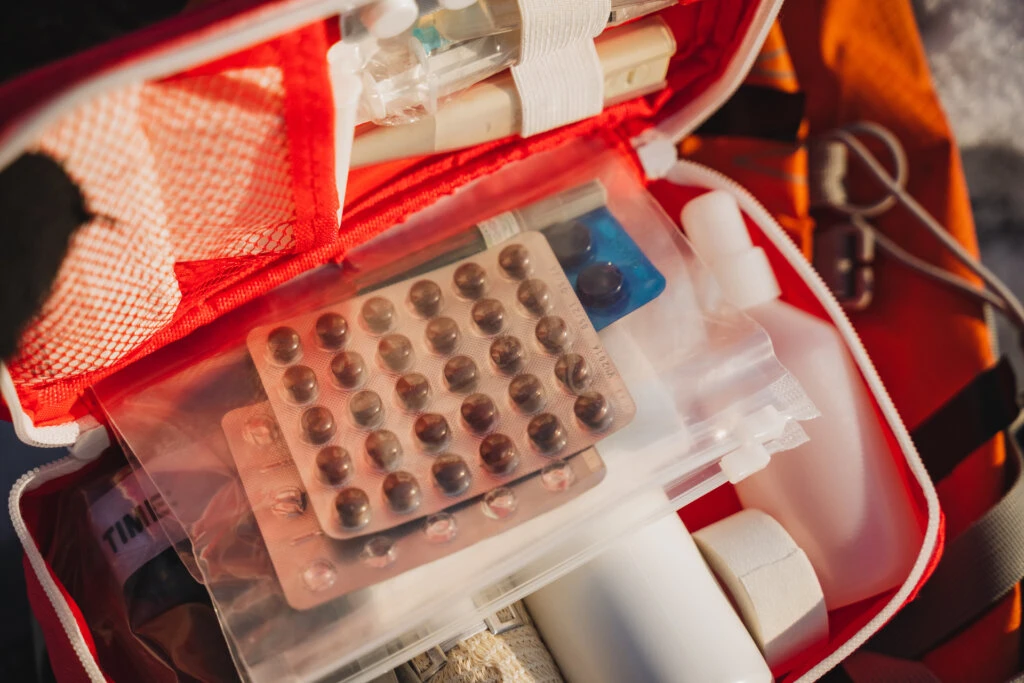 The urban survival kit differs from the wilderness survival kit in several important ways. Urban emergencies rarely require fire starting, primitive shelter building, or wilderness navigation. They do require water storage, communication capability, home security, and medical preparedness.
The 72-hour urban survival kit — the non-negotiables:
| Category | Items |
| Water | 3 gallons per person, water filter, purification tablets |
| Food | 72-hour supply of shelf-stable foods, manual can opener |
| Light | Headlamp (per person), extra batteries, LED lantern |
| Communication | Emergency radio, phone charger, power bank |
| First aid | Complete first aid kit, prescription medications (30-day supply) |
| Documents | Copies of ID, insurance, financial documents in waterproof bag |
| Cash | $200 to $500 in small bills |
| Security | Appropriate to local laws and personal situation |
| Sanitation | Toilet paper, hand sanitizer, waste bags |
| Tools | Multi-tool, duct tape, work gloves |
Ultimate Emergency Supplies List: What FEMA Won’t Tell You
The Questions People Actually Ask About Urban Survival
How long should my urban survival supply actually last?
The minimum is 72 hours — that’s the standard FEMA recommendation. But most serious urban preparedness experts recommend a 2-week supply as the realistic minimum for major urban emergencies. The 2021 Texas winter storm lasted 4 to 7 days for most affected households. Hurricane Maria left parts of Puerto Rico without power for months. A 30-day supply provides genuine security for most realistic urban emergency scenarios. Start with 72 hours, build toward 2 weeks, and keep going from there.
I live in a high-rise apartment. Does any of this actually apply to me?
It applies — but differently. High-rise buildings face specific challenges that ground-floor dwellers don’t: elevator failure makes vertical movement difficult, water pressure fails faster than in low-rise buildings, fire evacuation is more complex, and the concentration of people in a single building creates both community resources and security challenges. If you’re in a high-rise, prioritize water storage above everything else (pressure fails faster), get familiar with your stairwells now, and invest in relationships with neighbors on your floor. Those relationships will matter more than almost any piece of gear.
What’s the single most important urban survival skill?
Situational awareness — the continuous practice of perceiving, comprehending, and projecting the state of your environment. It costs nothing, requires no gear, and can be practiced every single day. The ability to recognize a deteriorating situation before it becomes a crisis, to identify threats before they materialize, and to make calm decisions under pressure is the foundation on which all other urban survival skills rest. Everything else is secondary.
What should I actually do first when an urban emergency hits?
The STOP method: Stop (cease all movement and action), Think (assess your situation honestly), Observe (look at your environment with fresh eyes), Plan (create a specific action plan before moving). The instinct to immediately do something — to move, to act, to react — is powerful and often counterproductive. The first minutes of an urban emergency are best spent in calm assessment, not panicked action. The people who pause and think clearly in the first five minutes almost always make better decisions than the people who immediately start moving.
Products / Tools / Resources
These are the specific items that consistently come up in serious urban survival conversations — not because they’re the most expensive or the most tactical-looking, but because they actually work when it matters.
Water Storage and Purification
WaterBOB Emergency Drinking Water Storage— The most practical emergency water storage solution for apartment dwellers. Holds 100 gallons in a standard bathtub, fills in 20 minutes, costs about $30. Keep one in every urban household. It’s the kind of thing you buy once and hope you never need.
Aqua-Tainer 7-Gallon Rigid Water Container — Stackable, food-grade, and sized for apartment storage. Four of these under a bed gives a family of four a week of drinking water. The built-in spigot makes dispensing easy.
Sawyer Squeeze Water Filter — Rated for 100,000 gallons, weighs 3 ounces, removes 99.99999% of bacteria and protozoa. The standard recommendation for portable water filtration. Pair with chlorine dioxide tablets for complete coverage against viruses.
Potable Aqua Chlorine Dioxide Tablets — The most effective chemical water treatment option. Kills bacteria, viruses, and Cryptosporidium. Lightweight, compact, and effective. Keep a supply in every emergency kit.
Communication
Midland ER310 Emergency Crank Weather Radio — Multiple power sources (battery, hand-crank, solar), NOAA Weather Radio reception, USB charging port, and SOS function. The most consistently recommended emergency radio for urban preparedness.
Anker PowerCore 26800 Portable Power Bank — High-capacity portable power bank for charging phones, flashlights, and other devices during extended power outages. The 26800 mAh capacity provides multiple full charges for most smartphones.
Food Storage
Augason Farms Emergency Food Supply — One of the most accessible freeze-dried and dehydrated food suppliers for beginners. Wide variety, reasonable pricing, available on Amazon. A good starting point for building the 30-day layer.
Security and Home Hardening
Door Armor MAX Complete Door Reinforcement Kit — The most recommended door reinforcement system for residential use. Significantly increases resistance to forced entry. Installs without professional help.
Kidde Battery-Operated Carbon Monoxide Detector— Critical for any household using alternative heating or cooking during power outages. Carbon monoxide poisoning is one of the leading causes of death in power outage scenarios. This costs less than $30 and could save your life.
Light and Power
Black Diamond Spot Headlamp — The most consistently recommended headlamp for emergency preparedness. Bright, durable, water-resistant. Headlamps beat handheld flashlights in almost every emergency scenario because they free both hands.
Goal Zero Yeti 500X Portable Power Station — A mid-range portable power station for powering essential devices during extended outages. Charges from solar panels, wall outlets, or car chargers. Worth the investment for households that need to power medical devices or maintain communication equipment.
First Aid and Medical
Adventure Medical Kits Comprehensive Family First Aid Kit — The most complete pre-built first aid kit for household emergency preparedness. Includes a comprehensive first aid guide and supplies for managing most common emergency injuries.
American Red Cross First Aid/CPR/AED Course — The most accessible first aid certification for civilians. 4 to 8 hours of instruction that provides skills genuinely capable of saving lives. Find a course at redcross.org. This is the most important supplement to any first aid kit.
Planning Resources
FEMA Ready.gov Emergency Plan Templates — Free, downloadable family emergency plan templates from the federal government. The starting point for every household’s written emergency plan. Available at ready.gov.
The Prepared (theprepared.com) — The most rigorous and evidence-based emergency preparedness resource available online. Their urban survival guides are extensively researched and regularly updated. If you read one preparedness website, make it this one.