

Hey there! Some links on this page may be affiliate links which means that, if you choose to make a purchase, I may earn a commission at no extra cost to you. I greatly appreciate your support. Read the full disclosure here.
Nearly 3.5 billion people worldwide still cook, heat, and light their homes without reliable grid electricity, and they do it every single day. For most preppers in 2026, the question isn’t whether a long-term grid failure could happen. It’s whether they’d survive one that lasted months, not days.
Learning how to live without electricity long term isn’t about suffering through inconvenience. It’s about building a complete, functioning lifestyle that doesn’t depend on a system you don’t control. This guide covers every core system, water, heat, food, light, communication, and medical care, so you can make that transition with confidence, whether by choice or necessity.
Key Takeaways
- Long-term electricity-free living requires mastering five core systems: water, food, heat, light, and sanitation.
- The biggest difference between off-grid living and simply using less electricity is intentional infrastructure, you replace grid systems with independent alternatives.
- A basic no-electricity homestead can be started for under $2,000 if you prioritize skills over gear.
- Families with children can absolutely live without electricity, but the transition requires planning, practice, and age-appropriate skill-building.
- The most common failure point isn’t equipment, it’s the gap between knowing what to do and having practiced it.
- Medical preparedness is the most overlooked challenge in electricity-free living and requires specific planning for anyone with chronic conditions.
- Communication without electricity is achievable using hand-crank radios, satellite messengers, and community networks.
- Starting with a 72-hour practice run before committing to long-term changes reveals gaps that no checklist can predict.

What Are the Basics of Living Off-Grid Without Electricity
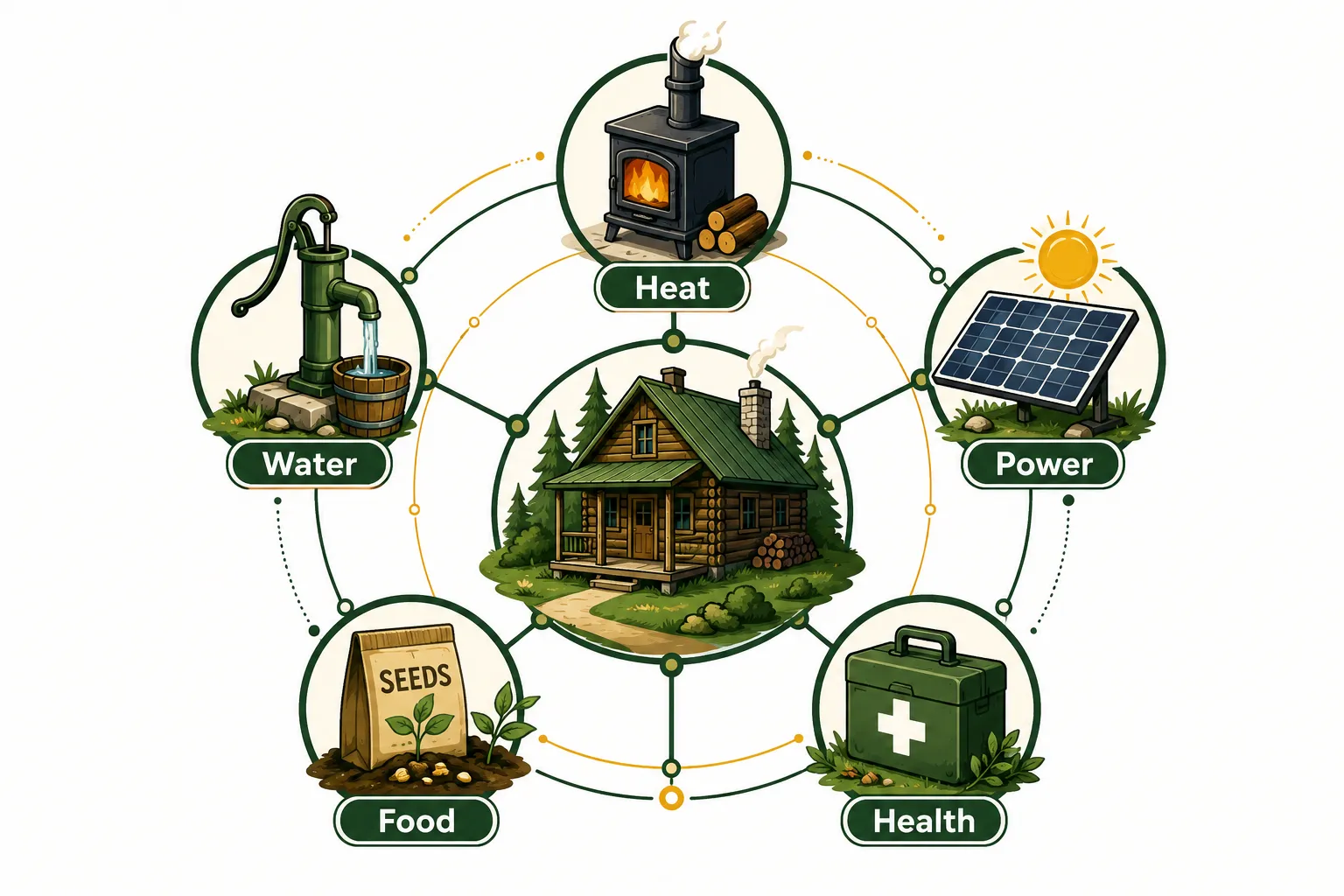
Living off-grid without electricity means replacing every grid-dependent system in your home with a self-sufficient alternative. The five core systems are water sourcing, food production and preservation, heating and cooking, lighting, and waste management. Get those five right, and everything else becomes manageable.
Most people underestimate how deeply electricity is woven into daily routines, not just lights and screens, but water pressure, refrigeration, heating controls, and even basic communication. Going electricity-free long term means auditing each of those dependencies and building a functional replacement before you need it.
The five pillars of electricity-free living:
- Water: Hand-pump wells, gravity-fed rainwater collection, or proximity to a natural water source with filtration capability
- Food: A working garden, food preservation skills (canning, fermenting, drying), and a substantial dry goods stockpile
- Heat and cooking: Wood stoves, rocket stoves, or propane systems with stored fuel
- Light: Oil lanterns, beeswax candles, and solar-charged LED lanterns for transitional use
- Sanitation: Composting toilets, outhouse construction, and greywater management
The difference between a prepared homesteader and someone who simply lost power is infrastructure. Every system needs to be in place and tested before you depend on it.
For a deeper foundation, the Ultimate Guide to Off-Grid Living covers the homestead independence model in full detail.
What’s the Difference Between Off-Grid Living and Just Using Less Electricity
Off-grid living means your home functions independently of the utility grid. Using less electricity still means you depend on the grid, you’ve just reduced your bill. The distinction matters enormously when the grid goes down for weeks.
Someone who has cut their electricity use by 50% still loses everything the moment the grid fails. A true off-grid household has replaced grid dependency with owned infrastructure: a well with a hand pump, a wood stove for heat, a root cellar for food storage, and a water filtration system that doesn’t require power.
Think of it this way: reducing electricity use is a financial choice. Living without electricity long term is a resilience strategy.
How Do People Generate Their Own Power Without Electricity
This question contains a useful paradox. “Living without electricity” doesn’t always mean living without any generated power, it means living without grid electricity. Many long-term off-grid households use small-scale renewable generation for targeted, essential tasks.
Practical low-power generation options:
- Solar panels with battery storage: Even a modest 200-400 watt system can power LED lighting, a radio, and phone charging without grid dependency
- Micro-hydro systems: If you have a running stream on your property, a micro-hydro turbine can provide consistent low-wattage power
- Wind turbines: Viable in consistently windy regions; less reliable as a sole source
- Hand-crank and pedal generators: Useful for charging small devices and radios in true no-power scenarios
For preppers who want zero grid dependency, the focus shifts to eliminating the need for electricity entirely rather than generating it. That means replacing electric appliances with non-electric equivalents: hand-crank grain mills instead of electric blenders, propane or wood for cooking instead of electric ranges, and oil lamps instead of electric lights.
The Backup Power for Emergencies guide is worth reading even if your goal is full electricity-free living, it clarifies exactly which loads are worth powering and which are better replaced entirely.
How Much Does It Cost to Set Up a No-Electricity Homestead
A functional no-electricity homestead can be established for as little as $1,500 to $3,000 if you already own land and focus on skills-first, gear-second. Full infrastructure buildout, well, wood stove, root cellar, garden, and food storage, typically runs $10,000 to $30,000 depending on your starting point and region.
Rough cost breakdown for core systems:
| System | Budget Option | Mid-Range |
|---|---|---|
| Water (hand-pump well) | $500,$1,500 | $3,000,$8,000 |
| Wood stove + installation | $800,$1,200 | $2,000,$4,000 |
| Food storage (6 months) | $600,$1,000 | $1,500,$3,000 |
| Garden setup | $100,$300 | $500,$1,500 |
| Lighting (lanterns, candles) | $50,$150 | $200,$500 |
The cheapest way to start is to prioritize skills over equipment. A person who knows how to start a fire without matches, preserve food, and purify water needs far less gear than someone who hasn’t practiced any of those skills.
Common mistake: Buying expensive gear before developing the skills to use it. A $400 water filter is useless if you don’t know how to identify a safe water source. Start with a preparedness lifestyle plan and build systematically.
How Do You Stay Warm and Cook Food Without Electricity
Heating and cooking are the two systems most people feel least confident about when learning how to live without electricity long term. Both are highly solvable with the right equipment and fuel management.
Heating without electricity:
- A wood-burning stove is the single most reliable long-term heat source. It heats the space, can heat water, and can cook food simultaneously. Proper installation with a certified chimney is non-negotiable for safety.
- Rocket mass heaters burn wood extremely efficiently and radiate heat for hours after the fire dies down, ideal for cold climates.
- Propane heaters work well as a backup but require stored fuel, which has limits.
- Passive solar design, south-facing windows, thermal mass walls, and heavy insulation, reduces heating demand dramatically before any fuel is burned.
Cooking without electricity:
- Cast-iron cookware on a wood stove is the gold standard for long-term off-grid cooking. It’s durable, versatile, and works on any heat source.
- Rocket stoves use small-diameter wood (twigs, branches) and burn hot and clean.
- Solar ovens work surprisingly well in sunny climates for slow cooking and baking.
- Propane camp stoves serve as a reliable bridge during transition periods.
For detailed no-power cooking methods, the Emergency Cooking Without Power guide covers fuel types, stove options, and meal planning in depth.
Knowing how to purify water without tools outdoors is equally critical, clean water and the ability to boil it are foundational to every other system.
What Skills Do You Need Before Going Electricity-Free
The skills gap is the most dangerous gap in electricity-free preparedness. Equipment fails, runs out, or gets damaged. Skills don’t. Before committing to long-term electricity-free living, there are specific competencies that directly affect survival outcomes.
Priority skills to develop before going electricity-free:
- Fire starting and management, including wet-weather fire starting and maintaining a fire overnight
- Water sourcing and purification, identifying sources, filtering, boiling, and chemical treatment
- Food preservation, pressure canning, lacto-fermentation, dehydrating, and root cellaring
- Basic carpentry and repair, fixing structures, building shelves, maintaining tools
- Garden management, soil health, seed saving, pest management, and seasonal planning
- Basic medical care, wound treatment, herbal remedies, and managing common illnesses without a pharmacy
- Navigation without GPS, map reading, compass use, and landmark navigation
A structured approach to skill-building is more effective than random learning. The Complete Prepping Guide for Beginners provides a sequential framework that works for both new and experienced preppers.
Edge case: Many people discover their biggest skill gap is food preservation, not fire-starting. If you can’t preserve a summer harvest, you’ll face serious food shortages by winter regardless of how well-stocked your pantry is at the start.
Is Living Without Electricity Realistic for Families with Kids
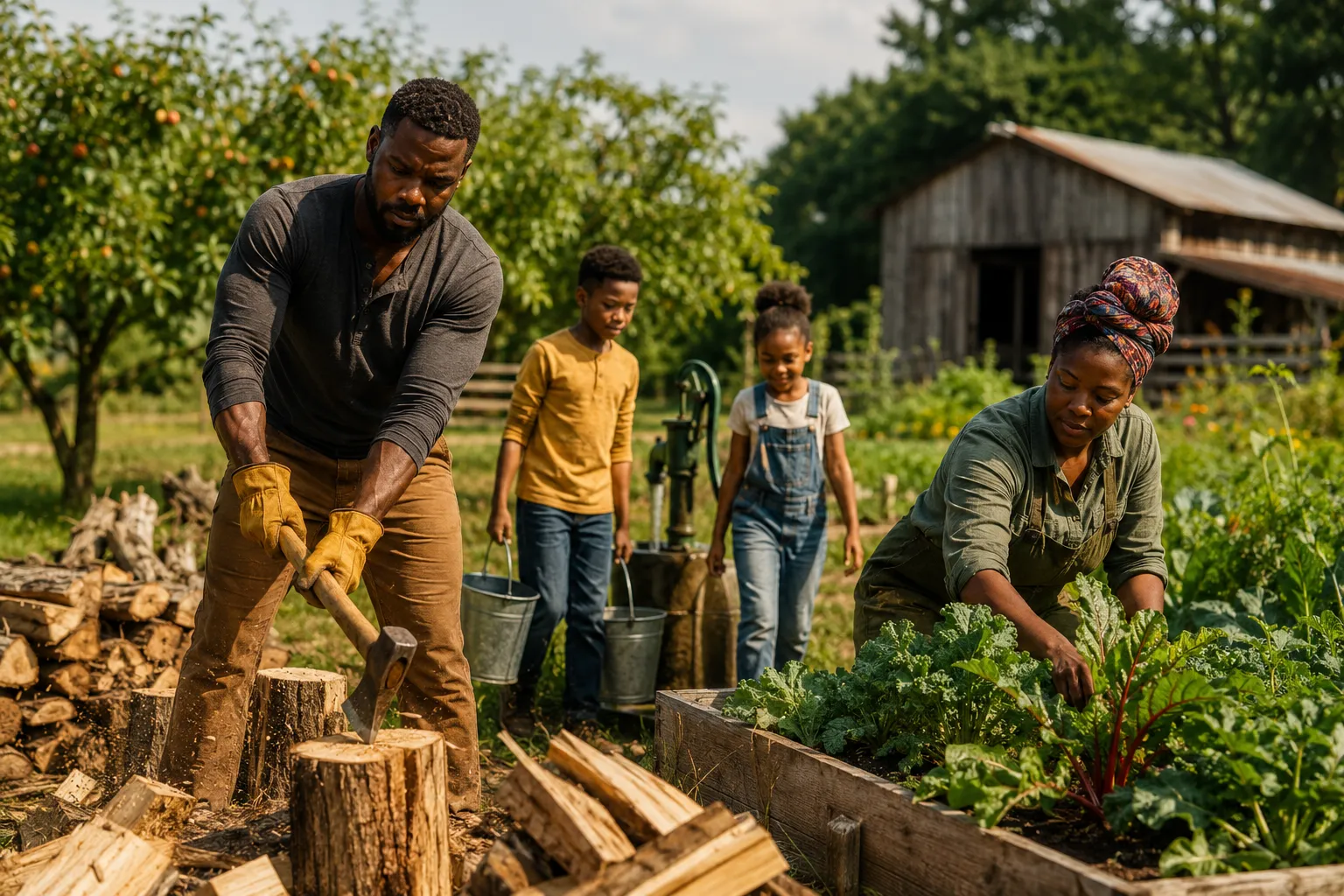
Yes, families with children can live without electricity long term, and historically, most of humanity did exactly that. The key is involving children in the systems early, making the transition gradual, and addressing the specific needs of different age groups.
Age-specific considerations:
- Infants and toddlers: The primary concerns are temperature regulation, clean water, and formula or breastfeeding support. A reliable heat source and clean water system are non-negotiable.
- School-age children (6-12): Children this age adapt quickly and can contribute meaningfully to homestead tasks. Homeschooling by candlelight or natural light is entirely practical.
- Teenagers: The social isolation of off-grid living can be harder for teens. Community connections, neighboring homesteads, local markets, church groups, matter more for this age group.
What actually makes it work for families:
- Establish routines around natural light cycles (earlier to bed, earlier to rise)
- Assign age-appropriate tasks so children feel capable rather than deprived
- Build a community network with other off-grid or prepared families
- Have a medical plan that accounts for children’s specific health needs
The Kids Emergency Preparedness guide addresses family-specific planning in detail.
What Are the Biggest Challenges of Living Without Electricity Long Term
The biggest challenges aren’t the ones most people expect. Physical discomfort is manageable. The real challenges are medical dependency, social isolation, and the relentless physical labor that replaces automated systems.
The top five long-term challenges:
- Medical needs: Anyone dependent on refrigerated medications (insulin, certain biologics), powered medical equipment (CPAP, oxygen), or regular medical access faces serious risk. This requires individual planning, not generic advice.
- Physical labor: Every task that electricity automates, pumping water, grinding grain, washing clothes, becomes manual work. The physical demand is significant, especially in the first year.
- Food production gaps: A single bad growing season can create a food crisis. Diversified food storage is essential as a buffer.
- Social isolation: Long-term electricity-free living without community support is genuinely difficult. Isolation affects mental health and reduces resilience.
- Information access: Staying informed about weather, regional threats, and community events requires deliberate communication systems.
Can you live comfortably without electricity in a modern house?
A modern house can be adapted for electricity-free living, but it requires significant retrofitting. Most modern homes lack wood stoves, proper insulation for passive heating, and non-electric water systems. The structural bones are usually fine, the systems need replacement. A modern house in a cold climate without a wood stove is genuinely dangerous in a long-term grid failure.
How Do You Handle Medical Needs or Emergencies Without Electricity
Medical preparedness is the most under-planned aspect of electricity-free living. The direct answer: you need a personalized medical plan that accounts for every prescription, condition, and likely emergency in your household before you go off-grid.
Core medical preparedness steps:
- Audit all medications: Identify which require refrigeration, which can be stockpiled, and which have herbal or non-electric alternatives
- Build a comprehensive first aid capability: Go beyond a basic kit, learn wound closure, splinting, and infection management
- Stock a 90-day minimum medication supply for any chronic conditions, and work with your physician on extended supply options
- Learn herbal medicine basics: Elderberry, yarrow, plantain, and garlic have documented antimicrobial and immune-supporting properties
- Have a medical evacuation plan: Know the nearest hospital, the route to get there without a powered vehicle, and the conditions that warrant immediate evacuation
For individuals with disabilities or complex medical needs, the Emergency Preparedness for Disabled Individuals guide provides specific frameworks that apply directly to electricity-free scenarios.
What About Internet and Communication Without Electricity
Communication without electricity is achievable and should be a deliberate system, not an afterthought. The goal is maintaining situational awareness, staying connected with family, and accessing emergency information.
Practical communication options:
- Hand-crank or battery-powered AM/FM/NOAA weather radio: The most reliable way to receive emergency broadcasts and weather alerts without any grid dependency
- Satellite communicators (Garmin inReach, SPOT): Two-way text messaging via satellite, no cell towers required. Battery life is manageable with solar charging.
- Ham radio (amateur radio): A licensed ham radio operator can communicate regionally and globally. The license is straightforward to obtain and the equipment is affordable.
- CB radio: Short-range community communication, useful for coordinating with neighbors
- Physical mail and community bulletin boards: Underrated in a long-term grid-down scenario
Internet without electricity: True long-term internet access without grid power requires either a satellite internet system (Starlink with battery backup) or acceptance that internet access will be intermittent and limited. For most preppers living without electricity long term, internet access becomes a periodic resource rather than a constant one, charged devices at a community hub, library generator, or vehicle.
Who Should and Shouldn’t Attempt Long-Term Electricity-Free Living
Long-term electricity-free living is realistic for most healthy adults who are willing to invest in skills and infrastructure. It is genuinely high-risk for specific groups without additional planning.
Good candidates for electricity-free living:
- Physically healthy adults and families on owned rural land
- People with strong practical skills (carpentry, gardening, mechanical repair)
- Individuals with community connections and mutual aid networks
- Those who have completed at least several extended practice runs (72 hours to 2 weeks without grid power)
Who needs additional planning before attempting this:
- Anyone dependent on electrically powered medical equipment
- Individuals on refrigerated medications without a reliable cold-storage alternative
- People in extreme climates (very cold or very hot) without proven heating or cooling solutions
- Urban renters without land access or legal ability to modify their living space
The honest edge case: Someone who has never grown food, never started a fire without a lighter, and has never gone more than 12 hours without a smartphone is not ready for long-term electricity-free living, regardless of how much gear they own. The gap is skills and practice, not equipment.
For those starting from scratch, the How to Start Homesteading From Scratch guide provides a realistic entry point.
Common Mistakes People Make When Trying to Go Electricity-Free
Most failures in electricity-free living come from a predictable set of errors. Knowing them in advance is the fastest way to avoid them.
The most common mistakes:
- Going all-in too fast: Transitioning to full electricity-free living without practice runs leads to dangerous gaps. Start with 72-hour blackout drills, then extend to a week, then a month.
- Underestimating water needs: The average person needs a minimum of one gallon per day for drinking alone, more for cooking, hygiene, and gardening. Most people severely underestimate their household’s total water demand.
- Ignoring food preservation: Stockpiling food without the skills to preserve a fresh harvest means running out when stored food is depleted.
- No community network: Solo off-grid living is significantly harder and more dangerous than community-supported living. Build relationships with neighbors before you need them.
- Neglecting mental health: The psychological adjustment to a slower, more physically demanding life is real. Boredom, isolation, and frustration are common in the first six months.
- Buying gear instead of building skills: A $500 water filter doesn’t replace knowing how to identify a safe water source and treat it with multiple methods.
For food storage specifically, the Long Term Food Storage Beginner’s Guide covers the most common storage mistakes and how to build a genuine multi-year supply.
Frequently Asked Questions
How long does it actually take to adapt to living without electricity? Most people reach functional competence within three to six months if they’ve prepared in advance. Full adaptation, where the lifestyle feels natural rather than effortful, typically takes one to two full seasonal cycles (about a year). The first winter is usually the hardest.
Can you live without electricity in a cold climate? Yes, but it requires a reliable wood-burning heat source, proper insulation, and a sufficient fuel supply before winter arrives. Cold climates are unforgiving of preparation gaps. A wood stove with a two-year firewood supply is the minimum for serious cold-climate off-grid living.
What do you do about refrigeration without electricity? Root cellars maintain temperatures between 32°F and 40°F year-round in most climates, ideal for vegetables, preserved foods, and some dairy. In cold climates, outdoor cold storage works seasonally. Fermentation, canning, and dehydration eliminate the need for refrigeration for most foods. Dairy animals can be milked daily rather than stored.
How do you handle laundry without electricity? Hand-washing with a washboard and wringer, or a hand-crank portable washer, handles most laundry needs. Line drying is standard. The process is time-consuming but entirely manageable once it’s part of a weekly routine.
Is it legal to live completely off-grid? Legality varies significantly by location. Some counties and municipalities require connection to municipal water or sewer systems. Zoning laws may restrict certain structures or animals. Research local regulations thoroughly before committing to a property for off-grid living.
What’s the single most important thing to do first? Secure a reliable, non-electric water source. Everything else, food, heat, light, can be managed with improvisation. Water cannot. A hand-pump well, a gravity-fed spring, or a rainwater collection system with filtration should be the first infrastructure investment.
How do you handle emergencies without a phone? A hand-crank NOAA weather radio provides emergency alerts. A satellite communicator (Garmin inReach or similar) provides two-way emergency messaging globally without cell service. A community network with agreed-upon check-in protocols adds another layer of safety.
What about children’s education without electricity? Homeschooling by natural light is entirely practical. Physical books, workbooks, and hands-on learning through homestead tasks provide a rich education. Many off-grid families find that children learn more practical skills and retain more academic content in a low-distraction environment.
Conclusion
Learning how to live without electricity long term is one of the most comprehensive preparedness investments a person can make. It forces you to solve every fundamental survival problem, water, food, heat, light, and health, with systems you own and control. That’s not deprivation. That’s genuine independence.
The path forward is sequential, not overwhelming. Start with a 72-hour practice blackout in your current home. Identify every system that fails without power. Then build replacements, one at a time, starting with water and heat. Practice each skill before you depend on it. Build community connections before you need them.
The people who thrive in long-term electricity-free scenarios aren’t the ones with the most gear. They’re the ones who practiced, built relationships, and developed skills before the situation demanded it.
Actionable next steps:
- Conduct a 72-hour no-power drill in your home this month
- Identify your household’s single greatest dependency on electricity and build one non-electric alternative
- Begin a long-term food storage system with a 90-day supply as the first milestone
- Research your local water sources and invest in a gravity-fed filtration system
- Take a hands-on fire-starting and food preservation course before purchasing additional gear
Recommended Tools and Resources
- Cast-iron cookware set (Lodge is a reliable, widely available brand): The foundation of off-grid cooking on any heat source
- Hand-crank NOAA weather radio (Midland ER310 or similar): Essential for emergency communication and weather alerts without grid power
- Gravity-fed water filter (Berkey or equivalent): Filters up to 6,000 gallons without electricity or water pressure
- Wood-burning cook stove (US Stove or Vogelzang brands): Heats, cooks, and heats water simultaneously
- Pressure canner (All American or Presto): Required for safely preserving low-acid foods long term
- Satellite communicator (Garmin inReach Mini 2): Two-way emergency messaging anywhere on Earth without cell service
- Preppers HQ’s Best Survival Garden Crops guide: The practical starting point for food production without grid dependency
Preparedness isn’t about fear. It’s about having the confidence that comes from knowing exactly what you’d do, and having already practiced it.