

Hey there! Some links on this page may be affiliate links which means that, if you choose to make a purchase, I may earn a commission at no extra cost to you. I greatly appreciate your support. Read the full disclosure here.
There’s a specific kind of quiet dread that hits you when the power goes out and you realize — really realize — that everything in your refrigerator has maybe 48 hours left. Or when a storm closes the roads and you open the pantry to find half a box of pasta, some mustard, and optimism.
Most people shake it off. They order pizza when the lights come back on and file the whole thing under “that was weird.” But some people — maybe you’re one of them — don’t shake it off. They sit with that feeling a little longer. And they decide to do something about it.
This guide is for those people.
The Ultimate Guide to the Off-Grid Living: Achieving Independent Homestead
Not the doomsday crowd. Not the bunker builders. Just regular people who’ve looked at the world lately and thought: maybe having a year’s worth of food on hand isn’t crazy. Maybe it’s just smart.
What Long Term Food Storage Actually Is — And Why Most Beginners Start Wrong
 Let’s clear something up immediately. Long term food storage isn’t a pantry with extra canned soup. It’s not a case of bottled water shoved under the stairs. It’s a deliberate, systematically built supply of food designed to sustain your household for months — or a full year — without a single trip to the grocery store.
The distinction matters because the foods you choose, the containers you use, the conditions you store them in, and the way you manage the whole system are completely different from anything you’d do with a normal pantry.
And here’s the uncomfortable truth most beginner guides skip entirely: the majority of people who start building a food storage supply make the same expensive mistakes within the first month. They buy the wrong foods. They store them in conditions that quietly destroy shelf life. They build a supply their family would never actually eat under normal circumstances — let alone during a crisis.
Six months later, they’re quietly throwing it all away and telling themselves it was a phase.
This guide exists to make sure that doesn’t happen to you.
Key Takeaways:
– Long term food storage requires strategic planning with durable containers like mylar bags plus oxygen absorbers, stored in cool, dark, low-humidity environments to maximize shelf life (up to 30 years for staples like white rice and beans).
– Build your supply in layers: start with calorie-dense grains, then add protein sources (dried beans, freeze-dried meats), followed by fats, and finally micronutrient supplements and comfort foods.
– Regularly rotate your stock using FIFO principles, audit at least twice yearly, and tailor your supply to your household’s specific dietary needs to avoid waste and maintain nutrition.
– Budget-friendly monthly plans from $25 to $100 can successfully build a functional food storage system over time without financial strain.
– Managing temperature, humidity, pest prevention, and correct use of oxygen absorbers are critical to avoid common costly mistakes that degrade stored food prematurely.
Short Term vs. Long Term — Why the Difference Matters More Than You Think
A short term emergency supply — the kind FEMA recommends — covers 72 hours to 30 days. It’s extra canned goods, some bottled water, a flashlight. It’s designed for the kind of disruption that resolves itself: a hurricane, a winter storm, a brief power outage.
Long term food storage is built for something different. Job loss that stretches for months. Regional supply chain failures. Economic instability that makes grocery runs feel uncertain. The kinds of disruptions that don’t resolve in a weekend.
The foods are different. The containers are different. The mindset is different. Once you understand that, everything else in this guide will make more sense.
How Long Does This Food Actually Last?
This is always the first question — and the honest answer is: it depends entirely on how you store it.
Shelf life in long term food storage is governed by four variables: temperature, humidity, light, and oxygen. Change any one of them significantly and you change the shelf life dramatically. White rice sealed in a mylar bag with oxygen absorbers in a 55°F basement can last 25 to 30 years. That same rice in its grocery store bag in a warm kitchen cabinet? Two years, maybe three, before quality degrades noticeably.
Here’s what properly stored food actually looks like in terms of longevity:
- White rice — 25 to 30 years
- Hard wheat berries — 25 to 30 years
- Rolled oats — 20 to 30 years
- Dried beans and lentils — 25 to 30 years
- Honey — indefinite (this is not an exaggeration — archaeologists have found edible honey in 3,000-year-old Egyptian tombs)
- Iodized salt — indefinite
- White sugar — 30+ years
- Freeze-dried fruits and vegetables — 25 to 30 years
- Freeze-dried meats — 15 to 25 years
- Commercially canned goods — 2 to 5 years (often safe beyond label dates, but quality declines)
The short version for featured snippet readers: Properly sealed staples like white rice, hard wheat, dried beans, honey, and salt last 25 to 30 years or more when stored in mylar bags with oxygen absorbers in cool, dark conditions. Temperature is the single most important variable.
Build the Foundation First — What to Store, In What Order, and Why
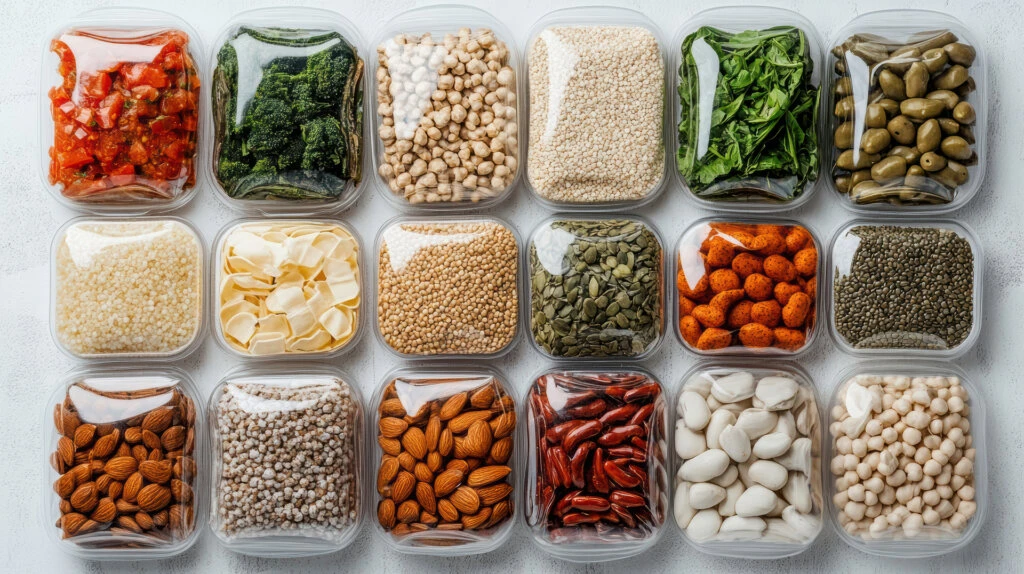 Most beginners approach food storage the way they approach grocery shopping: they wander the aisles and grab things that seem useful. Experienced preppers approach it the way an architect approaches a building — foundation first, structure second, finishing details last.
The hierarchy isn’t arbitrary. It exists because not all food categories serve the same function. Some provide calories. Some provide protein. Some provide the micronutrients that keep your body functioning over months. And some — this part gets overlooked constantly — provide the psychological comfort that keeps a family emotionally stable during extended stress.
Layer One: The Caloric Backbone
Before anything else, your food storage needs to answer one fundamental question: can your family actually survive on this?
Survival requires calories. The average adult needs 2,000 to 2,500 per day. Children, elderly individuals, pregnant women, and physically active people have different requirements — and those differences need to be calculated before you buy a single pound of anything.
The foundation layer is built from calorie-dense, shelf-stable staples that form the backbone of daily nutrition:
Grains — the cornerstone of everything:
- White rice: roughly 1,700 calories per pound, 25 to 30 year shelf life
- Hard red or white wheat berries: around 1,500 calories per pound, 25 to 30 years
- Rolled oats: approximately 1,700 calories per pound, 20 to 30 years
- Pasta (white, not whole wheat): around 1,600 calories per pound, 8 to 10 years
- Cornmeal: approximately 1,600 calories per pound, 5 to 10 years
A note on white rice vs. brown rice — because this comes up constantly and the answer matters. Brown rice contains natural oils in its bran layer. Those oils go rancid within 6 to 12 months, even in ideal conditions. White rice, stripped of those oils, stores for decades. For long term storage, white rice is always the right choice. Always.
Layer Two: Protein — The Category Everyone Underestimates
Grains keep you alive. Protein keeps you functional. Without adequate protein over weeks and months, physical strength deteriorates, cognitive function declines, and immune response weakens. It’s not dramatic — it’s gradual. And it’s preventable.
The best long term protein sources, ranked by shelf life and cost-effectiveness:
Dried beans and legumes sit at the top of this list for a reason. Black beans, pinto beans, kidney beans, chickpeas, lentils, split peas — all of them store for 25 to 30 years when properly sealed, cost roughly $1 to $2 per pound in bulk, and provide around 1,500 calories per pound. They are the most cost-effective protein source in any food storage system, full stop.
Freeze-dried meats — chicken, beef, pork, fish — offer 15 to 25 year shelf life and nutritional completeness. They’re expensive per calorie. But they matter for morale in ways that are hard to quantify until you’ve been eating rice and beans for three weeks straight.
Canned meats — tuna, salmon, chicken, sardines — are affordable, widely available, and nutritionally dense. Shelf life runs 3 to 5 years. They’re the workhorse of the protein layer for most beginners.
Textured vegetable protein (TVP) is dehydrated soy protein that most people have never heard of and should probably know about. Fifteen to twenty year shelf life. Extremely affordable. High protein density. Versatile enough to substitute for ground meat in most recipes.
Powdered eggs provide complete protein and fat, store for 5 to 10 years, and are essential for baking and cooking when fresh eggs aren’t available.
Peanut butter powder — high calorie, high protein, psychologically comforting in a way that’s almost embarrassingly effective. Four to five year shelf life.
Layer Three: Fats — The Most Overlooked Category in Food Storage
Here’s something most beginner guides won’t tell you: fat is the most calorie-dense macronutrient available, and it’s the category most likely to silently fail in your storage system.
Fats go rancid. Not maybe — definitely. The question is when, and whether you’ve chosen fats that give you enough time to actually use them.
The best options for long term fat storage:
- Refined coconut oil: 2 to 5 years, highly stable due to its saturated fat content
- Ghee (clarified butter): 1 to 2 years at room temperature, significantly longer refrigerated
- Commercial shortening (sealed cans): 8 to 10 years
- Olive oil: 1 to 2 years, best in dark, cool conditions
The practical rule: rotate your fat supply more aggressively than anything else. Buy what you use. Use what you buy. Never let fats sit untouched past their shelf life.
Layer Four: The Nutritional Gaps Nobody Talks About
A diet of rice, beans, and canned goods will keep you alive. It will not keep you healthy.
Extended reliance on stored food without micronutrient diversity leads to deficiency diseases that were common in historical famines — scurvy, pellagra, beriberi, night blindness. These aren’t ancient problems. They’re what happens when people survive on calories alone for months.
The solutions are straightforward:
- Multivitamins: Store a 1 to 2 year supply. Shelf life is typically 2 to 3 years from manufacture.
- Freeze-dried fruits and vegetables: Retain up to 97% of nutritional value and provide critical vitamins and minerals.
- Dehydrated greens powder: Concentrated micronutrients in compact, shelf-stable form.
- Vitamin C tablets or powder: Critical for immune function and tissue repair.
- Iodized salt: Prevents iodine deficiency, which causes thyroid dysfunction.
The Container Question — Because the Wrong Choice Ruins Everything
 The container you choose isn’t a minor logistical detail. It is the single most important factor in determining whether your food storage investment survives for 5 years or 25. Get this wrong and everything else you do right becomes irrelevant.
Mylar Bags and Oxygen Absorbers — Why This Combination Dominates
Mylar bags are multi-layer metallic foil pouches that create an impermeable barrier against light, moisture, and oxygen. Pair them with oxygen absorbers — small packets containing iron powder that chemically removes oxygen from the sealed environment — and you’ve created the closest thing to a perfect long term storage environment available to the average person.
How to do it correctly:
- Choose 5-mil mylar for most applications, 7-mil for maximum protection
- Select 1-gallon bags for smaller quantities, 5-gallon for bulk staples
- Add 300cc oxygen absorbers per gallon of storage space for most dry goods
- Fill the bag, leaving 2 to 3 inches of headspace
- Remove as much air as possible before sealing
- Heat-seal using a flat iron, hair straightener, or impulse sealer
- Place sealed mylar bags inside food-grade buckets for physical protection
The mistakes that cost people money:
- Using oxygen absorbers with sugar (it hardens into a solid, unusable brick)
- Using oxygen absorbers with high-moisture foods (creates anaerobic conditions that can support botulism)
- Sealing bags with pinholes (oxygen infiltrates slowly and defeats the entire purpose)
- Storing mylar bags without an outer hard container (rodents will find them)
Food-Grade Buckets — The Essential Outer Shell
Food-grade HDPE buckets with gamma-seal lids are the industry standard for bulk storage. The critical detail: not all plastic buckets are food-grade. Look for the recycling symbol with the number 2 (HDPE) or 4 (LDPE) on the bottom. Hardware store buckets are not food-grade. Restaurant supply buckets often are.
A standard 5-gallon food-grade bucket holds approximately:
- 33 pounds of white rice
- 35 pounds of hard wheat
- 25 pounds of rolled oats
- 30 pounds of dried beans
Gamma-seal lids — which thread on and off rather than requiring a lid-popping tool — are worth every extra dollar for any bucket you’ll access regularly.
Mason Jars — Excellent for Some Things, Wrong for Others
Mason jars are ideal for medium-term storage of smaller quantities. They’re airtight, pest-proof, and let you see exactly what’s inside without opening anything. Their limitations are real: breakable, heavy, and transparent to light unless stored in darkness.
For true long term storage beyond 5 years, mason jars work best as a secondary system for herbs, spices, and specialty items — not as the primary container for bulk staples.
Vacuum Sealing — Good, But Not Good Enough for the Long Game
Vacuum sealers remove roughly 99% of oxygen. Not 100%. For 1 to 5 year storage, they’re excellent. For 10 to 30 year storage, oxygen absorbers in mylar bags are superior — because they chemically remove the residual oxygen that vacuum pumps can’t reach. Standard vacuum seal bags also allow slow oxygen migration through the bag material over time. Mylar’s metallic barrier prevents that migration entirely.
The Shelf Life Truth — What Actually Lasts and What Quietly Fails
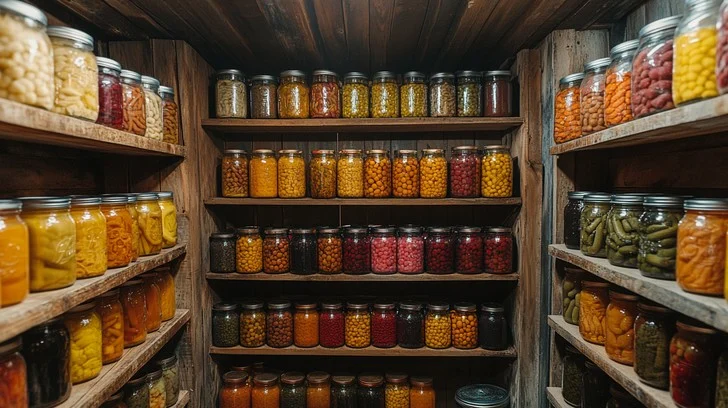 Understanding shelf life isn’t about memorizing a chart. It’s about understanding the underlying science well enough to make intelligent decisions when your specific situation doesn’t match the textbook answer.
The Four Things That Destroy Food Storage
Every food storage failure traces back to one or more of these:
Heat is the most destructive force in the system. Every 10°F increase in storage temperature roughly halves the effective shelf life of most stored foods. A basement at 55°F stores food dramatically longer than a garage that hits 90°F in summer. This isn’t a minor difference — it’s the difference between 30-year rice and 5-year rice.
Moisture enables microbial growth, enzymatic reactions, and chemical degradation. Foods stored above 10% moisture content are vulnerable to mold, bacteria, and accelerated spoilage. Oxygen absorbers help, but they don’t remove moisture — which is why proper drying before storage is non-negotiable.
Light degrades vitamins, causes fat oxidation, and accelerates chemical breakdown across most food categories. Dark storage isn’t optional. It’s foundational.
Oxygen is the primary mechanism behind fat rancidity, vitamin degradation, and flavor deterioration. Removing it through mylar bags and oxygen absorbers is the single highest-impact action you can take to extend shelf life.
The Shelf Life Reference You’ll Actually Use
| Food | Properly Stored Shelf Life | Best Storage Method |
| White rice | 25–30 years | Mylar + oxygen absorbers |
| Hard wheat berries | 25–30 years | Mylar + oxygen absorbers |
| Rolled oats | 20–30 years | Mylar + oxygen absorbers |
| Dried beans/lentils | 25–30 years | Mylar + oxygen absorbers |
| Honey | Indefinite | Original sealed container |
| Iodized salt | Indefinite | Any sealed container |
| White sugar | 30+ years | Mylar (no oxygen absorbers) |
| Freeze-dried fruits/veg | 25–30 years | Sealed #10 cans |
| Freeze-dried meats | 15–25 years | Sealed #10 cans |
| Dehydrated vegetables | 8–10 years | Mylar + oxygen absorbers |
| White pasta | 8–10 years | Mylar + oxygen absorbers |
| Cornmeal | 5–10 years | Mylar + oxygen absorbers |
| Commercial canned goods | 2–5 years | Cool, dark storage |
| Powdered milk | 2–10 years | Mylar + oxygen absorbers |
| Cooking oils | 1–5 years | Dark, cool storage |
| Whole wheat flour | 1–2 years | Mylar + oxygen absorbers |
| Brown rice | 6–12 months | Refrigerator or freezer |
Building on a Budget — The $25, $50, and $100 Monthly Plans That Actually Work
This is where most guides lose people. They present ideal scenarios — fully stocked pantries, commercial freeze-dried meal kits, elaborate storage systems — without acknowledging that most families are working with real financial constraints.
Here’s the truth: you can build a meaningful, functional long term food storage system on $25 to $100 per month. It takes longer. It requires discipline. But it works — and it works without financial stress or guilt.
$25 Per Month — Slow, Steady, and Surprisingly Effective
At $25 a month, focus exclusively on the highest-calorie, lowest-cost staples:
- 25-pound bag of white rice: ~$12
- 5-pound bag of dried beans (rotate varieties each month): ~$5
- 1-pound container of iodized salt: ~$1
- 1 pound of rolled oats: ~$2
- Remaining budget: mylar bags and oxygen absorbers, amortized over several months
At this pace, you’ll have approximately a 3-month supply built within your first year. That’s not nothing. That’s a foundation.
$50 Per Month — The Balanced Builder
At $50 a month, protein diversity and nutritional complexity become possible:
- White rice (25 lbs): ~$12
- Dried beans and lentils (10 lbs): ~$8
- Rolled oats (10 lbs): ~$6
- Canned meats — tuna, chicken: ~$10
- Cooking oil (1 gallon): ~$8
- Honey (1 lb): ~$6
A 6-month supply within the first year is realistic at this level.
$100 Per Month — The Accelerated System
At $100 a month, freeze-dried components, expanded variety, and a full year’s supply within 12 to 18 months become achievable:
- Bulk staples (rice, beans, oats, wheat): ~$40
- Freeze-dried fruits and vegetables: ~$25
- Canned proteins and specialty items: ~$20
- Storage containers (mylar bags, buckets): ~$15
Where to Actually Buy This Stuff
Warehouse stores (Costco, Sam’s Club): Best for bulk rice, oats, canned goods, cooking oils, and honey. Price per pound runs 30 to 50% lower than grocery stores.
Online retailers (Amazon, Walmart, Thrive Life, Augason Farms): Best for freeze-dried foods, mylar bags, oxygen absorbers, and specialty prepper supplies.
Restaurant supply stores: Chronically overlooked by beginners. Commercial-grade bulk quantities at wholesale prices, often without membership fees.
Local grain mills and co-ops: The best source for hard wheat berries, cornmeal, and specialty grains at the lowest possible prices.
Ethnic grocery stores: Large bags of rice, lentils, and dried beans at prices that mainstream supermarkets simply can’t match.
The Rotation System — How to Manage What You’ve Built
 Building the supply is only half the work. The other half — the half most beginners completely neglect — is managing it.
An unmanaged food storage system becomes a graveyard of expired food and wasted money. A well-managed one is a living resource that continuously refreshes itself while maintaining your target supply level.
FIFO — The Principle That Keeps Everything Working
First In, First Out. The oldest food in your supply should always be the first food consumed. New purchases go to the back. Oldest items come to the front.
Simple in theory. Requires intentional organization in practice:
- Shelving systems: Can rotators or slanted shelves automatically move older cans forward as new ones are added at the back.
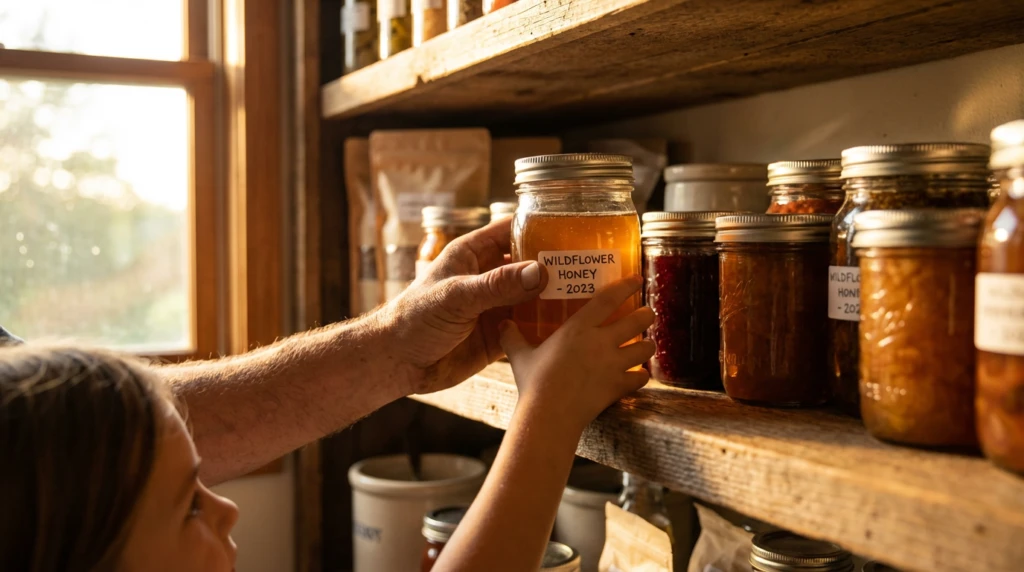
- Labeling: Every item gets a purchase date and estimated use-by date in permanent marker. No exceptions.
- Inventory tracking: A physical binder or digital spreadsheet listing every item, its quantity, and its expiration date. This sounds tedious until the day it saves you from throwing away $200 worth of food.
How Often to Actually Audit Your Supply
Twice a year, minimum. The spring and fall equinoxes work well as a built-in reminder — easy to remember, naturally spaced.
During each audit:
- Check all items for damage, swelling in cans, or pest infiltration
- Update your inventory with current quantities
- Identify items approaching expiration and move them into active meal rotation
- Calculate what needs replenishing and add it to your next shopping list
- Assess whether your storage conditions — temperature, humidity — remain optimal
When Standard Advice Doesn’t Apply — Food Storage for Real Dietary Needs
One of the most common and costly mistakes in food storage planning is building a supply that doesn’t account for the actual dietary needs of every person in your household. A supply that works for a healthy adult in their thirties may be genuinely dangerous for a diabetic, an infant, or an elderly person with specific health conditions.
Diabetics and Blood Sugar Management
Standard food storage staples — white rice, pasta, white flour, sugar — are high-glycemic foods that can cause dangerous blood sugar spikes. A diabetic-conscious storage system should emphasize:
- Low-glycemic grains: Barley, bulgur wheat, and whole oats have significantly lower glycemic indices than white rice
- Legumes: Among the lowest-glycemic foods available — ideal for diabetic food storage
- Freeze-dried vegetables: Provide fiber that moderates blood sugar response
- Nuts and seeds: High fat, moderate protein, low carbohydrate
- Stevia or monk fruit sweetener: Long shelf life alternatives to sugar
Infants and Toddlers
Infants under 12 months who aren’t breastfed require formula — and formula has roughly a 1-year shelf life from manufacture date. A 3 to 6 month formula supply requires careful rotation to prevent expiration.
For toddlers transitioning to solid foods: freeze-dried fruits and vegetables rehydrate to appropriate textures, powdered whole milk provides essential nutrition, and oatmeal prepared to the right consistency works well for most ages.
Seniors and Those With Medical Conditions
Seniors often need more protein per pound of body weight than younger adults, lower sodium intake, and foods that accommodate dental issues or swallowing difficulties.
Key considerations: look for low-sodium canned goods or plan to rinse canned beans and vegetables. Prioritize high-protein storage foods. Freeze-dried and dehydrated foods that rehydrate to soft textures matter more than most guides acknowledge. And if anyone in your household takes medications requiring refrigeration, a contingency plan for power outages isn’t optional — it’s essential.
The Mistakes That Quietly Ruin Food Storage Systems
 Every mistake in this section has been made by thousands of people before you. Learning from their experience is faster and cheaper than learning from your own.
Storing Food Your Family Won’t Eat
This is the single most common and most expensive mistake in food storage. Beginners read lists of “ideal” storage foods and buy them wholesale — only to discover that their family refuses to eat them under normal circumstances, let alone during a stressful emergency.
Fifty pounds of lentils is not a food storage asset if nobody in your household has ever eaten a lentil. It’s a liability.
Build your storage around foods your family already eats. If pasta appears on your dinner table twice a week, pasta should be a cornerstone of your storage system. The best food storage is the one your family will actually use.
Ignoring Temperature and Humidity
The most perfectly sealed mylar bag of rice stored in a garage that hits 100°F in summer will degrade significantly faster than the same bag in a 55°F basement. Temperature is the most powerful variable in food storage longevity — and the one most beginners completely ignore.
Ideal storage temperature: 50 to 70°F. Maximum acceptable: 75°F. Humidity target: below 15% relative humidity.
If your home doesn’t have a naturally cool, dark storage space, consider interior closets (typically cooler than exterior walls), under-bed storage in air-conditioned bedrooms, or insulated storage containers that buffer temperature fluctuations.
Oxygen Absorber Errors
Oxygen absorbers are not universally appropriate for all stored foods. Using them incorrectly can ruin your supply — or in rare cases, create dangerous conditions.
Never use oxygen absorbers with: sugar (hardens into an unusable solid), brown sugar (same problem), high-moisture foods (creates anaerobic conditions that can support botulism growth), or salt (unnecessary — salt doesn’t oxidize).
Always use them with: white rice, wheat, oats, and other dry grains; dried beans and legumes; pasta; freeze-dried and dehydrated foods.
Neglecting Pest Prevention
Rodents and insects are the silent destroyers of food storage systems. A single mouse can contaminate an entire storage area. Pantry moths can infiltrate sealed bags through microscopic gaps.
Practical prevention: store all food in hard-sided containers rather than relying solely on mylar bags. Inspect all incoming food for signs of insect eggs before storage. Freeze grains for 72 hours before long term storage to kill any eggs present. Seal all gaps and entry points in your storage area. Bay leaves placed throughout the storage space act as a natural insect deterrent.
Building Without a Plan
Buying random quantities of random foods without a systematic plan results in a storage system that’s simultaneously overstocked in some areas and critically deficient in others. Calculate your household’s actual caloric and nutritional needs before purchasing anything. Determine your target supply duration. Build a shopping list that systematically fills each nutritional category to your target level.
15 Food Storage Mistakes to Avoid (Save Money)
The Questions People Actually Ask — Answered Honestly
How much food does one person actually need for a full year?
More than most people expect. A one-year supply for one adult requires approximately:
- Grains: 300 to 400 pounds (rice, wheat, oats, pasta)
- Legumes: 60 to 90 pounds (beans, lentils, split peas)
- Fats and oils: 13 to 20 pounds
- Sugars and sweeteners: 60 pounds
- Powdered dairy: 16 pounds
- Salt: 8 pounds
- Freeze-dried or dehydrated fruits and vegetables: 60 to 90 pounds
This provides roughly 2,000 to 2,500 calories per day and meets basic macronutrient requirements. Adjust for individual caloric needs, dietary restrictions, and personal food preferences.
I live in an apartment. Is this even realistic for me?
More realistic than you think. A studio apartment can store a 3 to 6 month food supply using under-bed storage containers, closet shelving systems, furniture with built-in storage, and vertical pantry shelving in kitchen or hallway spaces. The key is selecting compact, calorie-dense foods that provide maximum nutrition per cubic foot of storage space.
What’s the cheapest way to actually do this?
Purchase bulk dry staples — white rice, dried beans, rolled oats, hard wheat — from warehouse stores or restaurant supply outlets and seal them in mylar bags with oxygen absorbers inside food-grade buckets. A one-month supply for one adult using this method costs approximately $30 to $50 in food, plus a one-time investment of $30 to $50 in mylar bags, oxygen absorbers, and buckets.
How do I know if my stored food has gone bad?
Trust your senses. Swollen or dented cans indicate bacterial activity — discard immediately. Any unusual, rancid, or fermented smell means something is wrong. Visible mold means the entire container goes. Significant darkening or discoloration in grains or legumes may indicate oxidation or moisture damage. Fats and oils that taste bitter or soapy have gone rancid.
The universal rule: if it looks wrong, smells wrong, or tastes wrong — throw it out.
Should I tell people I have a food storage supply?
This is more nuanced than it sounds. Share the location and contents with close family members who need to know. Exercise discretion with neighbors and acquaintances. During genuine emergencies, a well-stocked food supply can attract unwanted attention and social pressure that’s difficult to navigate.
The better approach: encourage the people around you to build their own supply. A prepared community is safer than a single prepared household surrounded by unprepared ones.
Your Month-by-Month Action Plan — From Zero to One Year
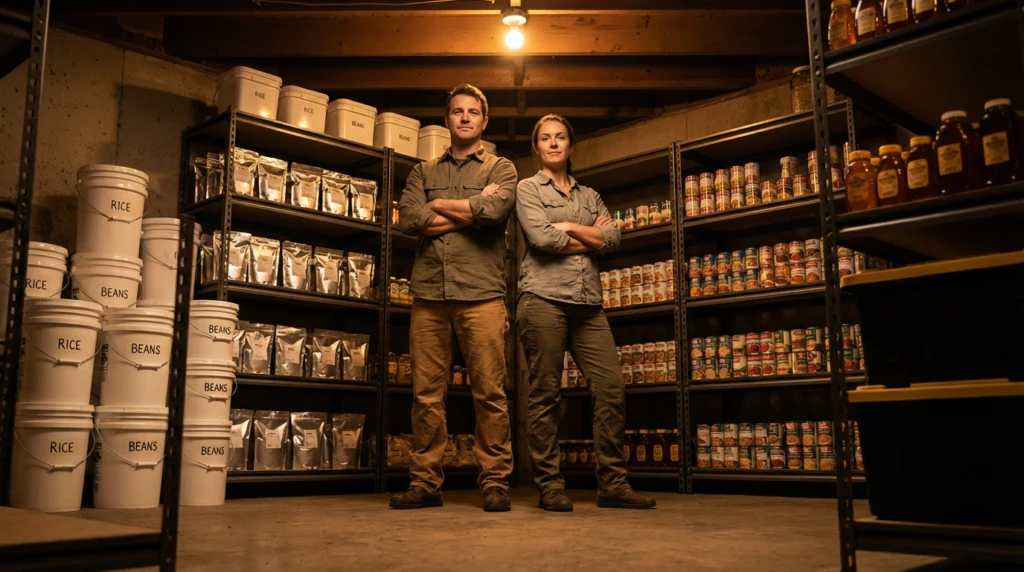 Months 1–2: The Foundation
Goal: Establish the caloric backbone.
- 50 pounds of white rice
- 20 pounds of dried beans (mixed varieties)
- 20 pounds of rolled oats
- Mylar bags (5-gallon, 5-mil), oxygen absorbers (300cc), 2 to 3 food-grade buckets
- Seal and store your first batch
- Set up your inventory tracking system
Estimated cost: $80 to $120
Months 3–4: Protein and Nutrition
Goal: Add protein diversity and micronutrient coverage.
- 20 additional pounds of dried beans and lentils
- 12 cans of tuna or canned chicken
- 1 gallon of refined coconut oil or commercial shortening
- A 1-year supply of multivitamins
- Freeze-dried or dehydrated vegetables (start with a variety pack)
Estimated cost: $100 to $150
Months 5–6: Depth and Variety
Goal: Expand variety, add comfort foods, address special dietary needs.
- Hard red wheat berries (25 pounds) and a hand grain mill
- Powdered milk (10 pounds)
- Honey (5 pounds)
- Salt (10 pounds)
- Sugar (10 pounds)
- Comfort foods: coffee, tea, chocolate, spices, hot sauce
Estimated cost: $120 to $180
Months 7–12: Completion and Refinement
Goal: Reach your target supply level, address gaps, build redundancy.
- Continue purchasing staples to reach your calculated one-year quantity targets
- Add freeze-dried meats for protein diversity
- Build a complete spice and seasoning supply
- Establish a water storage system (minimum 1 gallon per person per day)
- Conduct your first complete inventory audit
- Cook from your storage supply at least once a month — this is not optional
What Nobody Tells You About What This Actually Does to You
There’s something that happens to people who build a genuine food storage supply. It’s quiet. It doesn’t arrive all at once. But it’s real.
You stop being afraid.
Not of everything. But of that specific, low-grade anxiety that hums beneath modern life — the one that comes from knowing your family’s food security depends entirely on supply chains, grocery store hours, and a paycheck that arrives on schedule. That anxiety is so normalized that most people don’t even recognize it as anxiety. They just call it Tuesday.
When you have a year’s worth of food stored, labeled, rotated, and ready — that hum goes quiet. Not because the world becomes safer. Because your family’s position within it becomes more secure.
That security is practical. It’s financial. It’s the difference between making decisions from scarcity and making decisions from abundance.
And that, more than any shelf life chart or storage container recommendation, is the real return on investment.
Products / Tools / Resources
These are the items and resources that consistently come up in serious food storage conversations — not because they’re sponsored, but because they actually work.
Storage Containers & Sealing
- Mylar bags (5-mil, 5-gallon) — The Wallaby brand and PackFreshUSA are both well-regarded. Buy in bulk to reduce per-bag cost.
- Oxygen absorbers (300cc) — Oxy-Sorb and Wallaby are reliable. Store unused absorbers in a mason jar immediately after opening the package.
- Food-grade HDPE buckets (5-gallon) — Available at restaurant supply stores, Home Depot (food-grade only), and online. Pair with gamma-seal lids.
- Impulse sealer or flat iron — A basic impulse sealer runs $20 to $40 and makes mylar sealing significantly easier than a hair straightener.
Bulk Food Sources
- Augason Farms — One of the most accessible freeze-dried and dehydrated food suppliers for beginners. Wide variety, reasonable pricing.
- Thrive Life — Higher quality freeze-dried options with a subscription model that makes building a supply more manageable.
- Azure Standard — Bulk organic grains, legumes, and pantry staples at co-op pricing. Excellent for building the foundation layer affordably.
- Costco / Sam’s Club — The most underrated food storage resource available. Their bulk rice, oats, canned goods, and honey pricing is hard to beat.
Grain Processing
- WonderMill Electric Grain Mill — The standard recommendation for anyone storing hard wheat berries. Grinds wheat into fresh flour in minutes.
- Country Living Hand Grain Mill — The manual option for grid-down scenarios. Expensive but built to last decades.
Inventory Management
- Pantry Check app — Simple, effective inventory tracking for food storage systems.
- Google Sheets — Free, accessible from any device, and customizable to your exact storage categories and quantities.
- The Prepper’s Long-Term Survival Guide by Jim Cobb — One of the more practical and readable books on building a comprehensive food storage system without the doomsday theatrics.
Water Storage (Because Food Storage Without Water Is Incomplete)
- WaterBOB bathtub bladder — Holds up to 100 gallons in a standard bathtub. Inexpensive insurance for short-term water emergencies.
- Aqua-Tainer 7-gallon rigid water containers — Stackable, food-grade, and practical for apartment-scale water storage.
- Sawyer Squeeze water filter — Lightweight, effective, and rated for up to 100,000 gallons. The most versatile portable water filtration option available.
- Berkey water filtration system — The countertop standard for home water purification. Removes bacteria, viruses, and heavy metals without electricity.