

Hey there! Some links on this page may be affiliate links which means that, if you choose to make a purchase, I may earn a commission at no extra cost to you. I greatly appreciate your support. Read the full disclosure here.
A 2019 American Veterinary Medical Association survey found that 67% of pet owners said they would refuse to evacuate without their animals, yet fewer than 30% had any kind of emergency kit prepared for them. That gap between intention and preparation is exactly where lives, both human and animal, are put at risk.
A bug out bag for pets is not an optional add-on to your emergency plan. It is a core component of any serious preparedness strategy. If you’ve already built your own 72-hour bug out bag, the next logical step is making sure your animals are covered with equal care and specificity.
This guide covers everything from what to pack, how to customize by species and size, common mistakes, and how to practice evacuating so that when the moment comes, your pet is as ready as you are.
Key Takeaways
- A pet bug out bag should sustain your animal for a minimum of 72 hours with food, water, medications, and comfort items.
- Dogs and cats have meaningfully different needs; a one-size-fits-all approach will leave critical gaps.
- Always include physical copies of vaccination records, microchip numbers, and veterinary contacts, shelters and hotels will require them.
- Medications, prescription food, and behavioral aids belong in the bag, not on a mental checklist.
- Practice evacuating with your pet before a real emergency. Familiarity with the bag, carrier, and process reduces panic for both of you.
- Exotic pets like rabbits, birds, and reptiles need species-specific planning that most generic guides skip entirely.
- The biggest mistake preppers make is building a human bug out bag and treating the pet kit as an afterthought.
Find this useful? Add us as a preferred source on Google and more of what we publish will show up in your results.
What Should You Put in a Bug Out Bag For Pets
A well-built pet bug out bag covers five core categories: nutrition, hydration, health, identification, and comfort. Every item in the bag should serve a clear function for at least 72 hours of independent operation away from home.
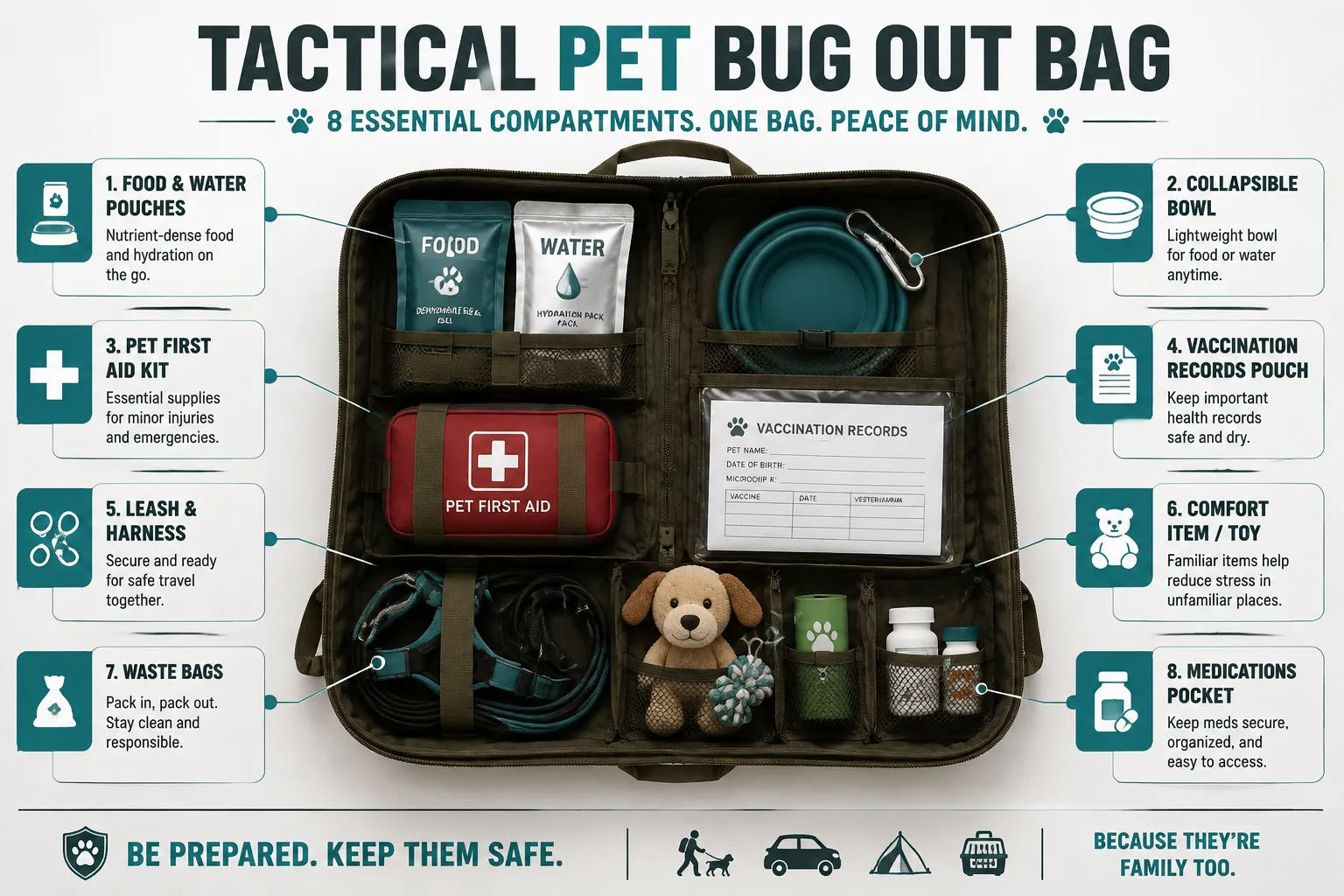
Here is a practical checklist organized by category:
Nutrition
- 3-day supply of your pet’s regular food (dry or wet, portioned in sealed bags or pouches)
- Manual can opener if using canned food
- Collapsible food bowl
- High-value treats for stress management and recall training
Hydration
- Minimum 1 liter of clean water per day per pet (more for large dogs)
- Collapsible water bowl or bottle with a built-in trough
- Water purification tablets as backup (tap water may be unavailable at shelters)
Health and Medical
- Full supply of any prescription medications (minimum 7-day supply)
- Basic pet first aid kit: gauze, antiseptic wipes, tweezers, vet wrap, digital thermometer
- Flea and tick prevention
- Copies of vaccination records and health certificates
- Veterinarian contact information and nearest emergency vet along your evacuation route
Identification
- Current photo of your pet (printed, not just digital)
- Written record of microchip number
- Collar with ID tags already attached
- Backup collar and leash
Comfort and Containment
- A small familiar item: a toy, a worn t-shirt, or a blanket that carries your scent
- Waste bags or a portable litter tray for cats
- Muzzle (for dogs under stress, even the gentlest animals can bite when frightened)
- Carrier or crate appropriate to the animal’s size
For a more comprehensive breakdown, see The Ultimate Pet’s Emergency Preparedness Checklist (45 Items).
How to Make a Bug Out Bag For Cats vs. Dogs
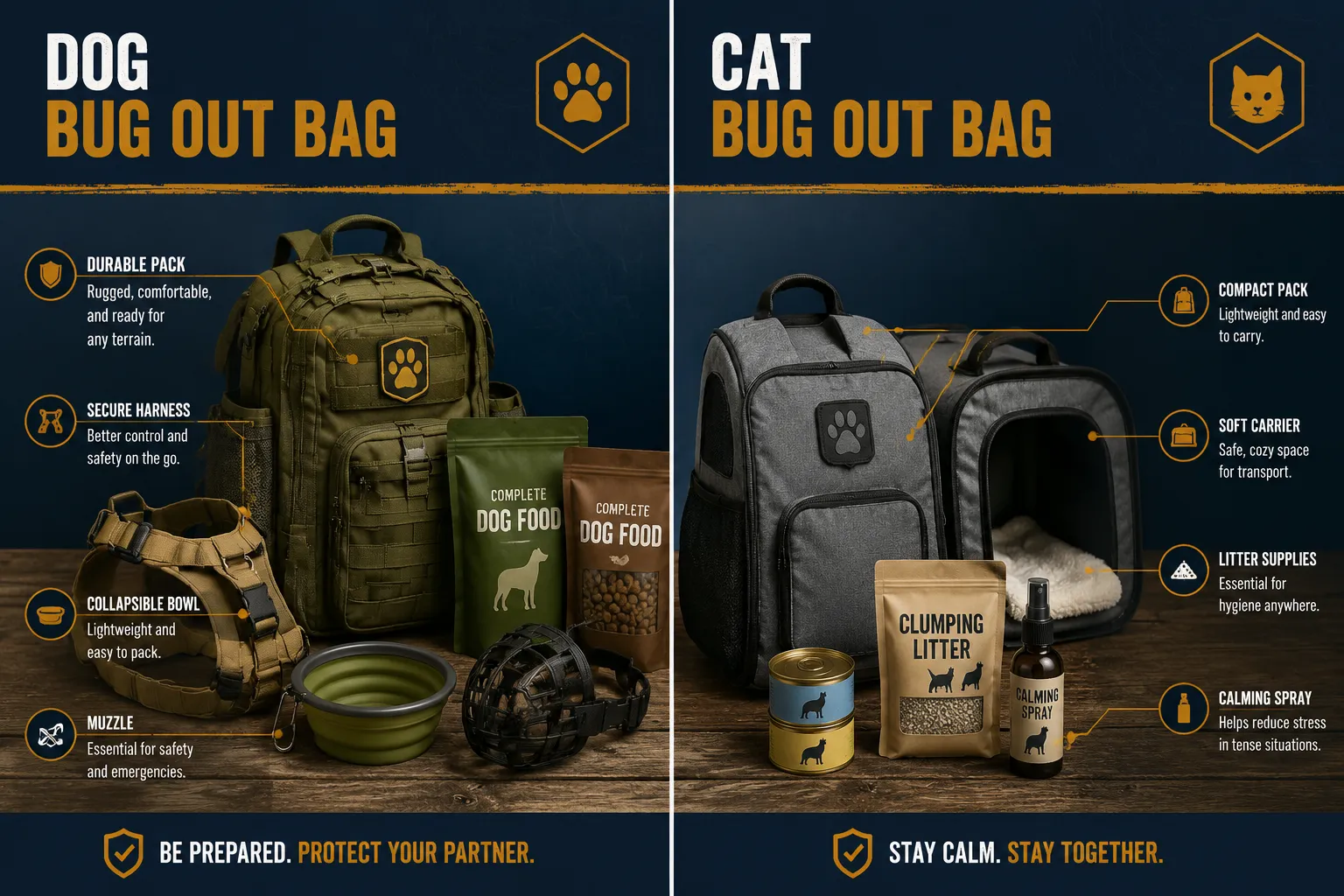
Dogs and cats require different approaches, and trying to use the same kit for both will leave one or both animals underserved. The core difference comes down to containment, stress response, and dietary needs.
For dogs:
- A harness is often more secure than a collar during high-stress movement
- Include a 6-foot leash and a shorter traffic leash for crowded evacuation areas
- Larger dogs need significantly more water, a 70-pound dog may need 2+ liters per day in warm conditions
- A portable dog crate or collapsible kennel is worth the weight if you’re evacuating by vehicle
- Include a muzzle even for friendly dogs; stress changes behavior
For cats:
- A soft-sided carrier is essential, cats under stress will bolt, and an open leash is not sufficient containment
- Include a small portable litter box and a bag of litter (unscented is less stressful)
- Cats are more sensitive to dietary changes; bring their exact brand of food
- A pheromone spray like Feliway can significantly reduce anxiety in unfamiliar environments
- Keep the carrier accessible and familiar before an emergency by leaving it out at home
The biggest mistake with cats is assuming they’ll tolerate a carrier they’ve never used. If your cat hasn’t been in its carrier in six months, start acclimating it now.
Do You Need Different Bug Out Bags For Different Sized Pets
Yes, and the difference matters more than most people expect. A 10-pound dog and a 90-pound dog have radically different water, food, and containment requirements.
Small pets (under 20 lbs): A compact 15-20L backpack works well. You can carry the bag and the animal simultaneously if needed. Focus on a secure soft carrier and lightweight food pouches.
Medium pets (20-60 lbs): A 25-35L bag covers the essentials. Consider a pet-specific backpack with external attachment points for a collapsible crate. These dogs can carry their own small saddlebag if trained to do so.
Large pets (60+ lbs): The bag itself may need to be a wheeled duffel or a vehicle-based kit rather than a carried pack. Water weight alone becomes a logistical challenge. Pre-position water along likely evacuation routes if possible.
For multi-pet households, assign a separate bag per animal rather than combining supplies. In a real evacuation, you may not have time to sort through a shared kit.
Pet Bug Out Bag Checklist: The Essentials at a Glance
This quick-reference checklist covers the non-negotiables for any pet bug out bag, regardless of species or size:
- 72-hour food supply (portioned and labeled)
- 3+ liters of water per pet
- Prescription medications (7-day supply minimum)
- Vaccination records and health certificates (physical copies)
- Microchip number and current photo
- Collar with ID tags, plus a backup collar
- Leash or secure carrier
- Basic first aid supplies
- Waste management supplies
- One comfort item
- Veterinary contact info and emergency vet locations on your route
- Muzzle or calming aid
Keep this checklist inside the bag as a laminated card. When stress is high, memory fails. A physical checklist does not.
Should You Include Medications in Your Pet’s Bug Out Bag
Absolutely, and this is one of the most commonly overlooked items in a pet emergency kit. Medications should be treated with the same priority as your own prescriptions.
Include a minimum 7-day supply of any daily medications. If your pet takes a controlled substance or a specialty medication, talk to your veterinarian now about getting an emergency supply. Many vets will prescribe a small backup supply specifically for disaster preparedness purposes.
Also include:
- Antihistamines (check with your vet for species-appropriate dosing)
- Anti-diarrheal medication (stress commonly causes GI upset in evacuated animals)
- Any behavioral medications your pet takes for anxiety
- Topical wound treatment
Store medications in a waterproof pouch inside the bag. Label each medication with the pet’s name, dosage, and frequency. If someone else needs to administer medication in an emergency, they should be able to do so without guessing.
Bug Out Bag For Exotic Pets: Rabbits, Birds, and More
Exotic pets are almost entirely absent from standard emergency preparedness guides, which is a serious gap. Rabbits, birds, reptiles, and small rodents have highly specific needs that standard pet kits do not address.
Rabbits:
- Require a secure carrier with ventilation
- Need hay (their primary food source) and fresh water at all times
- Highly sensitive to heat and stress, include a cooling pad
- Avoid loud environments; cover the carrier with a light cloth to reduce stimulation
Birds:
- A travel cage with a secure latch is essential
- Include a 3-day supply of seed or pellets in an airtight container
- Birds are extremely sensitive to air quality; keep them away from smoke, fumes, and extreme temperature changes
- Include a small cloth to cover the cage for calming
Reptiles:
- Temperature regulation is critical; include a portable heat source appropriate to the species
- A secure, ventilated container (not a mesh bag) prevents escape
- Include a 3-day supply of appropriate food or note that many reptiles can fast safely for short periods
- Research your specific species’ stress responses before a crisis, not during one
For exotic pets, a handwritten care card inside the bag is especially important. Emergency shelters and temporary caretakers will not know how to handle a bearded dragon or a cockatiel without guidance.
Best Pet Bug Out Bag Brands and Where to Buy in 2026
Several brands have built strong reputations for quality pet emergency gear. The right choice depends on your pet’s size, your budget, and whether you want a pre-built kit or a custom-assembled bag.
Pre-built kits worth considering:
- Ready America offers pet emergency kits that cover the basics at an accessible price point. Good for beginners who want a starting foundation.
- Kurgo makes durable dog-specific travel and emergency gear, including harnesses and collapsible bowls built for active use.
- PetKit and Ruffwear are strong options for higher-end, purpose-built pet packs with better materials and organization.
For custom builds:
- Start with a quality 20-30L tactical backpack (5.11 Tactical, Maxpedition, or similar)
- Source individual components from pet supply retailers, outdoor gear stores, and medical supply vendors
- A custom-built bag typically outperforms a pre-built kit because it’s tailored to your specific animal’s needs
Where to buy:
- Amazon, Chewy, and REI carry most components
- Your veterinarian’s office may carry or recommend emergency-specific products
- Specialty prepper retailers often stock complete pet emergency kits alongside human gear
How Much Does a Pet Bug Out Bag Cost
A functional pet bug out bag can be built for $50,$150 if assembled from individual components. Pre-built kits from reputable brands typically run $75,$200 depending on quality and completeness.
The cost breakdown generally looks like this:
| Component | Estimated Cost |
|---|---|
| Quality backpack or bag | $30,$80 |
| 72-hour food supply | $10,$25 |
| Water and bowls | $10,$20 |
| First aid kit | $15,$35 |
| Carrier or crate | $25,$80 |
| Medications (ask your vet) | Varies |
| Miscellaneous (leash, ID, comfort items) | $10,$20 |
The most expensive component is often the carrier or crate. If you already own one, redirect that budget toward medical supplies and a quality first aid kit. Don’t cut corners on the bag itself, a bag that fails under load during an evacuation is worse than no bag at all.
Pet Bug Out Bag for Apartment vs. House Evacuation
Where you live affects how you store and deploy your pet’s emergency kit. Apartment evacuations tend to be faster and more constrained than house evacuations, and that changes the priorities.
Apartment considerations:
- Storage space is limited; a compact, wall-mounted or under-bed bag works better than a large crate setup
- Elevator outages are common during emergencies; practice carrying your pet and bag down stairs
- Noise and chaos in shared hallways can trigger severe stress responses in cats and dogs, a secure carrier is non-negotiable
- Know your building’s evacuation routes and whether pets are permitted in the designated assembly area
For more on apartment-specific preparedness, see The Ultimate Guide to Prepping in a Small Apartment.
House considerations:
- More storage flexibility allows for a vehicle-based kit in addition to a carried bag
- A garage or mudroom staging area for the pet kit speeds up deployment
- If you have a yard, practice loading your pet into the car with the bag as part of regular drills
Regardless of housing type, the bag should be stored in the same location every time and accessible within 60 seconds. If you have to search for it during an emergency, the system has already failed.
Common Mistakes People Make With Pet Bug Out Bags
Most pet emergency kits fail not because of what’s missing, but because of how they were built and maintained. These are the most consistent errors:
Building the kit once and never updating it. Food expires. Medications expire. Vaccination records go out of date. Set a calendar reminder every six months to audit the bag.
Using the wrong carrier. A carrier your cat has never been in will become a 10-minute wrestling match during an evacuation. Introduce the carrier months in advance.
Forgetting water. Many preppers pack food carefully and then assume water will be available at a shelter. It may not be, or it may not be safe. Pack it.
No physical ID documentation. A photo on your phone is useless if your phone dies. Print a current photo of your pet and laminate it.
Ignoring behavioral needs. A dog that barks uncontrollably or a cat that scratches through carriers creates real problems in shared evacuation spaces. Include calming aids and practice using them.
Packing too much weight. A 40-pound bag you can’t carry quickly is a liability. Prioritize ruthlessly. If you have to choose between a luxury item and speed, choose speed.
For a broader look at what not to do when building any emergency kit, the guide on bug out bag mistakes to avoid covers the human side with the same level of detail.
What If My Pet Won’t Use the Bug Out Bag or Carrier
Some animals resist carriers, bags, and unfamiliar equipment, and the middle of an evacuation is the worst time to discover this. The solution is desensitization, and it starts well before any emergency.
For carrier-resistant cats:
- Leave the carrier open in a common area with a familiar blanket inside
- Feed meals near or inside the carrier to build positive association
- Practice short trips in the carrier every few weeks
For leash-resistant or anxious dogs:
- Work on basic obedience commands under stress conditions
- Practice loading into the car with the bug out bag present
- Use high-value treats specifically associated with the bag and evacuation gear
Calming aids that work:
- Pheromone sprays and diffusers (Feliway for cats, Adaptil for dogs)
- Anxiety wraps like Thundershirts
- Veterinarian-prescribed anti-anxiety medications for severe cases
The goal is to make the carrier and the bag feel like normal, neutral objects, not threats. That takes weeks of low-stakes exposure, not a single training session.
How to Practice Evacuating With Your Pet’s Bug Out Bag
Practicing an evacuation is the single most underused element of pet emergency preparedness. A full drill, done twice a year, will expose gaps in your plan that no checklist can reveal.
Here is a practical drill structure:
- Set a timer for 5 minutes.
- Grab the pet bug out bag from its designated location.
- Secure your pet (collar, leash, or carrier) without assistance from other household members.
- Load the pet and bag into your vehicle.
- Drive to your designated first evacuation destination.
- Note what went wrong, what took too long, and what was missing.
For guidance on building a full evacuation plan around this drill, see The Ultimate Evacuation Plan Guide and What to Pack for a 5-Minute Evacuation.
Run the drill at different times of day, including at night. Run it with children present if applicable. Run it in different weather conditions. Each variation will teach you something the previous drill did not.
How Long Can a Pet Survive With Just a Bug Out Bag
A properly stocked pet bug out bag is designed to sustain an animal for 72 hours, the standard window for most emergency evacuations. With a 7-day food supply and adequate water, that extends to a week of independent operation.
Beyond 72 hours, the critical variables are:
- Water availability: This is the primary constraint. A large dog can need 2+ liters per day. Without resupply, water runs out before food.
- Medications: A pet on daily heart medication or insulin cannot survive without resupply beyond whatever you’ve packed.
- Shelter and temperature: The bag addresses nutrition and health, but environmental exposure is a separate challenge.
- Stress: Prolonged displacement causes real physiological harm in animals. Behavioral support items extend functional wellbeing.
The 72-hour bag is a starting point, not a ceiling. Serious preppers build toward a 7-day pet kit as a minimum standard, with resupply plans for anything longer.
Frequently Asked Questions
How often should I update my pet’s bug out bag? Audit the bag every six months. Replace expired food, medications, and any documentation that has changed. A good trigger is the same schedule as rotating your smoke detector batteries.
Can my dog carry their own bug out bag? Yes, if the dog is healthy and trained. A dog saddlebag should carry no more than 25% of the dog’s body weight. Start with an empty pack and add weight gradually over several weeks of practice.
What documents should be in a pet bug out bag? Vaccination records, microchip registration number, a current photo of the pet, your veterinarian’s contact information, and any prescription documentation. Physical copies only, do not rely on digital files.
Are emergency pet shelters available during disasters? Many communities have made progress since Hurricane Katrina, and FEMA now encourages local emergency plans to include pets. However, availability varies significantly by region. Research your local options before an emergency, not during one.
What if I have multiple pets? Build a separate bag for each animal. In a real evacuation, a single shared bag creates confusion and slows you down. Label each bag clearly with the pet’s name and photo.
Should I include a muzzle even for a friendly dog? Yes. Even calm, well-socialized dogs can bite under extreme stress. A muzzle protects both your dog and the people around it in a crowded shelter or evacuation center.
What’s the most important single item in a pet bug out bag? Identification documentation. Food and water can often be sourced. If your pet escapes and has no ID, recovery becomes significantly harder or impossible.
Do I need a separate water filter for my pet? A basic water purification approach works for most pets. The same tablets or filter you use for your own water supply can be used for your pet. See the guide on how to purify water without tools outdoors for field-applicable methods.
What if my pet is on a prescription diet? Pack that exact food. Switching diets abruptly under stress causes significant GI distress and can create a medical emergency on top of an already difficult situation.
Can I use a regular backpack instead of a pet-specific bag? Yes. A quality 20-30L tactical backpack works well for a custom-built kit. The advantage of pet-specific bags is pre-designed compartments. The advantage of a standard pack is durability and lower cost.
Conclusion
A bug out bag for pets is not a nice-to-have. It is a direct extension of your commitment to protecting every member of your household. The animals in your care depend entirely on the decisions you make before an emergency, not during one.
Start with the 72-hour checklist. Customize it for your specific animal’s species, size, and medical needs. Practice the evacuation drill until it becomes automatic. And review the bag every six months so that when the moment comes, everything in it is current, functional, and ready.
For households with children and elderly family members, the same logic applies across the board. See Family Bug Out Bag: The Complete Age-Specific Guide for a parallel approach to human preparedness, and The Ultimate Family Emergency Plan Template to integrate your pet plan into a complete household system.
Preparedness isn’t about fear. It’s about being the person in the room who already has a plan.
Products, Tools, and Resources
Bags and Carriers
- OneTigris Approach Pack (dog saddlebag, highly durable, fits medium to large dogs)
- Sherpa Original Deluxe Carrier (airline-approved, soft-sided, good for cats and small dogs)
- 5.11 Tactical Rush 24 (excellent base for a custom-built pet kit)
First Aid
- Pet First Aid Kit (comprehensive, includes instruction guide)
- Adventure Medical Kits Workhorse (designed for working dogs, field-tested)
Calming Aids
- Feliway Classic Spray (cat pheromone, widely used by veterinarians)
- Adaptil Calm On-The-Go Collar (dog pheromone, continuous release)
- Thundershirt Anxiety Jacket (available for both dogs and cats)
Documentation
- Laminator pouches (waterproof your documents before they go in the bag)
- Petlink or Found Animals microchip registration (ensure your pet’s chip is registered and current in 2026)
Water
- Ruffwear Quencher Collapsible Bowl (lightweight, easy to pack)
- Aquatabs Water Purification Tablets (safe for pets at appropriate dosing, confirm with your vet)
Every item on this list serves a specific function. Buy what your animal actually needs, not what looks impressive on a shelf.