
Hey there! Some links on this page may be affiliate links which means that, if you choose to make a purchase, I may earn a commission at no extra cost to you. I greatly appreciate your support. Read the full disclosure here.
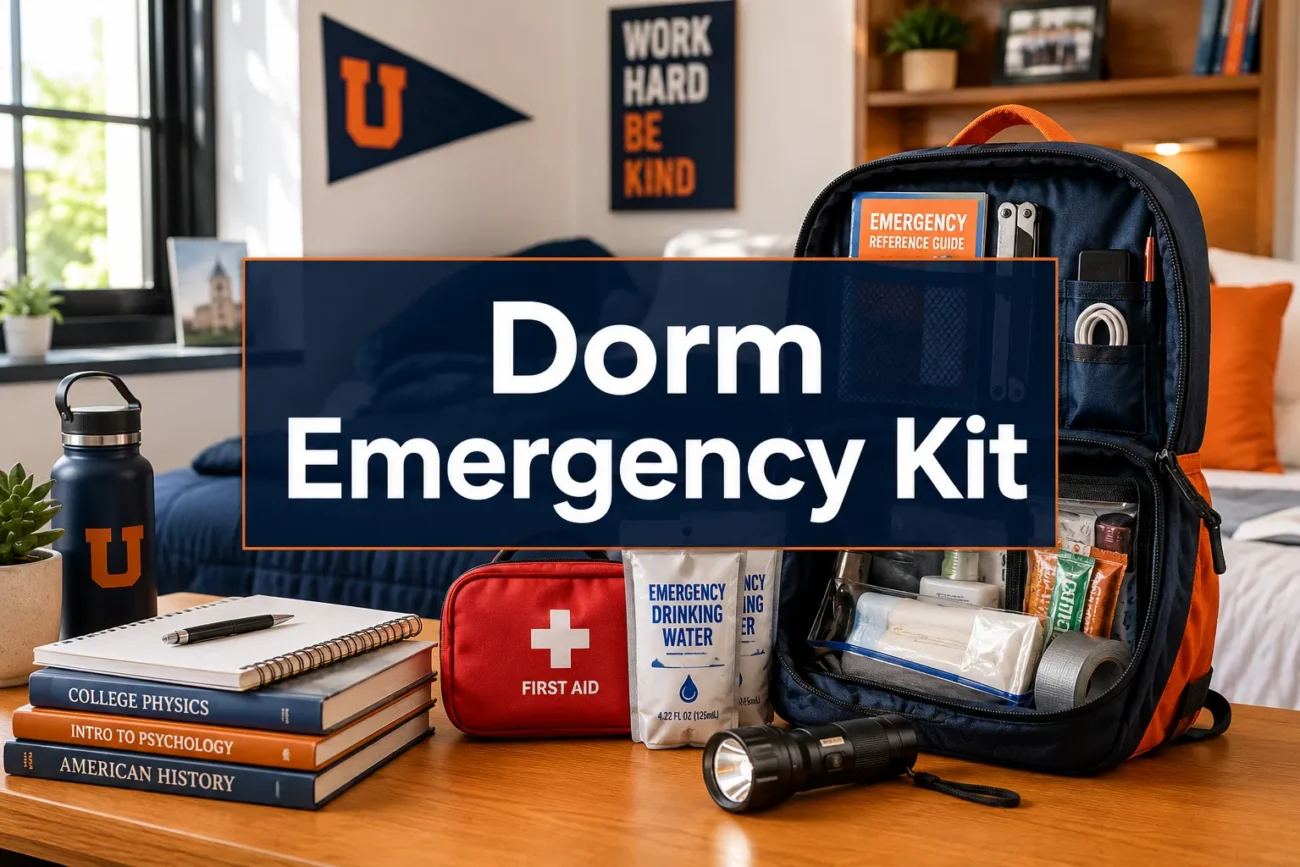
Nearly 60% of college students live on campus at some point during their academic career, yet most arrive with zero emergency supplies beyond a phone charger and a bottle of ibuprofen. That gap between comfort and preparedness isn’t just an inconvenience, it’s a genuine vulnerability. A College Dorm Emergency Kit: Apartment-Sized Preparedness for Students isn’t about paranoia. It’s about recognizing that dorms are dense, high-occupancy environments where fires, power outages, severe weather, and medical emergencies happen with real frequency, and where students are often hours away from family support.
Key Takeaways
- A functional dorm emergency kit fits in a single backpack or under-bed container and costs between $50 and $150 to build from scratch.
- College students face specific emergencies: power outages, campus lockdowns, severe weather, medical incidents, and evacuation orders.
- Dorm rules restrict open flames, large water containers, and some tools, your kit must work within those constraints.
- The core categories are water, food, first aid, light and power, communication, and documents.
- Seasonal adjustments matter: winter kits need warmth items, hurricane-season kits need extra water and battery power.
- Most colleges do not require students to have emergency kits, but many campus emergency management offices recommend them.
- Storage is the biggest challenge in a dorm, under-bed space, over-door organizers, and vacuum-sealed bags solve most of it.
- Building a kit incrementally over a few weeks costs less and feels less overwhelming than buying everything at once.
What Emergencies Do College Students Actually Need to Prepare For?
College students face a narrower but very real set of emergency scenarios compared to homeowners. The most common threats on and near campus are power outages, severe weather events (tornadoes, hurricanes, blizzards), campus lockdowns, building fires, and medical emergencies. Less frequent but serious scenarios include regional evacuations and extended utility failures.
Understanding your specific threat environment shapes everything about your kit. A student at a Florida coastal university needs hurricane-ready supplies and extra water. A student in the Midwest needs tornado shelter awareness and a battery-powered weather radio. A student in the Pacific Northwest should account for earthquake risk. The Ultimate Geographic Threat Prep Guide breaks down regional risks in detail and is worth reviewing before you finalize your supply list.
Common campus-specific emergencies:
- Extended power outages (12-72 hours)
- Severe weather requiring shelter-in-place
- Building evacuations due to fire or gas leaks
- Campus lockdowns
- Medical emergencies when health services are closed
- Winter storms that strand students on campus for days
What Should Be in a College Dorm Emergency Kit?
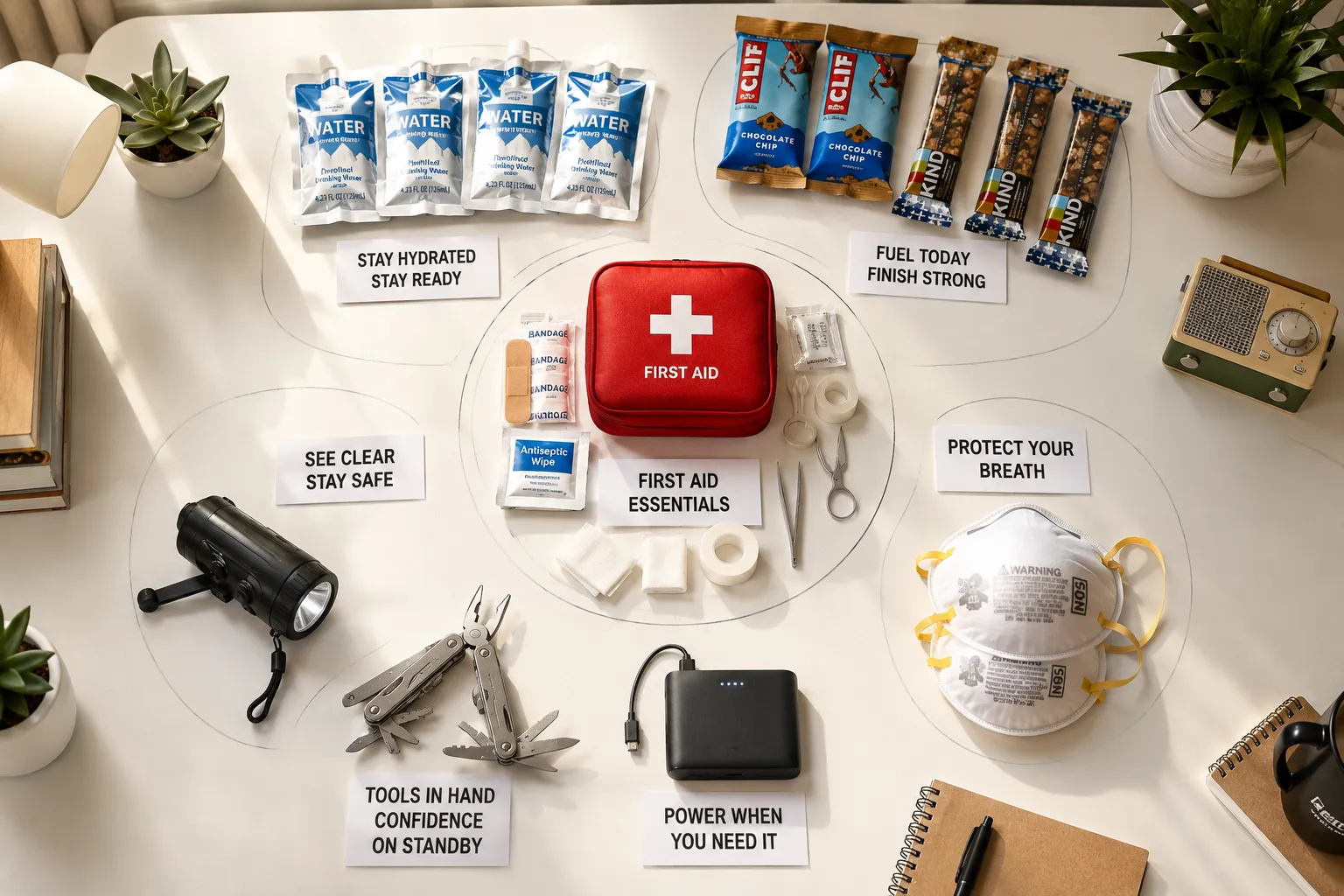
A well-built dorm emergency kit covers six core categories: water, food, first aid, light and power, communication, and critical documents. Every item should be compact, multi-purpose, and compliant with dorm regulations.
Water
Dorms restrict large containers, but you can realistically store one gallon per person per day for three days using collapsible water bottles, water pouches, or a compact filtration bottle like a LifeStraw. For deeper guidance on small-space water storage, see the Apartment Water Storage Complete Guide.
Food
Aim for 72 hours of calorie-dense, no-cook food. Good options include:
- Energy bars (Clif, RXBAR, or emergency ration bars)
- Instant oatmeal packets
- Peanut butter pouches
- Shelf-stable tuna or salmon packets
- Dried fruit and nuts
Avoid anything requiring an open flame, most dorms prohibit hot plates and camp stoves in rooms. For no-cook meal ideas, the Best No-Cook Survival Meals guide has practical options that work in a dorm context.
First Aid
A compact first aid kit should include adhesive bandages in multiple sizes, gauze pads, medical tape, antiseptic wipes, tweezers, nitrile gloves, and a digital thermometer. Add any personal prescription medications (a 7-day backup supply if possible), an epinephrine auto-injector if you have severe allergies, and a list of your medical conditions and emergency contacts. For a thorough breakdown of what a proper kit contains, the 47 Things Every Prepper First Aid Kit Needs is an excellent reference.
Light and Power
- Headlamp with extra batteries
- Small battery bank (20,000 mAh minimum) for charging phone and devices
- Hand-crank or solar emergency radio
- Glow sticks (safer than candles in dorms)
Communication
- Printed list of emergency contacts (phone dies; paper doesn’t)
- Campus emergency alert system registration
- NOAA weather radio app or a physical hand-crank radio
- A small notepad and pen
Critical Documents
Keep physical or encrypted digital copies of your student ID, health insurance card, prescription information, and a small amount of cash ($40,$60 in small bills). Card readers fail during power outages.
How to Make an Emergency Kit for a Dorm Room: Step by Step
Building a dorm emergency kit is a straightforward process when approached in phases. Don’t try to buy everything in one shopping trip, it’s expensive and easy to overbuy items you don’t need.
Phase 1: Container first (Day 1)
Choose your storage method before buying supplies. A 25-35 liter backpack works well because it doubles as a grab-and-go bag during evacuations. Alternatively, a flat under-bed storage container keeps everything organized without taking up floor space.
Phase 2: Water and food (Days 2-3)
Stock three days of water and food before anything else. These are the highest-priority items in any emergency.
Phase 3: First aid and medications (Days 4-5)
Assemble your first aid kit and gather a backup supply of any prescription medications.
Phase 4: Light, power, and communication (Days 6-7)
Add your headlamp, battery bank, and emergency radio. Register for campus emergency alerts if you haven’t already.
Phase 5: Documents and cash (Day 7)
Make copies of critical documents and set aside emergency cash.
Phase 6: Seasonal review (every semester)
Swap out expired food and batteries, and adjust for seasonal threats at the start of each semester.
What’s the Difference Between a Basic and Comprehensive Dorm Emergency Kit?
A basic kit covers 72 hours of survival needs with minimal gear. A comprehensive kit extends coverage to 7-14 days and adds tools for a wider range of scenarios.
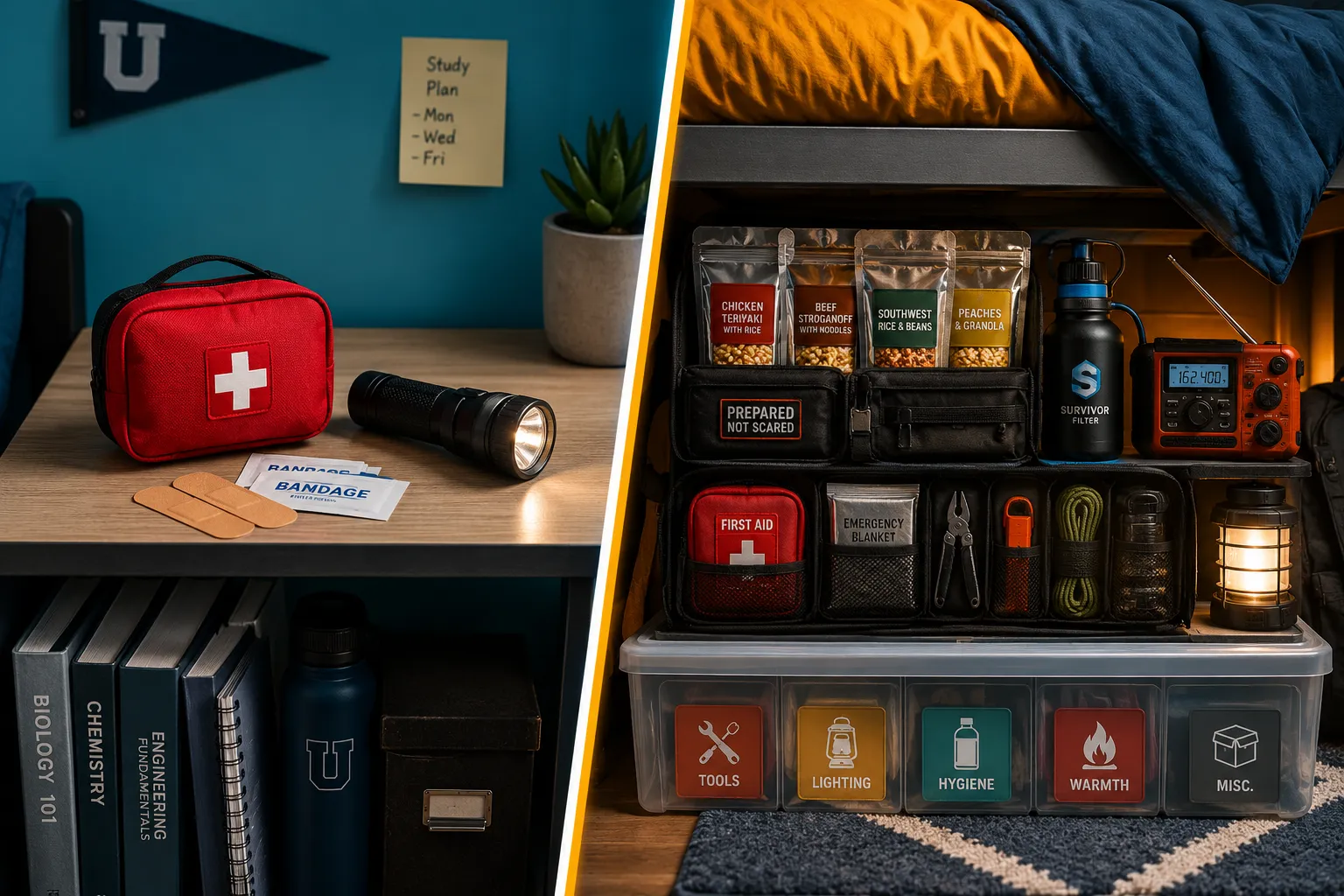
Basic Kit (72-hour coverage, ~$50,$75)
- 3 days of water (stored in pouches or a filtration bottle)
- 3 days of no-cook food
- Basic first aid kit
- Headlamp and extra batteries
- Phone battery bank
- Emergency contacts list and cash
Comprehensive Kit (7-14 day coverage, ~$100,$150)
Everything in the basic kit, plus:
- Water filtration bottle AND purification tablets as backup
- 7-14 days of shelf-stable food
- Upgraded first aid kit with trauma supplies
- Hand-crank emergency radio
- Mylar emergency blankets (2-3)
- N95 masks (useful for smoke, dust, or airborne illness scenarios)
- Duct tape and a multi-tool
- Portable phone charger with solar panel
For students who want to go deeper, the Urban Survival Kit for Apartment Residents guide covers many of the same principles in a small-space context.
Can You Keep Emergency Supplies in a Dorm Room?
Yes, with some limitations. Most college dorms allow emergency supplies as long as they comply with fire safety codes and housing policies. The restrictions vary by institution, but common prohibitions include open-flame devices (candles, camp stoves), large quantities of flammable liquids, and oversized containers.
What’s typically allowed:
- Battery-powered lights and radios
- Sealed food and water
- First aid kits
- Battery banks and solar chargers
- Multi-tools (check blade length policies)
- Emergency blankets
What’s typically restricted or prohibited:
- Candles and oil lamps
- Propane or butane stoves
- Containers over a certain size (varies by dorm)
- Firearms or weapons (even legal ones in most campus housing)
If you’re unsure about a specific item, check your housing agreement or contact your Resident Advisor before purchasing. The last thing you want is to have supplies confiscated during a move-in inspection.
What If My Dorm Doesn’t Allow Certain Emergency Supplies?
Work around restrictions by choosing compliant alternatives that serve the same function. This is one of the core skills of apartment-sized preparedness.
Open flame alternatives:
- Battery-powered LED lanterns instead of candles
- Hand warmers (chemical, single-use) instead of propane heat sources
- Electric heating pads if outlets are available
Large water container alternatives:
- Collapsible water pouches that store flat
- LifeStraw or Sawyer Squeeze filtration bottles
- Individual 500ml water pouches (stack easily under a bed)
Cooking alternatives:
- No-cook food only (bars, pouches, dried goods)
- If your dorm allows it, a small electric kettle opens up instant oatmeal, ramen, and freeze-dried meals
For more on heating and cooking without traditional fuel sources, the guide on apartment emergency heating without electricity covers compliant options in detail.
Dorm Emergency Kit Checklist by Season
Seasonal adjustments make a significant difference in kit effectiveness. A one-size-fits-all approach leaves gaps.
Fall Semester (August, November)
- Hurricane supplies if in a coastal or southern region (extra water, battery bank, weather radio)
- Back-to-school illness kit: cold/flu medications, electrolyte packets, thermometer
- Wildfire mask (N95) if in the western US
Winter (December, February)
- Mylar emergency blankets (2-3)
- Chemical hand warmers (10-15 packets)
- Extra warm layers in your kit bag
- Ice melt packets or traction cleats if you’re in a high-snowfall area
- Extended food supply in case of blizzard lockdown
Spring Semester (January, May)
- Tornado preparedness if in the Midwest or South: know your shelter location, keep your kit accessible
- Allergy medications if applicable
- Re-stock and rotate any expired items from fall
Summer Sessions
- Heat preparedness: electrolyte packets, cooling towels, extra water
- Hurricane season begins June 1, coastal students should have a full 72-hour kit ready by then
Where to Buy Emergency Kits for Dorms and How Much They Cost
Pre-built emergency kits are available from Amazon, REI, Walmart, and specialty preparedness retailers. Building your own kit is almost always cheaper and better-suited to your specific needs.
Pre-built kit options:
- Budget kits ($30,$60): Basic 72-hour kits from brands like Ready America or Sustain Supply. Good starting point, but often lack a battery bank and have minimal food quality.
- Mid-range kits ($75,$120): Better food quality, more complete first aid, and usually include a hand-crank radio.
- Premium kits ($150,$250): Extended coverage, better gear quality, and more customization. Often overkill for a single dorm resident.
DIY build cost breakdown (approximate):
| Category | Estimated Cost |
|---|---|
| Water (pouches + filtration bottle) | $15,$25 |
| Food (72-hour supply) | $20,$35 |
| First aid kit | $15,$30 |
| Headlamp + batteries | $10,$20 |
| Battery bank (20,000 mAh) | $20,$35 |
| Hand-crank radio | $20,$40 |
| Miscellaneous (cash, documents, blankets) | $10,$20 |
| Total | $110,$205 |
Building incrementally over a few weeks keeps costs manageable. Start with water and food, then add layers each week.
Do Colleges Require Students to Have Emergency Kits?
Most colleges do not mandate that students maintain personal emergency kits. However, many campus emergency management offices and student affairs departments actively recommend them, and some residence life programs distribute basic starter kits during move-in week.
The absence of a requirement doesn’t mean the absence of need. Campus emergency response systems are designed for building-level and campus-wide events, they don’t stock individual supplies for each student. During a prolonged power outage or severe weather event, students who have their own supplies are significantly better positioned than those who rely entirely on institutional resources.
Check your school’s emergency management website. Many publish recommended supply lists specific to their region and campus layout.
How to Store Emergency Supplies in a Small Dorm Room
Storage is the most common obstacle students face when building a dorm emergency kit. The good news is that dorm rooms, while small, have more usable storage space than most students use.
Best storage locations:
- Under the bed: A flat, lidded container or a vacuum-sealed bag holds a surprising amount of gear. Most dorm beds can be raised on risers to create more clearance.
- Over-door organizers: Useful for smaller items like first aid supplies, medications, and documents.
- Closet shelf: A dedicated shelf or bin keeps your kit separate from everyday items so you can grab it quickly.
- The kit bag itself: A backpack that stays packed and accessible near your door is the most grab-and-go-ready option.
Space-saving tips:
- Use vacuum-sealed bags for clothing layers and emergency blankets, they compress to a fraction of their normal size.
- Choose flat water pouches over bulky jugs.
- Multi-purpose items reduce total volume: a headlamp serves as both a flashlight and hands-free work light; a multi-tool replaces several individual tools.
For more small-space storage strategies, the Ultimate Guide to Prepping in a Small Apartment applies directly to dorm-sized constraints.
Is a Dorm Emergency Kit Different From a Home Emergency Kit?
Yes, in three meaningful ways: size constraints, restriction compliance, and the absence of a household infrastructure.
A home emergency kit can include a 72-hour supply for an entire family, a generator, large water containers, and a full pantry backup. A dorm kit must fit in a single bag, comply with housing policies, and account for the fact that a student has no kitchen, no garage, and limited personal space.
That said, the core principles are identical: water, food, first aid, light, communication, and documents. The Ultimate Guide to Home Emergency Preparedness is worth reading for the underlying framework, even if the scale differs.
The other key difference is the evacuation scenario. Dorm students evacuate on foot or by car to a different location, often a parent’s home, a friend’s off-campus apartment, or a designated campus shelter. Your kit should be light enough to carry without assistance and organized so you can grab it in under two minutes.
Common Mistakes When Packing a Dorm Emergency Kit
Even experienced preppers make these errors when scaling down to a dorm context.
Mistake 1: Buying a pre-built kit and never opening it.
Pre-built kits often contain items you don’t need and lack items specific to your situation. Open it, audit it, and customize it.
Mistake 2: Forgetting prescription medications.
A 7-day backup supply of any prescription medication is one of the most important and most overlooked components of a personal emergency kit.
Mistake 3: Relying entirely on your phone.
Phones die, networks overload during emergencies, and digital documents become inaccessible without power. Keep printed copies of critical information and a physical battery bank.
Mistake 4: Ignoring dorm-specific restrictions.
Packing a camp stove or large propane canister is a fire code violation in virtually every college dorm. Know your restrictions before you shop.
Mistake 5: Never rotating supplies.
Energy bars expire. Batteries lose charge. Check your kit at the start of every semester and replace anything past its date. For a broader look at what gets overlooked, 15 Things Missing From Your Emergency Kit is a useful audit resource.
Mistake 6: No cash.
ATMs and card readers fail during power outages. Keep $40,$60 in small bills in your kit at all times.
Frequently Asked Questions
How much space does a dorm emergency kit actually take up?
A well-organized 72-hour kit for one person fits in a 25-35 liter backpack or a flat under-bed container roughly the size of a large shoebox. It should not take up significant floor or desk space.
Can I share a kit with my roommate?
You can share some items (a first aid kit, a battery bank, a radio), but water, food, and personal medications should be individual. If one of you evacuates and the other doesn’t, you both need independent supplies.
What’s the single most important item in a dorm emergency kit?
Water. Every other problem has a workaround. Dehydration doesn’t. Even a basic filtration bottle and a few water pouches give you a meaningful safety margin.
Should I tell my RA about my emergency kit?
There’s no requirement to disclose it, but if any items could be questioned under housing policy, it’s worth a quick conversation. Most RAs will appreciate the preparedness mindset and can clarify what’s allowed.
What if I can’t afford to build a full kit right now?
Start with the three highest-value items: a water filtration bottle ($15,$25), a 3-day food supply of energy bars ($15,$20), and a headlamp ($10,$15). That’s roughly $40,$60 and covers your most critical needs. Add layers each month.
Does my campus have emergency supplies I can access?
Many campuses have emergency supply caches in residence halls, student unions, and campus police stations. Check your campus emergency management website to know what’s available and where, but don’t rely on those supplies as your primary plan.
How often should I update my dorm emergency kit?
Review it at the start of every semester. Rotate food and batteries, update your medications, and adjust for the season’s specific threats.
What about my pet in the dorm?
If your dorm allows pets, your emergency kit needs to include supplies for them too. The Ultimate Pet’s Emergency Preparedness Checklist covers food, water, medications, and carrier needs for animals in emergency scenarios.
Is a dorm emergency kit the same as a bug-out bag?
They overlap but aren’t identical. A bug-out bag is optimized for rapid evacuation and extended mobility. A dorm emergency kit is designed for both shelter-in-place and evacuation scenarios. If you want your kit to double as a bug-out bag, the Bug Out Bag for Apartment Living Checklist is a direct reference for that hybrid approach.
What if I have dietary restrictions or food allergies?
Pre-built kits rarely accommodate dietary restrictions. Building your own kit is the only reliable way to ensure every food item is safe for you. Always read labels, and include an epinephrine auto-injector if you have severe allergies.
Conclusion
A College Dorm Emergency Kit: Apartment-Sized Preparedness for Students doesn’t require a large budget, a storage unit, or a survival obsession. It requires about 30 minutes of planning, a few targeted purchases, and the discipline to actually keep the kit stocked and accessible.
Start this week with the three essentials: water, food, and a headlamp. Add a first aid kit and battery bank before the end of the month. By the time the semester is fully underway, you’ll have a complete 72-hour kit that fits under your bed and costs less than a textbook.
The students who come through emergencies with the least disruption aren’t the ones who panicked and called home, they’re the ones who had supplies on hand, knew where their documents were, and didn’t have to rely on a crowded campus shelter for basic needs.
That’s what preparedness actually looks like. Not fear. Confidence.
Recommended Products and Resources
- LifeStraw Personal Water Filter, Compact, dorm-compliant, and reliable for filtering tap or questionable water sources. A foundational item for any small-space kit.
- Anker PowerCore 26,800 mAh Battery Bank, One of the most reliable high-capacity battery banks available. Charges a smartphone 4-5 times on a single charge.
- Ready America 70280 Emergency Kit, A solid pre-built starting point for students who want a baseline kit to customize from.
- SOL Emergency Bivvy Blankets, Lightweight, vacuum-sealed, and compliant with all dorm policies. Essential for winter preparedness.
- Midland ER310 Emergency Hand-Crank Radio, NOAA weather alerts, solar and hand-crank charging, and a USB output for phone charging. One of the best values in emergency communication gear.
- Preppers HQ Emergency Preparedness Resources, For a broader preparedness foundation, the Ultimate Emergency Preparedness Guide covers the full spectrum from beginner to advanced.