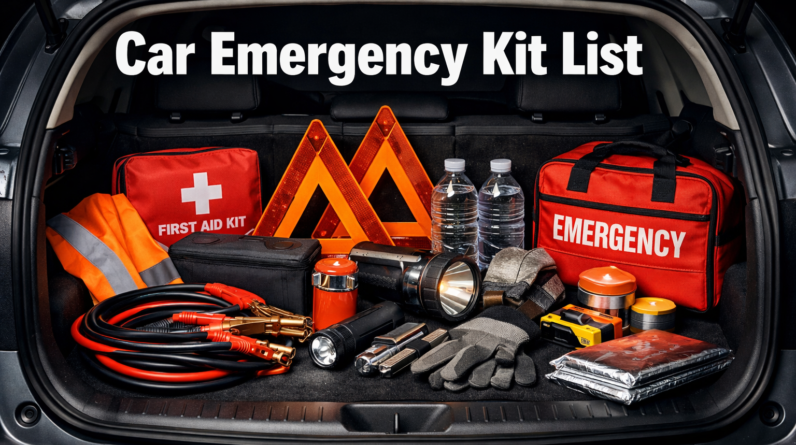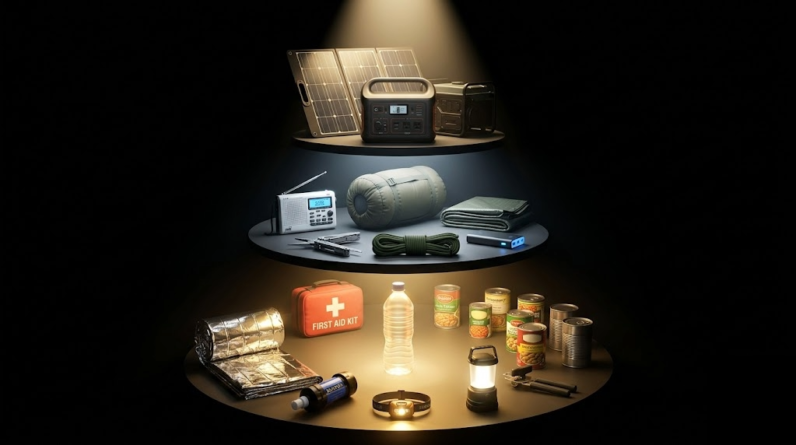
Your emergency supplies list is probably incomplete. Not because you’re careless, but because most guidance focuses on what to buy rather than what actually matters when disaster strikes.
When the hurricane warning goes from “watch” to “mandatory evacuation,” when the earthquake hits at 3 AM, when the wildfire jumps the containment line, you don’t have time to figure out what you need. You need a system—a prioritized emergency supplies list that addresses the most critical needs first, then expands outward based on your specific situation, budget, and risks.
Most people approach emergency preparedness backwards. They buy a flashlight, some batteries, maybe a case of water, and call it done. Then when a real emergency hits, they discover the gaps: no way to purify additional water, no manual can opener for the canned food, no backup power for critical medications, no plan for sanitation when the toilets stop working.
This isn’t another generic checklist. This is a priority-ranked system, built from emergency management protocols and real-world disaster response, that ensures you address the most critical vulnerabilities first. Because in an emergency, having the right 15 items is infinitely more valuable than having the wrong 50.
The Emergency Supplies Hierarchy: Understanding What You Actually Need
Not all emergency supplies are created equal. Some items are critical for immediate survival. Others increase comfort or extend your self-sufficiency. Understanding this hierarchy prevents wasted money and ensures you’re truly prepared.
The “Rule of Threes” Applied to Emergency Supplies
The “Rule of Threes” is the foundational principle of survival prioritization:
- 3 minutes without air (or in extreme cold/heat)
- 3 hours without shelter (in harsh conditions)
- 3 days without water
- 3 weeks without food
Your emergency supplies list should reflect these priorities. Shelter and temperature regulation come before water. Water comes before food. This hierarchy is non-negotiable and backed by decades of survival medicine.
Survival Priorities: Shelter, Water, Fire, Food, Medical, Communication
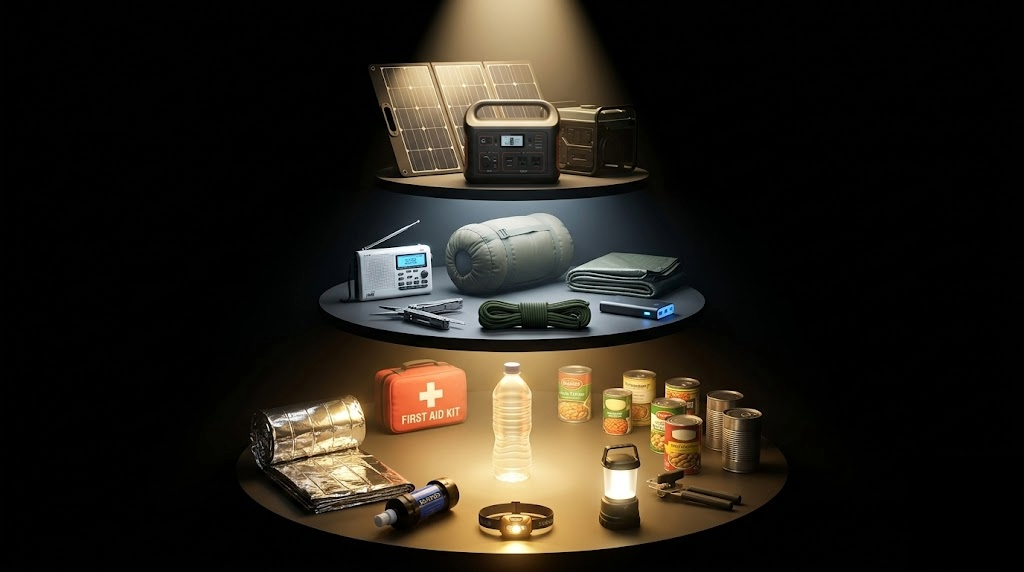 Every item on your emergency supplies list should serve one or more of these six core functions:
- Shelter: Protection from the elements (hypothermia and heat stroke kill faster than dehydration)
- Water: Sourcing, storing, and purifying (the human body can’t function without it)
- Fire/Power: Warmth, water purification, cooking, light, communication
- Food: Caloric energy for sustained survival and decision-making
- Medical: Treating injuries and managing chronic conditions
- Communication: Receiving information and signaling for help
The Difference Between “Essential” and “Comfort” Items
An essential item is one that, if absent, significantly reduces your chances of survival or recovery in a realistic emergency scenario. A comfort item increases morale or convenience but isn’t critical for survival.
Essential: Water filter, first aid kit, flashlight, emergency blanket Comfort: Playing cards, favorite snacks, pillow, portable speaker
Both matter, but essentials come first when budget or space is limited.
How to Prioritize When Budget or Space Is Limited
If you can only afford or store a limited number of items:
- Start with Tier 1 (The Critical 15): These cover the first 72 hours
- Customize for vulnerabilities: Medical needs, infants, elderly, pets
- Add Tier 2 items gradually: One or two per month
- Skip Tier 3 until Tiers 1 and 2 are complete
A complete Tier 1 kit beats an incomplete Tier 3 kit every time.
The short version: An emergency supplies list should be prioritized based on the “Rule of Threes”: shelter and warmth (3 hours), water (3 days), and food (3 weeks). The six core functions are shelter, water, fire/power, food, medical, and communication. Start with the Critical 15 items for 72-hour survival before expanding to long-term supplies.
Tier 1: The Critical 15 (Survival Essentials for the First 72 Hours)
T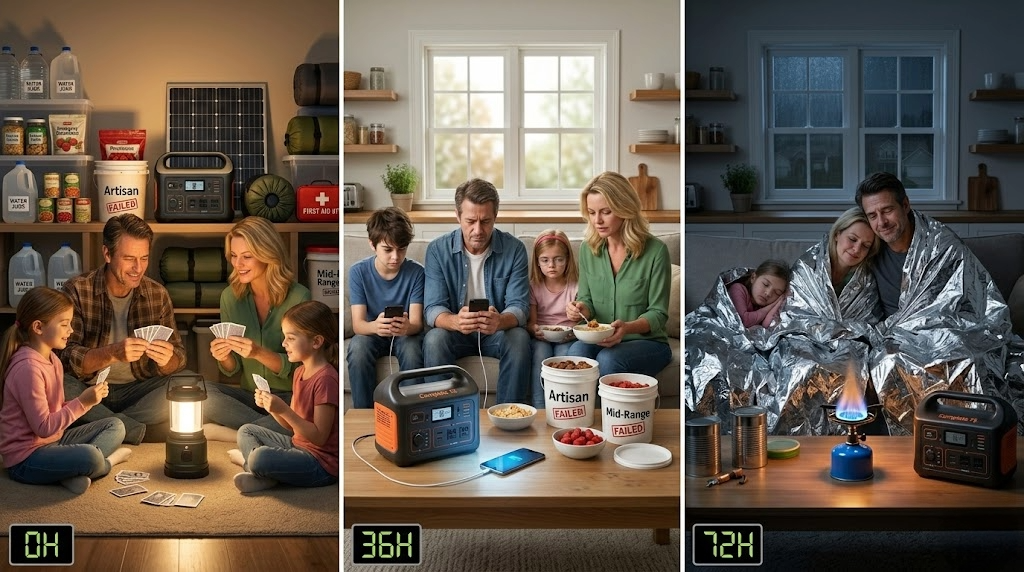 hese 15 items are non-negotiable. If you have nothing else, you have these. They address immediate survival needs for the critical 72-hour window when emergency services are overwhelmed and you’re on your own.
Water & Hydration (Items 1-3)
Water is the absolute top priority. You can survive weeks without food, but only 3 days without water—and in hot conditions or with physical exertion, even less.
- Bottled water storage (1 gallon per person per day)
Store a minimum of 3 gallons per person (3-day supply). A family of four needs 12 gallons minimum. Use food-grade containers and store in a cool, dark place. Rotate every 6 months.
- Portable water filter (Sawyer, LifeStraw, Katadyn)
A portable water filter allows you to source water from streams, lakes, or even questionable tap water. Look for:
- 0.1-micron filtration (removes bacteria and protozoa)
- 100,000+ gallon capacity
- Fast flow rate (1+ liter per minute)
Top recommendation: Sawyer Squeeze ($25-40, 100,000-gallon capacity)
- Water purification tablets (backup method)
Purification tablets kill viruses, bacteria, and protozoa. They’re lightweight, compact, and work when filters fail or clog.
Top recommendation: Potable Aqua Chlorine Dioxide tablets ($10 for 30 tablets)
Food & Nutrition (Items 4-7)
Food is lower priority than water, but you need calories for energy, decision-making, and morale.
- Non-perishable food (3-day minimum supply)
Focus on:
- Canned goods: Tuna, chicken, beans, vegetables, fruit
- Dried foods: Rice, pasta, oats (require water and cooking)
- Ready-to-eat: Protein bars, trail mix, peanut butter, crackers
- Comfort foods: Chocolate, cookies, hard candy (morale matters)
Aim for 1,200-2,000 calories per person per day.
- Manual can opener (the most forgotten item)
If you stock canned goods, a manual can opener is non-negotiable. Buy two—one for your kit, one for your kitchen. The P-38 military can opener ($2) is virtually indestructible.
- High-calorie emergency food bars
Emergency food bars (like Datrex or SOS) are calorie-dense, compact, and have a 5-year shelf life. They’re designed for survival, not taste, but they work.
- Electrolyte packets or sports drinks
Dehydration isn’t just about water—it’s about electrolytes. Packets like Liquid IV or Pedialyte powder help your body retain water and maintain function.
Light & Power (Items 8-11)
When the power goes out, darkness is immediate and disorienting. Light is essential for safety, navigation, and morale.
- LED headlamps (hands-free lighting)
A headlamp keeps your hands free for tasks. LED technology provides 50-200 hours of light on a single set of batteries.
Key features: Minimum 200 lumens, red-light mode (preserves night vision), waterproof rating (IPX4+)
Top recommendation: Black Diamond Spot ($40, 300 lumens)
- LED lanterns (ambient room lighting)
Lanterns provide 360-degree ambient light for rooms. Look for 300+ lumens and 24+ hour runtime.
Top recommendation: Goal Zero Lighthouse 400 ($60, rechargeable, doubles as phone charger)
- Extra batteries (lithium for long shelf life)
Stock lithium AA and AAA batteries. They have a 10-year shelf life and perform better in extreme temperatures than alkaline batteries.
- Portable power bank (20,000+ mAh)
A high-capacity power bank can recharge smartphones 4-6 times, keeping you connected to information and emergency services.
Top recommendation: Anker PowerCore 26800 ($60)
First Aid & Medical (Items 12-15)
Minor injuries become major problems without proper care. Medical supplies are critical, especially for those with chronic conditions.
- Comprehensive first aid kit
Your kit should include:
- Trauma supplies: Tourniquet, Israeli bandage, QuikClot, chest seals
- Wound care: Gauze, medical tape, antiseptic wipes, antibiotic ointment
- Tools: Tweezers, scissors, safety pins, thermometer
Top recommendation: Adventure Medical Kits Trauma Pak ($70-90)
- Prescription medications (30-day supply)
Work with your doctor to obtain an extra 30-day supply of all critical medications. Store in a cool, dark place and rotate regularly.
- Over-the-counter medications (pain, fever, allergies)
Stock:
- Pain relievers (ibuprofen, acetaminophen)
- Antihistamines (Benadryl, Claritin)
- Antidiarrheals (Imodium)
- Antacids (Tums, Pepto-Bismol)
- Personal hygiene items
Basic hygiene prevents illness and maintains morale:
- Toothbrush and toothpaste
- Soap and shampoo
- Deodorant
- Feminine hygiene products
- Toilet paper
Tier 2: The Foundational 30 (Expanding Your Capability)
 With the Critical 15 secured, these 30 items dramatically expand your survival capabilities from 72 hours to 2 weeks and address comfort, sanitation, and communication.
Shelter & Warmth (Items 16-22)
Temperature regulation is critical. Hypothermia can set in within 3 hours in cold conditions; heat stroke within 6-12 hours in extreme heat.
- Emergency blankets (Mylar space blankets)
Mylar blankets reflect 90% of body heat. They’re lightweight, compact, and essential for preventing hypothermia.
- Sleeping bags (temperature-rated)
Choose sleeping bags rated for 20°F below your expected low temperature. Synthetic insulation works when wet; down is warmer but useless when soaked.
- Tarp or emergency tent
A 10×10 tarp can create a lean-to, A-frame, or debris shelter. Learn basic knots (bowline, taut-line hitch) before you need them.
- Warm clothing layers
The layering system:
- Base layer: Moisture-wicking (synthetic or merino wool)
- Mid layer: Insulation (fleece or synthetic puffy)
- Outer layer: Wind/water protection (rain jacket)
- Rain gear (waterproof jacket and pants)
Staying dry is critical for preventing hypothermia. A waterproof/breathable jacket and pants are essential.
- Hand and toe warmers
Chemical hand warmers provide 8-10 hours of heat. They’re cheap, lightweight, and can prevent frostbite.
- Emergency candles (with matches/lighter)
Candles provide light and a small amount of heat. Use with caution—they’re a fire hazard and produce carbon monoxide.
Communication & Information (Items 23-27)
Information is survival. Knowing what’s happening, where to go, and how to signal for help can save your life.
- NOAA weather radio (battery/hand-crank)
A NOAA weather radio provides emergency alerts and information when internet and cell service fail.
Top recommendation: Midland ER310 ($60, AM/FM/NOAA, hand-crank, solar, USB charging)
- Two-way radios (FRS/GMRS)
FRS/GMRS radios allow family communication if separated. Range: 1-2 miles in urban areas, 5-10 miles in open terrain.
- Whistle (signaling device)
A whistle carries farther than your voice and requires no energy. Three blasts = distress signal.
- Emergency contact list (printed)
A printed list of emergency contacts, medical information, and important phone numbers. Phones die; paper doesn’t.
- Local maps (paper, not digital)
GPS fails. Cell service fails. Paper maps don’t. Store topographic maps of your area.
Tools & Equipment (Items 28-35)
Multi-use tools dramatically expand your capabilities for repairs, shelter building, and problem-solving.
- Multi-tool or Swiss Army knife
A multi-tool provides pliers, screwdrivers, knife, scissors, and more in a compact package.
Top recommendation: Leatherman Wave+ ($100, 18 tools)
- Fixed-blade knife
A full-tang fixed-blade knife is essential for batoning wood, cutting cordage, and building shelter.
Top recommendation: Mora Companion Heavy Duty ($20-30)
- Duct tape
Duct tape repairs gear, seals leaks, creates bandages, and solves countless problems. Wrap 20 feet around a water bottle to save space.
- Paracord (50-100 feet)
550 paracord has a 550-pound tensile strength. Use it for shelter building, securing gear, creating clotheslines, and more. The inner strands can be separated for finer tasks.
- Work gloves
Protect your hands from cuts, blisters, and burns. Leather or synthetic work gloves are essential for debris removal and manual labor.
- Plastic sheeting
Heavy-duty plastic sheeting (6 mil thickness) creates vapor barriers, covers broken windows, and protects supplies from water.
- Zip ties and bungee cords
Zip ties secure gear and create quick repairs. Bungee cords hold tarps, secure loads, and provide tension.
- Crowbar or pry bar
A crowbar opens jammed doors, removes debris, and serves as a lever for heavy objects. Essential for earthquake and storm recovery.
Sanitation & Hygiene (Items 36-42)
Sanitation prevents disease. In a disaster, poor hygiene can incapacitate you as quickly as lack of food or water.
- Toilet paper and tissues
Stock a 2-week supply minimum. Toilet paper is also useful for fire starting and wound care.
- Moist towelettes and baby wipes
When water is scarce, wipes provide hygiene without using drinking water.
- Garbage bags and plastic ties
Heavy-duty garbage bags manage waste, create waterproof barriers, and serve as emergency rain ponchos.
- Bucket with tight lid (emergency toilet)
A 5-gallon bucket with a toilet seat lid and waste bags creates an emergency toilet when plumbing fails.
- Feminine hygiene products
Stock a 3-month supply of pads, tampons, or menstrual cups.
- Personal hygiene items (soap, toothbrush, etc.)
Maintaining hygiene prevents illness and maintains morale:
- Bar soap or body wash
- Toothbrush and toothpaste
- Shampoo
- Deodorant
- Nail clippers
- Hand sanitizer
Hand sanitizer (60%+ alcohol) kills germs when handwashing isn’t possible.
Tier 3: The Complete 75 (Long-Term Resilience & Specialized Needs)
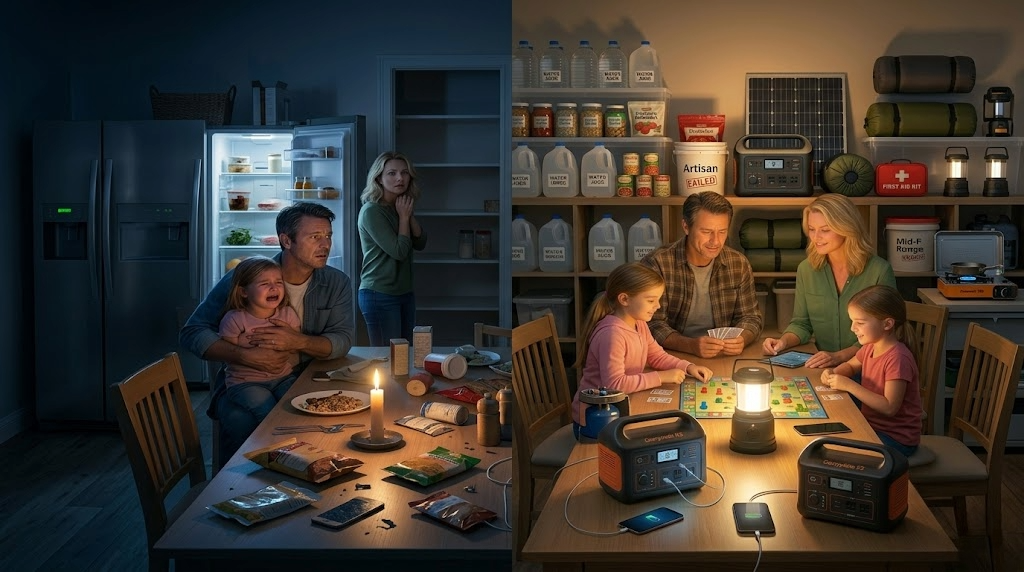 Once you’ve mastered Tiers 1 and 2, these items provide long-term self-sufficiency, backup power, and specialized capabilities.
Extended Food & Water (Items 43-50)
Expanding from 3 days to 2 weeks requires more storage and cooking capability.
- 2-week food supply
Expand your non-perishable food to 14 days. Focus on bulk staples:
- Rice (25-pound bag)
- Beans (dried or canned)
- Oats
- Pasta
- Canned vegetables and fruit
- Water storage containers (55-gallon drums)
For long-term water storage, 55-gallon food-grade drums are efficient. Add water preserver concentrate to extend shelf life to 5 years.
- Camping stove with fuel
A propane or butane camp stove allows cooking when power is out. Store fuel safely outdoors.
Top recommendation: Coleman Classic Propane Stove ($50, two-burner)
- Mess kit or camping cookware
Lightweight pots, pans, and utensils for cooking. Stainless steel or titanium are durable and easy to clean.
- Paper plates and plastic utensils
Conserve water by using disposable plates and utensils. Stock a 2-week supply.
- Aluminum foil
Aluminum foil cooks food, reflects heat, creates makeshift containers, and signals for help.
- Can opener (backup)
A second manual can opener ensures you’re never without one.
- Food storage bags
Ziplock bags protect food from moisture, organize supplies, and create waterproof containers for documents.
Advanced Power & Light (Items 51-55)
Backup power extends your capabilities from days to weeks, especially for medical devices and communication.
- Portable power station (battery generator)
A portable power station provides AC outlets, USB ports, and DC outputs without the noise, fumes, or fuel requirements of a gas generator.
Capacity guide:
- 500Wh: Powers phones, laptops, CPAP for 2 nights
- 1,000Wh: Powers mini-fridge, medical devices, multiple devices
- 2,000Wh: Powers full-size refrigerator, power tools
Top recommendation: Jackery Explorer 500 ($500, 518Wh)
- Solar panels (portable)
Portable solar panels recharge power stations and devices indefinitely. Pair with your power station for renewable energy.
Top recommendation: Jackery SolarSaga 100 ($300, 100W)
- Generator (gas/propane)
For high-wattage needs (well pump, whole-home AC, multiple appliances), a traditional generator is necessary.
Top recommendation: Honda EU2200i ($1,100, 2,200W, inverter, ultra-quiet)
- Extension cords (heavy-duty)
12-gauge outdoor extension cords safely carry power from generators to appliances.
- Fuel storage containers
Store gasoline or propane safely in approved containers. Rotate fuel every 6 months with stabilizer.
Safety & Security (Items 56-62)
Safety equipment prevents injuries and protects your home and family.
- Fire extinguisher
A multi-purpose ABC fire extinguisher handles most home fires. Mount in kitchen and garage.
- Smoke detectors (battery backup)
Ensure smoke detectors have battery backup. Test monthly and replace batteries annually.
- Carbon monoxide detector
Essential if using any combustion heating or cooking (generators, propane heaters, camp stoves).
- Emergency flares
Road flares signal for help and mark hazards. Store in vehicle and home kit.
- Reflective vest
High-visibility vests make you visible to rescuers and drivers during evacuations.
- Dust masks or N95 respirators
N95 masks protect against smoke, dust, and airborne particles during fires, earthquakes, and storms.
- Safety goggles
Protect eyes from debris, chemicals, and dust during cleanup and recovery.
Documents & Financial (Items 63-68)
Protecting your identity and financial access is critical for recovery.
- Important documents (waterproof container)
Store copies of:
- Birth certificates
- Social Security cards
- Passports
- Driver’s licenses
- Insurance policies
- Property deeds
- Medical records
- Cash (small bills)
Keep $500-$1,000 in small bills ($1, $5, $10, $20). ATMs and card readers don’t work without power.
- Credit cards (backup)
Carry credit cards from different networks (Visa, Mastercard) for redundancy.
- Insurance policies (copies)
Copies of homeowners, auto, life, and health insurance policies with contact information.
- Medical records
Summaries of medical history, prescriptions, allergies, and chronic conditions for each family member.
- Identification documents
Copies of driver’s licenses, passports, and other ID for all family members.
Special Considerations (Items 69-75)
These items address unique family needs that generic lists often overlook.
- Pet supplies (food, water, medications)
7-day supply of pet food, 1 gallon of water per day per pet, medications, leash, carrier, and comfort items.
- Baby supplies (formula, diapers, wipes)
7-day supply of formula (powder lasts longer), 10-12 diapers per day, wipes, and comfort items.
- Entertainment items (books, cards, games)
Boredom and stress are real threats to morale. Books, playing cards, and board games provide distraction and normalcy.
- Comfort items (photos, favorite snacks)
Small comfort items—family photos, favorite candy, a beloved stuffed animal—provide psychological resilience.
- Seasonal items (sunscreen, insect repellent)
Sunscreen (SPF 30+), insect repellent (DEET or picaridin), and lip balm for outdoor conditions.
- Specialty tools (for your specific needs)
Tools specific to your situation: well pump repair kit, chainsaw, generator maintenance tools, etc.
- Backup eyeglasses or contacts
If you wear corrective lenses, keep a backup pair in your emergency kit.
Building Your Emergency Supplies Kit: A Room-by-Room Approach
Don’t store all your emergency supplies in one location. Distribute them throughout your home for easy access and redundancy.
Kitchen and Pantry Essentials
Store in kitchen:
- Non-perishable food
- Manual can opener
- Water (1-week supply)
- Cooking supplies (camp stove, fuel, mess kit)
- Paper plates and utensils
Bathroom and Sanitation Supplies
Store in bathroom:
- Toilet paper and tissues
- Personal hygiene items
- First aid kit
- Medications
- Cleaning supplies
Bedroom and Comfort Items
Store in bedroom:
- Headlamp (on nightstand)
- Flashlight
- Extra blankets or sleeping bags
- Warm clothing
- Comfort items
Garage and Tool Storage
Store in garage:
- Generator and fuel
- Tools (crowbar, multi-tool, knife)
- Duct tape, paracord, plastic sheeting
- Fire extinguisher
- Safety equipment
Vehicle Emergency Kit
Store in vehicle:
- Jumper cables
- Tire repair kit
- Flashlight and batteries
- First aid kit
- Water and snacks
- Emergency blanket
- Road flares
Budget-Friendly Emergency Supplies: Building Your Kit Over Time
You don’t need to buy everything at once. Build your emergency supplies kit gradually based on priority and budget.
The $50 Starter Kit (Absolute Essentials)
Total: $50
- Water (3 gallons): $5
- Canned food (3-day supply): $15
- Manual can opener: $2
- LED flashlight: $10
- Batteries (AA/AAA): $8
- Basic first aid kit: $10
This covers the absolute minimum for 72 hours.
The $200 Comprehensive Kit (72-Hour Coverage)
Total: $200
- Everything in $50 kit
- Sawyer Squeeze water filter: $30
- Headlamp: $40
- Portable power bank: $60
- NOAA weather radio: $60
- Emergency blankets (4-pack): $10
- Additional food and water: $30
- Hygiene supplies: $20
This provides complete 72-hour coverage for a family of four.
The $500 Premium Kit (2-Week Self-Sufficiency)
Total: $500
- Everything in $200 kit
- Portable power station (500Wh): $500
- 2-week food supply: $100
- Sleeping bags (2): $100
- Camping stove with fuel: $75
- Comprehensive first aid kit: $75
- Tools (multi-tool, knife, duct tape, paracord): $75
- Sanitation supplies: $50
- Additional batteries and lighting: $50
This provides 2-week self-sufficiency with backup power.
Monthly Acquisition Plan (Spreading the Cost)
Month 1: Water and basic food ($20)
Month 2: Lighting (flashlight, headlamp, batteries) ($50)
Month 3: First aid and medications ($40)
Month 4: Water filter and purification tablets ($40)
Month 5: Communication (NOAA radio, power bank) ($120)
Month 6: Shelter and warmth (emergency blankets, sleeping bags) ($80)
Month 7: Tools and equipment ($50)
Month 8: Sanitation and hygiene ($40)
Month 9: Extended food supply ($60)
Month 10: Backup power (portable power station) ($500)
Total over 10 months: $1,000
Maintenance & Rotation: Keeping Your Emergency Supplies Ready
 An emergency supplies kit you pack and forget is a liability. Regular maintenance ensures everything works when you need it.
Quarterly Inspection Checklist (Every 3 Months)
- Test all batteries: Replace any that are weak or dead
- Check flashlights and headlamps: Ensure they turn on and are bright
- Inspect first aid kit: Replace used items, check expiration dates
- Test radios and communication devices: Ensure they receive signals
- Check water storage: Look for leaks or contamination
- Inspect food: Check for damage, pests, or expiration
Food and Water Rotation Schedule
- Water: Rotate every 6 months (use for watering plants, then refill)
- Canned goods: Rotate every 12 months (use in regular cooking, replace)
- Dried foods (rice, beans, pasta): Rotate every 12-24 months
- Emergency food bars: Check expiration dates, replace as needed (5-year shelf life)
Battery Testing and Replacement
- Test batteries quarterly: Use a battery tester or flashlight
- Replace annually: Even if batteries test good, replace annually for reliability
- Lithium batteries: 10-year shelf life, but test annually
Medication Expiration Monitoring
- Check monthly: Set a calendar reminder to check medication expiration dates
- Rotate prescriptions: Use oldest medications first, replace with new prescriptions
- OTC medications: Replace when expired (typically 2-3 years)
Frequently Asked Questions
What’s the single most important emergency supply to have?
Water. You can survive weeks without food, but only 3 days without water. If you can only afford one item, buy a portable water filter like the Sawyer Squeeze ($25-40). It allows you to source water from streams, lakes, or questionable tap water, providing virtually unlimited clean drinking water.
How much should I spend on emergency supplies?
Minimum: $50-$100 for a basic 72-hour kit (water, food, light, basic first aid) Recommended: $200-$500 for a comprehensive 72-hour to 2-week kit Premium: $1,000-$2,000 for extended self-sufficiency with backup power
Start with the Critical 15 items (Tier 1), then expand based on your budget and needs. Building your kit over 6-12 months makes it affordable.
Where should I store my emergency supplies?
Distribute across multiple locations:
- Primary kit: Easily accessible location (hall closet, garage)
- Bedroom: Headlamp, flashlight, shoes (for nighttime emergencies)
- Kitchen: Food, water, cooking supplies
- Vehicle: Smaller emergency kit for roadside emergencies or evacuation
- Offsite: Consider storing supplies at a trusted friend or family member’s home in a different area
Avoid: Attics (extreme temperatures), basements (flooding risk), single location (single point of failure)
How often should I replace items in my emergency kit?
Annually:
- Batteries (even if they test good)
- Food (rotate into regular use)
- Water (rotate every 6 months)
- Medications (check expiration dates monthly)
Every 2-3 years:
- First aid supplies (bandages, ointments)
- Hygiene items (soap, toothpaste)
Every 5+ years:
- Emergency blankets (if damaged)
- Tarps and plastic sheeting (if degraded)
Inspect quarterly to catch issues early.
What’s the difference between a bug-out bag and an emergency supplies kit?
Bug-out bag (BOB):
- Portable 72-hour kit in a backpack
- Designed for rapid evacuation
- Lightweight and mobile
- One per person
- Contains essentials for survival away from home
Emergency supplies kit:
- Larger, more comprehensive supply
- Designed for sheltering in place
- Can include heavier items (water storage, generator)
- Stored at home
- Covers 2 weeks to 1 month
You need both. The bug-out bag is for when you must leave. The emergency supplies kit is for when you stay home.
Taking the Next Step
You now have the complete emergency supplies list—75 items ranked by priority, organized by function, and tailored to real-world emergencies. But knowledge without action is just anxiety with extra steps.
Start small. This week, buy the first three items from Tier 1: water, a water filter, and a headlamp. That’s $70 and 30 minutes of your time. Next week, add food and a manual can opener. The week after, add a first aid kit.
Small, consistent actions build unstoppable momentum. In 30 days, you’ll have a complete 72-hour kit. In 90 days, you’ll have 2-week self-sufficiency. And the next time severe weather threatens, or the power goes out, or an emergency strikes, you won’t be scrambling. You’ll be ready.
That’s the difference between hoping and preparing. And that difference could save your life.
PRODUCTS / TOOLS / RESOURCES
These are the specific items and resources that consistently come up in serious emergency preparedness conversations—selected for reliability, value, and real-world effectiveness.
Water Storage & Purification
- Sawyer Squeeze Water Filter: 0.1-micron filtration, 100,000-gallon capacity, removes 99.99999% of bacteria and protozoa. The gold standard for portable water filtration ($25-40).
- Aqua-Tainer 7-Gallon Water Container: Food-grade, stackable, built-in spigot, BPA-free. Perfect for home water storage ($15 each).
- Potable Aqua Chlorine Dioxide Tablets: Kills viruses, bacteria, and Giardia. Lightweight backup purification (30 tablets for $10).
Emergency Lighting
- Black Diamond Spot Headlamp: 300 lumens, waterproof (IPX8), red-light mode, runs on AAA batteries. The standard for reliability ($40).
- Goal Zero Lighthouse 400 Lantern: 400 lumens, rechargeable via USB or hand-crank, doubles as phone charger. Provides 48 hours of light on low setting ($60).
- Energizer Ultimate Lithium AA Batteries (24-pack): 10-year shelf life, performs in extreme temperatures. The best long-term storage battery ($30).
Portable Power Solutions
- Jackery Explorer 500: 518Wh capacity, 500W output, powers CPAP machines, laptops, phones, small appliances. Pairs with solar panels ($500).
- Anker PowerCore 26800 Power Bank: 26,800mAh capacity, charges phones 6-7 times, compact and portable. Essential for communication devices ($60).
- Honda EU2200i Inverter Generator: 2,200W output, ultra-quiet (48-57 dB), fuel-efficient, clean power for electronics. The gold standard ($1,100).
Communication & Information
- Midland ER310 Emergency Radio: NOAA weather alerts, AM/FM, hand-crank and solar charging, flashlight, USB phone charging ($60).
- Motorola T600 H2O Talkabout Radio (2-pack): Waterproof, 35-mile range, 22 channels, rechargeable. Essential for family communication ($80).
First Aid & Medical
- Adventure Medical Kits Trauma Pak Pro: Comprehensive trauma kit with tourniquet, Israeli bandage, chest seals, QuikClot ($70-90).
- QuikClot Advanced Clotting Sponge: For serious bleeding, this can be life-saving. Requires training to use effectively ($15).
Food & Cooking
- Mountain House Essential Bucket: 32 servings of freeze-dried meals, 25-year shelf life, just add water ($100).
- Coleman Classic Propane Stove: Two-burner, 20,000 BTU, runs 1 hour per 16.4 oz propane cylinder ($50).
- P-38 Can Opener: Military-issue, virtually indestructible, weighs almost nothing. Keep one in every kit ($2).
Shelter & Warmth
- SOL Emergency Bivy: Reflects 90% of body heat, waterproof, reusable. Weighs 3.8 oz ($20-25).
- Coleman Sleeping Bag (20°F rated): Affordable, reliable, synthetic insulation works when wet ($40-60).
Tools & Equipment
- Leatherman Wave+: 18 tools, replaceable wire cutters, 25-year warranty. The most versatile multi-tool ($100-120).
- Mora Companion Heavy Duty: Full-tang, high-carbon steel, virtually indestructible. The best budget survival knife ($20-30).
- Gorilla Tape: Stronger than duct tape, waterproof, all-weather. Essential for repairs ($10).
Planning Resources
- FEMA Ready.gov: Free downloadable guides, checklists, and emergency planning tools from the federal government.
- Red Cross Emergency App: Free smartphone app with weather alerts, emergency preparedness information, and first aid guidance.
- “The Disaster Preparedness Handbook” by Arthur T. Bradley: Comprehensive guide covering all aspects of emergency preparedness with practical, actionable advice.