

Hey there! Some links on this page may be affiliate links which means that, if you choose to make a purchase, I may earn a commission at no extra cost to you. I greatly appreciate your support. Read the full disclosure here.
A Medical Preparedness Checklist ensures you have the essential supplies, medications, documents, and tools needed for emergencies at home, during travel, or evacuations. Focus on bleeding control, airway support, and a 30-day supply of prescriptions tailored to your household. Use free printable templates to customize your kit, audit it regularly, and prioritize training for effective use. This guide helps you build a practical, scenario-specific emergency medical kit that saves lives.
Key Takeaways
- A medical preparedness checklist covers first aid supplies, prescription medications, emergency medical documents, and scenario-specific tools for home, travel, and bug-out situations.
- The most critical items in any emergency medical kit are bleeding control supplies, airway management tools, and a minimum 30-day supply of personal prescription medications.
- Home kits and travel kits serve different purposes and should be built separately, not as one-size-fits-all solutions.
- Families with children, elderly members, or people with chronic conditions need customized checklists that go beyond standard first aid.
- Most preppers understock wound care and overstock minor-injury supplies they rarely use in real emergencies.
- A solid baseline medical kit costs between $75 and $250, depending on depth; trauma-level kits run $300 to $600 or more.
- Medical kits should be audited every six months and after any use.
- Free printable medical preparedness templates are available from FEMA, the Red Cross, and dedicated prepper resource sites.
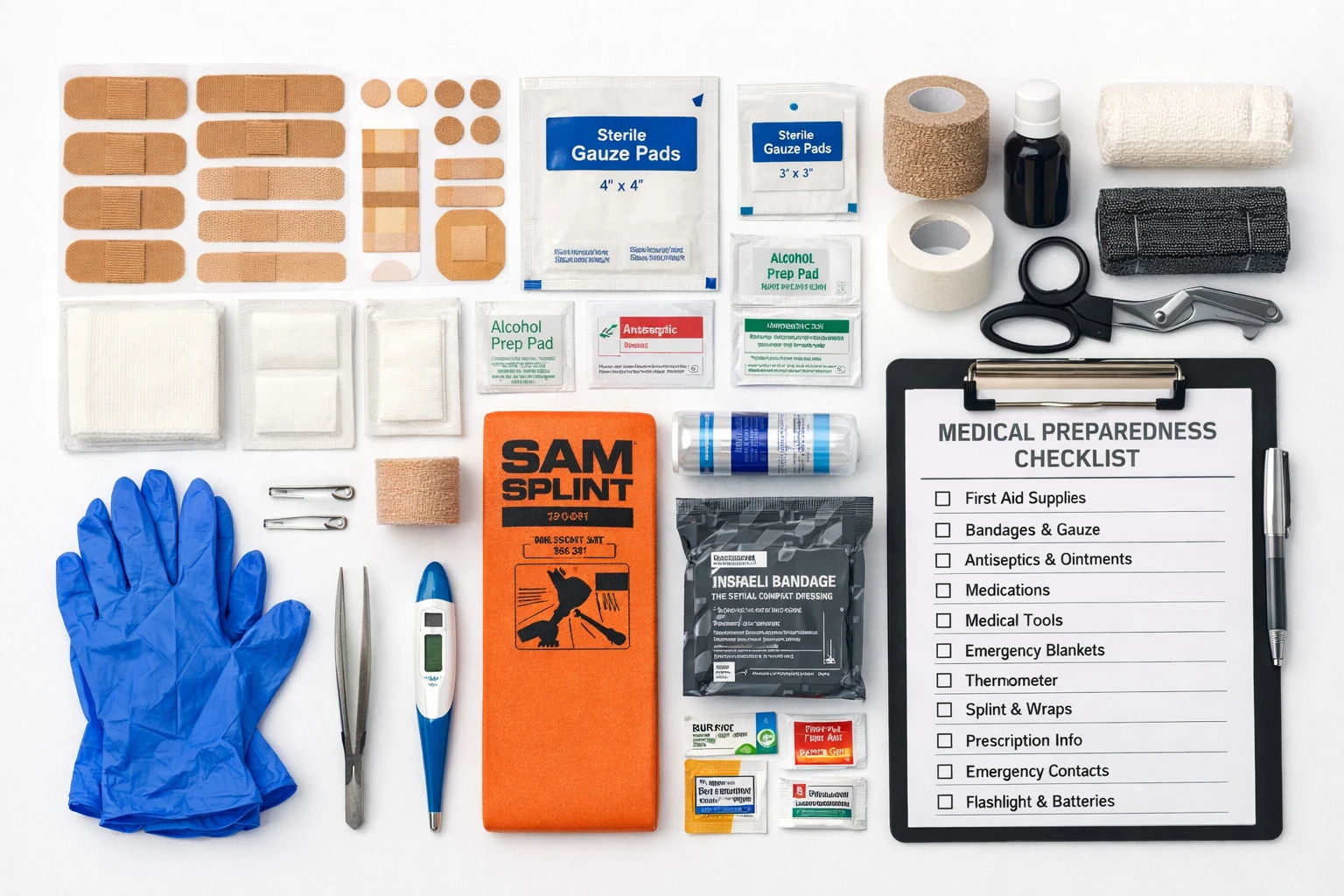
Every year, the Federal Emergency Management Agency (FEMA) reports that a significant portion of Americans have no emergency medical supplies whatsoever in their homes. Not a single bandage beyond what came in a hotel sewing kit. When disaster hits — a hurricane, a grid failure, a vehicle accident on a remote road — the gap between a prepared household and an unprepared one is often measured in minutes and gauze pads.
A well-built Medical Preparedness Checklist (Free Printable) is not a luxury item for extreme survivalists. It is the foundation of any serious emergency plan. This guide covers exactly what goes on that list, how to customize it for your household, where to download free printable templates, what common mistakes to avoid, and how much it will realistically cost to build a kit that actually works.
What Exactly Goes on a Medical Emergency Preparedness Checklist
A complete medical emergency preparedness checklist covers five core categories: wound care, airway and breathing support, medications, medical documents, and tools and diagnostics. Every item on the list should serve a specific, realistic scenario — not just fill space in a bag.
Core categories and what to include in each:
Wound Care and Bleeding Control
- Adhesive bandages (multiple sizes, including knuckle and fingertip)
- Sterile gauze pads (4×4 and 2×2)
- Rolled gauze (Kerlix or equivalent)
- Medical tape (cloth and waterproof)
- Israeli bandage or emergency trauma dressing
- Tourniquet (CAT or SOFTT-W, not the cheap elastic kind)
- Hemostatic gauze (QuikClot or Celox)
- Wound closure strips (Steri-Strips)
- Skin stapler (optional but useful for deep lacerations)
- Irrigation syringe (for wound flushing)
- Antiseptic solution (povidone-iodine or chlorhexidine)
Airway and Breathing
- Nasopharyngeal airway (NPA) with lubricant
- Chest seals (vented, for penetrating chest wounds)
- CPR face shield or pocket mask
- Pulse oximeter
Medications
- Personal prescription medications (30-day minimum supply)
- Over-the-counter pain relievers (acetaminophen, ibuprofen, aspirin)
- Antihistamines (diphenhydramine for allergic reactions)
- Anti-diarrheal medication (loperamide)
- Antacids
- Electrolyte packets
- Epinephrine auto-injector (if any household member has severe allergies)
- Prescription antibiotics (if obtainable through a physician)
Medical Documents
- Copies of all household members’ prescriptions
- Insurance cards (copies, laminated)
- Blood types for all household members
- Allergy lists
- Emergency contact numbers
- Medical power of attorney (if applicable)
Tools and Diagnostics
- Digital thermometer
- Blood pressure cuff (manual)
- SAM splint
- Triangular bandage and safety pins
- Trauma shears
- Nitrile gloves (multiple pairs, multiple sizes)
- Tweezers and forceps
- Headlamp (for hands-free use during treatment)
- Permanent marker (for writing tourniquet application time)
This is the baseline. Scenario-specific additions are covered further below.
How Do Different Checklists Compare for Home vs. Travel Medical Prep
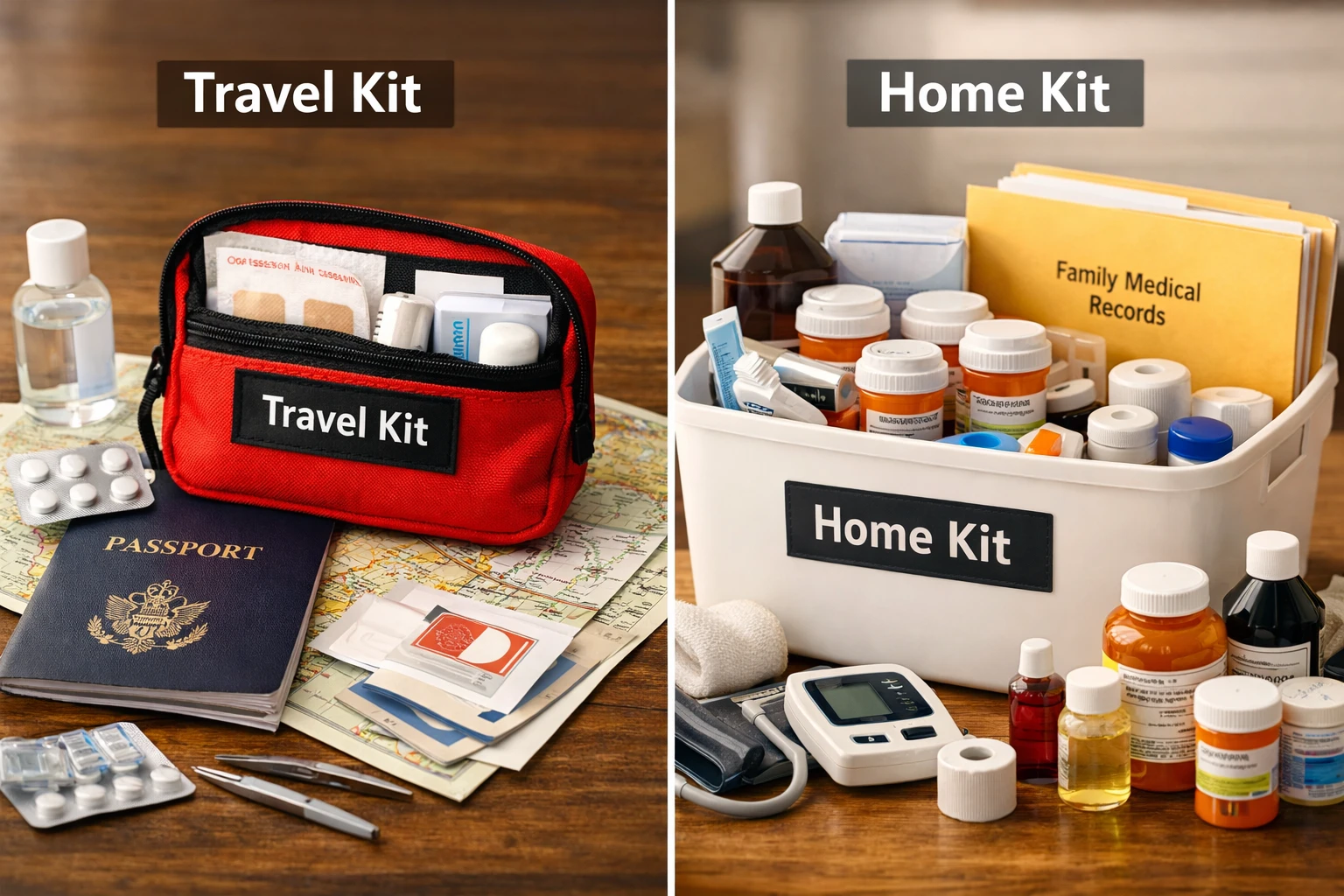
Home kits and travel kits are built for fundamentally different constraints and threat profiles. A home kit prioritizes depth and volume — you have storage space and may need to sustain care for multiple people over days. A travel kit prioritizes portability and the most likely on-the-road emergencies.
| Category | Home Kit | Travel Kit |
|---|---|---|
| Size | Large bin or backpack | Compact pouch or small bag |
| Medications | 30-90 day supply | 7-14 day supply |
| Trauma supplies | Full bleed-control kit | Compressed gauze, tourniquet, basic bandages |
| Documents | Full folder with copies | Laminated card with essentials |
| Weight | No limit | Under 2 lbs ideally |
| Cost | $150-$600+ | $40-$120 |
For vehicle preparedness, a dedicated car kit bridges the gap between the two. The Ultimate Car Emergency Kit List for Survivalists and Preppers covers this in detail, including medical components specific to roadside emergencies.
Decision rule: Build your home kit first, then strip it down to the essentials for a travel version. Never cannibalize your home kit to build a travel kit — they should be independent.
Where to Download a Free Printable Medical Preparedness Template
Several credible sources offer free printable medical preparedness checklist templates that you can download, customize, and print at home.
Reliable sources for free printable templates:
- FEMA (ready.gov): Offers a basic emergency supply checklist that includes medical items. It is a solid starting point but not comprehensive enough for serious preppers.
- American Red Cross: Provides first aid kit checklists and family emergency plan templates, available in PDF format on their website.
- CDC (cdc.gov): Publishes emergency health checklists, including guidance for people with chronic conditions.
- Preppers HQ: The checklist framework in this article is designed to be printed directly. Copy the categorized lists above into a word processor, format them with checkboxes, and print.
How to create your own printable checklist:
- Use Google Docs or Microsoft Word.
- Create a table with columns: Item, Quantity Needed, Quantity On Hand, Expiration Date, and Notes.
- Organize by the five core categories listed above.
- Add a “Last Reviewed” date field at the top.
- Print double-sided and laminate one copy for your kit.
A printed checklist stored inside the kit itself is more reliable than a phone-based list when a phone is dead, damaged, or unavailable.
What Common Mistakes Do People Make When Creating Emergency Medical Kits
The most common mistake is building a kit for minor inconveniences instead of actual emergencies. Most store-bought first aid kits are stocked for paper cuts and headaches, not for the scenarios that actually threaten lives during a disaster.
The seven most frequent mistakes:
-
No tourniquet or hemostatic agent. Uncontrolled bleeding is the leading cause of preventable death in trauma situations. Yet most preppers skip these because they seem “extreme.”
-
Expired medications. A kit that was assembled three years ago and never audited is not a medical kit. It is a false sense of security.
-
No written medical information. In a crisis, a household member may be unconscious or unavailable to communicate. Written allergy lists and medication records can be life-saving for first responders.
-
Ignoring prescription medications. Over-the-counter supplies are easy to stock. Prescription medications require planning months in advance. Most people wait until they are almost out before requesting refills — the opposite of what preparedness requires.
-
One kit for everything. Keeping all medical supplies in one location means they are unavailable during evacuation or vehicle emergencies.
-
No training to use the supplies. A tourniquet applied incorrectly can cause more harm than no tourniquet. Supplies without skills are only partially useful. Consider a Stop the Bleed course or basic first aid certification.
-
Overpacking minor-injury supplies. Twenty types of bandages and no trauma dressings is a common pattern in beginner kits.
For a broader look at what preppers commonly overlook, the article on 15 things missing from your emergency kit that could cost you everything covers gaps across all supply categories.
How Much Does a Comprehensive Medical Preparedness Kit Cost
A functional baseline medical kit costs between $75 and $150. A comprehensive trauma-capable home kit runs $250 to $600, depending on brand choices and the depth of medication supplies.
Realistic cost breakdown:
| Kit Level | What It Covers | Estimated Cost |
|---|---|---|
| Basic (beginner) | Wound care, OTC meds, basic tools | $75-$150 |
| Intermediate | Above + tourniquet, hemostatic gauze, splints, 30-day Rx supply | $150-$300 |
| Advanced (family) | Above + trauma dressings, NPA, pulse oximeter, BP cuff, full document folder | $300-$600 |
| Extended (off-grid) | Above + prescription antibiotics, suture kit, advanced diagnostics | $600+ |
Cost-saving strategies:
- Buy individual components rather than pre-assembled kits. You pay a premium for packaging.
- Purchase nitrile gloves, gauze, and bandages in bulk from medical supply wholesalers.
- Check for expiration dates when buying medications — longer shelf life means less frequent replacement cost.
- Prioritize trauma supplies first. The $30 tourniquet and $25 hemostatic gauze provide more life-saving value per dollar than a $150 pre-packaged kit from a sporting goods store.
What Medical Supplies Do You Really Need for Different Emergency Scenarios
The supplies that matter most depend entirely on the scenario. A natural disaster at home requires different priorities than a wilderness emergency or a grid-down situation lasting weeks.
Scenario-specific priorities:
Natural disaster (shelter in place)
- Full wound care kit
- 30-90 day prescription medication supply
- Water purification (infections from contaminated water are a major post-disaster medical risk)
- Anti-diarrheal and rehydration supplies
- Medical documents in a waterproof bag
Wilderness or bug-out scenario
- Compact trauma kit (tourniquet, hemostatic gauze, chest seal)
- Blister care (moleskin, athletic tape)
- Water purification tablets
- Snakebite protocol information (not a kit — there is no effective field treatment for envenomation)
- Signaling device for rescue
For wilderness scenarios specifically, the 25 Most Critical Wilderness Survival Skills covers the skill side of medical response in remote environments.
Grid-down extended scenario
- Antibiotics (with physician guidance)
- Dental emergency kit (temporary filling material, clove oil)
- Wound closure supplies (stapler, suture kit if trained)
- Extended medication supply (90+ days)
- Medical reference book (Where There Is No Doctor by David Werner is the standard recommendation)
Vehicle emergency
- Tourniquet and hemostatic gauze (car accidents are a primary cause of traumatic bleeding)
- Trauma shears (to cut seatbelts and clothing)
- Emergency blanket
- Basic wound care
Are Medical Preparedness Checklists Different for Families vs. Individuals
Yes, significantly. A single adult’s checklist is primarily built around their own health profile. A family checklist must account for multiple people with different medical needs, different body sizes, and different vulnerabilities.
Key differences by household type:
Individual preppers:
- Focus on personal prescription medications and known allergies
- Compact kit size is achievable
- Simpler document requirements
Families with children:
- Pediatric dosing for all medications (acetaminophen and ibuprofen doses are weight-based)
- Child-sized airway adjuncts if stocking NPA
- Additional fever management supplies
- Comfort items for children during medical stress (not medical, but practically important)
Households with elderly members:
- Multiple prescription medication management (polypharmacy is common in older adults)
- Fall injury supplies (hip padding, extra splints)
- Hearing aid batteries and glasses backups
- Specific guidance on medication interactions during stress
For families building a broader preparedness system, the Disaster Preparedness for Families guide provides a full framework that integrates medical planning with food, water, and evacuation.
Decision rule: Build one master household checklist, then create individual sub-lists for each person’s specific needs. Store personal medications with each person’s go-bag, not only in the central kit.
What Medical Conditions Require Special Preparedness Considerations
Certain chronic and acute medical conditions require preparation that goes well beyond a standard first aid kit. These conditions can become life-threatening within hours if medications or management tools are unavailable.
Conditions that require dedicated preparedness planning:
- Diabetes: Insulin storage (requires refrigeration — plan for power outages), blood glucose monitoring supplies, glucagon emergency kit, extra lancets and test strips
- Severe allergies: Multiple epinephrine auto-injectors (EpiPens expire and should be replaced annually), written allergy protocol for caregivers
- Asthma: Extra rescue inhalers, spacer device, written action plan
- Heart conditions: Nitroglycerin tablets (if prescribed), aspirin (for suspected cardiac events), medical alert information
- Seizure disorders: Rescue medications (diazepam rectal gel or nasal midazolam if prescribed), seizure action plan, padded surfaces
- Mental health conditions: Adequate psychiatric medication supply, crisis contact numbers, written care instructions for caregivers
The 9 Essential Disaster Prep Strategies for Seniors addresses many of these chronic condition considerations in the context of older adults specifically.
Important note: Consult a physician when building a condition-specific kit. Some medications (like insulin) have specific storage requirements that affect how you plan. A physician can also help with obtaining emergency prescription supplies in advance.
How Often Should You Update Your Medical Emergency Preparedness Checklist
Medical kits should be audited every six months at minimum, and immediately after any use. A kit that was comprehensive when assembled becomes a liability if medications expire and supplies are not replaced.
What to check at each audit:
- Expiration dates on all medications (prescription and OTC)
- Integrity of sterile packaging on gauze, bandages, and wound closure products
- Battery life on any battery-powered tools (thermometer, pulse oximeter)
- Prescription medication quantities (are you maintaining the 30-day buffer?)
- Changes in household medical needs (new diagnoses, new medications, new family members)
- Any items used since the last audit
Recommended audit schedule:
- Every six months (align with daylight saving time changes as a memory trigger)
- After any emergency use
- After any household medical change (new diagnosis, new member, new medication)
- After any storage condition change (flood, extreme heat, vehicle kit in summer)
A printed checklist stored inside the kit makes audits faster. Each line item has a “last checked” date column, so nothing gets missed.
What Items Are Most Critical in a Basic First Aid and Emergency Medical Kit
The single most critical category is bleeding control. Uncontrolled hemorrhage is the leading cause of preventable death in trauma, and it is also the most addressable with proper supplies and basic training.
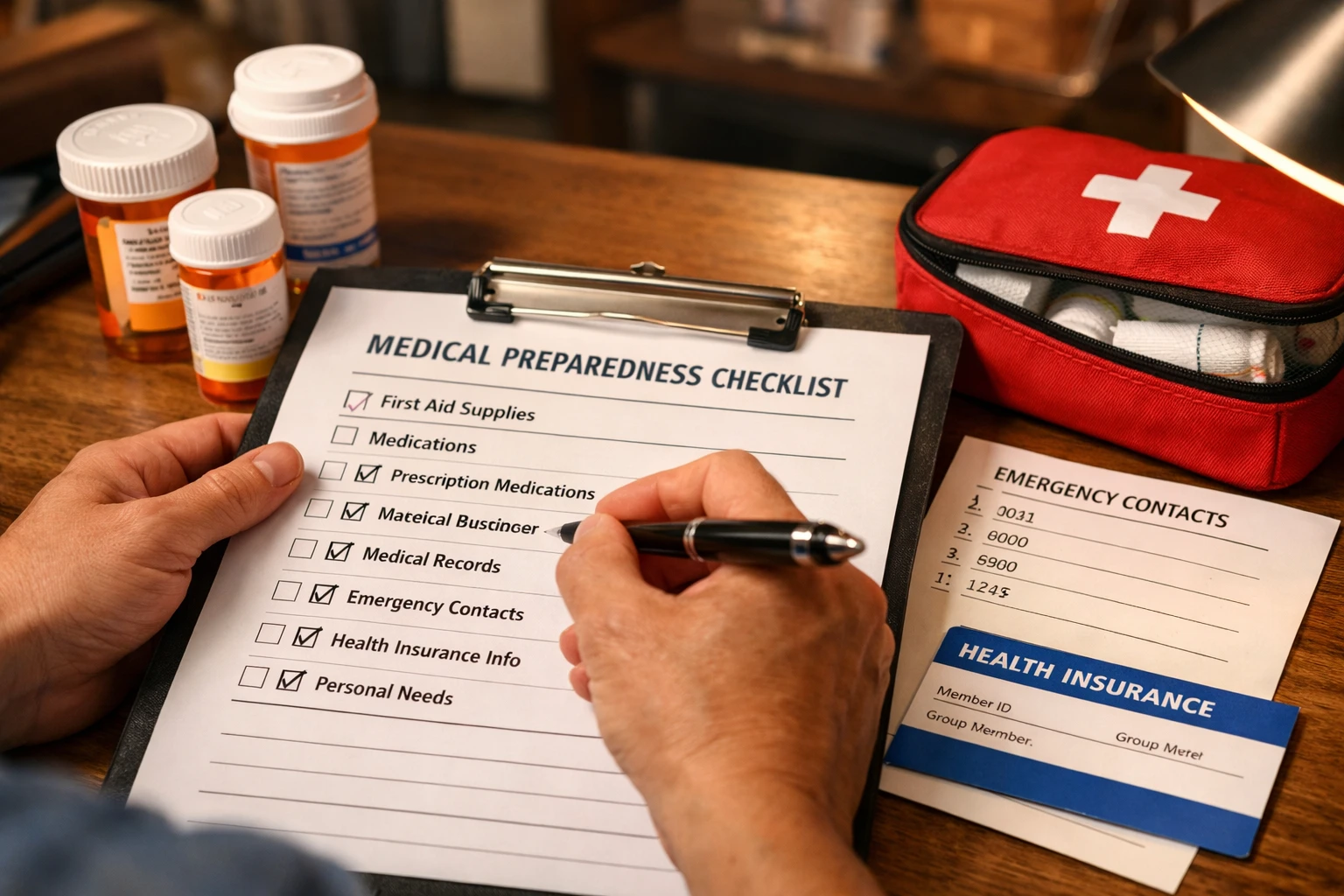
The non-negotiable core (ranked by life-saving priority):
- Tourniquet (CAT or SOFTT-W) — for extremity bleeding that cannot be controlled by direct pressure
- Hemostatic gauze (QuikClot Combat Gauze or Celox) — for wounds where a tourniquet cannot be applied
- Pressure bandage (Israeli bandage or equivalent) — for sustained pressure on large wounds
- Nitrile gloves — infection control for both patient and provider
- CPR face shield — for rescue breathing without direct contact
- Digital thermometer — fever is an early warning sign of infection
- Trauma shears — to access wounds quickly without causing additional injury
- Adhesive bandages (multiple sizes) — for minor wound management
- Prescription medications — for any household member with a chronic condition
- Medical information card — blood type, allergies, medications, emergency contacts
Everything else builds on this foundation. If a budget forces prioritization, start with these ten items before adding anything else.
For a broader emergency supply framework that integrates medical with all other categories, the Ultimate Disaster Preparedness Checklist: 50 Essential Items provides the full picture.
What Medical Supplies Are Recommended for Natural Disaster Preparedness
Natural disasters create a specific medical threat profile: trauma from structural damage, waterborne illness from contaminated water, respiratory issues from smoke or dust, and medication disruption from supply chain collapse.
Natural disaster-specific medical priorities:
- Wound care depth: Disasters create debris fields. Lacerations, puncture wounds, and crush injuries are common. Stock more wound care than you think you need.
- Infection management: Post-disaster environments are often unsanitary. Antiseptic solutions, antibiotic ointment, and if possible, oral antibiotics (with physician guidance) are critical.
- Respiratory support: N95 masks for smoke, dust, and mold exposure after flooding or structural damage.
- Water-related illness: Oral rehydration salts and anti-diarrheal medication for waterborne illness risk.
- Medication continuity: Pharmacies close during and after disasters. A 30-90 day prescription supply is not excessive — it is standard practice.
- Mental health support: Disasters are traumatic. Basic comfort supplies and written coping resources matter, especially for children.
The Natural Disaster Preparedness: A Step-by-Step Guide integrates medical preparedness into a full disaster response framework.
Common edge case: Many preppers prepare for physical trauma but ignore gastrointestinal illness, which is statistically far more common after natural disasters. Rehydration supplies and anti-diarrheal medication are often the most-used items in the aftermath of a flood or hurricane.
Frequently Asked Questions
Do I need medical training to use these supplies? Basic first aid and CPR certification is strongly recommended for anyone building a serious medical kit. A tourniquet or chest seal used incorrectly can cause harm. Stop the Bleed courses are free in many areas and take about two hours.
Can I get prescription antibiotics for my emergency kit? Some physicians will prescribe a small emergency supply of broad-spectrum antibiotics for patients with a documented preparedness plan. Telemedicine services have made this more accessible. Never self-prescribe or use antibiotics without medical guidance.
What is the difference between a first aid kit and a trauma kit? A first aid kit handles minor injuries (cuts, sprains, burns). A trauma kit is designed for life-threatening emergencies: severe bleeding, penetrating wounds, airway compromise. Serious preppers need both, or a kit that covers both categories.
How do I store medical supplies to maximize shelf life? Store in a cool, dry, dark location. Avoid vehicle storage in extreme heat — temperatures above 100°F degrade medications and compromise sterile packaging. Use airtight containers for moisture-sensitive items.
Should children have their own medical kits? Children do not need separate kits, but the household kit must include pediatric-appropriate items: weight-based medication dosing charts, child-sized bandages, and any child-specific prescriptions or medical devices.
What is the best bag or container for a home medical kit? A hard-sided, waterproof container with a gasket seal is ideal for home storage. For bug-out or travel use, a soft-sided bag with clear internal pouches allows faster access under stress.
Is a pre-assembled first aid kit good enough for emergency preparedness? Pre-assembled kits are a starting point, not a complete solution. Most lack trauma supplies, prescription medications, and medical documents. Use them as a base and add the critical items listed in this guide.
How do I handle medications that require refrigeration during a power outage? Insulin and some other medications require refrigeration. Plan for this specifically: a small 12V cooler, insulated medication cases, and knowledge of how long your specific medication remains viable at room temperature. Consult your pharmacist for guidance on your specific medications.
What medical reference books should be in my kit? “Where There Is No Doctor” by David Werner is the most widely recommended resource for extended off-grid medical situations. “The Survival Medicine Handbook” by Joseph Alton and Amy Alton is another strong choice specifically written for preppers.
Should I include a blood pressure cuff in my kit? For a home kit, yes. A manual (aneroid) blood pressure cuff is inexpensive, does not require batteries, and provides critical diagnostic information during a medical emergency.
Conclusion
A Medical Preparedness Checklist (Free Printable) is not a document you fill out once and forget. It is a living system that reflects your household’s real medical needs, gets audited regularly, and grows as your preparedness level grows.
Start with the non-negotiables: bleeding control, prescription medications, and a written medical information card. Then build outward into wound care, diagnostics, and scenario-specific supplies. Print the checklist, store a copy inside the kit, and set a calendar reminder to audit it every six months.
The goal is not to have the most comprehensive kit on the block. The goal is to have a kit that works when it matters, for the people who depend on you.
Actionable next steps:
- Print the categorized checklist from this article and do a current inventory of what you already have.
- Identify the gaps in your bleeding control category first — this is where most kits fall short.
- Contact your physician about obtaining a 30-day emergency supply of any household prescription medications.
- Register for a Stop the Bleed or basic first aid course in your area.
- Set a six-month audit reminder in your calendar.
For a complete emergency preparedness framework that integrates medical planning with food, water, shelter, and evacuation, the Ultimate Guide to Home Emergency Preparedness is the logical next step. If you are building a go-bag that includes medical supplies, the 72-Hour Bug Out Bag Checklist covers how to integrate medical gear into a portable emergency system.
Recommended Products and Resources
- North American Rescue CAT Tourniquet — the standard in both military and civilian trauma response; widely available online and at tactical supply stores
- QuikClot Combat Gauze or Celox Hemostatic Gauze — for wounds where a tourniquet is not applicable
- Survive X Large First Aid Kit — a well-organized soft bag that works as a base kit for intermediate preppers
- Pulse oximeter (Zacurate or Wellue brand) — reliable, inexpensive, and provides critical oxygen saturation data
- “Where There Is No Doctor” by David Werner — the definitive medical reference for off-grid and extended emergency situations
- Stop the Bleed course — free in many communities; find a course at stopthebleed.org
- FEMA Ready.gov — free downloadable emergency checklists including medical components