
Hey there! Some links on this page may be affiliate links which means that, if you choose to make a purchase, I may earn a commission at no extra cost to you. I greatly appreciate your support. Read the full disclosure here.
The average American household spends over $5,000 per year on groceries, according to the U.S. Bureau of Labor Statistics, and that number climbs every time supply chains hiccup, fuel prices spike, or a regional disaster empties store shelves. For preppers and survivalists, that dependency is a vulnerability. Learning how to start a vegetable garden for food independence isn’t just a hobby, it’s a strategic layer of resilience that no bug-out bag can replace.
This beginner’s guide covers everything from choosing your first plot to harvesting your first crop, with practical, no-nonsense advice built for people who take self-reliance seriously.
Key Takeaways
- A 10×10-foot garden can meaningfully supplement a household’s vegetable supply, while 200+ square feet begins to provide substantial food independence.
- Raised beds, in-ground plots, and containers all work, the right choice depends on your space, soil quality, and budget.
- Tomatoes, zucchini, green beans, kale, and lettuce are the best starting vegetables for beginners because they’re productive, forgiving, and calorie/nutrient-dense.
- Most beginners need only five basic tools: a trowel, garden fork, hoe, watering can or hose, and a soil pH test kit.
- Starting from seeds costs less but takes longer; seedlings cost more but reduce failure risk for beginners.
- Soil quality is the single most important factor in garden success, test it before planting anything.
- A beginner garden can produce its first harvest in as little as 30 days (leafy greens) or up to 80+ days (tomatoes, peppers).
- The biggest beginner mistakes are overwatering, planting too deep, ignoring soil pH, and crowding plants.
What Do You Need to Start a Vegetable Garden From Scratch?
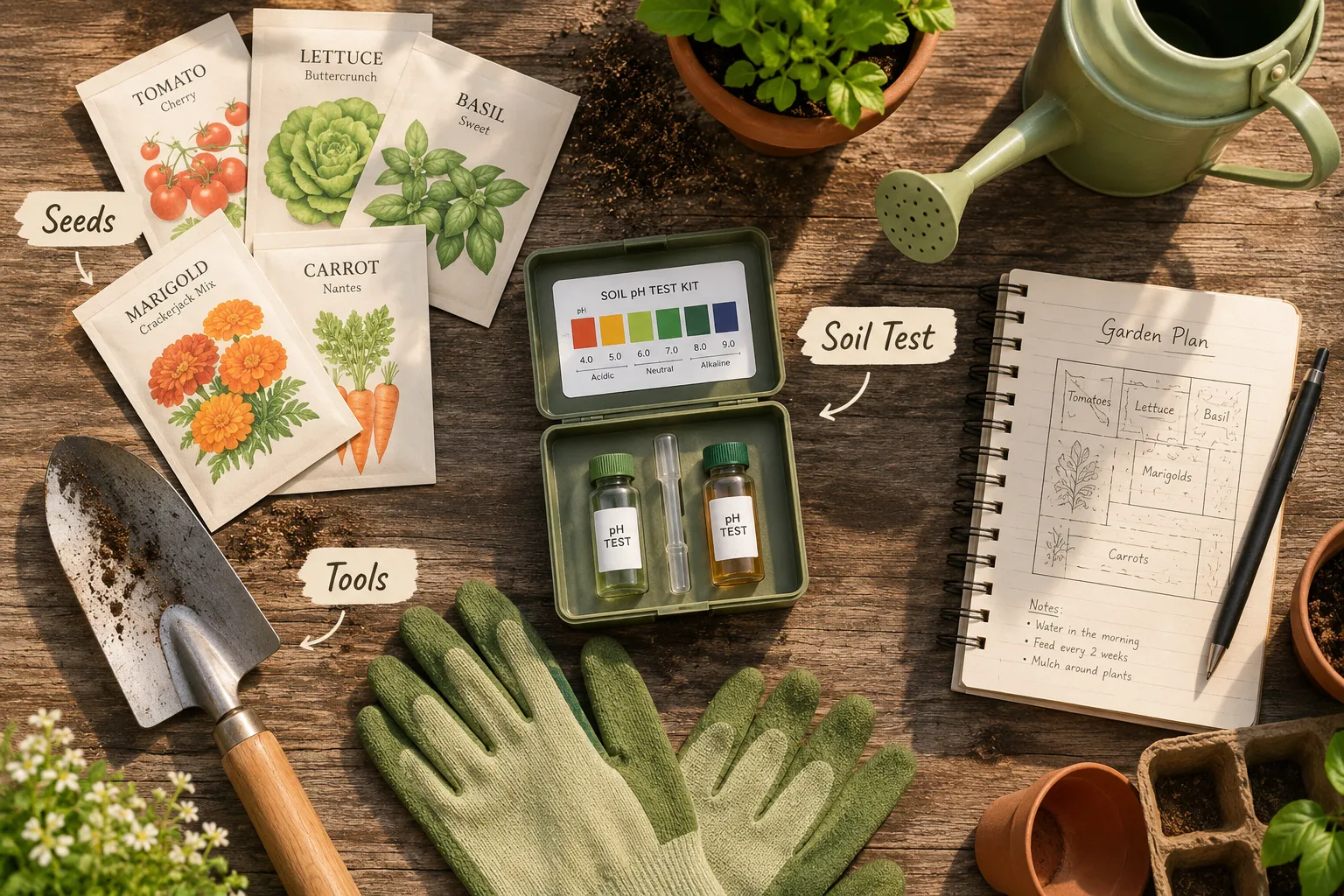
Starting a vegetable garden from scratch requires four core elements: a suitable location with adequate sunlight, quality soil, seeds or seedlings, and basic tools. Everything else, raised beds, trellises, irrigation systems, is an upgrade, not a requirement.
Here’s the honest minimum to get started:
- Location: A spot that receives 6-8 hours of direct sunlight daily. South-facing spots are ideal in the Northern Hemisphere.
- Soil: Native soil amended with compost, or a purchased raised-bed mix. Soil is where most beginners cut corners, don’t.
- Seeds or seedlings: Choose 3-5 beginner-friendly varieties for your first season.
- Water access: A hose, watering can, or drip irrigation system within reach.
- Basic tools: Trowel, garden fork, hoe, and gloves.
What Tools Do You Actually Need to Start Gardening?
Five tools cover 90% of what a beginner gardener needs:
- Hand trowel, for transplanting seedlings and digging small holes
- Garden fork or spade, for turning and loosening soil
- Hoe, for breaking up soil and managing weeds
- Watering can or adjustable hose nozzle, for controlled watering
- Soil pH test kit, inexpensive and essential for diagnosing problems before they start
A wheelbarrow and kneeling pad are useful additions but not critical for a small first garden. Avoid buying a full tool set upfront, start with these five and add as your garden grows.
How Much Space Do You Need for a Vegetable Garden?
A 4×8-foot raised bed or a 10×10-foot in-ground plot is enough to start learning and produce meaningful supplemental food. For genuine food independence, reducing grocery dependence by 30-50%, plan for at least 200 square feet per person.
A useful breakdown by goal:
| Garden Size | Best For | Expected Output |
|---|---|---|
| 4×8 ft (32 sq ft) | Learning fundamentals | Herbs, salads, small yields |
| 10×10 ft (100 sq ft) | Supplemental produce | 1-2 people, seasonal variety |
| 20×20 ft (400 sq ft) | Serious food production | Family of 4, significant supply |
| 50×50 ft+ | Near food independence | Year-round storage crops possible |
Start small and expand. A neglected large garden produces nothing. A well-maintained small garden builds the skills and confidence to scale up.
What Are the Best Vegetables to Grow for Beginners?
The best beginner vegetables are productive, pest-resistant, and fast-maturing. For preppers focused on caloric and nutritional output, prioritize crops that give the most food per square foot.
Top 8 beginner vegetables for food independence:
- Zucchini/summer squash, extremely productive, hard to kill, high yield per plant
- Green beans, fast-maturing (50-60 days), high yield, easy to preserve
- Tomatoes, calorie-dense, versatile, and storable (canning, drying)
- Kale, cold-hardy, nutrient-dense, continuous harvest over months
- Lettuce and salad greens, harvestable in 30-45 days, great for quick wins
- Radishes, ready in 25-30 days, excellent for filling gaps between rows
- Potatoes, calorie-dense survival crop, stores well, grows in most climates
- Garlic, plant in fall, harvest in summer, long shelf life, natural pest deterrent
Avoid starting with corn (space-intensive), melons (long season), or broccoli (pest-prone) in your first year.
Can You Grow a Vegetable Garden in Containers or Pots?
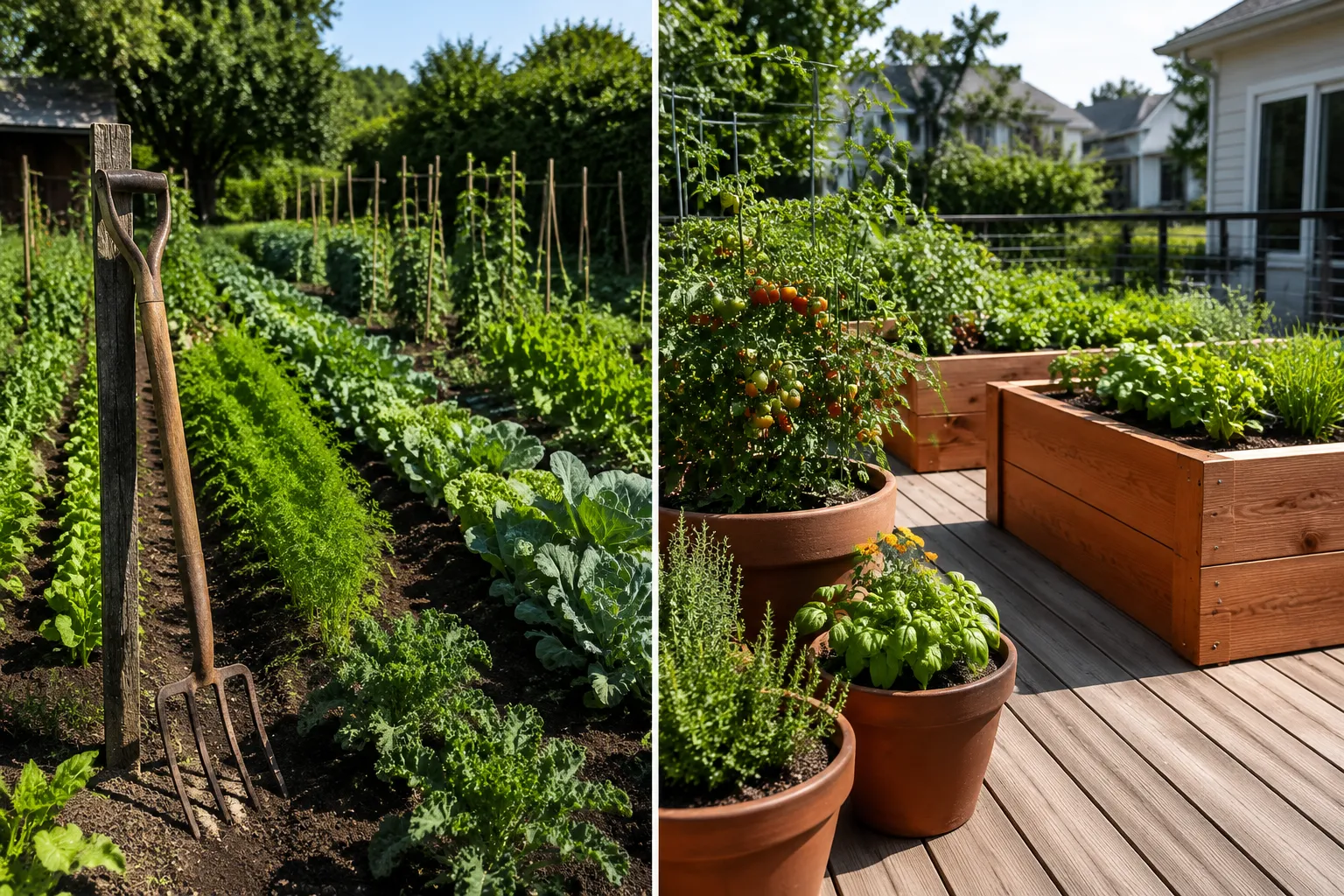
Yes, containers and pots can support a productive vegetable garden, especially for preppers in apartments, urban settings, or areas with poor native soil. The key is choosing the right container size for each crop and using a high-quality potting mix, not garden soil.
Container size guidelines:
- Small pots (1-3 gallons): Herbs, radishes, lettuce
- Medium pots (5 gallons): Peppers, bush beans, kale
- Large containers (10+ gallons): Tomatoes, zucchini, potatoes
- Fabric grow bags: Excellent for root vegetables and potatoes
Container gardens dry out faster than in-ground beds, so daily watering checks are essential. They also require fertilizing every 2-3 weeks since nutrients leach out with watering.
What’s the Difference Between Raised Beds and In-Ground Gardens?
Raised beds sit above the native ground in a contained frame, filled with controlled soil mix. In-ground gardens use the existing earth, amended as needed. Both work well, the right choice depends on your soil quality, budget, and physical mobility.
Raised beds are better when:
- Native soil is clay-heavy, rocky, or contaminated
- You want faster drainage and warmer soil in spring
- You have limited mobility (raised beds reduce bending)
- You’re starting in a location with no existing garden
In-ground gardens are better when:
- You have naturally good, loamy soil
- You’re gardening a large area (raised beds get expensive at scale)
- You’re growing deep-root crops like potatoes or parsnips
For most preppers starting from scratch in 2026, a 4×8 cedar raised bed filled with a quality soil mix is the fastest path to a productive first garden.
How Do You Know If Your Soil Is Good for Growing Vegetables?
Good vegetable garden soil is dark, loose, crumbles easily in your hand, and drains well without becoming waterlogged. A simple soil pH test is the fastest way to confirm whether your soil will support vegetables, most prefer a pH between 6.0 and 7.0.
Signs of poor soil:
- Pale color, compacted texture, or a clay-like feel
- Water pooling on the surface after rain
- pH below 5.5 (too acidic) or above 7.5 (too alkaline)
- Few earthworms visible when digging
How to improve poor soil:
- Add 2-4 inches of compost and work it into the top 12 inches
- For clay soil, add coarse sand and compost together
- To raise pH (acidic soil): add garden lime
- To lower pH (alkaline soil): add elemental sulfur or peat moss
Soil testing kits are available at any garden center for under $15 and take 10 minutes. This is the single most important diagnostic step before planting anything.
When Should You Plant Vegetables by Season?
Planting timing is determined by your USDA Hardiness Zone and the last/first frost dates in your area. Planting at the wrong time, especially putting warm-season crops out before the last frost, is one of the most common and costly beginner mistakes.
Seasonal planting guide:
- Early spring (4-6 weeks before last frost): Cool-season crops, kale, lettuce, spinach, peas, radishes, onions
- After last frost (soil temp 60°F+): Warm-season crops, tomatoes, peppers, zucchini, beans, cucumbers
- Midsummer: Second planting of fast-maturing crops (beans, lettuce) for fall harvest
- Late summer/early fall: Garlic (for next year’s harvest), cold-hardy greens, root vegetables
Find your last frost date at the USDA Plant Hardiness Zone Map (planthardiness.ars.usda.gov) or by searching your zip code. This single piece of information anchors your entire planting calendar.
How Often Should You Water Your Vegetable Garden?
Most vegetable gardens need about 1 inch of water per week, either from rainfall or irrigation. Watering deeply and less frequently is better than shallow daily watering, it encourages roots to grow deeper, making plants more drought-resistant.
Practical watering rules:
- Water at the base of plants, not the leaves (wet foliage encourages disease)
- Water in the morning so plants dry before evening
- Check soil moisture by pushing a finger 2 inches into the soil, water when it’s dry at that depth
- Raised beds and containers dry out faster and may need watering every 1-2 days in summer heat
- Mulching with straw or wood chips reduces water loss by 50% and suppresses weeds
Overwatering is actually the more common beginner mistake. Yellowing leaves, wilting despite wet soil, and root rot are all signs of too much water, not too little.
Should You Start From Seeds or Buy Seedlings?
Seedlings (transplants) are the better choice for most beginners because they reduce the time to harvest, eliminate the most failure-prone stage of plant development, and are more forgiving of beginner mistakes. Seeds are the better long-term choice for food independence because they’re cheaper, storable, and allow you to save seed year after year.
Choose seedlings if:
- It’s your first season and you want reliable results
- You’re planting tomatoes, peppers, or eggplant (long growing seasons)
- You missed the optimal seed-starting window
Choose seeds if:
- You’re growing root vegetables (carrots, beets, radishes), these don’t transplant well
- You want to build a seed bank for long-term food independence
- You’re working with a tight budget (seeds cost a fraction of transplants)
For preppers specifically, building a collection of open-pollinated, heirloom seeds is a long-term priority. Unlike hybrid seeds, heirloom seeds can be saved from your harvest and replanted indefinitely, a critical capability in a prolonged food disruption scenario.
How Much Does It Cost to Start a Vegetable Garden?
A basic beginner garden can be started for $50-$150 for an in-ground plot, or $200-$400 for a raised bed setup including lumber and soil. These are one-time startup costs, subsequent seasons cost significantly less because tools, beds, and infrastructure carry over.
Estimated startup costs:
- Seeds or seedlings: $20-$50
- Basic tools (trowel, fork, hoe): $30-$60
- Soil amendment or raised-bed soil mix: $30-$100
- Raised bed lumber (optional): $50-$150
- Soil pH test kit: $10-$15
The long-term return on investment is substantial. A well-maintained 100-square-foot garden can produce $500-$600 worth of produce per season, according to the National Gardening Association’s consumer research. That payback happens within the first growing season for most setups.
What Are Common Mistakes Beginners Make With Gardens?
The most damaging beginner mistakes fall into four categories: poor site selection, soil neglect, overwatering, and overcrowding. Each one is preventable with a small amount of upfront planning.
The seven most common beginner gardening mistakes:
- Choosing a shady spot, Vegetables need 6-8 hours of direct sun. Partial shade means poor yields or no yield.
- Skipping the soil test, Planting in the wrong pH or nutrient-deficient soil undermines everything else.
- Overwatering, More plants die from overwatering than drought. Check soil moisture before watering.
- Planting too close together, Crowded plants compete for nutrients, block airflow, and invite disease. Follow spacing guidelines on seed packets.
- Planting at the wrong time, Frost kills warm-season crops overnight. Know your last frost date.
- Ignoring pests until it’s too late, Check plants every 2-3 days. Early intervention is far easier than managing an infestation.
- Starting too big, A 4×8 bed managed well outperforms a 20×20 bed that becomes overwhelming.
Can You Grow Vegetables Indoors, or Do You Need Sunlight?
Vegetables can be grown indoors, but they require either a south-facing window with 6+ hours of direct light or supplemental grow lights. Most standard indoor lighting is insufficient for fruiting crops like tomatoes or peppers, but leafy greens, herbs, and microgreens thrive under LED grow lights.
Best vegetables for indoor growing:
- Lettuce and salad greens
- Spinach and arugula
- Herbs (basil, parsley, chives, cilantro)
- Microgreens (harvestable in 7-14 days, excellent for preppers)
- Radishes (with adequate light)
A basic two-bulb LED grow light setup costs $30-$80 and can support a continuous supply of greens year-round. For preppers building year-round food production, indoor growing bridges the gap between outdoor growing seasons.
How Long Does It Take to Get Your First Harvest?
The time to first harvest ranges from 7 days (microgreens) to 100+ days (winter squash, garlic). Most beginner-friendly vegetables produce their first harvest within 45-75 days of transplanting.
Harvest timeline by crop:
- Microgreens: 7-14 days
- Radishes: 25-30 days
- Lettuce/salad greens: 30-45 days
- Green beans: 50-60 days
- Zucchini: 50-65 days
- Cucumbers: 55-65 days
- Tomatoes (from transplant): 60-80 days
- Peppers: 70-90 days
- Potatoes: 70-120 days
- Garlic (fall-planted): 8-9 months
Plant a mix of fast and slow-maturing crops so you’re harvesting something within the first month while longer-season crops develop.
Frequently Asked Questions
Do I need to fertilize my vegetable garden?
Yes, especially in raised beds and containers where nutrients deplete faster. A balanced organic fertilizer (10-10-10 NPK) applied at planting, then every 4-6 weeks, supports steady growth. Compost is the best long-term soil amendment because it improves both nutrition and soil structure.
What’s the easiest vegetable to grow for a complete beginner?
Zucchini and green beans are the most forgiving. Both germinate reliably, grow fast, produce heavily, and tolerate minor mistakes in watering and spacing. Radishes are also excellent for building confidence, they go from seed to harvest in under a month.
Can I save seeds from my garden for next year?
Yes, but only from open-pollinated or heirloom varieties. Hybrid (F1) seeds don’t breed true, meaning saved seeds may not produce plants like the parent. For food independence, prioritize heirloom varieties from the start and learn to dry and store seeds properly.
How do I deal with pests without chemicals?
Start with physical barriers, row covers and netting keep most insects off crops. Hand-pick larger pests like caterpillars and beetles. Neem oil spray handles aphids, spider mites, and fungal issues. Companion planting (basil near tomatoes, marigolds around the border) deters many common pests naturally.
Is it worth building a compost system alongside my garden?
Absolutely. A compost bin turns kitchen scraps and yard waste into free, high-quality soil amendment. It takes 2-6 months to produce usable compost, so start it the same day you start your garden. Long-term, it eliminates the need to buy bagged soil amendments.
What if I have limited sunlight, can I still grow food?
Yes, but focus on shade-tolerant crops: lettuce, spinach, kale, chard, arugula, and most herbs do reasonably well with 3-4 hours of direct sun. Fruiting crops (tomatoes, peppers, squash) need full sun and won’t produce well in shade.
How do I extend my growing season?
Row covers, cold frames, and low tunnels protect plants from frost and can add 4-6 weeks to both ends of the growing season. A simple cold frame built from an old window and wooden boards can keep greens growing through mild winters in many climates.
Do I need to rotate crops every year?
Yes, especially for disease prevention. Avoid planting the same crop family in the same spot two years in a row. This is particularly important for tomatoes, peppers, and potatoes (all nightshades), which share common soil-borne diseases.
Conclusion
Food independence doesn’t happen overnight, but it starts with a single bed, a handful of seeds, and the decision to stop being entirely dependent on a supply chain you don’t control. Learning how to start a vegetable garden for food independence is one of the highest-leverage preparedness skills available, it produces real food, builds real knowledge, and compounds in value every season.
Start with a 4×8 raised bed, five beginner-friendly crops, and the five basic tools. Test your soil, know your last frost date, and water deeply rather than frequently. Master those fundamentals in year one, and year two becomes an expansion, not a restart.
The goal at Preppers HQ has always been practical resilience, not theory, not fear, but actionable capability. A productive vegetable garden is exactly that: a tangible, renewable asset that works whether the grid is up or down.
Actionable next steps:
- Identify your USDA Hardiness Zone and last frost date this week.
- Choose a garden location and evaluate sunlight hours over two days.
- Purchase a soil pH test kit and test your soil before buying anything else.
- Select 3-5 crops from the beginner list above and source heirloom seeds.
- Build or purchase a 4×8 raised bed, or prepare a 10×10 in-ground plot.
- Start a compost bin the same day you start your garden.
Related reading from Preppers HQ:
- How to Start Homesteading From Scratch, The Complete Beginner’s Guide
- The Ultimate Emergency Water Storage and Purification Guide
- Ultimate Prepper’s Guide to Freeze-Dried Food
Products, Tools, and Resources
Soil and growing supplies:
- A quality raised-bed soil mix (look for blends containing compost, perlite, and topsoil) is worth the cost over native soil for beginners. Brands like Mel’s Mix or Fox Farm Happy Frog are well-regarded in the gardening community.
- A basic soil pH test kit (Luster Leaf Rapitest or similar) costs under $15 and eliminates guesswork.
Seeds:
- For food independence, source open-pollinated heirloom seeds from reputable suppliers like My Pateriot Supplys Seeds, Seed Savers Exchange, or True Leaf Market. These allow you to save and replant seeds indefinitely, a critical long-term capability.
Tools:
- A quality hand trowel and garden fork from Fiskars or Radius Garden hold up for years and cost $20-$40 each. Avoid the cheapest options, bent trowels and snapped handles are a frustrating waste.
Indoor growing:
- A basic LED grow light panel (Barrina or Spider Farmer entry-level models) for $40-$80 supports year-round indoor greens and microgreens production.
Books:
- “The Vegetable Gardener’s Bible” by Edward C. Smith remains one of the most practical reference books for beginner and intermediate gardeners focused on high-yield production.