
Hey there! Some links on this page may be affiliate links which means that, if you choose to make a purchase, I may earn a commission at no extra cost to you. I greatly appreciate your support. Read the full disclosure here.
Most people who start homesteading quit within the first year, not because the lifestyle is too hard, but because they tried to learn everything at once. The homesteading skills every beginner should learn first are not the most glamorous ones. They’re the foundational ones: the skills that keep you fed, safe, and functional before you ever think about raising livestock or building a root cellar.
This guide cuts through the noise. Whether you’re working with five acres or a fifth-floor apartment, the principles here apply. If you’re serious about self-reliance, this is where you start.
Key Takeaways
- Homesteading is a spectrum, you don’t need land or livestock to begin building self-sufficiency skills today.
- The five highest-priority beginner skills are: growing food, preserving food, water management, basic first aid, and fire/heat management.
- You can start homesteading with less than $500 in tools and supplies if you prioritize correctly.
- Most beginners make the same mistake: they stockpile gear before they build skills.
- Small-space and apartment homesteading is legitimate and practical, container gardening, fermentation, and food storage require no land at all.
- Homesteading and farming are not the same thing. Homesteading is about household self-sufficiency; farming is about commercial production.
- Skills that save the most money include food preservation, scratch cooking, and basic home repair.
- Full self-sufficiency takes years. Meaningful self-reliance, enough to weather a 30-day disruption, is achievable in months.
What Is Homesteading and How Do You Start?
Homesteading is the practice of building household self-sufficiency through growing, preserving, and producing your own food, energy, and resources. It’s not a single lifestyle, it’s a spectrum that ranges from urban balcony gardens to fully off-grid rural properties.
You start homesteading by identifying the gap between what you currently produce and what you consume, then closing that gap one skill at a time. The entry point is almost always food: growing something, preserving something, or cooking something from scratch that you previously bought ready-made.
Homesteading vs. Farming, the key distinction: Farming is about producing surplus for sale or trade. Homesteading is about producing enough for your household. A farmer grows 500 tomato plants. A homesteader grows 20 and preserves the harvest in mason jars. The goal is household resilience, not commercial output.
For preppers and survivalists, homesteading is the long game. Bug-out bags and emergency kits handle short-term disruptions. Homesteading skills handle the months and years after that.
The Easiest Homesteading Skills for Complete Beginners
The easiest entry points into homesteading are the ones that require the least infrastructure and produce visible results quickly. These are also the skills that build confidence, and confidence is what keeps beginners from quitting.
Start here, in this order:
- Scratch cooking from whole ingredients, No tools required beyond a kitchen. Learn to make bread, soups, and preserved foods from raw components. This single skill reduces grocery dependency immediately.
- Container or raised-bed gardening, A few pots or a 4×8 raised bed can produce meaningful quantities of herbs, greens, and tomatoes. Low cost, low risk, fast feedback.
- Basic food preservation, Canning, fermenting, and dehydrating. Fermentation (making sauerkraut, pickles, or yogurt) requires almost no equipment and teaches you how food works at a biological level.
- Seed saving, Collecting and storing seeds from your harvest closes the loop on food production and costs nothing after the first season.
- Basic home repair and tool maintenance, Knowing how to fix a leaky faucet, sharpen a knife, or patch a wall keeps your homestead functional without outside help.
No prior gardening experience is required. In fact, beginners with no habits to unlearn often adapt faster than experienced gardeners who are used to chemical inputs and store-bought transplants.
How Much Land Do You Need to Start Homesteading?
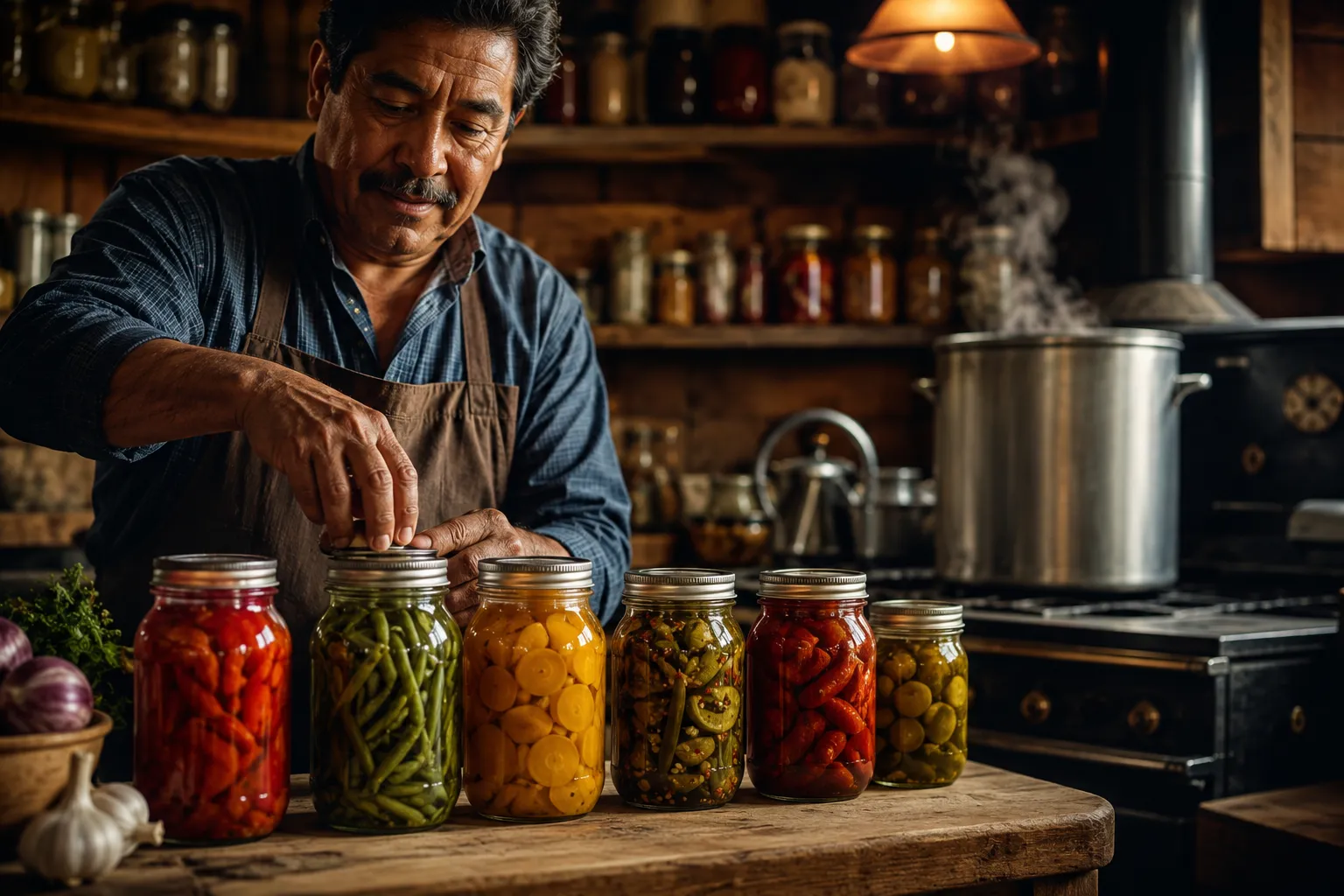
You don’t need any land to start homesteading. The most foundational skills, food preservation, scratch cooking, fermentation, seed saving, and basic first aid, require nothing more than a kitchen and a few square feet of space.
That said, land does expand what’s possible:
| Space Available | What You Can Realistically Produce |
|---|---|
| Apartment/balcony | Herbs, microgreens, fermented foods, sprouts |
| Small yard (under 1,000 sq ft) | Vegetables, fruit trees, chickens (where permitted) |
| Quarter-acre | Full vegetable garden, small fruit orchard, bees |
| Half-acre to 1 acre | Significant food production, small livestock |
| 2+ acres | Meaningful food self-sufficiency for a family |
The commonly cited benchmark for full food self-sufficiency is roughly 1 to 2 acres per person, depending on climate, soil quality, and diet. But “full self-sufficiency” is a long-term goal, not a starting point. Most homesteaders spend years building toward it.
Can You Homestead in an Apartment or Small Space?
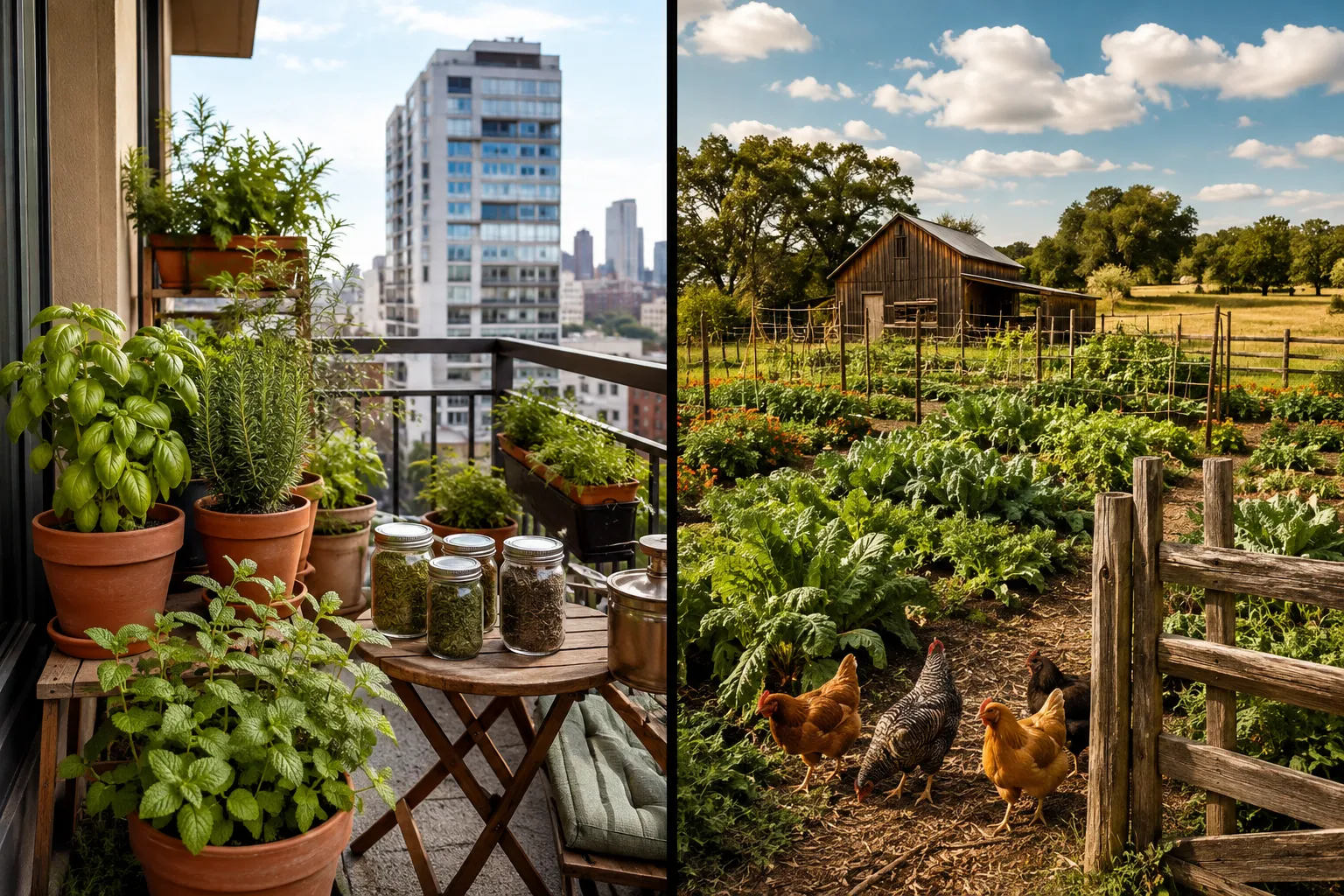
Yes, and this is one of the most underestimated truths in the preparedness community. Apartment homesteading focuses on the skills that scale down without losing value: food preservation, fermentation, sprout growing, container gardening, scratch cooking, and water storage.
Practical apartment homesteading looks like this:
- A windowsill herb garden producing fresh basil, mint, and rosemary year-round
- A fermentation corner with crocks of sauerkraut, kimchi, or kombucha
- A pantry stocked with preserved and bulk foods representing 30 to 90 days of meals
- A balcony with container tomatoes, peppers, and lettuce in grow bags
- A small dehydrator for preserving bulk produce from farmers markets
The constraint isn’t space, it’s skill. An apartment homesteader who knows how to ferment, preserve, and cook from scratch is more self-reliant than a rural landowner who buys everything at the grocery store.
How Much Money Do You Need to Begin Homesteading?
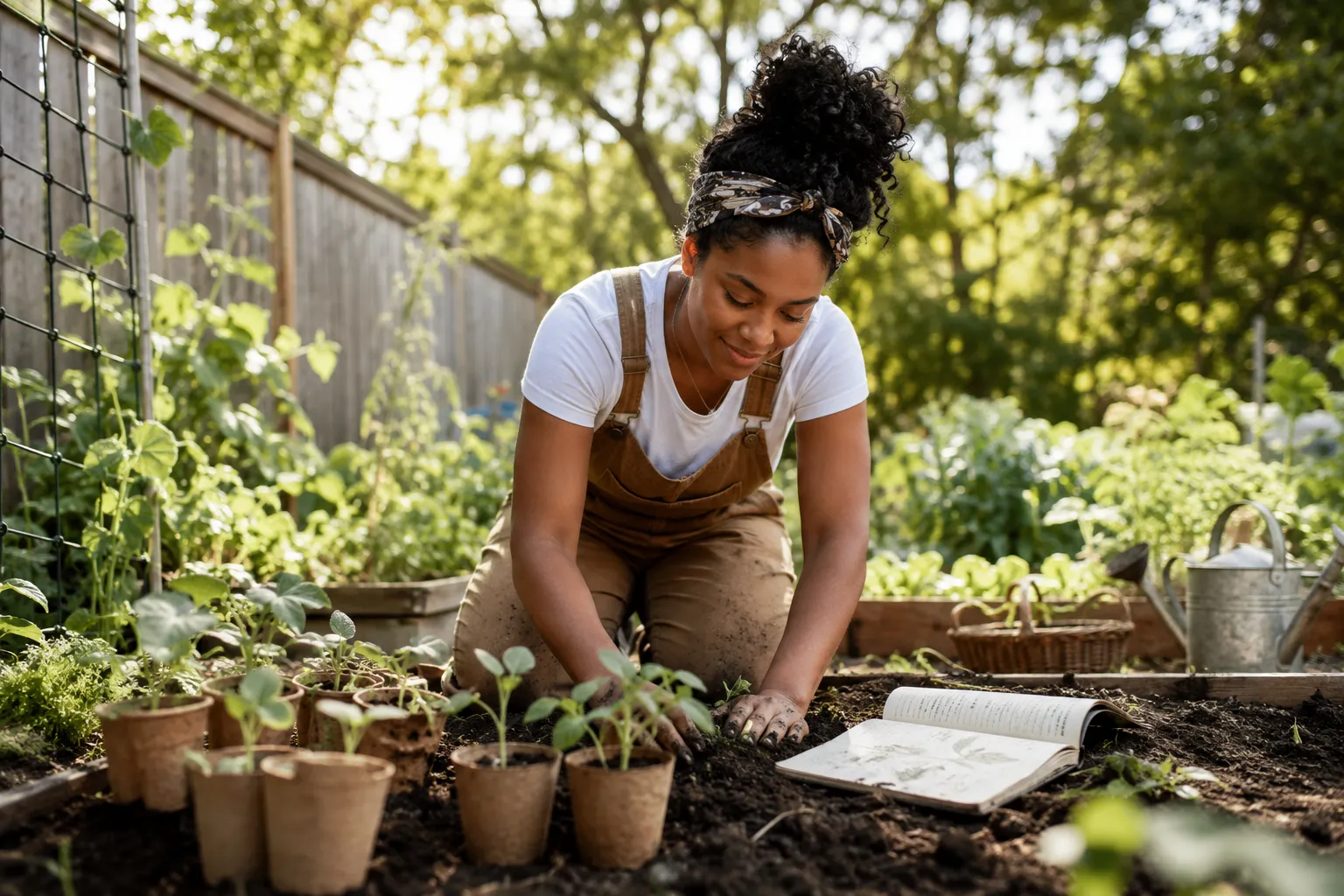
Most beginners can start building meaningful homesteading skills for under $200 to $500. The mistake is thinking you need to buy everything before you start. Skills cost almost nothing. Infrastructure costs money.
Low-cost starting points:
- A packet of seeds costs $2 to $4 and can produce hundreds of dollars of food
- A basic water bath canning kit runs $30 to $50 and lasts decades
- Fermentation crocks or mason jars cost $15 to $40
- A quality chef’s knife and cutting board: $40 to $80
- Basic first aid supplies: $30 to $60
Where beginners overspend: buying livestock before they’ve grown a single vegetable, purchasing expensive land before they’ve tested whether they enjoy the lifestyle, or investing in solar systems before they’ve learned to reduce consumption first.
The financial case for homesteading is strongest in food production and preservation. Growing and preserving your own vegetables, making your own bread, and producing your own fermented foods can realistically save a household $1,500 to $3,000 per year, though exact savings depend heavily on your location, diet, and how much you produce.
Homesteading Skills That Save the Most Money
The highest-return skills for beginners, measured in dollars saved per hour invested, are food preservation, scratch cooking, and basic home repair.
Top money-saving homesteading skills:
- Food preservation (canning, dehydrating, fermenting): Buying produce in bulk at peak season and preserving it eliminates premium pricing on out-of-season goods year-round.
- Bread and fermented food production: Homemade sourdough, yogurt, kefir, and fermented vegetables cost a fraction of store equivalents.
- Seed saving: After the first year, your seed supply is essentially free.
- Basic plumbing and carpentry: A single avoided plumber or contractor call can save $150 to $500.
- Foraging: Identifying edible plants in your local area adds free food to your supply chain with zero input cost.
These skills also have a compounding effect. A homesteader who preserves food doesn’t just save money on groceries, they also build a buffer against price spikes, supply chain disruptions, and inflation.
What Homesteading Skills Should You Learn First If You Have Kids?
If children are in the household, prioritize skills that are both practical and teachable. The goal is building a household culture of self-reliance, not just personal competence.
Start with:
- Gardening together, Children who grow food eat more vegetables and develop a direct relationship with where food comes from. Assign them a small dedicated bed.
- Basic cooking and food safety, Teaching children to cook from scratch is one of the highest-leverage life skills you can pass on.
- First aid and emergency response, Age-appropriate first aid training (wound care, choking response, calling for help) gives children agency in emergencies rather than panic.
- Animal care, If space allows, chickens are an excellent starting point. They teach responsibility, biology, and food production simultaneously.
- Foraging walks, Local plant identification is a skill that builds over years. Starting young accelerates the learning curve.
The practical benefit for preppers: a household where every member, including children, has functional skills is dramatically more resilient than one where a single adult carries all the knowledge.
Common Mistakes Beginners Make When Homesteading
The most common mistake is scope creep in the first year. Beginners try to start a garden, raise chickens, install solar panels, and build a root cellar simultaneously, and do all of them poorly.
Other frequent mistakes:
- Buying before learning: Purchasing expensive equipment before developing the skill to use it. A $400 pressure canner sitting unused is not preparedness.
- Ignoring soil health: Most first-time gardeners underinvest in soil. Without healthy soil, nothing else works. Composting is the first infrastructure investment worth making.
- Underestimating water: Water management, collection, storage, and purification, is the most overlooked homesteading skill. A garden without reliable water is a failed garden.
- Skipping the learning curve on preservation: Improperly canned food is a genuine health risk. Learn the science before you skip steps.
- Going it alone: Homesteading communities, local extension offices, and experienced neighbors are among the most valuable resources available. Use them.
How Long Does It Take to Become Self-Sufficient Through Homesteading?
Full food self-sufficiency, producing the majority of your household’s calories, realistically takes five to ten years of consistent effort. Meaningful self-reliance, defined as the ability to sustain your household through a 30 to 90-day disruption, is achievable in six to eighteen months.
The timeline depends on:
- Starting skill level and available time
- Land and climate
- Household size and dietary needs
- How aggressively you build and rotate food storage
For preppers, the practical target isn’t perfection, it’s redundancy. A homesteader who can produce 30% of their food, preserve a 90-day supply, and manage their water independently is in a fundamentally different position than someone with only a two-week emergency kit.
Is Homesteading Worth It Financially?
For most households, homesteading is financially positive when measured over a three-to-five-year horizon, accounting for startup costs. The break-even point on most homesteading investments, garden infrastructure, canning equipment, fermentation supplies, comes within one to three growing seasons.
Beyond direct savings, homesteading builds financial resilience in ways that don’t show up in a grocery receipt: reduced vulnerability to supply chain disruptions, lower dependence on income for basic needs, and a skill set that retains value regardless of economic conditions.
For preppers specifically, the value calculation includes the non-financial: the confidence of knowing you can feed your family without a functioning supply chain is worth more than any dollar figure.
Homesteading for People With Disabilities or Limited Mobility
Homesteading is adaptable. Many of the highest-value skills, food preservation, fermentation, seed saving, scratch cooking, and herbal medicine, require minimal physical exertion and can be practiced from a seated position.
Adaptations that work:
- Raised beds at standing or wheelchair height reduce bending and kneeling
- Container gardening on patios or balconies eliminates ground-level work entirely
- Fermentation and canning are primarily countertop activities
- Aquaponics systems can be designed for minimal physical maintenance
- Herb gardening indoors under grow lights requires almost no physical effort
The key is matching skill selection to physical capacity. A homesteader with limited mobility who masters food preservation, scratch cooking, and seed saving contributes enormous value to a household or community, skills don’t require a strong back to be powerful.
Best Time of Year to Start Learning Homesteading Skills
The best time to start is now, regardless of season. Many foundational skills, fermentation, scratch cooking, food preservation, first aid, tool maintenance, and water storage, have no seasonal dependency at all.
For gardening specifically:
- Late winter (January to March): Start seeds indoors, plan garden layout, amend soil
- Spring: Direct sow and transplant, begin composting
- Summer: Maintain, harvest, begin preserving
- Fall: Preserve the harvest, plant cover crops, save seeds
- Winter: Learn, plan, ferment, and build infrastructure for next season
The worst time to start is after a crisis. The homesteading skills every beginner should learn first are most valuable when built before they’re needed, not during an emergency when the learning curve has no margin for error.
Frequently Asked Questions
Do I need experience with gardening before I start homesteading?
No prior gardening experience is needed. Most successful homesteaders started with zero knowledge. Begin with easy crops, lettuce, radishes, herbs, and tomatoes, and build from there. Failure in the garden is a teacher, not a barrier.
What’s the single most important homesteading skill for a prepper?
Food preservation. It bridges the gap between what you grow and what you eat year-round. A homesteader who can’t preserve the harvest loses most of its value. Learn water bath canning and lacto-fermentation first.
Can I homestead without quitting my job?
Yes. Most homesteaders maintain employment, especially in the early years. Start with skills that fit into evenings and weekends, fermentation, baking, container gardening, and scale as your situation allows.
How do I learn homesteading skills if I don’t know anyone who homesteads?
Local agricultural extension offices offer free or low-cost classes on gardening, food preservation, and animal husbandry. Online communities, YouTube channels, and books by experienced homesteaders are also legitimate starting points.
Is homesteading legal in cities and suburbs?
Most homesteading activities, gardening, food preservation, scratch cooking, are legal everywhere. Chickens, bees, and rainwater collection are regulated at the local level and vary widely. Check your municipal code before adding livestock or water collection systems.
What’s the difference between homesteading and prepping?
Prepping focuses on readiness for specific disruptions, natural disasters, power outages, supply chain failures. Homesteading builds the underlying skills and infrastructure that make preparedness sustainable long-term. They reinforce each other directly.
How do I start composting as a beginner?
Start with a simple pile or a lidded bin. Add kitchen scraps (no meat or dairy), dry leaves, and cardboard in roughly equal layers. Turn it occasionally and keep it moist. In three to six months, you’ll have finished compost ready for the garden.
What tools should a beginner homesteader buy first?
A quality chef’s knife, a water bath canning kit, a few mason jars, basic garden hand tools (trowel, hoe, pruners), and a composting bin. These cover the highest-priority skills at the lowest cost.
How much water should a homestead store?
FEMA recommends a minimum of one gallon per person per day for drinking and sanitation. For a meaningful preparedness buffer, target 30 gallons per person. For a working homestead garden, water needs depend on garden size and local rainfall patterns.
Can homesteading replace a grocery store entirely?
For most households, partial replacement is realistic; full replacement takes years and significant land. The practical goal is reducing dependence, producing 20% to 50% of your food while maintaining a deep pantry covers most disruption scenarios.
Conclusion
The homesteading skills every beginner should learn first are not the most exciting ones on the list. They’re the ones that work when the grid goes down, when the supply chain breaks, and when the systems everyone else depends on stop functioning. Scratch cooking, food preservation, basic water management, soil building, and foundational first aid, these are the skills that actually sustain a household.
Start with one skill. Master it. Then add the next. The homesteaders who thrive long-term are not the ones who bought the most gear in year one, they’re the ones who built competence steadily, season after season.
Actionable next steps for this week:
- Choose one preservation method, fermentation is the easiest starting point, and make your first batch.
- Plant one container of herbs or greens, even if you only have a windowsill.
- Audit your pantry and identify how many days of food you currently have on hand.
- Read one resource on soil health or composting to prepare for your first garden bed.
The confidence that comes from real self-reliance isn’t built in a weekend. But it starts with a single decision to learn something your grandparents knew by default.
Recommended Tools and Resources
Building homesteading skills doesn’t require expensive equipment, but a few well-chosen tools make the learning curve shorter and the results more reliable.
For food preservation:
The Ball Complete Book of Home Preserving remains the definitive reference for water bath and pressure canning. A basic Presto or All American pressure canner handles both low-acid and high-acid foods safely. For fermentation, a set of wide-mouth mason jars with fermentation lids costs under $30 and handles sauerkraut, pickles, and kombucha.
For gardening:
Hoss Tools produces durable hand tools built for serious gardeners. For seeds, open-pollinated varieties from Baker Creek Heirloom Seeds or Seed Savers Exchange allow you to save seed year after year, a critical skill for long-term self-sufficiency.
For water management:
A quality gravity-fed water filter handles both stored water purification and field water treatment. For deeper guidance on water storage strategy, Preppers HQ’s Ultimate Emergency Water Storage and Purification Guide covers the full system from containers to purification methods.
For broader homesteading context:
If you’re building toward a fully independent homestead, the Ultimate Guide to Off-Grid Living at Preppers HQ covers the infrastructure decisions, energy, water, shelter, and food systems, that come after you’ve built the foundational skills covered here.
The tools matter less than the knowledge. Buy what you’ll actually use. Learn what you’ll actually need.