
Hey there! Some links on this page may be affiliate links which means that, if you choose to make a purchase, I may earn a commission at no extra cost to you. I greatly appreciate your support. Read the full disclosure here.
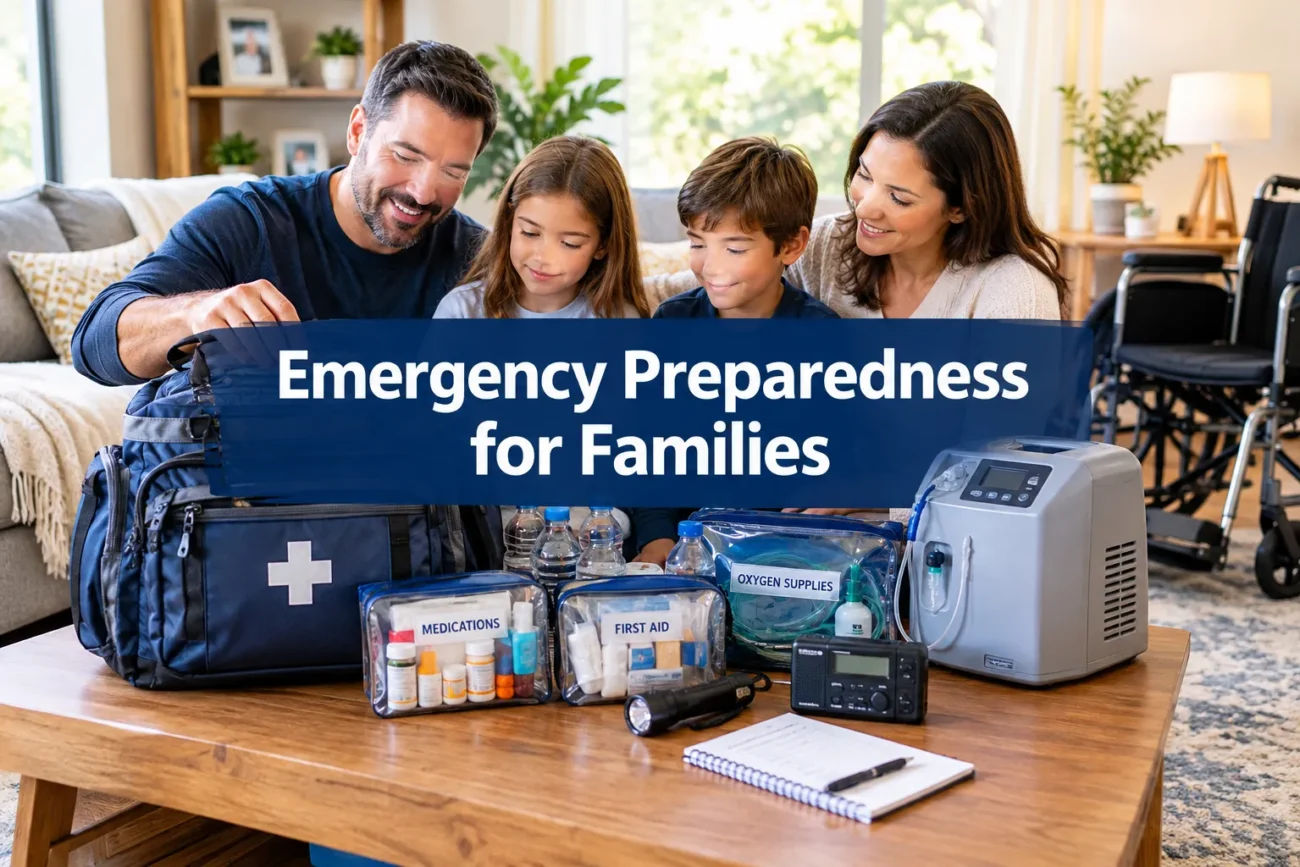
A power outage that lasts six hours is an inconvenience for most families. For a family whose child depends on an electric ventilator, feeding pump, or oxygen concentrator, those same six hours can become a medical emergency. Emergency Preparedness for Families With Children With Special Health Care Needs: A Complete Guide exists because standard disaster advice, flashlights, bottled water, a battery radio, simply doesn’t account for insulin that spoils above a certain temperature, a wheelchair that won’t fit through a shelter door, or a child who cannot verbally tell a first responder what’s wrong.
This guide breaks down exactly what to pack, who should be on your emergency team, how to plan evacuations around medical equipment, and how to keep your plan current as your child’s needs change.
Find this useful? Add us as a preferred source on Google and more of what we publish will show up in your results.
Key Takeaways
- Children with special health care needs require a medical-specific emergency kit, not just the standard household kit.
- Backup power planning is non-negotiable for any child using electric medical devices.
- A written emergency information card should travel with your child at all times, not just during disasters.
- Siblings and the medically complex child may need separate but coordinated emergency plans.
- Practice drills should be adapted to your child’s communication style and sensory needs.
- Review and update the plan every three to six months, or after any change in medication, equipment, or diagnosis.
- Several nonprofit and government programs offer free or subsidized emergency supplies for families with disabled children.
What Counts as Special Health Care Needs for Emergency Preparedness
A child has special health care needs for emergency planning purposes if a disaster could disrupt medication access, medical equipment power, mobility, communication, or behavioral stability in a way that threatens their safety. This covers a far wider group than many parents assume.
Conditions that typically qualify include:
- Chronic illnesses requiring daily medication (diabetes, epilepsy, asthma, heart conditions)
- Dependence on medical devices (ventilators, feeding tubes, oxygen concentrators, dialysis)
- Physical disabilities affecting mobility (cerebral palsy, spinal conditions, limb differences)
- Sensory impairments (deaf, hard of hearing, blind, low vision)
- Developmental and intellectual disabilities (autism, Down syndrome)
- Severe allergies requiring epinephrine
- Mental health conditions requiring consistent medication or routine
Choose the “medically complex” planning tier if your child’s survival depends on electricity, refrigeration, or a device within hours. Choose the “support needs” tier if the primary risk is communication, behavior, or mobility rather than immediate medical failure. Both tiers need a plan, the urgency and kit contents differ.
What Should Be in an Emergency Kit for a Child With Special Health Care Needs
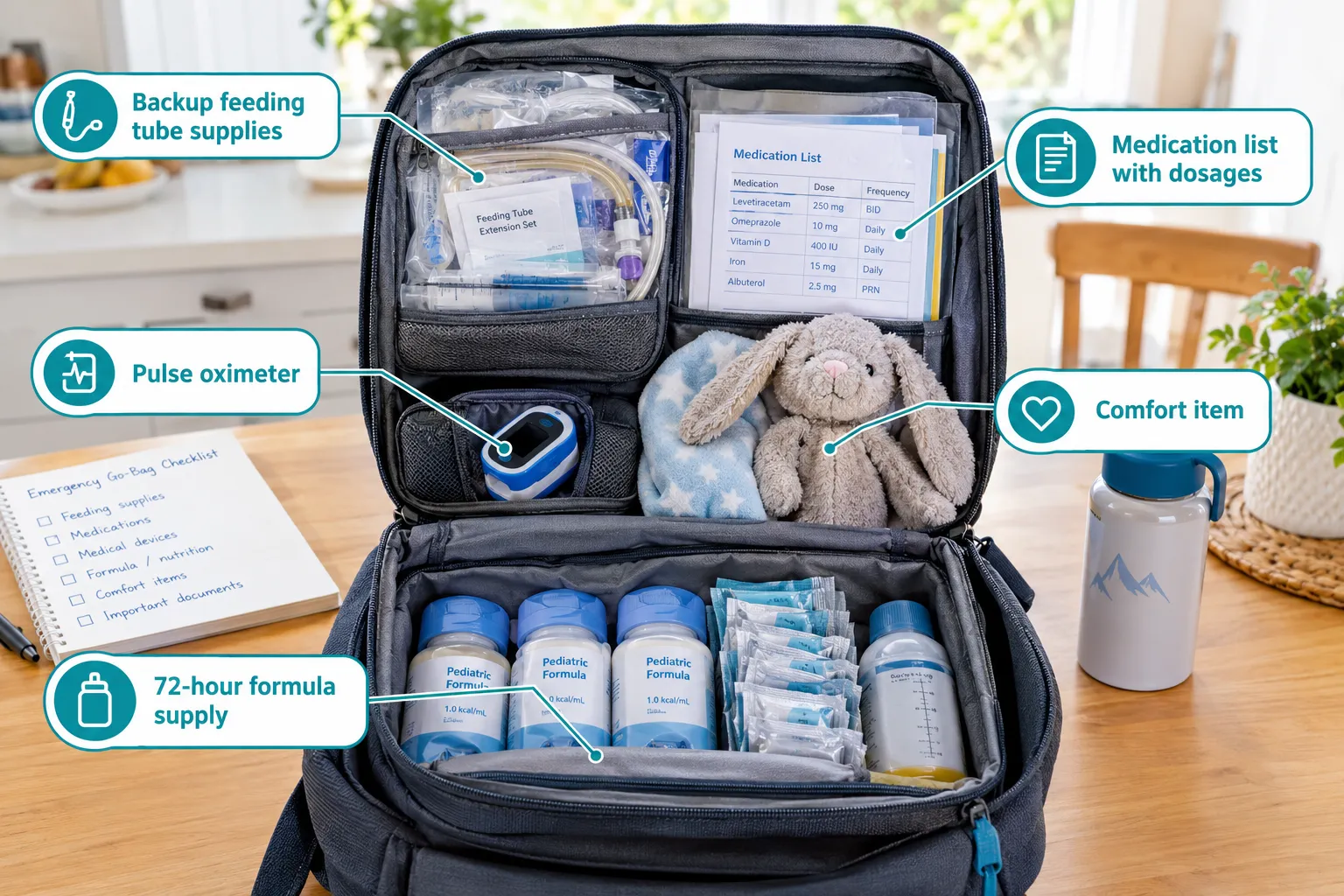
A special needs emergency kit should contain a 72-hour to 7-day supply of medications, backup power for devices, mobility aid essentials, and clear medical documentation, all in a bag that one adult can carry or roll alone. This kit sits alongside, not instead of, your household bug-out bag.
Core contents include:
- Seven-day supply of all medications in original labeled containers
- Backup batteries or a portable power station sized for the child’s device wattage
- Spare feeding tube, catheter, or ostomy supplies
- Copies of prescriptions and a pharmacy contact list
- Medical history summary, including allergies and baseline vital signs
- Comfort item (weighted blanket, noise-canceling headphones, favorite toy)
- Extra eyeglasses, hearing aid batteries, or communication device charger
- Durable medical equipment manual with troubleshooting steps
A common mistake is packing only a three-day medication supply because that matches generic disaster guidance. Many specialty medications take longer than three days to refill during a regional disaster, so err toward seven days where the prescription allows. For the rest of the household’s gear, a family-of-four emergency kit and a 72-hour emergency kit cover the baseline needs everyone shares.
How to Create an Evacuation Plan When Your Child Uses Medical Equipment
An evacuation plan for a child using medical equipment must identify backup power, transport method for the device, and a confirmed accessible destination before disaster strikes, not during it. Waiting to figure this out mid-evacuation costs time your child may not have.
Steps to build this plan:
- List every device by name, model, wattage, and battery runtime.
- Identify two backup power sources: a portable battery and a vehicle inverter or generator.
- Confirm your vehicle or evacuation transport can physically fit the equipment and any mobility aid.
- Call ahead to shelters or hospitals on your route to confirm they accept medically dependent evacuees.
- Map a primary and secondary route, accounting for detours around flooded or blocked roads.
If your child uses a wheelchair, measure doorways and ramp access at your planned shelter in advance, assume nothing. The ultimate evacuation plan guide and bug-out route planning from the city walk through route selection logic that applies here too, adapted for mobility constraints.
How to Keep Medications Safe During an Emergency or Evacuation
Medications stay safe during an emergency when they’re stored in a temperature-controlled, clearly labeled container with a rotation system that prevents expired doses from being grabbed in a rush. Insulin, certain seizure medications, and some biologics require refrigeration, which makes this one of the highest-stakes parts of the plan.
- Use a small medical-grade cooler with ice packs for refrigerated medications; replace ice packs every 24 hours when possible.
- Keep an updated medication list taped inside the kit lid, including dosage, frequency, and prescribing doctor.
- Rotate the emergency supply into daily use every 60-90 days so nothing expires unnoticed.
- Store a laminated card with pharmacy name, phone number, and insurance info separate from the medications themselves, in case the bag is separated from the family.
Edge case: if a medication requires strict refrigeration and your area faces extended grid failure, talk to the prescribing physician in advance about an emergency protocol or short-term alternative. Backup power for the home refrigerator matters here too, see the complete guide to backup power for emergencies.
How to Prepare for Power Outages if Your Child Needs Medical Devices
Preparing for a power outage with a medically dependent child means having a device-specific backup power source rated for the equipment’s wattage and a tested plan for how long that backup lasts. A standard flashlight-and-candles outage kit is not sufficient here.
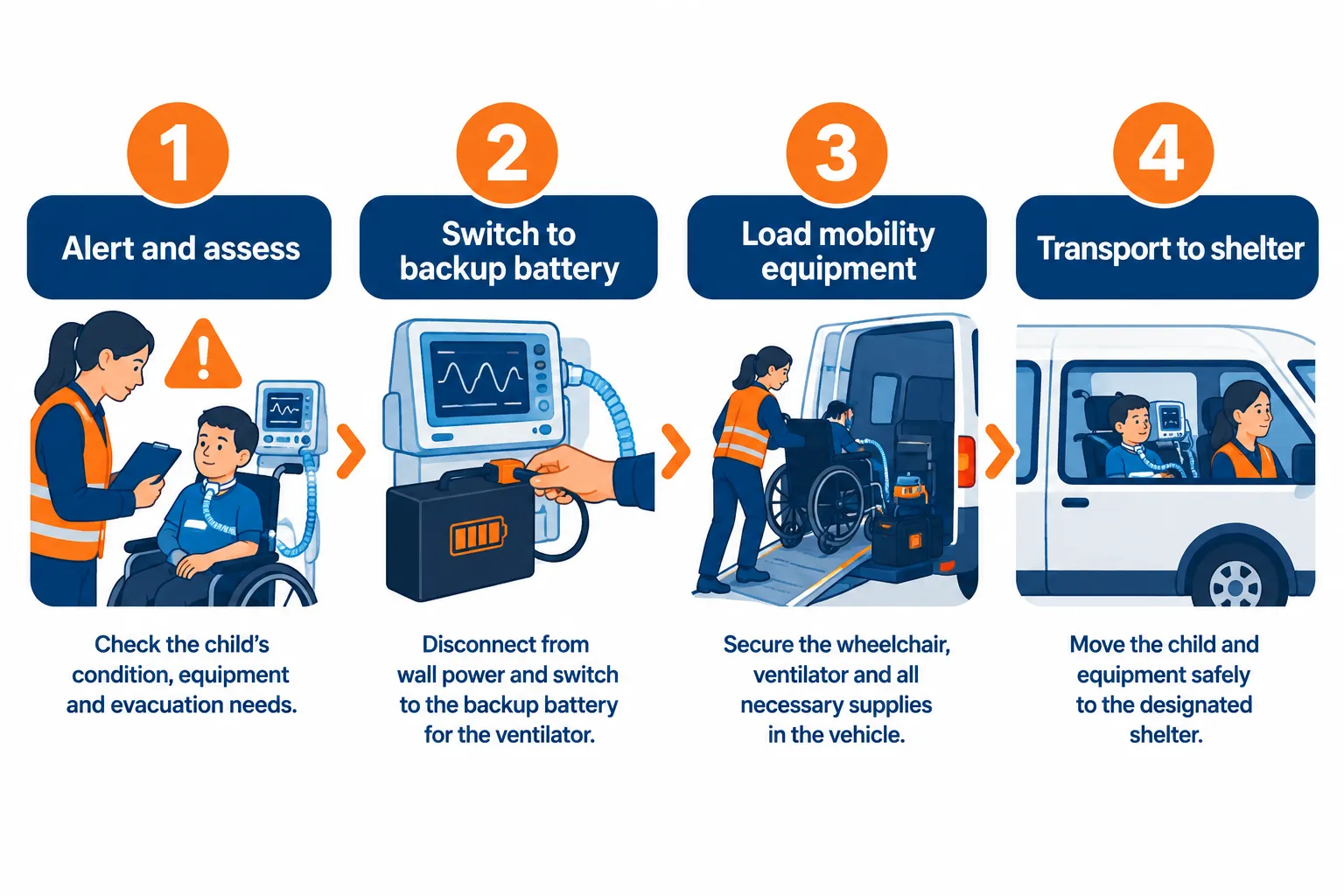
- Calculate total wattage needed for ventilators, feeding pumps, oxygen concentrators, or CPAP machines.
- Invest in a portable power station or generator sized above that total, with margin for cold weather performance loss.
- Test the backup system quarterly under real load, not just at purchase.
- Notify your utility company that your household has a medically dependent resident; many utilities maintain priority restoration lists.
- Keep a car charged and fueled as a mobile backup power source if the device can run off a vehicle inverter.
Choose a generator if outages regularly exceed eight hours in your area. Choose a large portable power station if your device draws under 300 watts and outages are typically shorter. The guide to living without electricity long term covers broader household strategy once medical devices are secured.
Should Special Needs Children Have a Different Emergency Plan Than Siblings
Yes, a child with special health care needs should have an individualized emergency annex layered onto the family’s broader plan, not a completely separate plan that excludes siblings from the process. The household still evacuates together; the medical logistics simply get their own documented layer.
Practical structure:
- Keep one master family emergency plan covering meeting points, communication, and general supplies.
- Add a medical annex specific to the child with special needs, covering equipment, medication, and care instructions.
- Assign one parent or caregiver as the primary point person for the medical annex during an actual event.
- Brief siblings on their role, such as carrying a specific bag or helping keep a sibling calm, so they feel included rather than sidelined.
Common mistake: treating the special needs child’s plan as entirely separate causes confusion about who carries what during a real evacuation. One unified plan with a clearly flagged medical section works better in practice. The family bug-out bag guide and emergency preparedness for kids resource both show how to assign age-appropriate roles across siblings.
How to Communicate With a Non-Verbal Child During an Emergency
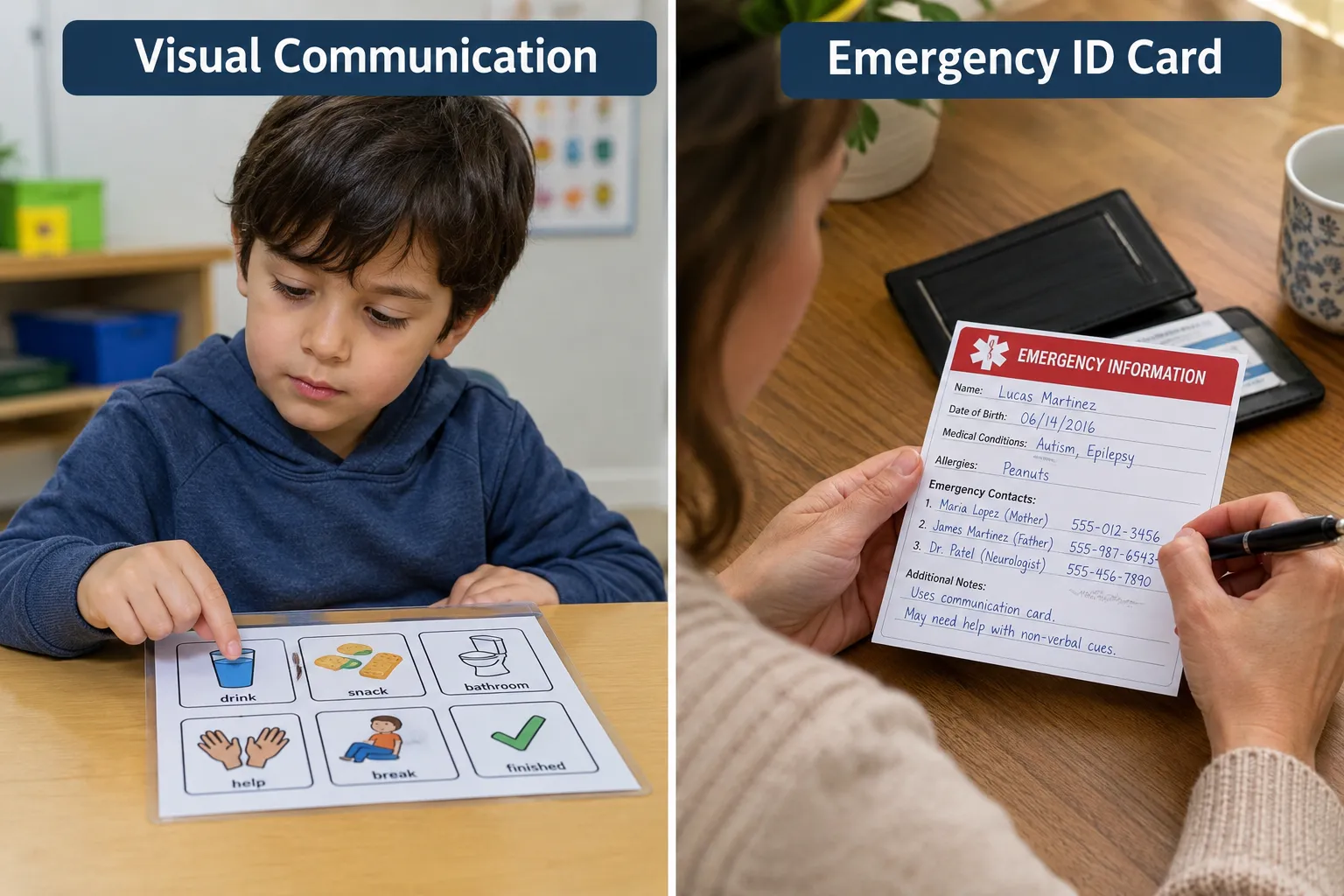
Communicating with a non-verbal child during an emergency works best with pre-made visual cards, a consistent gesture system, or an assistive communication device that’s charged and accessible at all times. First responders rarely have time to learn a child’s unique communication style on the spot, so the system needs to be portable and self-explanatory.
- Laminate a small set of picture cards showing “hurt,” “scared,” “need medicine,” “need bathroom,” and keep them in the emergency kit.
- Charge communication devices (AAC tablets, speech-generating apps) daily and keep a backup battery in the kit.
- Teach a simple hand signal for “I’m okay” and “I need help” that any caregiver or first responder can learn in seconds.
- Attach a card to the child’s bag explaining their communication method, so a stranger or responder knows how to interact.
What Information Should Be in a Special Needs Emergency Card or Wallet
A special needs emergency card should carry the child’s name, diagnosis, medications, allergies, emergency contacts, and communication instructions on one compact, laminated card the child can carry or wear. This card often matters more than any other item in the kit, because it works even if a caregiver is separated from the child.
Essential fields:
- Full name, date of birth, and photo
- Primary diagnosis and key medical conditions
- Current medications and dosages
- Allergies, in bold or highlighted
- Emergency contacts (two minimum) with phone numbers
- Communication method (verbal, AAC device, sign language, picture cards)
- Behavioral notes relevant to first responders (sensory triggers, flight risk, seizure history)
Keep one copy in the emergency kit, one in the child’s backpack, and one laminated version worn on a lanyard or ID bracelet. The emergency communication plan guide covers how to build the broader family contact tree this card connects to.
How to Teach a Child With Autism or Anxiety About Emergency Procedures
Teaching a child with autism or anxiety about emergency procedures works best through repetition, visual schedules, and low-pressure practice drills held well before any real emergency. Surprise drills or high-intensity simulations tend to backfire for children sensitive to sudden change.
- Use social stories or picture sequences showing exactly what happens step by step during a drill.
- Practice during calm, predictable times, not right before bed or during a meltdown-prone period.
- Introduce one new element at a time (the sound of a smoke alarm, then the evacuation route, then the shelter location).
- Pair the drill with a comfort item or reward to build a positive association.
- Avoid last-minute surprise drills; children with anxiety disorders often do worse with unannounced tests.
Choose a slower, multi-week introduction if your child has significant sensory sensitivity. Choose a condensed one-week drill cycle if your child adapts quickly to new routines. The mental health preparedness plan for emergencies offers additional strategy for reducing anxiety during actual crisis events.
What if My Child Has Seizures During an Emergency Evacuation
If a child has a seizure during an emergency evacuation, the priority is protecting them from injury, timing the seizure, and administering rescue medication if prescribed, while continuing to move toward safety only once the seizure resolves or with help carrying the child. Do not attempt to force movement during an active seizure unless immediate danger (fire, flood) requires it.
- Clear the immediate area of hard or sharp objects.
- Time the seizure; call for emergency help if it exceeds five minutes or a second seizure follows without full recovery.
- Administer prescribed rescue medication (such as rectal or nasal diazepam) per the doctor’s instructions, documented on the medical card.
- Place the child on their side once the active seizure ends to keep the airway clear.
- Resume evacuation once the child is stable enough to be moved, carried, or transported.
Keep rescue medication instructions printed in the emergency kit, since a caregiver under stress may forget exact dosing steps from memory alone.
Common Mistakes Parents Make When Preparing for Emergencies With Special Needs Kids
The most common mistake is building a generic family kit and assuming it covers a medically complex child’s needs, when in fact the medication, power, and mobility requirements demand a separate, tested annex. Several other recurring errors show up across families.
- Packing only a three-day medication supply when seven days is safer for specialty prescriptions
- Never load-testing backup power equipment before an actual outage
- Failing to notify the school, daycare, or utility company about the child’s medical dependency
- Skipping practice drills because they’re assumed to be too stressful for the child
- Not updating the plan after a diagnosis change, new medication, or equipment upgrade
- Forgetting a second copy of the medical ID card in a backpack or car
Avoiding these mistakes mostly comes down to treating the medical annex as a living document that gets reviewed, not a one-time binder that sits in a drawer.
Where to Find Emergency Preparedness Resources for Disabled Children
Families can find emergency preparedness resources for disabled children through state Title V Children’s Special Health Care Needs programs, FEMA’s accessibility guidance, and nonprofit disability advocacy organizations that often provide free planning templates and supply grants. Most states run a dedicated program under this federal Title V framework specifically for medically complex children.
- State Title V CSHCN programs (search your state health department’s website)
- FEMA’s disability and accessibility planning resources
- Local Centers for Independent Living
- Disability-specific nonprofits (epilepsy foundations, autism societies, muscular dystrophy associations)
- School district special education coordinators, who often maintain individualized emergency plans already
Can I Get Financial Help or Free Supplies for Emergency Kits for Special Needs
Yes, financial help and free supplies are available through state Medicaid waiver programs, durable medical equipment suppliers offering loaner backup batteries, and nonprofit grant programs aimed at disability preparedness. Eligibility and availability vary significantly by state and diagnosis, so checking multiple sources matters.
- Medicaid waiver programs in many states cover backup batteries for medically necessary equipment
- Durable medical equipment (DME) suppliers sometimes loan backup power units for ventilators and feeding pumps
- Local Red Cross chapters occasionally run accessibility-focused preparedness grants
- Disease-specific nonprofits sometimes fund emergency supply kits directly for members
Call your child’s DME supplier first; many already stock loaner backup batteries and simply need a request on file before an emergency happens.
How Often Should I Update My Special Needs Emergency Plan
A special needs emergency plan should be reviewed every three to six months, and immediately after any change in medication, equipment, diagnosis, school placement, or primary caregiver. Plans built once and never revisited tend to fail at the exact moment they’re needed.
- Set a recurring calendar reminder every quarter to check expiration dates and update contact info
- Update immediately after any hospitalization, new prescription, or device swap
- Re-run a practice drill after any major plan change
- Confirm shelter and school emergency contacts are current each school year
Frequently Asked Questions
Do I really need a separate kit just for my child’s medical needs?
Yes. A standard household kit doesn’t account for medication refrigeration, device batteries, or mobility equipment, so a dedicated medical kit layered on top of the family kit closes that gap.
What if my child’s device needs more power than a portable battery provides?
Look into a generator sized above your device’s total wattage, and register with your utility company for priority restoration status.
Is it safe to practice evacuation drills with a child who has severe anxiety?
Yes, if the drills are introduced gradually using visual schedules and paired with comfort items, rather than sprung on the child without warning.
What happens if we get separated from our child during an evacuation?
The laminated medical ID card carried on the child’s body becomes critical here, since it tells any responder the diagnosis, medications, and communication method without needing a parent present.
Should siblings carry any of the medical supplies?
Age-appropriate siblings can carry a lighter supporting bag, but the core medical kit should stay with the primary caregiver whenever possible.
How do I know if my child’s condition qualifies for state special health care needs programs?
Most state Title V programs use broad criteria covering chronic illness, disability, or developmental conditions requiring more than routine care; contact the state health department directly to confirm.
Conclusion
Emergency Preparedness for Families With Children With Special Health Care Needs: A Complete Guide comes down to one principle: standard disaster advice is a floor, not a ceiling, for families managing medical complexity. Build the medical annex, test the backup power, laminate the ID card, and walk through the evacuation route before you ever need it under pressure.
Start this week with three concrete actions: build the seven-day medication kit, calculate your device’s power needs and size a backup battery accordingly, and fill out a medical information card for your child to carry. Review the whole plan again in three months, and after any medical change in between.
Products, Tools, and Resources
A portable power station rated above your child’s device wattage is worth the investment before worth is tested by an actual outage; pair it with the broader household approach in the guide to backup power for emergencies. For the rest of the household’s readiness, the ultimate guide to home emergency preparedness and the disaster preparedness for families resource round out a plan that protects everyone under one roof, medically complex or not.