
Hey there! Some links on this page may be affiliate links which means that, if you choose to make a purchase, I may earn a commission at no extra cost to you. I greatly appreciate your support. Read the full disclosure here.
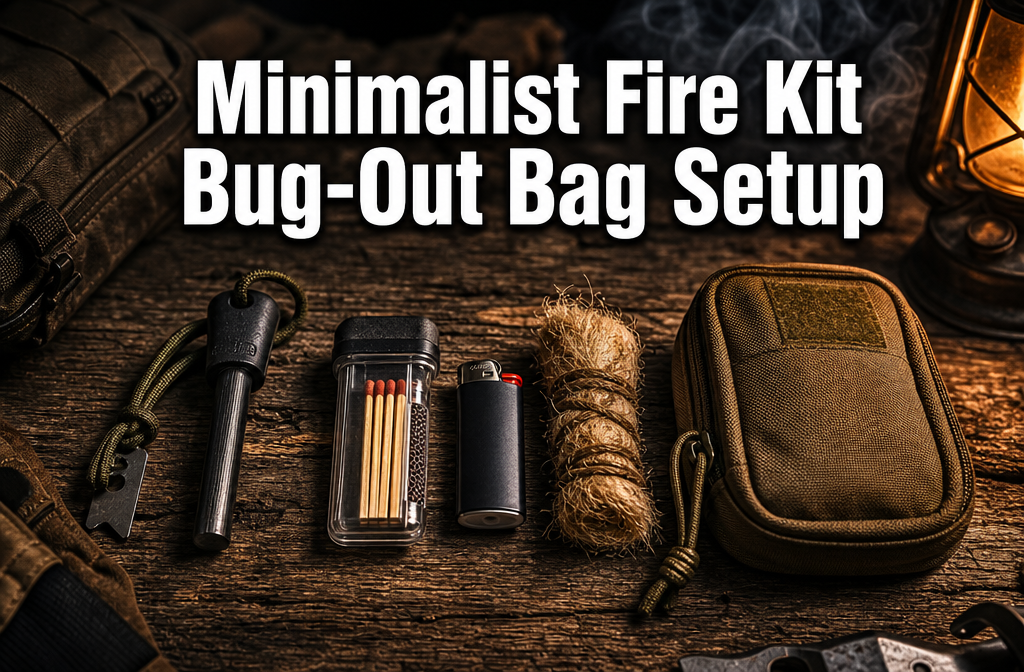
A functional fire kit weighing under two ounces exists. Most preppers carry four times that weight without gaining any meaningful advantage. The minimalist fire kit bug-out bag setup covered in this guide strips fire-starting down to what actually works — three to five purpose-selected tools that cover every realistic scenario, from wet forests to high-altitude cold snaps, without dragging down your pack or draining your budget.
Fire is not optional in a survival situation. It handles warmth, water purification, signaling, cooking, and morale in one package. Getting the kit right means understanding what each tool actually does under pressure — not just what it says on the packaging.
Find this useful? Add us as a preferred source on Google and more of what we publish will show up in your results.
Key Takeaways
- A complete minimalist fire kit can weigh under 2 oz and cost less than $25
- The core three-tool setup: ferro rod, windproof lighter, and waterproof tinder — covers 95% of scenarios
- Ferro rods outperform matches in wet and cold conditions but require practice to use effectively
- Water-resistant and waterproof are not the same thing — the distinction matters in the field
- Beginners should start with a windproof lighter, not a ferro rod
- Tinder is the most underrated component — and the most common point of failure
- Altitude and extreme cold reduce lighter fuel pressure; carry a ferro rod as backup above 8,000 feet
- Special forces and wilderness guides consistently recommend redundancy: at least two ignition sources
- Dead weight in a fire kit includes novelty tools, oversized strikers, and single-use items with no backup function
What Is a Minimalist Fire Kit and Why Does It Matter for Bug-Out Bags?
A minimalist fire kit is a curated set of fire-starting tools selected for maximum reliability at minimum weight and volume. For bug-out bag purposes, it typically fits inside a small waterproof pouch no larger than a deck of cards.
Weight matters in a bug-out bag because every ounce compounds over distance. A 30-pound pack becomes a liability after 10 miles on rough terrain. The fire kit should contribute almost nothing to that load while delivering full capability. For a deeper look at how fire fits into the broader survival skill set, the 25 Most Critical Wilderness Survival Skills guide ranks fire-making near the top of the priority list — and for good reason.
Who this setup is for: Anyone building or refining a bug-out bag, from beginners assembling their first kit to experienced preppers auditing dead weight.
Who should modify it: Families with young children, preppers in extreme cold climates, and anyone with limited hand dexterity may need to adjust tool selection toward easier-to-use options.
What’s the Absolute Lightest Fire Starting Kit for Emergency Survival?
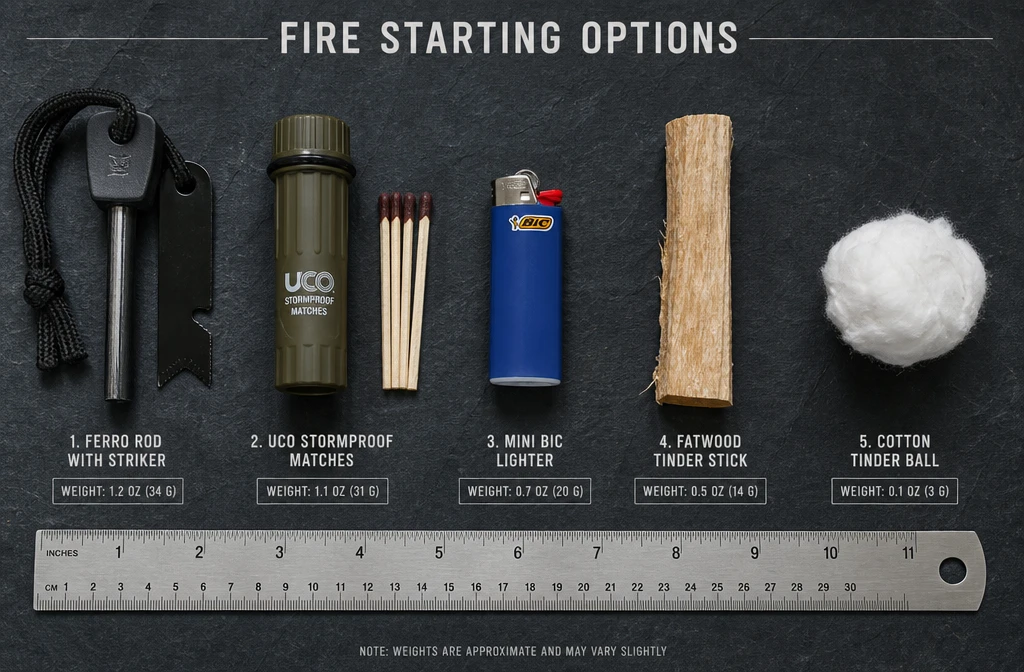
The lightest functional fire kit for emergency survival consists of three items: a mini ferro rod (roughly 0.5 oz), a small Bic lighter (0.5 oz), and a compressed tinder tab or waxed cotton tinder (0.3 oz). Total weight: approximately 1.3 oz.
That’s it. Anything lighter starts sacrificing redundancy, and redundancy is the entire point. A single-tool fire kit is a gamble. Two tools that cover each other’s weaknesses — lighters fail in cold, ferro rods require dry tinder — is a system.
The ultralight core kit:
| Tool | Weight | Cost | Best Use |
|---|---|---|---|
| Mini ferro rod (3-inch) | ~0.5 oz | $8–$12 | Wet/cold backup ignition |
| Small Bic lighter | ~0.5 oz | $1–$2 | Fast, reliable primary ignition |
| Waxed tinder tabs (x4) | ~0.3 oz | $4–$6 | Guaranteed tinder in wet conditions |
| Waterproof pouch | ~0.2 oz | $2–$4 | Keeps everything dry |
| Total | ~1.5 oz | ~$15–$24 | Full redundancy |
How Much Should a Basic Fire Kit Cost?
A fully functional minimalist fire kit costs between $15 and $30. There is no survival advantage to spending more unless you’re adding specialized tools for extreme environments.
The Bic lighter is genuinely one of the best fire-starting tools available — it costs under $2 and outperforms many $40 “survival lighters” in normal conditions. A quality ferro rod from brands like Light My Fire or Bayite runs $8–$15 and lasts for thousands of strikes. Waxed tinder tabs from UCO or Coghlan’s cost a few dollars for a pack that covers multiple fire-starting sessions.
Where spending more makes sense:
- Stormproof matches (UCO brand) for extreme wet/wind conditions: ~$8 for a box of 25
- A Peanut lighter (refillable, windproof) as a Bic upgrade: ~$15–$20
- Fatwood sticks for reliable natural tinder: ~$5–$8
Where spending more doesn’t help: Novelty multi-tool fire kits, oversized magnesium bars, and branded “survival kits” that bundle poor-quality tools together. Check out the complete bug-out bag guide for under $200 for context on how fire kit costs fit into the overall BOB budget.
What’s the Difference Between Waterproof and Water-Resistant Fire Starters?
Water-resistant means a fire starter can handle brief moisture exposure — light rain, damp hands, surface splashing. Waterproof means it will function after full submersion. These are not interchangeable terms, and confusing them has ended survival situations badly.
Standard matches are neither. “Storm matches” or “lifeboat matches” are typically water-resistant, not waterproof — they’ll light after being damp but not after being submerged. UCO Stormproof matches are a notable exception: they’re designed to relight even after being briefly submerged and will burn in 30 mph winds.
Bic lighters are water-resistant. A Bic that falls in a stream may not light immediately — shake it out, dry the striker wheel, and it usually works within a minute. Ferro rods are genuinely waterproof. The rod itself doesn’t care about moisture; the challenge is finding dry tinder, which is why carrying waxed tinder tabs matters.
Practical rule: If your bug-out scenario involves water crossings, heavy rain, or humid jungle environments, treat water-resistant as unreliable and build your kit around waterproof tools plus sealed tinder storage.
Can You Make Your Own Minimalist Fire Kit for Cheap?
Yes — a DIY minimalist fire kit can be assembled for under $10 and performs as well as most commercial kits. The components are simple and widely available.
DIY kit components:
- Ferro rod: Buy a bulk ferro rod blank from Amazon or a bushcraft supplier ($3–$5). Wrap the handle in paracord for grip.
- Tinder: Petroleum jelly-soaked cotton balls stored in a small pill bottle or zip-lock bag. A single cotton ball with Vaseline burns for 3–5 minutes — more than enough to catch kindling. Cost: pennies.
- Container: A small Altoids tin or waterproof pill container keeps everything together and doubles as a char cloth-making vessel.
- Striker: A hacksaw blade piece or the spine of a fixed-blade knife works as a ferro rod striker.
Total cost: $5–$10. The only thing this DIY kit lacks is a windproof lighter, which should still be added for $1–$2.
Common mistake: Using regular cotton balls without petroleum jelly. They catch sparks but burn out in seconds — not long enough to catch damp kindling.
Which Fire Starting Methods Work Best in Wet Conditions?
In wet conditions, the three most reliable fire-starting methods are: ferro rod with pre-made waterproof tinder, stormproof matches, and a windproof lighter. The key variable is always tinder, not ignition.
Wet wood doesn’t mean no fire — it means you need to work harder to find or create dry tinder. Look for dead wood that’s been sheltered from rain (under dense canopy, on the underside of fallen logs), split larger pieces to expose dry inner wood, or use your pre-packed tinder tabs.
Ranked by wet-weather reliability:
- Ferro rod + waxed tinder tabs — sparks work regardless of moisture; tinder is pre-protected
- UCO Stormproof matches — wind and water resistant; reliable in most field conditions
- Windproof lighter (Peanut or Zippo) — flame resists wind; can struggle in heavy rain
- Standard Bic lighter — works in light rain; unreliable in heavy downpour
- Standard matches — last resort; avoid in wet environments
What doesn’t work in wet conditions: Magnesium scrapers without dry tinder, friction fire methods (bow drill, hand drill), and standard matches without shelter.
What Fire Starter Is Best for Beginners With Zero Outdoor Experience?
For beginners, a windproof lighter is the best starting fire starter — specifically a Bic or a Peanut lighter. It requires no technique, works in most conditions, and provides immediate, controllable flame.
Ferro rods are excellent tools, but they require practice. A beginner under stress, with cold or wet hands, attempting to use a ferro rod for the first time will likely fail. The bug-out bag for beginners guide makes this point clearly: gear that requires trained muscle memory is not beginner gear.
Beginner-friendly fire kit progression:
- Start with: Bic lighter + waxed tinder tabs
- Add next: UCO Stormproof matches as backup
- Practice then add: Ferro rod once you’ve spent time using it at home before it goes in the bag
- Never skip: Pre-made tinder — this is where beginners fail most often
Are Ferro Rods Really Better Than Matches?
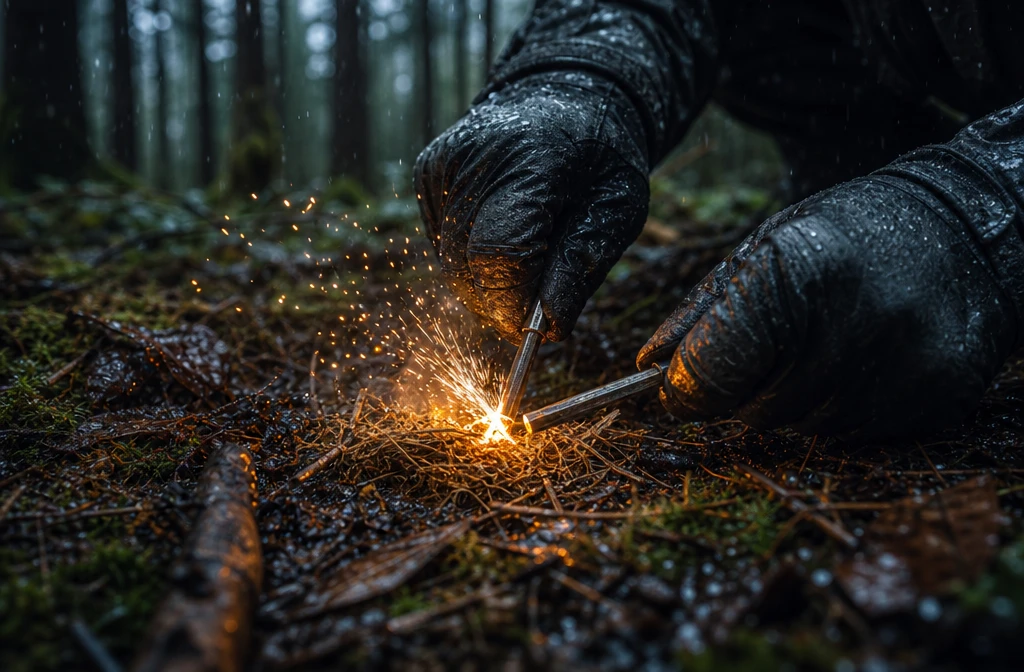
Ferro rods are more durable and reliable over time than matches, but they’re not universally “better” — the right answer depends on conditions and user skill. A ferro rod produces sparks at roughly 5,400°F and will work after being submerged, frozen, or stored for decades. A box of matches is lighter, easier to use, and faster for a beginner.
Ferro rod advantages:
- Virtually unlimited strikes (thousands per rod)
- Unaffected by water or age
- Works at altitude and in cold (unlike lighters)
- No fuel to run out
Match advantages:
- Zero learning curve
- Immediate open flame (no tinder technique needed)
- Stormproof variants handle most field conditions
- Compact and lightweight
Decision rule: Choose a ferro rod if you’re experienced, operating in extreme conditions, or building a long-term survival kit. Choose stormproof matches if you’re a beginner or building a kit that someone else might need to use in an emergency.
Carry both. The weight difference is negligible and the redundancy is everything.
What Common Mistakes Do Newbies Make With Emergency Fire Kits?
The most common mistake is packing ignition tools without packing tinder. A ferro rod and a lighter are useless against wet wood without a reliable tinder source. The second most common mistake is never practicing with the tools before an emergency.
Top mistakes in a minimalist fire kit bug-out bag setup:
- No tinder: Assuming natural tinder will always be available — it won’t be in rain, snow, or desert
- Untested tools: Putting a ferro rod in the bag without ever striking it
- Single ignition source: One lighter with no backup is a single point of failure
- Wet storage: Keeping fire kit components loose in the main bag compartment instead of in a waterproof pouch
- Oversized tools: Carrying a 6-inch ferro rod when a 3-inch does the same job at half the weight
- Relying on novelty tools: Flint-and-steel sets, bow drill kits, and fire pistons have their place — but not as primary tools for a minimalist kit
Also see the bug-out bag mistakes to avoid guide for broader packing errors that affect the entire BOB, not just the fire kit.
What Fire Starting Tools Do Special Forces and Wilderness Experts Recommend?
Special forces personnel and wilderness survival instructors consistently recommend the same core principle: redundancy with simplicity. The specific tools they favor are ferro rods, windproof lighters, and pre-made tinder — with an emphasis on training over gear complexity.
Military survival manuals (including the U.S. Army Survival Manual FM 21-76) emphasize that fire-starting skill matters more than tool quality. That said, the tools most frequently recommended by wilderness guides and survival instructors include:
- Light My Fire Swedish FireSteel — widely considered the benchmark ferro rod for reliability and longevity
- UCO Stormproof Matches — the go-to recommendation for wet-weather backup ignition
- Bic Mini Lighter — universally recommended for its simplicity and reliability-to-weight ratio
- Fatwood sticks — natural resin-soaked wood that catches sparks reliably; recommended by bushcraft instructors as a natural tinder upgrade
- Tinder Quik tabs (BCB International) — used by military survival kits; burn for 2+ minutes even when wet
“The best fire kit is the one you’ve practiced with.” — A principle repeated across every credible wilderness survival course.
For a broader look at the skills that make gear useful, the 10 critical bug-out survival skills guide covers fire-making alongside navigation, shelter, and water procurement.
How Small Can a Functional Fire Kit Actually Be?
A fully functional fire kit can fit inside an Altoids tin (3.75″ x 2.25″ x 0.875″) and weigh under 1.5 oz. That’s the practical floor for a kit that includes ignition, backup ignition, and tinder.
Altoids tin fire kit contents:
- 1x mini ferro rod with striker
- 4x petroleum jelly cotton balls in a small zip-lock
- 4x UCO Stormproof matches
- 1x small piece of fatwood
- 1x folded piece of char cloth
This kit handles wet, cold, and windy conditions with multiple redundancies. The tin itself can be used to make more char cloth in the field. Total volume: roughly 3.5 cubic inches.
Can it go smaller? A single ferro rod and a waxed tinder tab fits in a jacket pocket. That’s a functional emergency fire-starting capability in two items. But for a bug-out bag where the kit might need to work for 72+ hours across changing conditions, the Altoids tin setup is the practical minimum.
What Fire Starters Won’t Work at High Altitude or in Extreme Cold?
Standard butane lighters become unreliable above roughly 8,000 feet elevation and below 10°F (-12°C) because butane fuel pressure drops in cold temperatures. At high altitude, reduced oxygen also affects flame quality and sustainability.
Tools affected by altitude and cold:
- Bic lighters: Fuel pressure drops below 10°F; may not ignite or produce weak flame above 8,000 feet
- Zippo lighters: Naphtha fuel performs better in cold than butane, but windscreen is critical at altitude
- Standard matches: Wind and low oxygen make ignition difficult above treeline
- Magnesium bars: The magnesium shavings are hard to control in wind; sparks still work but tinder management becomes critical
Tools that work at altitude and in extreme cold:
- Ferro rods: No fuel, no pressure — works at any altitude and temperature
- Stormproof matches: Designed for wind; still affected by extreme cold but more reliable than standard matches
- Fatwood/waxed tinder: Burns hot enough to compensate for reduced oxygen at altitude
Rule of thumb: Above 8,000 feet or below 20°F, treat the ferro rod as your primary ignition source, not your backup.
Do Ultralight Backpackers Prefer Matches or Lighters?
Ultralight backpackers predominantly choose a mini Bic lighter as their primary fire-starting tool because it offers the best weight-to-reliability ratio for non-emergency use. A mini Bic weighs roughly 0.5 oz and provides hundreds of lights.
For ultralight survival contexts (where fire may be genuinely needed, not just convenient), most experienced ultralight preppers carry a mini Bic plus a small ferro rod — total weight under 1 oz. Matches are generally considered heavier and less reliable per use for ultralight applications.
The ultralight community consensus:
- Primary: Mini Bic lighter
- Backup: 3-inch ferro rod
- Tinder: Petroleum jelly cotton balls (2–3, sealed in a small bag)
- Skip: Stormproof matches (heavier per use), magnesium bars (heavy, slow), novelty fire kits
What Fire Kit Components Are Useless Dead Weight?
Several fire kit components are commonly included in commercial survival kits but add weight without adding meaningful capability. Identifying dead weight is central to a good minimalist fire kit bug-out bag setup.
Dead weight to cut:
- Large magnesium bars: Heavy, slow to use, and the magnesium shavings blow away in wind. The ferro rod embedded in them is the only useful part.
- Oversized ferro rods (6-inch+): A 3-inch rod provides thousands of strikes. The extra length adds weight with no functional benefit for a BOB.
- Waterproof match cases without stormproof matches: The case is useful; standard matches inside are not worth the weight when UCO stormproof matches exist.
- Novelty fire pistons: Impressive in calm conditions, nearly impossible under stress with cold hands.
- Bow drill or hand drill kits: Friction fire is a valuable skill but has no place in a minimalist emergency kit — it requires dry materials, time, and significant practice.
- Duplicate lighters: Two Bic lighters when one Bic plus one ferro rod covers more scenarios at the same weight.
The test: Ask of every item — “Does this do something my other tools can’t?” If the answer is no, it’s dead weight.
Building Your Minimalist Fire Kit Bug-Out Bag Setup: Step-by-Step
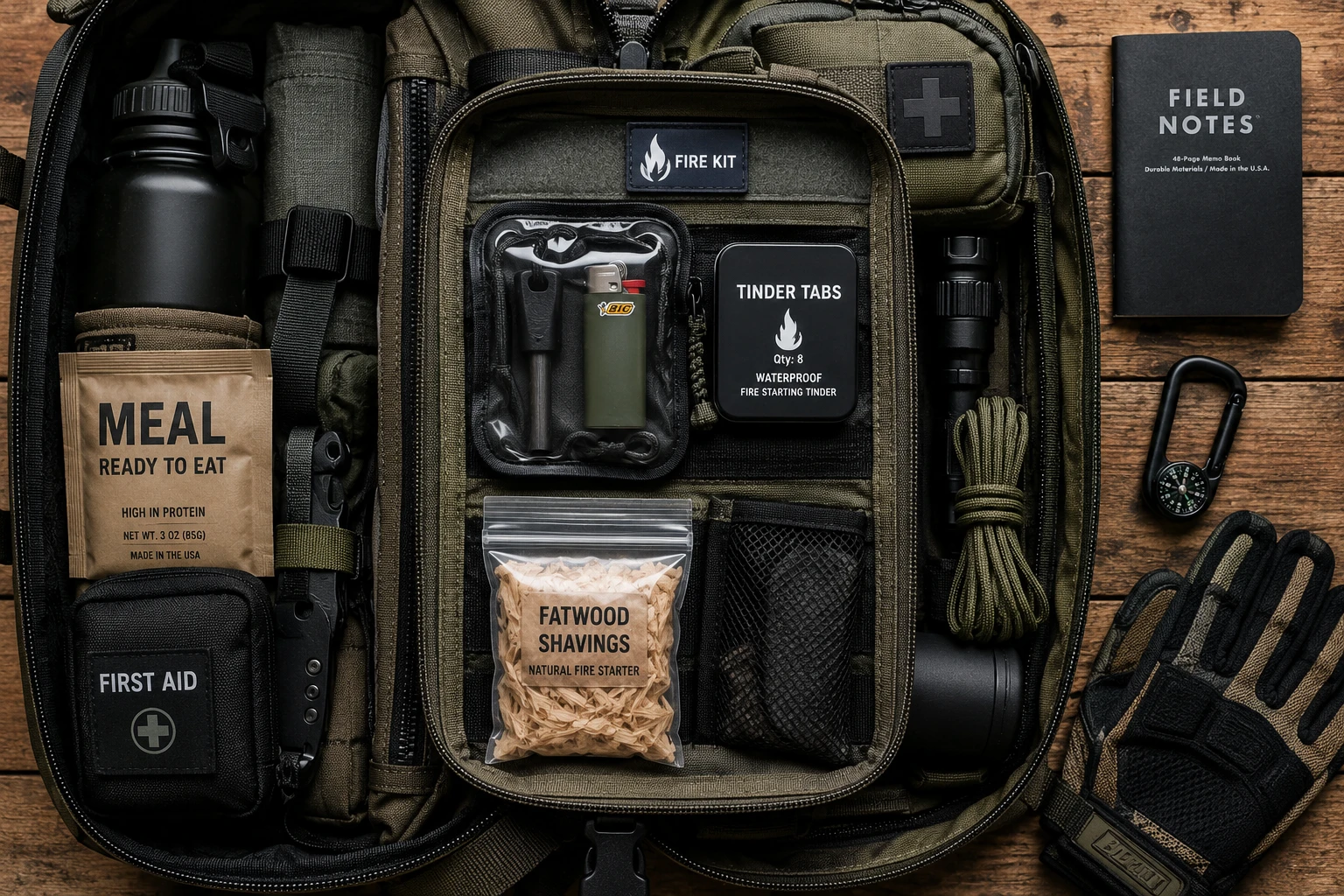
Here’s how to assemble the complete minimalist fire kit bug-out bag setup from scratch, in order of priority:
Step 1 — Choose your primary ignition source
For most people: a Bic Mini lighter ($1–$2). For cold/high-altitude environments: a Peanut lighter or Zippo with naphtha fuel.
Step 2 — Add a ferro rod as backup
A 3-inch ferro rod with a lanyard hole. Light My Fire, Bayite, and Überleben are reliable brands at $8–$15.
Step 3 — Pack pre-made tinder
Four petroleum jelly cotton balls in a small zip-lock, or four UCO Tinder Quik tabs. This is non-negotiable.
Step 4 — Add a weather-specific backup
In wet climates: UCO Stormproof matches. In dry/high-altitude: fatwood stick. In all conditions: both are worth the weight.
Step 5 — Store everything in a waterproof container
A small dry bag, waterproof zip pouch, or Altoids tin. Label it clearly if it’s in a shared bag.
Step 6 — Practice before it goes in the bag
Strike the ferro rod 20 times at home. Light a cotton ball. Build a small fire in your backyard. The kit is only as good as your familiarity with it.
For a complete view of how this fire kit fits into the broader BOB system, the 72-hour bug-out bag checklist covers every category from fire to food to first aid. And if you’re still building out your overall emergency supplies, the ultimate emergency supplies list is worth reviewing alongside this guide.
FAQ: Minimalist Fire Kit Bug-Out Bag Setup
Q: How many fire-starting tools should be in a bug-out bag?
A minimum of two ignition sources that cover each other’s weaknesses — typically a lighter and a ferro rod. Three is better if weight allows.
Q: Can I use a candle as tinder in my fire kit?
Yes. A small birthday candle or tea light works as extended tinder and weighs almost nothing. It’s a solid addition to a minimalist kit.
Q: How long does a ferro rod last?
A quality 3-inch ferro rod provides approximately 3,000 to 12,000 strikes depending on the rod’s diameter and composition. For practical purposes, it lasts years of regular use.
Q: Should I keep my fire kit separate from the rest of my BOB?
Yes. Store it in a dedicated waterproof pouch in an easily accessible pocket — not buried at the bottom of the bag. In an emergency, you need it fast.
Q: Will a Bic lighter work after being submerged in water?
Usually yes, after shaking out the water and drying the striker wheel. It may take several attempts. For guaranteed post-submersion performance, use a ferro rod.
Q: What’s the best tinder to find in the wild if I run out of pre-made tinder?
Dry birch bark, fatwood (resin-soaked pine heartwood), dry grass bundles, cattail fluff, and the inner bark of dead cedar trees are among the most reliable natural tinder sources across North American environments.
Q: Is a Zippo better than a Bic for a bug-out bag?
A Zippo is windproof and refillable, which are genuine advantages. The downsides: it evaporates fuel within a few weeks even when unused, and it’s heavier than a Bic. For a bag that might sit unused for months, a Bic is more reliable. Carry both if weight allows.
Q: Can I bring fire-starting tools on a plane?
Regulations vary by country and airline. In the U.S., one Bic-style lighter is permitted in carry-on luggage per TSA rules (as of 2026). Matches are restricted to one book of safety matches. Ferro rods are generally permitted in checked baggage. Always verify current TSA and IATA guidelines before travel.
Q: What’s the single best fire-starting tool for someone who has never camped before?
A Bic lighter. No technique required, immediate flame, universally available, costs $1.
Q: Does altitude affect a ferro rod?
No. A ferro rod produces sparks at roughly 5,400°F regardless of altitude. The challenge at high altitude is sustaining a fire due to reduced oxygen — use extra tinder and build a smaller, more protected fire structure.
Conclusion: Build It Light, Build It Right
The minimalist fire kit bug-out bag setup isn’t about cutting corners — it’s about cutting everything that doesn’t earn its place. A ferro rod, a windproof lighter, pre-made tinder, and a waterproof pouch to hold them: that’s a kit that weighs under two ounces, costs under $25, and covers nearly every scenario a bug-out situation will throw at you.
The tools matter less than the practice. Build the kit today, then go use it. Strike the ferro rod in your backyard. Light a fire in the rain. Know exactly how your tinder behaves before you need it at 2 a.m. in a wet forest.
Actionable next steps:
- Audit your current BOB fire kit against the dead weight list above
- Add a second ignition source if you only have one
- Pack pre-made tinder if you don’t have it — this is the most common gap
- Store the kit in a dedicated waterproof pouch in an accessible pocket
- Practice with every tool before the bag gets sealed
For the full picture on building a capable, lightweight bug-out bag, the bug-out bag for beginners complete guide is the natural next read. And if you want to build out the survival skills that make every piece of gear more effective, the essential bushcraft skills for beginners guide covers fire-making technique alongside shelter, water, and navigation.
Preparedness isn’t about having the most gear. It’s about having the right gear — and knowing exactly how to use it.
Products, Tools, and Resources Worth Knowing
These are the specific items that consistently earn their place in a minimalist fire kit, based on real-world use and community consensus among experienced preppers:
Light My Fire Swedish FireSteel Army 2.0 — The benchmark ferro rod. Rated for approximately 12,000 strikes, comes with a dedicated striker, and the handle is comfortable even with cold hands. Around $15.
UCO Stormproof Match Kit — 25 matches that relight after submersion and burn in 30 mph winds. The included waterproof case doubles as a striker. Around $8. Worth every penny for wet-climate preppers.
Bic Mini Lighter — No explanation needed. Buy a three-pack, put one in the fire kit, one in a jacket pocket, one in the car emergency kit. Under $5 for the pack.
Überleben Zünden Ferro Rod — A step up from budget rods, with a comfortable wood handle and a high-quality steel striker. Comes in 3-inch and 5-inch versions. Around $18–$22.
UCO Tinder Quik Tabs — Pre-made tinder tabs that catch sparks and burn for 2+ minutes even when damp. A 20-pack weighs almost nothing and costs around $6. These belong in every minimalist kit.
Petroleum Jelly + Cotton Balls (DIY) — The budget option that outperforms many commercial tinder products. A small Vaseline container and a bag of cotton balls costs under $3 and makes dozens of fire-starting bundles.
Exotac nanoSTRIKER XL — A compact, keychain-sized ferro rod with a built-in striker stored in the handle. Excellent for an ultra-minimalist kit or as a backup to a backup. Around $20.
For anyone building out a complete emergency kit beyond just fire, the ultimate emergency supplies list and the bug-out bag food list are practical next steps.
References
- U.S. Army. FM 21-76 Survival Manual. Department of the Army, 1992. https://www.enlisted.info/field-manuals/fm-21-76-survival.shtml
- BCB International. Tinder Quik Product Specifications. BCB International Ltd, 2021. https://www.bcbin.com
- UCO Gear. Stormproof Match Kit Product Documentation. UCO, 2023. https://ucogear.com
- Light My Fire. Swedish FireSteel Technical Specifications. Light My Fire Sweden AB, 2022. https://www.lightmyfire.com
- Transportation Security Administration. What Can I Bring? Lighters and Matches. TSA, 2024. https://www.tsa.gov/travel/security-screening/whatcanibring/items/lighters