
Hey there! Some links on this page may be affiliate links which means that, if you choose to make a purchase, I may earn a commission at no extra cost to you. I greatly appreciate your support. Read the full disclosure here.
A FEMA study found that roughly 60% of Americans are not prepared to evacuate with even 72 hours of supplies. Of those who do have a bug out bag, most overlook clothing entirely, focusing on food, water, and tools while packing a single spare outfit as an afterthought. That gap can be life-threatening. Your bug out bag clothing list is not a secondary concern, it is your first line of defense against hypothermia, dehydration, injury, and exposure.
This guide covers every clothing decision you need to make: what to pack, what fabrics to choose, how many layers you actually need, and the mistakes that could cost you when it counts most.
Key Takeaways
- A complete bug out bag clothing list should include base layers, mid layers, an outer shell, sturdy footwear, and essential accessories, not just a spare t-shirt and jeans.
- Choose synthetic or merino wool fabrics over cotton. Cotton kills in wet and cold conditions because it loses all insulating value when wet.
- The layering system (base, mid, outer) is the most effective framework for regulating body temperature across changing conditions.
- Footwear is the single most critical clothing item in your bag. Prioritize waterproof trail shoes or lightweight boots over sneakers.
- Women and men share most core clothing needs, but women’s-specific items require deliberate planning and a dedicated checklist.
- Packing cubes and compression sacks can reduce clothing volume by 40-50%, freeing space for other critical gear.
- Budget-friendly options exist across every category, synthetic base layers and military surplus outer shells offer strong performance at lower cost.
- Seasonal adjustments matter. A summer bug out bag clothing list looks very different from a winter one.
What Clothes Should You Put in a Bug Out Bag
The core bug out bag clothing list for any adult should cover three functional layers, footwear, and a set of accessories that protect exposed skin. Every item must earn its place by being lightweight, durable, and multi-functional.
Here is a practical starting checklist:
Base Layers (worn against skin)
- 2 moisture-wicking shirts (merino wool or synthetic)
- 2 pairs of moisture-wicking underwear
- 2 pairs of wool or synthetic hiking socks
Mid Layers (insulation)
- 1 lightweight fleece or down jacket
- 1 pair of insulating pants or thermal leggings (cold climates)
Outer Shell (weather protection)
- 1 waterproof rain jacket with hood
- 1 pair of waterproof or water-resistant pants
Bottoms
- 1-2 pairs of nylon or ripstop cargo pants (convertible zip-off styles are ideal)
Footwear
- 1 pair of waterproof trail shoes or lightweight hiking boots
- 1 pair of camp sandals or lightweight backup footwear
Accessories
- Wool or synthetic beanie hat
- Sun hat or boonie hat
- Lightweight gloves
- Buff or neck gaiter
- Spare bandana
For a broader look at what else belongs in your pack, the 72 Hour Bug Out Bag Checklist: Complete Prepper Guide covers the full system beyond clothing.
Best Fabrics for Bug Out Bag Clothing
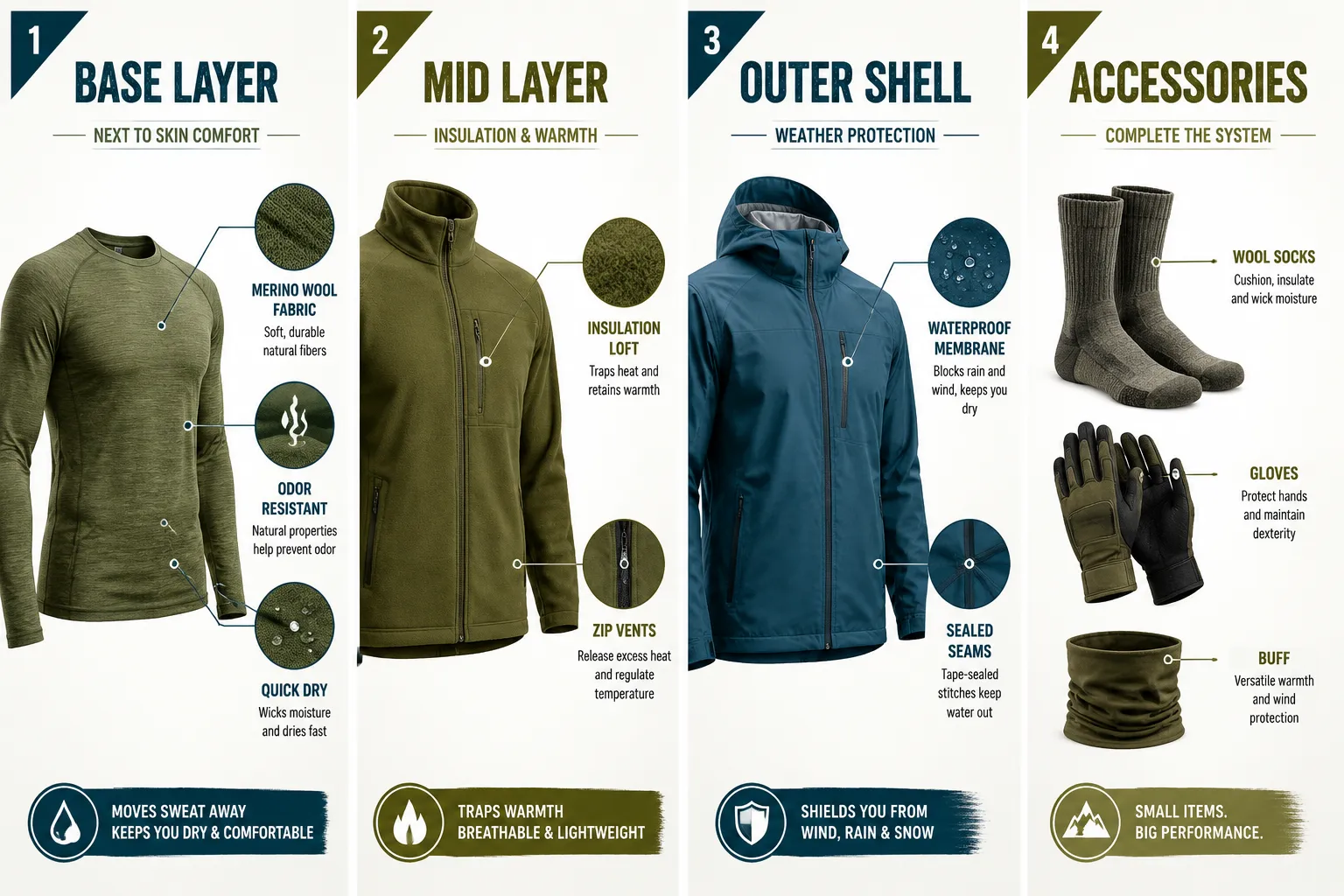
The best fabrics for bug out bag clothing are merino wool and synthetic materials like polyester and nylon. Both manage moisture, dry quickly, and retain insulating properties when wet. Cotton fails all three tests and should be avoided in almost every survival scenario.
Merino Wool is the gold standard for base layers. It regulates temperature across a wide range, resists odor naturally (meaning you can wear it multiple days without washing), and stays warm even when damp. The trade-off is cost, quality merino pieces run higher than synthetics.
Synthetic fabrics (polyester, polypropylene, nylon) dry faster than merino and cost less. They are excellent for mid layers, outer shells, and pants. The downside is odor retention over multiple days of wear.
Nylon and ripstop nylon are the best choices for pants and outer shells. They resist abrasion, dry quickly, and pack down small.
Down insulation works extremely well for mid layers in dry climates. In wet environments, synthetic insulation (PrimaLoft, Thinsulate) is more reliable because it retains warmth when wet.
Avoid: 100% cotton jeans, cotton t-shirts, and cotton socks. These are the most common and most dangerous clothing mistakes preppers make.
How Many Layers Do You Need in a Bug Out Bag
A three-layer system is the minimum standard for any bug out bag clothing setup. Base layer, mid layer, and outer shell, each serves a distinct function, and together they handle a wide range of temperatures and weather conditions.
- Base layer: Moves sweat away from your skin. This prevents the chilling effect of wet skin, which accelerates heat loss.
- Mid layer: Traps warm air close to your body. A fleece or lightweight down jacket fills this role.
- Outer shell: Blocks wind, rain, and snow from penetrating the system.
In practice, you should be able to add or remove layers as conditions change. This is why zippers, vents, and convertible designs matter. A single heavy jacket cannot replace a layered system because it cannot be adjusted incrementally.
For a 72-hour bug out scenario, pack two complete base layer sets (so you can rotate while one dries), one mid layer, and one outer shell. That is the minimum. Cold weather scenarios require additional insulation pieces.
Bug Out Bag Clothing for Different Seasons
Seasonal conditions should directly shape your bug out bag clothing list. A summer pack and a winter pack are not the same, and treating them as identical is a serious preparedness gap.
Summer/Warm Weather:
- Lightweight, light-colored synthetic shirts (sun protection, heat management)
- Convertible pants that zip off into shorts
- Sun hat with wide brim
- Lightweight rain jacket (summer storms are still a threat)
- Moisture-wicking socks to prevent blisters
Fall/Spring (Transitional):
- Full layering system with a mid-weight fleece
- Waterproof outer shell
- Gloves and a beanie (temperatures drop fast at night)
Winter/Cold Weather:
- Heavyweight merino or synthetic base layers
- Insulated mid layer (down or synthetic-fill jacket)
- Windproof and waterproof outer shell
- Insulated waterproof boots
- Wool socks (at least two pairs)
- Balaclava or face mask, heavy gloves or mittens
Many experienced preppers maintain separate seasonal clothing kits stored alongside their main bag, swapping them out as the season changes. This approach keeps the bag optimized year-round without constant repacking.
Lightweight vs Heavy Clothing for Bug Out Bags
Lightweight clothing wins in almost every bug out scenario. The goal is mobility, and every extra pound in your pack reduces the distance you can cover and the speed at which you can move.
The practical rule: choose the lightest item that still meets the performance threshold for your climate. A 6-ounce packable rain jacket that keeps you dry is worth more than a 2-pound waterproof parka in a warm-climate evacuation.
That said, there are scenarios where heavier, more durable items are justified:
- Cold weather survival may require heavier insulated layers that cannot be replaced by ultralight alternatives without sacrificing warmth.
- Rough terrain may justify heavier, more protective boots over lightweight trail runners.
- Long-duration scenarios (beyond 72 hours) may require more durable clothing that holds up to repeated use.
The balance point for most preppers: target a total clothing weight of 5-8 pounds for a three-season pack. Winter packs will run heavier, but every item should still be evaluated for weight-to-performance ratio.
What Shoes Are Best for a Bug Out Bag
Waterproof trail running shoes or lightweight hiking boots are the best footwear choices for a bug out bag. They balance protection, traction, weight, and durability across the widest range of terrain and weather conditions.
Top footwear criteria:
- Waterproof membrane (Gore-Tex or equivalent)
- Aggressive, grippy outsole for mixed terrain
- Ankle support appropriate to your terrain (trail runners for flat/moderate, boots for rough or mountainous)
- Broken in before an emergency (never pack brand-new shoes)
Footwear to avoid:
- Sneakers or athletic shoes without waterproofing
- Sandals as primary footwear
- Heavy military boots unless you regularly train in them
Pack a secondary lightweight option, camp sandals or packable water shoes, to give your feet recovery time at camp and to serve as backup if your primary footwear fails.
Blisters are one of the most common and debilitating survival injuries. Wool or synthetic socks, properly fitted boots, and a small blister kit (moleskin, medical tape) are all part of a complete footwear system. See the Free Printable Medical Preparedness Checklist for Home and Travel Kits for blister and first aid supplies to pair with your clothing kit.
Bug Out Bag Clothing List for Women vs Men
Most core clothing items on a bug out bag clothing list apply equally to men and women, but women’s-specific needs require deliberate planning rather than simply scaling down a men’s list.
Women-specific additions:
- Sports bras (2-3, moisture-wicking synthetic or merino)
- Feminine hygiene supplies (menstrual cup or compact tampons/pads)
- Women’s-cut base layers and pants (fit affects mobility and comfort over long distances)
- Compression shorts or leggings to reduce chafing
Fit matters more than most people acknowledge. Ill-fitting clothing causes blisters, chafing, and restricted movement, all of which become serious problems over a multi-day evacuation. Women should prioritize trying on and field-testing every piece of their clothing kit before an emergency.
For a full breakdown of women’s-specific gear considerations, the Complete Women’s Bug Out Bag Checklist is a dedicated resource worth bookmarking.
How to Pack Clothes to Save Space in a Bug Out Bag
Compression packing is the most effective method for reducing clothing volume in a bug out bag. Rolling clothes tightly rather than folding them, and then placing them in compression sacks or packing cubes, can reduce total clothing volume by 40-50%.
Practical packing techniques:
- Roll, don’t fold. Rolling compresses air out of fabric and reduces wrinkles.
- Use compression sacks. A single compression sack can reduce a fleece jacket to the size of a softball.
- Pack by layer. Keep base layers together, mid layers together, and your shell accessible at the top or in an outer pocket (you’ll reach for it first in rain).
- Wear your heaviest items. Your boots, outer shell, and heaviest pants should be on your body, not in your bag.
- Eliminate redundancy. Two base layer shirts is enough for a 72-hour kit. Three is excessive unless you’re planning for a longer scenario.
For apartment dwellers or those with limited storage space, the Bug Out Bag for Apartment Living Checklist offers additional space-saving strategies specific to urban preppers.
Common Mistakes People Make with Bug Out Bag Clothing
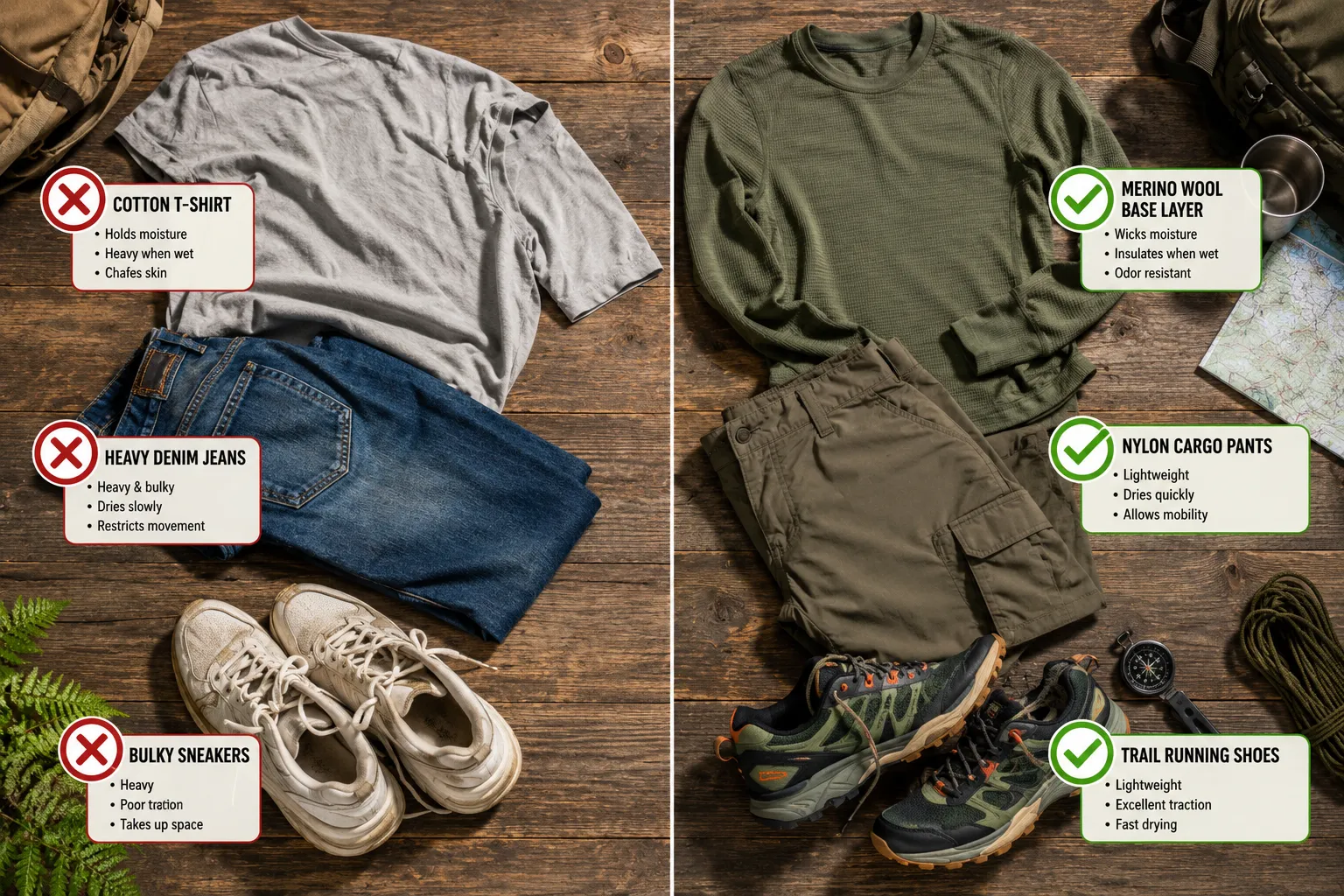
The most damaging mistakes in bug out bag clothing planning are packing cotton, ignoring footwear quality, and failing to test gear before an emergency. These three errors account for the majority of clothing-related failures in real evacuation scenarios.
The most common mistakes:
- Packing cotton jeans and t-shirts. Cotton absorbs moisture and loses all insulating value when wet. In cold or wet conditions, this becomes a hypothermia risk.
- Ignoring footwear. Packing old sneakers or never breaking in boots before an emergency leads to blisters and reduced mobility within the first day.
- Over-packing. Too many clothing items add weight without adding capability. More than 2-3 outfit changes in a 72-hour bag is usually unnecessary.
- Not testing gear. Clothing that has never been worn on a real hike or field exercise may fail in ways you won’t discover until it’s too late.
- Forgetting accessories. A hat, gloves, and a buff weigh almost nothing but protect against sun, wind, and cold in ways that no jacket can fully compensate for.
- Ignoring seasonal updates. A bag packed in July with summer clothing is dangerously under-equipped in January.
Reviewing your full preparedness kit against a structured checklist helps catch these gaps before they matter. The Ultimate Disaster Preparedness Checklist: 50 Essential Items to Survive Any Crisis is a useful companion audit for your full bag.
Do You Need Multiple Outfits in a Bug Out Bag
For a standard 72-hour bug out bag, two complete base layer sets plus one pair of pants and one outer shell is sufficient. Full outfit changes beyond that add weight without proportional benefit for short-duration scenarios.
The reasoning: in a 72-hour evacuation, your priority is movement and survival, not comfort or hygiene in the conventional sense. One outfit worn, one in reserve for when the first is wet or compromised, covers the functional need.
For longer-duration scenarios (7+ days), add one additional base layer set and a second pair of socks per every three days planned. Socks and underwear are the highest-priority rotation items because they directly affect foot health and skin integrity.
Budget-Friendly Bug Out Bag Clothing Options
A complete bug out bag clothing list does not require premium gear. Functional, durable survival clothing is available at multiple price points, and budget-conscious preppers can build a solid kit for under $150.
Budget-friendly strategies:
- Military surplus stores offer durable outer shells, cargo pants, and base layers at a fraction of retail prices. ECWCS (Extended Cold Weather Clothing System) components are particularly well-regarded.
- Synthetic base layers from mid-tier brands (Hanes Sport, C9 by Champion, Under Armour Charged Cotton alternatives) perform adequately for most scenarios at $15-25 per piece.
- Thrift stores occasionally carry fleece jackets and rain shells from quality brands at steep discounts. Check for waterproofing integrity before buying.
- Prioritize spending on footwear and rain shell. These two items have the highest performance impact. Save money on mid layers and base layers if needed, but invest in quality where it matters most.
A complete functional kit, two base layer sets, one fleece, one rain jacket, one pair of nylon pants, and quality trail shoes, can be assembled for $100-200 if you shop strategically.
Waterproof Clothing for Bug Out Bags
Every bug out bag clothing list needs at least one piece of genuinely waterproof outerwear. A waterproof rain jacket with a sealed hood is the minimum. Waterproof pants add significant protection in sustained rain or when moving through wet vegetation.
What to look for in waterproof clothing:
- Waterproof-breathable membranes (Gore-Tex, eVent, or proprietary equivalents) keep rain out while allowing sweat vapor to escape. This prevents the internal dampness that non-breathable rain gear creates.
- Sealed or taped seams prevent water from entering through stitch holes. Look for “fully seam-sealed” or “critically seam-sealed” in product descriptions.
- DWR (Durable Water Repellent) coating on the outer fabric surface causes water to bead and roll off rather than saturate the shell.
Budget waterproof options: Frogg Toggs rain suits are a widely used budget option among preppers. They are not as durable as Gore-Tex alternatives, but they are lightweight, packable, and effective for their price point.
Waterproof clothing pairs directly with shelter planning. For a complete picture of how clothing fits into your broader emergency strategy, review the Ultimate Emergency Supplies List: What FEMA Won’t Tell You.
Bug Out Bag Clothing Checklist for Beginners
If you’re building your first bug out bag clothing list, start with the minimum viable kit and expand from there. Don’t let perfect be the enemy of prepared.
Beginner’s bug out bag clothing checklist:
- 2 moisture-wicking base layer shirts (no cotton)
- 2 pairs of moisture-wicking underwear
- 2 pairs of wool or synthetic hiking socks
- 1 pair of nylon or ripstop cargo pants
- 1 lightweight fleece jacket
- 1 waterproof rain jacket with hood
- 1 pair of waterproof trail shoes or hiking boots (broken in)
- 1 wool or synthetic beanie
- 1 sun hat or boonie hat
- 1 pair of lightweight gloves
- 1 buff or neck gaiter
- 1 spare bandana
This list weighs approximately 5-7 pounds depending on item selection and covers a 72-hour evacuation across most three-season conditions. For cold weather, add insulated pants and a heavier mid layer.
If you’re just getting started with preparedness overall, the Prepper Checklist for Beginners: 30-Day System provides a structured roadmap for building your full kit, clothing included, over a manageable timeline.
Frequently Asked Questions
Can I just pack extra clothes from my regular wardrobe? Only if those clothes meet the fabric and function criteria above. Regular wardrobe items are fine if they are synthetic or merino wool, fit well, and have been worn on physical activity. Cotton jeans and casual t-shirts from your closet should not go in your bug out bag.
How often should I update my bug out bag clothing list? Review your clothing kit at minimum twice a year, once before summer and once before winter. Check for seasonal gaps, replace worn items, and verify that everything still fits.
Is a poncho a substitute for a rain jacket? A poncho provides basic rain protection and is lighter than a jacket, but it does not seal around the body the same way. In high wind or heavy rain, a poncho allows water to blow in. A rain jacket is more reliable for sustained wet conditions.
What about camouflage or tactical clothing? Camouflage has legitimate uses in wilderness or rural scenarios where avoiding detection matters. In urban evacuations, it can attract unwanted attention. Earth tones (olive, tan, grey) are a practical middle ground that blends in most environments without being overtly tactical.
Do I need to pack pajamas or sleep clothing? No. Your base layer serves as sleep clothing in a survival scenario. Packing dedicated sleep items adds weight without adding function.
How do I handle laundry during a multi-day bug out? Merino wool base layers can be worn 2-3 days before washing due to natural odor resistance. For synthetic items, a small amount of biodegradable camp soap and a stuff sack as a wash basin is sufficient for field washing. Pack a lightweight microfiber towel for drying.
Should children have their own bug out bag clothing list? Yes. Children’s clothing needs scale down in size but follow the same principles: no cotton, layered system, quality footwear. Children lose body heat faster than adults, so prioritize insulation. Check sizing every 6 months as children grow.
Is a space blanket a substitute for a proper outer layer? A space (emergency) blanket is a backup tool, not a replacement for a waterproof shell or insulating layer. It reflects body heat effectively in an emergency but is fragile, not breathable, and impractical for extended movement.
What is the most important single item on the bug out bag clothing list? Footwear. No other clothing item has as direct an impact on your ability to move, cover distance, and stay functional over multiple days. Invest here before anywhere else.
Can I use a military-style field jacket as my outer shell? Military field jackets (M65 style) provide wind and light rain protection but are not fully waterproof. They work as a mid-to-outer layer in mild conditions but should be paired with a waterproof layer in heavy rain.
Conclusion
A well-built bug out bag clothing list is not about packing the most gear, it’s about packing the right gear. The layering system, fabric selection, and footwear choice are the three decisions that will define your comfort, mobility, and safety in a real evacuation scenario.
Start with the beginner’s checklist above. Replace any cotton items with synthetic or merino alternatives. Break in your footwear before you need it. Update your kit seasonally. And test everything on an actual field exercise before an emergency makes the testing mandatory.
Clothing is the one category of preparedness gear that works directly with your body every second of a crisis. It deserves the same attention you give to food, water, and navigation tools.
For the next step in building a complete bug out system, the 72 Hour Bug Out Bag Checklist: Complete Prepper Guide and the Ultimate Bug Out Bag Food List for Survival will round out your full kit beyond clothing.
Products, Tools, and Resources
Merino Wool Base Layers: Smartwool and Icebreaker are the benchmark brands for merino base layers. Both offer 150-weight (lightweight) and 250-weight (midweight) options suited to different climates. For budget-conscious preppers, Minus33 and Darn Tough (for socks) offer comparable quality at lower price points.
Waterproof Rain Jackets: Marmot PreCip, REI Co-op Rainier, and Outdoor Research Helium are well-regarded packable rain jackets in the $100-150 range. For budget options, Frogg Toggs suits offer functional waterproofing at under $30.
Footwear: Salomon X Ultra and Merrell Moab lines are consistently recommended by experienced hikers and preppers for their durability, waterproofing, and traction. Both are available in trail running and hiking boot configurations.
Compression Sacks and Packing Cubes: Sea to Summit Ultra-Sil compression sacks and Eagle Creek Pack-It cubes are lightweight, durable, and used widely in the backpacking and preparedness communities.
Military Surplus: ECWCS Gen III base layers and field jackets are available through surplus retailers like Sportsman’s Guide and Army Surplus Warehouse. These are battle-tested, durable, and significantly cheaper than civilian equivalents.
Layering Reference: The Survival Skills Checklist: 7 Core Skills Every Prepper Needs is a useful companion resource for understanding how clothing and shelter work together in a survival context.