
Hey there! Some links on this page may be affiliate links which means that, if you choose to make a purchase, I may earn a commission at no extra cost to you. I greatly appreciate your support. Read the full disclosure here.
The Ultimate Bug Out Bag Food List for Survival
Your bug out bag food list is either the most important thing in your pack — or the most dangerous illusion of safety you’ve ever created.
Most people get this wrong. Not because they don’t care. Because they don’t know what “right” actually looks like when the stakes are real. They grab a few granola bars, toss in some trail mix, and call it prepared. Then they imagine themselves moving fast through a crisis — hungry, exhausted, making decisions that could determine whether their family makes it — and they realize those granola bars aren’t going to cut it.
Food in a bug out bag isn’t about eating. It’s about performing. Thinking. Leading. Surviving.
Here’s exactly what that requires.
What Makes a Bug Out Bag Food List Actually Work
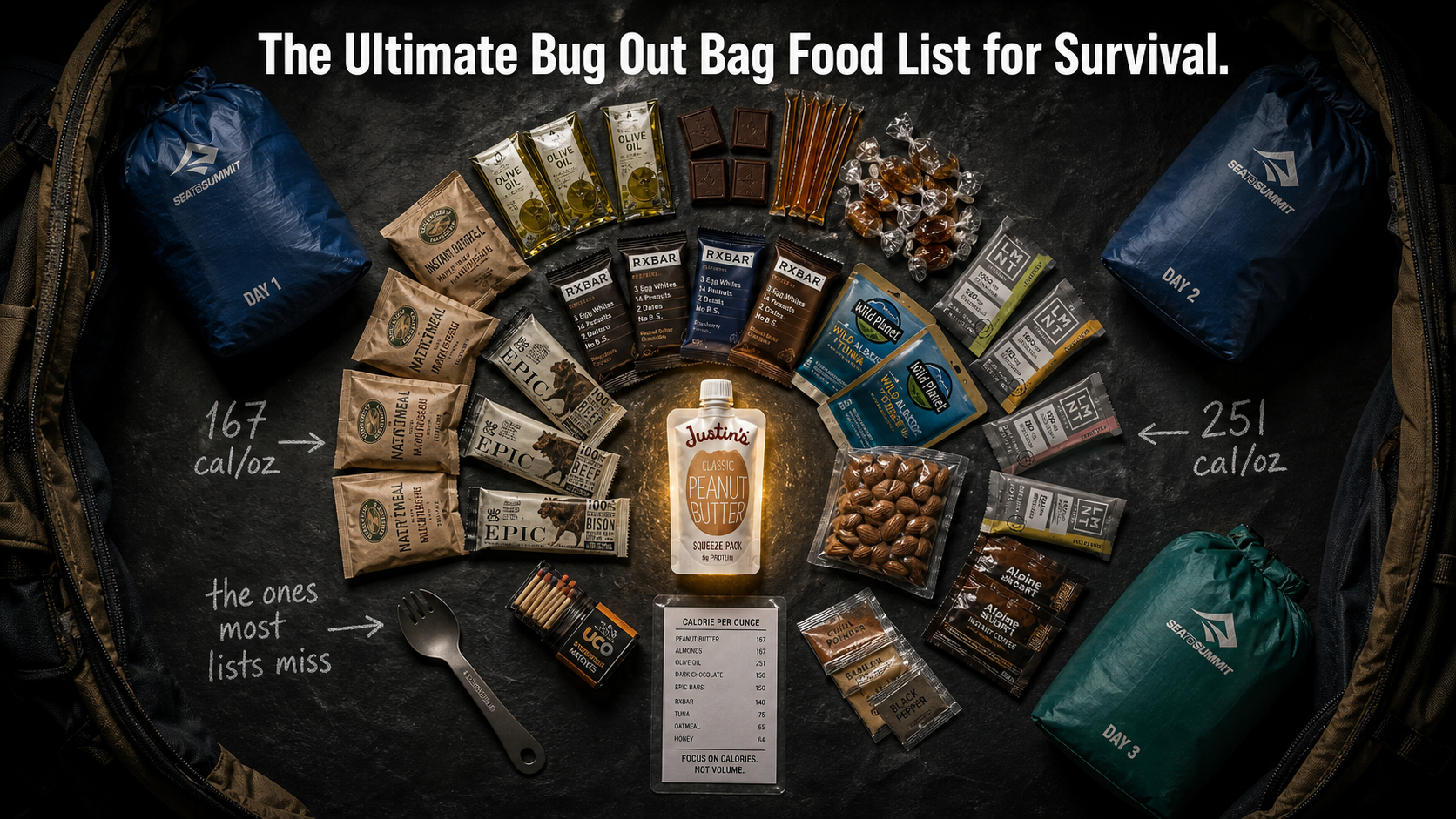
 The Calorie-to-Weight Ratio Rule Every Prepper Must Know
The single most important metric in bug out food selection isn’t taste, convenience, or even shelf life. It’s calories per ounce.
When you’re evacuating — moving fast, carrying weight, managing stress — your body burns significantly more energy than it does at rest. A moderately active adult burns 2,000–2,500 calories per day under normal conditions. Under physical evacuation stress, that number climbs to 3,000–4,000 calories or higher.
Every ounce of food you carry needs to justify its weight in caloric return. The benchmark most experienced preppers use: 100 calories per ounce minimum. Foods that fall below this threshold are luxury items in a bug out context — they take up space and weight that could be doing more work.
| Food | Calories per Ounce |
| Peanut butter | 167 cal/oz |
| Almonds | 164 cal/oz |
| Olive oil | 251 cal/oz |
| Freeze-dried meals | 90–120 cal/oz |
| Protein bars | 100–130 cal/oz |
| Jerky | 70–80 cal/oz |
| Crackers | 120–140 cal/oz |
| Instant oats | 107 cal/oz |
This table isn’t just data — it’s a decision framework. Every food choice you make should be filtered through it.
Why Most Bug Out Food Lists Fail in Real Emergencies
The most common failure isn’t packing too little food. It’s packing the wrong food — items that require cooking when you have no fire, water when you have none to spare, or refrigeration that doesn’t exist in the field.
The second most common failure: packing food that destroys morale. Eating the same tasteless, textureless survival bar for three days straight doesn’t just bore you — it psychologically depletes you. Studies on military ration consumption show that soldiers who dislike their rations eat less, even when hungry, leading to measurable performance degradation.
Your food list needs to solve three things simultaneously: caloric density, preparation simplicity, and psychological sustainability.
The 72-Hour vs. 2-Week Food Strategy Difference
A 72-hour bug out food plan and a 2-week plan are fundamentally different documents — and confusing them is a critical planning error.
72-hour strategy: Maximum caloric density, minimum preparation requirements, absolute portability. You’re moving. You’re not cooking elaborate meals. You’re fueling a machine.
2-week strategy: Introduces more variety, some cooking capability, and nutritional balance. You’ve likely reached a secondary location. You have more time, possibly more resources.
This article focuses on the 72-hour framework — the most critical window — with notes on extending your supply for longer scenarios.
Key Takeaways:
– Prioritize calorie-to-weight ratio: aim for foods with 100+ calories per ounce to fuel high physical and mental demands during evacuation.
– Pack foods requiring minimal to no preparation, no refrigeration, and stable shelf life to ensure readiness and ease in crisis.
– Include variety to sustain morale: mix high-calorie staples with comfort foods like dark chocolate, coffee, and spices for psychological resilience.
– Customize your bug out food list based on specific needs—children, allergies, medical conditions—and plan different strategies for 72-hour vs. longer-term scenarios.
– Regularly rotate and test your food supply to maintain freshness, familiarity, and optimize your list based on real usage experience.
The Complete Bug Out Bag Food List by Category
High-Calorie Compact Foods (The Non-Negotiables)
 These are the foundation. Every bug out bag, regardless of size, budget, or scenario, needs these:
- Peanut butter packets (single-serve) — 190 calories each, no refrigeration, no preparation, high fat and protein
- Almonds and mixed nuts — calorie-dense, shelf-stable, no preparation required
- Protein or energy bars — Clif, RX Bar, or Larabar; look for 200+ calories per bar with real ingredients
- Instant oatmeal packets — requires only hot water, 150–200 calories each, psychologically comforting
- Crackers (vacuum-sealed) — Triscuits or hardtack; pair with peanut butter for a complete calorie hit
- Olive oil packets — 120 calories per tablespoon, adds calories to any meal without adding weight proportionally
- Dark chocolate — 150+ calories per ounce, morale booster, antioxidants, long shelf life
Protein Sources That Survive Without Refrigeration
Protein is the macronutrient most commonly under-packed in bug out bags — and the one your muscles and immune system need most under physical stress.
- Beef or turkey jerky — 70–80 cal/oz, high protein, long shelf life (1–2 years)
- Canned tuna or salmon (pouches) — pouches are lighter than cans; 25g protein per pouch
- Peanut butter (listed again intentionally) — 8g protein per 2 tablespoons
- Freeze-dried meat — chicken, beef, or shrimp; requires water but offers full protein profile
- Protein powder packets — mix with water for a complete amino acid profile; lightweight
- Hard salami or summer sausage — shelf-stable for weeks without refrigeration; high calorie and protein
Protein target: Aim for at least 50–75g of protein per day in your bug out food plan. Below this threshold, muscle breakdown accelerates under physical stress.
Carbohydrate Fuel for Sustained Physical Output
Carbohydrates are your body’s preferred fuel source for sustained physical activity. Don’t let low-carb trends mislead you here — in a survival scenario, your brain and muscles need glucose.
- Instant rice packets — 200 calories per serving, requires only boiling water, extremely lightweight
- Ramen noodles — maligned but effective; 380 calories per pack, requires minimal water and fuel
- Instant mashed potatoes — comfort food with real caloric value; pairs with any protein
- Granola — dense, calorie-rich, no preparation required
- Dried fruit — raisins, apricots, dates; natural sugars for quick energy, fiber for digestive health
- Hard candy — quick glucose for mental clarity during high-stress decision moments
Fats and Calorie-Dense Additions That Most Lists Miss
Fat is the most calorie-dense macronutrient at 9 calories per gram (vs. 4 for protein and carbs). It’s also the most under-utilized in bug out food planning.
- Olive oil packets — add to any meal for an instant calorie boost
- Coconut oil packets — stable at room temperature, antimicrobial properties, 120 cal/tablespoon
- Nut butter packets — almond, cashew, or sunflower seed butter for variety
- Ghee packets — clarified butter with a shelf life of 12+ months; adds richness to any cooked meal
- Macadamia nuts — highest fat content of any nut; 204 calories per ounce
Comfort Foods and Morale Items (More Important Than You Think)
This category gets dismissed by tactical preppers and embraced by experienced ones. There’s a reason.
In extended stress scenarios, food becomes emotional currency. The smell of coffee. The sweetness of chocolate. The familiar texture of something that tastes like home. These aren’t luxuries — they’re psychological anchors that maintain decision-making capacity and group cohesion.
- Instant coffee packets or tea bags — caffeine for alertness, ritual for calm
- Hot cocoa mix — especially critical if children are in your group
- Honey packets — natural sweetener, antimicrobial, long shelf life
- Spice packets — salt, pepper, garlic powder; transforms bland survival food into something edible
- Hard candy or gum — oral stimulation reduces stress hormones
- Favorite snack bar — one item per person that they genuinely enjoy; the psychological return is disproportionate to the weight cost
Special Dietary Considerations for Bug Out Food List Planning
Bug Out Food List for Families with Children
 Children have different caloric needs, different psychological food relationships, and different tolerance for unfamiliar foods under stress. A child who refuses to eat during an evacuation is a crisis within a crisis.
Child-specific additions:
- Squeeze applesauce pouches (familiar, no preparation, self-contained)
- Peanut butter and cracker snack packs
- Fruit snacks or gummies (morale and quick energy)
- Instant mac and cheese (requires water and heat, but worth the morale return)
- Familiar granola bars or snack bars they already eat at home
Critical rule: Never introduce new foods in a bug out scenario. Stress already suppresses appetite. Unfamiliar food compounds the refusal risk.
Medical Dietary Needs and Allergy-Safe Alternatives
- Nut allergies: Replace nut-based items with sunflower seed butter, pumpkin seeds, and soy-based protein bars
- Gluten intolerance: Substitute rice-based crackers, gluten-free oats, and certified GF freeze-dried meals
- Diabetes: Prioritize protein and fat over simple carbohydrates; include glucose tablets for hypoglycemia management
- Lactose intolerance: Avoid dairy-based freeze-dried meals; choose plant-based alternatives
Document dietary needs in your emergency plan. In a crisis, memory fails. Written lists don’t.
High-Performance Options for Active Evacuation Scenarios
If your bug out plan involves significant physical movement — hiking, climbing, extended walking — your caloric needs increase substantially.
- Tailwind Nutrition packets — complete endurance fuel with electrolytes and calories
- GU Energy Gels — 100 calories per packet, designed for sustained physical output
- LMNT Electrolyte packets — sodium, potassium, magnesium; prevents cramping and cognitive decline from dehydration
- Clif Shot Bloks — chewable energy with caffeine options for sustained alertness
Weight, Volume, and Pack Optimization
How Much Food Should Actually Be in a Bug Out Bag?
 The standard recommendation: 1.5–2 lbs of food per person per day for a 72-hour supply. That’s 4.5–6 lbs of food for a three-day individual kit.
For a family of four over 72 hours: 18–24 lbs of food — which is why family bug out planning requires distributed carrying, not a single bag.
The Calorie Math: How to Calculate Your Personal Daily Need
Step 1: Establish your baseline metabolic rate (BMR). A rough estimate: body weight in pounds × 15 for moderately active adults.
Step 2: Add 30–50% for evacuation stress and physical activity.
Step 3: Multiply by 3 for your 72-hour caloric target.
Example: 160 lb adult × 15 = 2,400 baseline. Add 40% stress factor = 3,360 calories/day. × 3 days = 10,080 calories for 72 hours.
Now divide by your average calories-per-ounce across your food selection to get your target food weight.
Packaging, Compression, and Waterproofing Your Food Supply
- Use vacuum-sealed bags to compress soft items and remove air
- Store food in waterproof dry bags or zip-lock bags inside your pack
- Keep one day’s food accessible in an outer pocket — don’t dig through your pack to eat
- Use color-coded bags by day (Day 1, Day 2, Day 3) for organization under stress
- Mylar bags with oxygen absorbers for any loose items you’re pre-packing at home
Shelf Life, Rotation, and Food Safety on the Move
Which Foods Last Longest Without Refrigeration
| Food | Shelf Life |
| Hard candy | 1+ year |
| Honey packets | Indefinite |
| Instant coffee | 2–20 years |
| Freeze-dried meals | 25–30 years |
| Peanut butter packets | 1–2 years |
| Jerky (commercial) | 1–2 years |
| Protein bars | 1–2 years |
| Olive oil packets | 18–24 months |
| Instant oats | 1–2 years |
How to Rotate Your Bug Out Food Without Wasting Money
The rotation principle: eat what you store, store what you eat.
Every six months, pull your bug out food, eat it in your daily life, and replace it with fresh stock. This keeps your supply current, your costs manageable, and your familiarity with the food high — which matters when you’re eating it under stress.
Set a calendar reminder. Twice a year. Non-negotiable.
Food Safety Rules When Cooking in the Field
- Never eat from a damaged or swollen pouch — botulism risk is real
- Boil water for at least one minute before using it to rehydrate food
- Eat prepared food within two hours in warm weather
- Pack out all food waste — smell attracts wildlife and signals your location
Building Your Bug Out Food System Beyond the Bag
Foraging as a Supplemental Food Strategy
 Foraging is not a primary food strategy — it’s a supplemental one. But knowing five to ten edible plants in your region adds a meaningful caloric buffer in extended scenarios.
Common edible plants across North America and Europe: dandelion (leaves and roots), cattail (pollen and shoots), pine needles (vitamin C), acorns (requires leaching), wild berries (know your species).
Invest in a regional foraging guide specific to your geography. Keep a laminated copy in your bag.
Compact Cooking Tools That Pair With Your Food List
Your food list is only as good as your ability to prepare it. Key tools:
- Jetboil Flash — boils water in 100 seconds, compact, fuel-efficient
- Esbit Pocket Stove — ultralight, uses solid fuel tablets, no liquid fuel required
- Titanium spork — one utensil, negligible weight
- Collapsible silicone cup — doubles as measuring cup and eating vessel
- Lighter + waterproof matches — redundant fire-starting capability
How to Upgrade Your Bug Out Food List Over Time
Your first bug out food list is a draft, not a final document. After every practice drill or camping trip using your supplies, ask:
- What did I actually eat?
- What did I avoid eating?
- What did I wish I had?
- What was too heavy for its caloric return?
The best bug out food lists are living documents — refined by real experience, not just theory.
FAQ
Do I really need 3,000+ calories per day? That seems like a lot.
Under normal conditions, maybe not. But evacuation isn’t normal. Physical movement, stress hormones, cold exposure, and disrupted sleep all dramatically increase caloric demand. Under-fueling in a crisis doesn’t just make you hungry — it impairs judgment, slows movement, and compromises immune function. Pack for the scenario, not for your desk job.
Can I just use MREs for my entire bug out food list?
MREs are excellent but heavy (averaging 1.5 lbs each for 1,200 calories). They’re a solid component of a bug out food strategy, not the whole strategy. Mix them with lighter, higher-calorie-per-ounce options for better pack efficiency.
What if I have to bug out for longer than 72 hours?
Your bag covers the first 72 hours. Your secondary location — a cabin, a relative’s home, a pre-positioned cache — covers the rest. A bug out bag is a bridge, not a destination. Plan what’s on the other side of it.
How do I handle food for my dog during a bug out?
Pack 1–2 days of your dog’s regular food in a separate dry bag. Dogs under stress also eat less than normal. Prioritize calorie-dense kibble or dehydrated dog food. Never feed your dog human jerky with onion or garlic — both are toxic to dogs.
Is freeze-dried food worth the cost?
For long-term storage and extended scenarios, yes. For a 72-hour bag, the cost-to-benefit ratio is less clear. A well-curated selection of commercial foods (jerky, nut butters, bars, instant meals) achieves similar caloric density at lower cost. Freeze-dried meals earn their place in extended kits and cache supplies.
What’s the single most important food item I should add to my bag today?
Peanut butter packets. Calorie-dense, protein-rich, no preparation required, universally palatable, and under $1 each. If your bag has nothing else, it should have these.
Your Food List Is a Decision You Make Before the Crisis — Not During It
The families who eat well during emergencies aren’t the ones who grabbed whatever was left on the shelf when panic hit. They’re the ones who made deliberate choices weeks or months earlier, when they had time to think clearly.
Your bug out bag food list is one of those decisions. And now you have everything you need to make it correctly.
PRODUCTS / TOOLS / RESOURCES
What’s Actually Worth Buying — From People Who’ve Used It
These aren’t random product placements. They’re the items that consistently appear in serious preparedness communities because they solve real problems without adding unnecessary weight or cost.
For Calorie-Dense Foundation Foods:
- Justin’s Peanut Butter Squeeze Packs — 190 calories, single-serve, no mess, genuinely good. The most versatile item in any bug out food kit.
- RXBAR Protein Bars — clean ingredients, 210 calories, 12g protein. Holds up in heat better than chocolate-coated bars.
- Trader Joe’s Roasted and Salted Almonds (vacuum-sealed) — 164 cal/oz, long shelf life, affordable in bulk.
For Protein:
- Epic Provisions Meat Bars — real meat, no fillers, 100+ calories per bar. Better ingredient profile than most jerky.
- Wild Planet Tuna Pouches — sustainably caught, no draining required, 25g protein per pouch. Lighter than cans.
For Freeze-Dried Meals:
- Mountain House Classic Bucket — 30-year shelf life, genuinely palatable, wide variety. The benchmark for freeze-dried emergency food.
- Backpacker’s Pantry — slightly more gourmet options; good for morale in extended scenarios.
For Electrolytes and Performance:
- LMNT Electrolyte Packets — sodium-forward formula designed for real physical output. No sugar, no artificial ingredients. Critical for preventing cognitive decline during physical evacuation.
For Cooking:
- Jetboil Flash Cooking System — the fastest, most fuel-efficient compact stove available. Boils 500ml in 100 seconds. Worth every dollar.
- Esbit Ultralight Folding Stove — backup option; uses solid fuel tablets, weighs almost nothing, works in wind.
For Organization:
Sea to Summit Ultra-Sil Dry Sacks — waterproof, ultralight, compressible. Use one per day’s food supply for organized, protected storage.