Prepping in a Small Apartment: The Complete Guide to Maximum Preparedness in Minimal Space
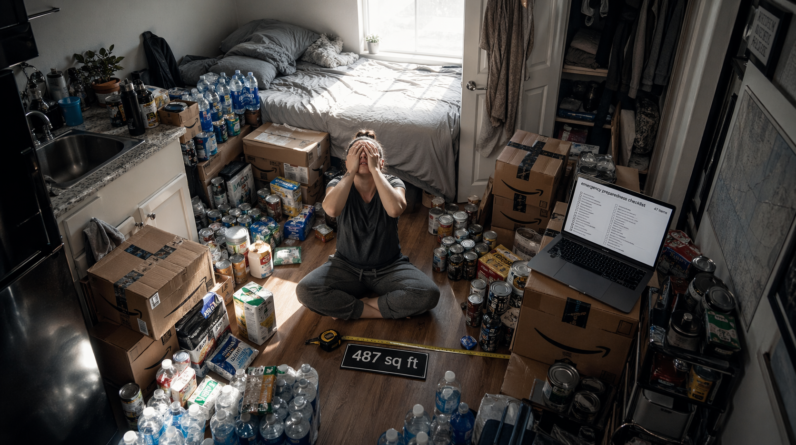
Prepping in a small apartment feels impossible. You look at your 500-square-foot studio, your shared one-bedroom, your cramped urban rental, and think: “Where would I even put a week’s worth of water? How do I store food when my pantry is the size of a shoebox? Am I just supposed to accept that I can’t be prepared because I don’t own a house with a basement?”
The answer is no. You don’t need a basement, a garage, or acres of land to be genuinely prepared. In fact, living in a small apartment forces you to do what most preppers fail at: ruthless prioritization. You can’t accumulate junk. You can’t buy gear you’ll never use. You can’t hide behind a pile of stuff and call it preparedness.
Small apartment prepping is about maximizing every cubic foot, choosing multi-use items over single-purpose gear, and building skills that replace supplies. It’s about being smarter, not just having more. And when done right, a well-prepared apartment dweller can be more resilient than someone with a garage full of unopened Amazon boxes.
This is your complete guide to turning spatial constraints into strategic advantages.
The Small Apartment Prepping Advantage (Why Less Space Can Mean More Preparedness)
 Before you start trying to cram supplies into every corner, you need to understand why your small apartment might actually be an advantage.
Debunking the “You Need a Basement” Myth
The idea that preparedness requires massive storage space is a myth perpetuated by people selling you stuff you don’t need. The truth is, most emergencies—power outages, natural disasters, economic disruptions—are resolved within 72 hours to 2 weeks. You don’t need a year’s worth of freeze-dried food. You need a well-thought-out system that addresses realistic scenarios.
A small apartment forces you to focus on what actually matters: water, food, light, medical supplies, and communication. Everything else is optional.
The Forced Prioritization Benefit: Quality Over Quantity
When you have limited space, you can’t afford to waste it on low-quality gear or redundant items. Every item must earn its place. This forced prioritization means you end up with better, more reliable supplies than someone who bought the cheapest version of everything just to fill a shelf.
A $30 high-quality water filter that you actually use is worth more than $300 worth of water purification tablets you never rotate.
Urban Apartment Advantages During Emergencies
Living in an apartment, especially in an urban area, comes with advantages during emergencies:
- Proximity to resources: Stores, hospitals, and emergency services are closer
- Shared infrastructure: If one building loses power, others nearby might not
- Community density: More neighbors means more potential for mutual aid
- Insulation: Apartments retain heat (or cool) better than standalone houses
- Security: Multi-unit buildings are harder to break into than isolated homes
The Psychology of Constraint-Driven Creativity
Constraints force creativity. When you can’t just “buy more storage,” you start thinking about vertical space, multi-use items, and skills that replace gear. This creative problem-solving makes you a better prepper than someone who just throws money at the problem.
Featured Snippet Target: Prepping in a small apartment is achievable by maximizing vertical storage, prioritizing multi-use items, and focusing on the essentials: water (1 gallon per person per day), compact food storage, space-efficient lighting and power, and skills that replace supplies. Use under-bed storage, wall-mounted shelves, and multi-functional furniture to maximize every cubic foot.
The Vertical Preparedness Strategy: Maximizing Every Cubic Foot
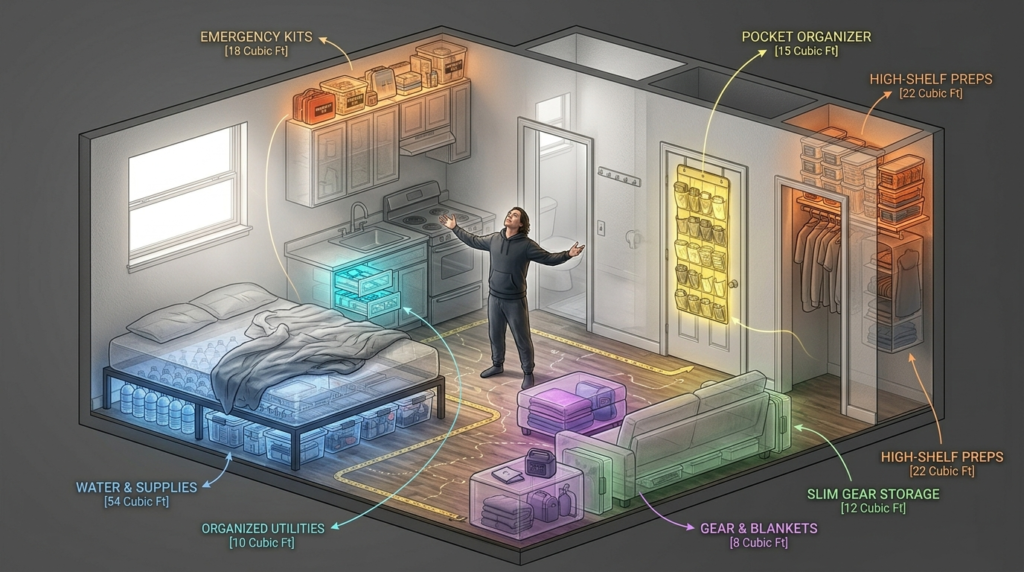 Small apartment prepping isn’t about floor space—it’s about cubic space. Think vertically, think overhead, think hidden.
Wall-Mounted Storage Solutions
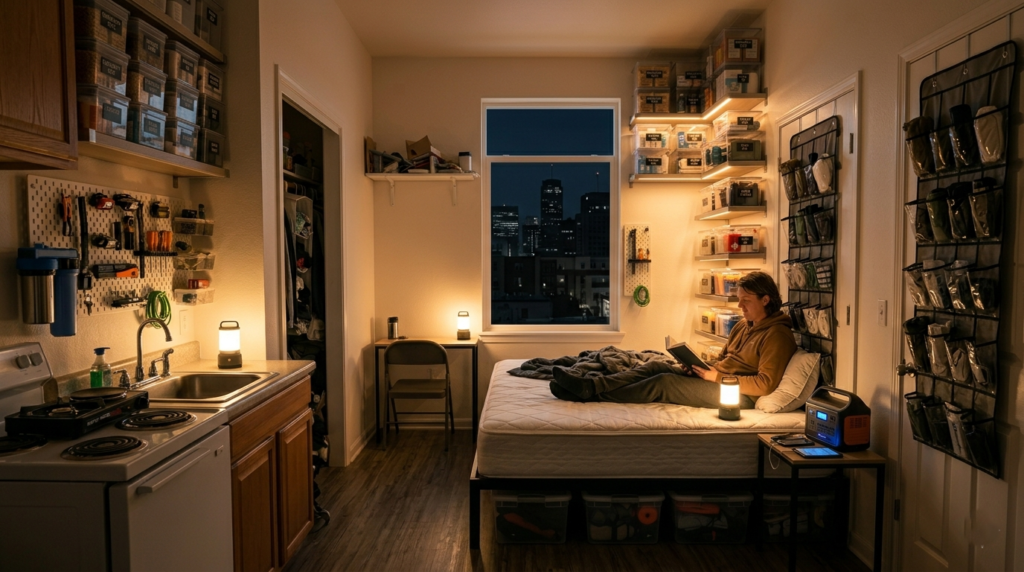
Floating shelves for emergency supplies
Install floating shelves above doorways, in hallways, and in any dead wall space. These are perfect for storing:
- Canned goods and dry food
- First aid supplies
- Batteries and small electronics
- Hygiene items
Pro tip: Use uniform containers (like clear plastic bins) to create a clean, organized look that doesn’t scream “prepper.”
Pegboard systems for tools and equipment
A 4×4 foot pegboard on a wall can hold:
- Multi-tools and knives
- Flashlights and headlamps
- Paracord and rope
- Small repair tools
Pegboards are renter-friendly (small nail holes) and infinitely customizable.
Over-door organizers for medical and hygiene items
Over-door shoe organizers aren’t just for shoes. Use them for:
- First aid supplies (each pocket is a category)
- Toiletries and hygiene items
- Small emergency supplies (batteries, lighters, matches)
- Medications and supplements
Under-Utilized Spaces
Under-bed storage (water, food, sleeping bags)
The space under your bed is prime real estate. Use:
- Flat storage containers: For water bottles, canned goods, and emergency blankets
- Rolling drawers: For easy access to frequently rotated items
- Vacuum-sealed bags: For sleeping bags, extra clothing, and blankets
A queen bed can store 20-30 gallons of water in flat containers, plus significant food and gear.
Above-cabinet storage (rarely-used emergency gear)
The space between the top of your kitchen cabinets and the ceiling is perfect for items you need but rarely access:
- Extra batteries (in sealed containers)
- Backup lighting
- Seasonal emergency gear
Behind-furniture gaps (slim storage containers)
That 6-inch gap between your couch and the wall? That’s storage. Slim rolling carts fit behind furniture and can hold:
- Canned goods
- Bottled water
- Cleaning supplies
- Paper products
Multi-Functional Furniture
Ottoman storage for blankets and supplies
A storage ottoman serves as:
- Seating
- A coffee table
- Storage for emergency blankets, sleeping bags, and cold-weather gear
Bed frames with built-in drawers
Platform beds with built-in drawers eliminate the need for a separate dresser and provide massive storage for:
- Clothing
- Emergency supplies
- Food storage
- Gear and equipment
Coffee tables with hidden compartments
Lift-top coffee tables provide hidden storage for:
- Important documents
- Cash and valuables
- First aid kits
- Communication devices
The Small Apartment Emergency Supplies Priority Matrix
Not all supplies are equal. This matrix ensures you address the most critical needs first.
Tier 1: The Absolute Essentials (72-Hour Focus)
These items address immediate survival needs for the critical 72-hour window.
Water storage solutions for limited space
The baseline: 1 gallon per person per day for 3 days. For a single person, that’s 3 gallons. For a couple, 6 gallons.
Space-efficient options:
- 7-gallon Aqua-Tainer containers: Stackable, food-grade, with spigot ($15 each)
- Collapsible water containers: WaterBrick (3.5 gallons, stackable like Lego)
- Cases of bottled water: 24-pack = 3 gallons, fits under bed or in closet
Emergency option: WaterBOB bathtub bladder (100 gallons, fills in 20 minutes when you have warning of an emergency)
Compact, calorie-dense food options
Focus on:
- Canned goods: Tuna, chicken, beans, vegetables (stack vertically)
- Dried foods: Rice, pasta, oats (store in airtight containers)
- High-calorie bars: Clif Bars, emergency food bars (2,400 calories per bar)
- Nut butters: Peanut butter, almond butter (calorie-dense, long shelf life)
Space-saving tip: Remove bulky packaging. Transfer food to stackable, square containers that maximize shelf space.
Space-efficient lighting and power
- LED headlamps: One per person (hands-free, 50+ hours per battery set)
- Compact LED lantern: Goal Zero Lighthouse Micro (150 lumens, rechargeable, 170-hour runtime)
- Portable power bank: Anker PowerCore 20,000+ mAh (charges phones 4-6 times)
- Lithium batteries: AA and AAA (10-year shelf life, better than alkaline)
Minimal first aid and medical supplies
A compact first aid kit should include:
- Adhesive bandages (various sizes)
- Gauze pads and medical tape
- Antiseptic wipes and antibiotic ointment
- Pain relievers, antihistamines, antidiarrheals
- Prescription medications (30-day supply)
- Tweezers, scissors, thermometer
Space-saving option: Adventure Medical Kits Ultralight/Watertight .5 (fits in a jacket pocket)
Tier 2: The 2-Week Expansion
Once Tier 1 is complete, expand to 2-week self-sufficiency.
Rotating food storage in existing pantry
Use the “first in, first out” (FIFO) method:
- Buy extra of what you already eat
- Store new items in the back, use from the front
- Your pantry becomes your emergency food supply
Target: 2-week supply of shelf-stable foods you actually eat.
Portable water filtration systems
A portable water filter allows you to source water from questionable sources:
- Sawyer Squeeze: 0.1-micron filtration, 100,000-gallon capacity, $25-40
- LifeStraw: Personal filter, 1,000-gallon capacity, $15-20
- Purification tablets: Potable Aqua chlorine dioxide (backup method)
Compact cooking solutions (no balcony required)
Indoor-safe options:
- Butane camp stove: Single-burner, portable, safe for indoor use with ventilation
- Alcohol stove: Compact, lightweight, safe for indoor use
- Sterno canned heat: For warming food (not full cooking)
Critical safety: Always use with ventilation (open window) and have a carbon monoxide detector.
Tier 3: Long-Term Resilience
Skills that replace supplies
The most space-efficient prep is knowledge:
- First aid and CPR: Take a Red Cross course
- Water purification: Learn multiple methods (boiling, filtration, chemical)
- Food preservation: Canning, dehydrating, fermenting
- Basic repair: Plumbing, electrical, sewing
Community resource mapping
Identify:
- Nearby water sources (streams, lakes, swimming pools)
- Community resources (food banks, shelters, medical facilities)
- Neighbors with complementary skills or supplies
Digital document backup systems
Store critical documents digitally:
- Scan birth certificates, passports, insurance policies, medical records
- Store in encrypted cloud storage (Google Drive, Dropbox)
- Keep offline backup on encrypted USB drive
Room-by-Room Small Apartment Prepping Strategy
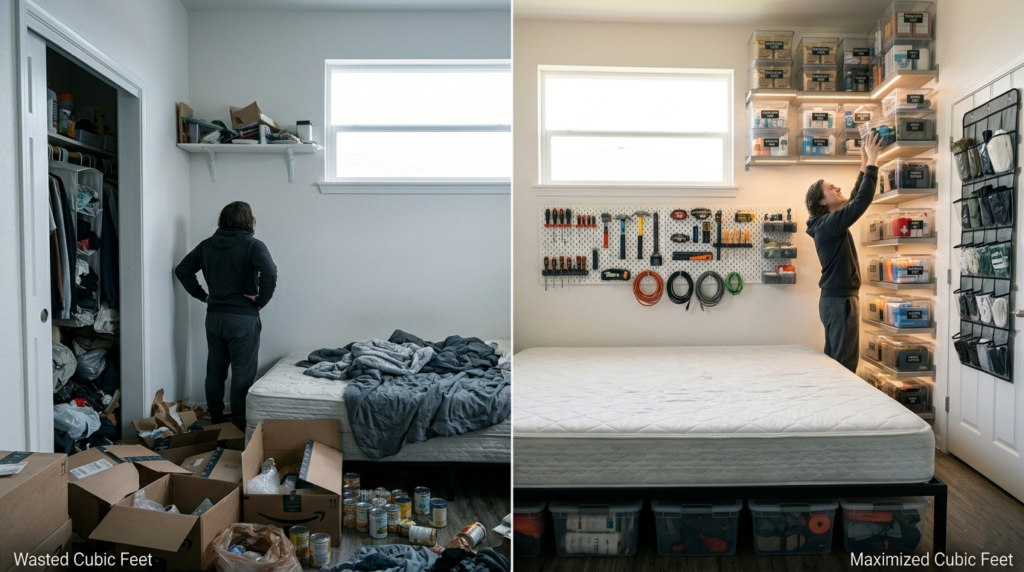 Distribute your supplies throughout your apartment for easy access and redundancy.
Kitchen & Pantry Optimization
Vertical pantry organization systems
- Stackable can organizers: FIFO rotation, maximize vertical space
- Over-door spice racks: Repurpose for small emergency items
- Lazy Susans: Corner cabinet optimization
- Drawer dividers: Organize small items (batteries, lighters, tools)
Magnetic spice racks for extra storage
Mount magnetic strips on:
- Inside cabinet doors (for knives, small tools)
- Refrigerator sides (for spice jars, small containers)
- Walls (for metal containers with small supplies)
Collapsible cookware and containers
- Collapsible bowls and measuring cups: Save 70% of storage space
- Nesting cookware: Pots and pans that stack inside each other
- Silicone food storage bags: Replace bulky plastic containers
Bathroom Efficiency
Over-toilet storage units
A 3-tier over-toilet shelf can hold:
- Toilet paper and tissues (2-week supply)
- Hygiene supplies (soap, shampoo, toothpaste)
- First aid supplies
- Cleaning products
Shower caddy for hygiene supplies
Use a hanging shower caddy for:
- Daily hygiene items (keeps counter clear)
- Emergency hygiene backup (baby wipes, dry shampoo)
- First aid items (waterproof and accessible)
Under-sink organization
Use:
- Sliding drawers: Maximize deep cabinet space
- Stackable bins: Organize by category
- Door-mounted organizers: Use inside cabinet doors
Bedroom Preparedness
Bedside emergency kits
Keep within arm’s reach:
- Flashlight or headlamp
- Whistle (for signaling if trapped)
- Shoes (for broken glass)
- Phone charger and power bank
- Small first aid kit
Closet optimization for gear storage
- Hanging organizers: For clothing, gear, and supplies
- Shelf dividers: Maximize vertical closet space
- Vacuum-sealed bags: For seasonal clothing and emergency blankets
- Over-door hooks: For backpacks, go-bags, and gear
Window escape planning
If you’re above the first floor:
- Know your building’s fire escape routes
- Keep a rope ladder or escape ladder if on 2nd-3rd floor
- Practice your evacuation route
Living Room Multi-Use
Entertainment center as supply hub
Use TV stand drawers and cabinets for:
- Emergency supplies (hidden in plain sight)
- Communication devices (radios, chargers)
- Important documents (in fireproof box)
Decorative storage that hides supplies
- Decorative baskets: Hold blankets, supplies, gear
- Storage benches: Seating + hidden storage
- Bookshelf bins: Labeled containers that look intentional
The Compact Power & Water Strategy
Power and water are the two most challenging aspects of small apartment prepping. Here’s how to solve both.
Small-Space Water Solutions
Collapsible water containers (WaterBrick, Aqua-Tainer)
WaterBrick (3.5 gallons):
- Stackable like Lego blocks
- Cross-stacks with food storage containers
- Fits in small spaces (closets, under beds)
- Can be used as building blocks for furniture
Aqua-Tainer (7 gallons):
- Rigid, stackable
- Built-in spigot
- Fits in closets, under sinks
Bathtub water storage (WaterBOB)
The WaterBOB is a 100-gallon bathtub bladder that:
- Fills in 20 minutes when you have warning
- Keeps water clean and accessible for weeks
- Costs $35 and stores in a shoebox
When to use: When you have 24-48 hours warning of a storm, power outage, or water disruption.
Portable filtration vs. purification tablets
Portable filters (Sawyer, LifeStraw):
- Remove bacteria and protozoa
- Reusable (100,000+ gallons)
- Require water source
Purification tablets:
- Kill viruses, bacteria, protozoa
- Lightweight, compact
- Require wait time (30 minutes to 4 hours)
Best strategy: Have both. Filter is primary, tablets are backup.
Apartment-Safe Power Backup
Portable power stations (no generator needed)
Portable power stations (battery generators) are ideal for apartments because:
- No noise (silent operation)
- No fumes (safe for indoor use)
- No fuel storage required
- Rechargeable via wall outlet or solar
Capacity guide:
- 300Wh: Phones, laptops, small devices (2-3 days)
- 500Wh: CPAP, mini-fridge, multiple devices (3-5 days)
- 1,000Wh: Full-size fridge, medical devices, extended use (5-7 days)
Top recommendation: Jackery Explorer 500 ($500, 518Wh)
Solar charging on windowsills or balconies
Even without a balcony, you can use solar:
- Windowsill solar panels: Small panels (20-50W) charge power banks
- Portable solar panels: Fold-out panels you can place in sunny windows
- Balcony solar: If you have a balcony, 100W panels charge power stations
Battery management systems
- Rechargeable AA/AAA batteries: Eneloop or similar (recharge 2,100 times)
- Battery organizer: Keep batteries organized and tested
- Battery tester: Test batteries quarterly
Apartment-Specific Challenges and Solutions
Small apartment prepping comes with unique challenges. Here’s how to address them.
No Balcony or Outdoor Space
Indoor-safe cooking alternatives
If you don’t have a balcony for a propane grill:
- Butane camp stove: Safe for indoor use with ventilation
- Alcohol stove: Compact, safe, no fumes
- Sterno canned heat: For warming food
- Electric hot plate: If you have power backup
Ventilation strategies for emergency cooking
- Open windows for cross-ventilation
- Use kitchen exhaust fan if power is available
- Cook near windows
- Never use outdoor grills or charcoal indoors
Carbon monoxide safety in confined spaces
- Battery-powered CO detector: Essential if using any combustion cooking
- Test monthly: Replace batteries annually
- Know symptoms: Headache, dizziness, nausea = evacuate immediately
Noise and Neighbor Considerations
Quiet emergency equipment
Choose:
- LED lights: Silent (vs. generators)
- Portable power stations: Silent (vs. gas generators)
- Hand-crank radios: Quiet operation
OPSEC (operational security) in shared buildings
- Don’t broadcast your preparedness to neighbors
- Keep supplies out of sight
- Be discreet about deliveries
- Build relationships without revealing everything
Building community vs. broadcasting preparedness
Do:
- Get to know neighbors casually
- Offer help during small emergencies
- Share skills (not supplies)
Don’t:
- Tell everyone you’re a “prepper”
- Show off your supplies
- Create resentment or become a target
Lease Restrictions and Landlord Rules
Non-permanent storage solutions
- Freestanding shelves: No wall mounting required
- Tension rods: For hanging storage (no holes)
- Command strips: For lightweight items
- Furniture-based storage: No modifications needed
Renter-friendly modifications
- Removable wallpaper: Covers walls, easy to remove
- Peel-and-stick tiles: For organization, removes cleanly
- Magnetic strips: No drilling required
What you can and can’t store legally
Generally allowed:
- Food and water
- First aid supplies
- Batteries and flashlights
- Clothing and blankets
Often restricted:
- Gasoline (fire hazard)
- Propane tanks over certain size
- Firearms (check local laws and lease)
- Excessive amounts of flammable materials
Always check your lease and local fire codes.
Skills That Replace Supplies in Small Spaces
The most space-efficient prep is knowledge. These skills multiply the value of limited supplies.
First Aid and Medical Knowledge
Take a Red Cross First Aid/CPR course. Hands-on training is invaluable. The muscle memory and confidence you gain can’t be stored in a closet.
Advanced option: Wilderness First Aid (WFA) course teaches you to handle medical emergencies when professional help is delayed.
Food Preservation Without Equipment
Learn to preserve food without bulky equipment:
- Dehydrating: Use your oven on low heat
- Fermenting: Sauerkraut, kimchi (requires only jars)
- Pickling: Vinegar-based preservation (no canning equipment)
Water Sourcing and Purification Techniques
Know how to:
- Identify safe water sources
- Boil water properly (1 minute rolling boil)
- Use filtration and purification correctly
- Collect rainwater (if legal in your area)
Communication and Information Gathering
Learn to:
- Use a NOAA weather radio
- Navigate without GPS (map and compass)
- Communicate without cell service (two-way radios)
- Access information when internet is down
The Small Apartment Bug-Out vs. Bug-In Decision
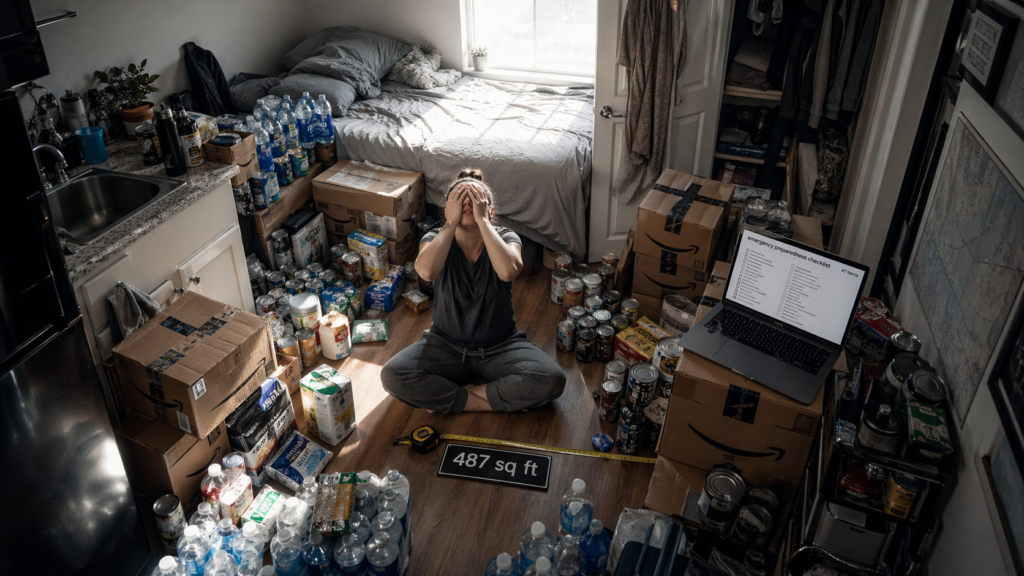 Should you stay or should you go? Here’s how to decide.
When to Shelter in Place in an Apartment
Stay if:
- You have adequate supplies
- The building is structurally sound
- The threat is outside (civil unrest, hazmat, severe weather)
- Evacuation routes are more dangerous than staying
- You have vulnerable family members who can’t travel
When to Evacuate (And Where to Go)
Leave if:
- Building is damaged or unsafe
- Fire or flood threatens the building
- Authorities issue mandatory evacuation
- You have a safe destination (family, friends, shelter)
- Staying puts you in immediate danger
Where to go:
- Pre-arranged location with family or friends
- Hotel (if accessible and safe)
- Emergency shelter (know locations in advance)
- Evacuation center (last resort)
The 15-Minute Evacuation Drill
Practice evacuating your apartment in 15 minutes:
- Grab your go-bag (pre-packed)
- Grab important documents (in fireproof box)
- Grab pets and pet supplies
- Lock door and leave
Time yourself. If you can’t do it in 15 minutes, you have too much stuff or poor organization.
Distributed Supply Caches (Car, Work, Trusted Contacts)
Don’t keep all supplies in one location:
- Car kit: 72-hour supplies in trunk
- Work kit: Basic supplies at office
- Trusted contact: Supplies at friend/family member’s home in different area
This ensures you have access to supplies no matter where you are when disaster strikes.
Frequently Asked Questions
Can I really be prepared in a 400-square-foot studio?
Yes. A 400-square-foot studio has approximately 3,200 cubic feet of space when you include vertical storage. You don’t need a basement—you need smart organization.
Focus on:
- Under-bed storage (20-30 gallons of water, food, gear)
- Wall-mounted shelves (canned goods, supplies)
- Multi-functional furniture (ottoman storage, bed with drawers)
- Vertical space (above cabinets, over doors)
A well-organized studio can hold 2 weeks of supplies for one person, easily.
Where do I store water when I have no space?
Under the bed: Flat water containers fit under any bed (20-30 gallons) In closets: Stack 7-gallon Aqua-Tainers vertically Behind furniture: Slim water containers fit in 6-inch gaps Bathtub bladder: WaterBOB stores 100 gallons when needed
Pro tip: Rotate water every 6 months by using it to water plants, then refill.
What if my landlord doesn’t allow certain supplies?
Check your lease for specific restrictions. Most leases prohibit:
- Gasoline storage
- Large propane tanks
- Excessive flammable materials
Allowed alternatives:
- Portable power stations (instead of gas generators)
- Butane canisters (instead of large propane tanks)
- LED lights (instead of candles)
If in doubt, ask your landlord about specific items. Frame it as “emergency preparedness” not “prepping.”
How do I prep without my roommates thinking I’m crazy?
Don’t announce you’re “prepping.” Just quietly build your supplies.
Frame it as:
- “I like to keep extra food on hand”
- “I want to be ready if the power goes out”
- “It’s just smart to have a first aid kit”
Involve them:
- “Want to split the cost of a portable power station?”
- “Should we get some extra water for the apartment?”
Most people are receptive to preparedness when it’s framed as responsible planning, not doomsday prepping.
What’s the most space-efficient emergency food?
Calorie-per-cubic-inch winners:
- Peanut butter: 190 calories per 2 tablespoons, long shelf life, compact
- Emergency food bars: 2,400 calories per bar, size of a paperback book
- Rice and beans: Bulk calories, stores in small containers
- Canned tuna/chicken: Protein-dense, stackable
- Nuts and trail mix: Calorie-dense, no cooking required
Avoid: Bulky packaging, low-calorie foods, anything that requires refrigeration.
Taking the Next Step
You now have the complete blueprint for prepping in a small apartment. You understand the advantages of limited space, the vertical storage strategies, the priority matrix, and the room-by-room approach.
But knowledge without action is just anxiety with extra steps.
This week—not next month, not when you have more money, not when you feel “ready”—do one thing. Buy a 7-gallon water container and fill it. Install a floating shelf. Order a headlamp.
Small actions create momentum. Momentum creates confidence. Confidence creates capability.
In 90 days, you won’t have a basement full of supplies. But you’ll have something better: a well-organized, efficiently-prepared small apartment that can handle 2 weeks of self-sufficiency. You’ll be the calm one when the power goes out. The prepared one when the storm hits. The capable one when others are panicking.
That’s not just preparedness. That’s mastery of your environment, regardless of its size.
PHASE 5: PRODUCTS / TOOLS / RESOURCES
These are the specific items and resources that consistently come up in serious small apartment prepping conversations—selected for compact size, multi-functionality, and real-world effectiveness in limited spaces.
Water Storage (Space-Efficient)
- WaterBrick 3.5-Gallon Containers: Stackable like Lego, cross-stack with food containers, fit in small spaces. The most space-efficient water storage ($20 each).
- Aqua-Tainer 7-Gallon Containers: Rigid, stackable, built-in spigot. Perfect for closet storage ($15 each).
- WaterBOB Bathtub Bladder: 100-gallon emergency water storage, fills in 20 minutes, stores in a shoebox ($35).
- Sawyer Squeeze Water Filter: 0.1-micron filtration, 100,000-gallon capacity, compact size. Essential for small apartments ($25-40).
Compact Food Storage
- Stackable Can Organizers: FIFO rotation, maximize vertical pantry space ($20-30).
- Airtight Food Storage Containers (Square): Maximize shelf space better than round containers. OXO Good Grips or Rubbermaid Brilliance ($30-50 for set).
- Emergency Food Bars (Datrex or SOS): 2,400 calories per bar, 5-year shelf life, size of a paperback book ($40 for 12 bars).
Space-Efficient Lighting & Power
- Goal Zero Lighthouse Micro: 150 lumens, rechargeable, 170-hour runtime, size of a water bottle ($30).
- Black Diamond Spot Headlamp: 300 lumens, waterproof, compact. Essential hands-free lighting ($40).
- Jackery Explorer 500 Portable Power Station: 518Wh capacity, silent operation, indoor-safe. Perfect for apartments ($500).
- Anker PowerCore 26800 Power Bank: Charges phones 6-7 times, compact size ($60).
Multi-Functional Furniture & Storage
- Seville Classics 3-Tier Resin Slat Utility Shoe Rack: Repurpose for water storage, supplies, gear. Fits in closets ($25).
- SONGMICS Storage Ottoman: Seating + storage for blankets, supplies, gear ($40-60).
- Zinus Ironline Metal and Wood Platform Bed with Storage: Built-in drawers eliminate need for dresser ($200-300).
Compact Cooking Solutions
- GasOne Portable Butane Stove: Single-burner, indoor-safe with ventilation, compact storage ($25).
- Sterno Canned Heat (24-pack): For warming food, safe for indoor use, long shelf life ($30).
First Aid & Medical (Compact)
- Adventure Medical Kits Ultralight/Watertight .5: Comprehensive first aid kit, fits in jacket pocket, waterproof ($25).
- QuikClot Advanced Clotting Sponge: For serious bleeding, compact size, essential for trauma kit ($15).
Organization & Storage Solutions
- Simple Houseware Over-Door Organizer (24 Pockets): Repurpose for first aid, hygiene, small supplies ($15).
- Command Strips and Hooks (Variety Pack): Renter-friendly, no holes, for hanging storage ($20).
- Whitmor Over-the-Toilet Storage: 3-tier shelf, no installation, maximizes bathroom space ($30).
Skills Development & Education
- “The Apartment Prepper” by Bernie Carr: Specific guide for small-space preparedness with practical, actionable advice.
- Red Cross First Aid/CPR/AED Course: Hands-on training, essential skills that replace supplies.
- The Prepared (theprepared.com): Evidence-based online resource with apartment-specific guides and product reviews.
Community & Networking
- Reddit r/preppers: Active community with apartment-specific discussions and space-saving tips.
- Apartment Therapy: Home organization and storage hacks applicable to preparedness.