
Hey there! Some links on this page may be affiliate links which means that, if you choose to make a purchase, I may earn a commission at no extra cost to you. I greatly appreciate your support. Read the full disclosure here.
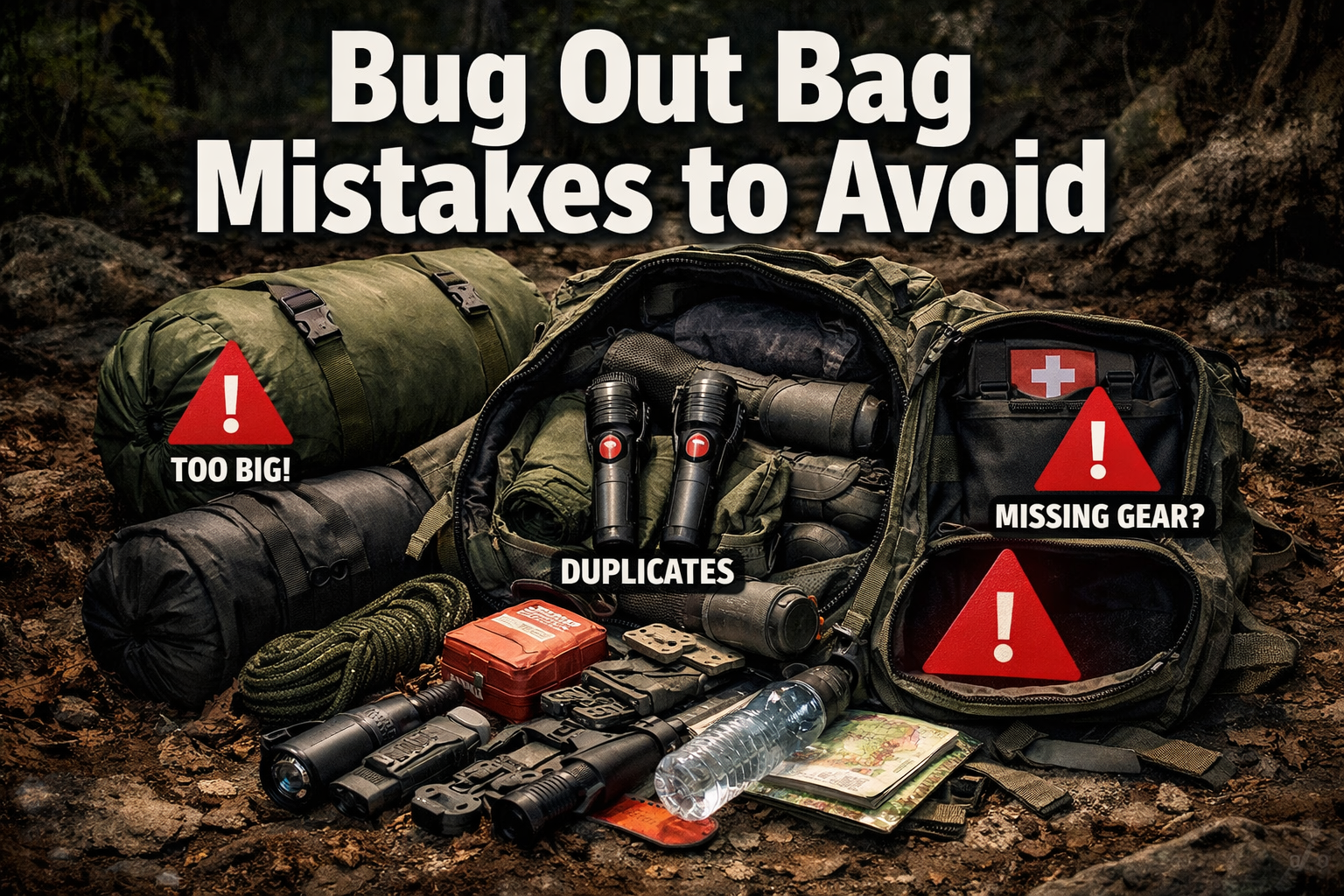
The most damaging bug out bag mistakes include overpacking, neglecting water purification, failing to test gear before a crisis, and building a bag that doesn’t match your specific evacuation route or physical fitness level. Avoiding these errors can be the difference between a functional emergency kit and dead weight when it counts most.
Key Takeaways
- Weight is the number-one killer of bug out bag effectiveness. Most adults should target a loaded pack weight of no more than 25–30% of their body weight.
- Never pack gear you haven’t tested. Unknown equipment fails at the worst possible time.
- Water is more critical than food. A person can survive roughly three weeks without food but only three days without water.
- Your bag must match your specific bug out plan, not a generic internet checklist.
- Rotate perishable supplies (food, batteries, medications) on a scheduled basis, at minimum every 6–12 months.
- A bug out bag without a destination plan is just a heavy backpack.
- Redundancy matters for critical systems (fire, water, navigation) but not for comfort items.
- Physical fitness is part of your bug out plan. A 50-pound bag is useless if you can’t carry it five miles.
- Digital copies of documents aren’t enough. Keep laminated physical copies of IDs, insurance, and maps.
- Practice your bug out route at least once a year under realistic conditions.
What Are the Most Common Bug Out Bag Mistakes?
The most common bug out bag mistakes fall into three categories: packing errors, planning failures, and maintenance neglect. Each category can independently compromise your ability to evacuate safely.
Preppers at every experience level make these errors. Beginners tend to overpack with comfort items. Intermediate preppers often buy quality gear but never test it. Even experienced survivalists sometimes build bags around online lists rather than their own geography, fitness, and family situation.
Understanding where people go wrong is the fastest way to build a bag that actually works.
Why Is Overpacking One of the Biggest Bug Out Bag Mistakes?

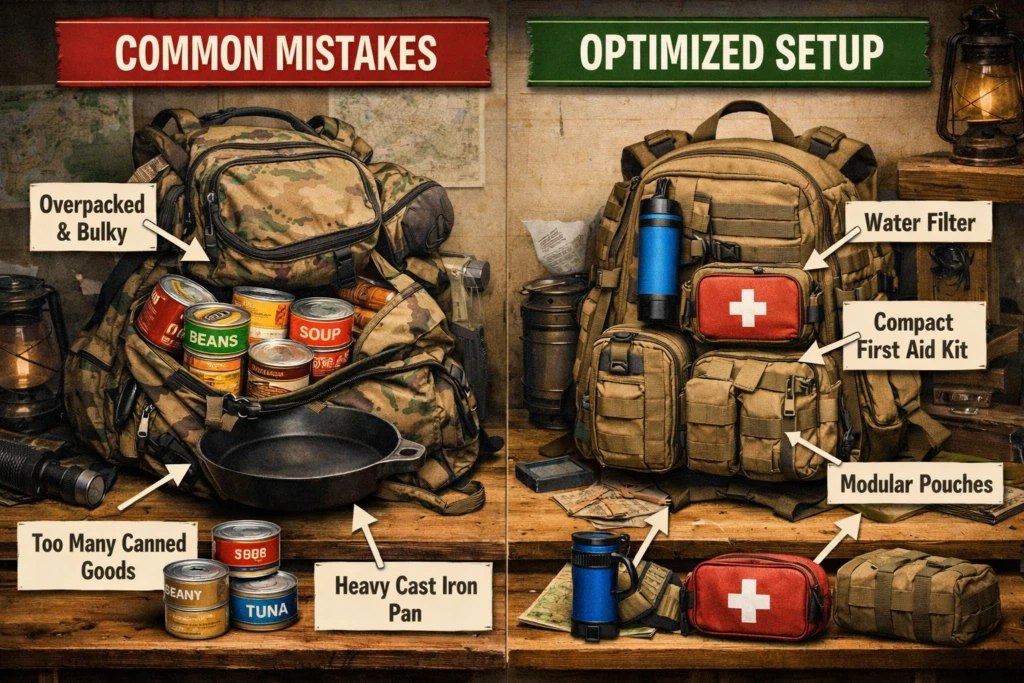
Overpacking is the single most common bug out bag mistake, and it’s also one of the most dangerous. A bag that’s too heavy slows you down, increases injury risk, and drains energy you can’t afford to lose during an evacuation.
The Weight Problem
A general guideline used by backpacking and military communities suggests keeping a loaded pack at or below 25–30% of the carrier’s body weight. For a 160-pound adult, that’s roughly 40–48 pounds maximum, and many experienced preppers aim lower, around 20–25 pounds for a 72-hour bag.
Common overpacking culprits:
- Canned food (extremely heavy relative to caloric density)
- Full-size tools (hatchets, shovels, cast iron cookware)
- Duplicate clothing for every weather scenario
- Too many “just in case” comfort items
- Multiple firearms with large ammunition loads
The fix: Lay everything out on a table before it goes in the bag. Weigh each item. Ask one question for every piece of gear: “Does this item earn its weight?” If the answer isn’t a clear yes, leave it out.
Decision rule: Choose lightweight, multi-use gear over single-purpose heavy items every time. A titanium spork beats a full cutlery set. A quality tarp beats a two-person tent for solo evacuation.
Are You Ignoring Water Purification? That’s a Critical Error
Water is the most overlooked priority in bug out bag planning. Many preppers pack a single water bottle or a few pouches of emergency water and call it done. That’s not a water strategy.
The human body needs roughly half a liter to one liter of water per hour during moderate physical activity in moderate temperatures, according to general wilderness medicine guidelines. A 72-hour evacuation on foot in summer heat can demand far more than any pre-stored supply can cover.
What a Proper Water System Looks Like
A solid bug out bag water strategy uses a three-layer approach:
- Carry capacity: At least one 32–48 oz water bottle or hydration bladder, pre-filled.
- Filtration: A quality hollow-fiber filter (such as a Sawyer Squeeze or LifeStraw) handles most natural water sources reliably.
- Chemical backup: Water purification tablets (iodine or chlorine dioxide) weigh almost nothing and serve as a last resort when filtration isn’t possible.
Common mistake: Packing only one method. Filters can freeze and crack in cold weather. Tablets don’t remove particulate matter. Use both.
Edge case: If your bug out route crosses an urban area with no natural water sources, pre-positioned water caches or knowledge of municipal water access points becomes part of the plan.
How Does Poor Planning Compound Bug Out Bag Mistakes?
 A bug out bag without a bug out plan is just gear. Poor planning is arguably a bigger mistake than any individual packing error, because even a perfectly loaded bag fails if you don’t know where you’re going or how to get there.
The Plan Your Bag Must Support
Before finalizing any gear list, answer these questions:
| Planning Question | Why It Matters |
|---|---|
| Where is your bug out location (BOL)? | Determines distance, terrain, and gear needs |
| What are your primary and alternate routes? | Road closures and crowds require backup paths |
| How will you travel (foot, vehicle, both)? | Affects weight limits and fuel/food needs |
| Who is in your group? | Children, elderly, or disabled members change everything |
| What threats are you preparing for? | Wildfire, flood, civil unrest, and grid-down scenarios have different demands |
Common planning mistake: Building a bag for a 72-hour scenario but having a bug out location that’s 300 miles away. A 72-hour bag doesn’t cover a 300-mile evacuation on foot. Either extend your supplies or plan for vehicle use with fuel caches.
What Gear Mistakes Undermine a Bug Out Bag?
Gear selection errors are some of the most fixable bug out bag mistakes, but they’re also surprisingly common even among experienced preppers.
Buying Gear You’ve Never Tested
This is non-negotiable: every item in a bug out bag should be tested before it’s needed. A fire starter that works in dry summer conditions may fail in wet weather. A water filter may clog faster than expected in silty water. Boots that feel fine in a store will destroy your feet on a 10-mile hike.
Test protocol for new gear:
- Use it in a controlled environment first (backyard, local trail).
- Stress-test it in adverse conditions (rain, cold, darkness).
- Time yourself performing critical tasks (filtering water, starting a fire, setting up shelter).
GPS devices fail when batteries die or satellites are unavailable. A physical topographic map of your bug out area and a quality baseplate compass are essential backups. Knowing how to use them is equally essential.
Skipping a First Aid Kit (or Packing a Useless One)
A basic first aid kit from a dollar store isn’t adequate. A functional bug out bag first aid kit should include, at minimum:
- Tourniquets (CAT or SOFTT-W are field-proven options)
- Hemostatic gauze
- Israeli bandages or similar pressure dressings
- Nitrile gloves
- Blister treatment
- Prescription medications (30-day supply minimum)
- Any personal medical devices (EpiPen, inhaler, blood pressure medication)
Edge case: If anyone in your group has a chronic medical condition, their medication supply and any required equipment (insulin, CPAP) must be factored into the bag weight and volume before anything else.
Are You Making These Bug Out Bag Mistakes With Food?
Food is important, but it’s the third priority after water and shelter in most survival frameworks. Many preppers either overload on food or make poor caloric choices that waste space and weight.
Common Food Packing Errors
- Packing heavy, low-calorie foods: Canned goods are heavy and calorie-poor relative to their weight. Freeze-dried meals, nut butters, and energy bars offer far better caloric density.
- Ignoring dietary restrictions: Allergies and intolerances don’t disappear in a crisis. Pack food your group can actually eat.
- No cooking plan: Many preppers pack food that requires boiling water without packing a reliable stove or fuel source.
- Forgetting comfort foods: A small amount of familiar food (coffee, hard candy, chocolate) has a measurable impact on morale during high-stress situations.
Caloric target: Most adults need 1,800–2,500 calories per day under normal conditions. During physically demanding evacuation, that number rises. Aim for at least 2,000 calories per day in your food supply.
How Does Neglecting Maintenance Create Bug Out Bag Mistakes?
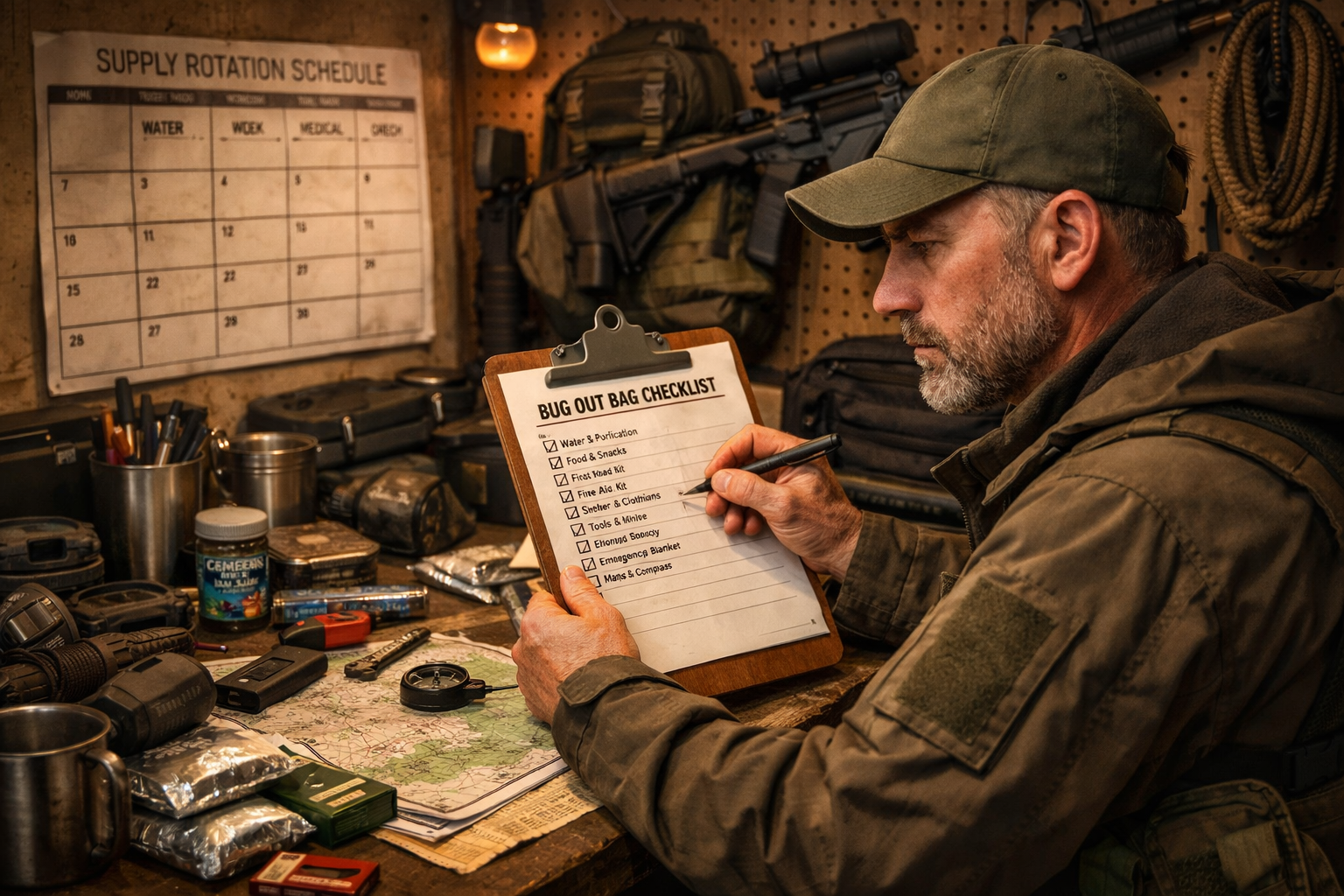
A bug out bag that’s packed once and never touched again is a liability. Maintenance neglect is one of the quietest bug out bag mistakes because nothing seems wrong until the moment you need the bag and everything has expired, corroded, or degraded.
What Degrades and When
| Item Type | Recommended Check Interval |
|---|---|
| Food and water | Every 6–12 months |
| Batteries | Every 6 months |
| Medications | Check expiration dates every 6 months |
| Fuel canisters | Annually (check for leaks) |
| Clothing | Annually (check fit, condition, seasonality) |
| Documents | Annually (update IDs, insurance, contact lists) |
| First aid supplies | Every 6–12 months |
Practical tip: Tie your bag review to a recurring event, like daylight saving time changes or a family birthday. Consistency matters more than the specific date.
The Skill Maintenance Problem
Gear degrades, but skills degrade faster. Knowing how to use a compass, start a fire with a ferro rod, or apply a tourniquet correctly requires regular practice. Schedule at least one realistic bug out drill per year, including actually carrying the bag over your planned route.
What Are the Most Overlooked Bug Out Bag Mistakes for Families?
Family bug out planning introduces a layer of complexity that solo preppers don’t face. The mistakes are different, and the stakes are higher.
Key Family-Specific Errors
Packing one bag for the whole family: Every capable adult should carry their own bag. Children over roughly age 8–10 can carry a smaller pack with their own water, snacks, and comfort items. Distributing weight improves group mobility.
Ignoring children’s developmental needs: Infants and toddlers require formula, diapers, and comfort items. Older children need activities to manage fear and boredom during extended evacuations.
No communication plan: Every family member old enough to understand should know the bug out location, the rally point if separated, and an out-of-area contact person. Practice this verbally until it’s memorized.
Assuming pets are covered: Pet food, water, carriers, vaccination records, and leashes must be accounted for separately. Most emergency shelters don’t accept pets, so your bug out location plan must accommodate animals.
FAQ: Bug Out Bag Mistakes
How heavy should a bug out bag actually be?
Most preppers should target 20–35 pounds for a 72-hour bag. The upper limit for most adults is 25–30% of body weight. Heavier than that and you risk injury and exhaustion on a long evacuation.
Do I really need a bug out bag if I plan to shelter in place?
Yes. Sheltering in place is often the right call, but conditions can change fast. A wildfire, chemical spill, or civil unrest event can make evacuation mandatory with almost no warning. A ready bag means you can leave in minutes, not hours.
What’s the biggest mistake beginners make with bug out bags?
Buying gear before making a plan. The plan determines what gear you actually need. Without knowing your route, destination, group size, and likely threats, any gear list is just guessing.
How often should I update my bug out bag?
Review it every six months at minimum. Replace expired food, batteries, and medications. Update documents. Check that clothing still fits and suits the current season.
Should I tell people I have a bug out bag?
Operational security (OPSEC) is a legitimate concern. Sharing your preparations broadly can make you a target during a crisis. Limit knowledge of your bag and bug out plan to trusted family members and close preparedness partners.
Is a 72-hour bag enough?
For most evacuation scenarios (natural disasters, short-term grid failure), yes. For longer-term grid-down or societal disruption scenarios, a 72-hour bag is a starting point, not a complete solution. Many preppers maintain a 72-hour bag alongside longer-term supplies at their bug out location.
Can I use a regular hiking backpack for a bug out bag?
Absolutely. A quality hiking pack with an internal frame, padded hip belt, and proper fit is often better than purpose-marketed “tactical” bags. Fit and comfort matter more than aesthetics.
What documents should be in a bug out bag?
Laminated copies of: government-issued IDs, passports, birth certificates, insurance policies, property deeds, vehicle titles, medical records, prescriptions, and a contact list with phone numbers. Store originals in a fireproof safe at home.
Do I need a firearm in my bug out bag?
This is a personal and legal decision. Many experienced preppers include a handgun or compact rifle for self-defense. If you choose to include a firearm, train with it regularly and understand the legal requirements in every jurisdiction on your planned route.
What’s wrong with just following an online bug out bag list?
Generic lists don’t account for your climate, terrain, physical fitness, group size, or specific threats. Use lists as a starting framework, then customize aggressively based on your actual situation.
Products, Tools, and Resources Worth Knowing
These recommendations come from what experienced preppers consistently rely on, not from marketing materials.
Water filtration: The Sawyer Squeeze filter is lightweight, effective, and field-proven for years. Pair it with Aquatabs (chlorine dioxide tablets) as a chemical backup.
Bags: The 5.11 RUSH72 and Mystery Ranch 3-Day Assault Pack are well-regarded for durability and organization. For budget-conscious preppers, the Osprey Atmos AG line offers excellent ergonomics at a lower price point.
Fire starting: A quality ferro rod (Bayite or Light My Fire brands) paired with a BIC lighter and UCO stormproof matches covers all conditions.
Navigation: The Suunto A-10 baseplate compass is reliable and affordable. Pair it with CalTopo for printing custom topographic maps of your specific bug out area before a crisis.
First aid: The North American Rescue Individual First Aid Kit (IFAK) is a field-tested starting point. Add a CAT tourniquet and QuikClot gauze as priorities.
Food: Mountain House and Backpacker’s Pantry freeze-dried meals offer reliable caloric density. Clif Bars, peanut butter packets, and Honey Stinger waffles are solid calorie-dense additions that don’t require cooking.
Skills resources: The American Red Cross First Aid certification and FEMA’s free online emergency preparedness courses (available at ready.gov) are practical starting points for skill-building.
Conclusion: Build a Bag That Actually Works
The most expensive, well-stocked bug out bag in the world fails if it’s too heavy to carry, filled with untested gear, or built around someone else’s plan instead of your own.
Avoiding bug out bag mistakes isn’t about perfection. It’s about honest self-assessment: knowing your physical limits, your actual route, your group’s needs, and the specific threats in your region. Start with a solid plan, pack to that plan, test every piece of gear, and maintain the bag on a regular schedule.
Actionable next steps for 2026:
- Weigh your current bag fully loaded. If it exceeds 30% of your body weight, start cutting.
- Identify your bug out location and map at least two routes to get there.
- Pull out every item in your bag and check expiration dates today.
- Schedule one full gear test and route walk before the end of the year.
- Fill any critical gaps: water filtration, first aid, navigation, and communication tools.
A bug out bag is only as good as the person carrying it and the plan behind it. Build both.
References
- Federal Emergency Management Agency (FEMA). Build A Kit. ready.gov. (2023). https://www.ready.gov/kit
- Wilderness Medical Society. Wilderness Medicine guidelines on hydration and fluid replacement. (2019).
- American Red Cross. Emergency Preparedness and Response. redcross.org. (2022). https://www.redcross.org/get-help/how-to-prepare-for-emergencies.html
- North American Rescue. IFAK and Tourniquet Product Documentation. narescue.com. (2023). https://www.narescue.com