
Hey there! Some links on this page may be affiliate links which means that, if you choose to make a purchase, I may earn a commission at no extra cost to you. I greatly appreciate your support. Read the full disclosure here.
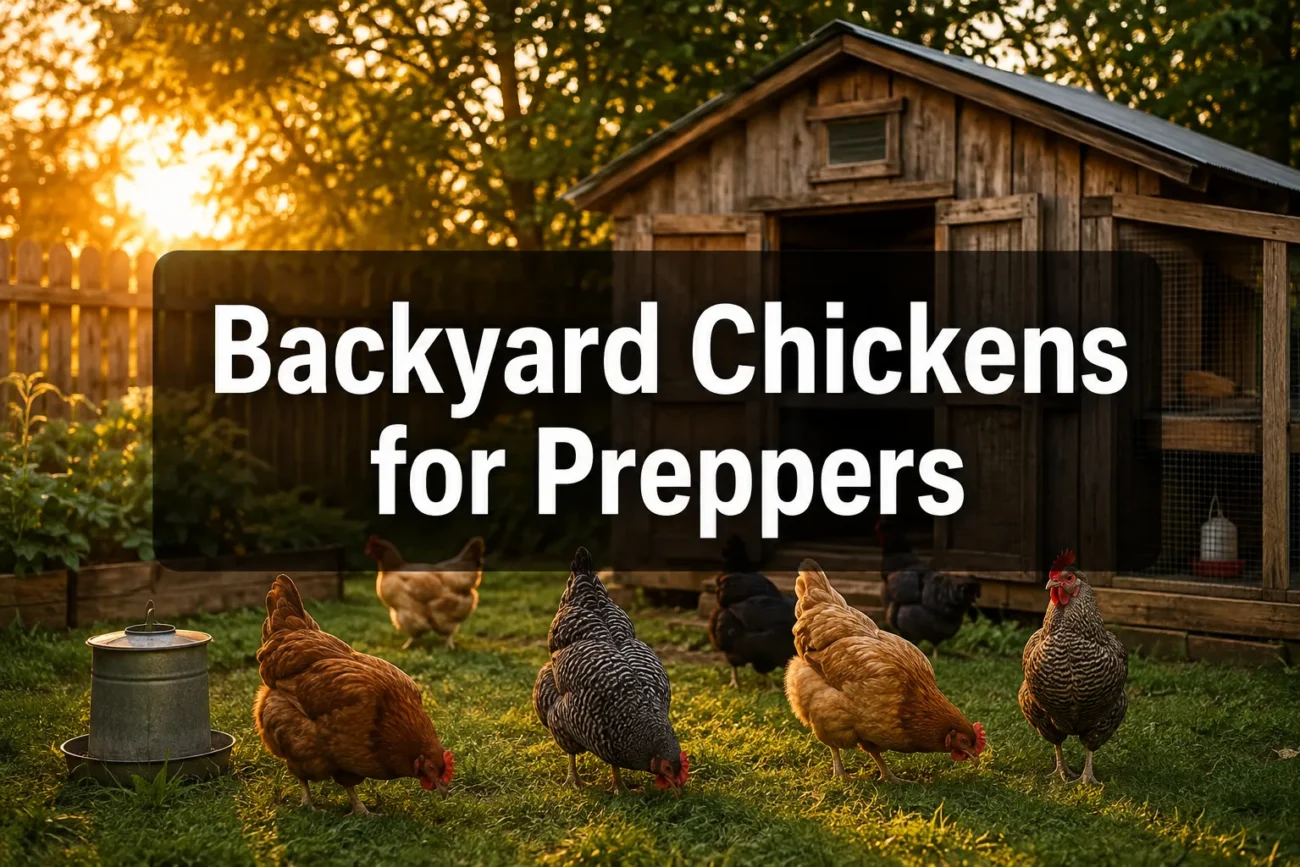
A single laying hen produces roughly 250 to 300 eggs per year, that’s a steady, renewable food source that no freeze-dried bucket or canned goods shelf can replicate. For preppers serious about long-term food security, backyard chickens aren’t a hobby. They’re infrastructure.
This guide how to raise backyard chickens for preppers covers everything a beginner needs to get started: the right breeds, coop setup, feeding costs, predator defense, health management, and what to do when the grid goes down. Whether you have a quarter-acre suburban lot or a rural homestead, the principles are the same.
Key Takeaways
- A flock of 4 to 6 hens is the ideal starting point for most beginner preppers, manageable, productive, and low-cost.
- Heritage breeds like Rhode Island Reds, Plymouth Rocks, and Australorps are the most resilient choices for harsh climates and off-grid conditions.
- Chickens do not require electricity to survive, they are naturally cold-hardy when properly housed and fed.
- A basic predator-proof coop can be built for under $300 using reclaimed materials; commercial coops run $400 to $1,500.
- Monthly feed costs for a small flock of 6 hens typically run $15 to $30, depending on supplemental foraging.
- Common beginner mistakes include overcrowding, inadequate predator protection, and neglecting ventilation.
- Hens typically produce eggs for 3 to 4 years, with peak production in years 1 and 2; they can live 5 to 10 years.
- Local zoning laws govern whether you can keep chickens, always verify before buying birds.
How Chickens Help With Food Security and Prepping
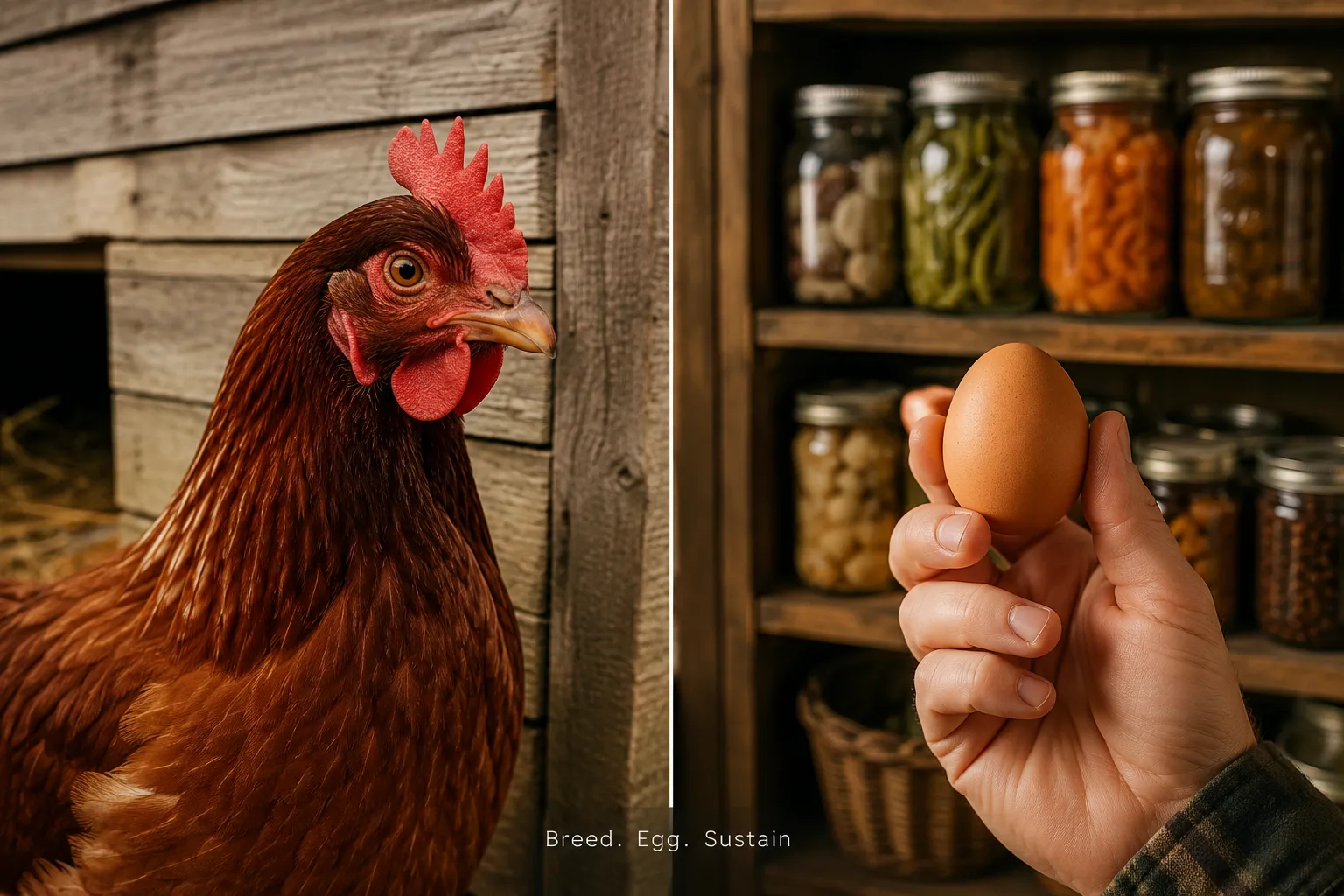
Backyard chickens provide a self-renewing protein source that doesn’t depend on supply chains, refrigeration, or store shelves. A small flock of 6 hens can produce 4 to 6 eggs daily during peak season, supplying a family with a reliable daily protein source even when grocery stores are empty or inaccessible.
Beyond eggs, chickens contribute to a prepper’s system in several compounding ways:
- Meat production: Dual-purpose breeds supply both eggs and meat, giving you a harvest option when a hen’s laying years end.
- Pest control: Free-ranging chickens consume insects, ticks, and garden pests, reducing the need for pesticides.
- Fertilizer: Chicken manure is a high-nitrogen fertilizer that improves garden soil productivity, critical for anyone growing their own food.
- Barter value: In a grid-down or economic disruption scenario, fresh eggs and live birds have real trade value in a community.
For preppers building toward genuine self-reliance, chickens close a gap that no amount of stored food can fully fill: the gap between finite supplies and ongoing production.
How to Start Homesteading From Scratch
What Do Backyard Chickens Need to Survive Long Term
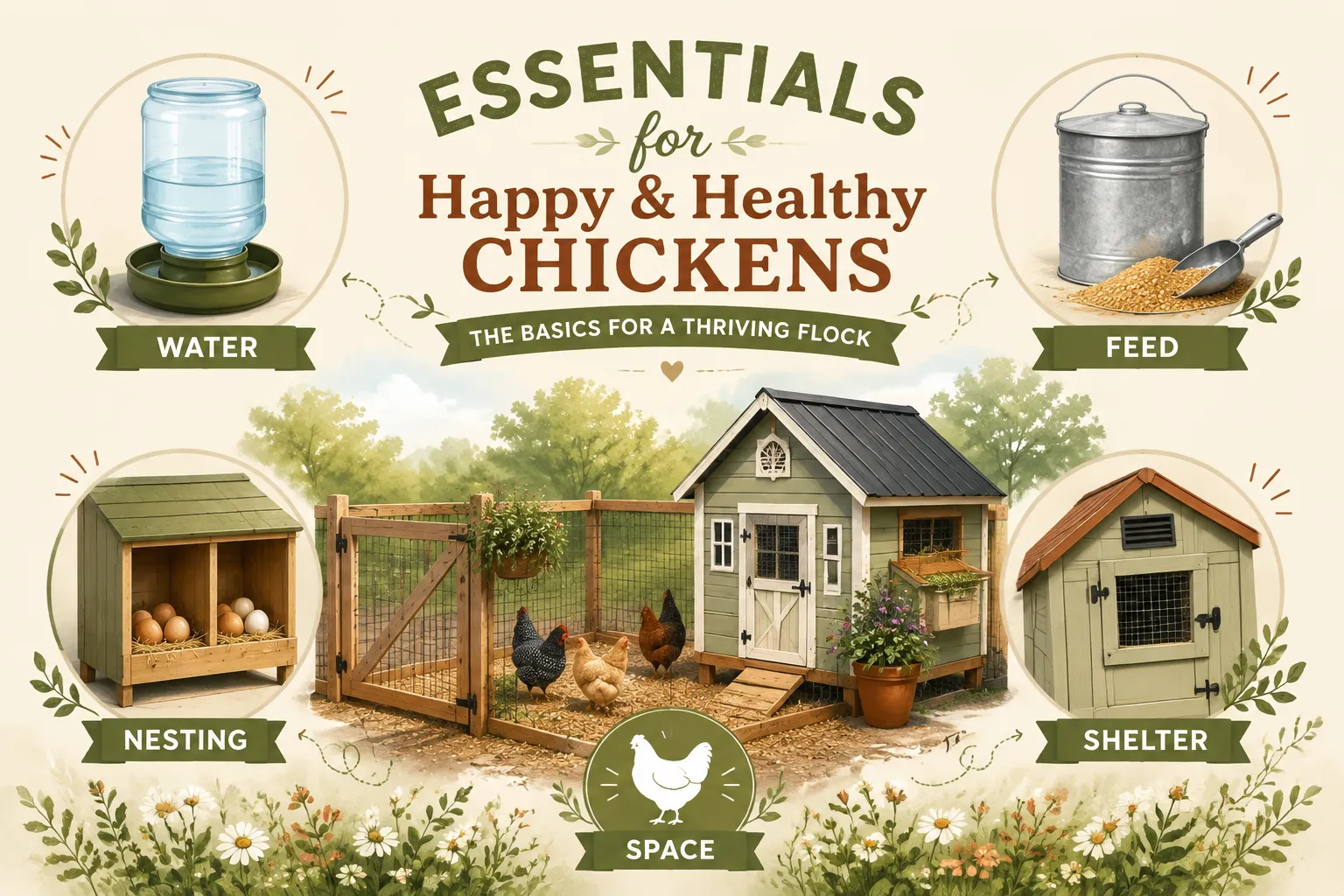
Chickens need five things to thrive long-term: clean water, quality feed, secure shelter, adequate space, and protection from predators. Remove any one of these, and flock health deteriorates quickly.
Water: Fresh water must be available at all times. A standard 3-gallon waterer serves 6 to 8 hens. In winter, water freezes, heated waterers solve this if you have power, but a twice-daily manual refill works just as well off-grid.
Feed: Layer pellets or crumble are the foundation. Supplement with kitchen scraps, garden waste, and free-range foraging to reduce feed costs and improve nutrition.
Shelter: A coop must be dry, ventilated (not drafty), and secure. Moisture and ammonia buildup from poor ventilation cause respiratory disease faster than almost any other factor.
Space: The general rule is 4 square feet of coop space per bird and 10 square feet of outdoor run space per bird. Crowding causes stress, feather-pecking, and disease.
Biosecurity: Keep the coop clean, quarantine new birds for 30 days before introducing them to the flock, and limit contact with wild birds.
Best Chicken Breeds for Beginners and Harsh Climates
The best beginner breeds are those that lay consistently, tolerate temperature extremes, and have calm temperaments that make daily handling easy. For preppers specifically, dual-purpose breeds that produce both eggs and meat offer the most strategic value.
| Breed | Eggs/Year | Cold Hardy | Dual Purpose | Best For |
|---|---|---|---|---|
| Rhode Island Red | 250-300 | Yes | Yes | All-around preppers |
| Plymouth Rock | 200-280 | Yes | Yes | Cold climates |
| Australorp | 250-300 | Moderate | Yes | High egg production |
| Buff Orpington | 200-280 | Yes | Yes | Beginners, calm flocks |
| Sussex | 250 | Yes | Yes | Foraging efficiency |
Avoid: Leghorns are prolific layers but flighty and poor in cold weather. Silkies are beautiful but fragile and low-production, not a prepper’s first choice.
Choose Rhode Island Reds or Plymouth Rocks if you’re in a northern climate or want the most versatile, resilient starter flock.
How Many Chickens Should a Beginner Prepper Start With
Four to six hens is the right starting number for most beginner preppers. This flock size produces enough eggs for daily use (roughly 3 to 5 eggs per day), remains manageable for first-time keepers, and keeps feed and housing costs low while you build experience.
Starting too large is one of the most common beginner mistakes. More birds mean more feed, more waste management, more disease risk, and more coop space, before you’ve learned the basics.
- Solo prepper or couple: 3 to 4 hens
- Family of 4: 5 to 6 hens
- Extended household or barter surplus: 8 to 12 hens
Add birds gradually as your skills and infrastructure grow. Never add more than a few birds at a time, and always quarantine new arrivals.
What’s the Cheapest Way to Set Up a Chicken Coop
A functional, predator-proof coop can be built for $150 to $300 using reclaimed lumber, salvaged hardware cloth, and basic tools. This is the most cost-effective route for preppers who prioritize budget and self-sufficiency.
Budget coop build essentials:
- Frame: Reclaimed 2×4 lumber or pallets
- Walls and roof: Plywood or corrugated metal roofing
- Hardware cloth: 1/2-inch gauge (not chicken wire, predators tear through chicken wire easily)
- Nesting boxes: One box per 3 to 4 hens; wooden crates work fine
- Roost bars: Wooden dowels or branches, 2 inches in diameter, 12 inches per bird
- Ventilation: Screened openings near the roofline, covered with hardware cloth
Commercial coops range from $400 to $1,500 but often sacrifice ventilation and predator resistance for aesthetics. If budget is a concern, build your own.
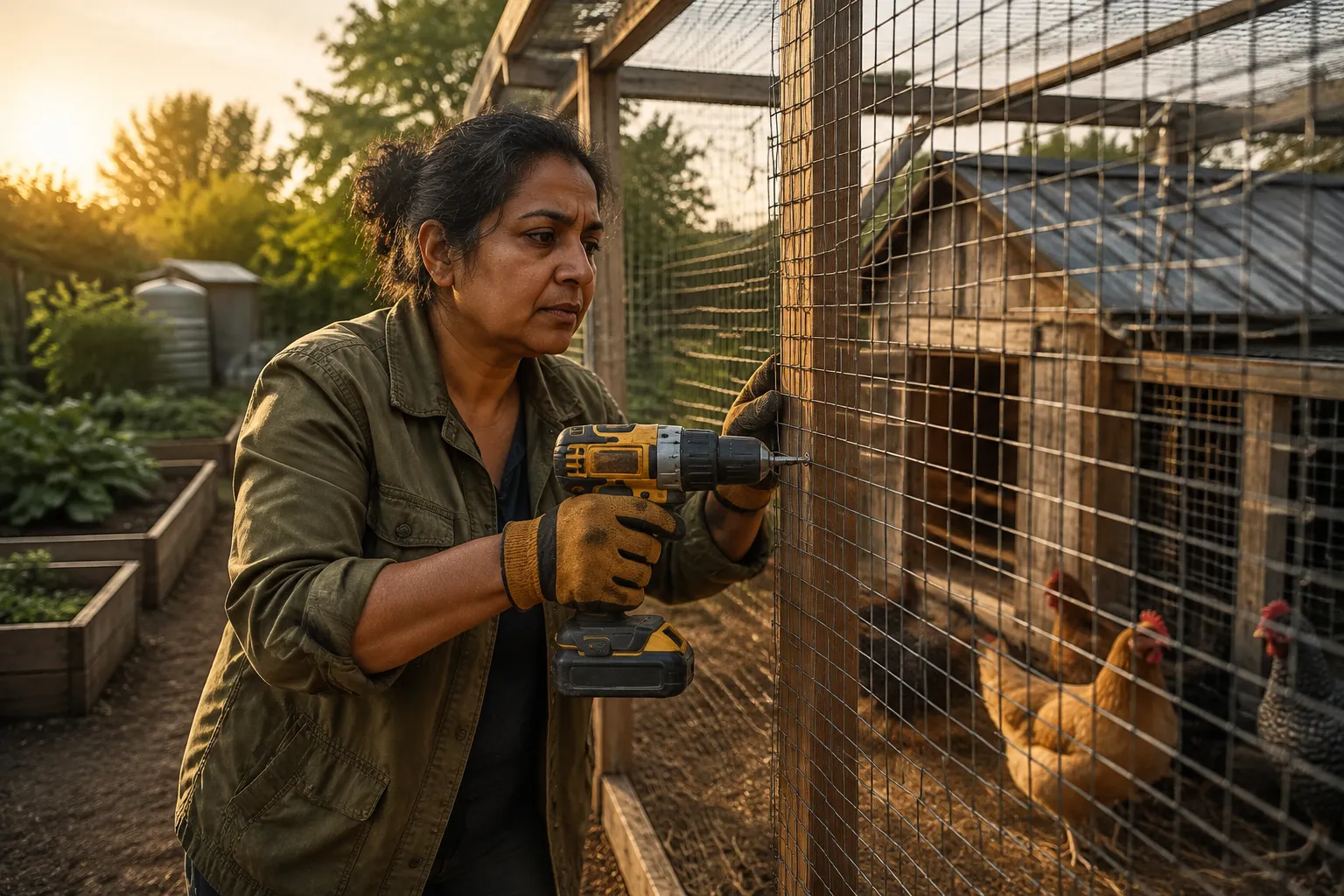
Common mistake: Using chicken wire instead of hardware cloth. Chicken wire keeps chickens in; it does not keep predators out. Raccoons, foxes, and weasels can breach it easily.
Can You Raise Chickens Without a Lot of Space or Land
Yes. A flock of 4 to 6 hens can be kept on as little as 100 to 150 square feet of total space, including coop and run. Urban and suburban preppers with small backyards can absolutely maintain a productive flock.
The key is managing space efficiently:
- Use a chicken tractor (a moveable coop and run) to rotate birds across a small yard, giving them fresh ground and reducing manure buildup.
- Stack vertical space in the coop with tiered roost bars and elevated nesting boxes.
- Supplement confined birds with kitchen scraps and sprouts to compensate for limited foraging.
Can you raise chickens in an apartment or urban area? Not practically inside an apartment, but many urban municipalities now permit backyard hens (typically 3 to 6 hens, no roosters) on residential lots. Check local zoning ordinances before purchasing birds. Cities including Los Angeles, Denver, Seattle, and Chicago allow urban chicken keeping with permit requirements. Rooftop setups exist but require structural assessment and are rarely practical for beginners.
How Much Does It Cost Per Month to Feed Backyard Chickens
Monthly feed costs for a flock of 6 hens typically run $15 to $30, depending on feed quality, local prices, and how much the birds forage. A 50-pound bag of layer pellets costs roughly $18 to $25 and lasts 6 hens approximately 3 to 4 weeks.
Ways to reduce feed costs:
- Free-range or rotational grazing cuts feed consumption by 20 to 30 percent during warm months.
- Kitchen scraps (vegetable trimmings, bread, cooked grains) supplement commercial feed safely.
- Grow fodder crops like sunflowers, comfrey, or black soldier fly larvae as a low-cost protein source.
- Ferment feed, soaking feed in water for 48 to 72 hours increases nutrient bioavailability and reduces consumption by up to 20 percent.
Avoid feeding: Raw beans, avocado, onions, chocolate, and citrus, these are toxic to chickens.
Annual feed cost estimate for 6 hens: $180 to $360, offset by the value of eggs produced (roughly 1,500 to 1,800 eggs per year at market rates).
Do Chickens Need Electricity or Special Equipment to Survive
No. Chickens do not need electricity to survive. Healthy, cold-hardy breeds in a well-insulated, properly ventilated coop can handle temperatures well below freezing without supplemental heat.
This is one of the most important facts for off-grid preppers: chickens are one of the most grid-independent livestock options available.
What chickens need in winter without electricity:
- Deep litter method: 4 to 6 inches of bedding (pine shavings or straw) generates microbial heat as it composts.
- Draft-free but ventilated coop: moisture is more dangerous than cold; ammonia from wet litter causes respiratory illness.
- High-calorie feed: Scratch grains (cracked corn) fed in the evening raise body temperature overnight.
- Petroleum jelly on combs: Prevents frostbite on large-combed breeds like Leghorns; rose-comb breeds like Dominiques are naturally frostbite-resistant.
Artificial lighting: Hens need roughly 14 to 16 hours of light to maintain peak egg production. In winter, production drops naturally without supplemental light. This is fine for preppers, it’s a natural cycle. If you want year-round production, a simple solar-powered LED light on a timer solves it without grid dependence.
What Predators Attack Chickens and How to Protect Them
The most common chicken predators are raccoons, foxes, coyotes, hawks, weasels, mink, and domestic dogs. Each requires a specific defensive strategy, and most flock losses happen because of a single gap in protection.
Predator-proofing checklist:
- Hardware cloth (1/2-inch gauge) on all openings, windows, and the run floor or apron
- Apron barrier: Lay hardware cloth flat on the ground extending 12 inches outward from the run perimeter to stop diggers
- Automatic coop door: Closes at dusk, opens at dawn, eliminates the most common entry point for nighttime predators
- Covered run: Overhead netting or hardware cloth prevents hawk attacks
- Secure latches: Raccoons can open simple hook-and-eye latches; use carabiner clips or two-step latches
- Lock the coop every night without exception
Most dangerous predator for beginners: Raccoons. They are strong, dexterous, and persistent. They will work a weak latch for hours. Hardware cloth and locking latches are non-negotiable.
What Diseases Kill Backyard Chickens and How to Prevent Them
The most lethal diseases for backyard flocks are Marek’s Disease, Newcastle Disease, Infectious Bronchitis, and Coccidiosis. Most are preventable through vaccination, biosecurity, and clean husbandry practices.
Prevention protocol:
- Buy vaccinated chicks: Reputable hatcheries vaccinate for Marek’s Disease at hatch. Always ask.
- Quarantine new birds: 30 days minimum before introducing to an existing flock.
- Clean water daily: Wet, dirty waterers breed bacteria and parasites fast.
- Clean the coop regularly: Remove wet litter promptly; full cleanout every 2 to 3 months.
- Limit wild bird contact: Wild birds carry Newcastle Disease and Avian Influenza.
- Treat for internal and external parasites: Check birds monthly for lice and mites; use food-grade diatomaceous earth in dust baths as a preventive measure.
Watch for these warning signs: lethargy, reduced egg production, labored breathing, swollen eyes or face, greenish diarrhea, or sudden unexplained deaths. Isolate any sick bird immediately.
How Long Do Backyard Chickens Actually Live and Produce Eggs
Hens typically live 5 to 10 years, but peak egg production occurs in years 1 and 2. Production declines by roughly 10 to 20 percent each year after the second laying season.
Practical timeline for preppers:
- Year 1: Peak production, 250 to 300 eggs per hen annually
- Year 2: Strong production, slight decline
- Years 3 to 4: Moderate production, 150 to 200 eggs per hen
- Years 5+: Low production; hen transitions to pest control and fertilizer roles, or becomes a meat bird
For a sustainable flock, introduce new pullets (young hens) every 2 years to maintain consistent egg production. This staggered approach ensures you always have birds in peak production.
What to Do With Chickens During Winter or Emergencies
During winter, maintain the flock’s core needs without electricity by using deep litter bedding, high-calorie scratch feeds, and manual water management. During emergencies, grid-down events, evacuations, or extended disruptions, the flock becomes both more valuable and more vulnerable.
Winter management without power:
- Increase bedding depth to 6 inches; the composting action generates warmth
- Feed scratch grains (cracked corn) in the evening to boost metabolic heat overnight
- Refill water twice daily if it freezes; a black rubber bowl absorbs solar heat and thaws faster than plastic
Emergency flock management:
- Keep 2 to 4 weeks of feed stored at all times as part of your prepper supply rotation
- If evacuating, prioritize the flock’s water and feed over equipment
- In a true grid-down scenario, free-ranging reduces feed dependency significantly, but requires secure perimeter fencing
- Know in advance which birds you would harvest for meat if feed becomes scarce; dual-purpose breeds make this decision easier
The flock that survives a crisis is the one whose keeper prepared for it in advance, same principle that applies to every other aspect of preparedness.
Common Mistakes New Chicken Keepers Make
Most beginner failures come down to a handful of predictable errors. Knowing them in advance saves money, birds, and frustration.
- Using chicken wire instead of hardware cloth. Chicken wire has large openings that raccoons can reach through and tear apart. Hardware cloth is the only secure option.
- Overcrowding the coop. Too many birds in too little space causes stress, feather-pecking, disease, and reduced egg production. Follow the 4 square feet per bird rule inside the coop.
- Neglecting ventilation. A sealed coop in winter feels warmer but traps ammonia and moisture, the leading cause of respiratory disease. Ventilation near the roofline, away from roost bars, is essential.
- Skipping the quarantine period. Introducing new birds directly to an existing flock is how disease spreads. Thirty days of isolation is non-negotiable.
- Underestimating predator intelligence. Raccoons, in particular, are persistent and problem-solving. A latch that works once may not work twice.
- Buying too many birds too fast. Starting with 10 or 12 birds before you understand the basics leads to overwhelm and preventable losses.
- Not checking local ordinances. Some municipalities prohibit backyard chickens entirely or limit flock size. A cease-and-desist order after you’ve built a coop and bought birds is an expensive lesson.
Beginner’s Guide to Homesteading Skills
FAQ: How to Raise Backyard Chickens for Preppers
How long before new chicks start laying eggs?
Most breeds begin laying at 18 to 24 weeks of age. Heritage breeds sometimes take up to 6 months. Plan your timeline accordingly, chicks purchased in spring will typically start laying by late summer or early fall.
Do I need a rooster to get eggs?
No. Hens lay eggs without a rooster. You only need a rooster if you want fertilized eggs for hatching chicks. Most urban ordinances prohibit roosters due to noise.
How do I know if an egg is still good without refrigeration?
The float test works: place the egg in a bowl of water. Fresh eggs sink and lay flat. Older eggs stand upright. Floating eggs are bad and should be discarded.
Can chickens eat grass and bugs for most of their nutrition?
Free-ranging chickens can meet a significant portion of their nutritional needs from foraging during warm months, but they still need a balanced layer feed to maintain egg production and bone health. Foraging alone is not sufficient.
What’s the minimum space needed for a backyard flock?
A coop of 16 to 24 square feet and a run of 40 to 60 square feet comfortably houses 4 to 6 hens. That fits in most suburban backyards.
How do I store chicken feed long-term?
Store feed in airtight metal containers (not plastic, which rodents chew through) in a cool, dry location. Layer pellets stay fresh for 3 to 4 months under proper storage conditions. Rotate stock regularly.
What happens to egg production during a molt?
Hens molt (shed and regrow feathers) annually, typically in fall. Egg production stops or drops sharply during this 6 to 8 week period. This is normal. Increase protein in the diet to support feather regrowth.
Is it safe to eat eggs from sick chickens?
No. Discard eggs from visibly ill birds until the illness is diagnosed and resolved. When in doubt, don’t eat them.
How do I introduce new hens to an existing flock?
After the 30-day quarantine, introduce new birds at night by placing them on the roost bar beside existing birds. Daytime introductions cause more conflict. Expect some pecking order establishment for 1 to 2 weeks, this is normal.
What’s the best way to dispose of a dead chicken?
Bury at least 2 feet deep away from water sources, or double-bag and dispose of in trash. Do not compost a bird that died from disease. Incineration is the most biosecure option if available.
Conclusion
Raising backyard chickens for preppers isn’t complicated, but it does require deliberate preparation, the same principle that drives everything at Preppers HQ. A flock of 4 to 6 well-chosen hens, housed in a predator-proof coop, fed a simple diet supplemented by foraging, produces a renewable protein source that no supply chain disruption can take away.
Start small. Choose hardy breeds. Build the coop right the first time, with hardware cloth and locking latches. Keep feed in rotation. Learn the signs of illness before you see them. And understand that your chickens are not just a hobby, they’re a working part of your preparedness system.
Actionable next steps:
- Check your local zoning ordinances for backyard chicken regulations before spending a dollar.
- Decide on flock size (start with 4 to 6 hens).
- Choose a dual-purpose heritage breed suited to your climate (Rhode Island Red or Plymouth Rock for most regions).
- Build or purchase a predator-proof coop before your birds arrive.
- Source chicks from a reputable hatchery that vaccinates for Marek’s Disease.
- Stock 4 weeks of feed as part of your existing prepper supply rotation.
The goal isn’t perfection on day one. The goal is a functional, productive flock that feeds your family when the systems most people depend on fail.
Products, Tools, and Resources
Building a reliable backyard flock starts with the right equipment. These are the tools experienced chicken keepers and preppers consistently rely on:
Coop and Run
- Premier 1 Supplies PoultryNet Electric Fencing, Portable, predator-deterrent perimeter fencing for free-range setups and chicken tractors. Effective against foxes, coyotes, and dogs.
- Rent-A-Coop Chicken Coops, Well-ventilated, hardware cloth-reinforced coops that are a significant step up from most big-box options in terms of predator resistance.
Waterers and Feeders
- RentACoop Automatic Chicken Waterer with Cup System, Gravity-fed, no-electricity system that keeps water clean and reduces daily labor. Works well off-grid.
- Harris Farms Hanging Poultry Feeder, Reduces feed waste from scratching and spillage; a simple upgrade that pays for itself quickly.
Health and Biosecurity
- Durvet Strike III Permethrin Spray, For treating the coop environment against mites and lice during routine cleanouts.
- Manna Pro Poultry Protector, Natural spray for treating birds directly; useful for mite and lice prevention between full coop treatments.
- Food-Grade Diatomaceous Earth, Add to dust bath areas to help control external parasites naturally.
Feed and Nutrition
- Purina Layena+ Omega-3 Layer Pellets, A reliable, complete layer feed with added omega-3s; widely available and consistently formulated.
- Scratch and Peck Feeds Organic Layer Feed, A premium option for preppers focused on clean inputs and flock health.
Books and References
- Storey’s Guide to Raising Chickens by Gail Damerow, The single most referenced book in backyard chicken keeping. Covers breeds, health, housing, and feeding in practical depth.
- The Backyard Homestead by Carleen Madigan, Broader homesteading context that situates chickens within a complete food-production system.
For preppers building toward genuine self-reliance, the investment in quality equipment upfront prevents the costly losses that come from cutting corners on predator protection and coop design.