
Hey there! Some links on this page may be affiliate links which means that, if you choose to make a purchase, I may earn a commission at no extra cost to you. I greatly appreciate your support. Read the full disclosure here.
Prepper Checklist for Beginners: The Complete 30-Day System (Start Today, Be Ready Tomorrow)
The prepper checklist for beginners you’re about to discover isn’t about building a bunker or stockpiling weapons—it’s about the systematic, affordable transformation from “I hope nothing bad happens” to “I’m ready for whatever comes.” Most people discover they need emergency preparedness at the worst possible moment: during an actual emergency, when stores are empty, power is out, and panic has replaced planning.
The difference between prepared families and panicked families isn’t money, space, or special knowledge. It’s having a clear checklist and following it one step at a time. It’s knowing exactly what to buy first, what can wait, and how to build real preparedness in 30 days without overwhelming your budget or your life.
This is your complete prepper checklist for beginners—from the first $25 you spend on water storage to the skills you’ll practice in week four, from the mistakes that waste money to the free steps that build real security. Whether you’re worried about natural disasters, economic uncertainty, or just want the peace of mind that comes from being prepared, this 30-day system will take you from complete beginner to confidently prepared.
How to Get Started with a Preparedness Lifestyle (90-Day Plan)
Why You Need a Prepper Checklist for Beginners
 Before you buy anything or change anything, understand why a systematic approach matters and what you’re actually building toward.
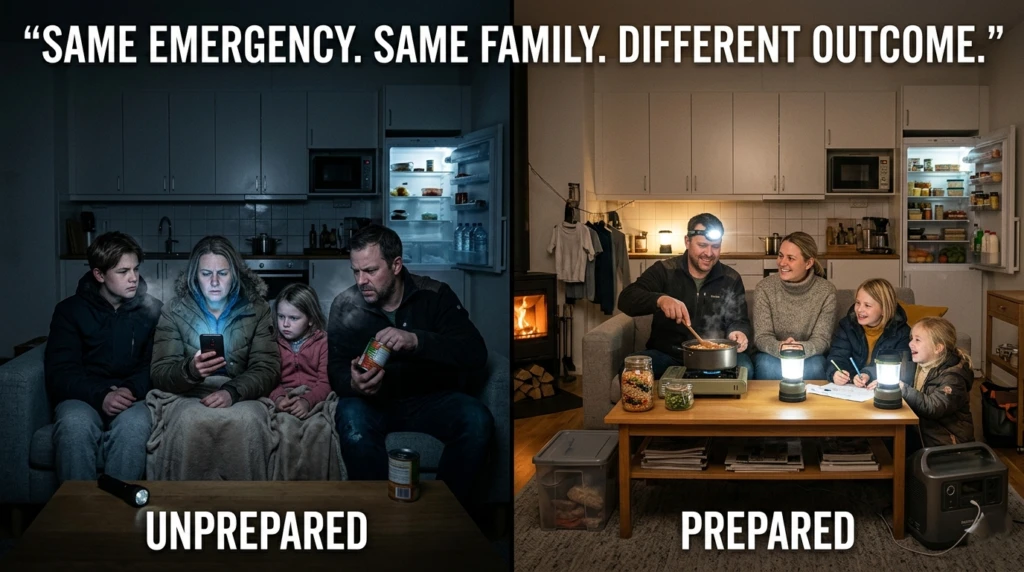
The Difference Between Prepared and Panicked
The prepared family during a 2-week power outage:
- Has water stored (30 gallons per person)
- Has food that doesn’t require refrigeration (30-day supply)
- Has alternative lighting and cooking methods
- Has first aid supplies and medications
- Has a plan everyone knows and has practiced
- Experiences stress, but manages it with resources and systems
The panicked family during the same outage:
- Rushes to stores that are already sold out
- Fights over bottled water and canned goods
- Has no way to cook food or see in the dark
- Runs out of critical medications
- Has no plan, leading to family conflict and poor decisions
- Experiences crisis-level stress and potential danger
The difference: The prepared family spent 30 days and $300-500 building a system. The panicked family spends more money during the emergency (inflated prices, panic buying) and gets less security.
Real example: During the 2021 Texas freeze, prepared families had water stored before pipes froze, had food that didn’t require power, and had alternative heating. Unprepared families paid $50 for a case of bottled water (if they could find it), went hungry when stores closed, and some faced life-threatening cold.
What “Prepping” Actually Means (And Doesn’t Mean)
What prepping IS:
- Having supplies for likely emergencies (power outages, storms, job loss)
- Building skills to handle disruptions (cooking without power, first aid)
- Creating plans so your family knows what to do
- Achieving peace of mind through reasonable preparation
- Being self-reliant for 3-30 days during disruptions
What prepping is NOT:
- Building bunkers or preparing for apocalypse
- Stockpiling weapons or becoming paranoid
- Spending thousands on gear you’ll never use
- Isolating from community or becoming extreme
- Living in fear or letting preparedness consume your life
The beginner prepper mindset: “I’m preparing for the emergencies that are actually likely in my area (storms, power outages, job loss, natural disasters), not for Hollywood scenarios. I’m building reasonable self-reliance, not extreme isolation.”
The 30-Day Transformation Timeline
| Week | Focus | Investment | Time | Result |
|---|---|---|---|---|
| Week 1 (Days 1-7) | Water and food basics | $75-125 | 3-5 hours | 3-7 day supply of water and food |
| Week 2 (Days 8-14) | Safety and shelter | $50-100 | 3-4 hours | Emergency lighting, first aid, basic security |
| Week 3 (Days 15-21) | Communication and information | $25-75 | 2-3 hours | Emergency communication, document backup, family plan |
| Week 4 (Days 22-30) | Skills and expansion | $50-100 | 4-6 hours | Basic skills practiced, supplies expanded to 30 days |
Total 30-day investment: $200-400 (or $25-50/week)
Total time: 12-18 hours over 30 days
Result: 30-day emergency preparedness for your family
The short version: A prepper checklist for beginners should include water storage (1 gallon per person per day for 30 days), shelf-stable food (30-day supply), first aid kit, emergency lighting, communication devices, important documents, sanitation supplies, and basic tools. Start with a 3-day supply, then expand to 30 days over 4 weeks, investing $200-400 total.
Key Takeaways:
– Start prepping with water storage: 1 gallon per person per day, aiming for a 3-7 day supply initially, then expand to 30 days over 4 weeks with a $200-400 budget.
– Build preparedness systematically across 4 weeks: Week 1 (water/food), Week 2 (safety/shelter), Week 3 (communication/planning), Week 4 (skills practice and supply expansion).
– Focus on practical, affordable supplies and skills, avoiding panic buying, hoarding, or extreme prepping behaviors.
– Regularly rotate supplies, practice emergency skills, and review your family emergency plan to maintain readiness and confidence.
– Preparedness is achievable in any home without special bunkers; start small, take consistent steps, and build momentum with simple first actions like buying and storing water.
The Essential Prepper Checklist for Beginners
 Different weeks focus on different priorities, building a complete system step by step.
Week 1: Water & Food Basics (Days 1-7)
Priority: Water and food are the foundation—you can survive 3 days without water, 3 weeks without food, but you need both for real preparedness.
Water Storage Fundamentals (1 Gallon Per Person Per Day)
The calculation:
- Minimum: 1 gallon per person per day (drinking and cooking only)
- Recommended: 1.5 gallons per person per day (includes basic hygiene)
- Family of 4, 30-day supply: 120-180 gallons
Week 1 water goal: 3-7 day supply (12-28 gallons for family of 4)
What to buy:
- 7-gallon water containers (2-4 containers): $15-20 each, stackable, food-grade
- Water purification tablets (50-pack): $8-12 (backup purification)
- Total cost: $40-60
Where to store:
- Best: Interior closet, under beds, basement (if no flood risk)
- Avoid: Garage (temperature swings), attic (heat), direct sunlight
- Tip: Rotate every 6-12 months (use for watering plants, refill)
Common mistakes:
- Buying only bottled water (expensive, takes more space, harder to rotate)
- Storing in clear containers in sunlight (algae growth)
- Forgetting purification backup (if stored water runs out)
3-Day Food Supply Essentials
Week 1 food goal: 3-7 day supply of shelf-stable food your family will actually eat
What to buy (family of 4, 7 days):
- Canned proteins: Tuna, chicken, beans (14-21 cans) – $20-30
- Canned vegetables: Corn, green beans, tomatoes (14-21 cans) – $15-25
- Canned fruits: Peaches, pears, applesauce (7-14 cans) – $10-15
- Grains: Rice, pasta, oats (5-10 lbs) – $10-15
- Peanut butter: Protein and calories (2-3 jars) – $8-12
- Crackers/bread: Shelf-stable options (2-3 boxes) – $8-12
- Total cost: $70-110
Storage tips:
- Organize by meal: Breakfast, lunch, dinner groups
- Label with dates: Know what expires when
- Store in cool, dark place: Pantry, closet, under bed
- Rotate regularly: Eat oldest first, replace as you go
First Purchases Under $100
Week 1 complete shopping list:
- Water containers (2-4): $40-60
- Water purification tablets: $8-12
- Canned proteins (14-21): $20-30
- Canned vegetables (14-21): $15-25
- Canned fruits (7-14): $10-15
- Grains (5-10 lbs): $10-15
- Total: $103-157
If budget is tight ($75 limit):
- Water containers (2): $30-40
- Purification tablets: $8-12
- Canned goods (focus on proteins and vegetables): $30-40
- Rice and beans (bulk): $7-10
- Total: $75-102
Action steps:
- Day 1: Calculate water needs, buy containers
- Day 2: Fill water containers, store properly
- Day 3: Inventory current pantry, make shopping list
- Day 4: Buy canned goods and grains
- Day 5: Organize food storage, label dates
- Day 6: Plan 7 days of meals using stored food
- Day 7: Review and adjust, prepare for Week 2
Week 2: Safety & Shelter (Days 8-14)
Priority: You have water and food, now you need to see in the dark, handle injuries, and maintain basic security.
Emergency Lighting and Power
Week 2 lighting goal: Multiple light sources that work without electricity
What to buy:
- LED headlamps (2-4): $12-20 each, hands-free, long battery life
- LED lantern (1-2): $15-30 each, area lighting, battery or rechargeable
- Batteries (bulk pack): $15-25, AA and AAA for devices
- Hand-crank flashlight/radio combo: $20-35, no batteries needed
- Total cost: $60-110
Why headlamps over flashlights:
- Hands-free (can cook, repair, help others while lit)
- More versatile (can be used as area light or focused beam)
- Longer battery life (LED efficiency)
- Cheaper than multiple flashlights
First Aid Kit Essentials
Week 2 medical goal: Handle common injuries and illnesses for 30 days
Pre-made kit option:
- Quality 200-piece first aid kit: $30-50
- Add: Prescription medication backup, personal items
- Total: $40-70
DIY kit option (better value, customized):
- Bandages: Various sizes (50-100 count) – $8-12
- Gauze pads and tape: Wound care (20-30 pads) – $8-12
- Antibiotic ointment: Infection prevention (2-3 tubes) – $6-10
- Pain relievers: Ibuprofen, acetaminophen (200-400 count) – $10-15
- Antihistamines: Allergic reactions (50-100 count) – $8-12
- Anti-diarrheal: Stomach issues (24-48 count) – $6-10
- Thermometer: Digital, battery-powered – $8-12
- Tweezers, scissors, safety pins: Basic tools – $8-12
- First aid manual: Instructions for emergencies – $8-12
- Total: $70-110
Week 3: Communication & Information (Days 15-21)
Priority: When power and cell service fail, you need alternative communication and access to critical information.
Emergency Communication Devices
Week 3 communication goal: Stay informed and connected when normal systems fail
What to buy:
- Hand-crank emergency radio: $20-40, NOAA weather alerts, AM/FM, flashlight
- Two-way radios (pair): $25-50, family communication within 2-5 miles
- Whistle (2-3): $5-10, signal for help, attach to emergency bags
- Total cost: $50-100
Important Documents and Copies
Week 3 documents goal: Protect and access critical information during emergency
Documents to copy/backup:
- Identification: Driver’s licenses, passports, birth certificates
- Financial: Bank account info, credit cards, insurance policies
- Medical: Insurance cards, prescriptions, medical history
- Property: Deeds, titles, rental agreements
- Contacts: Phone numbers, addresses (if phone dies)
Family Emergency Plan
Week 3 planning goal: Everyone knows what to do, where to go, and how to communicate
Emergency plan components:
- Evacuation plan: When to evacuate, where to go, how to get there, meeting points
- Shelter-in-place plan: When to shelter, where to shelter, what to have, how long
- Communication plan: Out-of-state contact, check-in schedule, meeting points, backup methods
- Roles and responsibilities: Who does what, age-appropriate tasks, practice drills
Week 4: Skills & Expansion (Days 22-30)
Priority: Practice using your supplies, learn basic skills, and expand to 30-day preparedness.
Basic Survival Skills to Learn
Week 4 skills goal: Practice essential skills before you need them in emergency
- Skill 1: Cooking without power – Practice: Cook 3 meals using camp stove (2-3 hours)
- Skill 2: Water purification – Practice: Purify water using tablets, filter, or boiling (30-60 minutes)
- Skill 3: First aid basics – Practice: Bandaging wounds, CPR review, treating burns (1-2 hours)
- Skill 4: Emergency lighting – Practice: Navigate house in dark using headlamp, lantern (30-60 minutes)
- Skill 5: Communication – Practice: Use two-way radios, hand-crank radio (30-60 minutes)
Why practice matters:
- Learning curve: First time takes 3x longer than practiced
- Confidence: Reduces panic during actual emergency
- Problem identification: Discover missing items or skills
- Family buy-in: Practicing makes preparedness real and engaging
Prepper Checklist by Category
 Comprehensive checklists organized by supply type for easy reference and shopping.
Water Storage Checklist
- 7-gallon water containers (quantity: ___)
- 55-gallon water barrel (optional)
- Water storage pump (if using barrel)
- Food-grade containers only
- Water purification tablets (50-100 count)
- Water filter (Sawyer, LifeStraw, or similar)
- Bleach (unscented, for emergency purification)
- Pot for boiling water
- 1 gallon per person per day minimum
- 3-day supply (minimum)
- 30-day supply (goal)
- Family of 4 = 120-180 gallons for 30 days
Food Storage Checklist
- Proteins: Tuna, chicken, beans (30-60 cans)
- Vegetables: Corn, green beans, tomatoes (30-60 cans)
- Fruits: Peaches, pears, applesauce (15-30 cans)
- Soups and stews (15-30 cans)
- Rice (20-40 lbs)
- Pasta (10-20 lbs)
- Oats (5-10 lbs)
- Flour (10-20 lbs, if you bake)
- Peanut butter (4-8 jars)
- Nuts and seeds (2-5 lbs)
- Cooking oil (2-4 bottles)
- Powdered milk (2-4 boxes)
- Coffee or tea
- Spices and seasonings
- Honey or sugar
- Crackers or shelf-stable bread
Medical Supplies Checklist
- Bandages (various sizes, 50-100 count)
- Gauze pads (20-40 count)
- Medical tape
- Antibiotic ointment (2-3 tubes)
- Butterfly bandages or wound closure strips
- Pain relievers: Ibuprofen, acetaminophen (200-400 count)
- Antihistamines (50-100 count)
- Anti-diarrheal (24-48 count)
- Antacids (50-100 count)
- Prescription medications (30-90 day backup)
- Thermometer (digital)
- Tweezers
- Scissors
- Safety pins
- Disposable gloves (20-50 pairs)
- First aid manual
Budget-Friendly Prepping for Beginners
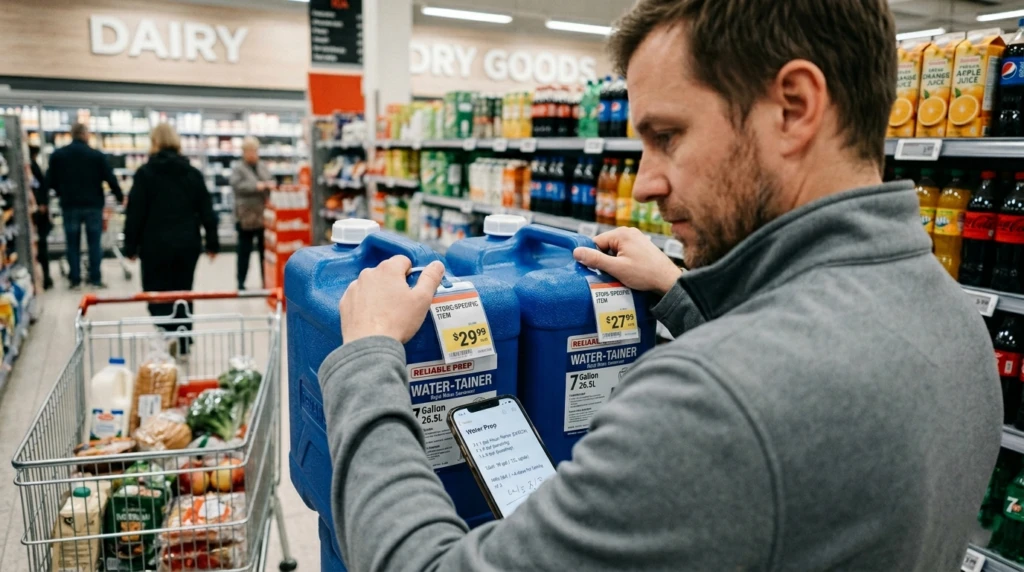 Preparedness doesn’t require thousands of dollars—it requires smart planning and consistent small investments.
The $25/Week Prepping Plan
| Week | Focus | Items | Cost |
|---|---|---|---|
| Week 1 | Water foundation | 1-2 water containers (7-gallon), Water purification tablets | $23-32 |
| Week 2 | Food basics | Canned proteins, Canned vegetables, Rice or pasta | $23-32 |
| Week 3 | More food | Canned fruits, Peanut butter, Oats, Crackers | $19-29 |
| Week 4 | First aid basics | Bandages, gauze, Pain relievers, Antibiotic ointment | $20-31 |
| Week 5 | Lighting | LED headlamp, Batteries (bulk) | $20-35 |
| Week 6 | Communication | Hand-crank radio, Whistle | $23-30 |
| Week 7-12 | Expansion | More water, food, sanitation, tools | $150 |
12-week total: $300 ($25/week)
Result: 30-day preparedness for 1-2 people
Free or Low-Cost Preparedness Steps
Free steps (cost: $0, value: high):
- Create emergency plan – Write evacuation and shelter-in-place plans (2-3 hours, priceless value)
- Practice drills – Evacuation, shelter-in-place, cooking without power (2-3 hours total)
- Learn skills – First aid, CPR, fire safety (free online videos, 3-5 hours)
- Build community – Meet neighbors, share skills and resources (ongoing)
- Inventory and organize – List what you have, organize supplies (2-4 hours)
Common Beginner Prepper Mistakes to Avoid
Learning from others’ mistakes saves money, time, and frustration.
Buying Too Much Too Fast
The mistake: Spending $2,000-5,000 in first month on gear and supplies
Why it’s a mistake:
- Overwhelm: Too much to organize, learn, and maintain
- Wrong purchases: Buying items you don’t need or won’t use
- Budget strain: Can’t sustain spending, leads to quitting
- No testing: Haven’t tested anything, don’t know what works
The better approach:
- Start small: $25-50/week for 12 weeks ($300-600 total)
- Test as you go: Use supplies, identify gaps
- Adjust: Buy what you actually need, not what looks cool
- Sustainable: Build habit of preparedness, not one-time panic buy
Ignoring Water Storage
The mistake: Focusing on food and gear while neglecting water
Why it’s a mistake:
- Water is more critical: Survive 3 days without water, 3 weeks without food
- Harder to improvise: Can’t easily find clean water during emergency
- Heavy and bulky: Can’t quickly acquire during crisis
- Purification takes time: Even with filter, takes time to purify enough
Forgetting About Rotation
The mistake: Buying supplies and never using or rotating them
The better approach:
- FIFO system: First In, First Out rotation
- Regular use: Eat stored food monthly, replace as you go
- Label dates: Know what expires when
- Quarterly audit: Check expiration dates, reorganize
No Practice or Testing
The mistake: Buying supplies but never practicing using them
Practice schedule:
- Week 4: Initial practice of all skills
- Monthly: Cook 1-2 meals using stored food and camp stove
- Quarterly: Full emergency drill (evacuation or shelter-in-place)
- Annually: Review and update entire plan
How to Use Your Prepper Checklist
 A checklist is only useful if you actually use it—here’s how to make it a living system.
Monthly Review and Updates
Monthly checklist (15-30 minutes):
- Water containers full and sealed
- Food organized and accessible
- First aid kit stocked
- Batteries charged or fresh
- Fuel adequate
- Eat 1-2 stored meals
- Replace consumed items
- Check expiration dates
- Move oldest items to front
- Cook one meal without power
- Test one piece of equipment
- Review emergency plan with family
Seasonal Adjustments
- Spring (March-May): Check for winter damage, refresh water storage, update evacuation routes
- Summer (June-August): Check for heat damage, ensure cooling supplies, update hurricane/wildfire plans
- Fall (September-November): Prepare for winter, stock up before holidays, check heating fuel
- Winter (December-February): Check for freeze damage, ensure heating supplies, practice cold-weather plans
Frequently Asked Questions
What should a beginner prepper buy first?
The absolute first purchase: Water storage.
Why water first:
- Most critical: Survive 3 days without water, 3 weeks without food
- Hardest to improvise: Can’t easily find clean water during emergency
- Foundation: Once water is handled, everything else is less urgent
- Affordable: $40-60 gets you 3-7 day supply for family
First week shopping list (priority order):
- Water containers (2-4): $30-60
- Water purification tablets: $8-12
- Canned proteins (tuna, chicken, beans): $15-25
- Canned vegetables: $10-15
- Rice or pasta: $5-10
- Peanut butter: $4-6
Total first week: $72-128
How much does it cost to start prepping?
Minimum viable preparedness (3-day supply, 1-2 people): $100-150
Comfortable preparedness (30-day supply, family of 4): $300-600
Comprehensive preparedness (90-day supply, family of 4): $1,000-2,000
Cost breakdown by week:
- Week 1 (water and food basics): $75-125
- Week 2 (safety and shelter): $50-100
- Week 3 (communication and information): $25-75
- Week 4 (skills and expansion): $50-100
- Total 30-day preparedness: $200-400
How long does it take to become prepared?
Minimum viable preparedness (3-day supply): 1-2 weeks
Comfortable preparedness (30-day supply): 4-8 weeks
Comprehensive preparedness (90-day supply): 3-6 months
The 30-day transformation timeline:
- Week 1: Water and food basics (3-7 day supply)
- Week 2: Safety and shelter (lighting, first aid)
- Week 3: Communication and information (plan, documents)
- Week 4: Skills and expansion (practice, expand to 30 days)
Do I need a bunker or special location?
Short answer: No.
What you actually need:
- Your home: 90% of preparedness happens at home
- Climate-controlled storage: Interior closets, under beds, pantry
- Organized system: Supplies accessible and rotated
Bottom line: You don’t need a bunker, special property, or secret location. You need proper storage in your current home, a clear plan, and the discipline to maintain your supplies.
What’s the difference between prepping and hoarding?
Prepping (healthy preparedness):
- Organized: Supplies are organized, labeled, accessible
- Rotated: Food and supplies are used and replaced regularly
- Planned: Clear purpose for each item, based on likely needs
- Balanced: Preparedness is part of life, not consuming life
- Community-minded: Willing to help others, build mutual aid
Hoarding (unhealthy accumulation):
- Disorganized: Supplies are piled, cluttered, inaccessible
- Unused: Items never used, expired, forgotten
- Impulsive: Buying without plan, “just in case” mentality
- Obsessive: Preparedness consumes life, causes stress
- Isolating: Secretive, paranoid, unwilling to share
Products, Tools & Resources
These are the specific products and tools that help you build your prepper checklist efficiently and affordably.
Water Storage & Purification
- Aqua-Tainer 7-Gallon Water Container (4-pack): Stackable, food-grade, BPA-free ($60-80 for 4)
- WaterBrick 3.5-Gallon Stackable Container (8-pack): Space-efficient, modular design ($80-120 for 8)
- Potable Aqua Water Purification Tablets (50-pack): Lightweight backup purification ($8-12)
- Sawyer Mini Water Filter: Filters 100,000 gallons, compact, affordable ($20-25)
Food Storage Basics
- Augason Farms 30-Day Emergency Food Supply: Taste-tested, good value, 1-person 30-day supply ($150-200)
- Mountain House Essential Bucket: Premium freeze-dried meals, 24 servings ($80-100)
- Rubbermaid Brilliance Pantry Organization Set: Airtight containers for organizing bulk foods ($40-60)
- Sharpie Permanent Markers (12-pack): Label everything with dates ($8-12)
First Aid & Medical
- First Aid Only 298-Piece All-Purpose Kit: Comprehensive, well-organized, good value ($35-50)
- Adventure Medical Kits Trauma Pack: Advanced trauma supplies for serious injuries ($30-45)
- Braun Digital Thermometer: Fast, accurate, battery-powered ($10-15)
- Israeli Bandage (4-pack): Emergency trauma bandage for severe bleeding ($20-30)
Emergency Lighting
- Black Diamond Spot 400 Headlamp: Bright, durable, long battery life ($60-80 for 2)
- Goal Zero Lighthouse 600 Lantern: Rechargeable, USB charging, 400 lumens ($50-70)
- Energizer AA Batteries (48-pack): Long shelf life, reliable ($20-30)
- UCO Stormproof Matches (3-pack): Windproof, waterproof, essential backup ($12-18)
Communication & Information
- Midland ER310 Emergency Radio: Hand-crank, solar, NOAA weather, phone charger ($50-70)
- Midland T71VP3 Two-Way Radios (pair): 38-mile range, rechargeable, weather alerts ($60-80)
- SanDisk 128GB USB Flash Drive: Document backup, photos, important files ($15-25)
- Honeywell Fire/Waterproof Safe: Protect documents, cash, valuables ($60-100)
Cooking & Fuel
- Coleman Classic Propane Stove: Reliable 2-burner, easy to use ($50-70)
- Coleman Propane Fuel (12-pack): 30-day cooking fuel supply ($40-60)
- Stanley Adventure Camp Cook Set: Durable pots and pans for emergency cooking ($40-60)
- P-38 Can Opener (10-pack): Military-style, compact, reliable ($8-12)
Tools & Equipment
- Leatherman Wave+ Multi-Tool: 18 tools, durable, lifetime warranty ($100-120)
- Gorilla Tape (3-pack): Heavy-duty duct tape for repairs ($15-25)
- Paracord 550 (100 feet): Versatile rope for countless uses ($10-15)
- Blue Tarp 10×12: Shelter, ground cover, waterproofing ($15-25)
Your Next Step Starts Now
You’ve got the complete prepper checklist for beginners. You know what to buy, when to buy it, how much to spend, and how to avoid the mistakes that waste money and create false security.
But here’s what separates people who actually become prepared from people who just read about it: taking the first action this week.
Not next month when you have more money. Not next year when you have more time. This week.
Go buy two 7-gallon water containers and fill them. That’s it. $30-40 and 30 minutes. You’ll have just taken the single most important step in emergency preparedness, and you’ll have momentum to continue.
Because preparedness isn’t about having everything—it’s about having something. And right now, you have nothing but good intentions. Turn those intentions into two containers of water this week, and you’ll be further ahead than 90% of people who never start.
The checklist is here. The plan is clear. The only question is whether you’ll use it.