
Hey there! Some links on this page may be affiliate links which means that, if you choose to make a purchase, I may earn a commission at no extra cost to you. I greatly appreciate your support. Read the full disclosure here.
Roughly 35 million American households grew food at home in 2023, according to the National Gardening Association, a number that has continued climbing as supply chain disruptions, inflation, and grid vulnerabilities push more families toward self-reliance. Backyard homesteading in a suburban neighborhood is no longer a fringe lifestyle. It’s a practical, proven strategy for building food security, reducing dependency on fragile systems, and developing the skills that matter when things go sideways.
This guide covers everything a prepper or survivalist needs to start, scale, and sustain a productive suburban homestead, from zoning laws and livestock rules to water conservation and financial returns.
Key Takeaways
- Backyard homesteading in a suburban neighborhood is legal in most U.S. municipalities, but local zoning codes and HOA rules vary significantly and must be checked before starting.
- A 10×10-foot raised bed garden can produce meaningful food yields; even 100 square feet is enough to grow a meaningful portion of a family’s vegetables.
- Chickens are permitted in many suburban areas, but flock size limits, setback requirements, and rooster bans are common restrictions.
- Composting, rainwater harvesting, and companion planting reduce input costs and increase resilience without requiring large land areas.
- The most common beginner mistakes are ignoring local ordinances, overplanting too fast, and neglecting soil health from the start.
- Beekeeping is growing in suburban acceptance, with many cities now explicitly permitting backyard hives under specific conditions.
- Starting costs for a basic suburban homestead range from a few hundred dollars to around $2,000 depending on infrastructure choices.
- Suburban homesteading builds tangible preparedness skills, food production, water management, and animal husbandry, that no amount of stockpiling can replace.
What Is Backyard Homesteading and How Do You Start
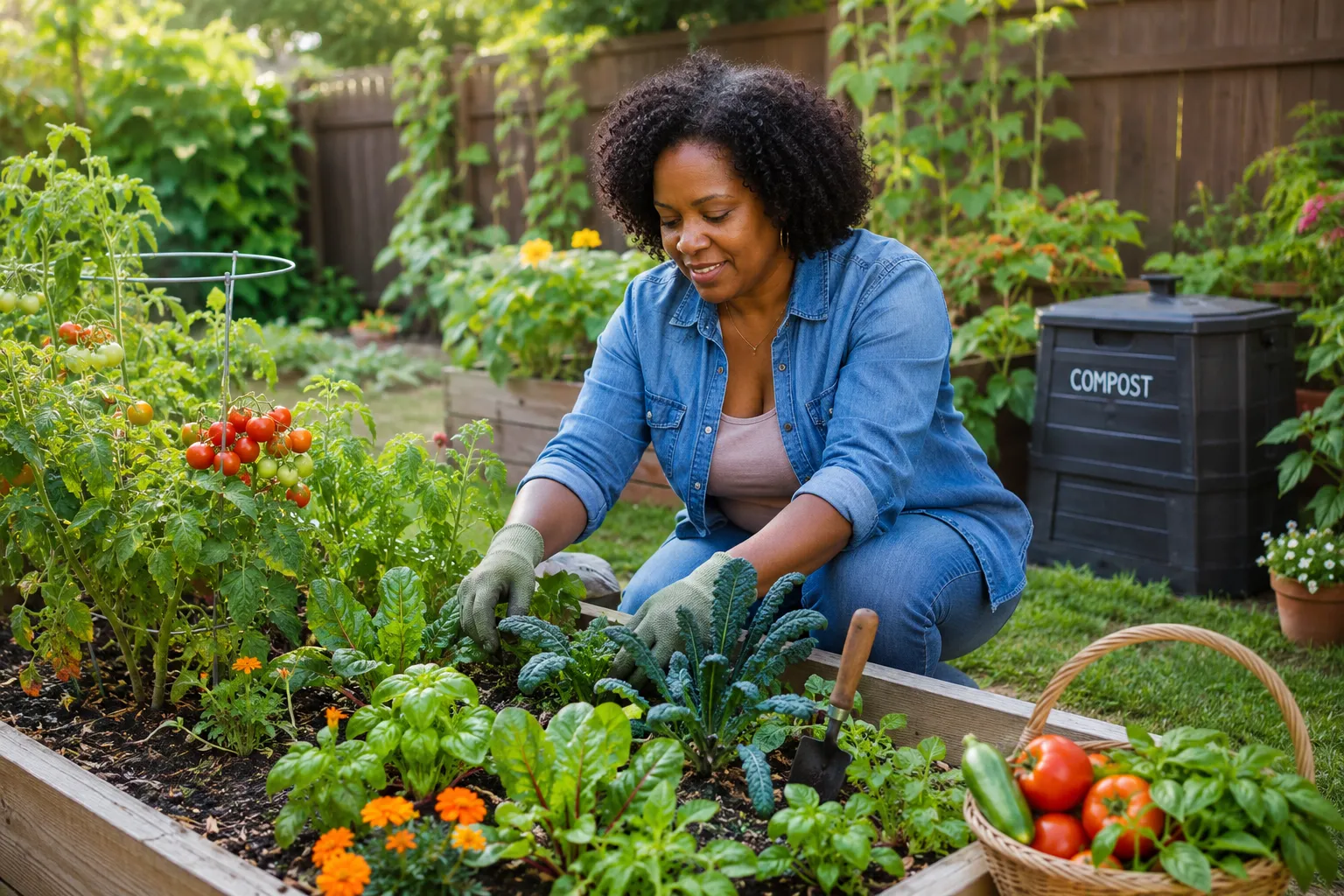
Backyard homesteading is the practice of producing food, managing resources, and building self-sufficiency from a residential property, typically a suburban lot, rather than a large rural farm. It combines vegetable gardening, small-scale animal husbandry, food preservation, composting, and water management into a cohesive system that reduces dependence on grocery stores and municipal infrastructure.
For preppers, it’s not just a hobby. It’s an active layer of resilience.
How to start:
- Assess your space. Walk your yard and note sunlight patterns (most vegetables need 6-8 hours of direct sun), water access points, fence lines, and soil condition.
- Check local rules first. Before buying a single seed packet, research your city’s zoning ordinances and any HOA covenants. More on this below.
- Start with soil. Build or amend one raised bed with quality compost-rich soil. Healthy soil is the foundation everything else depends on.
- Choose one animal or none. Beginners often try chickens, bees, and a full garden simultaneously. Pick one focus for your first season.
- Add water infrastructure. Install at least one rain barrel early. It pays for itself and builds a critical habit.
- Preserve what you grow. Canning, dehydrating, and fermenting turn a seasonal harvest into a year-round food supply.
The goal in year one isn’t maximum output. It’s building systems, learning your microclimate, and developing skills that compound over time.
Backyard Homesteading Zoning Laws and HOA Restrictions
Zoning laws and HOA rules are the single most important factor to research before starting backyard homesteading in a suburban neighborhood. Violating them can result in fines, forced removal of animals or structures, and neighbor conflict that undermines everything you’re building.
What to check:
- City or county zoning ordinances: Search your municipality’s code for terms like “urban agriculture,” “backyard chickens,” “beekeeping,” and “accessory structures.” Many cities have updated these codes in recent years to be more permissive.
- HOA covenants: If you live in an HOA community, your CC&Rs (Covenants, Conditions, and Restrictions) may prohibit visible garden beds, outbuildings like coops, or any livestock regardless of city rules. HOA rules are private contracts and generally override local permissiveness.
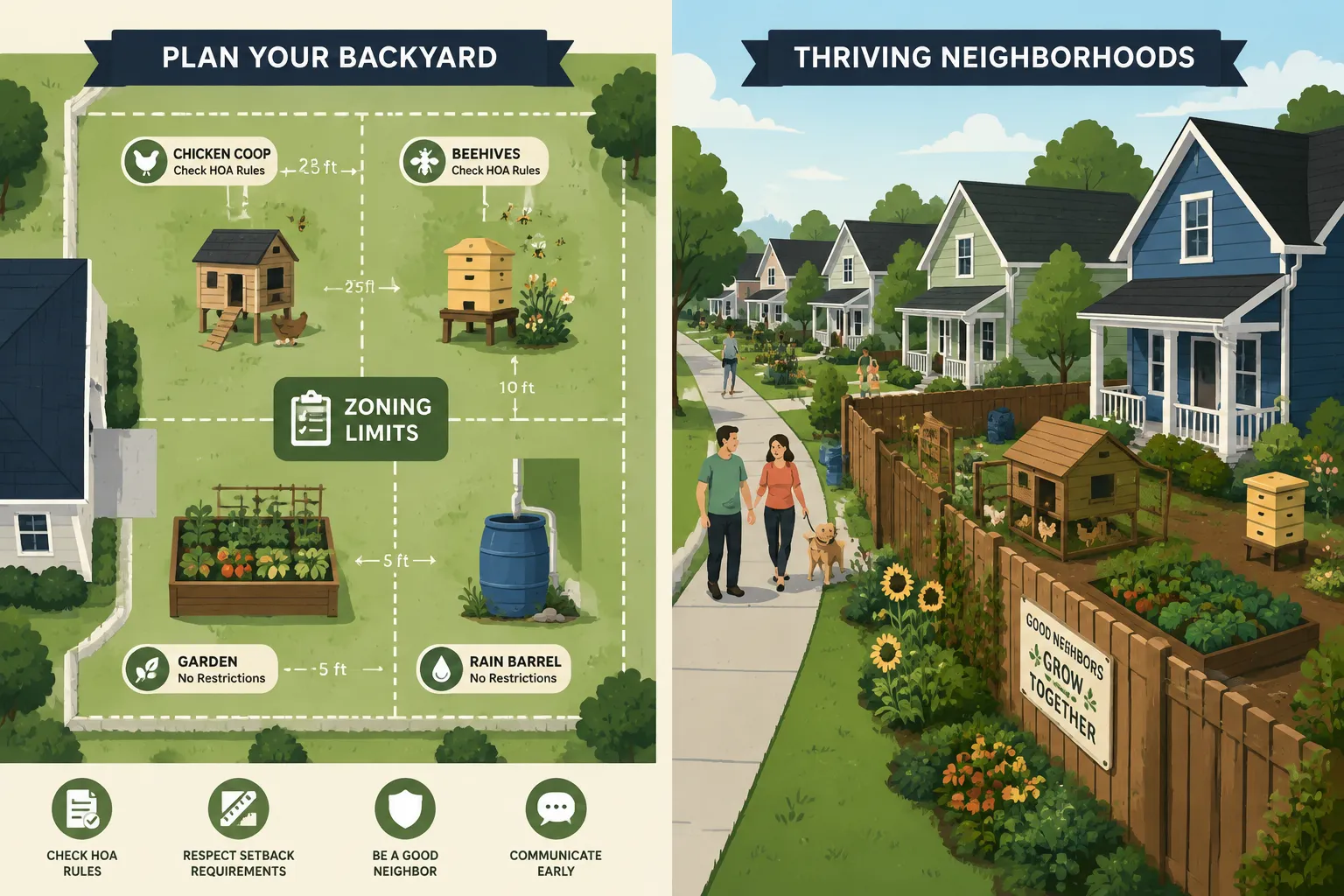
- Setback requirements: Even where chickens or bees are permitted, coops and hives typically must be placed a minimum distance (often 10-25 feet) from property lines and structures.
Decision rule: If your HOA prohibits livestock or visible gardens, focus on container gardening, indoor growing systems, and food preservation skills first. Challenge restrictive HOA rules through your community’s amendment process, many have been successfully changed by organized residents.
Can You Have Chickens in a Suburban Backyard
Chickens are permitted in a large and growing number of U.S. suburban jurisdictions, but almost always with restrictions. The most common rules include flock size limits (typically 4-6 hens), no roosters, minimum coop setbacks from property lines, and requirements that coops be kept sanitary.
Before getting chickens:
- Confirm your city’s ordinance and any HOA rules
- Check setback distances for your specific lot size
- Understand that most suburban permits cover hens only, roosters are almost universally banned in residential areas due to noise
Why chickens matter for preppers: A small laying flock of 4 hens can produce 3-5 eggs per day during peak season. That’s a consistent, renewable protein source that no amount of freeze-dried food can fully replicate. Chickens also consume kitchen scraps, reducing waste, and their manure is a valuable compost amendment.
Common mistake: Buying chicks before securing housing. A proper coop with predator-proof hardware cloth (not standard chicken wire), a secure latch system, and adequate ventilation is non-negotiable in suburban environments where raccoons, foxes, and hawks are active.
How Much Space Do You Need for a Vegetable Garden
A dedicated beginner can produce meaningful food from as little as 100 square feet of growing space. Experienced suburban homesteaders using intensive planting methods, such as square foot gardening, can generate a significant portion of a family’s vegetable needs from 400-600 square feet.
Practical benchmarks:
- 100 sq ft: Salad greens, herbs, radishes, and some tomatoes. Supplements grocery shopping.
- 200-400 sq ft: Adds beans, squash, peppers, and root vegetables. Meaningful food security contribution.
- 400-600 sq ft: With succession planting and vertical growing, a family of four can cover a substantial share of their vegetable consumption during the growing season.
Vertical growing (trellises, cages, wall planters) effectively multiplies usable space. A single 4×8 raised bed with a trellis can grow cucumbers, pole beans, and tomatoes simultaneously.
For preppers specifically: Prioritize calorie-dense crops over salad greens. Potatoes, winter squash, dried beans, and sweet corn deliver more caloric return per square foot than lettuce. Balance nutrition with caloric density in your planting plan.
Best Vegetables to Grow in Small Suburban Yards
The best vegetables for small suburban homesteads are those that produce high yields in compact spaces, store well, and provide genuine nutritional value. For preppers, the calculus adds one more factor: caloric density.
Top performers for suburban homesteads:
| Crop | Space Needed | Why It Matters |
|---|---|---|
| Tomatoes | 2 sq ft per plant | High yield, preservable, versatile |
| Pole beans | 1 sq ft per plant | Protein, easy to dry and store |
| Winter squash | 4 sq ft per plant | High calories, stores for months |
| Kale/Swiss chard | 1 sq ft per plant | Nutritional powerhouse, cold-hardy |
| Potatoes | 1 sq ft per plant | Calorie-dense, stores well |
| Garlic | 6 inches per bulb | Medicinal, long shelf life |
| Zucchini | 3 sq ft per plant | Extremely productive, fast-growing |
Avoid crops that take significant space for low caloric return in a survival context, melons and pumpkins are satisfying but space-intensive. In a small yard, beans, tomatoes, and winter squash deliver the best preparedness value.
Backyard Composting for Beginners in Suburbs
Composting is the most impactful, lowest-cost practice a suburban homesteader can adopt. It converts kitchen scraps and yard waste into free, high-quality soil amendment, reducing dependence on purchased inputs and closing the nutrient loop on your property.
Basic hot composting method:
- Layer “greens” (nitrogen-rich: vegetable scraps, coffee grounds, fresh grass) with “browns” (carbon-rich: dry leaves, cardboard, straw) in roughly a 1:3 ratio by volume.
- Keep the pile moist but not waterlogged, like a wrung-out sponge.
- Turn the pile every 1-2 weeks to introduce oxygen.
- In 6-12 weeks, you’ll have finished compost ready to amend beds.
Suburban considerations: Use a contained bin (tumbler or enclosed three-bin system) rather than an open pile. This controls odors, deters pests, and is more acceptable to neighbors. Avoid composting meat, dairy, or cooked foods in open systems.
Never compost: Diseased plant material, pet waste, or anything that will attract rodents. In a suburban environment, rodent attraction is the fastest way to create neighbor conflict.
Raising Bees in Residential Neighborhoods
Beekeeping is legal in a growing number of suburban and even urban jurisdictions across the United States, and it’s one of the highest-value additions a suburban homesteader can make. A single productive hive can yield 30-60 pounds of honey per year while dramatically improving garden pollination.
Before installing a hive:
- Verify local ordinances, many cities now have specific beekeeping regulations rather than outright bans
- Check HOA rules separately from city codes
- Understand setback requirements (hives are often required to be 10+ feet from property lines, with flyway barriers like fences directing bees upward)
- Take a local beekeeping course before your first hive, the learning curve is real
For preppers: Honey is one of the few foods with an indefinite shelf life when stored properly. Beeswax has practical applications in fire-starting, wood preservation, and homemade candles. A productive hive is a genuine long-term preparedness asset.
Common mistake: Purchasing bees without having the hive fully assembled and sited. Bees need a permanent home from day one.
How to Keep Neighbors Happy While Homesteading
Neighbor relations are a genuine operational concern for backyard homesteading in a suburban neighborhood. A single complaint can trigger a zoning inspection, HOA action, or ongoing conflict that makes the entire enterprise stressful.
Practical strategies:
- Give before you take. Share eggs, produce, and honey with immediate neighbors. People who benefit from your homestead rarely complain about it.
- Keep everything clean and contained. Odors from poorly managed compost or dirty coops are the number one complaint trigger. Manage them proactively.
- Communicate proactively. If you’re adding chickens or bees, let adjacent neighbors know in advance. Surprises generate resentment; transparency builds goodwill.
- Maintain curb appeal. Raised beds with clean lumber, painted coops, and tidy garden borders look intentional rather than neglected. Aesthetics matter in suburban environments.
- Know your rights. If you’re operating within local ordinances, you have legal standing. Document your compliance in case of disputes.
Cost to Start Backyard Homesteading
Starting a basic suburban homestead requires an upfront investment, but it’s far more accessible than most people assume. A functional beginner setup, one or two raised beds, a small chicken coop, a rain barrel, and basic tools, can be built for $500-$1,500 depending on whether you source materials new or salvaged.
Estimated startup costs:
- Two 4×8 raised beds (materials + soil): $150-$300
- Starter chicken coop (4-6 hens): $200-$600 (DIY) or $400-$1,000 (purchased)
- 4-6 laying hens: $15-$25 per bird
- Rain barrel (55-gallon): $30-$80 (DIY from food-grade barrel) or $80-$150 (commercial)
- Basic tools (shovel, hoe, hand trowel, watering can): $50-$150
- Seeds and starts for first season: $30-$80
Total range: Approximately $500-$2,000 for a functional first-year setup.
Is it worth it financially? A well-managed suburban homestead can offset $1,000-$3,000 or more in annual grocery costs, depending on scale, crop selection, and food preservation practices. The financial return improves significantly in years two and three as infrastructure costs are already paid.
Common Mistakes Beginners Make With Suburban Homesteading
Most beginners fail not because suburban homesteading is difficult, but because they skip foundational steps in the rush to get growing.
The most costly mistakes:
- Ignoring local rules before investing. Discovering your HOA prohibits chickens after you’ve built a coop is an expensive and demoralizing lesson.
- Starting with poor soil. Planting in native suburban soil without amendment almost always produces disappointing results. Invest in quality compost and raised bed mix first.
- Overplanting in year one. Trying to grow 20 different crops simultaneously creates management chaos. Start with 5-8 crops you’ll actually eat and learn them well.
- Underestimating predator pressure. Raccoons, foxes, hawks, and neighborhood dogs are relentless. Hardware cloth, secure latches, and covered runs are not optional.
- Neglecting succession planting. Planting everything at once creates a feast-or-famine cycle. Stagger plantings every 2-3 weeks for continuous harvest.
- No food preservation plan. Growing food without a plan to preserve it means most of the harvest is wasted or overwhelms the household in a short window.
Backyard Homesteading Without a Lot of Land
Limited space is not a barrier to meaningful suburban homesteading. Vertical growing, container gardening, intensive planting methods, and smart crop selection allow even a small urban lot to produce significant food.
Space-maximizing strategies:
- Vertical growing: Trellises, cattle panels, and wall-mounted planters multiply growing area without expanding footprint.
- Container gardening: Potatoes, tomatoes, peppers, and herbs all grow productively in 5-15 gallon containers on patios and balconies.
- Square foot gardening: This intensive method (developed by Mel Bartholomew) plants crops at precise spacings to maximize yield per square foot, typically producing 4-5 times more than traditional row gardening.
- Dwarf and compact varieties: Many modern seed varieties are bred specifically for small spaces, bush tomatoes, patio peppers, and compact squash all perform well in tight quarters.
- Food forests: Even a single fruit tree underplanted with herbs, berries, and ground covers creates a multi-layered productive system in a small footprint.
For preppers with minimal space: Prioritize high-calorie, high-nutrition crops in containers (potatoes, beans, tomatoes) and dedicate any ground space to perennial food plants that produce year after year without replanting.
How to Deal With Pests and Predators in the Suburbs
Suburban environments have a full complement of pests and predators, and managing them is a core operational skill for any backyard homesteader. The goal is integrated pest management, reducing damage without creating chemical dependency or harming beneficial insects.
Garden pests:
- Aphids and caterpillars: Introduce beneficial insects (ladybugs, lacewings) and use neem oil spray as a first response. Row covers protect seedlings from most insects.
- Slugs and snails: Diatomaceous earth around bed perimeters and copper tape on raised bed edges are effective non-toxic deterrents.
- Deer and rabbits: Physical exclusion (hardware cloth fencing at least 3 feet high, buried 6 inches underground) is the only reliable solution.
Livestock predators:
- Raccoons: They can open simple latches. Use carabiner clips or two-step latches on all coop doors.
- Hawks: Covered runs with hardware cloth overhead are essential for free-range chickens in suburban areas.
- Rats: Attracted by spilled feed. Use metal feed containers, clean up spills immediately, and elevate coops off the ground.
Decision rule: If a pest or predator problem persists after two seasons despite physical barriers, reassess your setup rather than escalating to chemical controls. Chemical pesticides kill beneficial insects and disrupt the ecosystem balance that makes a homestead productive long-term.
Water Conservation Tips for Suburban Homesteads
Water management is one of the most strategically important skills in suburban homesteading, and it directly overlaps with core prepper priorities around water security. Reducing municipal water dependence while maintaining productive gardens requires intentional infrastructure.
Core water conservation practices:
- Rainwater harvesting: A single 55-gallon rain barrel connected to a downspout can capture thousands of gallons per year depending on roof size and local rainfall. Multiple barrels linked in series dramatically increase capacity. (Check local regulations, some states restrict rainwater collection, though most now permit it.)
- Drip irrigation: Delivers water directly to root zones, reducing evaporation by 30-50% compared to overhead watering. Inexpensive timer-controlled drip systems automate the process.
- Mulching: A 3-4 inch layer of straw, wood chips, or shredded leaves around plants dramatically reduces soil moisture evaporation and suppresses weeds simultaneously.
- Soil organic matter: High-compost soil retains moisture far better than compacted native soil. This is another reason building soil health is the foundational investment.
- Swales and berms: On sloped lots, simple earthworks can slow and sink rainwater into the soil rather than letting it run off.
For deeper water preparedness strategies, Preppers HQ’s Ultimate Emergency Water Storage and Purification Guide covers long-term water security in detail.
Is Backyard Homesteading Worth It Financially
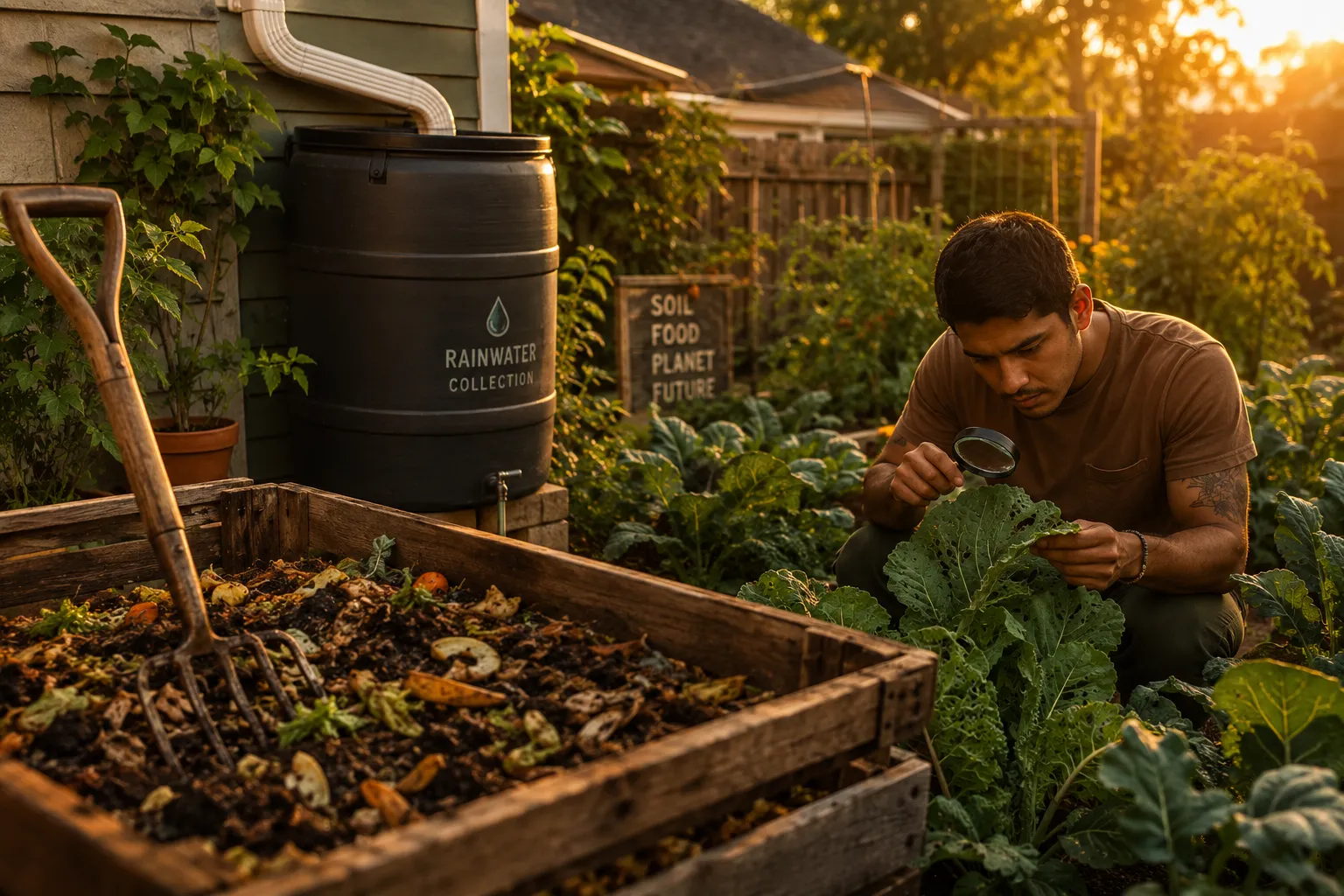
For most suburban preppers and homesteaders, the financial return on a well-managed backyard homestead is positive, but the real value goes well beyond grocery savings. The combination of reduced food costs, developed skills, and genuine preparedness infrastructure makes it one of the highest-return investments a prepper can make.
The financial case:
- A productive 400 sq ft garden can realistically offset $800-$2,000 in annual grocery costs, based on USDA retail price data for common vegetables and herbs.
- A small laying flock of 4-6 hens produces eggs valued at roughly $600-$1,200 per year at current retail prices for free-range eggs.
- Compost production eliminates the need for purchased fertilizers and soil amendments, saving $100-$300 annually.
- Infrastructure costs (beds, coop, tools) are largely one-time investments that depreciate over many years.
The non-financial case: No grocery store can give you the skill to grow food under pressure. No stockpile lasts forever. A suburban homestead builds the knowledge, habits, and systems that function when supply chains don’t. That’s the preparedness value that doesn’t appear on a spreadsheet.
Decision rule: If your primary goal is maximum financial return, focus on high-value crops (herbs, tomatoes, salad greens) and eggs. If your primary goal is preparedness, prioritize calorie-dense crops, food preservation skills, and water infrastructure.
Frequently Asked Questions
Do I need a permit to grow vegetables in my backyard?
In most U.S. jurisdictions, growing vegetables in a private backyard does not require a permit. However, raised bed structures above a certain height, water collection systems, or outbuildings like coops may require permits. Check your local building and zoning codes before constructing any permanent structure.
How many chickens can I legally keep in a suburban area?
Most suburban jurisdictions that permit backyard chickens limit flocks to 4-6 hens. Some allow up to 10. Roosters are almost universally prohibited in residential zones. Always verify the specific ordinance for your municipality, rules vary significantly even between neighboring cities.
Can I start a suburban homestead if I rent my home?
Yes, with limitations. Container gardens, indoor growing systems, and small-scale food preservation are renter-friendly. Raised beds, coops, and permanent water infrastructure typically require landlord permission. Get any agreements in writing before investing.
What’s the easiest crop to start with as a beginner?
Zucchini, radishes, and salad greens are the most forgiving beginner crops. They germinate quickly, tolerate imperfect conditions, and produce results fast enough to build confidence. Tomatoes are highly rewarding but require more attention to soil, watering, and support.
How do I deal with an HOA that prohibits backyard gardens?
Review your CC&Rs carefully, some HOA rules prohibit “vegetable gardens” in front yards but are silent on backyards. If the prohibition is explicit, you can petition the HOA board for a rule amendment, organize like-minded neighbors to vote for changes, or focus on container gardens and indoor growing that don’t technically violate the covenant.
Is backyard beekeeping dangerous for neighbors?
Managed honey bee hives maintained by a trained beekeeper pose minimal risk to neighbors. Honey bees are not aggressive when unprovoked and foragers typically fly above human height once they leave the hive. Proper siting (flyway barriers, setbacks) and good management practices reduce any risk to near zero.
How long does it take to see a return on homestead investments?
Most suburban homesteaders see a positive return on garden infrastructure within 1-2 growing seasons. Chicken coops take 1-3 years to recoup costs depending on feed prices and egg production. Perennial plantings (fruit trees, berry bushes) take 2-5 years to produce meaningful yields but then produce for decades.
What’s the best way to preserve a large vegetable harvest?
Water bath canning, pressure canning, dehydrating, and lacto-fermentation are the four most practical preservation methods for suburban homesteaders. Each suits different crops. Tomatoes, pickles, and jams are ideal for water bath canning. Meats and low-acid vegetables require pressure canning. Root vegetables store well in cool, dark conditions without processing.
Can I raise ducks instead of chickens in the suburbs?
Ducks are permitted under some suburban livestock ordinances, but less commonly than chickens. They require access to water for bathing (a kiddie pool suffices), produce wetter manure, and are noisier than hens. Check your local ordinance specifically, ducks are often not covered under “backyard chicken” provisions.
How do I start composting without attracting rats?
Use an enclosed tumbler or sealed bin rather than an open pile. Never compost meat, dairy, cooked foods, or bread. Bury food scraps under carbon material (dry leaves, cardboard) when adding them. Keep the bin away from the house and fence lines. Rats are attracted by accessible food, not by composting itself, proper management eliminates the risk.
Conclusion
Backyard homesteading in a suburban neighborhood is one of the most practical, high-return investments a prepper can make in 2026. It doesn’t require acreage, a rural address, or a dramatic lifestyle change. It requires research, patience, and a willingness to build skills incrementally.
Actionable next steps:
- This week: Research your city’s zoning ordinances and HOA rules. Know what’s permitted before spending a dollar.
- This month: Assess your yard’s sunlight, water access, and soil condition. Build or purchase one raised bed and amend it with quality compost.
- This season: Plant 5-8 crops suited to your climate and space. Learn succession planting. Install at least one rain barrel.
- Year one goal: Establish systems, composting, water collection, and food preservation, not just production. Systems compound. Harvests don’t.
The skills built through suburban homesteading, growing food, managing water, raising animals, and preserving harvests, are the same skills that matter most when the grid goes down, supply chains fail, or economic pressure makes every grocery bill a strategic decision. Start small, build deliberately, and let the homestead grow with your confidence.
For deeper guidance on related preparedness systems, explore Preppers HQ’s guides on off-grid living, emergency water storage, and how to start homesteading from scratch.
Products, Tools, and Resources
Building a functional suburban homestead is easier when you start with the right equipment. These are tools and resources worth knowing about:
- Raised bed kits: Cedar or composite raised bed kits (available from brands like Vego Garden or Greenes Fence) are rot-resistant, look clean in suburban settings, and assemble in under an hour.
- Rain barrel systems: The RainReserve or Algreen Products 50-gallon rain barrel systems are well-reviewed, food-safe options that connect to standard downspouts.
- Chicken coops: Omlet’s Eglu Cube and Precision Pet Products coops are predator-resistant, easy to clean, and designed for suburban aesthetics.
- Composting: The FCMP Outdoor IM4000 tumbling composter is a top-rated enclosed system that works well in suburban environments where open piles create neighbor concerns.
- Beekeeping starter kits: Mann Lake and Dadant both offer complete beginner hive kits with protective gear. Always pair equipment with a local beekeeping association course.
- Books: “The Market Gardener” by Jean-Martin Fortier, “Storey’s Guide to Raising Chickens” by Gail Damerow, and “The Backyard Homestead” by Carleen Madigan are three of the most practical references for suburban homesteaders at any skill level.
- Seed suppliers: Baker Creek Heirloom Seeds, Seed Savers Exchange, and Johnny’s Selected Seeds all offer open-pollinated and heirloom varieties suited to small-scale growing, important for preppers who want to save seeds year over year.