
Hey there! Some links on this page may be affiliate links which means that, if you choose to make a purchase, I may earn a commission at no extra cost to you. I greatly appreciate your support. Read the full disclosure here.
Homesteading on a budget getting started cheap is entirely possible, even with limited land, limited cash, and zero prior experience. The most cost-effective approach starts with skills and soil before spending on infrastructure. Most beginners can launch a functional homestead for under $500 in the first year by prioritizing food production, composting, and seed saving over expensive equipment.
Key Takeaways
- Homesteading on a budget getting started cheap begins with what you already have, a backyard, a balcony, or even a windowsill
- The single highest-ROI first investment is seeds and soil amendments, not tools or livestock
- You don’t need land to homestead; container gardening, community plots, and urban farming are legitimate starting points
- Free resources, library seed swaps, Facebook Marketplace, Craigslist, and local farming groups, can supply most starter tools and plants
- Chickens and rabbits offer the best return on investment among small livestock for beginners
- Composting and seed saving are the two fastest ways to eliminate recurring homestead costs
- Most beginners overspend on infrastructure in year one; skills cost nothing and pay dividends forever
- The first year of homesteading is rarely profitable, expect it to be an investment in capability, not immediate cash savings
What Is Homesteading and How Do You Start With No Money
Homesteading is the practice of living with greater self-sufficiency, growing your own food, preserving it, raising animals, and reducing dependence on commercial supply chains. For preppers and survivalists, it’s not a lifestyle trend; it’s a resilience strategy. You can start with zero dollars by focusing on three things: learning, foraging, and using what’s already around you.
Starting with no money looks like this:
- Learn first. County extension offices, YouTube, and public libraries offer free homesteading education. The knowledge base costs nothing.
- Start a compost pile. Kitchen scraps, cardboard, and yard waste are your first inputs, all free.
- Grow from kitchen scraps. Green onions, lettuce, and sweet potatoes can be regrown from grocery store remnants in a glass of water.
- Join local seed libraries. Many public libraries and community gardens offer free seed packets to residents.
- Trade labor for knowledge. Offer to help an experienced homesteader in exchange for mentorship, seedlings, or surplus produce.
The mindset shift matters most at this stage. Homesteading on a budget getting started cheap is less about buying the right gear and more about developing the right habits.
How Much Does It Actually Cost to Start Homesteading
The honest answer: a functional beginner homestead can be launched for $200 to $500 in year one if you’re disciplined about priorities. A full setup with raised beds, basic tools, a small flock of chickens, and canning supplies runs closer to $1,000 to $2,500 depending on your region and what you already own.
Here’s a realistic budget breakdown for a first-year beginner:
| Category | Low-End Cost | Mid-Range Cost |
|---|---|---|
| Seeds and starts | $20 – $40 | $60 – $100 |
| Soil and amendments | $30 – $60 | $80 – $150 |
| Basic hand tools | $0 – $40 (used) | $60 – $120 |
| Canning/preservation supplies | $20 – $50 | $80 – $150 |
| Small livestock (6 hens) | $60 – $120 | $150 – $250 |
| Fencing/housing (DIY) | $50 – $100 | $200 – $400 |
| Total estimate | $180 – $410 | $630 – $1,170 |
The biggest cost driver in most budgets isn’t livestock or seeds, it’s infrastructure. Raised beds, fencing, water systems, and storage all add up fast. Build these incrementally from reclaimed or salvaged materials whenever possible.
Cheapest Ways to Start a Homestead on a Tight Budget
The cheapest entry point into homesteading is always the garden. A 4×8 raised bed built from reclaimed lumber, filled with a mix of topsoil and compost, can produce hundreds of dollars worth of vegetables annually for an initial investment of $30 to $60.
The most cost-effective first steps, ranked by impact per dollar:
- Start composting immediately. Free inputs, free fertilizer output within 60 to 90 days.
- Grow high-yield, easy crops first. Zucchini, kale, green beans, and tomatoes produce heavily with minimal care.
- Source materials from the waste stream. Pallets, food-grade buckets, and salvaged lumber are often free or nearly free.
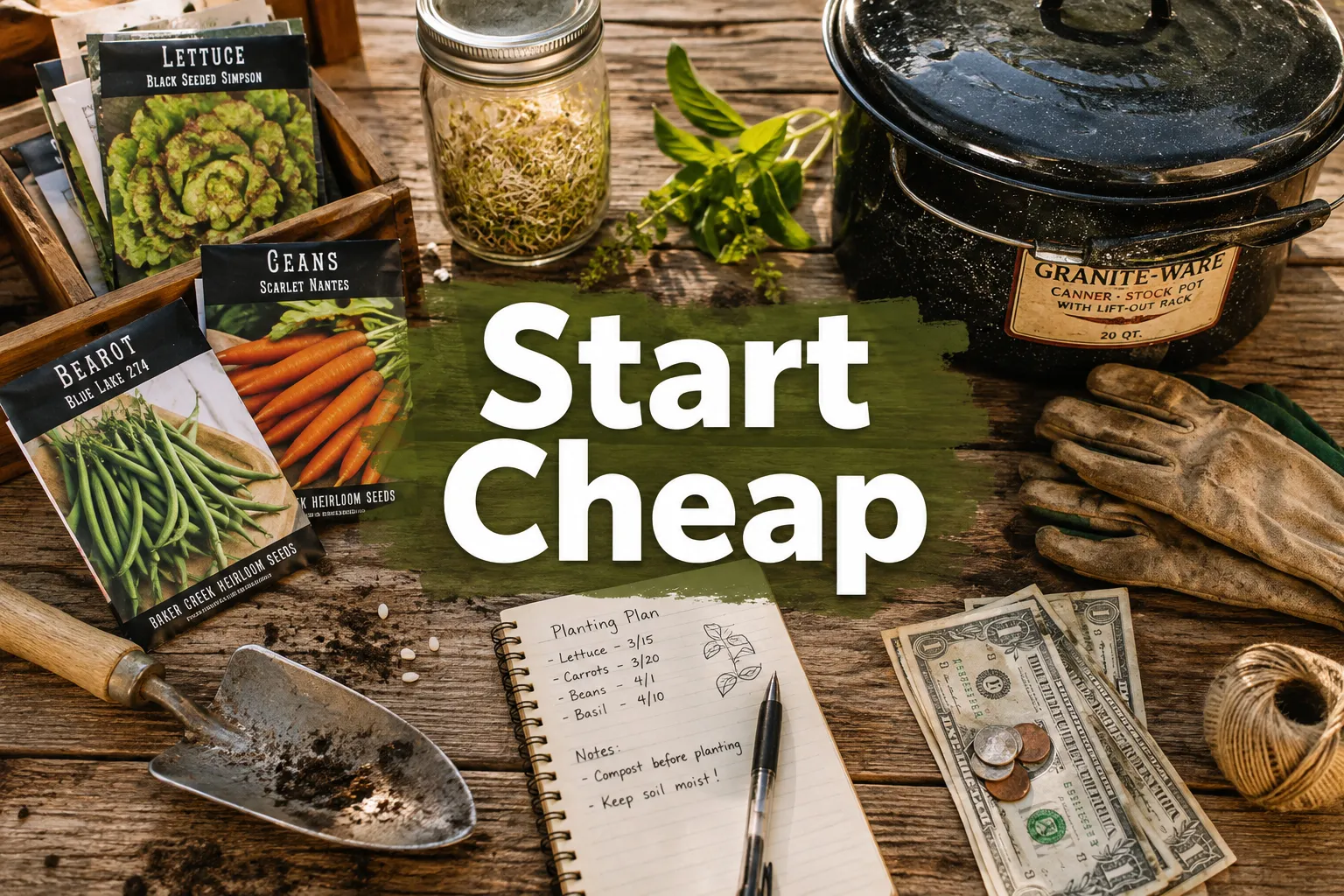
- Preserve what you grow. Water bath canning requires only a large pot and mason jars, both available used for under $20.
- Save seeds from the first harvest. One packet of open-pollinated seeds becomes a permanent, self-renewing supply.
The key principle: spend money on consumables (seeds, soil) before spending on infrastructure. A $200 raised bed that sits empty helps no one. A $5 packet of heirloom tomato seeds in decent soil produces real food.
Can You Homestead on Less Than an Acre
Yes, and many experienced homesteaders argue that a quarter-acre or less is actually easier to manage than a large property in the early years. Intensive growing methods like square foot gardening, vertical trellising, and container gardening can produce a significant portion of a family’s vegetable needs from very small spaces.
On a standard suburban lot (roughly 0.1 to 0.25 acres), a committed homesteader can realistically:
- Grow 30 to 50 percent of a family’s annual vegetable consumption
- Keep 4 to 6 laying hens (where local ordinances allow)
- Maintain a productive compost system
- Grow culinary and medicinal herbs
- Preserve seasonal abundance through canning, dehydrating, and fermenting
The constraint isn’t usually space, it’s zoning. Check local ordinances before investing in livestock or permanent structures. Many municipalities have updated their codes in recent years to allow backyard chickens, bees, and small gardens.
Do You Need Land to Homestead or Can You Do It in the City
You do not need land to homestead. Urban homesteading is a legitimate and growing practice that applies the same core principles, food production, preservation, and self-reliance, to apartment balconies, rooftops, and community garden plots.
Homesteading on a budget in an apartment or small space focuses on:
- Container gardening on balconies or windowsills (tomatoes, peppers, herbs, lettuce)
- Indoor microgreens and sprouts, one of the highest-nutrition, lowest-cost food production methods available
- Fermentation, sauerkraut, kimchi, kefir, and sourdough require no outdoor space
- Community garden plots, often available for $20 to $50 per season in most cities
- Worm composting (vermicomposting), a compact, odor-free composting method that works in a closet or under a kitchen sink
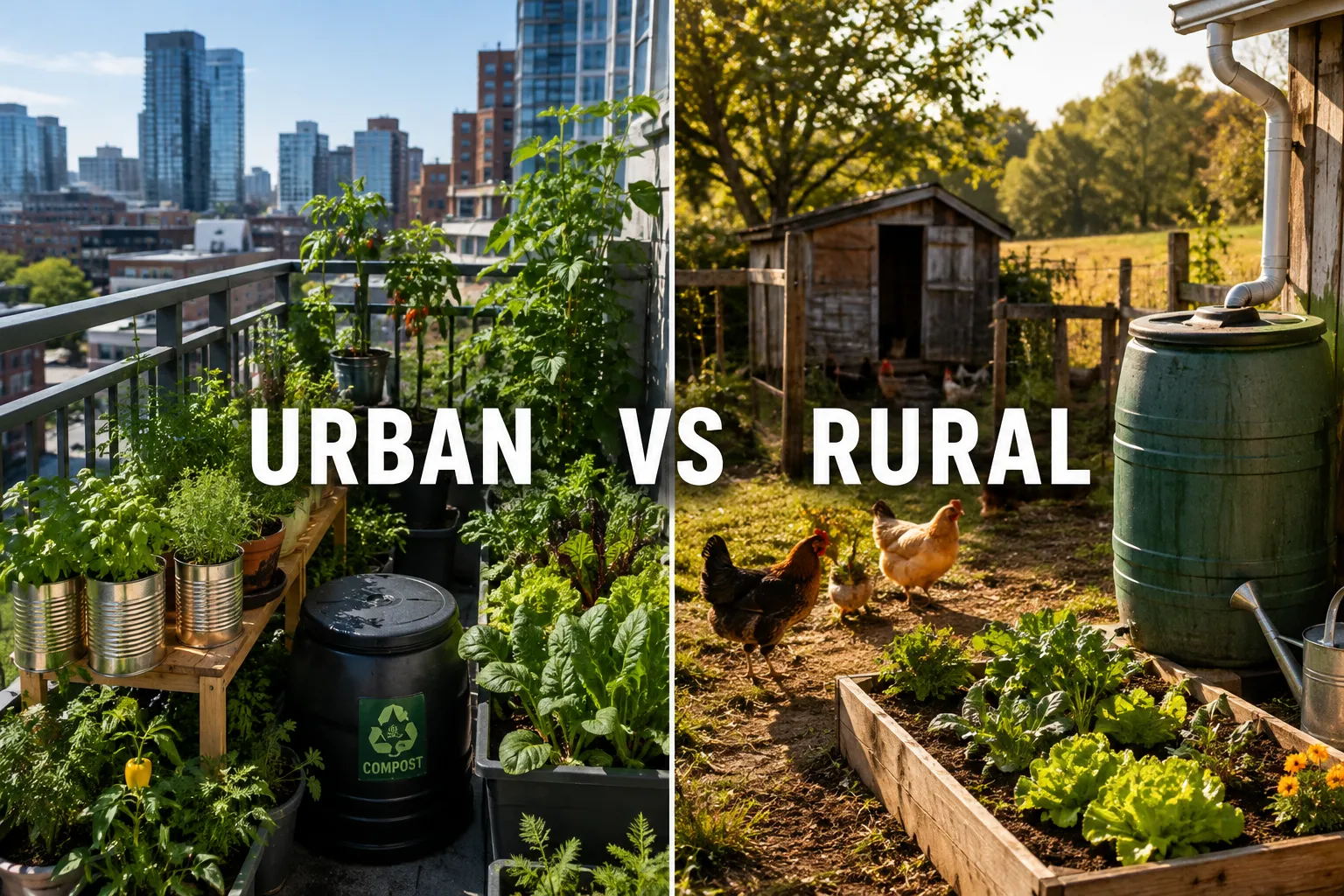
For preppers in urban environments, this approach also doubles as a food security buffer. A balcony that produces fresh greens year-round is a meaningful asset when supply chains tighten.
Free or Cheap Homesteading Tools and Supplies: Where to Find Them
Most homesteading tools don’t need to be new. The used market for garden tools, canning equipment, and small livestock supplies is deep and consistently underpriced.
Where to find free or cheap homesteading supplies in 2026:
- Facebook Marketplace and Craigslist, hand tools, canning jars, raised bed lumber, and even livestock are listed daily
- Estate sales and farm auctions, often the best source for quality cast-iron cookware, canning equipment, and hand tools
- Freecycle and Buy Nothing groups, neighbors regularly give away excess garden starts, seeds, and equipment
- Local feed stores, often have bulletin boards with free or cheap livestock, surplus hay, and equipment
- Library seed libraries, free open-pollinated seeds available in most mid-sized cities
- County extension offices, free soil testing, free educational resources, sometimes free compost programs
- Restaurant supply stores, food-grade buckets (essential for water and grain storage) are often free from bakeries and delis
The rule of thumb: never buy new what you can find used, and never buy used what someone will give you free.
Best Low-Cost Crops and Animals for Beginners
The best crops for budget homesteaders are those that produce heavily, store well, and require minimal inputs. The best animals are those that convert cheap feed into valuable outputs with low startup costs.
Top low-cost crops for beginners:
- Zucchini and summer squash, near-impossible to fail, extremely productive
- Green beans (bush variety), no staking required, heavy producer
- Kale and Swiss chard, cut-and-come-again harvests for months
- Sweet potatoes, grow from slips you can start yourself, stores for months
- Garlic, plant in fall, harvest in summer, replant from your own bulbs indefinitely
- Dried beans and corn, calorie-dense, stores for years, seeds are cheap
What animals give you the most return on investment:
- Laying hens offer the best ROI for most beginners. Six hens cost roughly $60 to $120 to purchase and produce 4 to 5 dozen eggs per week at full lay. Feed costs run approximately $15 to $25 per month for a small flock.
- Meat rabbits are the second-best option. They reproduce quickly, require minimal space, and convert feed to meat efficiently. A breeding trio can be started for under $100.
- Ducks are hardier than chickens in wet climates, lay consistently, and forage more aggressively, reducing feed costs.
Avoid goats, pigs, and cattle as first animals on a tight budget. Their infrastructure requirements, feed costs, and veterinary expenses can quickly exceed the value they produce in year one.
How to Start Composting and Saving Seeds for Free
Composting and seed saving are the two most powerful free inputs a budget homesteader can develop. Both eliminate recurring costs and build long-term self-sufficiency.
Starting a compost pile for free:
- Choose a shaded corner of your yard or a spot near the garden
- Layer brown materials (cardboard, dried leaves, straw) with green materials (kitchen scraps, grass clippings, fresh plant waste) in roughly a 3:1 brown-to-green ratio
- Keep it moist but not saturated
- Turn it every 1 to 2 weeks to accelerate decomposition
- Finished compost is ready in 60 to 90 days in warm weather
Saving seeds for free:
- Start with open-pollinated or heirloom varieties, hybrid seeds don’t breed true
- Let a few plants from each crop go to full seed maturity before harvesting
- Dry seeds completely before storing in labeled paper envelopes in a cool, dark location
- Tomatoes, peppers, beans, peas, and squash are the easiest seeds to save
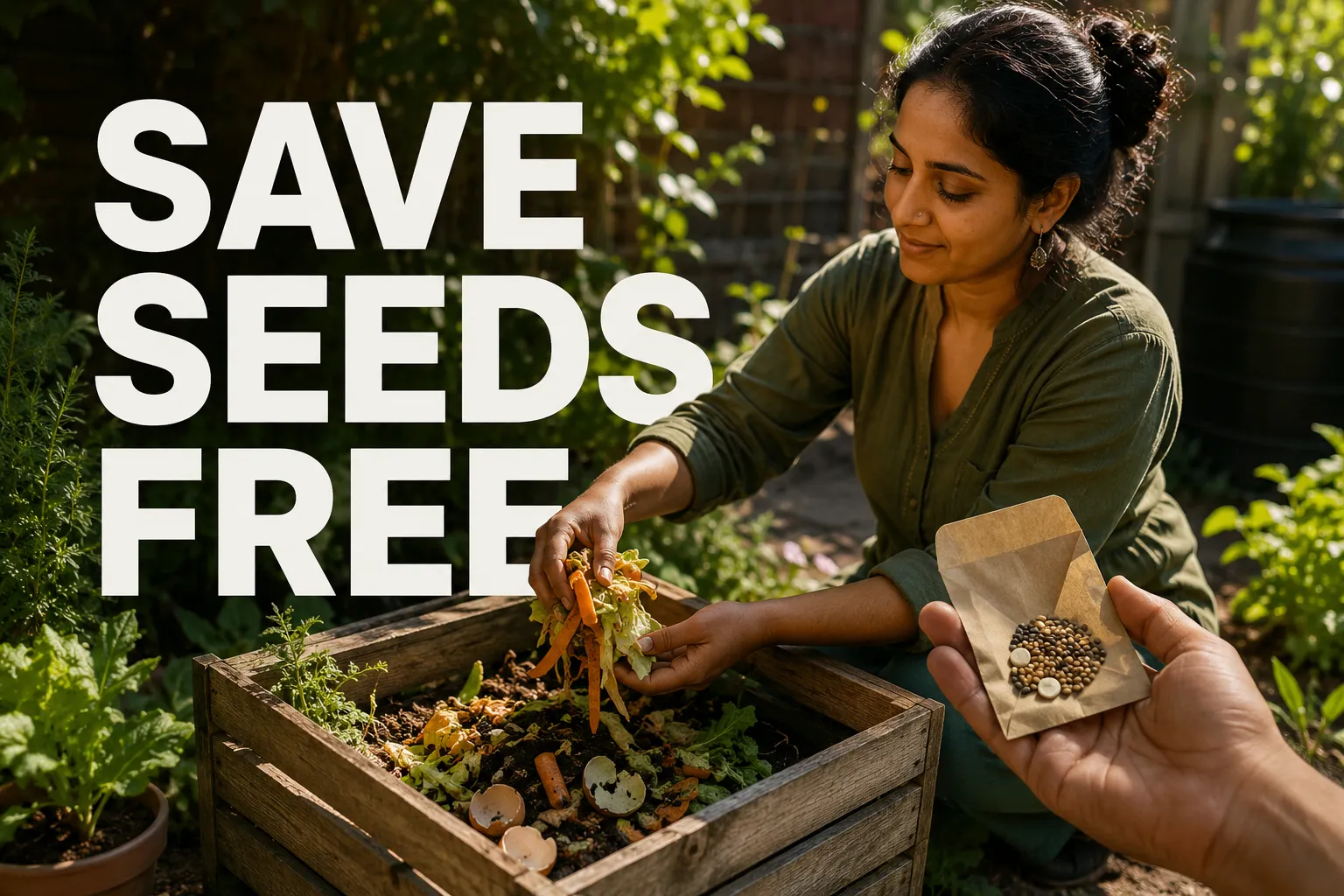
One season of seed saving from a $3 packet of heirloom tomatoes produces enough seeds to plant for years. Over a decade, that single packet is worth hundreds of dollars in avoided seed purchases.
Common Mistakes Beginners Make When Homesteading Cheap
The most common mistake is buying infrastructure before building skills. A $400 chicken coop built before you understand your local predator pressure, zoning laws, or flock management basics is money wasted. Skills compound. Equipment depreciates.
Other frequent beginner errors:
- Planting too much too fast. A 500-square-foot garden is overwhelming for a first-year homesteader. Start with 100 square feet and expand as your skills grow.
- Ignoring soil quality. Plants grown in poor soil produce poorly regardless of how much you water or fertilize. A $15 soil test from your county extension office is the best money a beginner can spend.
- Underestimating preservation. Growing food is only half the equation. Without a preservation plan (canning, dehydrating, fermenting, root cellaring), surplus harvest rots.
- Buying animals before building infrastructure. Chickens need predator-proof housing before they arrive, not after.
- Neglecting water management. A rain barrel or two can dramatically reduce irrigation costs and provide backup water during dry spells.
Is Homesteading Worth It Financially in the First Year
Financially, the first year of homesteading is almost never a net positive. Expect to spend more than you save while you’re building infrastructure, developing skills, and making the inevitable beginner mistakes. That’s not a reason to avoid it, it’s a reason to set realistic expectations.
The financial case for homesteading builds over time:
- Year 1: Primarily an investment. Expect to spend $300 to $1,500 depending on scale.
- Year 2: Soil improves, skills sharpen, infrastructure is in place. Food production costs drop significantly.
- Year 3 and beyond: A well-managed homestead can realistically offset $1,500 to $3,000 or more in annual grocery costs for a family of four, according to estimates from the National Gardening Association.
For preppers, the financial ROI calculation misses the point anyway. A homestead is a resilience asset. The eggs your chickens lay during a supply chain disruption, the preserved food in your pantry during an economic shock, the seeds you’ve saved against a seed shortage, these have value that doesn’t show up in a grocery receipt comparison.
Homesteading Budget Breakdown: What Costs the Most
Across most beginner homesteads, infrastructure consistently represents the largest single cost category, often 50 to 60 percent of total first-year spending. This includes raised beds, fencing, animal housing, water systems, and storage.
Where budget homesteaders typically spend the most:
- Animal housing and fencing (if keeping livestock), the most expensive line item for most beginners
- Soil and soil amendments, especially if starting with poor native soil
- Preservation equipment, pressure canners, dehydrators, and storage containers
- Water management, rain barrels, drip irrigation, and hose infrastructure
Where budget homesteaders can cut costs the most:
- Build animal housing from reclaimed lumber and salvaged materials
- Make your own compost instead of buying bagged amendments
- Source canning jars from estate sales and thrift stores
- Use gravity-fed rain barrels instead of drip irrigation systems in the first year
The single best cost-cutting strategy across all categories: build skills before buying equipment. A homesteader who knows how to identify and treat common plant diseases doesn’t need expensive fungicides. One who understands companion planting doesn’t need as many pesticides. Knowledge is the cheapest input with the highest return.
Frequently Asked Questions
How much land do I need to start homesteading on a budget?
You don’t need any land to start. Container gardens, balcony setups, and community garden plots are legitimate starting points. Even a 100-square-foot backyard patch can produce meaningful food.
What’s the single best first investment for a budget homesteader?
Seeds and soil. A $20 to $40 investment in open-pollinated heirloom seeds and basic soil amendments will produce more value in year one than any tool or piece of equipment.
Can I keep chickens if I live in the suburbs?
Many suburban municipalities now allow 4 to 6 backyard hens (no roosters). Check your local zoning ordinances before purchasing birds or building housing.
How long before a homestead saves me money on groceries?
Most homesteaders begin seeing meaningful grocery savings in year two, once infrastructure is built and skills are established. Year one is an investment, not a savings vehicle.
What’s the easiest food to preserve for a beginner?
Dehydrating is the most beginner-friendly preservation method. A basic food dehydrator costs $30 to $60 used and requires no special skills or pressure equipment.
Do I need to buy a pressure canner to preserve food?
Not immediately. Water bath canning handles high-acid foods (tomatoes, jams, pickles) safely and requires only a large pot. A pressure canner becomes necessary for low-acid foods like beans, meats, and most vegetables.
Is it cheaper to buy chicks or started pullets?
Chicks are cheaper upfront ($3 to $5 each) but require a brooder setup and 5 to 6 months before laying. Started pullets ($15 to $25 each) cost more but begin laying within weeks of purchase, often the better value for beginners.
What’s the best crop for a complete beginner with no gardening experience?
Zucchini. It’s nearly impossible to kill, produces prolifically, and teaches core gardening skills without punishing beginner mistakes.
Can I homestead while renting?
Yes. Container gardens, indoor growing systems, fermentation, and food preservation all work in rental situations. Get landlord permission before making any modifications to the property.
How do I find free homesteading resources in my area?
Start with your county extension office, local library seed library, and Facebook groups for local homesteaders and gardeners. Most experienced homesteaders are generous with knowledge, seeds, and surplus plants.
Conclusion
Homesteading on a budget getting started cheap isn’t about having the perfect piece of land or a barn full of equipment. It starts with a decision to become more self-reliant, followed by the smallest possible action you can take today, planting a seed, starting a compost pile, or joining a local seed library.
For preppers and survivalists, the homesteading mindset is a natural extension of preparedness. Every jar of preserved food, every flock of laying hens, every season of saved seeds represents a layer of independence from systems that can and do fail. The goal isn’t perfection. It’s capability.
Actionable next steps for this week:
- Start a compost pile or worm bin using kitchen scraps you already have
- Order one packet of open-pollinated heirloom seeds for your climate zone
- Check your local zoning ordinances for backyard chicken regulations
- Visit your county extension office website for free soil testing and local growing guides
- Join one local homesteading or gardening group on Facebook or Nextdoor
The homestead you build on a tight budget will teach you more than any expensive setup ever could. Constraints force creativity, and creativity is the most valuable survival skill there is.
Recommended Resources and Tools
For learning:
- Your county’s Cooperative Extension Service website (free, region-specific growing guides)
- “The Encyclopedia of Country Living” by Carla Emery, the most comprehensive homesteading reference available, often found used for under $10
- YouTube channels from experienced homesteaders like Justin Rhodes and Roots and Refuge Farm
For sourcing free and cheap supplies:
- Facebook Marketplace (tools, livestock, lumber)
- Freecycle.org and local Buy Nothing groups
- Local library seed libraries (search “seed library near me”)
For food preservation:
- Ball Blue Book Guide to Preserving, the standard reference for safe home canning, available used for under $5
- A basic water bath canning kit (large pot, jar lifter, lid wand), available new for $25 to $35 or used for under $15
For further reading on self-reliance and preparedness: